Month: March 2025

World leaders, UN chief mark International Day to Combat Islamophobia

By Muhsin Ibrahim

World leaders, including United Nations Secretary-General António Guterres, took to social media on Friday to mark the International Day to Combat Islamophobia, calling for unity and action against discrimination.

In a post on X (formerly Twitter), Guterres emphasized the need to address rising anti-Muslim hate worldwide. “Islamophobia is an affront to human rights and the values of the UN. We must stand together to promote tolerance, understanding, and mutual respect,” he wrote.

Several heads of state and government officials echoed similar sentiments. Canadian Prime Minister Justin Trudeau reaffirmed his country’s commitment to fighting religious discrimination, while Turkish President Recep Tayyip Erdoğan called for global solidarity against Islamophobia.

The International Day to Combat Islamophobia was designated by the UN in 2022 and is observed annually on March 15. It aims to raise awareness of prejudice against Muslims and promote inclusive societies.

Advocacy groups have urged governments to go beyond statements and implement concrete policies to tackle hate crimes and discrimination against Muslims.

Bayero University appoints Nura Garba as head of digital media unit

By Uzair Adam 

Bayero University, Kano (BUK) has approved the creation of new units within its Public Affairs Directorate and appointed Nura Garba as the Head of the Digital Media Unit. 

The decision, endorsed by the Vice-Chancellor, Professor Sagir Adamu Abbas, is part of efforts to enhance the university’s communication strategies and digital engagement.  

Nura Garba, formerly of the Information and Publication Unit, will lead the newly established Digital Media Unit, which will focus on utilizing digital platforms to promote BUK’s brand.

The unit will also engage with online audiences and provide timely updates on university activities.  

In a similar development, Muhammad Salisu Rabiu, previously with the Protocol Unit, has been appointed as the Head of the Publicity and Outreach Unit. 

His role will involve promoting the university’s achievements, programs, and services to various stakeholders, including the media and alumni.  

The appointments were confirmed in letters dated March 12, 2025, signed by the Registrar, Dr. Haruna Aliyu, and have taken immediate effect.

Transforming learning through the power of attentive listening

By Abubakar Aminu Ibrahim

Recently, I have been reflecting on public behaviour as I witness it in our local environments—schools, seminars, workshops, and similar gatherings. There is a stark contrast between what I observe here and what I see while watching lectures and discussions in the US, Europe, and other developed regions. The difference is striking, and unfortunately, it does not favour us.

Consider, for example, the simple yet profound act of listening and paying attention. I recently watched a Harvard professor facilitating a mature and highly engaging debate among his students on affirmative action and legacy admissions. What struck me was not only the relevance and depth of the topic but also the respect, composure, and attentiveness of the participants. Each speaker was heard without unnecessary interruption, and ideas were exchanged with mutual understanding—something that even the Nigerian Senate struggles to master.

Now, think about similar gatherings in Nigeria. It’s almost inevitable to hear teachers, speakers, or MCs repeatedly pleading, “Please be quiet!” during lessons or formal sessions. But why is it so hard for us to stay silent? Part of the problem is that many people do not realize that their individual choices matter.

People assume, “My little noise won’t make a difference; others are listening anyway.” But that is precisely the issue. The collective “little noise” from multiple individuals merges into a loud, distracting hum in the hall. If every person makes a conscious decision to remain silent and focused, the entire atmosphere will change. Ironically, those who think they are too insignificant to make an impact often do—but in a negative way. As the saying goes, if you think you are too small to make a difference, try sleeping with a mosquito!

Listening is not just about remaining silent—it is an act of respect and engagement. Your noise doesn’t just disturb serious-minded people around you; it also impacts the speaker’s performance. Non-verbal cues—such as the facial expressions of the audience—are vital to a speaker. A presentation can be either enhanced or ruined by the listeners’ posture, attention, and responsiveness. The energy a speaker receives from the audience directly affects the effectiveness of the session.

Your attention speaks volumes about you. Have you ever noticed how some people form friendships at events without even speaking to one another during the session? Yet, they find themselves drawn together by the positive energy they radiate through their attentiveness. I personally experienced this—I once met a remarkable individual whose rapt attention during a session caught my eye. After the event, I approached him, only to discover that he had also noticed the same attentiveness in me. That silent connection laid the foundation for a lasting friendship. We did not interrupt the session, nor did we disturb others, yet we gained something invaluable.

As a student, recognize that your attention is your most valuable asset. You get the most from your teacher not only by attending class but also by actively listening and fostering an environment where learning can flourish. The saying “attention is not free; it is paid” rings true—you must pay attention to acquire knowledge.

Likewise, as an audience member at any formal gathering, remember that your main purpose is to learn. Learning occurs only when you truly listen. Let us develop the discipline of attentiveness, as it is not only a sign of respect but also a characteristic of highly successful individuals. Public conduct is important, and in this instance, it starts with silence and a receptive ear.

Abubakar wrote from Katsina via abubakarmuhammadaminu21@gmail.com.

NAF’s airstrike destroys bandits’ hideouts, kills over 20

By Anwar Usman

The Nigerian Air Force has said that, operatives in Katsina State have destroyed notorious criminal hideouts in Unguwar Goga Hillforest, Ruwan Godiya Ward, the Faskari Local Government Area of the state.

The operation, done by the Air Component of Operation Fansan Yamma in the early hours of Thursday, centered on cracking down the fortified camps of two notorious bandit kingpins, Gero (Alhaji) and Alhaji Riga.

In astatement on Friday night by the Deputy Director of Public Relations and Information, Nigerian Air Force, Group Captain Kabiru Ali, said the airstrikes successfully neutralised over 20 bandits, with additional casualties reported in the surrounding rocky hills.

The statement in part read, “The Nigerian Air Force has delivered a devastating blow to banditry in Katsina State, as the Air Component of Area.

“The airstrikes, which preceded careful and actionable intelligence advancing purposeful lethality, destroyed the fortified camps of notorious bandit kingpins, Gero (Alhaji) and Alhaji Riga, neutralising over 20 criminals, with additional casualties reported in the surrounding rocky hills.

“The action by the operatives had a decisive impact on the criminals, assessment of the full extent of the damage is ongoing.”

Ali said Riga and Gero were key perpetrators of banditry in the region, providing shelter and all household items for terrorist elements responsible for deadly ambushes along the Funtua-Gusau Road, particularly between Yankara and Sheme villages.

He added that their elimination is seen as a major victory in the ongoing military battles to restore peace in the North-West region.

Kaduna police respond to El-rufai’s allegation of abduction by kidnappers

By Abdullahi Mukhtar Algasgaini

The Kaduna State Police Command has responded to allegations made by former Governor Malam Nasiru El-Rufai, who claimed that his former Commissioner, Malam Jafaru Sani, was abducted by a group of kidnappers he referred to as the “Uba Sani Group,” allegedly connected to the police.

The police dismissed the claim, emphasizing that there is no such group within the Nigerian Police Force.

According to the police, the Nigerian Police Force was established under the 1999 Constitution, with the primary responsibility of maintaining law and order.

They further urged the former governor to verify the truth of any allegations before making public statements.In a press release issued by the police spokesperson, DSP Mansir Hassan, he stated:

“We have taken note of a statement made by the former Governor of Kaduna State, Malam Nasiru El-Rufai, on his X platform, where he accused his former Commissioner, Malam Jafaru Sani, of being abducted by a group of kidnappers known as the ‘Uba Sani Group,’ whom he claimed to be police officers.”El-Rufai also alleged that Jafaru Sani was detained in prison without any police report (FIR) or charges filed by the state Ministry of Justice.

“There is no such group of kidnappers within the Nigerian Police Force. The police is a lawful body established by the constitution to uphold law and order.”

The police further explained that they are authorized to arrest and investigate anyone accused of committing a crime under the provisions of the law.

They noted that any individual, company, or government body has the right to file a complaint with the police, and if a crime is committed, the matter will be taken to court for trial.

The police urged the public, especially those in positions of authority, to exercise caution and avoid making baseless accusations against security agencies.

They warned that such unfounded claims could create confusion and undermine the integrity of security institutions.

World Speech Day, 2025: Know your audience or don’t speak to them

By Bello Sagir Imam                                           

In 2005, Prof. Auwal Yadudu of the Faculty of Law, Bayero University Kano, had to speak to a bench of Kano state Sharia courts judges at Aminu Kano College of Islamic and Legal Studies (AKCILS), where I was studying Law at Diploma level. I was even nicknamed as Senior Advocate of Nigeria (SAN) by my colleagues. The college management invited me to represent students as the Public Relations Officer (PRO) of Redemption Chambers, an association I co-founded at the AKCILS.

The legal luminary started his speech by addressing the judges in English, smiling. After about six minutes, I noticed him slowing down, and he completely paused. While silence overtook the venue, making it a graveyard, the lawyer examined the hall, making eye contact with some of us as if searching for something in our eyes. Then he returned to his speech with full force but this time with a bit of speed. We were all shocked to have discovered that Prof. switched to speaking in the Hausa language instead of the English language he was using earlier, which I enjoyed because of his near-native speakers’ control of the language I sensed in it.

Prof. Yadudu spoke for a while in Hausa, as if trying to do what he knew best: “defense”. He then paused and quickly said: “na tsara jawabi na gabaki dayansa a harshen Turanci, amma, tun kafin na yi nisa, sai na fahimci cewa, kaso mai tsoka daga cikinku ba sa fahimtar abin da nake fada yadda ya kamata, saboda da harshen Turanci nake magana, shi ya sa na yi sauri na koma yin magana da harshen Hausa.”

He mentioned his full name as “Barrack HUSSAIN Obama.” The former US president deliberately added the middle name (i.e., Hussain), a Muslim name, in his address to Turkish Muslims that he came from a Muslim background. This is unusual; Obama does primarily address Americans or other non-Muslim audiences.

Malam Aminu Kano, in his time, was hated by many Kano elites, including monarchs, politicians, and clerics. Why? Because he opted to always please the masses (talakawa), to the detriment of the elites, in his speeches. Why? Perhaps the masses cast votes en mass, while the elite, who were much fewer, hardly voted, and the Malam, a politician, needed votes.

The three stories above demonstrate the power of knowing your audience as a speaker for an effective speech.

Eugene Ehlich & Gene R. Hawes have recommended finding the answers to the following questions for any speaker who wishes to speak effectively to the audience. For instance:

What is the:

  1. Age
  2. Gender
  3. Educational status
  4. Religious inclination (including sectorial affiliation)
  5. Social status
  6. Their knowledge of you (the speaker)
  7. Their familiarity with your subject matter
  8. Race
  9. Peculiarity
  10. Career of the audience.

A series of phone calls ensued between me, the secretary, and the Chairman of Elite Coven of the Faculty of Law, Bayero University, Kano, last month, shortly after I accepted their invitation to train them in public speaking. That was in my effort to find answers to some of the questions above. For instance, number 2,3,7 etc. The aspiring lawyers furnished me with all the answers, accordingly.

One of my public speaking students asked me what she should do if, despite her effort to know her audience, she couldn’t succeed. My response was: “Don’t speak to them. Simple!”

In conclusion, “Unexpected Voices: 10 Years of Speaking for the World” is this year’s World Speech Day (WSD) theme, marking the 10th anniversary. All the voices that shaped the world, Like Malala’s, King’s, and Danfodio’s, that WSD aimed to celebrate and promote would not have been heard if the people behind them were oblivious of who their audiences were. The fate of future voices is going to be bleak, except if the knowledge of the audience is understood.

Bello Sagir Imam is a Public Speaking Coach at Domain Leadership Academy, Zoo Road, Kano. He can be contacted via belsagim@yahoo.com.

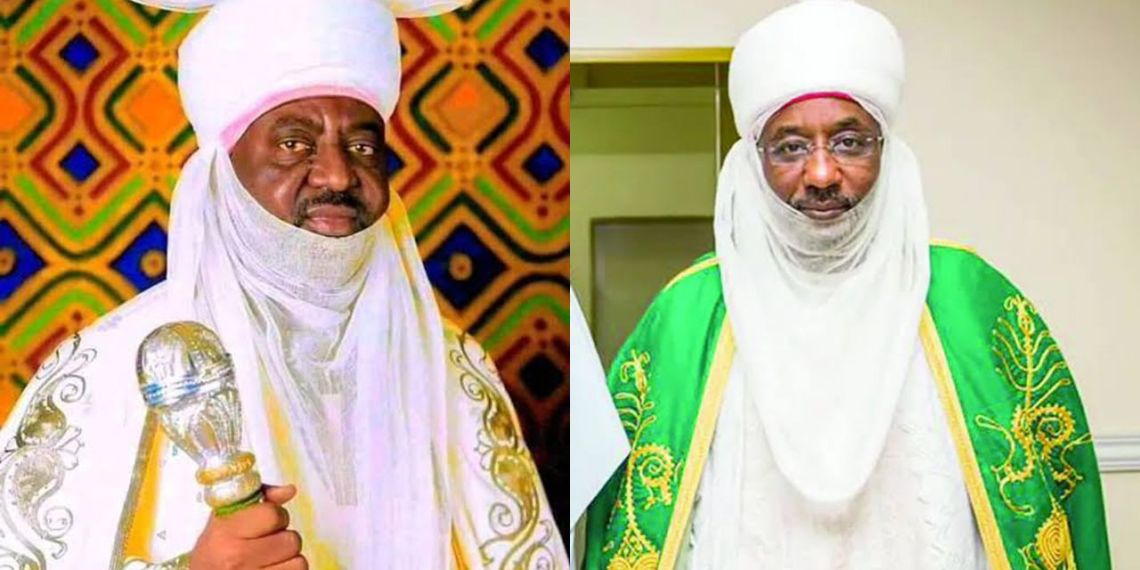
Appeal court halts Sanusi’s reinstatement as emir, awaits supreme court decision

By Uzair Adam 

The Court of Appeal in Abuja has suspended the enforcement of its January 10 judgment, which upheld the Kano State Government’s repeal of the 2019 Emirate Council Law, pending the determination of an appeal at the Supreme Court.  

The appellate court, sitting in Abuja, overturned the June 20 order by Justice Abubakar Liman of the Federal High Court in Kano, which had nullified actions taken by the state government under the Kano State Emirate Council (Repeal) Law 2024, including the reappointment of Sanusi Lamido Sanusi as the 16th Emir of Kano.  

The court ruled that Justice Liman issued the order without jurisdiction. Dissatisfied with the decision, the Kano State Government took the case to the Supreme Court and sought an injunction at the Court of Appeal to halt the execution of the judgment while awaiting the apex court’s ruling.  

On Friday, a three-member panel of justices led by Justice Okon Abang ruled on two suits—CA/KN/27M/2025 and CA/KN/28M/2025—filed by Alhaji Aminu Babba Dan’agundi (Sarkin Dawaki Babba). 

The suits were brought against the Kano State Government, the Speaker of the House of Assembly, the Inspector General of Police, the Nigeria Security and Civil Defence Corps, and other security agencies.  

Dan’agundi’s application, filed on February 6, 2025, sought to prevent the respondents from enforcing the appellate court’s judgment while an appeal was pending before the Supreme Court. 

He argued that the trial court lacked jurisdiction over the case and emphasized the need to maintain the status quo.  

In a unanimous ruling, Justice Abang held that the application was valid and deserving of the court’s discretion in the interest of justice. 

He stated that preserving the subject matter of the case was necessary since a valid appeal was already before the Supreme Court.  

The court ordered that the status quo be maintained as it was before the Federal High Court’s ruling on June 13, 2024. 

It also directed the applicant to file an undertaking within 14 days to indemnify the respondents for damages if the order was later found unnecessary.  

With this ruling, the reinstatement of Sanusi Lamido Sanusi as Emir of Kano remains on hold, pending the Supreme Court’s final decision on the matter.

Oscar-winning “No Other Land” faces screening bans in US amid free speech controversy

By Hadiza Abdulkadir

The Oscar-winning documentary No Other Land, which portrays the displacement of Palestinian communities in the West Bank, is facing significant opposition in the United States, reigniting debates over censorship and freedom of expression.

Co-directed by Palestinian activist Basel Adra and Israeli journalist Yuval Abraham, the film documents the Israeli military’s demolition of Palestinian villages to establish a military training zone. 

The documentary has gained critical acclaim worldwide, winning the Academy Award for Best Documentary Feature at the 97th Oscars.

However, the film has struggled to secure mainstream U.S. distribution, with several screenings facing backlash. In Miami Beach, Mayor Steven Meiner called the documentary “one-sided propaganda” and “antisemitic,” pushing to terminate the lease and withdraw funding from O Cinema, an independent theater that screened the film. His actions have drawn criticism from civil rights groups, who argue that this amounts to censorship and an attack on free speech.

Yuval Abraham has condemned these efforts, calling them “very dangerous” and warning that accusations of antisemitism should not be used to silence criticism of occupation policies. 

Despite the controversy, O Cinema went ahead with its screenings, resulting in sold-out shows and additional dates being added.

The situation has sparked a broader conversation about the portrayal of the Israeli-Palestinian conflict in Western media and the limits of artistic expression. 

As the debate continues, No Other Land has become a focal point in discussions on censorship, free speech, and the complexities of Middle Eastern geopolitics.

A call for a presidential library in memory of Alhaji Shehu Shagari

By Bilyamin Abdulmumin, PhD

On the 25th of February, the former president Mallam Alhaji Shehu Shagari posthumously celebrated his 100th birthday. To honor this significant occasion, his grandchild, Bello Shagari, wrote him a letter in heaven, where he now resides, inshallah.

In the letter, Shagari told his grandfather the entire story he had missed during the seven years since he left. He perhaps started with what would have concerned him the most: Muhammadu Buhari completed his eight-year tenure but never fulfilled the promise to honor him, even though a similar gesture was extended to MKO Abiola for recognizing June 12 and renaming the Abuja stadium after him, as well as completing a mausoleum for Dr. Nnamdi Azikiwe.

The letter continued: Bola Ahmed Tinubu has become the President of Nigeria, but surprisingly, Nigerians are now more patient with the burden of reforms than they were before when they celebrated coups.

Another piece of information shared in the letter was the launch of General Ibrahim Badamasi Babangida’s autobiography, a book surrounded by controversies on all sides. Interestingly, the book cleared Shagari of corruption.

The objective of this article was the Presidential Library the Shagari family is considering, as mentioned in the letter. The family hopes to achieve that by converting his decaying house into a historical monument.

Just before that birthday, a fatherly figure sent me a viral video of an old house belonging to Shehu Shagari, which had fallen into disrepair. The video was interestingly captioned with a suggestion: converting the house into a presidential library. The viral video may have already reached the Shagari family, who might have already contemplated it.

I think that so far, the only official presidential library we have in Nigeria is the Olusegun Obasanjo Presidential Library (OOPL). The complex is described as a mini village, featuring an open-air amphitheater, an auditorium, a hotel, an amusement park, a wildlife park, an observation point, restaurants and bars, a Jumu’at mosque, and of course, a church.

I was surprised to learn that OOPL has a Jumu’at mosque. This highlights not only the size of the village surrounding the library but also the diverse local and international users.

Ultimately, a promising archive of this significance—a repository of presidential documents, a tourist attraction, and an academic center—stands as a proud monument not only for a specific state or region but for all of Nigeria.

As the only democratically elected president of Nigeria’s Second Republic, the call to preserve his legacy for future generations cannot be overstated. Dear Nigerians, in memory of Alhaji Shehu Shagari, let’s make this dream a reality.

Nigeria Customs Service intercepts over $1.1 million, SR135,900 undeclared currency at Kano airport

By Sabiu Abdullahi

The Nigeria Customs Service (NCS) has seized a total of $1,154,900 and SR135,900 in undeclared foreign currency at Mallam Aminu Kano International Airport (MAKIA).

The interception occurred during a routine baggage inspection of Hauwa Ibrahim Abdullahi, a passenger who arrived from Saudi Arabia on Saudi Airline Flight No. SV401.

According to the NCS, officers discovered the foreign currency hidden inside packs of palm-date fruits, commonly known as Dabino, during a physical examination of the passenger’s luggage.

The agency stated that the operation aligns with its ongoing efforts to enforce financial regulations and curb illicit financial flows across Nigeria’s borders.

Following due process, both the suspect and the confiscated funds were handed over to the Economic and Financial Crimes Commission (EFCC) for further investigation and legal proceedings.

A court subsequently convicted the defendant and ruled that the undeclared money be forfeited to the Federal Government in accordance with the Money Laundering (Prevention and Prohibition) Act of 2022.

The NCS has reiterated that all travelers must adhere to Nigeria’s financial regulations, particularly the obligation to declare any cash or negotiable instruments exceeding the approved limit when entering or leaving the country.

The agency emphasized that failure to comply with these laws is a violation of Nigerian financial regulations and carries serious legal consequences.

Under the leadership of Comptroller-General of Customs, Bashir Adewale Adeniyi, the NCS remains committed to combating smuggling, illegal financial transactions, and other cross-border crimes.

This latest seizure, the agency noted, underscores its determination to protect Nigeria’s economic interests and enforce financial compliance.

The NCS assured the public of its continued collaboration with relevant government agencies and stakeholders to strengthen border security, ensure adherence to financial laws, and safeguard the nation’s economy.

It urged travelers and financial sector stakeholders to remain vigilant and strictly follow legal financial practices.