Month: January 2025

Sacked JAMB official alleges threats, challenges dismissal in court

By Uzair Adam

A former deputy director of the Joint Admissions and Matriculation Board (JAMB), Mr. Yisa Usman, has alleged that his life is under threat due to his efforts to expose corruption within the board.

Usman made the claim during cross-examination before Justice Osatohanmwen Obaseki-Osaghae at the National Industrial Court in Abuja, where he is challenging his dismissal from JAMB, which he claims was unlawful.

Responding to questions from JAMB’s counsel, A. A. Owonikoko, Usman admitted writing petitions to various government agencies, including the National Assembly, the Attorney-General of the Federation, and anti-corruption bodies, alleging financial mismanagement under the current registrar, Prof. Ishaq Oloyede.

Usman also acknowledged receiving queries from the board and an invitation to appear before a disciplinary committee prior to his dismissal.

While admitting to responding to the queries, he stated that he rejected the composition of the committee due to alleged bias.

“My Lord, I informed the committee that I could not trust its fairness as it comprised individuals implicated in the infractions I reported,” he said, denying claims that he refused to appear before the committee.

He further testified that he informed JAMB’s directors of his concerns through an email message dated May 18, 2023, in which he reiterated his resolve to fight corruption within the organization.

“The fight against corruption and abuse of authority is a responsibility of every Nigerian. My determination remains unshaken, despite the threats and attempts to intimidate me,” he told the court.

Usman also alleged that he had reported threats to his life to the Department of State Services (DSS) and the Inspector General of Police, claiming that if anything happened to him, the registrar, Prof. Ishaq Oloyede, and the Director of Finance and Accounts, Mr. Mufutau Bello, should be held responsible.

During the proceedings, Usman denied accusations that the criminal charges filed against him at the Federal High Court in Abuja were related to investigations into his allegations, stating that the charges were unrelated to the audit of JAMB’s finances conducted by the current registrar.

Justice Obaseki-Osaghae admitted several documents submitted by Usman’s counsel, Mohammed Shuaibu, as evidence, while reserving JAMB’s right to challenge their admissibility.

The court adjourned the case to February 27 for JAMB to present its defense.

It would be recalled that Usman has filed a N150 million lawsuit against JAMB, seeking reinstatement, full entitlements, and the nullification of his dismissal.

He has also requested a declaration that the disciplinary committee was improperly constituted and unable to guarantee him a fair hearing.

The case, marked NICN/ABJ/266/2023, remains ongoing.

Battle of words: SLS, IBK, Kperogi and our collective suffering

By Bin Isah

it has been a long week of debates, discussions, rejoinders and exchanges between and among the fans of three important personalities from Northern Nigeria: Emir Muhammadu Sunusi (popularly known as SLS), Prof Farooq Kperogi and Prof Ibrahim Bello Kano (IBK).

The truth is that, the wordplay of the writers provokes the fancy of readers, and entices the sense of the intellectual minds. However, the real deal rests upon the substance of the game and the appeal of the persuasions. IBK has truly got it right in the wrong way, while Kperogi still holds the ball in his court.

In fact, Kperogi didn’t simply wake up to set a fire upon the super-luminous star of the nation, SLS. He was called to the pen. SLS made a reel of remarks that smelt of all personal proclivities to self-importance, interest and power. Kperogi read the remark in its pompous tones, which cumulatively ran down the bad road of nonchalance to national concern.

Kperogi was on fire because SLS seemed to have put the national concern lower than his personal interest. Not only that, the remark also showed that SLS had forgotten that the precarious dance of the national economy which he found uninteresting was the product of his biblical belief in neo-liberal economic theory that he has preached to the government for a while. Remove subsidies, privatize, and add more tax!

Actually, the battle of words would not make SLS safe from the wildfire, because the matter is beyond words and vocabularies and lexicons of English frenzy. It’s deeper to be reduced into a rejoinder that boils down to rhetorical bigotry, jokes and indifference to real issues. The matter reveals what SLS represents as a national treasure, a facade. This is man who considers himself to be a gift to Nigeria, who has a magic wand to solve its problems, yet a self-centred saint.

To be fair to Kperogi, he is not worse than SLS in deployment of abusive arsenals when engaging a person. SLS is expert at dropping bombs on the personality of his worthy critics, ripping them apart, with words so vile of his royal roots. But, this is what a pen power induced into a person with a sense of superior opinions. Remember his unprintable phrases on Sheikh Jafar Mahmud Adam in his “Engagement with Jafar Mahmud Adam”. In this line, Kperogi can even be holier than SLS.

The case that awaits SLS is that of his undiluted support for policies that proved difficult to yield any results to the nation. I don’t know to what school of economics theorists he belongs, but they are not the best. At least, when a solution is given, and the solution put people into the mud of another worse problem, you propose for another solution not to insist on the first solution which had failed to work.

Because, any economic solution that would lead to economic depression, losing jobs, closing of businesses, high cost of living, poor standard of life, and plunging millions of people into abject poverty, that solution has become a terrible problem. A problem which requires a revision, a change in thoughts, in ideas, and in actions. However, SLS as a lover of IMF recommendations and brutal capitalism, he sees no problem with that line of trial, and no any other solution can be given but an embrace of patience and hardship.

I’m not an economics expert but we have been taught that economics is for the creation and management of wealth and resources in a way that a nation and its people get better, do better and produce better. It’s about the betterment of people, not deprivation and exploitation for the benefit of the few. We know SLS is an economist, at the same time, a business man, and thus, a profiteering hustler around the national wealth. What do you expect?

A support to Tinubu’s economic policies over which the nation is weeping is a sin. It’s more of a moral abuse than an intellectual view. In fact, SLS as an intellectual, is a betrayal to public intellectualism. The basic work of a public intellectual is to help the poor people against the powerful, not the powerful against the poor. Only that we know SLS has been a friend to the people in power, which may actually be a reason why he cannot but help them to succeed in their poor management of the nation. A friend in need is a friend indeed.

It’s not a hidden fact that he has no regrets for his romance with Tinubu’s iconoclastic antics of economic problematics. That’s not a problem! The remorse of SLS is that after all the sweetest sugars he added to their policies the government is still not taking him as a friend, is not treating him like a political-economic superman with paranormal powers to make things happen in a hush of the blink. This is the economic problem that disturbs the soul of SLS, not the national one. The government has used and dumped him like a homeless prostitute. Of course, it’s not fair. But, who cares? It’s a dinner with the devil.

It’s not about Kperogi, IBK, or the fans that worship the wonderful words around their altars. It’s about SLS and his public show of unpatriotism to the nation after he placed his back for the government to implement its illest ideas that inspire a brazen, merciless management of the country. Now, that the people he had provided a theoretical justification to their economic malevolence have abandoned him in his battle over the throne, and he now wants to throw them away along with the entire nation into a deep blue sea. What made Tinubu and his government better than the nation?

The man is for himself.

Bin Isah is a blogger who writes from Kano State.

Kano police arrest two over alleged assault on polytechnic lecturer

By Uzair Adam

The Kano State Police Command has apprehended two individuals for allegedly assaulting a lecturer at the Kano State Polytechnic.

The Police Public Relations Officer, SP Abdullahi Haruna Kiyawa, disclosed that the suspects, identified as Khalid Hussain, 20, also known as Baffa, of Dorayi Quarters, and Khadija Hassan, 18, of Charanchi Quarters, are currently in custody at the Anti-Daba (Anti-Thuggery) department.

According to reports, the lecturer, Aliyu Hamza Abdullahi, lodged a complaint with the police, accusing Khadija of masterminding the attack. She allegedly blamed the lecturer for obstructing her transfer to a preferred department due to insufficient grades.

In response, she reportedly contacted her fiancé, Khalid, who is said to have entered the lecturer’s office armed with a cutlass, striking him on the head.

The institution’s Public Relations Officer, Auwal Isma’ila Bagwai, confirmed the incident and commended the swift response of students and staff, which helped contain the situation before it escalated further.

SP Kiyawa assured the public that the suspects would face prosecution while noting the importance of maintaining order and safety within academic environments.

Meanwhile, the injured lecturer is reportedly recovering, as investigations into the matter continue.

Trump limits flags on government buildings — no more LGBTQ or BLM flags

By Maryam Ahmad

The Trump administration has reportedly issued a directive restricting the display of flags on government buildings, embassies, and military bases worldwide. According to a report by the Washington Free Beacon, which obtained a copy of the document, the new policy permits only the U.S. flag and select military symbols to be flown.

Although the directive does not explicitly mention specific flags, media outlets have interpreted the move as a ban on displaying symbols such as LGBT and Black Lives Matter (BLM) flags, which were frequently flown alongside the U.S. flag during the Biden administration.

This policy aligns with Trump’s broader cultural stance, including a previous decree recognising only two genders—male and female—in official U.S. government documents and policies.

The decision has sparked debate. Supporters praise the emphasis on national and military symbols, while critics view it as a step back in terms of inclusivity and representation.

Preserving the sanctity of the Qur’an: Why “Festival” is the incorrect term

By Abubakar Aminu Ibrahim

Language is a powerful tool. It shapes how we think, communicate, and understand our beliefs. In the Islamic faith, words carry immense weight, for they are tied to sacred meanings and spiritual truths. This is why using the term “Qur’anic festival” to describe any event associated with the Qur’an is both misplaced and misleading. While the word “festival” may seem innocuous, its implications are incompatible with the spiritual essence of the Qur’an and the traditions it upholds.

A festival is often marked by joy, festivities, and entertainment. While it can sometimes carry religious undertones, its modern usage is predominantly cultural or secular. On the other hand, the Qur’an is a divine revelation—a book of guidance, wisdom, and moral discipline. It is meant to elevate the soul, inspire reflection, and connect individuals to their Creator. Associating the Qur’an with a “festival” risks reducing its sacredness to something casual, even trivial.

Consider the Islamic celebrations of Eid al-Fitr and Eid al-Adha. These are joyous occasions deeply rooted in worship, gratitude, and submission to Allah. Their joy is spiritual and reflective, not superficial. To call these occasions “festivals” would diminish their profound meanings. Similarly, attaching the word “festival” to the Qur’an creates a disconnect between its sacred purpose and the secular image that the term often evokes.

Moreover, using the term “Qur’anic festival” opens the door to misinterpretation. To the uninformed, it might conjure images of parades, loud music, or revelry—activities that Islam often cautions against when taken to excess. For instance, a Qur’anic recitation event might aim to deepen one’s connection to Allah, but labelling it a “festival” could unintentionally attract a crowd expecting entertainment rather than spiritual enlightenment. Precision in language is vital in Islamic traditions, and terms like “gathering” or “symposium” better preserve the solemnity of such occasions.

The Qur’an is not just a book; it is Allah’s final message to humanity, and its recitation, study, and understanding are acts of worship. To frame these sacred practices as part of a “festival” undermines the dignity of the Qur’an and the reverence Muslims owe to it. Imagine referring to a gathering for tahajjud (night prayers) or a Qur’anic competition as a “festival.” Such terminology strips the event of its spiritual depth and misrepresents its purpose.

It is also important to, with all sense of humility, caution scholars and traditional leaders against carelessly inventing new terms or traditions on a whim. If some have historically criticised the celebration of Maulud (the Prophet’s birthday) as an innovation, why then should the term “Qur’anic festival” be any less scrutinised? This is not to argue the correctness or incorrectness of the concept of Maulud, Qur’anic events or similar practices but to highlight the inconsistency in applying principles of linguistic and theological precision. The issue is, first and foremost, with the choice of the word “festival” attached to the Qur’an.

The Qur’an deserves words that uplift its message, preserve its sanctity, and reflect its divine status. It is a guidance for humanity, a light for those in darkness, and a connection to Allah that transcends worldly pleasures. Let us honour its dignity by rejecting terms that fail to encapsulate its sacred purpose.

Abubakar Aminu Ibrahim (AbuMuhd) can be reached via matazu247@gmail.com.

Court refuses to grant bail to ex-Elrufa’i’s aide amidst corruption allegations

By Abdullahi Mukhtar Algasgaini

Kaduna State High Court has once again refused to grant bail to the former Chief of Staff to the former Governor of Kaduna State, Malam Nasir El-Rufai, Alhaji Bashir Sa’idu.

The court has ordered that he be returned to custody after being charged with 10 counts of alleged corruption, embezzlement, and theft during the administration of Malam Nasir El-Rufai.

When the case was resumed before Justice Isa Aliyu on Tuesday, the 10 charges were read to the defendant, to which he pleaded not guilty.

Among the charges, Sa’idu is accused of selling $45 million of the Kaduna State government’s funds—equivalent to N18.45 billion—at a rate of N498 per dollar, which allegedly resulted in a loss of N3.96 billion to the state government.

According to the prosecution, the offense occurred in 2022 when Sa’idu was serving as the Commissioner for Finance in El-Rufai’s government.

The prosecutors further stated that Sa’idu is accused of embezzling N3.96 billion, which violates Section 18 of the 2022 Anti-Corruption Act.

The defendant’s lawyer, M.I. Abubakar, informed the court that there was a need for bail to be granted to his client, as he had already spent 21 days in custody since his arrest on January 2, 2025.

He also informed the court that a bail application had been filed on January 16, 2025, adding that granting bail would allow Sa’idu to properly prepare his defense against the charges.

However, the prosecution’s counsel, Professor Nasiru Aliyu, objected to the bail request, stating that the law allows the prosecution seven days to respond to the bail application.

After a 40-minute recess, Justice Isa Aliyu ruled that the prosecution should be given sufficient time as provided by the law to respond to the bail request.

The court has adjourned the case to January 23, 2025, for further consideration of the bail application.

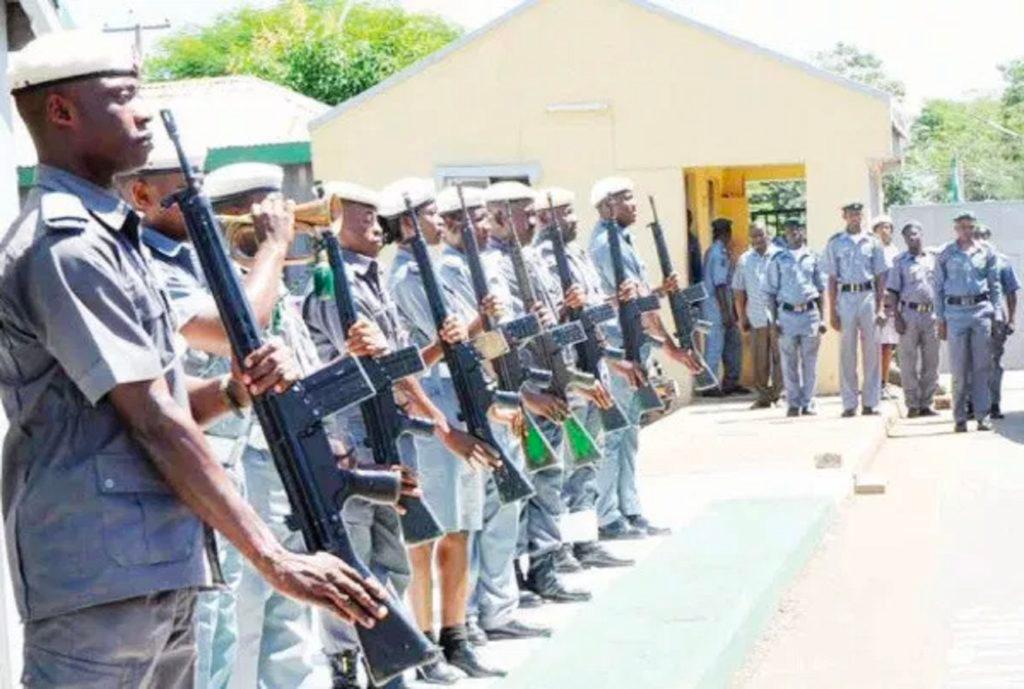
NCS achieves record revenue collection in 2024 after surpassing target by over 20%

By Sabiu Abdullahi

The Nigeria Customs Service (NCS) has achieved an unprecedented success in revenue collection for 2024 after surpassing its target by a significant margin.

This was revealed in a summary of all revenues collected by the service as seen below:

The total revenue collected reached NGN6.105 trillion, representing a 20.2% increase over the 2024 target of NGN5.079 trillion.

This remarkable figure also reflects a 90.4% increase compared to the 2023 collection of NGN3.206 trillion.

Several factors have contributed to this outstanding performance, including increased trade activities and intensified enforcement measures by the NCS.

The highest monthly collection ever recorded was in October 2024, with NGN604 billion.

Federation revenue amounted to NGN3.657 trillion, while non-federation revenue totaled NGN816 billion.

Import VAT collection reached NGN1.631 trillion, and concessions granted to stimulate economic growth amounted to NGN1.682 trillion.

Furthermore, the NCS recorded a significant reduction in concessions, with a 57.52% decrease compared to the NGN3.959 trillion granted in 2023.

Regarding waivers, duty waivers totaled NGN723 billion, levy waivers amounted to NGN372.65 billion, and VAT waivers reached NGN586.65 billion.

The service has implemented various strategies, including the deployment of modern technology and strengthening its enforcement capabilities.

Iranian court sentences pop star Tataloo to death for blasphemy

By Sabiu Abdullahi

An Iranian court has reportedly sentenced Amir Hossein Maghsoudloo, popularly known as Tataloo, to death for blasphemy following an appeal.

Local media revealed that the decision came after the prosecutor objected to an earlier five-year prison sentence.

“The supreme court accepted the prosecutor’s objection,” reported Etemad, a reformist newspaper, on Sunday.

According to the paper, the case was reopened, and the defendant was subsequently sentenced to death for “insulting the prophet,” referring to Prophet Muhammad (SAW).

The ruling, however, is not final and may still be appealed, according to reports.

Tataloo, a 37-year-old underground musician who blends rap, pop, and R&B, had been living in Istanbul since 2018.

He was extradited to Iran by Turkish authorities in December 2023 and has been in detention ever since.

The singer was also sentenced to 10 years for allegedly promoting “prostitution” and faced charges in other cases, including spreading “propaganda” against the Islamic Republic and sharing “obscene content.”

Tataloo, who is known for his extensive tattoos, was once embraced by conservative Iranian politicians to appeal to liberal-minded youth.

In 2017, he even participated in a televised meeting with Iran’s ultra-conservative president at the time, Ebrahim Raisi, who later died in a helicopter crash.

In 2015, Tataloo released a song supporting Iran’s nuclear programme, which was part of a deal to dismantle it in exchange for sanctions relief.

This agreement, however, fell apart in 2018 during the presidency of Donald Trump.

Tinubu holds closed-door meeting with Wike, Fubara, Ogoni Leaders

By Sabiu Abdullahi

President Bola Tinubu is currently hosting a closed-door meeting with Rivers State Governor Siminalayi Fubara and leaders from Ogoniland’s four Local Government Areas at the Council Chamber of the State House.

Observers noted the arrival of the delegation led by Fubara, which includes notable figures such as Senators Lee Maeba, Magnus Abe, Olaka Nwogu, Barry Mpigi, Victor Giadom, Kenneth Kobani, Monsignor Pius Kii, Ledum Mitee, and Prof. B. Fakae.

Around 2:45 pm, the official vehicle of Nyesom Wike, Minister of the Federal Capital Territory, was seen arriving at the venue.

Key federal officials at the meeting include National Security Adviser Nuhu Ribadu, Chief of Staff Femi Gbajabiamila, Minister of Information and National Orientation Idris Mohammed, Minister of Regional Development Abubakar Momoh, Minister of Environment Balarabe Abbas, and the Group Chief Executive Officer of the Nigerian National Petroleum Company Limited, Mele Kyari.

Although the meeting’s agenda has not been officially disclosed, it is widely speculated to focus on the Ogoni clean-up project and discussions about resuming oil exploration in Ogoniland, Rivers State.

The Federal Government has raised concerns over the prolonged suspension of oil activities in the region, emphasizing its impact on the nation’s economy.

The Niger Delta Development Commission’s Managing Director, Samuel Ogbuku, previously expressed concern over the conflicts that halted oil exploration in Ogoniland, which have led to significant losses in national revenue amidst growing energy challenges.

Meanwhile, a coalition of civil society organizations has demanded $1 trillion for the Niger Delta’s environmental clean-up and compensation for livelihood losses before crude oil production resumes.

In a joint statement, groups including Environmental Rights Action/Friends of the Earth Nigeria and the Health of Mother Earth Foundation criticized the government’s plan to restart oil production, describing it as neglecting environmental justice.

The coalition also referenced a 2011 UNEP report that documented widespread environmental damage in Ogoniland caused by oil exploration, citing severe pollution of land, water, and air.Further updates on the meeting are expected.

Japa: Nigerian hospitals face collapse as health workers exit in droves – CMDs

By Uzair Adam  

The Chief Medical Directors (CMDs) of University Teaching Hospitals and Federal Medical Centres have expressed concerns about a looming staff crisis. Doctors, nurses, and other healthcare professionals are leaving Nigeria in large numbers due to poor salaries and working conditions.  

During the 2025 budget defence session before the House of Representatives Committee on Health Institutions, the CMDs noted that despite significant federal government investments in health infrastructure, the mass exodus of healthcare workers weakens the country’s healthcare delivery system.  

The Chief Medical Director of Lagos University Teaching Hospital (LUTH), Professor Wasiu Adeyemo, described the trend as alarming, warning that if immediate steps are not taken, the nation’s hospitals could soon be empty.  

“Resignations occur almost daily,” Adeyemo stated. “In one or two years, our hospitals may become empty. The main reason people leave is economic. Consultants are earning less than $1,000 monthly. 

“Without addressing remuneration, all government investments in infrastructure will be wasted,” he added.

He reported that LUTH’s 2024 budget included N19.2 billion, with N13.57 billion allocated for personnel and just N33.2 million for overhead costs. 

While personnel performance reached 91 per cent by December, only 45 per cent of the capital project budget had been utilized.  

For 2025, LUTH proposes a budget of N32.7 billion, with N20.3 billion allocated for personnel. 

Adeyemo emphasized the need for improved funding to prevent further resignations and ensure the hospital’s functionality.  

Similarly, the Chief Medical Director of University College Hospital (UCH), Ibadan, Professor Jesse Abiodun, decried delays in releasing budgeted funds. 

He revealed that UCH had a capital appropriation of N5.59 billion in 2024, but only 38 per cent of the funds were released.  

“We still have 72 per cent of the funds outstanding,” Abiodun said. “We could only utilize the 38 per cent because we had prepared a cash plan in advance.”  

UCH has proposed a capital budget of N4.39 billion and an overhead budget of N690 million for 2025, which Abiodun said is insufficient, especially given rising utility costs such as electricity.  

The House Committee on Health Institutions Chairman, Hon. Patrick Umoh, urged the CMDs to provide comprehensive presentations detailing their budgetary needs and challenges. 

He noted that the committee would continue reviewing submissions to address the critical issues facing Nigeria’s tertiary health institutions.  

The CMDs reiterated the urgent need for government intervention, stressing that improving remuneration and timely funding release is crucial to averting a healthcare crisis.