Month: January 2025

DG research, Gimbiya Nana Asma’u, commends Governor Yusuf on 62nd birthday

By Uzair Adam

The Director General of the Kano State Research and Documentation Directorate, Gimbiya Nana Asma’u Jibrin, has lauded Governor Yusuf’s exceptional leadership and steadfast commitment to the state’s development.

In a statement she issued and signed on Sunday, Gimbiya Nana commended the governor on the occasion of his 62nd birthday, describing him as a visionary leader whose efforts have transformed Kano State across various sectors.

She stated his administration’s strides in education, healthcare, infrastructure, women and youth empowerment, noting that his passion for improving the lives of the people remains unparalleled.

“The governor has demonstrated exemplary leadership and an unwavering commitment to the progress of Kano State.

“His initiatives in promoting quality education, revamping healthcare delivery, and expanding infrastructure have brought remarkable changes to the lives of many citizens,” she said.

Gimbiya Nana further praised the Governor’s dedication to fostering unity and inclusivity, emphasizing that his approach to governance has earned him admiration both within and outside the state.

She urged citizens to continue supporting his vision for a better Kano.

“On this special occasion of his 62nd birthday, we celebrate a leader whose legacy of service and dedication will undoubtedly inspire future generations,” she added.

The statement concluded with a call for continued prayers and support for the governor as he steers the state towards greater heights.

62nd Birthday: Kwankwaso praises Gov Yusuf as icon of leadership, compassion

By Uzair Adam

The leader of the Kwankwasiyya movement and presidential candidate of the New Nigeria People’s Party (NNPP) in the 2023 elections, Rabiu Musa Kwankwaso, has hailed the Kano State Governor, Abba Kabir Yusuf, as a symbol of loyalty and compassionate leadership.

Kwankwaso, a former governor of Kano State, expressed his admiration in a statement celebrating Governor Yusuf’s 62nd birthday.

“The Executive Governor of Kano State, Alhaji Abba Kabir Yusuf, has proven himself as an effective leader, from his early days as my aide to his role as commissioner and now as the Chief Executive Officer of our state,” Kwankwaso remarked.

He commended Yusuf for his remarkable achievements within 19 months in office, highlighting transformative initiatives across various sectors in Kano.

“I am particularly impressed by his empathy for the people, his attentiveness to their needs, and his commitment to decisions that enhance the lives of Kanawa,” he said.

Kwankwaso further described the governor as a figure who has positively impacted Kano through his decades of service.

“In his 62 years, Governor Abba has set a standard as an icon of loyalty and compassionate leadership.

“May Allah grant him more grace, strength, and wisdom to continue serving his people. Happy Birthday, Your Excellency,” he said.

BUA clarifies stage of refinery amidst misleading reports

By Anas Abbas

BUA Refinery and petrochemicals has dismissed a report claiming that its 200,000 barrels/day refinery is 90% complete, describing it as misleading and inaccurate.

In a statement, The Daily Reality, gathered that, the company urged the public to disregard these misleading claims, emphasizing that they did not originate from BUA company.

The company confirmed that construction is progressing steadily and remains on track to meet its delivery timelines in collaboration with partners.

The Akwa Ibom refinery project is seen as a significant step towards enhancing Nigeria’s refining capacity and energy security.

In addition to the refinery, BUA is also advancing other energy initiatives, including a mini-LNG plant and new hybrid power plants across the country, aimed at increasing its existing captive power generation capacity of over 1,000 megawatts.

BUA also, encouraged the public to verify information through its official channels to avoid being misled by false reports. The company reiterated its commitment to transparency and excellence, noting that it has successfully completed over 12 major industrial projects worth more than $3.5 billion in the last decade.

As the Akwa Ibom project progresses, BUA expressed appreciation for the publics’ interest and support, affirming its dedication to building a robust industrial and manufacturing base for a self-reliant Nigeria.

The silent struggle: Tackling students’ mental health

By Khadijat Ogido 

Maintaining good health is essential for students every day. Well-being is a holistic journey that integrates physical, mental, and emotional health. Mental health is a cornerstone of well-being, though many students overlook it.

Mental health problems can affect a student’s energy level, concentration, dependability, cognitive ability, and optimism, which hinder their performance. Students consider symptoms like anxiety, depression, eating disorders, psychotics, and mood swings as everyday experiences which often lead to mental illness.

According to mental health research conducted by the National Alliance on Mental Illness (NAMI), one in four students has a diagnosable mental illness. “A lot of pressure from parents, stress from exams, the pressure of getting good grades in university. These aspects destroy the inner peace of students”.

In a world where stress and fast-paced demands are commonplace, prioritising self-care and balanced living can significantly impact health and happiness. However, the case is often different for most students. 

The stress of pursuing academic excellence sometimes leads to neglect of health. To pass their exams, most students stay up late, reading for more than 16 hours a day, and some do not properly care for their diet, which has resulted in mental, physical, and psychological problems.

Mental health is vital at every stage of life, from childhood to adolescence and adulthood. There are several causes of mental health illness in students, such as depression, anxiety disorders, personality disorders, obsessive-compulsive disorder, panic disorder, etc. Most students on campus experience some of these problems but always downplay them as usual.

Amina Abubakar, a 300L architectural student at Bayero University Kano (BUK), narrated her experience of how school activities have challenged and affected her mentally. She said, “Being a student is difficult because I must attend lectures, do tests, assignments, and presentations. Most of the time, I have a serious headache if I return from school. The headache lasts for more than two days, and I won’t be able to eat or sleep.”

Similarly, Maryam Jibrin, a student in the economics department, lamented about the price of being a student. She said, “Being a student, trying to get good grades, maintaining social relationships and trying to cope with the current hardship is on another level because it’s affecting most students in many ways. At times, students feel depressed and stressed out. Some students will even lock themself inside and don’t want to talk to anybody, and when u ask them what is wrong with them, they will say they are fine”.

Consequently, mental health issues among students have a significant effect on their academic performance. Social relationships, behavioural issues, physical health, lack of concentration, insomnia (difficulty sleeping), and other problems might affect students physically, mentally, and psychologically. 

Matt Haig, an English author and journalist, said, “Mental health problems don’t define who you are; they are something we experience. You walk in the rain and feel the rain, but you are not the rain.” Therefore, students who experience any symptoms of mental issues should not panic. They should always seek advice and help or talk to someone, not keep things to themselves.

In conclusion, since students must overcome academic stress to pass, the university authority should help create an environment that will enable students to study by building a counselling hall for students to go to when they feel depressed. Also, family and friends should not leave their loved ones alone without checking up on them, which might make them feel alienated. 

Students should engage in activities that bring them joy and relaxation, eat on time, take a break, give themselves time to rest, exercise, and be healthy. Health is wealth. Don’t hesitate to seek support when you need it. Your mental health matters, and seeking help is a sign of strength, not weakness.

Khadijat Ogido wrote via ogidokhadijat82@gmail.com.

Tinubu’s unyielding policies: Nigeria at the crossroads of economic turbulence and hope

By Usman Abdullahi Koli

As 2025 begins, Nigeria is grappling with an unprecedented economic crisis. Inflation is at an all-time high, the cost of living continues to skyrocket, and millions of Nigerians struggle to make ends meet. Against this backdrop, President Bola Ahmed Tinubu, in his maiden media chat, aired on December 23, 2024, reaffirmed his commitment to the controversial reforms that have significantly reshaped the nation’s economic landscape. For many Nigerians, his steadfastness in the face of public outcry has been both perplexing and polarising.

During the televised chat, Tinubu made it clear that he has no regrets about the swift removal of the fuel subsidy, a decision he implemented on May 29, 2023, immediately after assuming office. “I made the swift decision to preserve Nigeria’s future and that of generations yet unborn,” he stated. The move, he argued, was necessary to redirect funds toward critical infrastructure and social investments. However, while the rationale may have been rooted in long-term sustainability, its immediate impact on ordinary Nigerians has been devastating.

The President also defended his administration’s tax reform bills, currently before the National Assembly, insisting they were essential to Nigeria’s economic recovery. Despite significant pushback, particularly from Northern leaders who feared the reforms could deepen regional disparities, Tinubu maintained that these policies were non-negotiable. “The tax reforms have come to stay,” he declared, further solidifying his reputation as a leader unwilling to waver, even in the face of widespread criticism.

For the average Nigerian, these reforms have translated into unbearable economic hardship. Inflation rose to an alarming 33.95% in November 2024, up from 22.41% in May 2023. The cost of basic commodities such as food, fuel, and transportation has nearly doubled, pushing millions below the poverty line. The removal of the fuel subsidy, intended to save the government trillions of naira annually, has led to an exponential increase in the cost of petrol, which now hovers around ₦1000 per litre.

The ripple effects are evident everywhere. Transport fares have tripled, food prices are beyond the reach of many families, and small businesses are folding under the weight of operating costs. According to the National Bureau of Statistics, unemployment rose from 33.3% in Q1 2023 to 40% in Q3 2024, leaving millions without a source of income. For many Nigerians, survival has become a daily struggle, with no immediate relief in sight.

While President Tinubu’s reforms undoubtedly aim to stabilise the economy and ensure fiscal responsibility, their execution has lacked a critical human element. Policy changes of this magnitude require technical precision, empathy, and strategic cushioning to mitigate their impact on vulnerable populations. Governments worldwide that have implemented subsidy removals or tax reforms have typically done so gradually, accompanied by robust social safety nets.

In Nigeria, the absence of significant palliatives has amplified the suffering of the masses. The promised conditional cash transfers and mass transit buses remain primarily theoretical, leaving citizens to bear the brunt of these reforms unaided. The government urgently needs to adopt a more holistic approach that balances fiscal discipline with the immediate needs of its people.

As a writer, it has been my habit to pen a year-in-review piece every December, reflecting on the highs and lows of the past year. This year, however, I chose to wait until President Tinubu’s address to the nation, hoping for a message of hope or at least a roadmap to alleviate the suffering of Nigerians. Unfortunately, his reaffirmation of policies exacerbating the economic crisis offers little comfort.

The government must urgently prioritise measures to ease Nigerians’ economic burden. Initiatives such as targeted subsidies for essential goods, tax relief for low-income earners, and the accelerated implementation of promised palliatives could provide immediate relief. Additionally, robust dialogue with stakeholders, particularly those from regions expressing concerns, is critical to fostering a sense of inclusion and national unity.

President Tinubu’s vision for a self-reliant Nigeria is commendable, but the path to achieving it cannot come at the expense of the people’s well-being. Economic reforms must be designed to stabilise numbers and improve lives. As the nation stands at a crossroads, the government has an opportunity to recalibrate its approach, demonstrating that it is not only fiscally responsible but also deeply empathetic to the struggles of its citizens.

Nigerians’ resilience is unmatched, but resilience alone cannot drive a nation forward. It is time for governance that is as humane as it is ambitious—leadership that listens, learns, and adapts. As 2025 approaches, the hope is that the lessons of the past year will inspire a more inclusive and compassionate governance style, ensuring that no Nigerian is left behind in the pursuit of progress.

Usman Abdullahi Koli wrote via mernoukoli@gmail.com

Kaduna APC demands probe into Sen. Lawal’s alleged fake assassination attempt

By Abdullahi Mukhtar Algasgaini

The All Progressives Congress (APC) in Kaduna State has strongly condemned the allegations made by the Peoples Democratic Party (PDP) regarding an alleged assassination attempt on Senator Lawal Adamu Usman.

The APC dismissed the accusations as baseless and defamatory, calling them false and absurd.In a statement, the APC expressed concern over the growing trend of the PDP issuing unfounded statements that undermine the seriousness of public discourse in the state.

The party also criticized the PDP for not exercising due diligence in handling such critical matters, which it said reflected poorly on the party’s standards.

The Kaduna State Police Command had previously issued a statement revealing that Senator Usman had neither filed a formal complaint nor cooperated with the investigation into the alleged assassination attempt.

Despite the police making repeated efforts to contact him, Senator Usman remained unresponsive.

The APC expressed bewilderment at how the PDP arrived at its conclusions implicating the APC, considering the lack of evidence and cooperation in the case.

The APC called on Senator Usman and the PDP to fully cooperate with the ongoing investigation.

The party warned that failure to do so would suggest that the assassination attempt allegations were fabricated to malign the APC, disrupt peace in the state, and undermine progress.

The APC further speculated that the PDP, through certain individuals with vested interests, was attempting to derail the peace initiatives under the leadership of Senator Uba Sani.

The party reaffirmed its commitment to the ongoing peace efforts and the growth and stability of Kaduna State.

In its final remarks, the APC urged the PDP to refrain from spreading unverified accusations and focus on playing a more constructive role as the opposition.

The APC also reiterated its determination to continue delivering on its promises to the people of Kaduna State, particularly in the upcoming year, which the party has declared as the “Year of Fulfillment.”

NNPCL lacks respect – Obasanjo blasts open invitation

By Uzair Adam

Former President Olusegun Obasanjo has criticized the Nigerian National Petroleum Corporation Limited (NNPCL) for extending an open invitation to him to tour the Port Harcourt and Warri refineries, describing it as disrespectful.

Reacting through his media aide, Kehinde Akinyemi, Obasanjo expressed displeasure over the lack of a formal invitation, stating that such an approach undermined the dignity of his office.

“Is that the right way to invite a former president of the country? Who says Baba has even seen the statement or read the news? It is a total disrespect for the office of the former president.

“Ask the NNPCL, as of January 2, have they written to him? Is there any official letter addressed to him, inviting him to the refinery? It is an absolute insult, and the former president cannot dignify such with a response,” Akinyemi stated.

The NNPCL had extended the invitation through its spokesperson, Olufemi Soneye, following an interview Obasanjo granted on Channels Television, where he highlighted failed efforts to privatize Nigeria’s oil refineries during his presidency.

Obasanjo recounted that in his tenure, Aliko Dangote, Chairman of Dangote Group, had assembled a team to manage the Port Harcourt and Kaduna refineries through a $750 million public-private partnership deal.

However, his successor, Musa Yar’Adua, rejected the proposal, believing that the NNPC could manage the refineries despite clear evidence of inefficiency.

He remarked, “When I was president, I wanted to do something about the three refineries we have: Port Harcourt, Warri, and Kaduna.

“Aliko got a team together after I asked Shell to come and run it for us, but Shell declined. They wouldn’t take equity or even run it.

“Eventually, Aliko’s team paid $750m to manage the refineries. Unfortunately, my successor refunded their money, claiming the NNPC could run them. But we knew they couldn’t.”

Obasanjo lamented the mismanagement and wastage of over $2 billion on the refineries since 2007, with little to no improvement.

While acknowledging Dangote’s competence in managing his privately owned refinery, Obasanjo expressed doubts about the government’s ability to achieve similar efficiency.

In defense, NNPCL spokesperson Femi Soneye insisted that the refineries were operational and undergoing comprehensive rehabilitation to meet global standards.

“We extend an open invitation to former President Obasanjo to tour the rehabilitated refineries and witness firsthand the progress made under the new NNPC Limited,” Soneye said.

The news of the reopening of the Warri refinery has sparked skepticism among Nigerians, with many questioning the effectiveness of government-led initiatives in the oil sector.

Jigawa violence claims nine lives, Police say

By Uzair Adam

The Jigawa State Police Command has confirmed that nine people were killed and four others injured following a violent clash between communities in the state on Friday.

The incident, which occurred in Gululu village, Miga Local Government Area, reportedly began when a group of individuals suspected to be Fulani broke into a shop and stole hibiscus and other provisions.

According to the Police Public Relations Officer, SP Shi’isu Adam, the villagers (Hausawa) traced the suspects’ footprints to a Fulani settlement in Yankunama village, Jahun Local Government Area.

Upon confrontation, the Fulani community allegedly attacked the villagers with bows and arrows, injuring four people.

The altercation escalated as the villagers retaliated, burning houses in various locations across Miga and Jahun LGAs.

Adam stated that police teams from the Miga and Jahun Divisions intervened to restore peace, recovering nine bodies from the scene.

The victims’ remains were taken to hospitals in Jahun and Miga, where medical personnel confirmed the deaths.

The state Commissioner of Police, A.T. Abdullahi, along with other senior officers, visited the affected areas to assess the situation and ensure calm.

Community leaders, including district heads, vigilantes, and representatives of Miyetti Allah, held an emergency meeting to address the crisis and prevent further violence.

SP Shi’isu Adam assured the public that the situation is now under control and that an investigation is ongoing to apprehend those responsible.

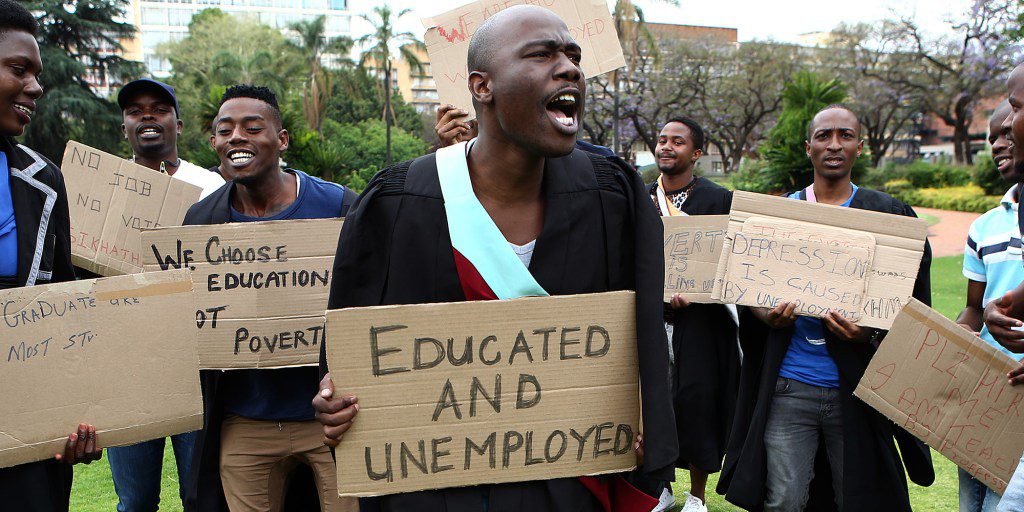
Unemployment: Nigerians shock firm with flurry of applications, force closure of vacancies

By Ishaka Mohamed

Edge Research Services Ltd has stopped accepting job applications just within 24 hours after advertising vacancies for data collectors across Nigeria.

The firm had called for applications on Thursday, January 2, 2025, and set January 20 as the deadline. However, an update by its LinkedIn handle in the early hours of January 4 declared the window closed after receiving over 2,000 applications.

Part of the statement reads: “WOW! We’re overwhelmed with gratitude! A huge thank you to everyone who commented, shared, and applied! We received over 2,000 applications in just 24 hours!”

After expressing gratitude and surprise, the firm stated its resolve to review only the applications received. “Due to this incredible response, we’re closing the job advert earlier than planned. Our recruitment team will now focus on reviewing applications and selecting the best fit…”

Edge Research Services Ltd, headquartered in Lagos and with a field office in Kano, Nigeria, is a data collection, research, and evaluation firm that offers qualitative and quantitative research services in sub-Saharan Africa.

It’s noteworthy that this is not the first time Nigerians’ interest in jobs has shocked an employer. A recent example was when the Nigerian National Petroleum Company Limited (NNPC Ltd) application portal glitched just a few hours after calling for applications. “Due to unprecedented traffic to the NNPC Ltd. career page from applicants applying for vacancies, the site is currently experiencing slow load times,” the company said in a statement.

Re: Sen. Bomai’s N20,000 empowerment

While scrolling through social media, I stumbled upon a rejoinder to my article published in Daily Trust on January 2, 2025, titled “N20,000 Empowerment: Senator Bomai, You Can Do Better.” The rejoinder, written by Abubakar MB Tamana from Potiskum, appeared on January 3, 2025, and sought to counter my assertions. Tamana argued, rather boldly and shamelessly, that the N20,000 distributed to constituents was not part of Senator Bomai’s empowerment program. Such a claim is misleading and lacks credibility, especially when viewed in light of Senator Bomai’s media team’s own statements. The team explicitly described the distribution as part of the senator’s efforts to empower 1,800 youths across APC branches in Yobe South, labeling it a commendable initiative aimed at addressing youth unemployment and supporting economic growth.

This statement from Senator Bomai’s media team is unequivocal, leaving no doubt that the N20,000 was indeed presented as part of his empowerment scheme. Yet, one cannot help but question the sincerity and effectiveness of such a gesture. Is a one-time distribution of N20,000 to jobless youths, most of whom are educated and have graduated from higher institutions, a genuine attempt at empowerment? This paltry sum barely scratches the surface of the socioeconomic challenges faced by the people of Yobe South. It is not enough to claim to be empowering the youth; the efforts must be meaningful and impactful enough to make a tangible impact on their lives. Unfortunately, Senator Bomai’s tokenistic approach falls woefully short of the mark.

The people of Yobe South are not ignorant of the opportunities available to their representatives through the Zonal Intervention Projects (ZIPs). These projects allow senators to allocate significant funds—often exceeding N600 million annually—for impactful programs such as skill acquisition training, provision of motorcycles, or other community-focused initiatives. Under President Tinubu’s administration, these allocations were even increased by 50%, further expanding the scope for developmental interventions. The glaring issue here is whether Senator Bomai has chosen to ignore these opportunities or simply lacks the vision and commitment to execute programs that would genuinely uplift his constituents. Since assuming office in 2019, Senator Bomai has yet to introduce a single substantial initiative that addresses the pressing needs of the people of Yobe South.

To put it bluntly, other senators have demonstrated what meaningful empowerment looks like. For instance, on January 3, Daily Trust reported that Senator Ahmed Ibrahim Lawan, the 9th President of the Senate, distributed N250,000 each to 400 small-scale business owners in Yobe North, totaling N100 million. This initiative was designed to revitalize the local economy and provide a sustainable foundation for small businesses to thrive. Similarly, just last week, Deputy Senate President Senator Barau Jibrin sponsored 70 students from Kano for postgraduate studies in India. This program not only supports education but also ensures that the beneficiaries acquire advanced skills that can contribute to national development. These are examples of impactful and far-reaching empowerment programs that go beyond mere handouts and focus on building capacity, creating opportunities, and fostering long-term growth.

Senator Bomai’s approach, on the other hand, leaves much to be desired. The distribution of N20,000 to jobless graduates and other struggling individuals is not empowerment; it is, at best, a temporary relief and, at worst, an insult to their intelligence and dignity. The youth of Yobe South deserve better than this tokenism. They need programs that address their specific challenges—be it through skill acquisition, job creation, entrepreneurship support, or educational sponsorships. There is an urgent need for the senator to prioritize the welfare of his constituents and leverage the resources at his disposal to implement impactful initiatives.

It is high time Senator Bomai opened his ears to the cries of his people and took decisive action to address their needs. The unemployment crisis among graduates, the lack of support for small-scale businesses, and the absence of sustainable economic opportunities in Yobe South demand immediate and meaningful intervention. The era of token gestures and empty rhetoric must come to an end. If Senator Bomai truly wishes to be remembered as a leader who cared for his people, he must rise to the occasion and deliver the kind of empowerment that makes a lasting difference in the lives of his constituents. Anything less would be a disservice to the people he claims to represent.

Kasim Isa Muhammad, an investigative journalist, wrote from Potiskum, Yobe State.