Month: January 2025

Tinubu turns down bill for Numan Federal University in Adamawa

By Abdullahi Mukhtar Algasgaini

President Bola Tinubu has declined to give assent to the bill establishing the Federal University of Education located in Numan, Adamawa State.

The President gave reasons for his decision in a letter addressed to the President of the Senate, Godswill Akpabio on Tuesday in Abuja.

Correspondent Kunle Ojo reports that in the letter which was read during plenary, President Tinubu said his decision stems from unresolved land discrepancies and constitutional issues regarding disposal rights.

Akpabio however assured that other minor concerns raised would be addressed in due course.

Students’ loan: BUK leads as NELFUND disburses over N20 billion

By Uzair Adam

The Nigerian Education Loan Fund (NELFUND) has disbursed loans worth over N20.07 billion to 192,906 students across public tertiary institutions in Nigeria, according to an announcement on the organization’s X (formerly Twitter) account.

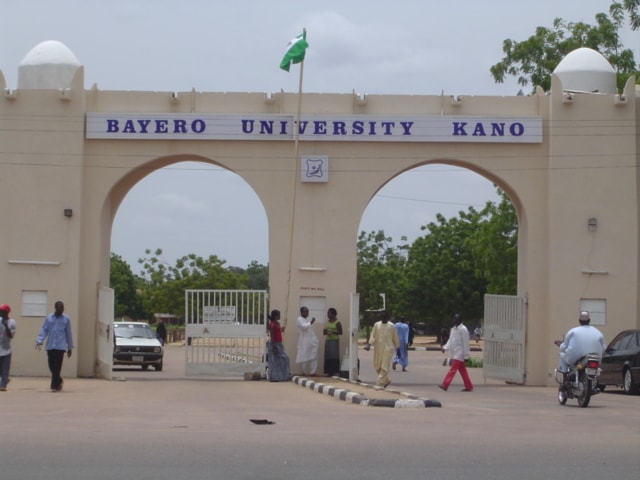
The latest disbursement, which reflects approvals made as of January 1, 2025, places Bayero University, Kano (BUK) at the top of the list, with 11,683 students set to receive a total of N1.3 billion.

The University of Maiduguri follows closely, where 12,198 students will share N1.27 billion. Other major beneficiaries include the University of Jos, with 6,988 students receiving N941 million, and the Federal University Dutsin-Ma, where 8,978 students are allocated N909 million.

At the University of Ibadan, 4,907 students will benefit from N746 million, while 5,451 students at the Federal University Dutse will receive N593 million.

Additionally, Usmanu Danfodiyo University, Sokoto, has 6,480 students who will share N578 million, and the University of Lagos will disburse N557 million to 3,685 students.

Smaller institutions also benefited, though to a lesser extent. For example, four students at Gombe State Polytechnic, Bajoga, are set to receive N122,000, and two students at Abia State Polytechnic will share N106,300.

Similarly, Nwafor Orizu College of Education, Nsugbe, has approved N214,116 for three students, while Kenule Benson Saro-Wiwa Polytechnic, Bori, will disburse N315,500 to seven students.

Other beneficiaries include Federal College of Education, Gidan Madi, where three students will receive N330,000, and Federal Polytechnic Ukana, Akwa Ibom, with 11 students sharing N518,500.

Federal Polytechnic Nekede, Imo State, has nine students allocated N368,400, while Alvan Ikoku Federal University of Education, Owerri, will distribute N528,500 among 12 students.

This disbursement is part of a broader initiative by NELFUND, which had earlier announced the allocation of N110 billion in student loans nationwide.

According to NELFUND’s Managing Director, Akintunde Sawyerr, these efforts are aimed at improving access to education for students in public institutions across the country.

Kano court dismisses claims of unlawful auction of property

By Uzair Adam

A Kano State High Court has dismissed allegations leveled by one Surajo Isa Yarima, who accused the court of illegally auctioning his property and rendering his family homeless.

In a statement released on Tuesday, the court’s Head of Public Relations, Baba Jibo Ibrahim, described the claims as baseless and an attempt to tarnish the court’s reputation.

The Daily Reality gathered that the controversy began after a Small Claims Magistrate Court, in December 2023, ruled against Yarima, ordering him to pay N355,000 to a plaintiff.

Following his failure to comply, the judgment creditor sought to recover the debt by attaching Yarima’s movable properties, which proved insufficient.

Subsequently, the creditor applied for the attachment and auction of Yarima’s immovable property, a process the High Court approved after adhering to due process.

“All actions taken by the court in this matter were in accordance with the law and principles of justice,” Baba Jibo said.

He added that Yarima was served hearing notices and given ample opportunity to challenge the application but failed to do so.

Claims that the auction left Yarima’s family homeless were also refuted.

“Investigations revealed that the property was rented to a tenant at the time of the sale, and his family was never evicted. The only item found in the house after the auction was a single mattress,” the statement clarified.

The court also addressed a petition by Yarima’s wife, who claimed ownership of the property. Her case was dismissed after it was determined that the sale agreements she presented did not pertain to the auctioned property.

The Chief Judge of Kano State launched an internal investigation, extending it to the property’s location and its neighborhood.

“Our findings unequivocally disproved the allegations. Yarima and his family resided in a neighboring house, and after the auction, he sold that house and renovated the auctioned property to mislead the public,” Baba Jibo stated.

The court warned that making false claims against public institutions is punishable under Section 140 of the Penal Code.

“It is disheartening that the judiciary, in the lawful execution of its duties, is subjected to such baseless attacks. Legal action will be taken where necessary,” Baba Jibo added.

He also urged media outlets to verify information before publication to prevent misinformation and protect the reputation of public institutions.

The High Court reiterated its commitment to justice and transparency in its proceedings.

CDS vows to take legal action against Reuters over false claims

By Abdullahi Mukhtar Algasgaini

The Chief of Defence Staff (CDS), General Christopher Musa, has disclosed plans by the Nigerian military to initiate legal action against Reuters over a report alleging the forced termination of 10,000 pregnancies during counter-insurgency operations in the North East.

The controversial report, published in late 2022, accused the Nigerian military of running a secret abortion program targeting women impregnated by insurgents.

However, a 2024 investigation by the National Human Rights Commission cleared the military of any wrongdoing.

Expressing his displeasure, General Musa criticized Reuters for failing to retract the report or issue an apology, noting that it had unfairly tarnished the reputation of Nigeria and its armed forces.

“After one and a half years of investigation, it was found that it was a complete lie. I was expecting Reuters to come in and apologize for it, but they did nothing. They did not even respond. After maligning the whole country, they have shown no accountability. I think it’s very important that Nigeria takes up this issue,” he said.

Musa revealed that discussions had been held with the Attorney General of the Federation regarding legal proceedings.

“I’ve discussed with the Attorney General, and I think it’s important that Nigeria addresses this. We will not allow anyone to demoralize our troops or malign the country,” he said.

He also suggested that such allegations often surface as part of a broader effort to undermine the military’s achievements in combating terrorism.

Brazil bans phones in schools, joining global trend

By Abdullahi Ibrahim

To enhance concentration and minimize disruptions in Brazilian classrooms, the use of mobile phones by elementary and secondary school students has been officially prohibited during school hours.

The new policy aims to enhance academic performance and encourage healthier social interactions among students.

Brazil joins a growing list of countries, including the Netherlands, France, and Italy, which have implemented similar measures to address concerns about the negative impact of mobile phone use on education.

Proponents of the ban argue that limiting phone use fosters a more engaging learning environment, while critics highlight potential challenges in enforcing the policy and addressing emergencies.

Education officials in Brazil have expressed optimism about the initiative, emphasizing its role in creating a more focused and collaborative atmosphere in classrooms.

The global trend reflects a broader debate on balancing technology’s benefits with its potential drawbacks in education.

Insecurity, damaged line worsen grid collapses – Minister

By Uzair Adam

The national electricity grid in Nigeria remains vulnerable to frequent collapses due to the government’s inability to repair a critical transmission line in the northern region, hindered by persistent insecurity.

Minister of Power, Adebayo Adelabu, disclosed this during the 2025 budget defense session with the Senate Joint Committee on Power.

Adelabu emphasized the consequences of the damaged Shiroro-Kaduna-Mando transmission line, which has been out of service since it was vandalized in October 2024.

“The Kaduna-Shiroro-Mando line was one of two major lines transmitting power to the north. The other line, Ugwuaji-Makurdi, was also vandalized but has since been repaired.

“However, the Shiroro-Mando-Kaduna line remains down due to security challenges,” Adelabu stated.

He highlighted that the reliance on a single transmission line has left the grid fragile and prone to collapse under strain.

Adelabu further noted that while the government cannot entirely prevent grid collapses, efforts are focused on minimizing their frequency and ensuring rapid restoration.

He acknowledged the collaboration with the Office of the National Security Adviser (NSA), led by Nuhu Ribadu, as crucial in combating vandalism, one of the sector’s most significant challenges.

The minister announced a proposed N2 trillion budget for the ministry and its agencies in 2025, with N229 billion allocated to the ministry itself.

He also unveiled a N700 billion allocation for the Power Metering Initiative (PMI), targeting the reduction of the metering gap by next month to enhance billing transparency and curb fraud.

“We are committed to reducing the restoration time after full or partial grid collapses and are working closely with security agencies to address the underlying issues,” Adelabu said.

In addition, the ministry plans to invest N36 billion in distributing transformers across the six geopolitical zones and has proposed the installation of solar lights and CCTV cameras on highways to monitor and deter vandals.

The security-focused proposal falls under a N200 billion sub-head in the 2025 budget.

The minister reaffirmed the government’s determination to secure critical infrastructure and improve power supply across the country.

Immigration reinvigorates border patrol over Lakurawa

By Anwar Usman

The Nigerian Immigration Service, Sokoto State Command, has reaffirmed its commitment to strengthening border security as part of its efforts to tackle the security problems posed by the emergence of the Lakurawa sect.

On Monday in Sokoto, the state Comptroller of the NIS, Mr Yusuf Bage, announced this during a courtesy visit from the leadership of the state Council of the Nigeria Union of Journalists.

Bage said the security problem posed by the Lakurawa sect is a new and evolving threat, especially in the state.

According to him, the Lakurawa sect members often enter the country through illegal routes.

”However, I want to assure the public that security agencies are ahead of them, and their activities will soon be curbed.”

He explained that one of the significant constitutional mandates of the NIS was to ensure effective border management, including oversight at airports and seaports.

To achieve this mandate, the NIS ensures proper identification of foreigners entering the country and closely monitors their movements and activities within communities.

He explains that the NIS had expanded its offices across the 23 local government areas to maintain visibility in all the state’s nooks and crannies.

He also highlighted the collaboration between the NIS, the Army, and other state security agencies to ensure the safety of citizens.

The comptroller also emphasized the importance of the media in supporting security efforts and pledged a mutual relationship between the NIS and journalists in the state.

The NUJ state Chairman, Mr Usman Binji, said the visit was to formally introduce the new leadership of the state council.

Binji reiterated the role of journalists in fostering collaboration with security agencies, stressing that the visit would reinvigorate the collaboration between the NIS and the NUJ to make Sokoto State safer.

He further stated that, “Our members are fully committed to supporting the security agencies in ensuring the safety of Nigeria’s territory.”

Scorecard: What ONSA, DSS, EFCC, others won, lost in 2024

By Haroon Aremu Abiodun

Despite the turbulence of 2024, Nigeria’s intelligence and anti-graft agencies recorded significant achievements. The Department of State Services (DSS), National Intelligence Agency (NIA), Office of the National Security Adviser (ONSA), and anti-corruption bodies like the Economic and Financial Crimes Commission (EFCC) and the Independent Corrupt Practices Commission (ICPC) made notable strides in combating corruption, safeguarding national security, and upholding the rule of law.

However, Emergency Digest reports that pressing challenges persist within these institutions, threatening sustained progress and credibility. This report delves into landmark achievements, systemic lapses, and broader implications for national security, highlighting the contributions of the NSA and other agencies such as the ICPC, DSS, and NIA.

EFCC: Wins Amid Controversies

Under Olukoyede’s leadership, the EFCC made impressive progress in tackling financial crimes. Notable accomplishments include a groundbreaking operation that led to the arrest of 792 individuals involved in cryptocurrency and romance scams in Lagos and the recovery of N230 billion and $105 million within a year. A major victory was the forfeiture of a sprawling Abuja estate valued at billions, reflecting the agency’s commitment to asset recovery.

Nevertheless, high-profile cases, like the delayed arrest of former Kogi State Governor Yahaya Bello and allegations of dropped charges against crossdresser Bobrisky in exchange for bribes, raised concerns about the EFCC’s integrity. Critics have also highlighted the agency’s inaction on prosecuting high-profile figures such as Humanitarian Affairs Minister Betta Edu, despite substantial evidence of corruption.

ICPC: Quiet but Impactful

The ICPC maintained a low profile but achieved commendable results, recovering N52 billion and $966,900 in misappropriated funds in a year. The commission exposed corruption in government contracts, cracked down on job racketeering, and raised concerns about misused funds in constituency projects.

Despite these successes, the ICPC struggles with transparency challenges, understaffing, and limited resources. Addressing these gaps is essential to sustain its fight against systemic corruption.

DSS: Vigilance Amid Criticism

The DSS maintained its critical role, thwarting terrorism plots, dismantling organised crime networks, and protecting vital national assets. However, the agency was criticized for alleged overreach, unlawful detentions, and a lack of transparency.

In a notable clash with the Socio-Economic Rights and Accountability Project (SERAP), the DSS faced backlash for questioning the group’s leaders after they criticized Nigeria’s human rights record. Similarly, unresolved issues surrounding Nnamdi Kanu’s case have cast a shadow over the DSS’s otherwise commendable efforts.

NIA: Expanding Reach, Addressing Gaps

The NIA expanded its global intelligence capabilities, collaborating on transnational crime and cyber threats. However, internal mismanagement and opacity remain significant concerns. With Mohammed Mohammed’s appointment as Director-General, there is hope for renewed efficiency and accountability.

ONSA: Orchestrating National Security

Under Malam Nuhu Ribadu’s leadership, the NSA made strides in combating terrorism and reuniting kidnapping victims with their families. However, controversial policies like the Cyber Security Levy faced opposition from stakeholders, highlighting the need for transparent communication.

To enhance its impact, the NSA must foster better relationships with the media and citizens, ensuring timely and accurate dissemination of information without compromising sensitive intelligence.

Recommendations for Progress

1. Strengthen Institutional Frameworks: Leverage technology and intelligence to prevent crime and enhance efficiency.

2. Enhance Public-Agency Relations: Foster trust through targeted awareness campaigns and transparent communication strategies.

3. Improve Leadership Accountability: Ensure transparent appointments and performance evaluations for agency heads.

4. Foster International Cooperation: Strengthen ties with global intelligence and financial institutions.

5. Address Root Causes: Combat unemployment and poverty to reduce criminal recruitment.

The collective efforts of Nigeria’s intelligence and anti-graft agencies in 2024 have established a solid foundation for a corruption-free society. From the EFCC’s groundbreaking operations to the ICPC’s meticulous investigations, these achievements underscore the potential for lasting change.

Nevertheless, tackling ongoing challenges, including transparency, resource limitations, and inter-agency coordination is essential. A collaborative approach—reinforcing institutions, enhancing public trust, and promoting integrity—will secure a more stable and prosperous Nigeria.

Haroon Aremu Abiodun is a Public Affairs Analyst, Advocate for National Development and Fellow of PRNigeria. He can be reached at exponentumera@gmail.com.

CDS exposes bandits’ new strategy of recruiting more fighters

By Abdullahi Mukhtar AlgasgainiThe chief of defencce staff general, Christopher Musa, stated that currently, the bandits, who no longer have any town under their control, have devised a new strategy for recruiting fighters.

He explained that in the past, they would raid villages to force men, whether willing or not, to take up arms and join them, threatening to kill them if they refused.

However, during an interview on Arise Television, he said they no longer have that option.

He further explained that the new tactic the bandits are using involves getting women pregnant repeatedly, using the children born as fighters.

According to him, once a woman gets pregnant and gives birth, within four months, the bandits would return to the woman to impregnate her again.

Some bandits, he added, who surrendered and handed over over 120,000 weapons, mostly small arms, had recruited children as fighters.

Kauran Gwandu: The architect of modern Kebbi State

By Jamilu Magaji Ambursa

Barely two years after a new political era emerged in Nigeria, Kebbi State has witnessed a remarkable transformation under Comrade Dr. Nasir Idris (Kauran Gwandu). His administration has focused on infrastructural development and prioritised groundbreaking educational reforms, social empowerment and security enhancements. These pivotal changes have redefined the landscape of Kebbi State, positioning it as a model for progressive governance in the country.

Dr. Nasir Idris was declared the winner of the 2023 Kebbi State gubernatorial election by the Independent National Electoral Commission (INEC) on April 17, 2023. Before becoming governor, Comrade Dr. Nasir Idris had a distinguished career as a teacher, unionist and politician. He served as the National President of the Nigerian Union of Teachers (NUT) and Deputy President of the Nigeria Labour Congress (NLC). As governor, Kauran Gwandu has focused on various development projects, including infrastructure development, education, healthcare, social empowerment, security and agriculture.

To start with, there is no gainsaying that one of the cornerstones of Kauran Gwandu’s administration has been the extensive focus on infrastructural development. For the first time, Birnin Kebbi has taken its shape as the State capital, witnessing massive unprecedented infrastructural reforms. Major investments have been made in road networks, healthcare facilities, and public utilities, significantly improving access and quality of life for residents.

Notable projects include rehabilitating key highways connecting rural and satellite communities to urban centres, facilitating trade and boosting local economies. Additionally, constructing a modern Motor Park and completing an ultra-modern secretariat would stimulate local economies and provide a conducive atmosphere and access to state-of-the-art facilities for civil servants.

Meanwhile, as a seasoned educationist and labour leader, Kauran Gwandu has recognized the critical role of education in driving sustainable development. His administration has focused on upgrading educational infrastructure, providing training for teachers, and ensuring that schools are equipped with modern learning resources. Steps have been taken to enhance access to quality education for girls and disadvantaged youth, thereby striving for inclusivity. These measures aim to cultivate a new generation of skilled individuals capable of contributing to Kebbi State’s development.

It is evident that the focus on educational reforms has not only boosted enrollment figures but has also significantly enhanced student performance across various educational levels. Kauran Gwandu’s commitment to education showcases his belief that an educated population is crucial for the socio-economic progress of Kebbi State.

The emphasis on training and re-training teachers, a new law raising the retirement age for educators from 60 to 65 years and extending the service limit from 35 to 40 years, along with the recruitment of 2000 new teachers and the awarding of contracts for the construction of four mega schools, underscores this commitment.

Furthermore, another unique aspect of Kauran Gwandu’s administration has been his ability to maintain a harmonious relationship with past governors of Kebbi State. This collaborative spirit has fostered an environment of continuity and shared vision for development. The Governor has been able to leverage the experiences and insights on the forebears while working towards achieving common goals that benefit the entire state. This collaborative governance model has helped streamline various developmental projects and create a unified front for the progress of Kebbi State.

To corroborate this, the Sultan of Sokoto, His Eminence, Alh. Sa’ad Abubakar III in his address at the maiden edition of Sheikh Abdullahi Fodio Public Lecture, disclosed that the Sultanate has conferred on Kauran Gwandu the title of Gwarzon Daular Usmaniyya (Knight of the Caliphate) based on recognition of merit, selfless service to humanity and clear demonstration of ability to considerably embraced unity of purpose, fairness, equity and transparency in governance as preached by Sheikh Abdullahi Fodio. The Sultan commended Kauran Gwandu for uniting with all his predecessors for the common interest of the state, involving religious and traditional leaders in governance through consultations, and operating an all-inclusive government.

In the area of social welfare, the administration has placed a strong emphasis on the welfare of Kebbi State citizens. The Governor has initiated various social programs aimed at improving living conditions, particularly for marginalized groups and vulnerable populations. Through microfinance initiatives, skills acquisition programs, and direct aid, many individuals have been empowered to pursue entrepreneurial ventures, thereby reducing poverty levels in the state. The commitment to social welfare reflects a holistic approach to governance, ensuring that economic opportunities are accessible to all.

The healthcare and agricultural sectors have also received the needed impulse. The administration provided medical treatment to patients with mental health problems and related illnesses, renovated general hospitals, and increased entitlements of doctors and nurses. The distribution of palliatives, fertilizers, and solar-powered water pumps to farmers to improve agricultural productivity is also afresh to all discerning individual in the State. These are indelible marks for Kebbi State in the last 18 months. 

In an era where security concerns pose significant challenges across Nigeria, Kauran Gwandu has prioritised the safety of Kebbi State residents. The Governor has taken proactive steps to address the security challenges in the state, particularly in the southern parts. His approach has been both curative and proactive, focusing on strengthening security measures and addressing the root causes of insecurity.

This administration has worked closely with security agencies to implement strategies that address crime and communal conflicts, fostering a safer environment in the State. The unprecedented support given to security agencies, enhanced policing initiatives, and regular security forums has heightened vigilance and encouraged public participation in maintaining peace and order. As a result, the state has seen a reduction in criminal activities, allowing citizens to go about their daily lives with greater peace of mind.

To conclude, let me reiterate that Kauran Gwandu’s transformative leadership has laid a solid foundation for the advancement of Kebbi State. As his administration continues to work towards building a better future for all, Kebbi State stands as a testament to the significant impact of dedicated and visionary governance.

Kauran Gwandu has demonstrated his inclusivity as a driver of a mass socio-political movement and architect of modern-day Kebbi State. He turned the state into an infrastructure development site and remodelled and redefined the political landscape. Therefore, it behoves every well-meaning citizen to support his administration in its determination to deliver democratic dividends to all in the State.

Jamilu Magaji, a public affairs analyst in Birnin Kebbi, can be reached via mjmagaji@gmail.com.