Month: November 2024

FG lifts ban, allows corps members to serve in banks, other private institutions

By Anwar Usman 

The Federal Government has lifted the ban that restricted the posting of members of the National Youth Service Corps to the public institutions, allowing for corps members to now be posted to private sector organisations, including banks and oil and gas companies. 

According to a memo released by the Minister for Youth Development, Ayodele Olawande, on November 18, 2024, the new policy directive will take effect with the commencement of the 2024 Batch ‘C’ Orientation exercise. 

The previous policy that was implemented during the former Minister for Youth and Sports Development, Bolaji Abdullahi, aimed at discouraging private companies from exploiting cheap labour while promoting public sector capacity building and restricted corps members to only four sectors of the economy, including education, agriculture, health, and infrastructure. 

The minister added that the new policy follows President Bola Tinubu’s strategy to tackle rising youth unemployment by ensuring that government agencies align with the vision of his administration, adding that the directive will initially take effect in Lagos and Abuja. 

“The new policy would also allow the corp members to gain valuable experience in their chosen fields of study, noting that the previous policy discouraged Nigerian youths from gaining experiences that would prepare them for the labour market. 

The memo further read in parts, “There is a serious need to review this policy to expand the opportunity and access for corps members to serve in places that are relevant to their areas of study. Without prejudice to the need to constantly review per prevailing realities, I now direct as follows: Lifting of all restrictions on postings.”

G20: President Tinubu endorses global coalition against hunger, poverty

By Abdullahi Mukhtar Algasgaini 

President Bola Tinubu has hailed the creation of the Global Alliance Against Hunger and Poverty, championed by President Luiz Inacio Lula da Silva of Brazil. 

Tinubu described the alliance as pivotal in the global fight against hunger and poverty. He made this statement on Monday at the 19th G20 Leaders Summit opening session in Rio de Janeiro, Brazil.  

He lauded the initiative and described it as the right step to address one of the world’s most significant challenges.  

“This bold and visionary step underscores Brazil’s leadership in addressing one of the most urgent and persistent challenges facing our world today.  

“The creation of this Alliance marks a significant milestone in our global efforts to eradicate hunger and poverty, and it also sends a powerful message of solidarity to vulnerable populations around the globe. 

“By fostering collaboration between governments, international organisations, and civil society, this initiative offers a comprehensive approach not only to addressing immediate needs but also tackling the structural causes of hunger and poverty,” he said. 

President Tinubu compared this global initiative to one of the eight priority areas he outlined at his inauguration 18 months ago, expressing Nigeria’s eagerness to adopt international best practices to advance its economic development. 

According to President Tinubu, Nigeria’s endorsement of the declaration of commitment to join the Global Alliance is a significant step in its efforts to address hunger and poverty by leveraging international cooperation and resources to bolster domestic strategies. 

He added that by supporting the initiative, Nigeria also demonstrates a solid commitment to realising the Sustainable Development Goals (SDGs), particularly SDG 1, which focuses on eradicating poverty, and SDG 2, which aims to achieve zero hunger. 

“These goals are at the core of Nigeria’s development agenda, and the Alliance offers a platform to accelerate progress towards them.  

“By collaborating with international partners, Nigeria aims to leverage best practices, innovative solutions, and financial support to enhance its efforts to combat poverty and hunger. The endorsement reinforces Nigeria’s role as a key player in global efforts to promote sustainable development and improve the quality of life for all its citizens,” President Tinubu said.

Prof. Oloyede retires, leaving a lasting impact on higher education

By Ahmed Rufa’i Shehu

Although unprepared for this, I am excited to celebrate a renowned educational and religious scholar, Professor Ishaq Oloyede (JAMB Registrar), for his successful retirement from the University of Ilorin. 

Prof. Oyedele has left the famous University of Ilorin after spending meritorious years as a lecturer. This led to his appointment as the Registrar of the Joint Admissions and Matriculation Board (JAMB). 

Prof. Oloyede is undoubtedly one of the people who made the University of Ilorin one of the best in Nigeria and Africa. The send-forth dinner was very colourfully organised.

Although Prof. Oyedele has retired from active university teaching, he still contributes his quota to the tertiary education sector. The ancient city of Ilorin was alive with celebrations for Prof. Oloyede.

One need not mention the innovations he has brought to the conduct of the JAMB examination and the running of the board’s affairs, including the welfare of the staff. It’s a blessing to have him as a boss. His unwavering support for his staff will not be overemphasised. Therefore, for me, the University of Ilorin should grieve after losing this astute Scholar. 

It took me eight years to understand his policies despite my beliefs and doubts, but I have concluded that Professor Ishaq Oloyede means Discipline and Integrity.

Happy Birthday and Happy Retirement, Sir

Nigeria signs agreement with India to curb customs-related offences

By Sabiu Abdullahi 

The Nigeria Customs Service (NCS) signed a Customs Mutual Administrative Agreement (CMAA) with India on November 16, 2023.  

This move, negotiated since 2016, aims to enhance collaboration between customs administrations, streamline border clearance processes, and curb customs-related offences. 

Comptroller-General of Customs Adewale Adeniyi, representing the NCS at the signing ceremony at the Ministry of Foreign Affairs in Abuja, noted the agreement’s benefits.

He said, “The agreement is expected to enhance collaboration between customs administrations, streamline border clearance processes, and curb customs-related offences.

“By facilitating the swift clearance of goods and reducing trade costs, the CMAA is set to bolster cross-border trade development and improve the enforcement of customs laws.”

Nigeria Customs Service, NAFDAC form strategic alliance

By Sabiu Abdullahi 

The Nigeria Customs Service (NCS) and the National Agency for Food and Drug Administration and Control (NAFDAC) have sealed a landmark partnership, following signing a Memorandum of Understanding (MoU) to fortify Nigeria’s public health and national security.

This historic agreement aims to intensify collaboration in combating illicit pharmaceutical products and harmful substances. 

Comptroller-General of Customs Bashir Adewale Adeniyi hailed the partnership as the culmination of dedicated dialogue and coordination.

“What we have seen today is a culmination of efforts for several months—I must say, years—of regular consultation between the two of us. This partnership is a response to a major scourge we are facing in the country.” 

NAFDAC Director-General Professor Moji Adeyeye noted that, “It is important because of you and me. We consume at least two of our regulated products every day—food and healthcare items.”

She also stressed the importance of ensuring safety and quality in food, drugs, and healthcare products, adding that there are threats posed by unregulated products to national security.

“We have ghost companies that are not on our lists. This MoU marks the beginning of the end of such practices.” 

Ulama Forum rejects proposed tax reform bills 

By Uzair Adam 

The Ulama Forum in Nigeria has expressed strong opposition to the proposed Nigeria Tax Bill (NTB) 2024 and Nigeria Tax Administration Bill (NTAB) 2024, currently before the National Assembly. 

In a joint statement signed by its Convener, Aminu Inuwa Muhammad, and Secretary, Engr. Basheer Adamu Aliyu, on Monday, the forum raised concerns about the bill’s implications on equity, federalism, and economic fairness.  

The statement criticized the bills for transferring the largest share of Value Added Tax (VAT) revenue from consumption or generation areas to states hosting production entities’ headquarters. 

“VAT is a consumption tax. Transferring its revenue from the areas where it is generated to the locations of head offices undermines fiscal equalization, widens income disparity, and risks social disharmony,” the forum said.  

The forum also noted that the bills threaten the survival of critical agencies such as TETFUND, NITDA, and NASENI by proposing a gradual reduction in their funding through the Development Levy. 

“Phasing out these agencies will jeopardize infrastructure, research, and capacity-building efforts in our tertiary institutions, leaving students to bear exorbitant tuition fees under an ill-conceived student loan scheme,” the statement warned.  

The forum accused the government of rushing the bills without sufficient public scrutiny, alleging that they align with a long-term reform agenda by international financial institutions such as the World Bank and IMF. 

“There is room to suspect that these bills are part of the World Bank’s 10 to 15-year reform agenda, threatening our sovereign independence,” the forum alleged.  

To address these issues, the Ulama Forum urged the National Economic Council and State Governors to intervene and demand a thorough review. 

“The concerns of state governors and other stakeholders must be addressed to give these bills credibility and avoid perceptions of external imposition,” it added.  

The forum recommended that the bills be subjected to extensive public debate and expert analysis to ensure they align with Nigeria’s federal structure and national interest. 

It called on members of the National Assembly to act in the best interests of their constituencies and resist any pressure to pass the bills in their current form.  

“We urge public-spirited individuals and organizations to rise against this threat to fair and even development. The VAT-sharing formula and the proposed bills strike at the heart of federal constitutionalism,” the forum concluded.  

The Ulama Forum emphasized the need for justice and fairness, calling for the bill’s withdrawal to allow for broader discourse and a national consensus.

Hausa community in Russia forms caretaker leadership

By Abdullahi Muhammad 

The Hausa Community Organization, Al-Ummar Hausawa Mazauna Rasha, appointed caretaker leaders to oversee operations. New officials include Abubakar Abdullahi Musa as Public Relations Officer (PRO), Aminu Taura as president, and Ahmad Garba Yakubu as vice president.

Founded in 2023 by Arewa youth, the organization fosters unity and collaboration among Hausa people in Russia. It supports students, professionals, and workers by providing a platform for their interests and promoting cultural and social engagement.

Last week, the community held its second online meeting with Hausa participants from various regions of Russia. The agenda focused on selecting interim leaders to guide the organisation during its formation.

Following discussions, nominees for key positions were identified, and messages were sent to confirm appointments. The caretaker team is expected to oversee the organization’s structure, engage members, and outline objectives that align with community goals.

Speaking on his nomination, Abubakar Abdullahi Musa expressed gratitude and commitment to serving the Hausa community in Russia. He noted that the organisation represents an opportunity to strengthen bonds among Hausa individuals and provide solutions to challenges members face in a foreign land.

The Hausa Community Organization in Russia anticipates continuous progress under its newly established leadership. It aims to strengthen the sense of belonging and solidarity among its members.

Tinubu travels to Brazil for G20 summit

By Anwar Usman

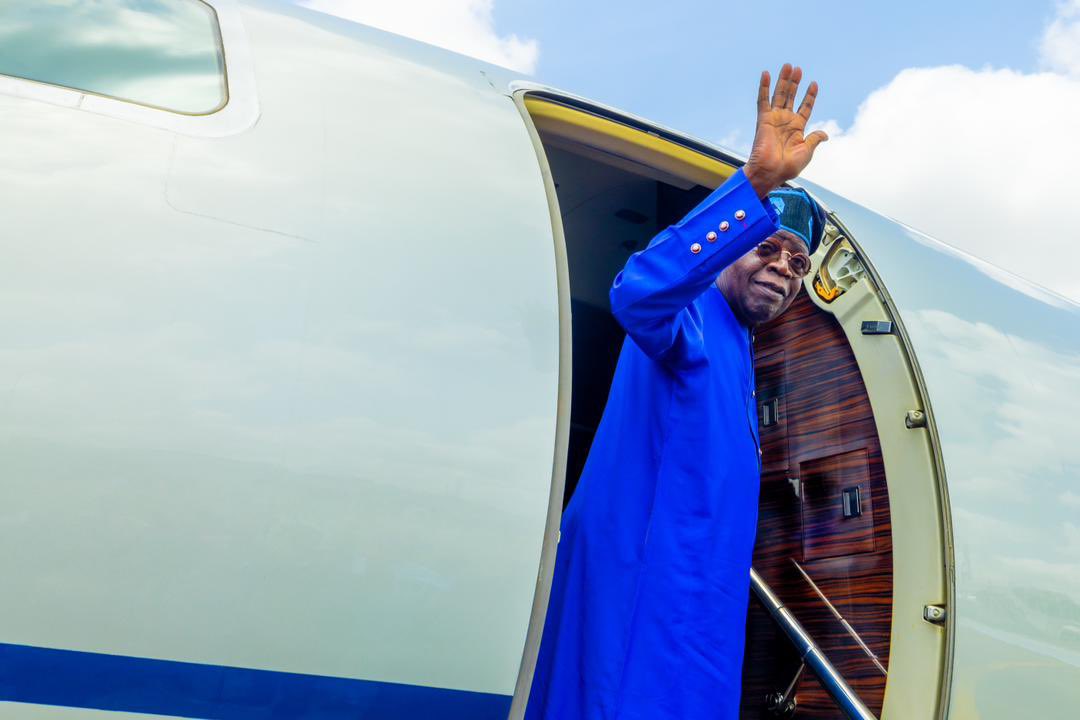
President Bola Tinubu has landed in Rio de Janeiro, Brazil, to attend the 19th Heads of State and Government Summit of the Group of 20 (G20).

The President, who arrived on Sunday at 11.03 p.m. local time (Monday 3. 03 a.m. Nigerian time), was received by Amb. Breno Costa in the Ministry of External Relations of Brazil.

The president was joined by Yusuf Tuggar, the Minister of Foreign Affairs; Idi Mukhtar Maiha, the Minister of Livestock Development; and Hannatu Musawa, the Minister of Art, Tourism, Culture, and Creativity.

Others are the Minister of State for Agriculture and Food Security, Dr Aliyu Sabi Abdullahi, and the Director General of the National Intelligence Agency, Amb. Mohammed Mohammed.

The president is also expected to hold bilateral meetings on the sidelines of the summit on advancing Nigeria’s socio-economic reforms.

Brazil’s president, Lula da Silva, is hosting the 2024 G20 summit. He has held the group’s rotating presidency since December 21, 2023, and his tenure ends on November 30.

The summit, themed: “Building a Just World and a Sustainable Planet,” will focus on three areas of sustainable development – economic, social, and environmental – and the reform of global governance.

It will also highlight the rising global temperatures and the principles of the digital economy, among other themes.

The Brazilian presidency will also discuss, as a priority, the Israel–Hamas war and the rising bloc confrontation between the United States and China.

NAN reports that the conclusion of the work carried out by the country holding the G20 rotating presidency is usually presented at the annual summit.

It is when heads of state and government approve the agreements negotiated throughout the year and point out ways of dealing with global challenges.

Regarding the summit theme, Da Silva declared a three-point agenda of combating hunger, poverty, and inequality at the summit, scheduled for November 18 to November 19.

Tinubu is attending the 2024 G20 summit, to which the organisers invited representatives of the African Union and the European Union.

The Brazilian Ambassador to Nigeria, Carlos Areias, invited Da Silva to Tinubu to attend the 2024 G20 summit on Aug. 29, when he presented his Letter of Credence to him.

Areias had said Da Silva was looking forward to welcoming Tinubu to the G20 Leaders’ Summit, saying that food security was the main proposal of the Brazilian presidency at the G20 to eliminate extreme poverty by 2030.

JAMB begins process to accredit CBT centres for 2025 UTME

By Uzair Adam 

The Joint Admissions and Matriculation Board (JAMB) has initiated the accreditation of Computer-Based Test (CBT) centres in preparation for the 2025 Unified Tertiary Matriculation Examination (UTME). 

JAMB’s Public Communication Adviser, Dr Fabian Benjamin, announced the commencement of the accreditation exercise in a statement on Sunday, emphasizing its importance in ensuring a smooth examination process.

The statement urged new CBT centres interested in participating in the 2025 UTME to review the requirements provided on JAMB’s official website. 

According to the statement, prospective centres must be able to familiarize themselves with the outlined standards by visiting the JAMB portal and submitting a formal notification of interest to the Registrar through the respective Zonal Director or State Coordinator.

Established centres that were accredited for the 2024 UTME and operated without issues are required to register their interest via the Centre Management System (CMS) Portal. 

For new centres, JAMB’s Zonal and State Offices will assist in creating accounts on the CMS Portal to facilitate their registration. 

“All centres must complete the mandatory Autobot/Autotest on a date to be announced as part of their preparation for the physical accreditation visit by the Board’s team,” the statement noted.

Dr Benjamin highlighted that only centres that successfully pass the Autobot/Autotest and meet JAMB’s stipulated standards would proceed to the next stage of the accreditation process. 

The physical accreditation exercise is set to commence in December 2024, with notifications sent only to qualifying centres.

JAMB reiterated that centres failing to meet the required standards during the Autobot/Autotest will not be considered for inclusion in the 2025 UTME registration and examination.

Cultural diversity and its benefits in Nigerian education

By Waliyat Ayomide Oseni

In an era increasingly defined by globalisation and interconnectedness, cultural diversity has become pivotal in shaping educational frameworks worldwide. In Nigeria, a nation rich in ethnic plurality and cultural heritage, cultural diversity within educational institutions assumes strategic importance.

Cultural diversity refers to various cultural, ethnic, and social backgrounds represented within a community. Nigeria is often called a “melting pot” due to its numerous ethnic groups, languages, customs, and traditions. This diversity can enrich the educational experience, providing students with a broader worldview and enhancing their understanding of global issues. 

Nigeria is a diverse country with over 250 ethnic groups and more than 400 languages spoken, reflecting a rich cultural tapestry. This diversity is fundamental to Nigerian society and contributes to its vibrancy and uniqueness. Ethnic groups such as the Hausa-Fulani, Yoruba, and Igbo, among others, each bring their traditions, languages, and customs, creating a mosaic of cultures across the nation. 

Religious diversity is also prominent, with Islam, Christianity, and traditional African religions coexisting harmoniously. This cultural richness is celebrated through various festivals, ceremonies, and events, showcasing the country’s diverse heritage and promoting unity among its people.

One of the most significant benefits of cultural diversity in Nigerian educational institutions is promoting critical thinking and problem-solving skills. Diverse classrooms encourage students to engage with differing viewpoints, challengepreconceived notions, and foster respect for others’ beliefs and practices. This exposure sharpens analytical skills andcultivates empathy and social awareness, which are crucial for functioning in a diverse society and workplace. 

Diversity also fuels creativity and innovation in the learning process. When students are encouraged to collaborate across cultural boundaries, they combine unique experiences and ideas, leading to imaginative solutions to complex challenges. 

For instance, blending cultural perspectives in group projects can enhance creativity and result in more comprehensive and multifaceted outcomes. Educational leaders who emphasise collaboration among students from diverse backgrounds can harness this potential, creating an environment that nurtures innovative thinking.

In addition, extracurricular activities such as cultural festivals, language clubs, and international exchange programs can enrich students’ learning experiences and promote cultural appreciation. These initiatives foster community and belonging while encouraging students to celebrate their unique identities.

In conclusion, cultural diversity within Nigerian educational institutions offers many benefits, including enriched learning experiences, enhanced critical thinking, and improved interpersonal skills. Educators play a vital role in embracing this diversity and fostering an inclusive environment where every student can thrive. As Nigeria continues to navigate its identity within a global landscape, prioritising cultural diversity in education will undoubtedly enrich the learning experiences of future generations and contribute to the nation’s development.

Waliyat Ayomide Oseni wrote from the Department of Mass Communications, Bayero University, Kano.