Month: November 2024

Mai Martaba unveils new era for Hausa film industry – Expert

By Anas Abbas

Joseph Dame Ali, a lecturer in the Department of Theatre and Performing Arts at Bayero University, Kano, described the unique characteristics of Kannywood films, particularly emphasising the cultural significance and narrative depth of the Hausa movie Mai Martaba, directed by Prince Daniel Aboki.

Mr Ali made this known today during a paper presentation at the Kano Indigenous Languages of Africa Film and Festival ( KILAF ) conference at Bayero University, Kano.

The academic described Kannywood’s cinematic offerings as often predictable, yet he highlighted “Mai Martaba” as a notable exception.

He praised the film’s intricate storytelling, stating, “If you missed a second, you missed a lot.” The film’s vibrant portrayal of local culture is further viewed by its authentic costume, makeup, and props, which reflect a pre-Western colonial-era aesthetic.

The movie’s director, Prince Daniel Aboki, who is also a journalist, has chosen to cast largely unknown actors, allowing fresh talent to shine while keeping the audience engaged with a narrative-driven approach.

Ali emphasized that “the film relies heavily on narration, showcasing a storytelling style that resonates with viewers”.

Through his work on Mai Martaba, Aboki has established himself as a Kannywood actor, contributing significantly to the evolving landscape of Hausa cinema.

Nigeria has also selected the award-winning film as its official submission for the Best International Feature Film (IIF) category at the 97th Academy Awards, also known as the Oscars.

Kaduna Refinery will start operations in December 2024 – MD

By Abdullahi Mukhtar Algasgaini

The Managing Director of the Kaduna Refining and Petrochemical Company (KRPC), Dr. Mustafa Sugungun, has said that the ongoing Quick Fix Project for the Kaduna refinery is scheduled to be completed by the end of 2024.

 Recall that the Nigerian National Petroleum Company Limited (NNPCL) awarded a $741m contract to South Korea’s Daewoo Engineering & Construction to rehabilitate the Kaduna Refinery.

Under the quick-fix repair contract, the firm will restore production at the 110,000 barrels-a-day facility to at least 60 per cent of its capacity by the end of 2024.

Speaking during the commissioning ceremony of the renovated Rido Community Primary School and a solar-powered borehole in Maraban Rido, Kaduna State, as part of its Corporate Social Responsibility (CSR) initiatives, he emphasised the company’s commitment to improving the living standards of its host communities.

 The MD, who was represented by the Manager of Operations, Mr. Emmanuel Ajiboye, noted that the success of the Quick Fix Project will bring immense economic benefits and job opportunities, boost petty trading, and foster other local businesses.

He said the school renovation aims to provide a conducive learning environment for pupils and teachers, while the borehole is expected to address water scarcity in the community and reaffirm KRPC’s dedication to sustainable development through initiatives like youth empowerment, rural electrification, periodic medical outreach, and other community-focused programs.

He urged the Rido community to support the Quick Fix Project, noting that its success would further strengthen the relationship between KRPC and its host communities.

In her remarks, the Head Teacher of Rido Primary School, Mrs. Rachael Aduwak, commended KRPC for the good gesture. 

She also appealed to the company to construct a perimeter fence for the school, adding, “We appeal to KRPC to furnish our classes with tables, chairs, and chalkboard as most of our students are sitting on bare floors during class hours.”

Bandits attack foiled in Katsina, 14 rescued

By Uzair Adam

Katsina State police operatives successfully thwarted a kidnapping attempt by bandits on Sunday evening, rescuing 14 individuals and neutralizing one attacker.

The incident occurred at approximately 7:55 PM in Dan’arau village, located in the Magama-Jibia area of Jibia Local Government Area.

Armed bandits, wielding dangerous weapons, ambushed two commercial vehicles, aiming to kidnap the passengers.

Responding swiftly to a distress call, police officers engaged the bandits in a fierce gun battle.

The timely intervention led to the rescue of 14 hostages, while one of the assailants was fatally wounded.

Unfortunately, two victims sustained gunshot injuries during the confrontation.

They were immediately rushed to a nearby hospital for medical attention, but one succumbed to their injuries.

The state police command has commended the bravery of its officers and urged the public to remain vigilant and report any suspicious activity to the authorities.

NAF kills several terrorists in Lake Chad

By Anwar Usman

Operation Hadinkai of the Nigerian Air Force has destroyed a terrorists’ food depot and killed several insurgents during bombardment on their enclave at Jubillaram in the Tumbuns area of the Lake Chad Basin.

This was contained in a statement released by the Director of Public Relations and Information of the Nigerian Air Force, Air Commodore Olusola Akinboyewa, on Monday in Abuja.

Akinboyewa stated that NAF aircraft operated on 23 November at a strategic location identified through meticulous intelligence efforts.

The location was described as a critical food storage site and a holy place for terrorist commanders and fighters.

He added that intelligence had linked the terrorists in the area to recent attacks, including an assault on troops in Kareto on 16 November.

NAN reports that it was in response that NAF fighter jets launched a robust air interdiction mission, destroying identified structures used as storage facilities and neutralising terrorists on-site.

He further explained that the victory was facilitated by extensive Intelligence, Surveillance, and Reconnaissance missions conducted over several days, which confirmed the presence of terrorist structures camouflaged under dense vegetation.

“The destruction of the terrorist enclave, including food storage facilities, has severely disrupted their logistical operations, while the neutralisation of a significant number of fighters has diminished their capacity to launch future attacks,” Akinboyewa explained.

He further emphasised that the mission demonstrated the NAF’s unwavering commitment to safeguarding the nation and its people independently and in support of ground forces in counterterrorism operations.

He reiterated the NAF’s resolve to sustain robust independent and joint operations until all enemies of Nigeria’s prosperity and well-being are brought to justice.

A life well lived: Celebrating Alhaji Lalo’s century of love and legacy 

By Hafsat Lalo

“I might have just seen my father for the last time,” was the message I sent to my husband on WhatsApp as I sat in the car that was to take my niece, Fatima and me to Kano a day before I travelled to Japan. My husband responded, “Why, nobody knows; life is not in our hands.” I told him that Baba was very old, though he was very strong, and I wouldn’t be surprised if he lived another year. We both prayed for him, leaving the conversation there. 

Earlier that morning, I went into Baba’s room to say goodbye. As I entered, I was met with the familiar scent of the room, his unmistakable charisma and the aura that has always surrounded him. I could have sensed his presence even if he were not in that room. 

Baba was sitting on the couch wearing a brown jallabiya, having just performed his Fajr prayer. I greeted him; his calm demeanour contrasted with the wave of emotions inside me. He asked, “Kin fito?” (Are you ready to leave?). I nodded. After a brief silence, I said, “Baba, ka yafe min” (Father, please forgive me). Another silence followed, and both of us were lost in our thoughts. I thought about how this might be the last time I saw him. I don’t know what he was thinking, but I am sure he understood what I was implying. 

He asked, “A yafe miki?” (Should I forgive you?). I replied affirmatively, almost crying at this point. He said, “Toh Na yafe miki, ki je ki rike karatun Qur’ani da sallah a kan lokaci”. Those were his exact words.

It was no coincidence that he had given me a prayer mat (darduma) as a gift two days earlier. He mentioned he was planning to give me a prayer mat and a Qur’an. He handed me the prayer mat and gave me N2500 to buy the Qur’an, explaining that he had asked for the price and intended to buy it himself but hadn’t had the chance to stop on his way home. It took him a while to locate the money from his pocket. So I told him to leave it since I had money, but he insisted.

At the time, I didn’t fully grasp the significance of the prayer mat and the promise of a Qur’an. They seemed like Baba being Baba – I had received similar gifts from him before. In 2019, my younger sister brought me a prayer mat and Riyadussalihin, which Baba had asked her to give me. I gave out the prayer mat when I was getting married, but I still have the Riyadussalihin. It wasn’t until the day he died, as I was about to pray Asr that I noticed the prayer mat I was about to use was the very one he had given me. The realisation hit me very hard, and I again broke down in tears, sitting there and thinking about that one last encounter. I began to reflect deeply on their meaning. I realised they were no ordinary gifts—they were symbols of his life, the values he held dear, and a message to keep faith at the centre of my life, no matter how far I am from home.

Baba’s love for the Qur’an was unwavering throughout his life. Even as recently as five years ago, he remained a student of the Qur’an despite his age. He would stop at the market with my elder brother to learn the Qur’an. He also had teachers who came to the house in the evenings to teach him. His relentless pursuit of knowledge, even in his later years, was a testament to his humility and passion for learning.

Baba ensured that we all had access to (Western) education, something he was not privileged to have. I remember how he would often call and ask me to translate the news on TV for him. While I was doing it, I would see him looking at me with the pride of a father who was able to give his daughter what he couldn’t have.

As I was overwhelmed by these thoughts, I couldn’t help but think back to the day Baba passed away—a day that started like any other but carried an inexplicable heaviness. I had woken up unusually sad after seeing a picture of Baba at the hospital at around 2:30 am. I couldn’t go back to sleep after. The morning came, but I had no appetite and was in a foul mood. I couldn’t eat.

The hours dragged on, clouded by unease, until that message from Ahmad came: ‘Baba ya rasu.’ When I read it, time seemed to stop, and my body went numb. It wasn’t just the news of Baba’s death; It was the fact that the message brought back the pain of losing my mom. It felt as though I had lost both of my parents all over again, and I cried for the two people who brought me into this world and shaped who I am. 

Baba, your death has torn me apart, and the fact that I wasn’t there with you in your final moments will haunt me forever. But I promise to hold on to your final gifts; no matter where life takes me, I will hold on to them. Being your daughter is the second most incredible honour of my life. Thank you for leaving us a good name and a legacy of integrity, Baban Umma. May Allah grant you eternal rest, forgive your shortcomings and grant you the highest rank in Jannah. 

He left behind a remarkable family: six wives, three of whom are deceased, 50 children (nine of whom are deceased), 116 grandchildren, and 55 great-grandchildren.

Hafsat Lalo wrote from Japan via hafsahlalo@gmail.com.

Dangote refinery cuts petrol price to ease marketers’ burden

By Uzair Adam

The Dangote Petroleum Refinery has announced a reduction in its ex-depot price for Premium Motor Spirit (PMS), commonly known as petrol.

Effective immediately, oil marketers will now purchase petrol from the refinery at a reduced rate of ₦970 per liter.

Anthony Chiejina, the company’s Chief Branding and Communications Officer, confirmed the price reduction in a recent statement.

He attributed the decision to the refinery’s commitment to supporting Nigerians and expressed gratitude for the ongoing support in making the refinery a reality.

The new price represents a significant decrease from the previous ex-depot price of ₦990 per liter, which was announced earlier this month.

The refinery reiterated its dedication to providing high-quality, environmentally friendly fuels while also addressing the nation’s fuel supply needs.

This price reduction is expected to have a positive impact on the retail price of petrol, potentially leading to further relief for consumers at the pump.

The refinery’s commitment to supporting the Nigerian market is evident in this move, as it strives to contribute to a more stable and affordable fuel supply.

Borno police recover 8 unexploded devices, reassure public of safety

By Uzair Adam 

The Borno State Police Command has successfully recovered eight unexploded devices from the Dala and Gwange areas of Maiduguri, the state capital. 

This discovery was made on Friday following distress calls about unidentified objects suspected to be explosive ordnance.

According to ASP Grace Michael, the command’s Deputy Public Relations Officer, the police received a distress call about unidentified objects clustered near an uncompleted building in the Dala-Abuja Talakawa Area, Maiduguri. 

The police swiftly moved to the scene and recovered six projectiles and one unexploded mortar bomb.

Later that day, the police received another distress call from the Gwange Area about an unidentified object washed ashore on the Gwange river bank. 

The police quickly recovered one unexploded Hand Grenade (UXO).

Preliminary investigations revealed that the ordnance was washed ashore due to the recent devastating flood incident in the state. 

The Borno State Commissioner of Police, CP Yusufu Lawal, reassured residents of the command’s commitment to ensuring public safety and security.

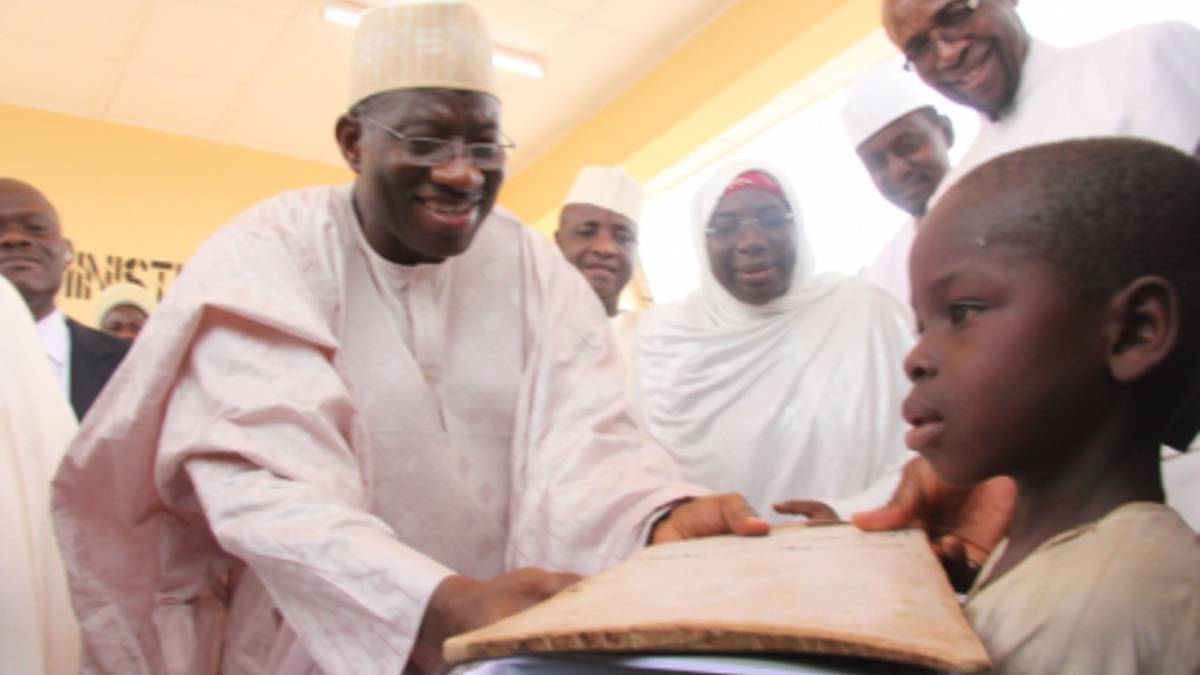
The challenges of integrating Almajiri traditional schools into mainstream education

By AbdulMajid Haruna

Several policies on education span across four decades, and yet Nigeria is still grappling with the menace of out-of-school children. Recent statistics from UNESCO projected a figure hovering around twenty million, with a significant portion of the children being the Almajiri Quranic students. 

Issues such as inconsistent government policies, poor implementation, inadequate funding, and limitations in terms of the scalability and scope of interventions provided by non-state partners and international donors have hindered efforts to address the problem. However, cultural and religious resistance remains a significant barrier.  

The classical system of Quranic Almajiri education imbibes Islamic teaching that every Muslim must acquire religious knowledge. However, culturally, the system aims to instill self-reliance and a sense of responsibility in the social and moral training of the child through hardship, toil, and hunger.

Sufism, the doctrine on which the system was founded, frowns at self-indulgence and believes asceticism and humility to be the hallmarks of a seeker of knowledge. This sentiment was echoed in the Weekend Triumph Newspaper of August 26, 1989, by Abdulkareem A. Bello, who describes the system as “the old wine in an old bottle”. 

In this article, Samaila Ado, an Almajiri in the Kano municipality, was reported to have said, “Our deplorable and wretched condition is a symbol of selflessness and humility.” According to Samaila, a true Almajiri is not concerned with worldly gains but rather is busy preparing for eternal life, which is more paramount.

Historically, the system had flourished owing to the support from the state’s public finances, the local community, and the philanthropic efforts from elites that catered to the modest needs of the children. During this time, the Almajiri scholars were artisans who, during their lecture-free hours, engaged in farming, fishing, well construction, production, masonry, trade, and tailoring. Most were farmers of the iconic Northern Nigerian cotton and groundnut pyramids. Some engaged in leather tanning and shoe and bag making in the old Sokoto empire. 

Sadly, however, the system has failed to adapt to the realities of the twenty-first century, with the modern Quranic Islamiyyas overshadowing the traditional Tsangayas and the Western secular education providing the safest route to climb up the socio-economic ladder. But more worrisome is the report that said six out of ten Almajiri pupils never find their way back home, and many lose their lives through street violence, ritual killing, kidnapping, disease and hunger.

Over the years, Integration has proven difficult due to the inadequacy of our policies. A careful analysis of the failure of Jonathan’s Almajiri integrated Model Schools by the Former Director of the Universal Basic Education Commission, Professor Ahmed Modibbo Mohammed, at Arewa House In Kaduna revealed that the lack of sensitisation and mobilisation of the nation affected the level of buy-in leading to a decrease in support and acceptance of the new system.  

Qualitative assessment research corroborated this analysis, carried out among Almajiri communities in Adamawa State. It demonstrated that including secular subjects was one of the major reasons parents did not welcome the program. 

Time and again, our policymakers have underplayed the subtle but widespread sentiment among the Islamic traditionalists who fear the new order poses the danger of erasing the cultural identity of the people. In a 2021 report published by The Resource Centre for Human Rights and Civic Education (CHRICED), Sheikh Bakura Assusaawi was remarked to have said: “Every Islamic scholar had gone through the system which shows us that there is indeed a great benefit in that system which we cannot afford to lose. There is no other help apart from helping the religion, and when we all neglect to do that, there is never a way forward.”

This allegiance to the old system and aversion towards Western education is rooted in the early events of the 20th century. On October 9, 1902, Fredrick John Lugard replaced Arabic & Hausa-Ajami (Hausa written with Arabic alphabets) with English & Romanized Hausa as the official language of Northern Nigeria. 

This single act in history changed the region’s educational scholarship trajectory. Not only did it render the rich knowledge produced in Ajami in the fields of humanity, science, and social science by the preeminent Sokoto caliphate obsolete and dying, but it relegated those proficient in this script to the background because to be “literate” and “employable” means to speak English and to write in the Roman script.

Tragically, the British also failed to recognise the Almajiri schools and abolished their state funding, tagging them as mere religious schools. This linguistic displacement brewed an identity threat in the people’s social psyche, igniting disdain and antagonism for the new system introduced by the colonial state and the Christian missionaries. 

Unfortunately, a century gap is still not enough to change the thought patterns of the Almajiri community. A recent story shared by a Twitter user about his late colleague’s son aptly drives home my point: 

The colleague had died, and the possibility of sponsoring the child’s education was hanging in the balance because the grandmother was standing in the way. She wanted the son to be enrolled in an Almajiri Quranic school instead of a secular Western school. 

The Twitter user was baffled because the grandma wouldn’t budge even when it was suggested that the child attend a formal school on weekdays and the Almajiri school on the weekends.

Many juxtaposing factors remain underpinning enrolment in traditional Almajiri education, barring socio-religious commitments and an aversion to Western education. These include rural-urban migration in search of greener pastures, disbanded families due to divorce or the death of the breadwinner, poverty, irresponsible parenting, and bad governance. 

Integration begins by fixing the stated problems, but reorienting society to the limitations of this age-long conservative approach to Islamic scholarship takes precedence.  Ever since the pilot scheme of 1964 to modernise Islamic schooling in the Northern Nigerian government headed by Sir Ahmadu Bello that ran successfully for few years before coming to a halt after his assassination, subsequent education policies namely Universal Primary Education (1976), National Primary Education Commission (mid-1980s), Universal Basic Education Act(2004) and Ministerial Committee on Madrasa Education (2009) which led to the establishment of President Jonathan’s Almajiri Model Schools have suffered detrimental setbacks.

Policies are cathedrals in the grand scheme of things; reality is the quicksand sinking them to the bottom. The government and relevant stakeholders must develop the political will to implement policies to their very ends. Most importantly, they must engage in intensive enlightenment, mobilisation, and re-orientation of the populace through the mass media, town hall meetings, and active involvement of the traditional Ulamas and leaders. 

AbdulMajid Haruna is an education thought leader and an inclusive education advocate primarily focused on vulnerable Almajiri children. He can be reached via abdoulmajeed570@gmail.com.

Drama: Kwankwaso’s brother drags Gov Yusuf to court over land dispute

By Uzair Adam

A legal dispute has emerged involving Governor Abba Kabir Yusuf over a contentious land allocation in Kwankwasiyya City, Kano.

The case, filed by Garba Musa Kwankwaso, centers on a vast expanse of land initially allocated to WAECO Nigeria Limited during the administration of former Kano State governor Rabiu Musa Kwankwaso.

Court documents reveal that the defendants include the state commissioner for Land and Physical Planning, the Kano State Urban Planning and Development Authority (KNUPDA), the Attorney General of Kano State, and others.

Garba Kwankwaso seeks an interlocutory injunction to prevent the governor and other parties from taking any action deemed adverse to his interests in the land.

The land dispute traces back to a 2017 investigation by the Kano State Public Complaint and Anti-Corruption Commission, which revealed that WAECO, the company allocated the land, was not a legal entity at the time of allocation.

The commission found that the company was actually “Water and Agricultural Engineering Company Limited,” in which Rabiu Kwankwaso and his brother were directors.

Based on this finding, the commission recommended the revocation of the allocation, leading to subsequent reallocation by the administration of former governor Abdullahi Ganduje.

During Ganduje’s tenure, portions of the land were allocated to Mallam Kato Square and other original owners, including the Dantata family.

However, sources allege that Governor Yusuf has resisted revoking the land and returning it to WAECO Nigeria Limited, and that prompted Garba Kwankwaso to take legal action.

In an application filed at the Kano High Court, Garba Kwankwaso sought an order to restrain the defendants from entering, demarcating, or allocating the disputed land, pending the outcome of the substantive suit.

Justice Usman Na’abba granted the order on November 13 and adjourned the case until November 27 for further hearing.

The case sheds light on the ongoing complexities of land allocation and revocation in Kano State, raising questions about governance and legal accountability.

Bayelsa governor, Diri, approves N300,000 grant for law students

By Sabiu Abdullahi

Bayelsa State Governor, Senator Douye Diri, has approved a grant of N300,000 for each law student from the state studying in various law schools across Nigeria.

This announcement was made by the Attorney-General and Commissioner for Justice in the state, Biriyai Dambo, during a meeting with representatives of the Bayelsa State Law Graduates Forum in Yenagoa. 

According to Dambo, the governor’s approval reflects his commitment to supporting the education of Bayelsa indigenes, particularly during these economically challenging times.

The grant aims to cushion the effects of economic hardship on the students, as that will enable them to focus on their academic pursuits. 

Governor Diri urged the students to concentrate on their studies, as well as striving to make their families and the state proud.

Imomotimi Godspower, speaking on behalf of the students, expressed deep gratitude to the governor for the grant, and described it as a highly encouraging gesture.