Month: November 2024

Infantile immunisation

By Ofemile Blessing Afeghese

Infantile immunisation is the process of making babies or toddlers resistant or immune to certain infections or diseases. It is vaccinating babies and young children to protect their health from serious and potentially life-threatening diseases. Immunisation gives infants the immunity to fight diseases that can cause long-term health issues or even death.

According to the United Nations Children’s Fund (UNICEF) in 2019, Vaccines are products usually given in childhood to protect against serious, often deadly diseases. By stimulating the body’s natural defences, they prepare the body to fight the disease faster and more effectively.

Infantile immunisation is important because infants are vulnerable to infections, and their immune systems are not fully developed. Immunisation provides them with protection during this critical period of their lives. Vaccines are given to babies to protect them against serious illnesses like polio, which can cause paralysis; measles, which can cause brain swelling and blindness; whooping cough (pertussis); and tetanus, which can cause painful muscle contractions and difficulty eating and breathing, especially in newborns.

Abdullah Sani, a 39-year-old survivor of polio, said, “Growing up, I realised I couldn’t do what children my age could do with their legs. I wanted to run, jump, play with my friends and do everything my peers were doing, but I couldn’t. I felt terrible.

At the age of three, doctors told my parents that I would never walk again. My mum cried profusely as she resolved with my dad to fight the disease that had disabled me. I was taken to many hospitals and traditional healers in search of a cure, but the search was fruitless as there was no cure for polio. The disease took my ability to walk.”

World Health Organisation (WHO) stated in 2024 that vaccines and immunisation currently prevent 3.5 million to 5 million deaths yearly from diseases like diphtheria, tetanus, pertussis, influenza, and measles globally.

In Nigeria, the National Programme on Immunization (NPI) in the year 2014 stated that routine immunisation of children in Nigeria is carried out using the following vaccines: BCG ( Bacilli Calmette Guerin) at birth or as soon as possible after birth; OPV (Oral Polio Vaccine) at birth and 6, 10, and 14 weeks of age; DPT (Diphtheria, pertussis, tetanus) at 6, 10, and 14 weeks of age; Hepatitis B at birth, 6 and 14 weeks; Measles at 9 months of age; Yellow Fever at 9 months of age and Vitamin A at 9 months and 15 months of age.

Nigerian Federal Ministry of Health states that a child is considered fully vaccinated if they have received a BCG vaccination against tuberculosis; three doses of DPT to prevent diphtheria; pertussis (whooping cough); tetanus and at least three doses of polio vaccine; and one dose of measles vaccine. All these vaccinations should be received for five visits during the first year of life, including the doses delivered at birth. According to this schedule, children between 12–23 months would have completed their immunisations and be fully immunised.

According to UNICEF, in 2019, infantile immunisation was one of the most effective ways to protect babies from preventable diseases. Health experts say that vaccinating your child not only safeguards their health but also contributes to the overall well-being of the community.

 Vaccines are safe and effective and have played a crucial role in reducing and eradicating dangerous diseases. By following the recommended immunisation schedule, parents can protect their babies from the serious risks of infectious diseases, giving them the best possible start in life.

Ofemile Blessing Afeghese wrote from Bayero University, Kano.

DisCos implement 28% hike in meter prices in four months

By Uzair Adam

Electricity Distribution Companies (DisCos) have announced another increase in the cost of various electricity meters, marking the second price adjustment in four months.

The new rates, which became effective on November 5, reveal a 28.03% rise in prices.

The Daily Reality learned that the cost of a single-phase meter has jumped from N117,000 to N149,800, depending on the specific distribution company and meter vendor.

The revised prices, disclosed on the DisCos’ official X (formerly Twitter) accounts, reflect the effects of a recent deregulation initiative by the Nigerian Electricity Regulatory Commission (NERC).

This deregulation, aimed at enhancing competition among meter providers, allows Meter Asset Providers (MAPs) to offer services across all electricity distribution companies, hoping to streamline prices and improve access.

An analysis of DisCos’ updated pricing shows a range based on different vendors and meter models.

Several reports indicate that Eko DisCo now charges between N135,987.50 and N161,035 for single-phase meters, while Abuja DisCo’s prices range from N123,130.53 to N147,812.50.

Kano DisCo customers are set to pay between N127,925 and N129,999 for similar meters. Additionally, three-phase meters show equally significant price hikes across the various DisCos.

This increase has raised concerns about affordability among electricity consumers, especially since a prior adjustment was made in August 2024.

NERC’s recent policy change, which now allows prices under the MAP scheme to be set through competitive bidding rather than central control, is expected to encourage competition and improve service quality.

However, customers have voiced worries about the mounting costs.Before the recent deregulation, meter prices were regulated and often subsidized across DisCos to keep costs manageable for consumers.

With the new policy, NERC aims for a more competitive landscape, where customers and DisCos may negotiate favorable deals with meter providers, improving both transparency and efficiency within the sector.

A.A Rano, others urge court to block Dangote from dominating Nigeria’s energy sector

By Uzair Adam

Three prominent oil marketing firms in Nigeria have filed a motion at the Federal High Court in Abuja to prevent Dangote Petroleum Refinery and Petrochemicals FZE from establishing a monopoly within the country’s energy sector.

The companies—AYM Shafa Limited, A.A. Rano Limited, and Matrix Petroleum Services Limited—argued that giving Dangote control over the oil industry could be detrimental to Nigeria’s economy.

Efforts to reach the Group Head of Communications at Dangote Group, Mr. Anthony Chiejina, for comment were unsuccessful, as calls and messages went unanswered.

The oil marketers filed their response after Dangote’s firm challenged the validity of licenses that the marketers had obtained to import refined petroleum products.

Dangote Refinery had initially brought a suit, marked FHC/ABJ/CS/1324/2024, against the Nigeria Midstream and Downstream Petroleum Regulatory Authority (NMDPRA), Nigeria National Petroleum Corporation Limited (NNPC), and several oil marketing companies, arguing that it was unnecessary to issue import licenses for refined products, given Dangote’s local production capacity.

The plaintiff claims that NMDPRA violated Sections 317(8) and (9) of the Petroleum Industry Act (PIA) by allowing other companies to import refined products like Automotive Gas Oil (AGO) and Jet-A1 fuel.

Dangote’s suit seeks N100 billion in damages from NMDPRA, asserting that the authority’s actions undermine local production capacity.

Additionally, Dangote requested an injunction to prevent further issuance or renewal of import licenses to these companies.

In their defense, the oil marketers countered that Dangote’s refinery does not produce enough petroleum products to meet Nigeria’s daily demand.

They argued that a monopoly would stifle competition, leading to rising product prices and an increased burden on consumers.

The companies also noted the risks involved if Dangote’s production chain encounters disruptions, potentially plunging Nigeria into an energy crisis.

The defendants highlighted that their import licenses were lawfully issued in compliance with the PIA, the Federal Competition and Consumer Protection Act, and other relevant legislation.

Justice Inyang Ekwo, overseeing the case, has adjourned proceedings to January 20, 2025, for potential out-of-court resolution.

Understanding nomophobia: The fear of losing mobile connectivity

 By Amrah Musa Kamaruddeen

In today’s hyper-connected world, our smartphones have become more than just communication devices; they are lifelines that connect us to information, social networks, and essential services. However, this dependence has given rise to a modern psychological phenomenon known as nomophobia—the fear of losing mobile connectivity. This article explores the definition, symptoms, causes, and potential solutions to this increasingly common issue.

Nomophobia, a term derived from “no mobile phone phobia,” was coined in a 2010 study by the UK-based Post Office. It describes the anxiety and fear experienced when an individual is unable to access their mobile phone or is disconnected from the internet. The condition can manifest in various forms, including feelings of panic, anxiety, and distress when separated from one’s phone, whether due to battery failure, loss, or lack of signal.

Nomophobia can manifest through several symptoms, which may vary from person to person. Common indicators include panic, physical distress, compulsive checking of devices, irritability, and social withdrawal.

 Several factors contribute to the development of nomophobia, including social connectivity pressures, work expectations, psychological tendencies, and cultural norms that emphasise constant connectivity. The condition can adversely impact personal relationships, professional performance, and well-being.

The impact of nomophobia extends beyond personal anxiety; it can affect professional performance, relationships, and overall well-being. Studies have shown that individuals with nomophobia may experience decreased productivity, difficulty concentrating, and strained relationships due to constant device distraction.

Furthermore, the omnipresence of mobile devices can lead to “phubbing,” a term for ignoring someone in favour of a mobile device. This behaviour can damage personal relationships and reduce the quality of face-to-face interactions.

Addressing nomophobia requires self-awareness, behavioural changes, and, in some cases, professional intervention. Individuals can implement strategies to manage nomophobia, such as setting device boundaries, practising mindfulness, engaging in digital detoxes, and seeking professional help if necessary. Understanding and addressing nomophobia is essential for fostering a healthier relationship with technology and enhancing mental well-being.

Nomophobia is a growing concern in our increasingly connected world, affecting individuals’ mental health and well-being. Understanding its symptoms, causes, and potential solutions is crucial for fostering a balanced relationship with technology. 

By acknowledging our dependency on mobile devices and taking proactive steps to manage our usage, we can mitigate the negative impacts of nomophobia and cultivate a healthier, more mindful approach to connectivity. 

Amrah Musa Kamaruddeen wrote from the Mass Communication Department, Bayero University, Kano.

Lagbaja: President Tinubu postpones FEC meeting,

By Abdullahi Mukhtar Algasgaini

President Bola Ahmed Tinubu, commander-in-chief of the Armed Forces, has ordered rescheduling of the Federal Executive Council meeting till another date to be announced.

Initially scheduled for today, the council meeting was postponed in honour of Lt. General Taoreed Lagbaja, the Chief of Army Staff, who passed away on Tuesday night.

General Lagbaja served as the Chief of Army Staff from June 19, 2023, till his death on November 5, 2024.

President Tinubu also ordered flags to be flown at half-staff nationwide for seven days in honour of the departed general.

Earlier today, President Tinubu expressed his heartfelt condolences to the Lagbaja family and the Nigerian Armed Forces.

He wished Lt. General Lagbaja eternal peace and honoured his significant contributions to the nation.

Katsina customs controller receives accolades from NDLEA, NBA for anti-smuggling efforts

By Sabiu Abdullahi 

Comptroller Abba-Aji Idris of the Katsina Area Command has been praised by the National Drugs Law Enforcement Agency (NDLEA) and the Nigerian Bar Association (NBA) for his proactive efforts in combating smuggling and drug trafficking.

This recognition comes after the NDLEA Commander for Katsina, Abubakar Aminu, visited Comptroller Idris at the Customs House in Katsina on October 30, 2024. 

“The purpose of this visit is to assist the Comptroller in any way possible,” Commander Abubakar stated, highlighting the NDLEA’s alignment with the Customs Command’s objectives to protect the state from illegal cross-border activities. Comptroller Idris expressed gratitude for the NDLEA’s support, describing the visit as a timely reinforcement of Katsina Command’s mission.

He outlined several strategies implemented since taking office, underscoring the Command’s ongoing dedication to safeguarding Katsina State’s borders. Similarly, the Katsina State Chapter of the NBA, led by Chairman Barrister Shafiu Umar, acknowledged Comptroller Idris’ contributions to public security.

During their visit, Barrister Umar applauded the Comptroller’s active engagement with the community and public enlightenment campaigns, noting the NBA’s commitment to supporting legal cooperation and awareness efforts aligned with the Command’s anti-smuggling objectives. 

Comptroller Idris thanked the NBA delegation for their support and pledged to collaborate closely with the association to enhance the command’s operational goals.

He stated the importance of community partnerships in achieving lasting success against border-related crimes. 

This recognition is not isolated, as other Customs Area Controllers have also received awards from the NDLEA for their anti-smuggling efforts.

Recently, Comptroller Babatunde Olomu participated in the “Walk Against Drugs” to commemorate the 2024 International Day Against Drug Abuse and Illicit Drug Trafficking.

Court restrains federal authorities from withholding Kano LG funds

By Uzair Adam

A Kano State High Court has issued an interim order to prevent federal agencies from interfering with the monthly statutory allocations meant for Kano State’s 44 local government councils.

The ruling came after members of the National Union of Local Government Employees (NULGE) and other concerned residents filed a Motion Ex-Parte on November 1, 2024.

The applicants, including Ibrahim Uba Shehu, Ibrahim Shehu Abubakar, Usman Isa, Sarki Alhaji Kurawa, and Malam Usman Imam, expressed concerns over potential delays or withholding of essential funds for local governance.

In the order dated November 4, Justice Ibrahim Musa Muhammad granted permission for the applicants to serve court documents to the Office of the Accountant General of the Federation, the Central Bank of Nigeria (CBN), the Revenue Mobilisation, Allocation and Fiscal Commission (RMAFC), and eight commercial banks.

The case, filed by Bashir Yusif Muhammad Esq and Umar Bala Salisu Esq, highlights the impact that withholding these allocations could have on local government operations.

Justice Muhammad stated that federal agencies, their representatives, or agents must refrain from actions that could hinder disbursement of the funds.

The court appointed Red Star Express Plc as a special bailiff to ensure service of the documents to respondents, who are outside the court’s jurisdiction in Kano State.

The interim injunction explicitly prohibits any measures to delay, withhold, or interfere with the funds until the court addresses the motion on notice.

The matter has been adjourned to November 21, 2024, when the court will further hear the motion.

Army Chief Lt. General Taoreed Lagbaja passes away at 56

By Uzair Adam

The Nigerian Armed Forces have announced the passing of Lt. General Taoreed Abiodun Lagbaja, the Chief of Army Staff.

He died at the age of 56 on Tuesday night in Lagos following an illness, as confirmed in a statement from the Presidency signed by Bayo Onanuga.

Lt. General Lagbaja, born on February 28, 1968, began his distinguished career in 1987 at the Nigerian Defence Academy.

He was commissioned as a Second Lieutenant in the Nigerian Infantry Corps on September 19, 1992, as part of the 39th Regular Course.

Throughout his service, he held various leadership positions, including platoon commander in both the 93 Battalion and the 72 Special Forces Battalion.

He contributed to several key security operations, such as Operation ZAKI in Benue, Lafiya Dole in Borno, Udoka in the Southeast, and Operation Forest Sanity in Kaduna and Niger States.

An alumnus of the U.S. Army War College, Lt. General Lagbaja held a Master’s degree in Strategic Studies, showcasing his dedication to professional development.

He is survived by his wife, Mariya, and their two children.

President Bola Tinubu expressed his condolences to Lt. General Lagbaja’s family and the Nigerian Armed Forces, honoring his contributions to the nation.

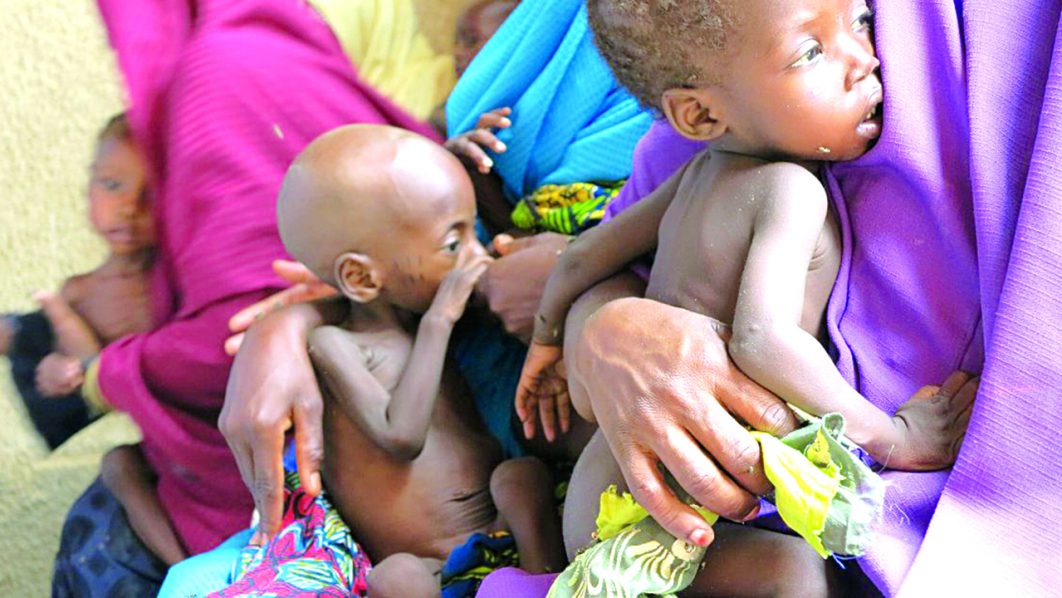
Northern Nigeria faces a severe malnutrition crisis

By Onumoh Abdulwaheed 

Northern Nigeria is facing an increasingly severe malnutrition crisis, with recent data revealing a stark escalation in cases. UNICEF reports that Nigeria has the second-highest burden of stunted children globally, with a 32% prevalence rate among children under five. An estimated 2 million children suffer from severe acute malnutrition (SAM), yet only 20% receive treatment.

According to Médecins Sans Frontières (MSF), the situation has worsened dramatically in 2024. Dr. Sanjana Tirima reports alarming increases across northern Nigeria. In Maiduguri, northeast Nigeria, MSF’s inpatient therapeutic feeding centre admitted 1,250 severely malnourished children with complications in April 2024, double the figure from April 2023. The centre has had to expand to 350 beds, far exceeding its initial 200-bed capacity.

Similar trends are seen elsewhere. In Bauchi state, MSF’s facility at Kafin Madaki Hospital saw a 188% increase in the first quarter of 2024 compared to 2023 in the admissions of severely malnourished children. Northwestern states like Zamfara, Kano, and Sokoto have reported increases in admissions to inpatient centres ranging from 20% to 100%.

Dr Christos Christou, MSF’s International President, previously highlighted the multiple challenges facing northern Nigeria, including “overwhelming levels of malnutrition, frequent outbreaks of vaccine-preventable diseases, lack of medical facilities and personnel, and continuous insecurity.” The crisis is further exacerbated by widespread flooding, which has devastated farmlands and displaced millions.

Despite the escalating crisis, the humanitarian response remains inadequate. In May, the United Nations and Nigerian authorities issued an urgent appeal for US$306.4 million to address nutrition needs in Borno, Adamawa, and Yobe states. However, MSF notes this is insufficient as it doesn’t cover other affected parts of northern Nigeria.

Dr Tirima emphasises the situation’s urgency: “Everyone needs to step in to save lives and allow the children of northern Nigeria to grow free from malnutrition and its disastrous long-term, if not fatal, consequences.” She calls for immediate action to diagnose and treat malnourished children and engage in sustained, long-term initiatives to address the root causes of the crisis.

MSF and other organisations stress the need for a comprehensive and urgent response as the situation worsens. “We can’t keep repeating these catastrophic scenarios year after year,” Dr. Tirima warns. “What will it take to make everyone take notice and act?” The crisis in northern Nigeria remains a critical humanitarian concern requiring immediate and sustained attention from national and international stakeholders.

Onumoh Abdulwaheed wrote via onumohabdulwaheed@gmail.com.

President Tinubu plans to lift Nigerians out of poverty – Gov. Uba Sani

By Abdullahi Mukhtar Algasgaini

Governor Uba Sani of Kaduna State says President Bola Ahmed Tinubu is determined to wipe out poverty in Nigeria.

Sani made this known at a town hall meeting and sensitization event on Tuesday in Kaduna for the N200 billion Presidential Intervention Fund and Loans Scheme for SSMEs, which the Federal Government organised in collaboration with the Bank of Industry.

He was represented by his Special Adviser on Economic Matters, Mr Ibrahim Muhammad.

He said the fund, which includes the Presidential Conditional Grant Scheme and loan options for MSMEs, is designed to boost Nigeria’s economy by empowering local entrepreneurs.

“This massive presidential initiative is proof that President Tinubu is a listening leader.

“Through these stimulus packages, small businesses and manufacturing enterprises will be revitalized, significantly benefiting both sub-national economies and Nigeria as a whole.”

He also emphasised the importance of MSMEs in driving job creation, innovation, and economic resilience, noting that Kaduna’s government is committed to fostering a supportive business environment.

The governor praised the timing of the fund, calling it a valuable support for Kaduna State’s ongoing efforts to boost the local economy, create jobs, and encourage entrepreneurial growth.

He urged all stakeholders to spread awareness of the initiative to maximize its impact.

Speaking at the event, Mrs Caroline Bala, one of the grant beneficiaries, expressed gratitude for the financial assistance that enabled her to start a soya milk business after she lost her previous job.

Bala said her business has been thriving, with daily earnings between 10,000 to 15,000 Naira.

She urged the organisers to sustain the initiative and ensure that deserving citizens continue to benefit from the grant, which she described as a life-changing opportunity.

Another beneficiary, Mr Albert Ibrahim, said he utilised the grant to purchase herbicides for his farm, resulting in a bumper harvest.

He expressed hope that others would also have the chance to benefit from this scheme.

Similarly, Summayya Ibrahim thanked the government for the support, adding that she looked forward to more assistance to enable broader outreach to aspiring entrepreneurs.

Muktar Aliyu, a cartoonist, said he used his grant to purchase specialised software to enhance his creative work.

He also appreciated the scheme, noting that it has greatly impacted his career.

Additionally, Mrs. Joy Oghiadomhe of the Bank of Industry outlined the eligibility criteria for both the grant and loan schemes, emphasizing the administration’s intent to tackle economic challenges through MSMEs as a key sector for development.