Month: July 2024

Open letter to President Bola Tinubu

Your Excellency Sir,

Northern Nigeria has been enmeshed in two major crises for about a decade and a half. The first was Boko Haram, born and bred in the North East. From their confrontation with the police to the execution of their leader, Boko Haram grew to become a terror group unprecedented in Nigeria’s history. The most unfortunate thing is that Boko Haram associated themselves with Islam even though most of their heinous attacks were targeted at Muslims.

The failure of Goodluck Jonathan’s government to end the Boko Haram insurgency led to a consensus among Nigerians to disallow him from getting a second shot at the presidency. He lost the 2015 election to your friend and party member, General Muhammadu Buhari. 

Throughout his campaign for the presidency, Buhari promised to end the scourge of Boko Haram and return normalcy to the North East. What he ignored, but he was not supposed to ignore, given his security background, was another crisis rearing its ugly head in the North West. 

Non-Fulani Nigerians were setting up cattle farms in city suburbs and gradually establishing themselves in the cattle farming business, which the Fulani were known for. This did not go down well with some Fulani, who began to form groups to attack such farms and rustle the cows. Anyone who resisted was killed. Since such non-Fulani cattle farmers were relatively small in number, it was soon over with them, and cattle rustling was extended to fellow Fulani, most of whom were law-abiding.

In no time, cattle rustling turned into banditry and kidnapping. Armed chair analysts with little knowledge of what was on the ground began to create conspiracy theories. Some blamed it on Niger Delta militants. Others said it was foreigners from sister West African countries. 

As of 2015, when President Buhari assumed office, the crisis could easily be nipped in the bud. A handful of cattle rustlers/bandits could easily be identified, arrested and punished. Unfortunately, Buhari did not do it either because he was not being correctly briefed or because he was out of sympathy for his kinsmen, who were the culprits.

In October 2016, some governors, notably of Zamfara and Katsina, invited the bandits’ leaders for a peace agreement. That was after they had killed countless numbers of innocent citizens. The villagers in the two states were told to accept the criminals as their brothers or face the wrath of the state. They had no choice.

The peace accord did not last long before the bandits resumed their crimes, which worsened by the day. Banditry continued to thrive under the Buhari administration, and in 2019, he directed the Governors of the affected states to dialogue with the bandits. The governor of my state of Katsina, looking vividly frustrated, told the bandits before press cameras that he was meeting them at the directive of Mr. President. 

A few months after the 2019 accord, Masari told the world that the bandits had reneged on the peace pact. According to him, they were not people to be trusted.

A point of note in the peace accords of 2016 and 2019 was that none of the bandit leaders were citizens of any foreign country. They were all Nigerians, and all of them were Fulani. This invalidates the false belief that the bandits are foreigners or were from another tribe in the south. Most of those hardened criminal lords are still moving about unscathed in villages and forests of Katsina, Zamfara, Kaduna, Sokoto and Niger states. They have been granting press interviews and meeting people like Sheikh Ahmad Gummi, which proves that the government is very aware of their locations and identities. 

I cannot speak for other Nigerians. But for me as a person, I voted for you in the 2023 elections for two reasons. One. You are a Muslim. A Muslim is just as a leader and nice as a companion. If all Muslim leaders were to rule according to the teachings of Islam, even their enemies would beg Muslims to stand for elections, so they vote them to power. Two. Neither you nor your running mate are Fulani. With this, some of us believe Buhari’s sympathy for his kinsmen would not be there.

You are entering your second year, and banditry is only worsening. What struck me most about your approach to banditry are the latest revelations by a young Islamic scholar, Sheikh Munir Adam Koza. According to Sheikh Koza, he was among the many young influential Islamic scholars invited for a meeting by some defence officials of your government. With financial reward, they were requested to propagate the following in their preachings.

1. That banditry by Fulani groups is justified because Fulani people have been subjected to neglect and injustice over a long period.

2. Call on the government to dialogue with bandits and give them political appointments.

3. That the current Governors of Zamfara and Katsina are wrong to have set up security outfits to confront bandits.

Sheikh Koza, who expressed his disagreement at the first meeting, was not invited to subsequent meetings.

The fact that Islamic scholars are actively preaching the above items testifies to the veracity of Sheikh Koza’s statements.

The first question I raised when I saw the video clip was whether you are aware of this action taken by your appointees. It would be a monumental mistake to say since the insecurity is taking place in the North, you have now appointed Northerners to solve “their” own problem.  Nigerians voted for you, not Ribadu, Badaru, Matawalle or any of those. You are thus accountable to Nigerians, and before God for any action your government takes.

With all the due respect of a loyal citizen, I would like to call on your Excellency to come clean about this action allegedly taken by officials of your government. Taking appropriate action against the said Government officials would go a long way toward consolidating the confidence ordinary citizens like me have in your government. 

Most importantly, we want an end to banditry. It can be ended, Mr. President.

Prof. Abdussamad Umar Jibia wrote via aujibia@gmail.com.

FRCS deploys new commanders to Kano, 19 other states

By Uzair Adam

The Federal Road Safety Corps (FRSC) has announced the redeployment of new Sector Commanders to 20 states across Nigeria.

According to a statement by the Acting Corps Public Education Officer, Olusegun Ogungbemide, the redeployment is part of the Corps’ strategic intervention mechanisms aimed at enhancing operational activities and quality service delivery.

Corps Marshal Shehu Mohammed approved the redeployment, which is designed to drive the policy thrust of the Corps and reposition it for greater performance.

The move is also intended to reinvigorate the Corps’ operational activities in the field Commands.

The Corps Marshal explained that the redeployment was propelled by the renewed zeal to reposition the Corps for greater performance and quality service delivery.

The affected states include Kano, Rivers, Plateau, Gombe, and 16 others.

Corps Commander Maxwell Lede, formerly the Principal Staff Officer II to the Corps Marshal, has been deployed as the Sector Commander in Plateau State. Meanwhile, Tijani Muhammed, the outgoing Zonal Head of Operations in Sokoto, takes over as Sector Commander in Kano State.

Other redeployed officers include Saliau Ibrahim, who moves from Kano to Jigawa; Adeoye Irelewuyi, who takes over as Sector Commander in Ogun State; and Yahaya Adikwu, who has been redeployed from Yola to Adamawa State.

The Corps Marshal has charged the newly deployed Sector Commanders to report to their new posts immediately and “hit the ground running” to enhance safety on the roads.

Building collapse in Nasarawa market claims 3 lives

By Sabiu Abdullahi

A tragic incident occurred in Asakio’s main market on Monday afternoon as an old building collapsed, resulting in the deaths of three individuals.

The victims, identified as two women and a child, hailed from the Lafia Local Government Area of Nasarawa State. 

The collapse caused immediate chaos, halting all commercial activities within the market.

Eyewitnesses described the scene as chaotic, with frantic rescue efforts underway to locate survivors trapped under the debris. 

Emergency responders were able to rescue two other individuals from the wreckage.

The injured were promptly taken to a nearby hospital, where they are currently receiving treatment. 

The disaster has sent shockwaves through the local community, leaving residents in mourning.

Daily Post reports that the incident has had a profound impact on the people of Asakio, highlighting the urgent need for building safety inspections and regulations in the area.

NCS strengthens global partnerships with US CBP 

By Sabiu Abdullahi 

The Comptroller-General of Customs (CGC), Bashir Adewale Adeniyi, in a bid to enhance service delivery and combat cross-border crimes, met with US Customs and Border Protection (CBP) in Washington, DC, on July 18, 2024.

The meeting aimed to revive the over-decade-old Customs Mutual Assistance Agreement (CMAA) and promote global collaborations and data-driven decision-making. Adeniyi stated the importance of capacity building, particularly in Intellectual Property Rights (IPR) enforcement and opiate issues.

He also stressed the need for a Center for Advanced Cargo and Passenger Data Analysis to mitigate risks and enhance cargo and passenger security. 

The meeting also covered commercial air cargo security and potential partnerships with US government agencies.

Adeniyi stated the importance of future operations, including CBP’s global targeting advisory directors and their capabilities in information sharing on cargo and passenger sides. 

James Collins, Assistant Commissioner of the Office of International Affairs at US CBP, noted data integration, partnerships, and targeted efforts to address transnational criminal groups.

He stressed the need for secure channels for sharing intelligence and building partnerships with international organizations. 

Key action items identified include establishing specific channels for continued intelligence sharing between Nigeria Customs and CBP, exploring operational partnerships, and leveraging INTERPOL programmes. 

The meeting concluded with a presentation on artificial intelligence and its role in enhancing customs operations and security. 

In a related event, CGC Adeniyi visited the Nigerian Embassy in the USA, where he was received by Mr. Rabiu Lawal, Charge d’Affaires a.i., and his team.

The CGC appreciated their warm reception and efforts for Nigerians in the diaspora. 

This bilateral meeting marks a significant step in strengthening global partnerships to promote better service delivery and enhance national security for Nigerians.

Tinubu and efforts at addressing insecurity

By Kabir Fagge Ali

Sir, Nigeria has been plagued by various security challenges for over a decade, including insurgency, banditry, kidnapping, and separatist agitations. Despite high expectations from President Bola Ahmed Tinubu’s administration, the situation has deteriorated further, with increased abductions and ransom demands. According to a recent report, 3,707 citizens have been killed and 3,238 abducted between May 2023 and now.

The worsening security situation can be attributed to several factors, including under-resourced and poorly equipped security forces, corruption, high unemployment, poverty, weak governance structures, and a lack of political will.

However, it is encouraging to note that President Tinubu’s administration is adopting a comprehensive approach to address insecurity through the Office of the National Security Adviser (ONSA), Mallam Nuhu Ribadu. The strategy focuses on strengthening security forces, enhancing intelligence capabilities, and fostering regional and international collaboration.

According to the feeler from ONSA, the administration has increased funding and provided modern equipment and comprehensive training programs to enhance the operational capacity of the military, police, and other security forces.

Additionally, we were told that the administration has prioritised addressing economic factors contributing to insecurity, investing in education, healthcare, and job creation to mitigate the underlying causes of crime and violence. Efforts to combat corruption within the security sector have also been intensified, and regional security cooperation has been enhanced through diplomatic engagements with neighbouring countries.

I strongly believe that a comprehensive and multifaceted approach is required to effectively address Nigeria’s security challenges. This includes reforming and adequately equipping security agencies, enhancing accountability, investing in economic development programs, building trust between security forces and local communities, establishing effective mechanisms for resolving disputes, and implementing judicial reforms.

The government must also demonstrate strong political will, consistent policies, adequate funding, and transparency. Citizens must also recognise that security is a collective responsibility, not just the responsibility of security forces.

It is indisputable that President Tinubu’s administration has shown a commitment to addressing insecurity. Still, more must be done to restore public trust and confidence in the government’s ability to protect the nation. With a comprehensive approach and collective effort, Nigeria can overcome its security challenges and ensure peace and stability for its citizens.

Kabir Fagge Ali, a youth corps member with PRNigeria Centre, wrote via faggekabir29@gmail.com.

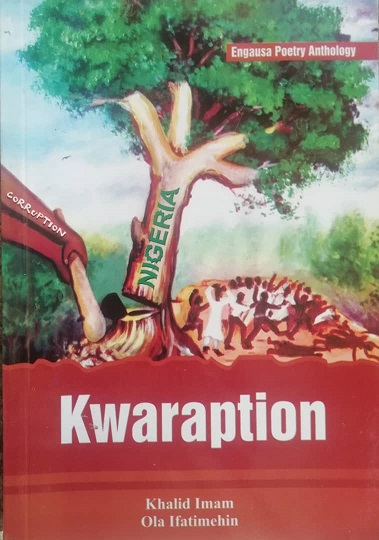
Engausa: An emerging writing phenomenon – A  study of  Imam and Ifatimehin’s “Kwaraption”

By Aliyu Idris

Engausa is a new emerging phenomenon that involves code switching and code mixing in English and Hausa. It’s a creative bilingual blend encompassing importance, uniqueness, and sending a message using a fusion of two popular languages (Hausa and English). It’s another genre of poetry and writing with its peculiarities. Its linguistic efforts are not to create a phenomenon that is Hausa or English but to create a genre that’s genuinely “Engausa.”

Khalid Imam and Ola Ifatimehin worked to establish a new writing phenomenon in the atmosphere of writing. After submission, they edited the ENGAUSA poetry anthology titled KWARAPTION.

Kwaraption Engausa Anthology is a poetry anthology comprising fifty-one poems penned by forty-five teeming poets. Various notable works of art have been produced on corruption in Nigeria. The poems in this anthology were written in various styles, from traditional to experimental, and they reflect the diverse voices and experiences of the poets.

One of the anthology’s strengths is its focus on Engausa poetry. Engausa is a hybrid form of poetry that blends Hausa and English languages. It is a relatively new and still evolving form of writing. The anthology features several poems in Engausa, allowing readers to experience this unique and dynamic form of writing.

The poems provide readers with a vast knowledge of Nigerian richness and valuable resources, but they’re not properly managed and are embezzled due to corruption. They also portray corruption as a major hindrance to the country’s progress, lament the nation’s current status, and inquire when corruption will end. The poems highlight many causes of corruption and its consequences.

The poets come from various backgrounds and experiences, and their poems reflect this diversity. The anthology features poems from established and emerging poets, which shows diversity in the anthology.

They try to display the pervasiveness of corruption in all parts of the country. Clearly, corruption was endemic but has now metamorphosed into an unending pandemic that continues to destroy the nation’s advancement. Several instances of the poem address corruption in different sectors of life, ranging from offices to hospitals to markets to politics to schools.

Kwaraption Engausa: An Anthology of Poems is a valuable contribution to Nigerian and Hausa literature and literature at large. It is a must-read for anyone interested in contemporary Nigerian poetry or the Engausa form of poetry as a newly branded way of writing.

Aliyu Idris wrote via aliyuidris063@gmail.com.

Windstorm wreaks havoc in Sokoto, 50 households affected

By Uzair Adam Imam

A windstorm in Sokoto State, Nigeria, has displaced at least 50 households in the Shagari and Wamakko local government areas.

The Director of Disaster Management, Umar Isa, confirmed that some victims have lost their homes entirely and are now staying with relatives or in temporary accommodations.

According to Isa, the ministry had contacted the National Emergency Management Agency (NEMA) over the issue.

He also noted that there were no reports of flooding in the state, despite predictions that some areas would experience flooding.

The state government has been conducting awareness campaigns to prevent flooding in prone areas.

The windstorm has caused significant damage, and the affected households are in need of assistance.

NiMet predicts 3-day thundery, rainy weather conditions from Sunday

By Uzair Adam Imam

The Nigerian Meteorological Agency (NiMet) has predicted thunderstorms and rains from Sunday to Tuesday across the country.

According to NiMet’s weather outlook, thunderstorms are expected on Sunday with rains over parts of Adamawa, Taraba, Borno, Kebbi, Kaduna, Gombe, and Yobe States during the morning hours.

Later in the day, thunderstorms are expected over the entire northern region, with rains over the North Central region in the morning hours and moderate thunderstorms with rains over parts of the Federal Capital Territory, Plateau, Benue, and Kogi states.

The agency also predicted morning thunderstorms on Monday with rains over parts of Kebbi, Sokoto, Bauchi, Kaduna, Borno, Taraba, and Katsina States.

Moderate thunderstorms are expected later in the day over parts of Jigawa, Kebbi, Kaduna, Sokoto, Borno, Zamfara, Yobe, Adamawa, and Katsina States.

Rains are also expected over parts of the Federal Capital Territory and Plateau states during the morning hours.

On Tuesday, morning thunderstorms are predicted with rains over parts of Yobe, Adamawa, Borno, and Taraba States.

Thunderstorms are expected over the entire northern region later in the day, with rains over parts of the Federal Capital Territory, Niger, and Kwara states with cloudy skies over the remaining states during the morning hours.

NiMet advised the public to take adequate precaution as strong winds might precede the rains in areas where thunderstorms are likely to occur.

The agency also advised residents to avoid flood-prone areas as high likelihood of urban flooding in major cities could occur due to downpours.

We need in-depth understanding of oil sector—Speaker Abbas

By Abdullahi Mukhtar Algasgaini 

The leadership of the House of Representatives, led by Speaker Abbas Tajudeen, Ph.D., paid a familiarisation tour to the Dangote Refinery and Petrochemicals Company in Lagos on Saturday. 

The familiarisation visit, which was at the invitation of the Dangote Group, was initially planned to take place jointly with the leadership of the Senate on June 3, 2024.

However, the leadership of the National Assembly had to put the visit on hold to meet with the leadership of the organised labour on the strike it embarked on at the time. 

The Senate leadership has since embarked on the visit separately, while the House leadership has slated July 20 for its own. 

The House leadership arrived in Lagos on Friday ahead of the familiarisation visit. Speaking when the leadership was conducted around the facility by the President of the Dangote Group, Alhaji Aliko Dangote, Speaker Abbas noted that the tour was part of the continuous efforts to understand and support key industries within our nation’s economy. 

“The purpose of this visit is to provide the House Leadership and the relevant oil and gas committees with an in-depth understanding of the nature, scope, and activities of the Dangote Refinery. This initiative aligns with our legislative agenda, which aims to support the President’s Renewed Hope agenda, focusing on economic transformation, growth, and development. 

“This familiarisation tour underscores our commitment to engaging with and supporting critical sectors that drive our economy. Also, this visit provides valuable insights that will inform our legislative measures and decisions. 

“We remain dedicated to fostering an environment conducive to economic growth and development, ensuring that our legislative actions align with the broader goals of national progress as articulated by President Bola Ahmed Tinubu, GCFR.  

He said, “We are acutely aware of the challenges facing the private sector in Nigeria, including regulatory hurdles, infrastructure deficits, and access to finance. The House of Representatives is committed to addressing these issues and improving the ease of doing business in our country. 

“We are working diligently to create a more business-friendly environment through legislative reforms that streamline processes, reduce bureaucracy, and enhance transparency. Our goal is to make Nigeria an attractive destination for both local and international investors. 

“Together, we can drive Nigeria forward, harnessing the full potential of our resources and talents. I look forward to continued collaboration and a prosperous future for our great nation.” 

He said the Dangote refinery “symbolizes not only the strength and potential of Nigerian industry but also the dedication and vision of one of our most esteemed business leaders, Mr. Aliko Dangote.

“However, the journey does not end here. There is always more we can do together to bolster our economy. I encourage Dangote Group to continue exploring avenues to complement government initiatives. By investing in renewable energy, enhancing corporate social responsibility programs, and fostering innovation through research and development, Dangote can further solidify its role as a key player in our economic landscape.” 

The Speaker was in company of the Deputy Speaker, Rt. Hon. Benjamin Okezie Kalu; House Leader, Hon. Julius Ihonvbere; Chief Whip, Hon. Usman Bello Kumo; Deputy House Leader, Hon. Abdullahi Ibrahim Halims; Deputy Whip, Hon. Adewumi Onanuga; Minority Leader, Hon. Kingsley Chinda; Minority Whip, Hon. Ali Isa; Deputy Minority Leader, Hon. Aliyu Sani Madaki, and Deputy Minority Whip, Hon. George Ozodinobi. 

Also in the delegation were the chairmen of relevant oil and gas committees and their deputies.

Kannywood movie, ‘Mai Martaba’, wows audiences in Kano

By Uzair Adam Imam 

The highly anticipated movie ‘Mai Martaba’ (Your Highness) premiered in Kano on Friday, drawing a large crowd of enthusiastic fans. 

The film, directed by Prince Daniel (Aboki), is a historical epic showcasing northern Nigeria’s rich cultural heritage.

Produced with a budget of over N25 million, ‘Mai Martaba’ features a cast of 500 actors, including Kannywood stars Adam A. Zango, Shugaba, Ghali Abdullah DZ, and Muktar Aminu Haruna. 

The movie tells the story of an ancient kingdom’s rise and fall, exploring themes of power, love, greed, and betrayal.

According to the producer, Prince Daniel Aboki, the movie aims to bridge the gap between Kannywood and global filmmaking standards. 

With 99.9% of the actors being new entrants, Aboki believes this move will expand the value chain of the creative industry in northern Nigeria.

‘Mai Martaba’ has already been nominated for international awards, including the Septimius Awards in Amsterdam. 

The movie’s success was believed to be a testament to the growing talent and innovation in the Kanywood film industry.