Month: June 2024

Customs crack down on petrol smugglers, makes significant seizures

By Sabiu Abdullahi

The Nigeria Customs Service (NCS) has launched “Operation Whirlwind,” a targeted offensive against petroleum product smugglers, and has already recorded significant seizures and disruptions to smuggling operations. 

Comptroller-General of Customs (CGC) Adewale Adeniyi announced on Monday that the service had intercepted 150,950 liters of PMS, valued at N105,965,391, in various locations nationwide within a week. 

The CGC attributed the success to credible intelligence and strategic efforts to address fuel smuggling, which has seen a significant increase in recent months, particularly in Borno, Kebbi, Sokoto, Taraba, and Katsina states. 

The service has collaborated with the Office of the National Security Adviser to dismantle smuggling cartels and defend the national currency. 

Notable seizures include 45,000 liters of PMS in a tanker at Mubi, Adamawa State, on May 31 and June 1, and 92,928 liters of PMS in jerry cans at various locations in Adamawa, Sokoto, and Cross River states between June 3 and 7. 

The total value of seizures stands at N196,524,075.50, raising concerns about national security and economic sabotage. 

The CGC lamented the increase in smuggling and vowed to continue the operation to ensure Nigerians benefit from fuel price deregulation, in line with President Bola Ahmed Tinubu’s vision.

The Kano throne dilemma

By Ibrahim El-mu’azzam 

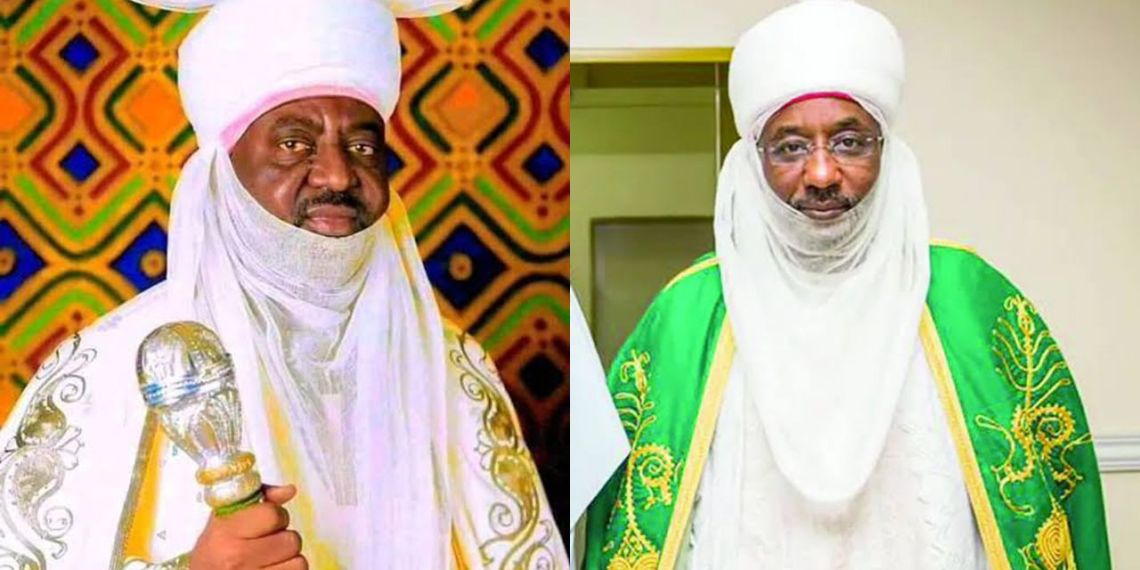
Four years ago, we witnessed the removal of Mallam Muhammadu Sunusi II as the Emir of Kano and the splitting of the Kano emirate a few months earlier. As they say, what goes around comes around.

Since then, many people have prayed, predicted, and foreseen that the action would be reversed. Thanks to time and destiny, we are now witnessing the return of the Emirates to one and the reinstatement of Muhammadu Sunusi II to Gidan Rumfa and the throne of Dabo. People forget too soon; if not for that, this wouldn’t have made these trends and surprises.

Muhammadu Sanusi II was legally appointed as the 14th Emir of Kano by Gov. Rabi’u Kwankwaso in 2014, following the passing of Alhaji Ado Bayero, the 13th Emir of Kano. Although he initially faced the usual opposition from some people, his appointment was eventually accepted by all, including the family of his predecessor, the Emirate council, the people of Kano, and the global community.

After about six years, a personal-political misunderstanding arose between him and the then-government of Dr Abdullahi Ganduje. This personal-political interest had no adverse effect on the Emirate or the good people of Kano state. However, despite calls from respected individuals and institutions worldwide, as well as a court order, Ganduje, in a display of power, divided the ancient Kano kingdom into five different kingdoms and proceeded to dethrone Sunusi on groundless grounds.

Ganduje didn’t stop there. He took the former CBN governor, the 14th Emir of Kano, an Imam, and the chartered Economist to Loko and later to Awe villages in Nasarawa state, where there was reportedly no stable electricity and water supply. His actions were only halted by the intervention of Malam Nasiru El-Rufa’i, the then-governor of Kaduna state.

You see, I’m not a big fan of SLS. I disagree with some of his takes, but this is an apparent disrespect and damage not only to him but also to the Kano Emirate, the people of Kano, and the entire Kingdoms of Shehu Usmanu Ɗanfodiyo. It pained me more to divide the Kingdom into pieces than to even dethrone the King.

Alhaji Aminu Ado succeeded the central Kano Emirate and performed admirably. I admire his personal qualities, demeanour, lifestyle, and effective handling of the throne. I often tell people that Sarki Aminu Ado embodies more of the traditional King’s character than Sarki Sunusi II. But sad, Aminu Ado was alive and well when his father, Bayero, the 13th Emir, passed away, and Sunusi was appointed. Despite Aminu’s charisma, love of the people, and competence, Sarki Sunusi was chosen by the Almighty to ascend to the Kano throne.

Ever since the campaign of the current governor of Kano state, Engr. Abba Kabir Yusuf, there have been suggestions to reinstate Sunusi and restore the Kingdom to its previous state. I supported this idea, but I didn’t fully agree with the decision to remove the Kano Emir again. I wanted the Kingdoms to be returned, with Aminu continuing as the King. I hoped Sunusi would oversee and move forward, especially with the furtherance that occurred and continue to befall him, like the Khilafa of Tijjaniya and more. I strongly oppose the idea of our honourable Kings to be played like toys by democratically elected governments. I even think of how unaware people were when the law of dethroning a King was made like this.

Although I have some doubts, I wanted everything to be very amicable, especially since all the parties are descendants of Malam Ibrahim Dabo—the same family, living in the same house and sharing the same bloodline. However, Sunusi’s return and acceptance of the reinstatement should not be blamed.

Firstly, for Emir Sanusi, it’s a repetition of history. The same thing happened to the King whose name he bears, Muhammadu Sunusi I. So, to cleanse their lineage of misfortune and bad luck, he can take this as a starting point.

Secondly, he was the last occupant of the undivided Kano throne. It is suggested that the five created kingdoms should be dissolved. Sarki Aminu has not been sworn in for the undivided Kano kingdom. If he is the one to continue, there must be an elevation that extends the continuity of the process. With this, reinstating Sunusi is more legal and straightforward. 

Furthermore, if Aminu is to continue, it will likely be forever prohibited for Sarki Sunusi to visit his origin, the Gidan Dabo. This is a hardly bearable consequence with the opportunity at Sarki Sunusi’s disposal. More importantly, everything is believed to be done on baseless grounds.

We should be reminded that the ultimate desire of every heir to a throne is to be crowned. In addition, Sarki Sunusi’s got the government at hand, the similar power that dethroned him before. Therefore, I don’t view this action as wrongful but rather corrective. The criticisms of Sarki Aminu’s supporters are expected and accepted.

Dr. Ganduje, the prior architect of the dilemma, is currently in a position where he has to watch everything unfold. He is even facing challenges in his current role. Whether he initiated this with a positive or negative mind, it’s up to him to reap. The important lesson to remember is that power is transient. If you have it now, use it wisely; it may turn against you in the future.

In conclusion, it is very significant to call on the Sultan, the high-ranking Emirs, and other stakeholders to address the law that allows Governors to singlehandedly dethrone their Emirs. It doesn’t make sense at all. These Emirs were the foundation. They founded these communities and controlled them for centuries. Then why on earth should a borrowed phenomenon dominate the founding one? Why should an Emir be selected or dethroned without the consent, not even the approval, of the Sultan or his Emirate council? This is the major issue that needs to be addressed.

For Gidan Dabo. Sarki Sunusi, Sarki Aminu, and Sarki Nasiru, you all come from that house. It’s your base and heritage. Why would you allow the government or any external party to distort your peace and relationships?

Sarki Sunusi and Sarki Nasiru lived in the same room for over a decade. Sarki Sunusi’s first wife, Sadiya Ado Bayero, is a biological sister to Sarki Aminu and Sarki Nasiru. Sarki Ado Bayero was on good terms with Sarki Sunusi I. It’s your family. Why would you let an outsider tear you apart? Assume the government dethroned Sarki Sunusi II in the first place, and you all disagree with it; none of you accepted it. Can Ganduje give it to an outsider? “Sai bango ya tsage ƙadangare ke shiga” – “It’s when the wall cracks that a lizard gets a passage,” as Malam Bahaushe says. Please give this a concerned look.

I believe it’s high time for the Emirs and Kings of our respective Kingdoms in Nigeria to stand firm in upholding their dignity and that of their kingdoms. It’s hard to believe that an Emir needs the consent of his local government chairman for his outings and some of his activities. I understand the importance of the position of a local government chairman, but when compared to that of an Emir or a King, there’s a clear distinction. Let’s face reality, set aside selfishness and personal interests, and work together for the betterment of our lands.

A person’s power is his greatest enemy. He either uses it well, or it uses him well.

Sarki Muhammadu Sunusi II (the 14th and 16th Emir of Kano), may Allah protect and guide you. Sarki Aminu Ado, Sarki Nasiru Ado, and the others, may the Almighty accept the right you have done and overlook the wrong. May the blessings of the Almighty be upon all of you for eternity.

Ibrahim El-mu’azzam wrote via elmuazzammail@gmail.com.
Kebbi deputy governor lauds FUBK management

By Jamilu Magaji Mohammed

The Kebbi State Deputy Governor, Senator Umar Abubakar Tafida, has commended the Management of the Federal University Birnin-Kebbi (FUBK) for maintaining high academic standards despite many operational challenges. The Deputy Governor made the commendation when the Management of FUBK, led by the Vice Chancellor, Professor Muhammad Zaiyan Umar, paid him a courtesy visit in his Office on Wednesday.

Senator Umar Tafida expressed the State Government’s concern over the problems of transportation, hostel facilities and land disputes affecting the University. He assured that these would be forwarded to the Governor for intervention and solution. He stressed the need for the institution to maintain an open communication channel with the State Government and continue to have cordial relationships with the host community as part of its corporate social responsibility.

Speaking earlier, the Vice Chancellor, Professor Muhammad Zayyanu Umar, told the Deputy Governor that the Federal University, which was set up in 2013, is planning its first Convocation of 5 sets of graduands before the end of this year. 

He said the institution, which has over 8,000 students, 70 per cent of them from Kebbi State, is facing challenges such as an acute shortage of transportation system, hostel facilities, power supply and non-payment of a parcel of land with its host community. He, therefore, appealed to the State Government to support the University towards hosting its very first combined Convocation coming up before the end of the year.

Prof. Umar said inadequate transport is seriously affecting the University, which is located 15 kilometres from Birnin Kebbi township, adding that only four buses jointly donated by Tetfund, Zamfara State Government and former Chief of Army Staff are presently serving the students of the institution.  

The Vice-Chancellor implored the State Government to come to the aid of the University with additional buses,especially now that the rainy season is fast approaching. He also urged the State Government to help in alleviating the 

acute shortage of hostel facilities, as well as interventions on settlement of land disputes with the host community to enable the University to put some development projects in the area. 

Highlights of the visit include the presentation of published materials of the University to the Deputy Governor by the Vice Chancellor and group photography.

Correspondents’ Chapel boycotts Kano govt activities over alleged maltreatment

By Uzair Adam Imam

The Correspondents’ Chapel of the Nigerian Union of Journalists (NUJ) in Kano State has announced a boycott of all Kano State Government activities, effective immediately.

This decision comes in response to the alleged persistent mistreatment of chapel members by the government and its agents while carrying out their duties.

According to Aminu Ahmed Garko, Chairman of the Correspondents’ Chapel, despite efforts to engage with the government to address these issues, there has been no improvement.

Members continue to face harassment, intimidation, and physical assault while performing their duties.

The government’s prioritization of non-professionals over trained journalists has also been criticized, with the chapel stating that this has become a state policy to sideline those best equipped to handle the job.

As a result, the chapel has announced that its members will no longer participate in press conferences, cover government events, or conduct interviews with state officials until a tangible commitment to press freedom and journalist safety is seen.

All members have been directed to comply with this directive and join the protest against the ill treatment of journalists in Kano State.

The chapel believes that a free and independent press is essential to a functioning democracy and will not stand idly by while its members are mistreated and intimidated.

Garko stated that the chapel will only reconsider its position when the government demonstrates a genuine commitment to addressing these issues and ensuring a safe and enabling environment for journalists to perform their duties.

Hypertension: The hidden epidemic affecting millions

By Mujahid Nasir Hussain

Hypertension, commonly known as high blood pressure, is characterized by persistent rising blood pressure levels in the arteries. It is often referred to as the “silent killer” because it presents no symptoms until significant damage to the cardiovascular system is achieved. This menace is a paramount health concern, affecting millions of people worldwide and contributing to a high risk of premature mortality. Therefore, as we marked World Hypertension Day on 17th May, raising awareness about this epidemic is very important. Raising awareness about hypertension is essential in combating this global concern as it will go a long way in educating the public about its dangers and causes and the importance of regular monitoring and early intervention.

Blood pressure is the force exerted by circulating blood against the walls of the arteries. It is measured in millimetres of mercury (mm Hg) and recorded with two numbers: systolic pressure (the pressure when the heart contracts) and diastolic pressure (the pressure when the heart relaxes). According to a lot of literature, normal systolic blood pressure in young adults is within the 90- 120 mmHg range, and diastolic blood pressure is within the 60- 90 mmHg range. Thus, it’s important to note that this value increases beyond the normal limit and consequently results in hypertension.

Hypertension is of two types: Primary hypertension and secondary hypertension. Primary hypertension accounts for about 85-90% of hypertension cases and develops gradually over many years. While other complications do not cause primary hypertension, the secondary type is always associated with underlying health conditions such as Kidney disease, Toxemia during pregnancy, etc.

The World Health Organization (WHO) reported hypertension as a global health issue, estimating that over 1.13 billion people worldwide suffer from it currently. Consequently, it is responsible for an estimated 7.5 million deaths annually, accounting for about 12.8% of all deaths. Its prevalence is increasing, particularly in developing countries like Nigeria, where health systems often struggle to diagnose and manage the condition effectively. In high-income countries, phishing awareness regarding its treatment rates is generally higher. However, even with that, the condition remains a significant health concern as a result of lifestyle factors such as poor dietary intake, physical inactivity, and high rates of obesity among individuals.

Several factors contributing to the development of hypertension include Genetic factors, Dietary habits, obesity, alcohol and tobacco use, stress, etc.

*Genetic Factors: Family history plays a vital role in the risk of developing hypertension. This means that if one or both parents have high blood pressure, the percentage of their offspring developing the condition is high.

Dietary Habits: Diets high in sodium (salt) and saturated fats are strongly associated with high blood pressure. Excessive salt intake can cause the body to retain water, leading to increased blood pressure.

 Obesity: Individuals with body mass index above 30kg/m² are at high risk of developing hypertension. Obesity often results in increased resistance in the blood vessels, making it harder for the heart to pump blood efficiently, resulting in high blood pressure.

Alcohol and Tobacco Use: High alcohol consumption and tobacco use are also contributing towards the development of hypertension. Alcohol can raise blood pressure by several mechanisms, such as stimulating the sympathetic nervous system. At the same time, smoking is associated with causing damage to the vessel walls, leading to increased blood pressure.

Stress: Prolonged stress can also contribute to the development of hypertension. Stress-related behaviours, such as inappropriate lifestyle modification, further attenuate the risk.

Age and Gender: As age progresses, so does the risk of developing hypertension. Men are generally at higher risk at a younger age compared to women. Still, the risk for women increases and often surpasses that of men after menopause as a result of hormonal withdrawal.

Some of the consequences of uncontrolled hypertension include Heart failure, Stroke, Kidney damage, vision loss, aneurysms, etc. Therefore, managing and preventing it requires a multi-faceted approach, such as lifestyle modifications, regular monitoring, and medication when necessary.

Some of the lifestyle modifications that need to be adopted to mitigate the effects of hypertension include:

Healthy Diet: A diet rich in fruits, vegetables, whole grains, and lean proteins can help manage blood pressure.

Exercise: Regular physical activity, such as brisk walking, cycling, or swimming, can help lower blood pressure.

Weight Management: Maintaining a healthy weight is crucial for controlling blood pressure. A small amount of weight loss can profoundly reduce blood pressure levels in overweight or obese individuals.

Limitation of Alcohol Consumption and Tobacco Use: Reducing alcohol intake and quitting smoking can have a significant positive impact on blood pressure and overall body health.

Stress Reduction: Stress-reducing techniques such as mindfulness, meditation, and deep-breathing exercises can help manage blood pressure. Ensuring adequate sleeping hours and managing work-life balance are also important.

Regular Monitoring: Regular blood pressure checks are crucial, especially for individuals with risk factors for hypertension. Home blood pressure monitors can help people keep track of their levels and detect any changes early.

Even with all the lifestyle modifications mentioned above, those changes alone may not be enough to control blood pressure for some individuals. In such cases, healthcare providers may prescribe antihypertensive medications. However, following the prescribed treatment strategies and attending regular follow-up appointments is essential.

Mujahid Nasir Hussain wrote via mujahidhnasir@gmail.com.

Police arrest fraudsters, recover 22 POS machines, 52 ATM cards in Kano

By Uzair Adam Imam

The Kano State Police Command has arrested suspected fraudsters who specialize in generating false bank alerts.

The command recovered 22 POS machines, 52 ATM cards, eight jerricans of diesel, and six mobile phones.

According to the command’s spokesperson, Abdullahi Haruna Kiyawa, “The suspects had purchased diesel worth N300,000 at Chula Filling Station using fraudulent payment methods, resulting in the owners receiving fake money transfer alerts.”

Kiyawa stated that the suspects confessed to their crimes and admitted to defrauding fuel attendants at various filling stations and businesses in Kano State.

The police commissioner, Mohammed Usaini Gumel, had directed detectives to be on alert to ensure the arrest and prosecution of the perpetrators.

The suspects, Abdulkadir Ibrahim, 38, Aliyu Tukur, 27, and Auwal Ibrahim, 20, were arrested following a distress call from the manager of Chula Filling Station.

Customs CG charges graduates to prioritise staff welfare

By Sabiu Abdullahi

The Comptroller-General of Customs, Bashir Adewale Adeniyi, has charged officers who graduated from Senior Course 10 at the Nigeria Customs Command and Staff College, Gwagwalada, Abuja, to prioritize staff welfare and continuous learning. 

Speaking at the graduation ceremony on June 7, 2024, CGC Adeniyi said, “I congratulate you for your commitment, which has led us to today’s occasion. I implore you to put to work all you have learned during your training at the college.” 

He also assured the college management and members of his unflinching efforts to enhance the welfare of officers and members, directing staff, which will improve efficiency in the Service. 

The Commandant of the College, Assistant Comptroller-General of Customs, Kingsley Egwuh, conferred the graduating students with the title of Pass Senior Course (PSC) and implored them to practice what they have learned. 

Deputy Commandant and Director of Studies of the College, Comptroller Oluyomi Adebakin, highlighted that the students had been duly trained in various fields in accordance with the curriculum of the Senior Course to enhance officers’ skills and abilities with a high level of moral standards. 

The management of the college had earlier hosted a regimental dinner night to honour the graduates of Senior Course 10, where the CGC was represented by DCG Beatrice Nwafor, who tasked the graduates to consider the opportunity of attending a month’s course at the college as a means to improve their performance as Customs officers. 

The graduation ceremony marked the end of a rigorous six-month training program for the officers, who are now expected to add value to the Service and contribute to maximizing security at the borders, suppressing smuggling, and generating revenue.

Outrage trails Sokoto government’s decision to rename road after Tinubu’s son

By Uzair Adam Imam

Sokoto State Governor, Ahmad Aliyu, has faced criticism for naming a road after Seyi Tinubu, son of President Bola Tinubu. The road, formerly known as “Pepsi Road”, was scheduled to be commissioned on June 3 by Katsina State Governor, Umaru Dikko Radda, but was postponed.

A photo of the renamed road, “Seyi Ahmed Bola Tinubu Road,” went viral on social media, sparking outrage.

Residents expressed disappointment, stating that Seyi Tinubu has not made any significant contributions to Sokoto or Nigeria.

“The governor ignored notable indigenes of Sokoto and named a road after someone with no connection to the state or region,” said Salisu Ahmadu.

Social media users also criticized the decision, with one user saying, “This is how Sokoto’s name is being tarnished.” Another user questioned why Sokoto would name a road after Seyi Tinubu when even Lagos, his father’s state, had not done so.

The spokesperson for the Sokoto State governor could not be reached for comment. Despite holding no official position, Seyi Tinubu has accompanied his father on foreign trips and was recently barred from attending a Federal Executive Council meeting.

Kano anti-graft agency probes alleged fraud in street hawkers empowerment scheme

By Uzair Adam Imam

The Kano State Public Complaints and Anti-Corruption Commission has launched a discreet investigation into an alleged scam involving some individuals in the streets hawkers empowerment scheme of the state government.

The scheme, which was inaugurated last Wednesday, aimed to empower 465 street hawkers with N50,000 each.

However, viral videos showed some youths impersonating beneficiaries and collecting the money.

The commission’s chairman, Barr. Muhuyi Magaji Rimingado, confirmed the investigation and assured that culprits would be brought to book.

He also appealed to the public for information to enhance the investigation, promising confidentiality.

The commission is also investigating other empowerment schemes and activities of the past and present administrations, including the suspended managing director of Abubakar Rimi Television, who is facing allegations of misappropriation of funds.

This investigation demonstrates the commission’s commitment to preventing fraud and ensuring that empowerment schemes reach their intended beneficiaries.

School dropout in Kano: Councillor sponsors 120 orphans

By Uzair Adam Imam

Hon. Bashir Shehu Aliyu, the councillor of Achika ward in Wudil Local Government Area of Kano State has sponsored over 100 out-of-school orphans to study in secondary schools.

The Daily Reality has gathered that the beneficiaries comprise a total of 65 girls and 54 boys.

Malam Aliyu, in a grand ceremony to present educational materials to the beneficiaries, said the gesture was to secure their future.

He added, at the event that took place on Sunday at the Achika ward, Aliyu said the beneficiaries would enrolled at Government Junior Secondary School Achika and Government Arabic Junior Secondary School Achika.

It was gathered that the beneficiaries would be sponsored to study from junior up to senior secondary school.

Aliyu said he would continue the good job even if he is not holding any political office.

Items distributed to the beneficiaries include 1,200 exercise books, 120 bags, 240 sets of uniform, 120 pairs of shoe, 120 socks, 240 pens and 240 pieces of pencil.

He stated that the gesture was his contribution towards the development of Kano state through empowerment of vulnerable and downtrodden.

He disclosed that he deemed it fit to come up with the initiative in a bid to secure the future of children, especially orphans who nowadays fond it difficult to achieve their education dream.

He was qoutes as saying, “I will continue to look after these children until they graduate from secondary school. Empowering children like these, all of them orphans, is a great service to humanity.

“They need the society’s support in order to be good and productive members of the society. Abandoning them would be dangerous.

“That is why I decided to sponsor their education from junior up to senior secondary school level even if i am no longer holding a political appointment,” the councillor said.