Month: June 2024

Eid-el-Kabir: Police ban durbar activities in Kano

By Uzair Adam Imam

The Police Command in Kano State has banned Durbar activities during the forthcoming Eid-el-Kabir celebrations in the state.

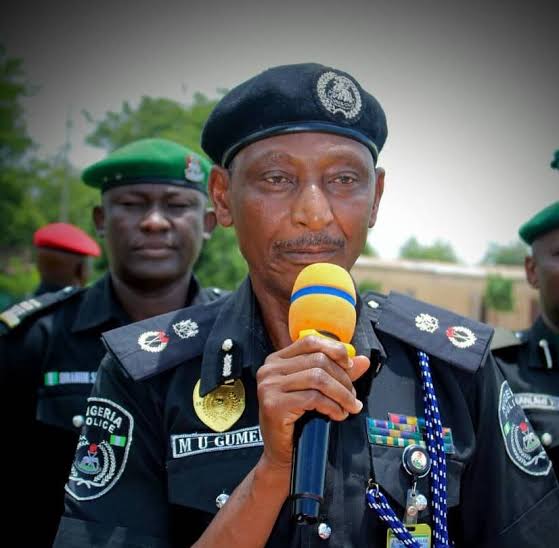
A statement issued on Thursday by Mr. Usaini Gumel, the state Commissioner of Police, stated that the ban became necessary to sustain the peace maintained by the Police Command in conjunction with all relevant security stakeholders.

“In furtherance, a ban on all contending parties has been placed, restraining them from conducting Durbar activities for the upcoming Eid-el-Kabir celebrations,” Gumel said.

He, however, advised worshippers to conduct their normal Eid Prayers at the various designated praying grounds, as was traditionally done in the past.

“In this trying period, the Police will enforce the existing Court Order and prevail on the two contending parties regarding the Kano Emirateship Tussle and urge them to remain apart and respect the court order,” he said.

The commissioner said the command would want to see continued collaboration and cooperation from all stakeholders to collectively work together to build a safer and more secure environment.

He urged the general public to keep reporting any suspicious movement of persons or items to the nearest police station.

Supreme Court reserves judgment in FG’s suit against LGs

By Uzair Adam Imam

The Supreme Court has reserved judgment in a suit filed by the Federal Government against the 36 state governors over the alleged misconduct in the administration of Local Government Areas.

The Federal Government is seeking full autonomy for local government areas and wants an order to stop governors from dissolving democratically elected local government leaders.

The government also wants funds meant for local governments to be channelled directly to them from the federation account, instead of the joint accounts created by governors.

The suit argues that the constitution recognizes federal, state, and local governments as three tiers of government, and that the failure of governors to put in place democratically elected local government systems is a deliberate subversion of the constitution.

The Federal Government claims that it is not obligated to pay funds to states that do not have democratically elected local government systems in place.

The Supreme Court’s judgment will determine the fate of local government administration in Nigeria and the extent of autonomy they will enjoy.

Kashim Shettima urges Nigerian doctors to resist ‘japa syndrome’

By Uzair Adam Imam Vice President Kashim Shettima has appealed to Nigerian doctors to resist the temptation of leaving the country for greener pastures, urging them to stay back and help salvage the nation’s healthcare system.

He made this appeal during a courtesy visit by the National Executive Committee of the Nigerian Medical Association (NMA) to the Presidential Villa in Abuja.

Shettima commended the sacrifices of Nigerian doctors and their contributions to the country’s healthcare system, assuring them that President Bola Tinubu’s administration is committed to supporting their efforts.

He emphasized that the government values their services and needs their expertise to improve healthcare delivery in Nigeria.

The Vice President encouraged the doctors to remain steadfast and resist the “Japa syndrome,” a term used to describe the brain drain of Nigerian professionals seeking better opportunities abroad.

He expressed optimism that with collective efforts, Nigeria can become a great nation, and its healthcare system can be transformed.

This appeal comes at a time when the country is facing a challenging healthcare landscape, with many doctors seeking better opportunities abroad due to the perceived lack of investment in the healthcare system.

Private school teachers and poverty: An insider’s view

By Ishaka Mohammed

I discussed in my last article why I don’t generally consider private school teachers victims of proprietors’ inhumanity. Many factors could be responsible for the seeming wickedness of some school owners. However, these teachers are mostly underpaid.

I understand that some private school teachers earn good salaries, but such usually come at the expense of their dignity and peace of mind. This is due to the presence of unruly students who are highly protected against reasonable corrective measures. A teacher must either tolerate their misbehaviour or be ready to quit.

In addition, schools that pay competitive salaries and have standard facilities often overlook other factors that might hinder learning aside from the teachers’ incompetence. Teachers’ efforts are hardly appreciated, as parents and proprietors judge everything based on the students’ scores in internal and external exams. As a result, teachers are usually under pressure to deliver near-perfect performance, hence sacrificing extra time and energy. 

Teachers in the above category are very few compared to those with meagre salaries. Based on my personal experience and interactions with colleagues and other stakeholders, a privileged private school teacher in Nigeria is one whose annual salary is enough to cover feeding, accommodation, clothing, toiletries, and transport expenses without attracting debts. I am talking about a person with perfect health conditions and no dependents.

I have seen instances where a teacher has to rely heavily on contributions (susu or adashi) for several months to be able to buy a new Android phone. 

Some people have questioned why anyone would choose to depend on such a job instead of finding additional sources of income.

Well, I don’t think anyone would decide to subject themselves to the life of penury that the job promises. 

Most private school teachers wish to have “side hustles,” but certain factors, such as time, location, information, capital, etc., block them.

We might think they should be able to access relevant information since they’re adults and educators, but life isn’t always like that. So, I believe that every individual, including you, the reader, can assist one or two teachers by occasionally sharing valuable information concerning alternative sources of income.

And if you own a school or are positioned to influence teachers’ well-being, I urge you to do your best to improve their economic status.

First, I appeal that you frequently review salaries based on economic realities and teachers’ efforts. Although salary increases largely depend on the organisation’s revenues, you must remember that a teacher’s failure to meet basic needs would adversely affect your organisation and education in general. 

Second, as much as possible, reveal dates on which your employees should expect salaries. This would allow them to plan how to use their money correctly. 

Lastly, strive to grant them access to interest-free business loans with flexible repayment terms. You can also organise workshops (for them) on managing multiple income streams.

I believe the implementation of the above suggestions would lead to win-win situations.

Police dismantle multibillion-naira jewellery syndicate in Abuja

By Uzair Adam Imam

The Nigerian Police Force has busted a multibillion-naira jewellery syndicate that colluded with armed robbers in Abuja and its environs.

According to Force spokesman Muyiwa Adejobi, the syndicate was dismantled after an armed robbery incident occurred at a police officer’s residence in the Lugbe area of the Federal Capital Territory (FCT) on April 28th.

The stolen items, including jewellery, money, academic certificates, documents, phones, and other valuable properties, were traced to Wuse Market, where they were purchased by one Alhaji Auwal.

Despite police warnings, Alhaji Auwal facilitated the purchase and instructed his associates on how to handle the stolen goods.

Further investigations revealed that Alhaji Auwal, his sons, and other associates are part of a cartel involved in dealing in stolen jewellery.

The group has been linked to previous similar cases under police investigation.

Twenty-six suspects have been arrested in connection with the case and are being detained legally under a court order.

They will be charged to court upon conclusion of the investigations.

This operation demonstrates the police’s commitment to tackling armed robbery and related crimes in the FCT.

The force urges the public to provide information to help in the fight against crime.

3 top Kano officials summoned, 2 other arrested over employment fraud

By Uzair Adam Imam

The Kano State Public Complaints and Anti-Corruption Commission has arrested two individuals and summoned three Permanent Secretaries for questioning regarding an alleged fraud scheme involving the sale of employment forms in the Office of the Head of Service.

The commission’s Chairman, Muhuyi Rimin-Gado, confirmed that the investigation is ongoing to identify and bring to justice those responsible for the scam, which has affected thousands of job seekers.

Preliminary investigations have uncovered fraudulent activities at several government offices, including the Office of the Head of Service, Civil Service Commission, Kano State Secondary Schools Board, and Health Service Management Board.

The two suspects in custody are cooperating with the investigation, which has led to the shutdown of a fake employment portal.

The commission aims to root out corruption and ensure justice is served in the employment fraud scandal.

“The commission is working to prevent corruption and ensure that justice is served,” Rimin-Gado said.

Nigeria: Is Democracy Day worth celebrating amidst the Japa wave?

By Abdul Sale

The perception of an average young man in Nigerian life is to have a good-paying job, own a house and settle down with his wife. After that, nothing more or less, while in foreign lands, the reverse is the case as struggles to have different means of income usually start after marriage. However, on the other hand, gathered a handful of Nigerians who have zeal and set their minds on travelling abroad looking for greener pastures, which, to them, is the only way to make it to the promised land.

In 2019 alone, during the Buhari administration, over twelve thousand Nigerians, especially professionals like doctors, nurses, medical lab scientists, engineers, and care workers, travelled to Canada as a result of low remuneration and bad conditions of the working environment. They alleged that the Federal Government refuses to address this. At the time, Nigeria fell into recession, which devastated the economy; then, the Japa trend (jakpa Yoruba word meaning “to flee or run”) became an anthem in Nigeria, especially in the southern part.

Thousands of Nigerians have fled to oversee countries like the USA, UK, Canada, Australia, and other European countries to better their lives and families. In the northern part of Nigeria, the trend was not popular then, even though there were hundreds of northerners who had travelled abroad.

Moreover, I have noticed a wave of japa in the northern part of Nigeria lately, especially in the core north; the emergence of travel agencies and travel agents helped. Hundreds of Arewa youths have fled to countries like Saudi Arabia, Qatar, UAE, Oman, Jordan, and Kuwait, spending around 2 to 3 million Naira.

In some cases, Nigerians embark on the journey through land borders en route to Niger, Libya, Algeria and Morocco, which mostly ends in tragedy. For instance, Aljazeera reported that at least 61 refugees and asylum seekers, including women and children, have drowned following a “tragic” shipwreck off Libya, the International Organization for Migration (IOM) says.

On June 14, 2023, the Adriana, a fishing boat loaded with 750 people en route from Libya to Italy, went down in international waters off southwest Greece. There was a series of similar tragic stories as Flavio Di Giacomo, an IOM spokesperson, wrote on X, formerly Twitter, that more than 2,250 people died in 2023 on the central Mediterranean migrant route.

More than 153,000 refugees and asylum seekers arrived in Italy in 2023 from Tunisia and Libya, according to the United Nations refugee agency. One would wonder what triggers this massive wave of migration, especially among youths who are perceived to be the backbone and the future leaders of society.

The country’s economic situation is one of the driving forces that pushed some Nigerians to make that decision. Our leaders should, as a matter of urgency, create policies and bring ways to improve the country’s economic situation, thereby creating an enabling environment for the people to flourish their businesses.

Federal and state governments should invite foreign investors to come and invest in Nigeria to employ the thousands of unemployed graduates in the country. Moreso, the military and other security agencies should always respect the fundamental human rights of the citizens, as Nigeria is labelled as a country with high cases of human rights violations.

As we are reaching the second quarter of 2024, many Nigerians, especially youths, are ecstatic and happy about 2024 democracy day, full of hope and dreams that they wish to accomplish this year. Therefore, the government in power should redouble its efforts in helping these ambitious youths to realise their dreams.

Abdul Sale wrote via abutalatu72@gmail.com.
NIGERIA: It’s the impunity, actually

By Dr Raji Bello

Our high-maintenance and strangely imaginative federal legislators have embarked on another fancy idea for solving our country’s problems – a single six-year term for federal and state chief executives. I have since realised that Nigerians would suggest anything as a way out of our problems other than the most pertinent one: defeating impunity. At the current rate that our National Assembly is moving, we will wake up one day to hear a motion to return the country to using miles instead of kilometres as a way to improve efficiency. 

Although I advocate for replacing our current system with a more centralised one, I have never doubted that the country’s most important problem is that its citizens can conduct themselves without any fear of consequences.

The fear of consequences has always moderated human behaviour and has brought peace, order, stability and prosperity to human societies. Even the most sophisticated countries in the world today have never thought of lifting the threat of consequences for law-breaking on their citizens. But Nigeria has decided that applying consequences for breaking the law is unkind and should be done away with. 

We are always unwilling to punish wrongdoing while also being unable to do so. As a result, we keep moving from chaos to dysfunction and back to chaos again. And each time we sit and ponder over potential solutions, we always look away from impunity – we feel that some cosmetic changes could rescue us while we allow our personally profitable culture of impunity to remain.

When our electoral system is not working, we think of changing electoral laws but without punishing those who broke the existing laws. Hardly anyone is in jail at the moment in Nigeria for sponsoring or perpetrating electoral violence, and the infamous former Adamawa INEC commissioner has still not been punished one year after he wilfully infused chaos into the state’s governorship election. 

We are incapable of punishing corruption by our VIPs; our most celebrated cases—Abacha loot, Alamieyeseigha, and Ibori—only happened because foreign countries assisted us. The Halliburton and Siemens bribery scandals were never punished in Nigeria, although both companies were prosecuted in their home countries for the crimes that they committed in Nigeria. 

It took the determination of the UAE and the US, not Nigeria, to finally put scammer Hushpuppi away. We have managed to convict kidnapper Evans after several years of trial, but there are now fresh attempts to arrange a plea bargain for him. As big as the problem of oil theft is in our country, only foreigners and other minor individuals have ever been convicted of the offence. 

A notorious bandit, who could not be arrested in Nigeria, was intercepted recently when he crossed the border into the Republic of Niger. If not for the help from the same Niger, we would also not have Abdulrashid Maina in prison by now. Nnamdi Kanu jumped bail and left Nigeria while our security looked the other way and it took the cooperation of Kenya to get him back. 

In the Boko Haram theatre, terrorist kingpins only die from infighting among their factions, not by getting killed by the authorities. Any terrorists that we actually capture are given a pardon and ‘rehabilitated’ in camps in our towns, where they end up living side-by-side with their terrified former victims. Over a dozen soldiers were killed on active duty in Delta State without any accountability by the culprits in that act, but we were surprised when five were killed yet again in Abia State. 

The few VIPs that we have managed to jail for corruption after long trials were given official pardons by the former president of Nigeria, whose pardon list also included ‘common criminals’ jailed for offences like the 419 scam. Donald Trump and Hunter Biden have just been convicted of, guess what, lying, but Nigeria could not as much as arrest and arraign Yahaya Bello for looting public funds and the famous case of our former Accountant-General Ahmed Idris has not taken off yet. 

Senator Omo-Agege was fingered by the police for the theft of the Senate’s mace but he got promoted to deputy senate president soon after. Ahmed Lawan has regained his senate seat without really participating in a valid electoral contest. He did not contest in the original primary but got his party to stage another one for him after he had decided that he wanted to be a senator again, not president. With his ‘victory’ in the arranged primary, he got the Supreme Court to support him via a 3-2 split decision. The same individual spoke to the BBC Hausa a few days ago as an elder statesman, where he proffered solutions to the problems of Nigerian democracy. There is no way that a country with such brazen industrial-scale duplicity would make any headway.

Open incitement is largely consequence-free in the country, and the perpetrators know that. Our Islamic clerics who went to foreign countries to study must have seen how public preaching is highly regulated in these countries. All Friday sermons are written by the state, and Imams get fired for merely letting substitute Imams deliver their government-authored sermons. But the same clerics return to Nigeria to assert their freedom to speak publicly in any way that they choose. For Nigerians, democracy is the same thing as lawlessness.

Well, there are no new laws or new political systems that could work side-by-side with impunity. We must defeat impunity first before anything else would work. Impunity begets even more impunity, unleashing a catastrophic loop. As long as the average Nigerian does not fear possible consequences for their actions, we will never be a normal country.

President Tinubu misses step, falls during Democracy Day celebration

By Muhammad Sabi’u

President Bola Tinubu experienced a brief moment of embarrassment on Wednesday during the Democracy Day parade at Eagle Square in Abuja.

While boarding a vehicle, he lost his footing and fell to the ground. Despite his efforts to regain balance by grasping the vehicle, the President couldn’t prevent the fall.

Fortunately, his aides quickly rushed to his aid and helped him back to his feet. 

The incident didn’t dampen the President’s spirits, as he continued to wave and greet the crowd with a smile.

The parade proceeded without any further incidents, marking a successful celebration of Nigeria’s democracy. President Tinubu’s resilience and good humor in the face of the mishap earned him praise from the crowd and onlookers.

The incident served as a brief moment of levity in an otherwise solemn celebration of Nigeria’s democratic journey.

Tnubu celebrates 25 years of unbroken democracy in Nigeria

By Sabiu Abdullahi

President Bola Tinubu marked Nigeria’s 25th anniversary of democratic governance, paying tribute to the country’s journey from military rule to democracy. 

The President honoured the sacrifices of pro-democracy heroes, including Chief MKO Abiola, General Shehu Musa Yar’Adua, and Pa Alfred Rewane, who fought for the nation’s freedom. 

Tinubu acknowledged the challenges faced during the transition but praised the resilience of Nigerians and the crucial role of pro-democracy activists, journalists, and media establishments. 

Displaying democracy as a way of life, the President vowed to safeguard citizens’ rights and freedoms, promising continued economic reforms and a commitment to listening to the people. 

As Nigeria celebrates this day, Tinubu urges citizens to cherish and protect their hard-won democracy, working together towards a brighter future.