Month: June 2024

Kano CP denies Govnor Yusuf’s disobedience allegations

By Uzair Adam Imam

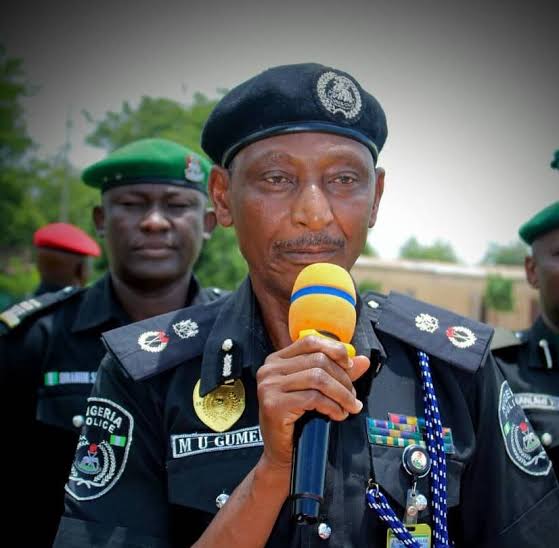
Kano State Police Commissioner, Usani Gumel, has vehemently denied allegations of disobeying Governor Abba Yusuf’s orders and taking instructions from unknown sources.

Gumel reiterated his commitment to maintaining peace and order in the state, citing his track record as a champion of community safety and sustainable peace.

The denial comes on the heels of accusations leveled by the state Attorney General, Haruna Dederi, who alleged that Gumel consistently disobeyed the governor’s instructions and unilaterally banned Eid-el Kabir festivities without consultation.

Dederi further accused the police commissioner of attempting to undermine the constitutional authority of the governor by taking instructions from unknown sources.

The ongoing crisis in Kano State revolves around the contentious emirate issue, with two claimants, Aminu Ado Bayero and Muhammadu Sanusi II, vying for the throne.

This has created palpable tension in the state, prompting the police to ban traditional Sallah Durbar processions to maintain peace.Gumel expressed shock and surprise at the allegations, noting his dedication to upholding the law and maintaining order in the state.

He reassured the public that the police would enforce the existing court order and work to resolve the emirate issue, prevailing on the two contending parties to respect the law.

Eid-el-Kabir: Emir Bayero greets Tinubu, Yusuf, cancels durbar amidst security concerns

By Uzair Adam Imam

Emir of Kano, Aminu Ado Bayero, has sent warm Eid-el-Kabir greetings to President Bola Ahmed Tinubu and Kano State Governor, Abba Yusuf.

In a message delivered at the Nassarawa mini palace on Saturday, the Emir emphasized the importance of sacrifice and prayer during Eid, expressing hopes for the leaders to continue delivering democracy dividends, protect lives and properties, and seek strength and courage from God.

He also announced the cancellation of durbar ceremonies to maintain peace in the state, following security recommendations.

Additionally, Sarkin Dawaki Babba, Aminu Agundi, announced that the Emir will observe Eid prayer at the Nassarawa mini palace on Sunday at 8:00 am.

He commended the public for their continuous prayers for peaceful coexistence in Kano and the nation at large.

The Kano Emirship is currently a subject of litigation following the dethronement of Bayero and the reinstatement of Mohammad Sanusi by Gov. Abba Yusuf of Kano State.

Governor Yusuf accuses CP of disobeying orders

By Uzair Adam Imam

Kano State Governor, Abba Kabir Yusuf, has accused the State Police Commissioner of disobeying his directives, particularly regarding the banning of Eid-el-Kabir festivities.

The Commissioner’s actions have been described as “disheartening and dangerous to peaceful coexistence” by the State Attorney General and Commissioner for Justice, Haruna Isa Dederi.

The government explained that the Commissioner’s decision to ban the festivities was unilateral, without consulting the Governor or the State Security Council.

This has raised concerns, as the Governor is the Chief Security Officer of the State.

The government also addressed the recent judgment by the Federal High Court No. 3 in Kano, which claimed that the former emir’s fundamental rights were infringed upon, including allegations of house arrest.

The government disputed this, stating that the former emir was not forced into Gidan Nassarawa, a government property, and was accompanied by security guards.

The government reiterated the Governor’s constitutional duty to ensure the protection of lives and properties.

They urged the people of Kano to continue their legitimate activities peacefully and promised to keep them informed as events unfold.

The government called on well-meaning Nigerians and international friends to intervene and allow the people of Kano to live in peace, stating that any attempt to undo the peace is an assault on democracy.

Super Eagles coach Finidi George resigns over NFF interference 

By Sabiu Abdullahi

Finidi George has stepped down as the head coach of the Nigerian national football team, the Super Eagles, citing interference from the Nigeria Football Federation (NFF). 

George’s resignation comes just two months after his appointment in May, and barely a week after the NFF announced plans to appoint a foreign technical adviser to oversee him. 

The former international winger had expressed frustration over the lack of support from the NFF and questioned the commitment of Nigeria’s top players in the crucial World Cup qualifiers. 

Under George’s leadership, the Super Eagles suffered disappointing losses to South Africa and Benin in the 2026 World Cup qualifiers, leading to his demotion. 

According to sources, George’s one-year contract will be downgraded, and his monthly salary will be reduced from N15 million to N5 million.

His handpicked assistants will also be replaced by the new foreign coach’s staff. 

The NFF’s decision to appoint a foreign technical adviser has been widely criticized by Nigerian football fans and stakeholders, who see it as a lack of confidence in local coaches. 

George’s resignation has added to the uncertainty surrounding the Super Eagles’ preparations for the upcoming World Cup qualifiers. 

The NFF has yet to officially confirm George’s resignation and has not announced a replacement for the former coach.

National Anthem: Is Nigeria losing its patriotic spirit?

By Haroon Aremu

For nearly 50 years, we have sung “Arise, O Compatriots, Nigeria’s call obey……,” pledging our loyalty to one nation bound in freedom, peace, and unity. But now, we are directed to change our national anthem. Could it be a strategic way of following the popular saying  Changing Narrative to Change Society or does this mean as compatriots we are now handicapped and cannot listen and obey Nigeria’s call anymore? Does it mean there is no more strength, love, and faith to serve our fatherland? Does it mean the labor of our heroes past has been in vain? Are we no longer able to serve with heart and might?

These are the questions lingering in masses mind as the national anthem has been changed. Many Nigeria citizens are clamoring: of all the changes that needed to be made, why the national anthem, especially during such times of hardship? Has the message of the anthem adopted in 1978, created by the five members of the Nigerian Police Band, lost its relevance?

Some citizens have given up hope that Nigeria can ever be better. But should this be our attitude? Instead of succumbing to pessimism, we should strive to refurbish our nation with optimism and prayer. When Americans wake up, they say “God bless America.” When we wake up, we often curse our leaders and condemn our country, forgetting that such negativity can have repercussions bouncing back to us.

The compatriots who built this country are not here to witness its destabilization. If we do not want their labor to be in vain, we must practice the values preached by our new anthem. Nigeria’s growth concerns not only the government but all its citizens.

The legislature has said that the newly launched national anthem serves as a beacon of hope and reassurance, starting with “Nigeria, we hail thee.” Are we hailing our dear native land for enduring economic hardship and remaining patient as we face daily challenges?

Change begins with us, at the individual level. Why are we not standing in brotherhood, despite our different tribes and tongues? Are we truly proud to serve our sovereign motherland?

As a member of the NYSC, one of the core aims we are exposed to is to promote national peace, togetherness, rehabilitation, reconstruction, and reconciliation of a torn-up country. Part of the bedrock of good governance is for the citizens to be involved in governance and also promote it. 

The National Youth Service Corps has been a supportive system for good governance from inception till date and it will always be.  The NYSC stands as a strong pillar that advocate for  good government policy.  Despite the economic hardship and the challenges we face, the NYSC continues to instill a sense of optimism and duty among the youth. 

The NYSC’s role in promoting government policies, such as the change of the national anthem, is crucial since the youth are a very important tool for the promotion of government policy, and through the NYSC, people learn to practice the values of unity, peace, and justice, which are embedded in the anthem and are essential for national development.  

Recently, I watched an interview asking people in the diaspora about the laziest African flags, and some chose Nigeria, does our tendency to take our nation’s issues with a grain of salt and not take them seriously as a people have any thing to do with their choice? Should that be the case? They forgot that our flag’s colors represent something meaningful: the two green stripes symbolize natural wealth, and the white symbolizes peace and unity. We should be proud of our flag because it is our symbol that truth and justice reign. Let us strive to improve on truth and justice for our nation’s growth so that we can hand over a banner without stain to the next generation.

There is a saying that a river that forgets its source will dry up. Let us be hopeful that going back to our source anthem will be a turning point for Nigeria. We should continue to pray with this saying: “Oh God of creation, grant this our request, by helping us to build a nation where no man is oppressed, and so with peace and plenty, Nigeria may be blessed.”

Let us hope that in this era of renewed hope, we are on the path to greatness and prosperity in our dear country. Promoting togetherness, avoiding tribalism and religious nepotism, and coming together as one nation are essential. There is a glimpse of hope that Nigeria will be great again, but it starts with each of us doing our part, not by condemning others. The NYSC scheme fosters this spirit of togetherness and national pride, reinforcing that change begins with us at the individual level. 

Nigeria’s journey to greatness begins with every citizen committing to unity, peace, and justice. By working together and supporting each other, we can ensure that the labor of our heroes past was not in vain and build a prosperous future for generations to come. May Nigeria be blessed!!

Haroon Aremu Abiodun is a youth corp member with PRNigeria center, Abuja and wrote in via exponentumera@gmail.com.

FUBK secures NUC accreditation for 12 programmes

By Jamilu Mohammed Magaji

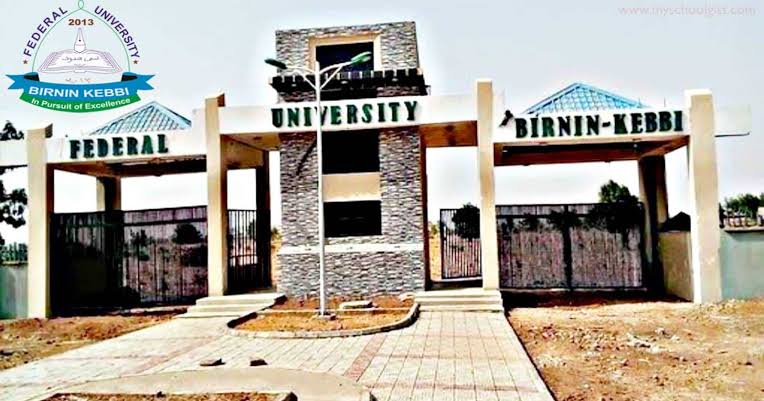
This is to inform the University community and the public that the National Universities Commission (NUC) has accredited 12 undergraduate programmes of the Federal University Birnin Kebbi (FUBK). Out of this number, 11 programmes were fully accredited, while one programme got interim accreditation.

The development is contained in the results of the accreditation exercise conducted by the NUC between November and December, 2023 signed by Ag. Director of Accreditation, Engr. Abraham Chundusu on behalf of the Executive Secretary and issued to the University.

The report disclosed that the accredited programmes cut across Faculties of Arts, Social and Management Sciences, and the Faculty of Science. It also highlighted that while full accreditation status is valid for five years, interim status lasts for two years, after which the programmes would be revisited.

The programmes that secured full accreditation include: Business Administration, History and International Studies, Demogragraphy and Social Statistics, Economics, Political Science and Sociology. The rest are Applied Geophysics, Biochemistry, Computer Science, Mathematics and Statistics. On the other hand, the programme with interim accreditation would be fully accredited in the next two years.

While speaking on the development, the Vice Chancellor of the University, Prof. Muhammad Zaiyan Umar, “expressed delight over the results. He was optimistic that the other programme with interim accreditation would achieve full accreditation in the next two years.”

The Vice Chancellor “expressed gratitude to all stakeholders who participated in the exercise. He thanked the Management of FUBK, Deans, Directors and Heads of Department. He also appreciated staff and students of the University for their support and cooperation which contributed to the success of the exercise.”

FUBK Bulletin reports that the NUC report revealed that “Section 10 (1) of the Education (National Minimum Standard and Establishment of Institutions) Act CAP 3LE3, Laws of the Federation of Nigeria 2004, empowers the NUC to lay down Minimum Academic Standards for all academic programmes taught in Nigerian Universities and also to accredite such programmes.”

“The implementation of the Core Curriculum Minimum Academic Standards (CCMAS) commenced in 2023/2024 academic session. The University is expected to ensure compliance in the utilization of the CCMAS for all programmes.”

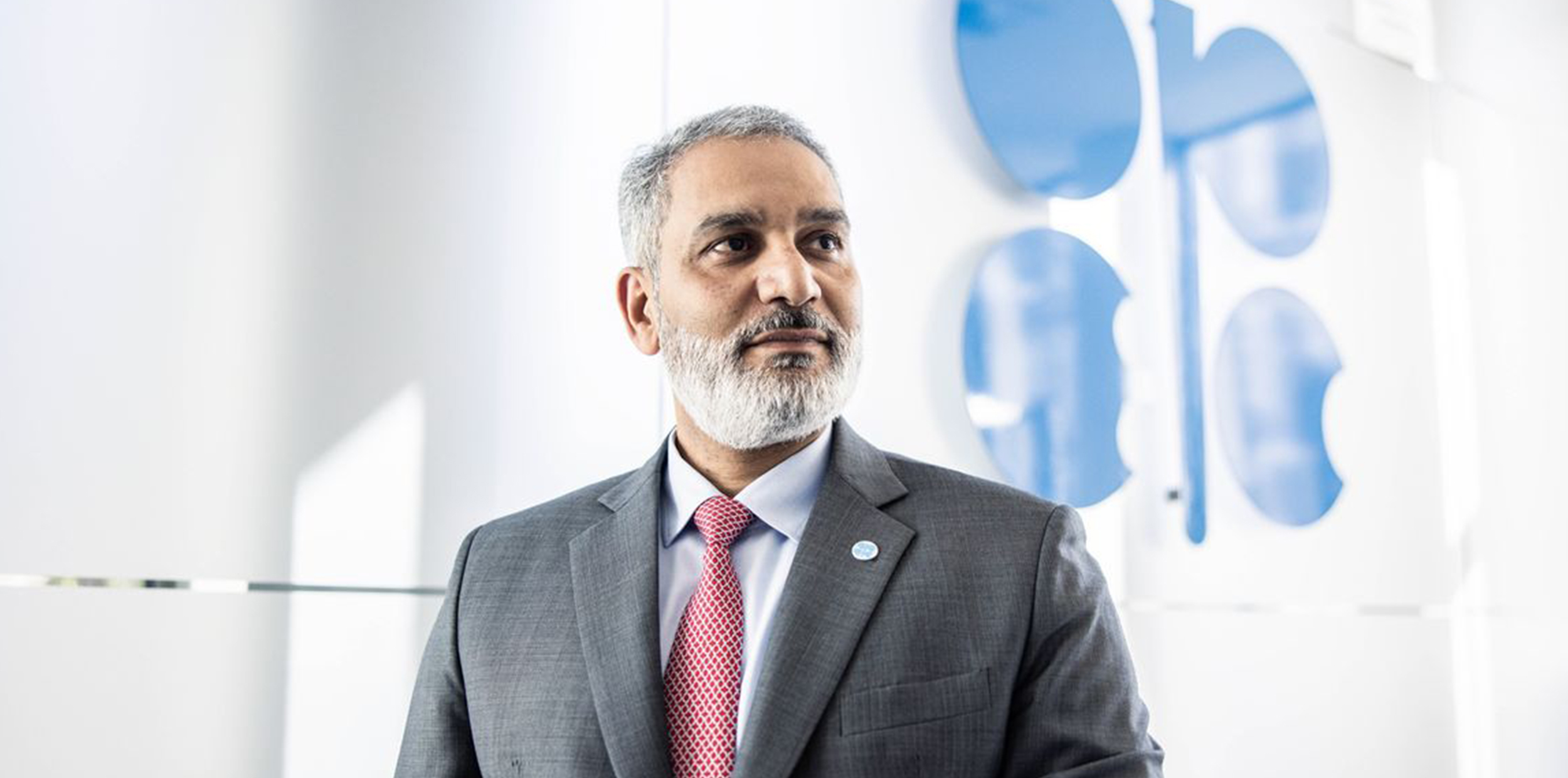
OPEC Sec Gen: Peak oil demand not on the horizon

By Haitham Al Ghais 

In the 1990s and 2000s, the world regularly saw column inches devoted to the theory of peak oil supply, amplified by voices like Colin Campbell and Matthew Simmons. Decades later, however, it has still not come to pass, as enhanced economics and constant improvement in technology have helped lower costs and open up new frontiers to expand the resource base.

The past decade or so has witnessed a shift to talk of peak oil demand, with some forecasters increasingly pushing theoretical scenarios that have decided before any data is analysed that oil should not be part of a sustainable energy future.

This is evident in some net zero scenarios, with suggestions that oil demand will peak before 2030 or, more dramatically, that oil demand will drop by more than 25% by 2030 and calls to stop investing in new oil projects. 

This narrative was repeated only yesterday when the IEA published its Oil 2024 report, which once again stated that oil demand would peak before 2030. It is a dangerous commentary, especially for consumers, and will only lead to energy volatility on a potentially unprecedented scale.

We have also heard similar narratives before, ones that have proven to be wrong. The IEA suggested that gasoline demand had peaked in 2019, but gasoline consumption hit record levels in 2023 and continues to rise this year. It also stated that coal demand had peaked in 2014, but today, coal consumption continues to hit record levels. 

Many net zero futures focus almost exclusively on replacing hydrocarbons, which make up more than 80% of the global energy mix today. Rather than adding new energy sources to the mix, the focus is on substituting energy sources, which flies in the face of the history of supplying energy to the world. The emphasis is on rhetoric over reality and constraint over consumer choice.

Today, wind and solar supply around 4% of global energy, with electric vehicles (EVs) having a total global penetration rate of between 2% and 3%, even though the world has invested over $9.5 trillion in ‘transitioning’ over the past two decades. OPEC welcomes all the progress made in renewables and EVs, but it is nowhere near close enough to replace 80% of the energy mix. Furthermore, electricity grids, battery manufacturing capacity and access to critical minerals remain major challenges. 

We should also remember that the development of renewables and EVs requires some oil-related products. Their future expansion will increase oil demand.

Of course, we all want to lower emissions, but at the same time, we all need ample, reliable and affordable supplies of energy. The two cannot be decoupled. Instead, our energy futures must focus on the full picture and not on a partial, incomplete one. In this respect, three key facts are worth bearing in mind. 

Firstly, future energy and oil demand growth primarily lies within the non-OECD developing world, driven by increasing populations, an expanding middle class and growing economies. From now until 2045, non-OECD oil demand is set to expand by over 25 million barrels a day (mb/d), with China and India contributing over 10 mb/d alone.

We should also remember that billions of people in the developing world still lack access to modern energy services. For these people, their energy future is not about net zero, deciding on the purchase of an electric vehicle, or ruminating over the costs and benefits of energy sources. Instead, it is about achieving the energy basics that the developed world takes for granted, such as being able to turn on a light, cook on a clean stove or have motorised transport to move to and from work or school.

Secondly, oil demand continues to increase. At OPEC, we see oil demand growth of 4 mb/d over the two years of 2024 and 2025, with other forecasters also seeing an expansion of over 3 mb/d. Even the IEA sees growth of 2 mb/d over this period, followed by growth of 0.8 mb/d in 2026. It then dramatically drops off a cliff to almost no growth in the next four years through 2030. 

This is an unrealistic scenario, one that would negatively impact economies across the world. It is simply a continuation of the IEA’s anti-oil narrative. Given the real trends we see today, we do not see peak oil demand by the end of the decade.

Thirdly, many parts of the world are witnessing consumer pushback as populations comprehend the implications of ambitious and unrealistic net zero policy agendas. This, in turn, is prompting policymakers to re-evaluate their approaches to future energy pathways, for example, in the UK, with the government recently supporting new oil and gas licenses. 

These shifts, alongside developments in the economic landscape, have seen OPEC revise its oil demand expectations upwards to 116 mb/d by 2045, and there is potential for this level to be even higher. We do not foresee a peak in oil demand in our long-term forecast.

On the supply side, technological improvements are allowing us to continually add resources to the base to help meet demand growth. There are clearly enough resources for this century and beyond, with the world’s proven crude oil reserves standing at over 1.55 trillion barrels. Moreover, technologies are also enabling us to take huge strides in reducing emissions, as exemplified by the availability of cleaner fuels, much-improved efficiencies and technologies such as carbon capture, utilisation and storage, carbon dioxide removal and direct air capture.

Everyone is free to have an opinion, but it is important that this is based on the realities we see before us today. There is a clear need to prioritise energy security, utilise all available energies, deliver energy affordability, enhance sustainability, reduce emissions, and not limit our energy options in the face of expanding demand.

Oil can deliver on all those fronts, and as we look to the future, its versatility ensures that we do not see peak oil demand on the horizon. Just as peak oil supply has never transpired, predictions of peak oil demand are following a similar trend.

Against this backdrop, stakeholders need to recognise the need for continued oil industry investment today, tomorrow, and many decades into the future, given the products derived from crude oil are essential for our daily lives. Those who dismiss this reality are sowing the seeds for future energy shortfalls and increased volatility and opening the door to a world where the gap between the ‘energy haves’ and ‘energy have-nots’ grows even further. 

Haitham Al Ghais became OPEC Secretary General in 2022. He served as Kuwait’s OPEC governor from 2017–21 and was the inaugural chairman of the OPEC+ Joint Technical Committee in 2017. Al Ghais was already an oil and gas industry veteran, having held senior positions in key OPEC and OPEC+ bodies and committees, as well as at the Kuwait Petroleum Corporation.
Hisbah shuts down hotel for allegedly lodging underage girls in Katsina

By Uzair Adam Imam

The Katsina State Hisbah Board has shut down New Palace Hotel in Katsina metropolis for allegedly corrupting the morals of underage girls.

The hotel was found to have violated an agreement with hoteliers across the state by allowing underage girls to stay on the premises.

Despite previous warnings, the hotel management failed to comply with the board’s regulations, leading to the hotel’s closure.

According to Dr. Aminu Usman (Abu Ammar), the Hisbah Commander General, the hotel was found to have lodged two underage girls in the same room during a recent inspection, which contravenes the Hisbah laws.

This is the second time the hotel has committed this offense, despite previous warnings and a promise by the hotel’s management to stop such incidents.

The Hisbah Board had earlier reached an agreement with hotel managers across the state that no hotel would accommodate underage children.

The hotel’s failure to comply with this agreement led to its closure.

The Hisbah Commander General reiterated the board’s commitment to enforcing reforms and instilling discipline that aligns with the state’s religious and cultural values.

The closure of the hotel is part of the Hisbah Board’s efforts to enforce reforms and ensure that hotels in the state comply with moral standards.

The board has been working to prevent the exploitation of underage girls and promote a culture of decency and respect for human rights.

ICPC invites foreign affairs ministry official over sexual harassment allegations

By Uzair Adam Imam

The Independent Corrupt Practices and Other Related Offences Commission (ICPC) has invited an official from the Ministry of Foreign Affairs for an interview regarding sexual harassment allegations against the Permanent Secretary, Ibrahim Lamuwa.

The official, Simisola Fajemirokun-Ajayi, had leveled allegations of persistent sexual harassment against Lamuwa, which triggered an investigation by the Office of the Head of Civil Service of the Federation (OHCSF).

The ICPC’s invitation letter, signed by Acting Director of Operations S. Yahaya, requests Fajemirokun-Ajayi to appear for an interview at the Commission’s Headquarters in Abuja.

While it is unclear whose petition led to the ICPC investigation, the agency is investigating the allegations.

Fajemirokun-Ajayi had alleged that Lamuwa’s conduct created an unsafe work environment, and she feared being raped. Lamuwa has responded to each alleged incident, claiming that Fajemirokun-Ajayi misconstrued his actions as sexual harassment.

He also made a counter-accusation, alleging that Fajemirokun-Ajayi’s claims resulted from his rejection of her “improper requests” regarding the ministry’s finances.

The investigation is ongoing, and the outcome may have significant implications for the Ministry of Foreign Affairs and the individuals involved.

Kano Emirate Tussle: Court fines Kano Govt N10M over Bayero’s right

By Uzair Adam Imam

A Federal High Court sitting in Kano has ordered Kano State Governor, Abba Kabir Yusuf, to pay N10 million in favor of deposed Emir of Kano, Alhaji Aminu Ado Bayero, for violating his fundamental rights.

The court ruled that the governor’s directive to the police to arrest Bayero without a valid reason was an infringement on his rights.

Bayero, through his counsel Mamman Lawan Yusifari SAN, approached the court to seek the enforcement of his fundamental rights to movement and personal liberty.

He told the court that the Executive Order by the Kano State Governor ordering the police to arrest him without any criminal complaints against him contradicts the provision of chapter 4 of the Constitution of the Federal Republic of Nigeria 1999 as amended.

The respondents in the suit include the Attorney General of the Federation, the Attorney General of Kano, Nigerian Police Force, Inspector General of Police, Commissioner of Police Kano Command, State Security Service, Nigerian Security and Civil Defence Corps, Nigerian Army, Nigerian Navy, and Nigerian Air Force.

The judgment reads: “That, the act of the Governor of Kano State in directing the Police to arrest the Applicant without any lawful justification is a threatened breach of the fundamental right to Liberty of the Applicant guaranteed under Section 35(1) of the Constitution of the Federal Republic of Nigeria, 1999 (as altered).

“That, the act of the Governor of Kano State in directing the police to arrest the Applicant without any lawful justification, which directive has forced the Applicant into house arrest, preventing him from going freely about his lawful business, constitutes a flagrant violation of his fundamental right to freedom of movement as guaranteed under Section 41(1) of the Constitution of the Federal Republic of Nigeria, 1999 (as altered).

“That the 2nd, 3rd, 4th and 5th Respondents, are either by themselves, their agents, servants, privies, or any other person or authority forthwith restrained from arresting, detaining, threatening, intimidating, harassing the Applicant or further interfering with the Applicant’s fundamental rights.

“That the 2nd Respondent and the Government of Kano State shall pay to the Applicant the Sum of 10,000,000.00 (Ten Million Naira) only for the breach and likely breach of the Applicant’s fundamental rights to personal liberty and freedom of movement guaranteed under the Constitution of the Federal Republic of Nigeria, 1999 (as altered).

“The prayer for the cost of filing and prosecuting this suit is refused, the amount having not been specifically pleaded and strictly proved.”