Month: June 2024

Kannywood/Nollywood film review: NANJALA (the Right Choice)

Company: Jammaje Productions

Director: Ali Nuhu

Producer: Abubakar Bashir Maishadda

Language: English

Cast: Nancy Isime, Sani Muazu, Sola Sabowale, Ali Nuhu, Enyinna Nwigwe, Rabi’u Rikadawa, Segun Arinze, Abba el-Mustapha, Asabe Madaki, Abba Zaki, etc.

Release date (Nigeria): 16-6-2024

After successful screenings in Turkey and the United States, the reportedly most expensive Kannywood movie, Nanjala, has finally hit our domestic screens. The movie is a groundbreaking attempt to bridge the gap between Northern Nigeria’s Kannywood and “mainstream” Nollywood by bringing actors from both industries together in a neutral setting and on an equal footing.

The film narrates the story of Nanjala (Nancy Isime), whose father, Captain Sembene (Sani Muazu), harbors a deep-seated disdain for female children. He, therefore, neglects his three daughters, focusing his care only on his son, Dititi (Abba Zaki). Nanjala has been a voracious reader with dreams of becoming a journalist since her childhood. However, her father’s constant discouragement makes his friend, Captain Jammoh Jummoh (Rabi’u Rikadawa), adopt her to help her realize her dreams.

Years later, Captain Sembene’s family falls apart. His favorite son, Dititi, becomes a drug addict, and his daughter, Jarry, leaves home, fed up with his mistreatment. Meanwhile, Nanjala achieves her dream of becoming a journalist but encounters problems with people in authority who want her to stop exposing their corrupt government.

How does the story unfold from there? Find out for yourself at Platinum Cinema.

The film addresses themes of women’s empowerment, the endurance of the human spirit, corruption, and moral decadence. It debunks the chauvinistic belief that female children are mere burdens to their parents and incapable of achieving greatness. We see how Nanjala suffers, initially at the hands of her chauvinistic father and later as a journalist hunted by a corrupt government. Despite these challenges, she overcomes her fears and insecurities to eventually emerge triumphant.

Nanjala is indeed a compelling film that has enough to hold viewers’ attention throughout its runtime. However, while it may lack attention-grabbing twists and turns, the wonderfully constructed screenplay and perfect use of flashbacks make it an enjoyable experience that you wish would never end. The cinematography is also spectacular, fully doing justice to the film’s scale. I haven’t enjoyed any Kannywood movie as much as this one recently. One must applaud the makers for their courage and financial strength in bringing such a big project to life.

The eponymous character seems to be inspired by Kenyan political analyst and activist Nanjala Nyabola. She also shares similarities with a character played by actress Miriam Osimbo in the Kenyan comedy series Hullaballoo Estate. Therefore, the film is likely to resonate with a broad African audience for that reason, and for its setting (a fictitious East African country), casting, character names, and universally relevant thematic preoccupations.

The film also deserves distinction marks for its English dialogue. The diction and flow of words are exceptional. What is even more interesting is how the Kannywood actors deliver their lines as flawlessly as their Nollywood counterparts in the cast. Thanks to Mallam Kabiru Musa Jammaje, the executive producer who pioneered the trend of “Kannywood films in English.”

In terms of performances, Nancy Isime fully immerses herself in the character of Nanjala and plays it exceptionally well. Sani Mu’azu is excellent as her chauvinistic father, delivering his dialogue with expressions that prove his acting skills. Rabi’u Rikadawa will win your heart as Nanjala’s foster father, who stands by her through thick and thin.

Asabe Madaki (Majuma), the character of Jarry, and Abba Zaki (Dititi) are first-rate as Nanjala’s siblings, but their mother, played by Sola Sobowale, does not live up to expectations. However, Enyinna Nwigwe is admirable as an accomplished author who later becomes Nanjala’s love interest. Segun Arinze, Ali Nuhu, and Abba el-Mustapha all shine in their brief roles. But it’s Hajara Haidar (Falmata) who will impress you with her adorable looks and fluent English, giving her small role a huge impact.

In conclusion, Nanjala has opened a new page in Nigerian cinema. It is a “Pan-Nigerian” film that will resonate across the country and beyond. I strongly recommend this insightful and inspiring film to every parent, young ladies, and, of course, anyone who enjoys seeing Africans speaking English on screen.

Habibu Maaruf

Kano, Nigeria abduhabibumaaruf11@gmail.com.

How Carlcare Nigeria almost cheated me

By Ishaka Mohammed

Carlcare Nigeria is the official customer care support for Infinix, TECNO, itel, and Oraimo users in Nigeria, offering after-sales service (repair, technical support, etc.).

I have known the company for a long time but only had a reason to seek its service on Saturday, June 8, 2024, when I realised that my Infinix SMART 5 phone lacks a particular feature: OTG. 

The USB On-The-Go (OTG) makes it easy to connect your smartphone with devices like flash drives, game pads, digital cameras, microphones, etc. Since my phone doesn’t support OTG, I couldn’t connect it with a wireless microphone.

Consequently, I made a reservation to visit a Carlcare service centre in Kaduna. While filling the online form, I wrote this: “My phone doesn’t support OTG, so I want to find out how I can still use it with a wireless microphone.” I screenshotted the reservation page, proceeded to the service centre and explained everything to a receptionist, who consulted an inner room and made me pay N4,700. 

After making the payment, I waited for over an hour before retrieving my phone. I tried to connect the microphone again, but nothing changed.

When I complained to the receptionist, she told me that the phone doesn’t support OTG. Then I asked her to explain why I had to pay to be told what I already knew, but she instead claimed I paid for “sub-board”.

As far as I was concerned, I didn’t know any sub-board. All I needed to know was the possibility of using my phone with a wireless microphone.

We kept exchanging words until it became clear that I wouldn’t get a refund, so I snapped the payment details and left.

I thereafter expressed my grievance to the company via Facebook, phone calls, email and X (formerly Twitter), but the responses were unfavourable. In fact, despite my explanation and supporting documents, I was told via X that I paid for the sub-board.

I thought of leaving the matter, but I couldn’t do that because the company could cheat me or another person in a similar manner in future.

I mentioned the issue to a patriotic Nigerian on X. He gave me his phone number, listened to me on the phone and warned Carlcare Nigeria in an X post to do the needful or be ready for action.

Within 20 hours after the post, I received calls from four different agents (of Carlcare). They all apologised, and the last one sent me my money.

You see, I made fruitless efforts for about six days (June 8 to 13), but Barrister Uthman Isa Tochukwu used a single X post to solve the problem within a day.

Although he clearly mentioned that legal consultation is not free, he helped me recover my money pro bono (without asking for payment).

I’m glad to have recovered my money but even thrilled that this encounter could deter the company from attempting to cheat other prospective customers.

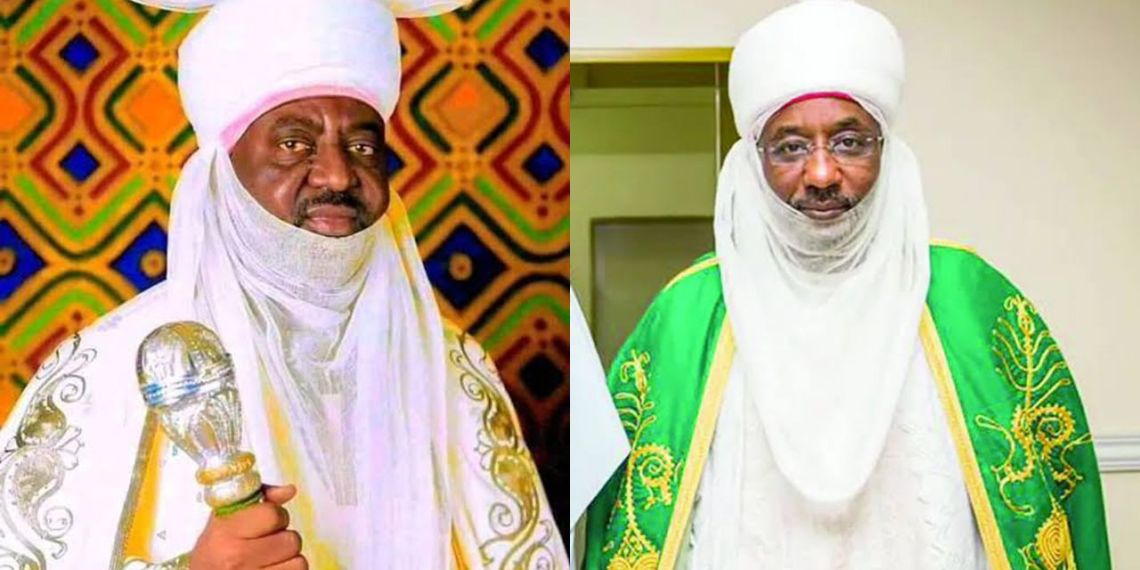
Court reinstates Aminu Bayero as Emir of Kano

By Sabiu Abdullahi 

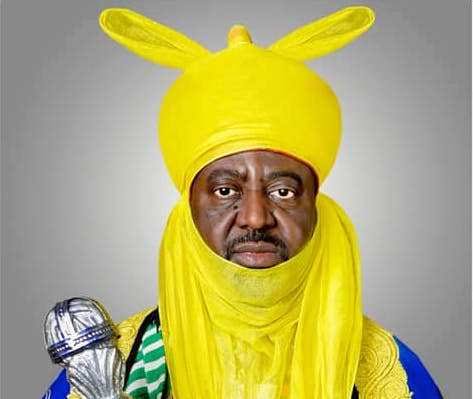
A Federal High Court in Kano has ruled in favour of Ado Bayero, reinstating him as the Emir of Kano. 

The court set aside the Kano State Emirate Law 2024, which had dissolved the five Emirates in Kano State and led to Bayero’s dethronement. 

Justice Abdullahi Muhammad Liman delivered the judgment on Thursday, ordering all parties to maintain the status quo. 

This development overturns the decision of the Kano State Government to repeal the law that established the Emirates and enthroned Bayero as the 15th Emir of Kano. 

The Kano Government had relied on the repealed law to dethrone Bayero and install Muhammadu Sanusi as the 14th Emir of Kano. 

However, Aminu Babba Danagundi, a kingmaker in the former Kano emirate, challenged the law in court, seeking a declaration of nullity. 

The court’s ruling has now reinstated Bayero as the Emir of Kano, marking a significant development in the ongoing legal battle over the Kano emirate. 

Further details are expected to emerge in the coming days.

Court postpones ruling on Kano Emirates Council repeal law

By Sabiu Abdullahi

A Federal High Court in Kano has postponed its ruling on the validity of the Kano Emirates Council Repeal Law 2024 to 2 pm today.

The judgement was initially set for 12 pm but was shifted before midday, and all parties in the suit were notified. 

The Kano Emirates Council Repeal Law 2024 was recently passed by the Kano State House of Assembly and signed into law by Governor Abba Yusuf.

The law led to the dethronement of Emir Aminu Ado Bayero and the reappointment of Muhammadu Sanusi II as the 16th Emir of Kano.

It also reversed the creation of four emirates established by former governor Abdullahi Ganduje in 2020. 

However, Sarkin Dawaki Babba, Aminu Danagundi, challenged the legality of the new law and asked the court to declare it null and void.

After hearing the motion last Friday, Justice Abdullahi Liman of the Federal High Court sitting in Kano adjourned the ruling till today. 

Counsel to the State House of Assembly and its speaker, Eyitayo Fatogun (SAN), informed the court of a notice of appeal filed at the Court of Appeal, seeking a stay of proceedings.

However, Justice Liman noted that there was no evidence that the appeal had been entered nor any formal application for a stay filed. 

The court’s ruling today will determine the fate of the Kano Emirates Council Repeal Law 2024 and its implications for the emirates in Kano State.

Kano Emirate Standoff: Sanusi, Bayero await verdict today

By Uzair Adam Imam

The Federal High Court in Kano will deliver a judgment today on the legality of the Kano Emirates Council Repeal Law 2024.

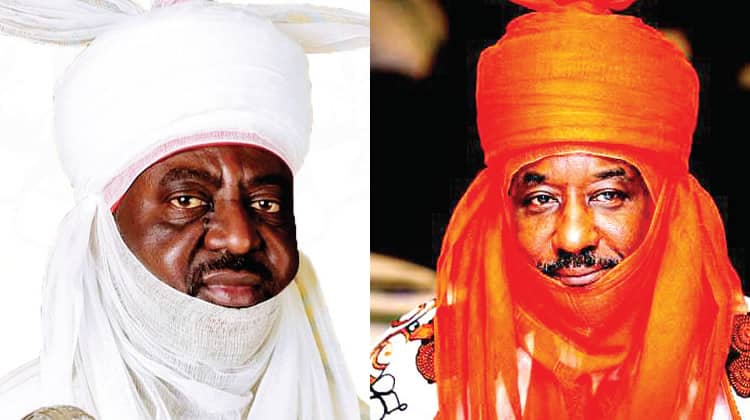
The law, enacted by Governor Abba Kabir Yusuf, led to the removal of Aminu Ado Bayero as the 15th Emir of Kano and the reversal of the creation of four emirates – Bichi, Rano, Karaye, and Gaya – by his predecessor, Abdullahi Umar Ganduje.

The law also led to the re-appointment of Muhammadu Sanusi II, who was dethroned in 2020, as the 16th Emir of Kano.

Aminu Babba Danagundi, a kingmaker in the former Kano emirate, challenged the law in court, seeking a declaration of its nullity.

The judge, Justice Abdullahi Muhammad Liman, will also rule on a motion to stay the proceedings filed by the State Attorney General and Kano State Government.

The ruling will determine the fate of Sanusi and Bayero in the protracted emirate tussle.

NCS announces significant achievements in revenue collection, trade facilitation

By Sabiu Abdullahi

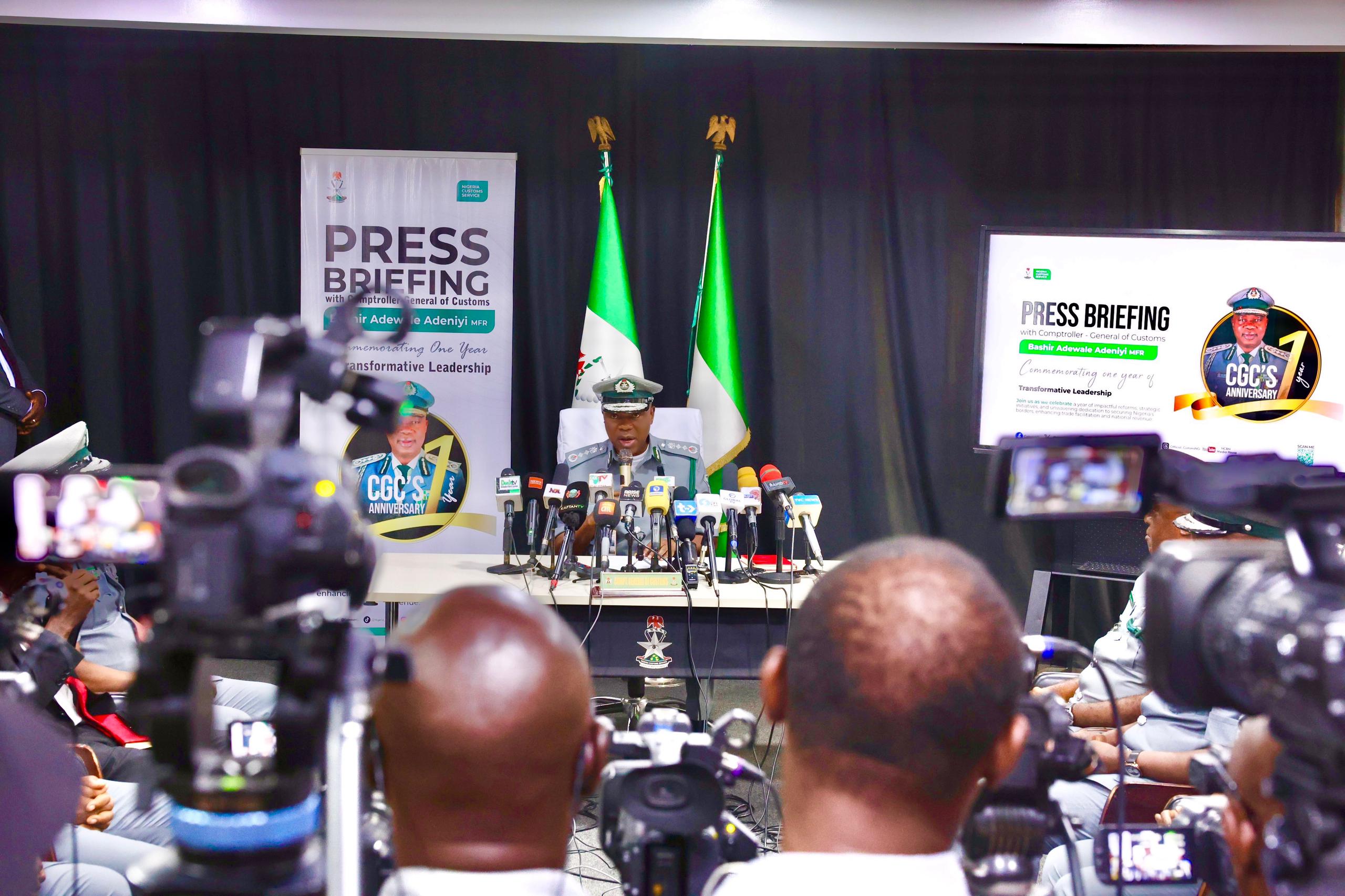
At a press conference in Abuja, Bashir Adewale Adeniyi, the Comptroller-General of the Nigeria Customs Service (NCS), reported significant achievements in the past year, underscoring the agency’s commitment to aligning with the policy directives of President Bola Ahmed Tinubu’s administration.

Adeniyi highlighted notable improvements in revenue collection, trade facilitation, anti-smuggling efforts, and stakeholder collaboration. 

The NCS reported a remarkable 74% increase in revenue collection, totaling N4.49 trillion between June 2023 and May 2024.

This substantial growth is a testament to the service’s enhanced efficiency and dedication to supporting Nigeria’s economic stability. 

In addition to financial achievements, the NCS has successfully decongested ports and reopened critical access roads, facilitating smoother trade operations.

The introduction of a dedicated terminal for exports has further bolstered trade efficiency, leading to significant gains for the economy. 

Adeniyi also stated the intensified efforts against smuggling, which have resulted in numerous notable seizures and arrests, demonstrating the NCS’s commitment to protecting society.

These efforts are complemented by improved collaboration with stakeholders, which has led to an 81.5% improvement in service reform indices, as reflected in the Presidential Enabling Business Environment Council (PEBEC) ranking. 

During the press conference, Adeniyi reassured Nigerians that these measures are designed to benefit the nation’s well-being by facilitating trade, reducing costs, and improving revenue collection to support government initiatives.

He acknowledged challenges, such as exchange rate fluctuations, and noted the NCS’s commitment to addressing these issues. 

The Comptroller-General expressed his appreciation for the support from President Tinubu, the Honourable Minister of Finance, and other stakeholders. He reaffirmed the NCS’s dedication to contributing to a safer and more prosperous Nigeria. 

“This year has been transformative for the Nigeria Customs Service, and we are proud of the progress made in various areas. Our focus remains on enhancing trade, protecting our society, and ensuring that we continue to generate the necessary revenue to support national development,” Adeniyi stated.

The return of Sanusi II, Tinubu, the north, and 2027

By Zayyad I. Muhammad 

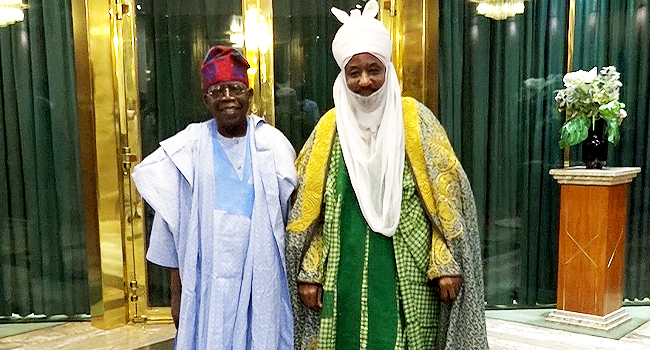
Emir Muhammadu Sanusi’s two ascensions to the throne of the ancient Kano Emirate have been deeply intertwined with local and national politics. On June 9, 2014, Sanusi was installed as the 14th Emir of Kano by then-Governor Rabiyu Musa Kwankwaso, seemingly to spite former President Goodluck Jonathan’s administration. Earlier that year, on February 2, Sanusi had been dismissed from his position as the Governor of the Central Bank of Nigeria for alleging that the Nigerian National Petroleum Company (NNPC) had failed to remit a $20 billion statutory fund to the federal government—a claim denied by Jonathan’s administration.

On March 9, 2020, Governor Abdullahi Umar Ganduje removed Sanusi from the throne, citing his alleged disregard for lawful directives. However, the primary motive behind Sanusi’s dethronement was political, as he had been openly critical of several policies and projects of the Ganduje administration. Ganduje was angered by Sanusi’s penchant to play a dual role as a revered Emir and a social critic, an untenable combination in the Nigerian context.

On May 23, 2024, Governor Abba Kabir Yusuf reinstated Sanusi as the Emir of Kano after signing a state assembly bill that dissolved the five emirates created by the Ganduje administration and dethroned the 15th Emir of Kano, Aminu Ado Bayero. Governor Yusuf’s decision to reinstate Sanusi Lamido Sanusi was also politically motivated, aimed at reversing Governor Ganduje’s actions and continuing the supremacy battle between former Governors Abdullahi Ganduje and Rabiyu Musa Kwankwaso.

Sanusi’s journey from being the Governor of the Central Bank of Nigeria (CBN) to his dismissal, his installation as the Emir of Kano, his subsequent dethronement, and finally, his reinstatement is marked by political intrigue. It begins with confusion and ends in confusion. His return as Emir of Kano on May 23, 2024, might seem straightforward, but it is anything but simple. It’s akin to a complex mathematical equation that appears simple on the surface but requires the application of numerous mathematical laws to solve. Sanusi’s reinstatement is a product of intricate local and national political manoeuvring, with an eye towards the 2027 elections from all the actors.

Senator Rabiyu Musa Kwankwaso is determined to erase any traces of Ganduje’s influence in Kano politics. Initially, this strategy worked for Kwankwaso without significant interference from the centre. However, it has now dawned on Tinubu and his handlers that allowing the Kwankwasiyya group to operate unhindered could lead to the loss of Ganduje’s group support without gaining substantial assurance from the Kwankwasiyya group. In the 2023 presidential and governorship elections, Kwankwaso garnered 997,279 votes, while Tinubu received 517,341 votes.

In the gubernatorial race, Abba Yusuf Kabir of the Kwankwasiyya group obtained 1,019,602 votes, whereas Nasir Yusuf Gawuna of the Ganduje group secured 890,705 votes, a difference of 188,897 votes. Maintaining this voting pattern is crucial for Tinubu and his team heading into 2027. Some members of the Ganduje group are discontent with the centre after narrowly losing the gubernatorial seat at the Supreme Court. If they continue to feel unprotected despite their connections at the centre, Tinubu’s prospects in Kano for 2027 could be jeopardized. Thus, the centre’s support for Aminu Ado Bayero is not surprising.

The calculations in Abuja, though not overtly confirmed, seem poised to influence Kano’s political landscape at a critical juncture. Giving the Kwankwasiyya group free hands to operate as they wish would be politically risky for the centre. Abuja needs to have some strong feet on the ground in Kano. Kano votes are crucial in the north.

The ongoing power struggle in Kano is straightforward: it’s an attempt to balance interests, strike a political equilibrium, and prepare the ground for future battles. For the common man, the advice is clear: do not take sides, as these are political manoeuvres made with future gains in mind. However, the implementation of these decisions will inevitably have collateral damage. In politics, there is no provision for a collateral damage estimate (CDE)—becoming collateral damage means being in the wrong place at the wrong time. No harm is intended personally.

What’s happening in Kano? It’s a fascinating and high-stakes game—a zero-sum game, to be precise. The same thing happened. On October 22, 1983, Governor Abubakar Rimi established four new emirates in Kano State to diminish Emir Ado Bayero’s power and influence. After his inauguration, his successor, Governor Sabo Bakinzuwo, revoked the law and restored the emirs to their previous positions as district heads.

Zayyad I. Muhammad writes from Abuja via zaymohd@yahoo.com.

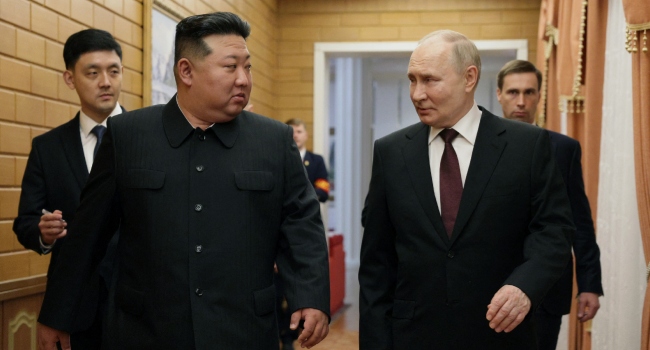
Russian President Vladimir Putin arrives in North Korea for 2-day state visit

By Sabiu Abdullahi 

Russian President Vladimir Putin has arrived in North Korea for a two-day state visit, where he was received by North Korean leader Kim Jong Un at the airport in Pyongyang. 

The visit is expected to focus on further arms deliveries from Pyongyang, which Moscow intends to use in its ongoing war against Ukraine. 

According to the Russian news agency Interfax, the main part of the visit will begin on Wednesday with a meeting between Putin and Kim on Kim Il Sung Square, Pyongyang’s urban and symbolic center. 

The day will continue with long negotiations, first in one-on-one talks and then on a larger scale.

The two leaders will also share several meals together and participate in a wreath-laying ceremony and a joint concert visit. 

This visit marks a significant development in the relationship between Russia and North Korea, which has been strengthening in recent years.

Putin’s last visit to North Korea was in 2000, when he was received by Kim’s father, Kim Jong Il. 

Since then, the two countries have experienced a long break in their relationship, but they have recently moved closer together, particularly in the context of the Ukraine war. 

As reported by observers, the visit is expected to solidify the alliance between Russia and North Korea, with a focus on arms deliveries and military cooperation. 

The visit is seen as a significant development in the geopolitical landscape, with implications for the ongoing conflict in Ukraine and the broader regional dynamics.

FG must avoid fostering discord in Kano

By Dr. Mansur Hassan

In a concerning and unprecedented development in Nigeria’s history, the Federal Government is undermining the powers of the executive and legislative arms of government in Kano State. This dangerous attempt threatens to plunge the state into a form of insecurity akin to that which plagues northern Nigeria.

Recently, Kano State has emerged as a hotspot of political tension and potential unrest. Allegations have surfaced that the APC-led Federal Government is attempting to create a new breed of Boko Haram insurgents in Northern Nigeria. If these claims hold any truth, they represent not just a political maneuver but a potential security disaster that could destabilize the entire region.

Federal security agencies have been accused of providing undue support to the deposed Emir of Kano, Aminu Ado Bayero. Instead of ensuring peace and order, these agencies are perceived as undermining the authority of Kano’s state government. This situation sets a dangerous precedent and could lead to widespread unrest if not addressed promptly.

The people of Kano are ready to resist any attempts to undermine the constituted authority in the state. This resistance is deeply rooted in the belief that the NNPP administration is genuinely committed to serving the people—a commitment that resonates strongly with their mass followership. Without the peace-loving Kwankwasiyya administration, Kano might already have descended into chaos.

Certain individuals within Kano, who can be seen as enemies of the state and Northern Nigeria at large, are misleading the Federal Government. These individuals are pushing for a state of emergency in Kano, and the Federal Government must scrutinize these advisors’ motives and the potential consequences of their recommendations.

As the 2027 elections loom, the political stakes are higher than ever. It is imperative for the Federal Government to ensure that its actions and those of its agencies do not fuel political instability or violence. No amount of intimidation or political harassment will sway the people of Kano from their allegiance to the Kwankwasiyya Government.

The Federal Government must act swiftly and decisively to address these concerns. Avoiding any course of action that could plunge Kano into chaos is crucial. The state’s stability is essential not only for its residents but also for the broader peace and security of Northern Nigeria.

Mansur Hassan, PhD wrote from Kano

My journey to NYSC orientation camp and the fear of the unknown

By Haroon Aremu 

Upon graduating from university, I eagerly anticipated joining the mandatory one-year national service with the National Youth Service Corps (NYSC). I shared my excitement with friends, but not all were keen to join immediately. One friend said he needed to hustle and build his career first. However, I wanted to finish it quickly and move on to my next life phase. So, I registered and subsequently got mobilised for a three-week-long camping/orientation.

Embarking on the journey to join the NYSC is more than just a transition to adulthood; it is a rollercoaster ride filled with unexpected twists and turns. 

Call up letter came, and it stated that  I was to camp at Niger State, Paikoro local government, Paiko camp, but after that three weeks, I am to complete my service in Abuja. I was happy and prepared to travel, as I had never been to Niger State before. I learned that Niger State is one of the largest states in terms of landmass. I thought about how beneficial it would be for the federal government to collaborate with NYSC and invest in agriculture to empower graduates to develop their futures. This would surely boost the economy at both the federal and state levels.

Before setting off, a friend’s cautionary words lingered in my mind. He chose to prioritise his career over immediate service, urging me to hustle first. However, my eagerness to dive into the experience outweighed any apprehensions. NYSC is a mandatory scheme for all graduates, except those over thirty, who are usually issued an exemption letter.

The night before departure, a subtle warning on the NYSC documentation reminded us not to travel at night—a precaution that resonated deeply. Despite the allure of reaching our destination quickly, we chose safety over haste, breaking our journey when dusk fell. This lesson applies beyond NYSC, reminding us that vigilance is key even in seemingly safe spaces.

As we embarked on our journey, camaraderie filled the air. The sense of unity was palpable while travelling alongside fellow prospective corps members. From shared laughter to prayers for safe travels, each moment cemented the bonds of camaraderie that NYSC fosters. My journey was fascinating, especially with a friend assigned to the same state. “Corpers on board” was boldly written on our vehicle, and the people we passed hailed and prayed for our safe journey. We chatted and played music, making the trip memorable.

Yet, amidst the laughter and anticipation, a stark reality halted us. Amid lush landscapes, armed men appeared—a stark reminder of the world’s unpredictability. It was a wake-up call, underscoring the importance of vigilance even in seemingly serene surroundings. We stopped at a canteen to eat a sumptuous meal, enjoying the privileges of being a corps member. Continuing our journey, we enjoyed the natural beauty of Nigeria’s landscapes.

However, amidst the tension, there were glimmers of hope. Security checkpoints operated by dedicated officers reassured us of their commitment to our safety. Their professionalism and integrity stood as beacons of hope on an otherwise uncertain journey.

The most unexpected twist came when a seemingly menacing encounter turned into a moment of levity. Startled awake by a tap on the shoulder, I found myself face-to-face with an armed security officer, his stern demeanour giving way to a shared joke. In that moment, fear melted into laughter, reminding me that amidst life’s uncertainties, moments of joy abound.

The journey left an indelible mark as we finally arrived at our destination. From cautionary tales to unexpected camaraderie, each moment was a testament to the importance of preparation and vigilance. As I shared my story with my hustling friend, who had chosen a different path, I couldn’t help but wonder what adventures awaited him. For in the journey of NYSC, every twist and turn is a chapter waiting to be written, a testament to the resilience of the human spirit and the bonds that unite us all. This is the essence of NYSC, preaching national unity and peace.

Apart from the interesting aspects of NYSC, I believe numerous advantages will convince you to join the program. If you want to know the funny joke the officer cracked with me, I guess you should also prepare to go to your NYSC to experience how interesting and memorable the journey was. As long as we take the necessary security precautions and avoid rough driving, NYSC ensures our safety because we are all dear to the government.

Haroon Aremu Abiodun is a youth Corp Member with PRNigeria centre, Abuja and wrote in via exponentumera@gmail.com.