Month: June 2024

WCO trains Nigerian customs officers on advance ruling, harmonised system

By Sabiu Abdullahi

The World Customs Organisation (WCO) has collaborated with the European Union (EU), the Global Alliance for Trade Facilitation, and GIZ to launch a capacity-building program for the Nigerian Customs Service (NCS). 

The training, held from May 20 to May 31, 2024, focused on critical customs procedures such as Tariff Classification, Rules of Origin, and Customs Valuation. 

“The capacity building is divided into three stages: Intermediate, Advanced, and Training-of-Trainers (ToT), to ensure a thorough and progressive enhancement of skills among NCS officers,” said a WCO official. 

The training aimed to improve the implementation of Advance Ruling, a trade facilitation measure designed to bring certainty and transparency to Nigeria’s customs operations. 

“The WCO has supported the development of Standard Operational Procedures (SOPs) to guide the implementation of Advance Rulings, providing detailed guidelines on handling HS and RoO,” the official added. 

The initiative aims to create a more efficient and transparent customs environment in Nigeria, aligning with international standards and fostering greater trust and cooperation in global trade.

Nigerians resort to taking loans as survival strategy amidst soaring inflation

 By Sabiu Abdullahi

A recent report by the Central Bank of Nigeria (CBN) has revealed that Nigerians are increasingly relying on loans to survive the harsh economic conditions, with consumer credit jumping by 12% to approximately ₦3.9 billion in January 2024. 

According to the CBN’s monthly economic report, the total consumer credit outstanding increased to ₦3,823 billion in January 2024, with personal loans accounting for 79% of consumer credit and retail loans accounting for 21%. 

The report noted that personal loans increased by 14.3% to ₦3,028 billion, while retail loans rose by 4% to ₦795 billion. However, consumer credit as a share of total credit from Online Data Capture Systems (ODCs) declined to 7% from 8% in the preceding month. 

The surge in demand for loans comes as the headline inflation rate hit 33.95% in May, forcing the CBN to hike the interest rate consecutively to 26.25%. 

A study by SBM Intelligence found that 27% of Nigerians across different income categories now resort to loan apps to keep up with their living expenses in the wake of record inflation. 

“The severe impact of the unyielding inflationary pressures on the daily lives of Nigerians, especially those already grappling with limited financial resources, is evident in the surge in demand for loan apps,” the report noted. 

As the cost of living continues to escalate, Nigerians are finding it increasingly difficult to make ends meet, with many resorting to loans as a survival strategy.

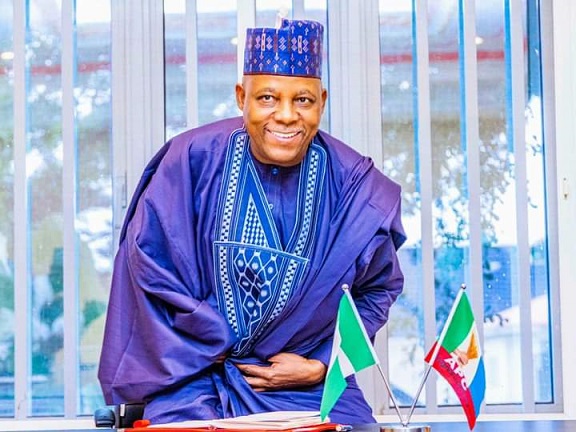
Between Shettima and his political doppelganger: a story of inspiration and appreciation

By Lawan Bukar Maigana

A United States congressman, Major Owens once said, ‘I have a great deal of respect and admiration for people who put themselves on the line.’

Vice-President Kashim Shettima’s political doppelganger, Awana Alhaji Gana, often describes him as an exemplary leader because, according to him, he was taught as a child in Islamic school that a leader is a servant of the people and a loyal servant sacrifices his life to protect his masters – the people.

Indeed, this was justified by Shettima when he was the governor of Borno State. He stood his ground to protect his people and never ran away from battle, putting his life on the line and confronting the monsters called Boko Haram.

He mobilised the police, rallied soldiers and established the Civilian JTF – a group of patriotic young people who are always ready to sacrifice their lives for their country – which helped to stem the tide of the insurgency.

The fear in Maiduguri in 2014 was so intense that some notable persons, politicians, and non-politicians had to relocate their families to Abuja. Shettima, who was abroad at that time, canceled the assignment, returned home, and mobilised residents to rise in defense of their ancestry. They succeeded in pushing the enemies back. That was the time when everybody thought the cursed elements had hoisted their flags in the city of Maiduguri.

Based on the sleepless nights he had endured in the latter part of his first tenure – moving from one shooting or bombing scene to the other and liaising with the federal government to protect Borno people – most observers actually thought he would just chicken out and not bother to seek a second term in office. But he contested, won, and sustained the fight against the enemies.

VP Shettima has always attracted the best brains to himself, being a first-rate intellectual as well. This was why it wasn’t difficult for him and this remarkable look-alike to find each other and connect.

Unlike other politicians who only read articles written by their admirers and watch activities done by others in their names without appreciation, Shettima keeps his eagle eyes around, following everything that involves his name and showing appreciation. He doesn’t look down on people, which is why his political network is full of diverse people of all classes.

This reminds me of the first time he called to appreciate me when I wrote an article titled “Kashim Shettima: Courage, Conviction Cannot Kill a Man,” in 2022 which was published in many national dailies across the country.

Interestingly, when VP Shettima met Alhaji Gana, who politically mimics him, he observed the striking similarities between himself and the latter.

Kashim Shettima is known for visiting his friends, honouring their special invitations, and standing with them during trying times. These quintessential traits have been maintained by his political doppelgänger whose friends work with him. Awana attends marriages, condoles with people who lost their loved ones, and organises a caricature of every political event the VP has attends.

VP Shettima once again showed the humane side of him recently when he posted on Facebook that: “On Tuesday, I paid a condolence visit to the family of my brother, friend, and colleague at Zenith Bank, Chief Kester Christopher Kenechuku Ogualili, who passed away on May 3, 2024. Kester and I have come a long way, and now that he is no more, we will step in to fill the vacuum created by his demise.”

Lawan Bukar Maigana writes from Borno and can be reached via email: lawanbukarmaigana@gmail.com

NAF destroys illegal refining sites, boats in crackdown on oil thieves

By Sabiu Abdullahi

The Nigerian Air Force (NAF) has launched a series of airstrikes against illegal refining sites and boats in Rivers, Bayelsa, and Imo states, destroying 13 sites and 7 boats. 

According to NAF spokesperson, AVM Edward Gabkwet, the air interdictions were carried out between June 18 and June 22 as part of Operation Delta Safe. 

Gabkwet said the airstrikes also dispersed 5 J-5 buses attempting to siphon crude oil products from surface tanks. 

The NAF spokesperson described the operation as a significant success, saying: “Air strikes against economic saboteurs and oil thieves have continued to record the expected outcomes.

“This is majorly due to improved intelligence, enhanced air-to-ground coordination, and most importantly, due to NAF’s improved agility and resilience.” 

He added that the operations will be sustained until the activities of the oil thieves are reduced to the barest minimum. 

The crackdown on oil thieves is part of the Nigerian government’s efforts to combat illegal oil refining and smuggling in the Niger Delta region.

Waste to wealth: An introduction for students 

By Bilyamin Abdulmumin

A couple of days ago, the Lagos State government officially entered into an agreement with the Netherlands government to establish a waste-to-energy firm. 

The initiative was said to get rid of heaps of waste across the Lagos metropolitan area (about 2250 tons daily) and generate between 60 and 75 megawatts of electricity annually, providing some 40,000 homes. 

In addition, the Lagos State Governor Sanwo-Olu said the project will help cut down the country’s carbon footprint, as about 550,000 metric tons of carbon dioxide and other greenhouse gasses emitted daily from the dumpsite will be addressed. 

Singapore is one of the countries that is an embodiment of waste to energy. Singapore is said to have zero waste, thanks to its waste-to-wealth program. They completely convert their waste, partly into energy and other parts into recycling.  

Trust developed nations; they always think ahead. In Denmark, an innovative twist was added to this technology. Due to the extensive space occupied by the conversion centre, the top area of this facility would be transformed into a game reserve and tourist attraction. Who said you can’t kill two birds with one stone?

As Sanwo-Olu highlighted, the world is currently grappling with climate change, so several countries have been resorting to generating energy from biomass. This includes food crops (maize, sugarcane, cassava, etc.), lignocellulosic materials (e.g., woods), and waste (a mixture of biomass, petroleum products, and metals), the latest being the most expensive for conversion. By using waste to generate energy, countries would not only clean the environment but also cut down their carbon budget, hence mitigating the effect of the looming climate change. 

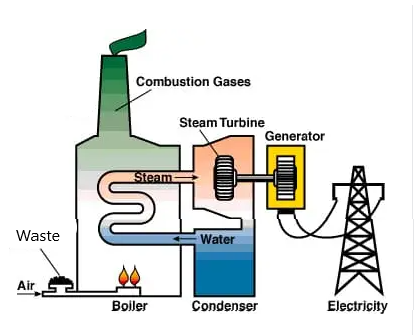
The most widely used technology for waste-to-electricity conversion is the combustion integration into steam turbines. In this process, the waste is burned in the boiler unit to generate steam, which generates steam channels to power the turbine and the movement of turbine generic electricity. But that is not all; the exhaust steam is channelled into a condenser unit, where the steam is converted back to the water, then finally the water is pumped to the boiler to complete the cycle.  

Applications of the laws of thermodynamics in each unit allow the energy usage analyses to make each step more efficient, that is, reduce energy waste in each section (boiler, turbine condenser, and pump). This technology is known as a steam turbine, one of the heat engines based on the principle of the Rankine cycle. A closely related heat engine is a locomotive rail or refrigeration and Air conditioning system based on Rankine cycles. 

 The second way to convert waste to energy is pyrolysis. In pyrolysis, waste is converted to oil instead of directly burning them. As mentioned above, these oils can then be burned in a boiler to generate steam and the cycle proceeds. Catalysts like zeolite can be used to upgrade the oil for use, such as petroleum.  The difference between pyrolysis and combustion is that in the former, oxygen is not allowed; in fact, pyrolysis means a lack of oxygen. In the former, oxygen is necessary; without oxygen, combustion will not occur, or there will be incomplete combustion if it is inadequate. 

The last category of technology for waste conversion is gasification; in this process, waste is converted to carbon monoxide and hydrogen (syngas); these gasses can be burned in a boiler to generate steam, and the process proceeds just as mentioned. Similarly, the syngas can be upgraded to synthetic fuels using metal catalysts like iron through popular technology known as Fischer-Tropsch. Depending on the quality, synthetic fuels produced may be used as petroleum, too. Gasification differs in combustion in the oxygen usage; in the former, oxygen is meticulously controlled.

Wise students will check out abundant videos on YouTube demonstrating these three categories of biomass conversion: combustion, pyrolysis, and gasification, the principles of Steam Turbines, Heat Engines, the Rankine cycle, and the Carnot Cycle, the applications of the laws of thermodynamics, and the catalysis involved in the bio-oil upgrade and the Fischer-Tropsch process.

If you are in the secondary or early years of a degree program and already aware of this information, then you are a step ahead, and you are not only fortunate than your peers but most of us at your level.

Bilyamin Abdulmumin wrote via bilal4riid13@gmail.com.
Atiku Abubakar pays visit to former President Buhari

By Sabiu Abdullahi

Former Vice President Atiku Abubakar, the presidential candidate of the Peoples Democratic Party (PDP) in the 2023 election, paid a surprise visit to former President Muhammadu Buhari at his residence in Daura, Katsina State. 

Accompanied by former Governor Aminu Tambuwal and other PDP stalwarts, Atiku’s closed-door meeting with Buhari has set tongues wagging about the purpose of the visit.

This development comes hot on the heels of Atiku’s recent meetings with former Military President Ibrahim Babangida and former Head of State, Abdulsalami Abubakar, in Niger State. 

While the details of these discussions remain under wraps, sources suggest that Atiku’s visit may be connected to the 2027 general elections.

As political intrigues continue to unfold, many are watching with bated breath to see what this unexpected meeting will yield.

Kano Emirate tussle: What I would do if I were Ganduje, by Dr. Muhsin Ibrahim

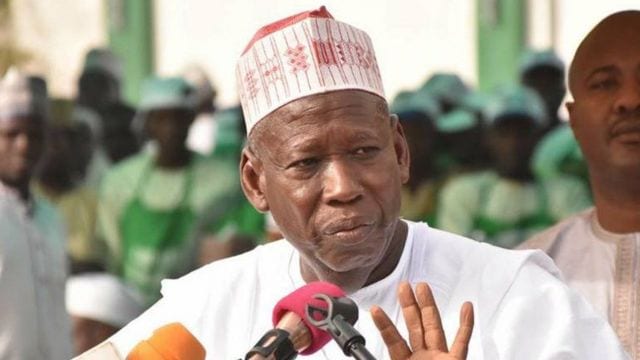
If I were Dr. Abdullahi Umar Ganduje, I would respectfully refrain from interfering in Kano politics, as it is not an election season.

Despite my desire to influence the state’s affairs, I would acknowledge that my time in charge has passed, and I would allow Engr. Abba Kabir Yusuf to lead as he sees fit.

I have had my time and made significant decisions, even challenging my former long-term boss.

Furthermore, I would prioritize the well-being and safety of the state and its people above my personal political ambitions.

Given my tainted record, I would strive to preserve the remaining respect that some people still hold for me.

Peace.

Dr. Muhsin Ibrahim writes from Cologne, Germany.

What I would do if I were Kwankwaso, by Dr. Muhsin Ibrahim

It is challenging, if not impossible, to raise a child, have him educated and employed, and then simply let him go without expecting anything in return. You may also want to guide him in his work. Determining the appropriate time to grant the child complete independence is a complex matter.

The relationship between Sen. Rabi’u Musa Kwankwaso and Engr. Abba Kabir Yusuf exemplifies the above dynamic. Despite Senator Kwankwaso’s claims or desires to refrain from interfering in Engineer Yusuf’s work, it is inherently difficult to do so.

On Abba’s part, he feels a deep sense of gratitude and indebtedness towards Kwankwaso. This gratitude naturally leads him to want to please his benefactor. Therefore, even if Kwankwaso were to distance himself, Abba would (and should) strive to do his utmost to fulfill the expectations and preferences of his mentor.

Godfatherism exists globally, particularly in democratic systems. I dislike it. I cherish my freedom and independence of thought, especially on matters related to Nigeria. Therefore, this post is not an endorsement of it.

Still, if I were Kwankwaso, I would try harder to stay away from the affairs of governance in Kano. I believe Abba is a competent protégé and old enough to lead the state. In fact, I would stop him from trying to please me, such as when he wanted to appoint my son as a commissioner. I would remind him to stop the vendetta and focus his energy elsewhere.

Anyway, I am not a politician. I am an academic. I wish my state and country all the best.

Peace.

Dr. Muhsin Ibrahim writes from Cologne, Germany.

Malam Danmodi palliative superstores: A benevolence for the Jigawa masses

By Muhammad Attahiru

Jigawa State has always been tagged the luckiest state in Northern Nigeria in terms of getting leaders who have the state in their hearts. This statement was not further from the truth. Since the inception of this Administration led by the astute driver, Jigawa state has been once again over the radar, and the spirit of its citizens has been bashed again. 

This week, the APC administration, led by His Excellency Mallam Umar Namadi, clocks one year in office. Indeed, it was more than a proud moment not only for the APC electorate but for the entire state’s citizens, having someone who serves as the consolidator of projects abandoned two decades to date, also a unifier and visionary leader who despite the slander of all the doom prophets, they were put to shame. As a   Governor, Mal.  Namadi became the tangible symbol of the united Jigawa. 

Those conversant with state politics would realise my statement: Against all odds, the Unifier has maintained his stance on his promises before the election. His viable and economically sustained state projects were disbursed across all parts of the state with every sense of justice and fairness. 

The massive appointment of his political aides, including commissioners, Permanent Secretaries, Special Advisors, board members, and heads of various Agencies, was all evidence of his commitment to fairness without compromising his known attribute of prioritising merit over political connection.

Over the last twelve months, the administration of Mal.  Umar Namadi has recorded an uncountable number of visible and impacting projects across every sector that directly or indirectly positively affect the common man of Jigawa state.

Food security and social welfare were one area the administration of Malam Namadi took with a serious note. The constant alarm was raised by the United Nations bodies like the World Bank and the Food and Agricultural Organization (FAO) about the impending danger of food insecurity facing our countries, especially those bordering the Sahara, due to multifaceted factors of Insecurity and climate change.

Jigawa State Government initiated the food distribution Palliative, especially during the Ramadan fasting. The success story of the Ramadan feeding program was indeed commendable, considering the hardships the poor populace would have passed through during the Holy month. The subsidy was also injected into Fertilizer to boost the agricultural output of the state’s majority farmers.

The most ambitious project of all was the coveted Danmodi Super Store Palliative Project. Around N1.5 billion was injected into it to procure all forms of food and household items that would be sold by special stores across all wards and local government headquarters in the state. The items would be sold at very cheap and subsidised prices.

 The project is a public-private partnership with the reputable FinTech Company Bizi Mobile. Specially designed ATM cards would be distributed to people, and transactions for items would be made through the ATM card number. This would ensure direct remittances of payment proceeds to the state treasury and ensure no diversion or overbuying above a certain limit, allowing each individual to buy his foodstuffs without fear of hijacking by people with access or those with more money.

The Superstore project would soon be commissioned, and the CEO of the Company, Mal. Aminu Bizi, has already made the necessary preparations for the technology, tools, logistics, and personnel for the smooth implementation of the project. This would greatly help the poor citizens of the state access cheaper food items in the markets. On the other hand, the project would allow the Government to have more Data on its citizens to aid in implementing other economic, security and social programs.

If implemented, this project would again prove this Administration’s sincerity and socialist-style approach to Hayakawa emancipation. Jigawa state would be the only state in Nigeria with this very welcome system. This form of superstore has already been practised in many countries, such as Venezuela, Brazil, and China. It is a simple and effective way of ensuring citizens have access to cheaper and affordable food. It’s also a method that directly links the Government to the masses. 

This project would reduce the burden and hardship caused by the removal of the petrol subsidy. Indeed, it’s money well spent.

We wish the Jigawa state Government under Malam Namadi a successful tenure and more ideas that would help impact the Jigawa state’s common man.

Long live Mal. Umar Namadi.

Long live Jigawa state.

Long live Nigeria.

Muhammad Attahiru wrote from Dutse via habibmultilinks@gmail.com.

Police defy governor’s order to evict deposed Emir of Kano

By Sabiu Abdullahi

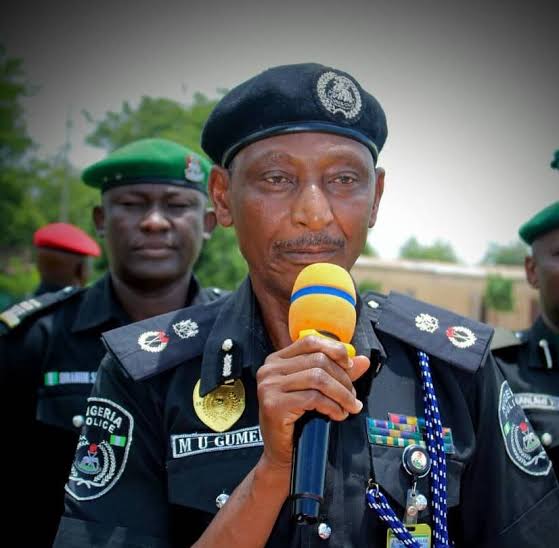
The Kano State Police Commissioner, AIG Usaini Gumel, has refused to enforce Governor Abba Yusuf’s directive to evict the deposed Emir of Kano, Aminu Ado Bayero, from the Nasarawa mini palace.

Gumel cited a pending court case filed by the state government, scheduled for June 24, 2024, as the reason for not complying with the governor’s order. 

“The police will not evict the deposed Emir because the same government has filed a case at the State High Court on the eviction order, which would come up on Monday, 24th June 2024,” Gumel explained in a telephone interview with newsmen.

“The government is jumping the gun because the same government has filed a case on the eviction order, which is coming up on the 24th of June, 2024. So, if we carry out the order, it is like we are pre-empting the court because we don’t know what will happen at the court.” 

Despite the police commissioner’s stance, security has been beefed up around the Nasarawa mini palace, with additional personnel deployed to the area.

The deposed Emir remains in the palace, receiving traditional greetings from loyal supporters.

A source close to Bayero debunked rumors of a bulldozer being stationed at the palace for demolition, calling it “social media propaganda.” 

The standoff continues, with the police refusing to act until the court has ruled on the eviction order.

The situation remains tense, with supporters of the deposed Emir and the state government awaiting the outcome of the legal battle.