Month: June 2024

Trailer loses control, kills 14 worshipers, injures dozens in Kano mosque tragedy

By Uzair Adam Imam 

Tragedy struck Kano on Friday when a trailer with registration number MKA 537XN lost control and ploughed into worshippers, leaving a mosque after Friday prayers, killing 14 people and injuring dozens. 

The accident occurred in Imawa town, Kura local government area, shortly after the Friday prayer, when the driver of the trailer coming from the Kaduna axis lost control and ran into the worshippers.

The Federal Road Safety Corps (FRSC) confirmed the incident, stating that nine of the deceased were buried on the same day, while those injured are receiving treatment at a hospital. The driver of the trailer is currently at large.

The FRSC Kano Sector Commander, Ibrahim Abdullahi, said, “Upon receiving the distress call, FRSC Kano State Command promptly dispatched personnel to the scene, alongside other security agencies, to initiate rescue operations and provide immediate medical assistance to the injured victims.”

Abdullahi emphasised the FRSC’s commitment to road safety and urged all road users to adhere strictly to traffic regulations to prevent such avoidable tragedies. 

He also extended heartfelt condolences to the families of the deceased.

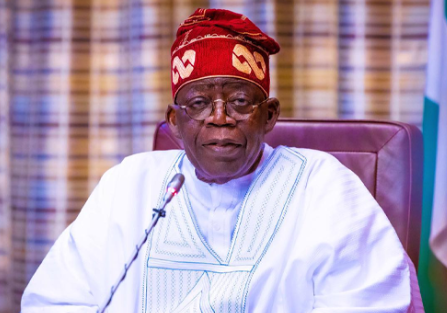
President Tinubu appoints eight new permanent secretaries

By Abdullahi Mukhtar Algasgaini

President Bola Tinubu has approved the appointment of eight new Federal Permanent Secretaries to fill in existing and impending vacancies in some states and geo-political zones in the top administrative cadre of the Civil Service of the Federation.

The new Federal Permanent Secretaries appointed after a diligent selection process by the Office of the Head of the Civil Service of the Federation are:

Dr. Emanso Umobong Okop – Akwa-Ibom 

Obi Emeka Vitalis – Anambra 

Mahmood Fatima Sugra Tabi’a – Bauchi 

Danjuma Mohammed Sanusi – Jigawa  

Olusanya Olubunmi – Ondo 

Dr. Keshinro Maryam Ismaila – Zamfara 

Akujobi Chinyere Ijeoma (South-East)

Isokpunwu Christopher Osaruwanmwen (South-South)

The President anticipates that the new Federal Permanent Secretaries will exercise absolute dedication, diligence, and fidelity to the nation in discharging their functions and ensuring optimum service delivery to the Nigerian people.

Muslim Students Society of Nigeria, Northern Intellectuals and El-Zakzaky’s Shi’ism: A constructive dialogue with Dr Abdulbasit Kassim

By Abdullahi Abubakar Lamido

The history of Islam – and religion in general – in post-colonial Nigeria is incomplete without a detailed analysis of the Muslim Students Society of Nigeria (MSSN). All the important Muslim figures, including politicians like Sir Ahmadu Bello Sardauna and MKO Abiola; scholars like Sheikh Mahmud Gummi, Sheikh Sherif Ibrahim Saleh and Sheikh Dr. Ahmed Lemu; intellectuals like Professor Oloyede, Dr. Usman Bugaje, Malam Ibrahim Sulaiman and Prof. Salisu Shehu; traditional leaders like Emir Muhammadu Sanusi II of Kano, Emir Maigwari of Birnin Gwari; Aree Musulmi Abdul Azeez Arisekola Alao; accomplished Muslim women like Alhaja Latifat Okunnu and Hajiya Aisha B. Lemu or distinguished business persons and technocrats; will all have a mutilated history of religious engagement if the chapter of their engagement with the MSSN is removed from their biographies.

These people (mentioned above) interacted with the MSSN as mentors, some as members, some as patrons, others as leaders, and so on. However, their relationship with the MSSN is vital because it is direct, mutually beneficial, and socio-religiously impactful. In case you did not know, the MSSN nominated Sheikh Abubakar Mahmud Gummi for the prestigious King Faisal International Award. When Hajiya Aisha Lemu came to Nigeria, she asked her husband, Sheikh Lemu, to link her up with the MSSN. And so is the story with almost every educated Muslim in Nigeria.

As an intellectual, reformist, ideological, moderate and resilient Islamic movement, the MSSN, in the last 70 years, remained the primary engineroom of Muslim intellectual development and the religious focus for Muslims. MSSN promotes the pursuit of Western-style education without compromising the Islamic faith. It encourages Muslims to learn from the West without being Westernized, to pursue “secular” education without embracing secularism, and to excel in all specializations without deviation. In MSSN, people learn how to learn, plan, earn, and live a life of faith, health, and wealth. It strikes a balance between the spiritual and the mundane, the worldly and the otherworldly. MSSN, in short, is a blessing to the Muslim Ummah and the entire Nigeria.

The primary operational arena of the MSSN has always been the academic institutions. While secondary schools are the recruitment centres of new members and the place where they are vaccinated with a sufficient dosage of spiritual, ideological and moral training, the higher institutions, particularly Universities, have remained the bastions of advancing the intellectual capacity, religious consciousness, leadership acumen and civilizational alertness of Muslim students. The Universities, in particular, have been the arenas where the philosophy of MSSN is built, its vision formulated, its projects designed, its programmes implemented, its members developed, its objectives pursued, its impact felt, and its strength consolidated. This has been the case since the 1960s when it was only about a decade old.

In this regard, three universities in particular distinguished themselves as the strongholds of the MSSN in its early history (especially from the 1970s to the 1980s): Ahmadu Bello University (ABU), University of Ibadan (UI) and Bayero University Kano (BUK). Details of how this happened are beyond this piece. But what suffices here is the fact that ABU and BUK took centre stage as the rallying point of young MSSN intellectuals, especially those who grew to be (among) the topmost Muslim intellectuals of the North, especially from the 1970s, at the peak of the booming days of communism and Marxism on Nigerian university campuses. It was then that emerging scholars like Malam Ibrahim Sulaiman, Dr Hamid Bobboyi, Prof. Auwal Yadudu, Dr Usman Bugaje, Prof. Ibrahim Naiya Sada, and a host of other MSSN leaders took the pen and the pain to counter the bane of the Ummah: they faced the challenge posed by the anti-religious radical left-wing Marxist socialist intellectuals. They wrote papers, presented lectures, engaged in debates, published magazines, made press releases and participated in on-campus and off-campus national discourses.

At the peak of the intellectual engagements of the MSSN in the late 70s came the Iranian Revolution. Since MSSN is an Islamic reformist movement, it was easy for it to join the global Muslim community in celebrating the emergence of the Iranian Revolution spearheaded by Ayatollah Khomeini in 1979 while the first generation of the MSSN intellectuals had graduated from the universities, even as they maintained contact with the Society’s leaders and members.

When Ibrahim El-Zakzaky, who was then the Vice President (International) of the society and among the few remaining older members on campus, represented it at an event in Iran, little did anyone know that the visit would open a new chapter not only in the MSSN movement but in the entire history of Islam in Nigeria. What did he do in Iran? How was he received? How did he receive their reception? What did he do after his return home? How, when, where did he start promoting Shiism? What was the reaction of the MSSN intellectuals? What then happened? The answers to these and many related questions are still scantly discussed, even in the highly scanty historical documentation of the MSSN itself. This is despite the importance of that discourse in the history of MSSN and Islam in Northern Nigeria.

By April 18 2024, MSSN had turned 70 years in its history. As part of the celebration of the Platinum Jubilee, a book was launched with the title MSSN @ 70: The Evolution, Success and Challenges of the “A” Zone, Northern States and the FCT. In this book, many actors like Dr. Usman Bugaje, Prof. Idris Bugaje, Barr. Muzammil Hanga, Alahaji Babagana Aji, etcetera shared illuminating perspectives about the MSSN in the 1960s, 70s and 80s. The book provides valuable insights into the events that culminated in El-Zakzaky’s embracing Shiism and his subsequent everlastingly irrevocable divorce from the MSSN. The book contains a rich rendition of events in the MSSN. Due to this, I wrote its review (on June 6 2024) on Facebook, mainly referring to El-Zakzaky’s Shi’ism-MSSN matter.

In the review, I referred to “how El-Zakzaky clandestinely planned to divert the MSSN to Shiism and how men like Dr. Bugaje and others were able to tackle him and save the Society from his sinister objectives”. But that led to a fascinating written conversation with Dr Abdulbasit Kassim; that bookworm was highly prolific and inquisitive but often interpreted by some as a “controversial” emerging Nigerian intellectual. Dr. Kassim is interested in African Islamic movements and has written extensively on important contemporary topics like Boko Haram, Salafism, Arabic manuscripts, Islamic intellectual developments in sub-Saharan Africa, and other issues. He raised questions. Our elder scholar-intellectual, Malam Ibrahim Ado-Kurawa, made clarifications. I responded. And the conversation continued. I share the interesting scholarly engagement with you here verbatim.

Dr. Abdulbasit Kassim wrote:

“Brilliant and timely! This book is an excellent sequel to Professor Siraj Abdulkarim’s “Religion and Development: The Muslim Students’ Society of Nigeria and its Contribution to National Development,” published in 2014. I highly recommend that MSSN A Zone create a digital archive of all the issues of Radiance Magazine and other publications published throughout the 80s and ’90s. If digitized, this repository would be a vital primary source collection for those seeking to learn more about the evolution of the organization and the ebbs and flows of ideational shifts of its leaders. 

“While I wait to read this book, I have a brief comment about the oft-repeated attempt to single out Zakzaky for his supposed “clandestine role of smuggling Shiism into MSSN.” This framing of Zakzaky, in my opinion, is a half-truth. A close reading of all the catalogue of articles our fathers published in the 80s and 90s about the Islamic Revolution in Iran belie the narrative they sometimes portray about their ignorance of the creedal orientation of the Iranian government. 

“Zakzaky was not a lone actor in that milieu. Several leaders of the MSSN, including my honoured father, Mallam Ibraheem Suleiman, wrote articles in New Nigerian, Triumph Newspaper, and Radiance magazine that were covertly and overtly sympathetic to Shiism. On March 3 1989, Dr Aliyu Tilde wrote “On the Path,” praising Zakzaky for leading the Iranian-style Islamic revolution in Nigeria. Dr Tilde wrote this letter nine years after Zakzaky publicly espoused his Shii affiliation at the Funtua Declaration on May 5 1980. Inayat Ittihad, the spokesman of the Iranian Revolution, was a regular keynote speaker at the International Islamic Seminar on Muslim Movements organized by MSSN at BUK in the early 80s. Inayat was public about his Shii creedal orientation. He preached the “Khomeini Model” to the MSSN members. At the same time, Sayyid Sadiq Al-Mahdi advocated for the Mahdiyya model in the struggle to achieve Islamic change.

“Although most MSSN leaders have embraced new ideological currents, it is important for our fathers to be honest in acknowledging their transitional phases and the seismic shifts in their orientations rather than scapegoating Zakzaky alone. The ebb and flow of ideations was not limited to Pantami alone. The ‎التراجعات was a common feature of all the prominent Muslim figures in the 80s and 90s, including Mallam Ibrahim Ado, whose translator’s introduction of Jihad in Kano captured the prevalent thought in that milieu. Even Zakzaky has passed through different ideological phases, such as Mallam Abubakar Mujahid et al. It is important to tell the complete story and explain the nitty-gritty nuances.

“I hope this book sheds light on the relationship between MSSN and IIFSO. I am also quite curious to read what the MSSN leaders wrote about the ideological proteges of Aminu Kano and the firebrand radicals who inherited the radical struggle against the feudal rulership in northern Nigeria, the likes of Balarabe Musa, Abubakar Rimi, Gambo Sawaba, Bala Muhammad, Sule Lamido, Ayesha Imam, Bala Takaya, Shehu Umar Abdullahi, Bala Usman and Yohanna Madaki. Some of these figures were the ideological adversaries of the MSSN leaders. 

“Congratulations to you, Abdullahi Abubakar Lamido. May Allah reward all the contributors who have documented the history of MSSN.

The following is my repose: 

Dr. Abdulbasit Kassim!  

Thank you for this intervention. As always, I like your consistency in trying to checkmate our intellectuals, especially what you see as their “methodology” of rendering historical narratives, which often presents “half-truth” and “belied” narratives. I believe your intervention is a continuation of your championing of suppressed history. Of course, just as you question these scholars and activists for always trying to give “half-truth” or one-sided aspects of history, so are others quick to read the same bias in virtually all your interventions on such matters. But that is what perspectives always mean.

You see, while I like us always to try to query narratives and ensure we get all the bits of it to have a comprehensive, nuanced reading of history, I doubt if defending the supposed “other side” at all costs will help us either. What seems clear is that you mistake being “sympathetic” to the Iranian Revolution or the “Khomeini Model” as being the same as accepting the “creedal orientation” of Iran. This, indeed, is misleading. Again, what escapes you is that Zakzaky never agreed to accept that he was Shia at that early time. He, in fact, “overtly and covertly” rejected being associated with Shi’ism. He was always quick to insist he was Sunni, Maliki. You can check that. However, even the Iranians who kept sending books to the students only sent books on Revolution, governance, justice, civilization, etc. 

By the way, I have not seen in your intervention here any substantial evidence to support your claim that “a close reading of all the catalogue of articles our farmers published in the 80s and 90s belie the narrative they sometimes portray about their ignorance of the creedal orientation of the Iranian government”. What I expected to see was where Malam Ibraheem Suleiman, Dr Tilde or any one of them declared or promoted the Shiite creed, not just showing sympathy to Iran. And I still need evidence to understand how “Zakzaky was not alone in that milieu”. Who and who were with him in promoting Shi’ism at that early stage? At least those “our fathers” have told us that not sooner than Zakzaky returned from his visit to Iran did they realize he had shifted from only romancing the Iranian Revolution to promoting strange ideologies. Immediately, people close to him started to caution the younger ones. And what I found in the narrative of Malam Baba Gana Aji in the MSSN @ 70 book is how Zakzaky got the opportunity, after most elders had left campus, to be virtually the only elder around and, therefore, take total control of contact with the younger ones.

Now, is it also part of the “belied” narratives that El-Zakzaky was alone when he started organizing what came to be known as “extension” after the Islamic Vacation Course (IVC)? Who was with him, please? Is it also “half-truth” that people like Dr Bugaje and others who later formed the Muslim Ummah were against him immediately after Zakzaky started his Shi’ism? Any evidence to the contrary? Is it also not true that people like Ustaz Abubakar Mujahid only continued to be with Zakzaky for some time because they liked the Iranian Revolution even as they disliked the Iranian Ccreed Are you saying there were no people who followed Zakzaky for some time while insisting they were Sunnis? Why were some people called yan karangiya by those in Zakzaky’s camp due to their anti-Shiism-pro-revolution posture even later? 

It is good that we study the issues and learn more about history than our assumption of reading “all the catalogue of articles” from the 80s and 90s. When we do so, perhaps we will be more educated about the matters and then see the apparent difference between sympathizing with the Iranian Revolution and embracing Shi’ism, especially at that time. 

But the fact that the MSSN was a group of people trying to bring societal change based on Islam, it should not be difficult for one to understand how easy it was for the MSSN to sympathize with whoever declared an Islamic Revolution at that time. By the way, praising and sympathizing with the Iranian Revolution was a common thing in the Muslim world, even among the global Sunni population. Even Azhar scholars could agree to work with Iran to unite Muslims and many of them after the Revolution. Scholars like Sheikh Yusuf Al-Qaradawi also joined their call for taqreeb. They only abandoned that project and often declared them hypocrites or so after discovering that they were using that to spread their Shiite creed. Could these scholars accept the “creedal orientation of the Iranian government”? 

You see, to date, some of the older MSSN people will still insist that they like the “Khomeini Model” of establishing an Islamic government, but they never like his creedal “model”. At least you have read one from one of our elders here. 

So, please, let’s expand our reading of the issues and understand them more.

Mal Ibrahim Ado Kurawa wrote:

“Professor Abdulbasit Kassim, I agree with you entirely, even though I haven’t been privileged to see the MSSN book. It is not unusual for people to follow different trajectories. I visited Iran in 1983. I didn’t like their Shiism but still respect their Muslim solidarity, so we indeed need a complete story. When the Iranians came to Nigeria, they didn’t begin by openly preaching Shiism. They even promised to translate the books of the Sokoto Jihad leaders, which they had never done then. They began propagating Shiism after Zakzaky accepted to become one. My last physical encounter with Zakzaky was in Makkah in 1984. Some of us left him to seek knowledge in Egypt and Saudi. Therefore, I cannot recall what transpired thereafter.”

After the above intervention by our elder brother, Dr. Abdulbasit Kasim wrote 

“Jazakallahu Khairan Amir Abdullahi Abubakar Lamido. May Allah reward you for your intervention and continue to guide and direct our affairs. Amīn. There is a famous saying that فللسؤال أهمية كبرى في طلب العلم فالأسئلة مفاتيح العلم (questioning is of great importance in seeking knowledge, for questions are the keys to knowledge.). This phrase is similar to what Imam al-Bāqillānī said العلم قفل ومفتاحه المسألة (Knowledge is a lock. And its key is questioning) and the well-known saying of Ibn Ḥajar al-ʿAsqalānī العلم سؤال وجواب (Knowledge is question and answer). The key to knowing for a seeker of knowledge is to ask questions with بلسان سؤول وقلب عقول (the tongue of a questioner and the heart of a thinker).”

My previous submission is devoid of malicious intent (an apology for the use of the word “belie” or “half-truth”) or an attempt to validate predetermined frames and outcomes. Instead, it is solely aimed at reconciling competing and sometimes contradictory interpretations of events that took place in the past. Alhamdulillah, no figures in MSSN I described as honoured fathers have ever ascribed ulterior motives to my questions. Since 2006, they have continuously accommodated the micro-details I pick up on and the torrent of questions I submit. I am indebted to them for granting me access to their libraries, encouraging critical historical questions, and helping me and other younger folks better understand where we are coming from and how we got where we are now. May Allah reward them abundantly in this world and the hereafter. Amīn. 

”How do we know what happened in the past? This mutual exchange is aimed at reading against the grain, reading between the lines, paying attention to what is not said, and listening to silences and absences by carefully engaging in comprehensive evaluation and chronological interrogation of a portfolio of primary sources generated contemporaneously that provide evidence or first-hand testimonies about the events in the 80s and 90s. While we respect our honoured fathers for their service to Islam, we must ask questions and subject the verbal and written testimony of events they present to us to thorough scrutiny by weighing, cross-referencing, or bringing their accounts into conversation with other disparate source materials and distinct authorial perspectives. This was the intent of my submission.

”The 11th February Revolution of Khomeini had a global appeal in the Muslim world. It had the Bin-Laden effect. What started as hysteria over the successful defeat of the Western colonial powers and their Arab secular puppet (the Shah regime) later transitioned into disillusionment after the creedal orientation of Khomeini became self-evident despite his call for Islamic unity. In Nigeria, the timeline of events could be traced from January 1980, when Zakzaky visited Iran and was reported to have personally met Imam Khomeini on his sickbed, to July 10 1994, when Shaykh Abubakar Mujahid and his followers in JTI successfully broke away from Zakzaky. 

“There was clear opposition from the MSSN leaders towards Zakzaky’s attempt to spread Shiism. This position was made clear by Shaykh Abubakar Mujahid during his 1998 interview when he said:“When he (Zakzaky) started he had not got any feeling towards Shiism. But at one point, when he started collecting money from Iran, they started bringing Shiism. What we did, we said no. Their beliefs and our beliefs are not the same. We operate the Mālikī School of Thought. They operate the Jaʿfarī School of Thought, so a clash will occur. Why don’t we go on with our revolutionary zeal, which was gaining momentum at the time, rather than bring this Shia? The people at the beginning were accusing us of being Shia, which we were not. Then they understood we weren’t so they started joining, and if we turned around and became Shia, we would be deceiving them. In 1989, he came back from prison in Port Harcourt. When we saw these moves in Shiism, we started to preach against them. That is, the members of the group who were entering Shiism, we preached against them, saying we are not Shia. We will not do Shiism, we will do the Maliki School of Thought.” [End of Quote]

“Before gaining further clarity from you, Amir, and our honored father, Mallam Ibrahim Ado, I struggled to reconcile the clear oppositional stance of the MSSN leaders towards Zakzaky’s Shiism with their admiration and reproduction of articles on the central tenet of the “Khomeini Model of Islamic Governance,” which revolved around the concept of “Wilāyat al-Faqīh.” My brain could not process why MSSN leaders would preach against Shiism yet write editorials and articles on Wilāyat al-Faqīh – a political theology Khomeini popularized in Iran with copious citations from the works of Shi’i theologians, including Mullah Ahmad Naraqi, Muhammad Hussain Naini, and Muhammad Baqir al-Sadr. If I could recall accurately, Mallam Ibraheem A. Waziri and Dr. Muhammad S Balogun once had an exchange about this subject in the past. 

“No doubt, our honored fathers yearned for Islamic models for societal change. They read and learned about Muslim movements across different historical periods, seeking a common method of formation, mobilization, and strategy that Muslims could utilize in the struggle to achieve Islamic change. The Khomeini, Fodiawa, and Mahdiyya models were some of the models they wrote about in the 1980s and 90s in their attempt to awaken the Muslim population to Islamic societal change. 

“What I learned from this exchange is that even when the MSSN leaders wrote about the “Khomeini Model of Islamic Governance” and the concept of “Wilāyat al-Faqīh,” they approached the idea as a political model without embracing the Shi’i creedal component Khomeini deployed to legitimize the concept as a political theology. 

“Let me conclude by saying once again Jazakallahu Khairan for providing safe spaces of dialogue and intellectual engagement where curious seekers of knowledge can ask the who, what, where, when, why, and how historical questions without invoking the binary of he belongs to “our side vs. their side” or “us vs. them” dichotomies. As Ibn Hazm said صفة سؤال المُتعلِّم هو أن تسأل عمَّا لا تدري لا عمَّا تدري (The characteristic of a learner’s question is to ask about what they do not know, not about what they do know.) The more we ask questions and try to reconcile competing ideas and narratives, the more we gain a comprehensive picture of the past.

Abdullahi Lamido responded 

Abdulbasit Kassim Masha Allah Prof. May Allah reward us all and bless our little efforts. You know, we are all passengers in the train of never-ending learning or what is called life-long learning. Interestingly, that is the first thing we learnt from the MSSN; that learning begins from the cradle and only ends in the grave. So, we always pray to Allah for more knowledge using the “And say O Lord increase me in knowledge” formula. We “ask those who know” so as to unlearn, learn and relearn.  

Through our usual lengthy, fruitful phone engagements with you (which often take us between two and four hours), I know that you are not only a scholar but one who is serious about learning. I have also understood that your questions are born out of an insatiable curiosity, a burning desire to know more and more and more. And I understand this further through your acceptance of every single issue where stronger evidence becomes clear to you. Unfortunately, not every social media friend of yours has the opportunity to have such heart-to-heart, deep, mutual scholarly engagements with you. 

However, the more interesting thing to me is the quantum of knowledge I gain from you via such amicable, mutual exchanges. I often deliberately bombard you with questions to trigger powerful, fact-supported responses that are usually backed by numerous references from books I have never read. I do not even have the time and energy to read them. You read too much!

Back to the “Khomeini Model” and the “Wilayat al-Faqih” question. As you rightly said, Wilayat al-Faqih is essentially a political concept and a convenient political instrument Khomeini used to establish the legitimacy of his Revolution and government. It is not fundamentally a theological concept. That is why he was comfortable spreading it even before starting to export his Shiite creed. And by the way he needed it at that time… 

Secondly, you seem to think that our fathers who were in the MSSN at that time had a prior sufficient knowledge of what Shi’ism entailed. No. Shi’ism had never been present in our community. So, nobody knew it. After all, those our fathers were not even necessarily deep in the knowledge of Sunnah and even the dominant Maliki jurisprudence back then. Their main sources of Islamic knowledge were the English translations of ikhwan books coming from Egypt and those coming from Pakistan. You should not expect them to just easily detect the traces of Shi’ism by mere reading a seemingly innocent political concept even when it was supported by Shiite authorities who, by the way, were not known here. 

I thank you very much and pray that this useful intellectual discussion will continue. And I look forward to reading your review of the MSSN @70 Book Insha Allah. 

Greetings to the family. 

Wasallam 

Finally, Dr. Abdulbasit Wrote

“Jazakallahu Khairan Amir Abdullahi Abubakar Lamido. May Allah reward you for helping me and other young folks to better understand the complexities of the history of Islamic thought. 

“Thank you for being generous with your time. I appreciate your patience and willingness to clarify all the torrent of questions on Wilāyat al-Faqīh that came up during our lengthy phone conversation. 

“May Allah reward you and all our fathers at MSSN who served the organization with the sole aim of uplifting the Dīn. May Allah bless the publisher, editors and contributors who worked on the book project. In sha Allah, I look forward to learning more from you and all our honoured fathers. 

“As promised, In sha Allah, once I receive the copies of the MSSN @70, I will distribute the book to different libraries where more people can access, read, and cite it in their research and writing. 

“Extend my Salam to the family. 

Wa Alaykum Salam.”

Conclusion

I have learned from the above engagement that there is a need to write more about the MSSN and its evolution and contributions to national development. A lot is missing and in need regarding the written history of MSSN and other Islamic organizations in Nigeria. May Allah bless our little efforts and grant us enormous rewards for them.

 Abdullahi Abubakar Lamido can be contacted via lamidomabudi@gmail.com.

Tragedy of losing a mentor and father: Tribute to Prof. Yusuf Saidu

By Jamilu M. Magaji

In the weaving of life, exceptional individuals leave a lasting impression on the hearts and minds of those they meet. Today, I grieve the loss of a truly extraordinary person who exemplified greatness through his steadfast dedication to his beliefs, compassion for humanity, and inspiring leadership that influenced many lives.

I was tidying up titbits for the June issue of FUBK Chronicle Magazine when I received a call from my former senior colleague, Mal. Abubakar Adamu recently retired from Federal University Birnin Kebbi (FUBK). He delivered the shocking news that prevented me from continuing my work until the following day. Social media was flooded with continuous updates on the tragic event. I hurried to pick up my children from school and return home, filled with sorrow and dismay.

When I joined the services of FUBK in 2014, I questioned the future of my career progression in the newly established institution. I pondered the obstacles of starting a new department, particularly as a founding staff member. My encounter with Prof. Yusuf Saidu proved to be fruitful. I worked closely with him for nearly seven years, serving as Chairman and Secretary of various committees. He was crucial in establishing the Federal University Birnin Kebbi Seminar Series as the founding Chairman in 2015.

Prof. Yusuf Saidu exemplified integrity and exceptional qualities. His extensive administrative and professional expertise positively influenced my professional development and the institution we both served. I believed he was destined for greater achievements. His diligent work ethic and inspiring nature served as a beacon of motivation for many. His leadership approach was exceptional, earning trust in carrying out demanding tasks assigned to him.

Yusuf Saidu is a Professor of Nutritional Biochemistry at the Usmanu Danfodiyo University, Sokoto (UDUS), Nigeria. He graduated in 1990 with a B.Sc. degree in Biochemistry from UDUS, winning the Northco Holdings prize for the best-graduating student in Biochemistry. He obtained an M.Sc. in Biochemistry from the University of Jos in 1994 with distinction and had his PhD in Biochemistry from the UDUS in 2005. 

Bandits killed Prof. Yusuf Saidu on June 24, 2024, en route to Kaduna for an official engagement. Until his sudden death, Prof. Saidu was the Deputy Vice-Chancellor, Research, Innovation and Development of UDUS. He was the Director Research, Innovation and Development, UDUS and the University Governing Council member representing Convocation. He served as a member of the TETFUND Standing Committee on Research and Development and a member of the National Research Fund Screening and Monitoring Committee. He was equally a member of the Education and Training Committee of the International Union of Biochemistry and Molecular Biology. Prof. Saidu was the Head, Department of Biochemistry, UDUS (2018-2020) and the pioneer Head of the Department of Biochemistry and Molecular Biology, Federal University Birnin Kebbi. He also led many other ad-hoc and standing committees at UDUS and FUBK.

Prof. Saidu, a Fellow of the Nigerian Society of Biochemistry and Molecular Biology (FNSBMB), was widely published with over 100 papers and three (3) patents to his credit. He attracted research grants from the Education Trust Fund (now Tertiary Education Trust Fund), Abuja, Nigeria; the International Foundation for Science (IFS), Sweden; Raw Materials Research and Development Council (RMRDC) and Science and Technology Education Post Basic (STEP-B). His research interests are in oxidative stress and pathogenesis of diabetes mellitus/hypertension, as well as the elucidation of the mechanism of action of medicinal plants used to manage diabetes mellitus and infant and preschool children.

As a visionary leader, Prof. Yusuf Saidu motivated others to achieve their full potential and strive for excellence in all their endeavours. He set a remarkable example, guiding them with wisdom, patience, and unwavering support. His ability to lead with integrity and humility earned him the respect and admiration of all his colleagues, leaving behind a legacy of empowerment and growth that continues to influence those he mentored.

In 2021, I paid tribute to his appointment as the pioneer Deputy Vice Chancellor of Research, Innovation, and Development at UDUS. I recalled a citation from Prof. Sahabi Danladi Mahuta during Prof. Yusuf Saidu’s inaugural lecture in 2017, where he boasted of having a great friend in Prof. Saidu. I, too, celebrated and acknowledged him as a remarkable mentor. Today, with a sense of longing, I mourn the loss of my esteemed mentor.

Prof. Saidu was a leader, mentor and guiding light in a world often clouded by darkness. His remarkable attributes, profound religious dedication, compassionate qualities, and forward-thinking leadership have had a lasting impact on all who know him. As we say goodbye to a cherished mentor and father, let us carry on his legacy of love, empathy, and leadership, ensuring that his memory remains alive in those he influenced and guided.

I express my sincere condolences to the immediate family of the deceased. I also sympathise with all his extended family members in the academic community at UDUS, UNIJOS, FUBK and the entire country.

May his spirit continue to inspire us, his light keep shining brightly, and his legacy of exceptionalism always be cherished in our hearts. May Allah (SWT) grant him eternal bliss in Aljannah. Ameen

Malam Jamilu Magaji, Head of Information and Public Relations at Federal University Birnin Kebbi, wrote via mjmagaji@gmail.com.

Insecurity triggers military to establish new commands in Kaduna

By Abdullahi Mukhtar Algasgaini 

The military high command has established new commands in Kaduna State to address insecurity. 

The three new commands are located in Samaru Zango-Kataf, Giwa, and Birnin-Gwari. Additionally, the Air Force will establish a base in Millennium City, in Chikun local government area. 

The Southern Kaduna Journalists’ Forum (SKJF) has praised the collaboration between the State governor, Uba Sani and the Chief of Defense Staff, General Christopher Musa, for their efforts in addressing insecurity in the State. 

In a statement issued by SKJF chairman, Ango Bally and Secretary, Lilian Silas, the forum expressed joy over the establishment of the military bases. 

The statement read in part: “These strategic moves will significantly help in addressing the protracted banditry, kidnapping and other security threats in the region and enhance agricultural activities in the State”. 

The Forum expressed optimism that the deployment of additional military personnel will significantly improve security and enable farmers to access their lands without fear, especially in communities like Maro-Kajuru, Kauru, Sanga, Giwa and Birnin-Gwari, which have been witnessing persistent banditry attacks.

New Kano CP vows to tackle thuggery

By Abdullahi Mukhtar Algasgaini 

The newly appointed Kano State Commissioner of Police, CP Salman Dogo Garba, has convened a strategic meeting with Area Commanders, Divisional Police Officers (DPOs), Tactical and Operational Commanders.

This meeting is part of a broader effort to strengthen security and safeguard the lives and properties of all residents in the state. 

The Commissioner of Police appreciates the officers for their commitment and dedication to crime fighting and maintaining peace despite the daunting security situation in the state.

He further charged them to remain resolute and redouble efforts towards surmounting the scourge of thuggery and other violent criminal activities that had hitherto bedevilled the good people of the state. 

He charged the officers to continue with the community policing engagements with their stakeholders and to ensure no thuggery (Daba) incidents are recorded in their areas of responsibilities.

They are also warned to always be available to supervise their men, as the CP will be going around on supervision. 

Dogo reminded the officers that accountability and professionalism will be his driving forces.

In addition, he urges all the supervising officers to ensure the cleanliness of their offices, including detention facilities. 

The CP reiterated that “I can not be sitting in my office to allow thugs (Yan Daba) and other perpetrators of criminal activities to disrupt the peace being enjoyed in the State.”

Ex-Cameroon international Landry Nguemo passes away in tragic accident 

By Sabiu Abdullahi

Former Cameroon international Landry Nguemo has died in a tragic traffic accident, the Cameroon Football Federation (Fecafoot) announced on Thursday.

The 38-year-old midfielder, who played for the Indomitable Lions between 2006 and 2014, lost his life in the accident. 

Nguemo had a distinguished club career in France, playing for AS Nancy-Lorraine, Bordeaux, and Saint-Etienne.

He won the French League Cup with Nancy in 2006 and the French Cup with Bordeaux in 2013. 

The football community is mourning the loss of Nguemo, who returned to Nancy as a coach after his playing days.

He worked with the Under 16s team, sharing his expertise and experience with young players. 

He will be remembered as a talented player and dedicated coach who made a lasting impact on the sport.

An assessment of Gov. Kefas’s administration’s one year in office

By Abdulrazak Iliyasu Sansani

I had not written anything for publication in a while. I had been occupied with things that reduced my little intervention on critical issues, which I have done over the years. However, I believe it won’t be right if I do not express myself and forward my position at this material time for posterity. This may be misconstrued or rightly received as my little contribution to the progress of our beloved state.

Governor Agbu Kefas’s administration has started on a good footing based on the yardstick of development in nature’s gift to the nation. The last few years have been extremely tough for Nigeria as a nation. This was compounded in the state by how the previous administration had handled the affairs of the state.

Hence, it is a complete deviation from the recent past and a potentially breakthrough moment for the state that has everything to be one of the most developed states, with years of constant progress judging by how endowed the state is.

However, despite modest attempts by successive administrations, the state has not sailed through.  Thus, it is yet to prevail over the tempestuous murky waters of politics, let alone be set for developmental strides worthy of the state’s potentialities.

Governor Agbu Kefas came into power at the most polarised moment in our history. The state was sharply divided along religious, toxic partisan, and ethnic lines. All those in the state during the electioneering period witnessed it as akin to a war. The worst of Tarabans came to bear most glaringly. The quest for power destroyed relationships that had taken decades to build.

Therefore, the next governor of Taraba would meet strenuous tasks and a problematic start that could threaten to crumble what was left of the state. It would take extraordinary leadership acumen to overcome those things that have characteristically held up the state.

On 29 May 2023, Gov. Agbu Kefas assumed office as the governor of Taraba State, having been declared the winner of the 18 March 2023 Gubernatorial election. Legal battles ensued, and questions were raised about the credibility of the electoral victory. This is a major blame game point for leaders who do not want to work.

One that could be used as an excuse to cover for incompetence and outright leadership failure.  However, the governor chose otherwise to lessen the heated polity and unite the people by inclusion. This resolve to give Tarabans a sense of belonging by appointing more diverse Tarabans into various offices across the state has given Tarabans a new lease of life to participate more in acts that move the state forward.  Of course, the hitherto neglected have every reason to believe things can improve.

This ushered in an era when abandoned projects like the modern abattoir in Wuro Sembe, the most sought-after minimum wage that some states had implemented, and Taraba joined that masses-centred list with the governor’s pronouncement on the implementation of minimum wage.


The removal of the Petroleum Subsidy by Mr President, a single decision that has had far-reaching consequences on our economy, the people of Taraba state received the news of the implementation of the minimum wage with utter joy, as it would help in cushioning the effects of the hardship, pending on the completion of discussion on a new minimum wage to meet the realities of the moment by the Federal government and the labour union.

Governor Dantala Kefas has done relatively well in so many sectors that I am brimming with hope of a new, better, more inclusive Taraba where every  Taraban can aspire to become anything and live in an atmosphere conducive to their personal growth and collective development. This is most apparent in the education sector, where I am most concerned.

The Kefas administration has made education the cornerstone of its agenda. This has proved not mere rhetoric, as primary and secondary education have been free. This has drastically reduced the number of out-of-school children, reducing the likelihood of having children who could constitute a nuisance to society and fundamentally helping the state’s security. The administration has slashed a whopping 50℅ of the tuition fees in the state-owned tertiary institutions, reducing the financial burden on the parents in this cash-strapped country.

The administration has gone ahead to effect some major infrastructure changes, renovating and building infrastructures in the state’s owned institutions: Taraba State University,  College of Nursing and Midwifery, and College of Agriculture, which had yarned for development for decades, with little executed. Education is the bedrock of all development, as it is widely known and accepted. The Kefas administration has gotten it right by making it a core part of its administration agenda and going ahead and walking the talk.

Recently, the governor decided that all government principals would be given official cars. I have seen some objecting to it. I think it is the right step in the right direction. Teachers are nation builders and deserve to be treated as such. If elected and appointed government officials are given official vehicles, and we see nothing wrong with that, we should see nothing wrong with the same treatment to provide principals, who toil to pass knowledge and incalculate morals that build students who shape the destiny of our nation.

For Gov. Agbu Kefas, he has started well, given our history as a state, the state’s debt profile and the nation’s economic challenges. I can only employ him to do more, especially in areas of rural roads. This will open up the state more, allowing local farmers to sell their farm produce without much hassle. This singular effort will create room for more investors to come in. Agriculture alone can change the economic narrative of our state, let alone combined with other sectors, such as tourism and mining, to mention a few.

I come from a farming community, Sansani, Wuro Jam Ward, Gassol Local government, which has an unmotorable road. A deathtrap has hindered the village’s substantial Agricultural potential and denied so many farmers an opportunity to enjoy their hard-earned money. Massive amounts are always kept to pay exorbitant fares to transport their produce to the nearest big market.

Taraba is an Agrarian state. Farming communities like Sansani, Gassol, Wuro Jam, Sendirde, Takalafiya, Sheka, Dakka, Karim Lamido, and Kurmi, to mention a few, deserve to have good and qualitative roads that open up the state for more economic activities and accelerated economic growth, which translate to actual economic development.  Governor Kefas has started well. He should not deviate. I admonish him to keep increasing the tempo; he will leave a good legacy. Power is transient.

Abdulrazak Iliyasu Sansani is a former TV Presenter and producer at Haske TV, Jalingo, Taraba State.

Yobe housewife arrested for stabbing husband to death

By Sabiu Abdullahi

An incident occurred in Damaturu, Yobe State, where a 22-year-old housewife, Zainab Isa, has been arrested for allegedly stabbing her husband, Ibrahim Yahaya, 25, to death. 

According to the Yobe State Police Command, the tragic event occurred on June 26, 2024, at about 10:00 am, following a heated argument between the couple at their residence in Abbari ward.

The argument escalated into a physical altercation, resulting in the suspect stabbing her husband in the chest with a knife. 

The police spokesman, Dungus Abdulkarim, confirmed the incident, stating that the suspect claimed to have acted in self-defense during a beating and kicking incident.

However, the police investigation is ongoing to determine the circumstances surrounding the tragic event. 

The couple had two children, with their second child born just earlier this month.

The incident highlights the disturbing trend of domestic violence and its devastating consequences. 

The police have urged anyone with information or witnesses to the incident to come forward to aid in the investigation.

The suspect is currently in police custody.

A peep into Kano’s declaration of state of emergency on education

By Sani Surajo Abubakar

Some days ago, Kano Government House was agog with guests from within and outside the country, primarily stakeholders in the education sector who thronged the state to witness the historic declaration of a state of emergency on education by the state government under the stewardship of Governor Abba Kabir Yusuf.


The declaration was necessitated by an alarming proliferation of out-of-school children, with its figure currently at 989,234 for both genders. This situation threatens to rob the entire generation of their education rights and a brighter future.


Dilapidated school structures, lack of instructional materials, a severe shortage of qualified teachers, and inadequate teacher training programs coupled with the socio-economic challenges in basic and post-basic schools across the state made learning and teaching challenging, if not impossible.


Statistics at government disposal indicate that out of the 42516 total classrooms available, a mere 22% meet the basic standard of habitability as nearly four out of every five classrooms in Kano’s primary and secondary schools are marred by dilapidation and disrepair, rendering them unsuitable for the noble pursuit of knowledge.


At the secondary school level, less than 30% of classrooms can be deemed habitable, leaving significant students of such schools grappling with inadequate facilities that impede their intellectual growth and development.


Looking at the science and technical schools, the pathetic story is the same, with less than 20% of classes meeting the essential criteria for habitability, making it difficult to nurture the next generation of scientists, IT experts and engineers when the very environments in which they are meant to learn are ripe with inadequacies and deficiencies.


Passionate and committed to rescuing the education sector from total collapse, on Saturday, 8th of June, 2024, the Kano State Government declared a state of emergency on education to address the critical challenges facing the sector with a clarion call to all the stakeholders to unite and prioritize the revitalization of the education system for the overall benefit of the society.

The cardinal aim of declaring a state of emergency on education was encapsulated in the overall vision for the education delivery in the state as articulated in a statement viz:

Every school, a good school; every child, enrolled in school; every student, an engaged learner; every teacher, a caring educator; every parent, a supportive partner; and your government, a committed investor in human capital development.


The declaration, as envisaged, will enable the government to mobilize resources, implement urgent reforms, and focus on strategic interventions that will rebuild educational infrastructure, provide necessary materials, and reclaim schools from encroachment.  


To ensure effective revitalization of the education sector, restore its lost glory and take Kano State to greater heights educationally, eleven robust commitments are put in place that include;

In the 2024 fiscal year, Kano State has made an unprecedented budgetary allocation of 29.95% to education. This was made based on the fact that significant financial resource allocation will address underfunding problems bedevilling the sector.


Two, for the smooth operation of basic and post-basic schools, restoration has been made for the payment of upkeep and overhead funds for all secondary schools in the state.  The timely release of the funds will allow schools to maintain their infrastructure, procure essential teaching and learning materials, and aid in conducive teaching and learning processes.

Third, plans have been made to build an additional 300 state-of-the-art laboratories across 100 schools in the state. The provision of such needed facilities will go a long way in providing students with hands-on experience in scientific inquiry, fostering a culture of experimentation and discovery needed for their future and success in their chosen endeavours. The provision of laboratories is another 300 earmarked for overhauling 100 secondary schools.

Four boarding secondary schools that were hitherto closed by the immediate past administration are to be reopened and re-boarded within the next academic year. Such schools provide a supportive environment for students, particularly those from remote areas or economically disadvantaged backgrounds.


Five, to consolidate the drive to improve the education sector, approval has been granted for a comprehensive renovation of all primary and secondary schools in the nooks and crannies of the state in the subsequent two academic sessions. In this regard, the Community Re-orientation Committee (CRC), Kwankwasiyya, Lafiya Jari, and Kano Pro-PA will handle minor repairs, while the Ministry of Education, State Universal Basic Education Board (SUBEB) will shoulder all major repairs through competitive bidding.


Six, to achieve the commitment of clearing out of school children roaming the streets, 28,264 additional classrooms will be built across the state within the next three years to accommodate such children through the supervision of the Ministry of Education, SUBEB, and to be monitored by the Ministry of Project Monitoring.


Seven, to make pupils engage learners with utmost attention in their classrooms, arrangements are made to distribute free one-meal per pupil per day in all primary schools. The CRC, assiduously working as preparations, has hired cooks for the home-grown feeding program. This is in addition to the plan to re-introduce the distribution of free uniforms to all primary I pupils in all primary schools in the state.


Eight, to show a solid commitment to tackling teacher shortage and positively adjusting the students/teacher ratio, 5632 BESDA (Better Education Service Delivery for All) teachers were fully employed. Also, the governor has approved hiring an additional 10,000 teachers to go ahead with SUBEB to chart a training roaster for all teachers in the state government’s employment.


Nine arrangements are going on to commence the renovation of schools affected by fire outbreaks in the last eight years in Madobi, Gaya, Ajingi, Kiru, Dawakin Tofa, Kano Municipal, Gezawa, Kabo, Gwarzo, Dambatta and Bichi local governments respectively.

Similarly, in his second tenure, 44 schools for Islamic Studies and 44 Technical Colleges initiated by Senator Rabiu Musa Kwankwanso would be completed and put to use in earnest.

Ten, to boost the morale of teachers and prioritize their welfare for quality service delivery, approval has been granted for the disbursement of the sum of three hundred million naira as a revolving soft loan to primary school teachers in the state.


Eleven, as a government with a resolve to project Girl-Child-Education and reduce pressure on parents to transport their girls’ children to schools daily, 70 high-capacity buses are shuttling in the Kano metropolis for such purpose.


All the commitments stated above are in addition to other feats achieved that range from sponsoring 1001 first-class degree graduates for foreign post-graduate studies; settlement of registration fees for Kano indigenes studying in various higher institutions of learning across the nation; payment of NECO and NBAIS fess; renovation and upgrade of two bilingual academies of French and Chinese located at Kwankwaso town and Niamey, capital of Niger Republic to mention but a few.


With the above-stated commitments and concerted efforts of all the relevant stakeholders, one can optimistically conclude that Kano State has begun a journey of education transformations.

Sani is an Assistant Chief Information Officer at Government House, Kano