Month: June 2024

BREAKING: FG, labour reach agreement on minimum wage

By Uzair Adam Imam

The Federal Government and the organised labour have reached an agreement on the minimum wage, ending the strike action that started on June 3, 2024.

The agreement was signed on Monday night after a meeting that started at 5:00 pm and ended at 11:00 pm.

Although the details of the agreement are not yet public, the Secretary to the Government of the Federation, George Akume, confirmed that the government is committed to paying a minimum wage higher than N60,000.

He also assured that no worker would be victimized for participating in the strike.

The national tripartite committee on minimum wage will meet daily for the next week to finalize the details of the agreement.

The labour leaders and government officials expressed optimism that the agreement would bring an end to the strike and restore normalcy to the country.

The strike, which started on June 3, had paralyzed economic activities in the country, with many businesses forced to shut down.

The agreement is seen as a positive development, and many are hoping that it would bring an end to the strike and restore normalcy to the country.

Reinstatement of Emir Muhammadu Sanusi II and the resurgence of thuggery in Kano

By Aliyu Dalhatu Adamu

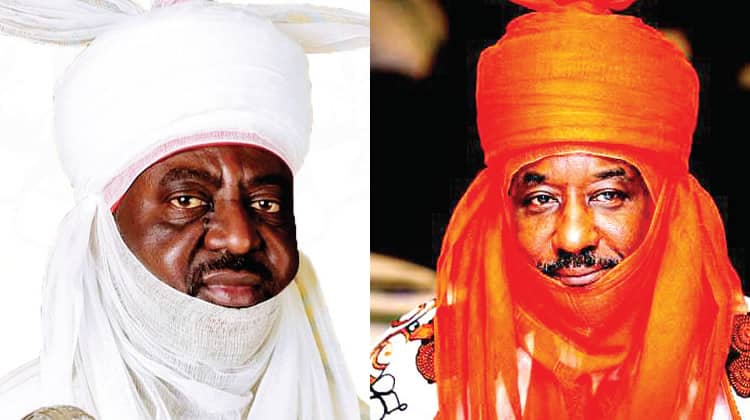
Kano people are known as peace-loving, as inculcated by the longest-serving Emir of the kingdom, Alhaji Ado Bayero,who led for over 50 years. His charisma and love for his people made him unique among all African traditional rulers. 

Kano people were traumatised by His Highness Alhaji Ado Bayero’s demise in June 2014, and the loss remained irreplaceable until 2020 when His Highness Alhaji Aminu Ado Bayero became the Emir of Kano. His emergence renewed the hope of the Kano people because he exhibited the same characteristics as his father. This makes him earn the love that people have for his father, which no one has in Kano.

The recent development of the Emir and reinstatement of the deposed Emir Sunusi Lamido Sunusi have seriously disrupted peace and stability in the state. This has opened doors for hooligans and thugs to widen their operations in the state.

It is a known fact that hooliganism and thuggery threaten the security of lives and property in every society. Hence, leaders are saddled with the responsibility of maintaining law and order to prevent potential offenders from engaging in such acts. 

It is unfortunate to say that the current administration of Governor Abba Kabir Yusuf has begun to do the other way around, as hoodlums and thugs are allowed to take over the Kano palace in the name of protecting the selfish and politically motivated interest of his political godfather. This has become a serious threat to the peace and safety of people in Kano as the hoodlums are harassing and intimidating people at will within the vicinity of the Kano Emir’s palace, all in the name of imposing Sunusi on the throne, which is facing outright absolute rejection by the good people of Kano.

This unbecoming attitude is becoming an eye-opener for young children who are now growing to witness this evil as a condoned behaviour. This may contribute to making hooliganism a wider phenomenon, a useful symbol, and a social obsession in the future tradition of the Kano Emirate traditional system.

Since the reinstatement of Sunusi Lamido Sunusi to Gidan Dabo, the palace and areas such as Kofar Kudu, Kano Municipal, Gwale, Dala, and the surrounding areas become the headquarters of thugs. Even medical workers at Hasiya Bayero Paediatric Hospital were attacked on the 27th of May, 2024. The Nigerian Medical Association (NMA) issued a statement condemning the barbaric development. Many other people living in the neighbourhood are not spared either.

This situation arose when the city’s public spaces were “swarming” with thousands of newly armed groups mandated to “protect” and pay allegiance to Emir Sunusi. These groups were recruited by the Kano state government only to praise their political master at the detriment of public safety.

Indeed, Gov Yusuf’s incompetence, ineptness, and clueless leadership style are undoubtedly taking Kano back to square zero. The pickle of the Kano emirship brawl is a cessation of Kano peace and stability as a courtesy to Senator Rabi’u Musa Kwankwaso, former Governor of the state Kwankwaso, by Governor Yusuf and the former Emir Sunusi Lamido Sunusi, in a bid to drag Kano to the state of anarchy. 

Hooligans also came to represent the dangers inherent in loosening constraints on society. Even when hooligans victimised people far from their concerns, the increase in their numbers, the apparent pettiness of their motives, and the savagery of their actions within Gidan Dabo suggested that certain members of the lower classes were either very beastly or very angry and that the mechanisms of state’s control were no longer in place to checkmate this.

Now, what we ask is, does the state government prioritise praising its political godfather over protecting the blood of theKano people?

Ironically, hooliganism and thuggery that previous administrations fought have now been revived by the present administration as the number 2IC in the government triggered the infiltration and indoctrination of youth into hooliganism and thuggery.

On this note, we are calling on the federal government, security agencies, intelligence communities, Nigerian Bar Association (NBA),  northern traditional rulers, religious leaders and all other relevant authorities to intervene. They should also advise the Kano state government to obey the court order restraining them from reinstating the deposed Emir Sunusi Lamido Sunusi and dissolving the remaining four Emirates in the interest of the good people of Kano. This will bring an end to hooliganism, public disrespect, defiance, chaos, and violence that are capable of destabilising the peace and security of Kano State.

Aliyu Dalhatu Adamu wrote from the Federal University, Dutsinma, Katsina State, via

aliyudalhatuadamu@gmail.com.

NLC strike stalls court hearing on Kano emirate tussle

By Uzair Adam Imam

The ongoing strike by the Nigeria Labour Congress (NLC) and Trade Union Congress (TUC) has stalled the hearing on the Kano emirate tussle at the Federal High Court in Kano.

The court had previously granted an order restraining the implementation of the Kano State Emirate Council (Repeal) Law, which dissolved the five Kano Emirates and reinstated Muhammadu Sanusi II as Emir of Kano.

According to the court order, “parties are hereby ordered to maintain status quo ante the passage and assent of the bill pending the hearing of the Fundamental Rights application.”

The hearing was scheduled for June 3, 2024, but due to the strike, the matter has been postponed until further notice.

The suit involves the Kano State Government, Kano State House of Assembly, the Speaker of Kano State, Attorney General of Kano State, Commissioner of Police of Kano State, Inspector General of Police, Nigeria Security and Civil Defence Corps, and Department of State Security (DSS).

As a result of the strike, the court was unable to hold the hearing as expected, and a new date has not been announced.

Unlocking career opportunities with a fisheries degree 

By MD Aminu, PhD 

Yesterday, I met a young lady who graduated with a degree in fisheries from the University of Port Harcourt. She was hesitant to tell me about her field of study because she often encountered scepticism about its prospects. Initially, she had wanted to pursue engineering but was assigned to fisheries. Many of her classmates transferred to other departments after their first year, driven by the belief that fisheries lacked career opportunities. 

The lady shared her concerns that people often looked down on her course of study, assuming it had no potential for a sustainable livelihood or a great career. However, I assured her that a fisheries degree holds significant promise and began to outline various opportunities, although our conversation was cut short. 

If I had pursued a degree in fisheries, here is the approach I would take to maximize its potential. With a good first degree in fisheries, I would utilize my national service year to study diligently for the GRE, preparing for graduate school in the United States or Canada. Prior to graduation, I would research the top researchers in fisheries globally and identify the institutions they belong to. By examining their research trends over the years, particularly focusing on the last five years, I would gain insights into the latest advancements and focal areas in the field. 

I would then reach out to these researchers, discussing my plans for graduate school and exploring potential funding opportunities within their departments. This proactive approach would demonstrate my interest and alignment with their work. 

Additionally, I would investigate the practical applications of these research trends beyond academia, specifically looking at what employers of fisheries graduates, such as FAO, IFAD, and the World Fish Centre, are currently focused on. Understanding that these organizations emphasize sustainability in their programs, I would delve into the major issues concerning sustainable livelihoods and fisheries management. 

As an African, I would pay particular attention to sustainability challenges relevant to African fisheries. This would ensure that my studies and future research remain pertinent and impactful within my regional context. Additionally, I would explore what researchers in sustainable fisheries in the tropics are identifying as future problems, aiming to stay ahead by addressing medium- and long-term challenges. 

Securing admission to a reputable university under leading fisheries researchers would be a significant milestone. My goal would be to produce a doctoral thesis that is futuristic, globally relevant, and applicable to Africa. I would aim to publish at least three research papers in leading fisheries journals, establishing my expertise and credibility in the field. Throughout my graduate studies, attending leading conferences where fisheries experts convene would be essential. Presenting my research at these events would enhance my visibility and allow me to network with professionals from both industry and academia.

 As I near the completion of my research, I will actively seek positions at global organizations like FAO, IFAD, and the World Fish Centre. Additionally, I would monitor the activities of institutions like the African Development Bank and other UN organizations involved in fisheries and food security in Africa, aiming to identify relevant vacancies. 

Securing a position in a global organization would provide not only an exciting career opportunity but also a platform to make a significant impact. My work would contribute to global initiatives in fisheries management and sustainability, and my expertise would be recognized internationally. 

By strategically planning my education and career path, networking with top researchers, understanding industry trends, and focusing on sustainability, I would be able to carve out a successful and impactful career in fisheries. By leveraging available resources, staying informed about industry trends, and aligning my studies with global and regional sustainability challenges, I would ensure that my fisheries degree opens doors to a fulfilling and globally influential profession. 

The young lady I met need not worry about the perceived limitations of her degree. With determination and strategic planning, she can transform her fisheries education into a thriving career with significant impact.

MD Aminu can be reached via mohd.aminu@gmail.com.

Sultan of Sokoto appeals to labour to shelve strike action

By Uzair Adam Imam

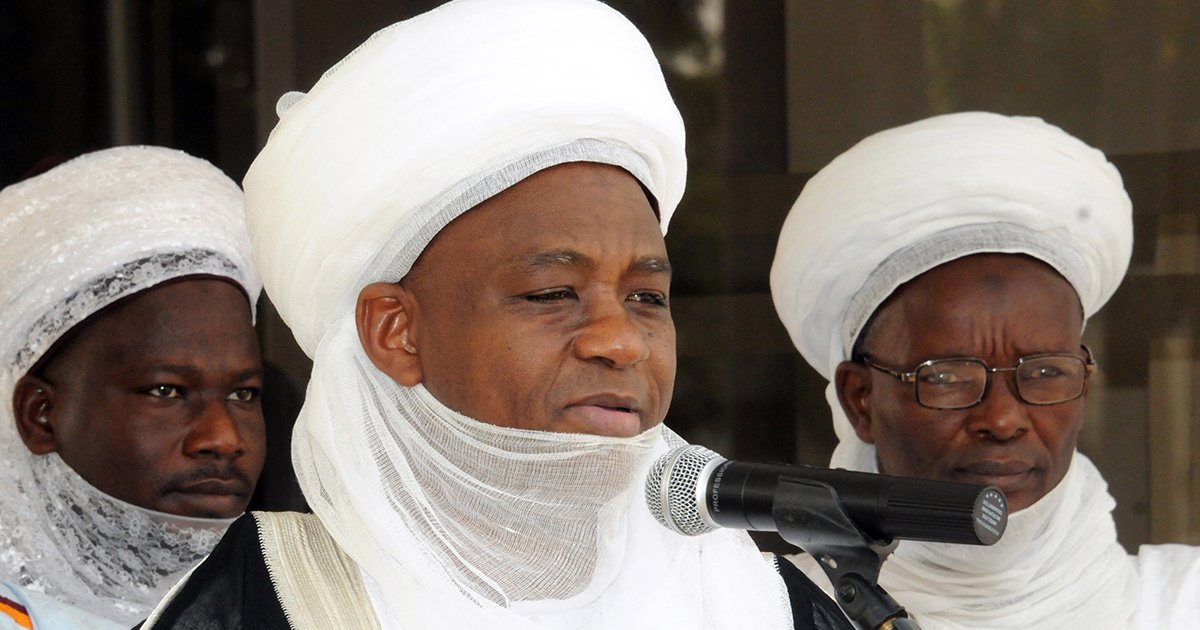
The Sultan of Sokoto, Alhaji Muhammad Sa’ad Abubakar, has urged the Organised Labour in Nigeria to reconsider their planned strike action scheduled to commence on Monday, June 3, 2024.

In a statement released by his media team on Sunday night, the Sultan appealed to the labour leaders to consider the potential hardships their action may cause Nigerians.

“The Labour leaders should consider the overbearing effects of the strike action they plan to embark upon on the wellbeing of the same Nigerians, whose interest they are fighting to protect, and therefore shelve the industrial action,” he said.

The Sultan emphasized the importance of negotiation, encouraging the labour leaders to continue engaging with the government.

“We appeal to Labour not to take the nation through another leg of hardship… They should try to listen to the government while the government should listen to them and both parties arrive at a conclusion that will be beneficial to all Nigerians, with the working class inclusive,” he said.

Drawing from his personal experience in past negotiations between labour and government, the Sultan acknowledged the labour leaders’ efforts to advocate for better welfare for their fellow workers.

However, he cautioned them to consider the potential consequences of their actions and to prioritize compassion.

“You are doing what is right for your class of fellow workers, but you should do it within the ambit of compassion and see strike always as the last option,” he said.

The return of Emir Sanusi II and Shaykh Ja’far’s polemics:  What many critics of Emir Sanusi don’t know

Isma’il Hashim Abubakar, PhD

Being one of the followers and now among proponents (perhaps pioneers) of Jafarology, an ongoing hypothetical intellectual formulation of a school of thought that seeks to document, survey and study the scholarly legacies of Shaykh Ja’far Mahmud Adam from multiple angles and diverse approaches, I ought to blindly oppose, like many fellows, anything favourable connected to Sanusi Lamido Sanusi. The reason for this is apparent: Shaykh Ja’far, my favourite scholar, had a bitter polemical engagement with Sanusi, and the duo exchanged hot tirades that escalated to the use of deregulatory labels and scathing monikers to attack each other. 

As someone who always aspires to operate objectively and dispassionately, in addition to having conducted a broad investigation on the pros and cons of the dispute between the two prominent figures, I feel it a duty-bound and personal responsibility to reveal what many people are oblivious of, mainly as thousands of people rely on the recorded and widely circulated sermons of the late Shaykh Ja’far against Sanusi to not only point to the latter’s lack of competence to rule the Islamic society of Kano but to go to the extent of excommunicating him.  

My decision to join issues with Sanusi’s critics on this saga, most of whom I believe are sincere, was informed by the desire to clear many misconceptions and set the record straight. Perhaps it will sound shocking if I boldly suggest that were Shaykh Ja’far alive today, having witnessed the many transformations in Sanusi’s career and the onerous memorable developments witnessed as a result of his adventurous capacity in the various roles he served, including as the 14th Emir of Kano, the late prominent cleric would have hailed and applauded Emir Sanusi in the same degree, if not higher than, he praised a few traditional figures. 

During his reign before the government of the day’s interruption, Emir Sanusi presided over a lively empire that revived, to a greater degree, the culture of intellectual debate and involvement of scholars and luminaries in various fields in the decision-making exercise. Sanusi’s leadership in prayer, his daily free-feeding scheme for the poor and regular comments on the goings-on, which were sometimes controversial, were all rendered dormant by his dethronement. Therefore, in as much an admirer of Shaykh Ja’far criticises Sanusi relying on the positions of Shaykh Ja’far on the former in some respects, one cannot help but align with Sanusi for epitomising what Shaykh Ja’far had been preaching, perhaps more than many of his peers who served similar roles as his. 

Having conducted my PhD research and written the thesis on the career, thoughts and ideas of Shaykh Ja’far and awarded a doctoral degree in July 2023 by Mohammed V University, Rabat, I present below a section in which I examine the engagement between the cleric and Sanusi, a social analyst by then. Enjoy.

Ja‘far had a bitter engagement with Sanusi Lamido Sanusi for the latter‘s critical view of the Shari‘ah project and other issues associated with Islam and Muslims in Nigeria. In one Friday sermon, the content of which was partly reflected in a newspaper interview by the Weekly Trust with the late Shaykh, Ja‘far depicted Sanusi as (a nominal) Muslim who imbibed some features of hypocrisy, which then informed his criticism of Islamic values and Shari‘ah, while attacking Muslim governors who were committed to the return and implementation of Shari‘ah. Ja‘far argued that Sanusi, who was then residing in Lagos, did not, conversely, pen a single essay to condemn the massacres of Muslims by the OPC in the Southwest. Ja‘far further expressed disappointment over what he regarded as a brazen act of Sanusi, who paraded himself as a social critic and intellectual, only to rubbish northern Muslim leaders who, in their effort to resist the marginalisation of Muslims by President Obasanjo, held meetings in Kaduna on the issue.

Ja‘far‘s dismay over Sanusi‘s rubbishing of Muslim leaders who complained of marginalisation of Muslims by the Obasanjo administration was a reference to Sanusi‘s article in which he argued that having fewer Muslims in the executive arm of the federal government was nothing scary, as scholars like Ja‘far and the northern leaders were ―needlessly – crying out. In the words of Sanusi, to reduce Obasanjo‘s crime to the number of members of the Muslim elite he has appointed-or rather not appointed – to key positions and to pretend that if we had more Muslim appointees,then Muslims would be better off automatically, to say this, is to speak from an ethically blind perspective (https://www.gamji.com/sanusi/sanusi48.htm).

Sanusi‘s concern that there was virtually no difference between Muslims and non-Muslims in terms of performance and citizen-concerned leadership was, to a large extent, correct. Ja‘far himself mostly criticised Muslim politicians who, in some regimes, dominated the echelons of power but failed to solve the myriad problems of their people, while in some occasions, he indirectly upheld the records of some non-Muslims who did better than their Muslim counterparts in some capacities. Nevertheless, equitable representation and centralisation of power are important ingredients of democratic dispensation, the absence of which has the potential of throwing political entities into chaos. Sanusi‘s criticism came at a time when sentiments among Muslims over marginalisation were heightening. Not only that, but it came at a time.

Obasanjo was convening a national constitutional review conference, which was seen as a robust chance to further shut out Muslims in the scheme of things. After all, despite being in the minority, Christians were given slots for delegation,which outnumbered Muslim delegates, hence the too much anxiety from the Muslim quarters.

When he took a swipe at Sanusi about Shari‘ah, Ja‘far was obviously referring to Sanusi‘s arguments in some of his writings where he portrayed the Shari‘ah as a tool for politicians to promote their popularity, while in essence, not applying the Shari‘ah to themselves but limiting it to the poor. Similarly, Sanusi had intensely criticised some rulings of Shari‘ah courts, which passed hudud verdicts over convicted criminal cases like flogging in the case of fornication, stoning for adultery and amputation for thievery. This had, at the time, led many Muslims in the country to conclude that Sanusi was a secularist Muslim or even a Marxist pursuing an anti-Shari‘ah agenda. But at the same time, he earned accolades and commendations from the Southern press and intellectuals who hailed him as an enlightened, progressive, reformist, modernist Muslim, etc. 

Ja‘far‘s Friday sermon and newspaper interview were greeted with Sanusi‘s ripostes in which he challenged Ja‘far‘s view of him and descended on the Kano-based scholar‘s personality. Sanusi dismissed Ja‘far as “an unknown quantity that rides on the back of religious fundamentalism to gain social relevancy” but also described him as “a Nigerian who was educated on the charity of Saudi Arabia and whose mosque and school – his source of livelihood – are funded by Arabs (http://www.gamji.com/sanusi/sanusi49.htm). 

This attack opened floodgates of defensive rejoinders from supporters of both Ja‘far and Sanusi, with some accusing the latter of pontificating about his “privileged background” and someone who “can tangle with the Karl Marx‘s of this world but not Qur‘an and Sunnah”, hence he “could not contribute to his society and religion as Sheikh Ja‘far does”. Although he admitted that Sanusi‘s response was too offensive for a respected scholar like Shaykh Ja‘far, one defender of the then-Kano prince observed that Sanusi‘s arguments were “not entirely bereft of its merit and sound judgment”, particularly his call for the adoption of “national identity”, rather than clinging onto ethnic and geographic proclivities.

Whatever the case, Sanusi seems to have developed an ambivalent position toward the Shari‘ah project in Nigeria, either because of the persons involved in the project or due to some personal interpretations of his on the Shari‘ah codes which might differ from the mainstream conception of Shari‘ah. As an independent thinker and intellectual, a quasi-Islam scholar, Sanusi is sometimes a complex person who is too difficult to predict. As opposed to Ja‘far‘s allegation that there was not a single instance in which Sanusi mounted a public discourse in defence of Islam, some other developments showcased Sanusi siding with Shari‘ah and championing the cause of some 

fundamental aspects related to it. In one conference held in London in 2005, Sanusi not only defended the Shari‘ah but also juxtaposed it against Western legal values, pointing out the defects and hypocrisy in the normalisation of free sexual relationships with multiple women while ridiculing polygamy, the myopic legal protection of a murderer by not subjecting him to the same death process, etc (http://www.gamji.com/sanusi/sanusi51.htm).

Similarly, in one other article, Sanusi countered the growing sentiments from Christian quarters about the potential of Shari‘ah controversy to plunge Nigeria into crisis, arguing that it was the portrayal of Shari‘ah in a bad light, that was an “attribute of injustice, this tendency to give a dog a bad name in order to hang it that will destabilise Nigeria, and not introduction of sharia”. Exonerating the Zamfara State government from some unfounded stories related to Shari‘ah implementation, Sanusi accused Christian leaders of threatening peace in the country by convening conferences to propagate anti-Shari‘ah rumours, calling on Christians to “judge Shari‘ah by what the Shari‘ah is” while arguing that “the historical church is no yardstick for measuring Islam”. Sanusi boldly declared that if “Christians fear intolerance from Shari‘ah, or accuse Islamic law of being barbaric, therefore, it is because their knowledge of Shari‘ah is limited to the bible and their experience under catholic popes which led to rebellion and secularism” (http://www.gamji.com/sanusi/sanusi8.htm).

 Therefore, Sanusi advised one Christian-owned newspaper, the Guardian, to listen to the Zamfara state government. It is time to know that the Qur’an and Sunnah enjoin creating a just and honest society and protecting freedom of religion and conscience. It is time to ask those who feel there are legal problems to go to a court of competent jurisdiction. Alhaji Ahmed Sani has repeatedly said his priorities are good government, education, poverty alleviation, and moral rebirth. He has assured non-Muslims of the full protection of their rights. He has never declared Zamfara an Islamic state (see http://www.gamji.com/sanusi/sanusi8.htm).

Above all this, as detailed in chapter two, it was when Sanusi served as the governor of the Central Bank of Nigeria that Muslims finally got the approval for non-interest banking and financial transactions, otherwise known as the Islamic banking system, to operate despite the vehement rejection by Nigerian Christians. Sanusi, who was once hailed by Christians and upheld as “progressive” in the Southern press, had quickly transformed into an agent of Islamization of Nigeria and was labelled with different dismissive names. Sanusi was subsequently promoted in the Muslim milieus as a hero and champion for Muslims and Islam, particularly as Christians united against him, calling for his removal from his post as CBN governor.

Interestingly, although this development was realised in 2012, five years after Ja‘far‘s assassination, Ja‘far‘s public discourses were full of advocacy and agitation as early as the late 1990s for the introduction of interest-free, Islamic-compliant banking and financial transactions.

Furthermore, when Sanusi became the emir of Kano in 2014, he transformed into a religious scholar who not only closely related with scholars, some of whom were members of Ja‘far‘s circle, but he uniquely led religious functions like serving as an imam and giving a weekly sermon, addressing the topic of public concern, much tallying with the way Ja‘far had been advocating for Muslims rulers. Sanusi built a reputation as one of the few traditional chiefs who used to boldly challenge the policies of governments, a move that largely contributed to his deposition in 2020 by the Kano State Government. As shown elsewhere in this chapter, Ja‘far gave special emphasis on the role he envisaged Muslim rulers to play in defending the interests of their subjects and uplifting them in multidimensional spheres of life, and this seemed to be one of Sanusi‘s priorities as the emir of Kano. It is safe, therefore, to trace some fundamental areas of convergences between the two fearless figures, born nearly the same year and at some point both went to Sudan and studied at the OIC-funded International University of Africa, Khartoum. 

If Ja‘far were alive when Sanusi navigated the later developments that catapulted his prestige among religious leaders and ordinary Nigerian Muslims, Ja‘far would have been most outspoken in celebrating the achievements recorded by Muslims through Sanusi. Interestingly, as two informants have revealed to me and later confirmed to me by Sanusi himself, before Ja‘far died, a meeting was arranged by Sanusi‘s mother where the duo had reconciled, understood each other and sheathed their swords.

Isma’il writes from Rabat and is reachable via ismailiiit18@gmail.com.

I’ve no regrets handing over to civilian government – Gen. Abdulsalami

By Uzair Adam Imam 

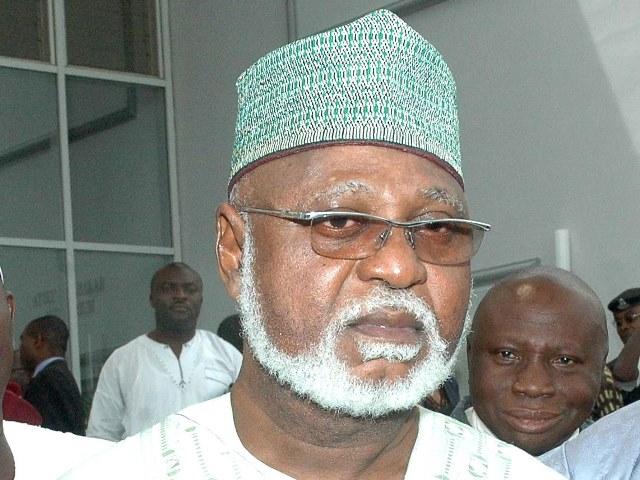
Former Head of State General Abdulsalami Abubakar expressed his satisfaction with handing power over to a democratically elected president in 1999.

Abubakar made this disclosure during an interview with journalists over the weekend. 

He stated, “Not at all! Not at all! Not at all! I am happy with what is going on. Yes, everything is not perfect, but here we are today, celebrating 25 years of unbroken democracy.”

Abdulsalami, who handed over power to former President Olusegun Obasanjo, acknowledged that while there are still challenges, Nigeria has made significant progress since 1999.

“We are not yet there but have come a long way since 1999. The only drawback we have in the system is people still sell their votes, and they do all types of things; they allow the politicians to use them in ballot box snatching here and there – unnecessary things that we should have overcome at this age.”

He emphasised the importance of voters holding elected officials accountable and lamented that some individuals still engage in vote-buying.

“Unfortunately, I still maintain, there are some very few people who abuse the process and they allow their votes to be bought. 

“And if they are buying these votes, certainly they cannot be called to be accountable, the people who are being so elected.”

Despite these challenges, Abdulsalami expressed optimism about Nigeria’s democratic progress and the growing awareness among citizens that their votes matter.

BREAKING: Finally, Kylian Mbappé joins Real Madrid

 By Sabiu Abdullahi 

Kylian Mbappé has officially signed with Real Madrid, with the club set to announce the French superstar as their new signing next week. 

According to sources, “every document has been signed, sealed, completed,” confirming Mbappé’s decision to join the Spanish giants.

The 24-year-old made his decision in February and has since completed all necessary steps for the transfer. 

“He can be considered a new Real Madrid player,” a source revealed.

Mbappé’s transfer comes on the heels of Real Madrid’s Champions League victory, marking a historic moment for the club. 

The announcement is expected to be made next week, cementing Mbappé’s place in Real Madrid’s history.

FG rejects labour’s demand for N494,000 minimum wage

By Uzair Adam Imam

The Federal Government has stated that it cannot meet the labour unions’ demand to increase the national minimum wage from N30,000 to N494,000.

According to the Minister of Information and National Orientation, Mohammed Idris, the demand would result in a total wages bill of N9.5 trillion yearly for federal workers alone, potentially destabilizing the economy and jeopardizing the welfare of over 200 million Nigerians.

The government offered a 100% increase to N60,000, which has been accepted by the private sector.

However, labour is seeking a 1,547% increase to N494,000.

The minister appealed to labour to return to negotiations and embrace realistic wages.

The government prioritizes affordability, sustainability, and the overall health of the nation’s economy, considering the welfare of all Nigerians, not just workers.

JUST IN: ASUU suspends warning strike

By uzair Adam Imam

The Academic Staff Union of Universities (ASUU) at Kano University of Science and Technology (KUST) Wudil has called off its two-week warning strike, which was launched to protest the state government’s handling of several issues.

ASUU had complained about the government’s reluctance to address issues related to university autonomy, staff welfare, and funding, despite efforts by the union and other stakeholders to resolve the matter.

However, following interventions by the Kano State House of Assembly, the House Committee on Higher Education, and the Governor of Kano State, the union has agreed to suspend the strike to allow for further dialogue and implementation of agreed-upon resolutions.

In a statement, ASUU-KUST Chairperson Dr. Aliyu Yusuf Ahmad said they appreciated the prompt intervention by the Kano State Government and relevant stakeholders.

He stated, “We appreciate the prompt intervention of the Governor and other stakeholders, which has created an opportunity for constructive engagement and resolution of the outstanding issues.”