Month: June 2024

Nigeria’s economic revival: Drawing inspiration from the Asian Tigers

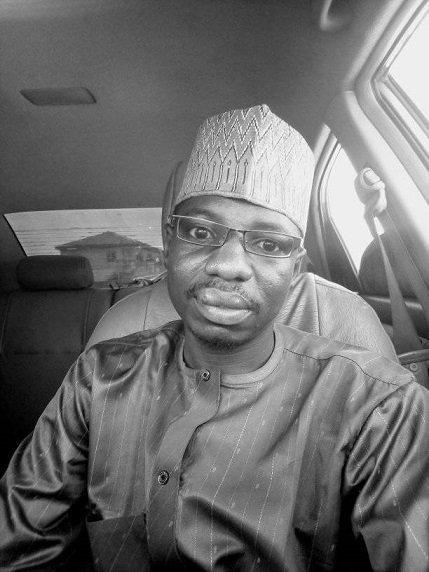
By Haruna Yusuf Abba

Nigeria, Africa’s largest economy, is grappling with severe economic challenges, including a debilitating recession, widespread poverty, and stagnant growth. Meanwhile, the Asian Tigers – Hong Kong, Singapore, South Korea, and Taiwan – have transformed their economies into high-tech, high-income powerhouses. This article explores the secrets behind the Asian Tigers’ success and how Nigeria can draw inspiration from their model to revitalise its economy.

I. Introduction

Nigeria’s economic woes are well-documented. With a shrinking GDP, rising inflation, and a volatile political climate, the country urgently needs a new economic direction. The Asian Tigers, on the other hand, have achieved remarkable economic growth and development, becoming global leaders in innovation, trade, and investment. By examining their strategies and policies, Nigeria can identify valuable lessons to overcome its current economic hardships.

II. The Asian Tigers’ Success Factors

A. Export-Led Growth

The Asian Tigers focused on export-oriented industrialisation, leveraging their competitive advantage in manufacturing and trade. Nigeria can similarly develop its export sector, particularly in areas like agriculture, textiles, and mineral processing.

B. Human Capital Development

Investing in education and training, the Asian Tigers built a skilled workforce, driving innovation and productivity. Nigeria must prioritise education, vocational training, and capacity building to enhance its human capital.

C. Infrastructure Development

The Asian Tigers invested heavily in modern infrastructure – transportation networks, energy systems, and telecommunications – creating a conducive business environment. Nigeria must upgrade its infrastructure to facilitate economic growth.

D. Economic Diversification

The Asian Tigers diversified their economies, reducing dependence on a single sector. Nigeria, too, must diversify its economy, exploring opportunities in services, manufacturing, and renewable energy.

E. Strong Institutions and Governance

Effective governance, rule of law, and institutional frameworks underpinned the Asian Tigers’ success. Nigeria must strengthen its institutions, combat corruption, and ensure transparency and accountability.

III. Nigeria’s Way Forward

A. Diversify the Economy

Nigeria must reduce its reliance on oil exports and develop other sectors, such as agriculture, manufacturing, and services.

B. Invest in Human Capital

Nigeria needs to prioritize education, vocational training, and capacity building to enhance its workforce’s skills and productivity.

C. Infrastructure Upgrade

Nigeria must invest in modern infrastructure, including transportation networks, energy systems, and telecommunications, to facilitate economic growth.

D. Export-Led Growth

Nigeria should focus on export-oriented industrialisation, leveraging its competitive advantage in areas like agriculture and mineral processing.

E. Strengthen Institutions and Governance

Nigeria must strengthen its institutions, combat corruption, and ensure transparency and accountability to create a conducive business environment.

IV. Conclusion

Nigeria’s economic revival requires a comprehensive approach, drawing inspiration from the Asian Tigers’ success factors. By diversifying its economy, investing in human capital, upgrading infrastructure, promoting export-led growth, and strengthening institutions and governance, Nigeria can overcome its current economic hardships and embark on a path of sustainable growth and development. The time for action is now.

Haruna Yusuf Abba wrote via ealistharoonyusufabba@gmail.com.

Mixed reactions trail Kano’s new premarital law

By Uzair Adam Imam

Kano State’s new Mandatory Premarital Law, signed by Governor Abba Kabir Yusuf, requires intending couples to undergo medical screening for genotype, hepatitis B and C, HIV/AIDS, and other related conditions before marriage.

The law aims to reduce the likelihood of children being born with underlying health issues and ensure the sanctity of marriages in the state.

Stakeholders, who spoke to Daily Trust on Saturday, have expressed diverse views on the development. While some, like Dr. Abdurrahman Ahmad Tijjani, a medical practitioner, welcome the law as a positive step.

Similarly, the Chief Imam of Shehu Usman Danfodio Jumat Mosque, Sheikh Isa Abba Umar Madabo, supports the law, citing Islam’s emphasis on protecting lives. Some individuals, like Malam Hamza Nata’ala and Alhaji Usman Ya’u Magashi, suggest that the medical screening should be free or subsidized, considering the economic situation.

The law prohibits discrimination against individuals living with HIV/AIDS, sickle cell anemia, hepatitis, and related conditions and imposes a fine of up to N500,000 or a minimum of five years imprisonment for non-compliance.

Zamfara lawmaker donates 3000 rams, 250m to constituency

By Uzair Adam Imam

Rep. Aminu Jaji (APC-Zamfara) has purchased 3000 rams for distribution to his constituents and the All Progressive Congress (APC) executives, members, and vulnerable households in the state, according to a statement by the State Chairman of Jaji’s Coordinating Committee, Aliyu Abubakar.The statement, issued in Gusau on Saturday, also revealed that Jaji, who represents the Kaura-Namoda/Birnin-Magaji Federal Constituency in the House of Representatives, has earmarked N250 million for distribution to individuals, orphans, and vulnerable groups across the state as Eid-el-Kabir welfare packages.The beneficiaries of the donation include state, local government, and ward executives of the party, party elders, prominent persons in the state, former political office holders, Islamic scholars, orphans, youths, and women APC support groups, among others.Jaji urged Muslims to use the first 10 days of Zulhijjah and Eid-el-Kabir period to intensify prayers for sustainable peace and stability in the state and country.

Kano groups win N100,000 grants for accountability in governance

By Uzair Adam Imam

In Kano State, three community groups have emerged winners of the Rising Awareness Driving Action (RADA) pitch competition, each receiving a grant of N100,000 to implement advocacy programs in their respective communities.

The competition, organized by Blue Sapphire Hub, a leading non-governmental organization, was supported by the MacArthur Foundation and the Ford Foundation.

The competition followed a 12-week radio program that aimed to raise citizens’ awareness about the roles and responsibilities of political office holders, from councilors to the president.

The program, aired on Arewa Radio every Sunday, included a question-and-answer session, allowing listeners to participate and ask questions.

The radio program was followed by a two-month training session for over 100 participants who applied.

The three winning groups will use the grants to advocate for community development and health, with a focus on inclusive political activities for people with hearing impairments.

Babangida Zama, leader of the first-place group, expressed gratitude to the organizers and pledged to use the grant to advocate for inclusive political activities for people with hearing impairments.

Abdullahi Mustapha Rabi’u, leader of the second-place group, expressed his gratitude to Allah and stated that the grant serves as a motivation to kickstart impactful projects in their community.

Engineer Sulaiman Bala Sani, the Executive Supervisor of the Hub, stated that the program aimed to educate citizens about their rights and the responsibilities of political office holders, and to advocate for good policies that benefit the community.

Abubakar Ibrahim Machika, the Community Coordinator of the Hub, emphasized the importance of the initiative, noting that most people are unaware of their rights and the roles and responsibilities of their leaders, making this move crucial for society.

Still on the trending “Skills vs. Degree” discussions

By lbrahiym A. El-Caleel

As I mentioned elsewhere, Nigeria’s educational system is not actually that bad. We need to understand that Nigeria has many good systems in place; the only problem is that these systems are either abused or not functioning efficiently. For instance, in our banking sector today, credit and debit alerts are nearly instantaneous. If I send you money now, you will be credited immediately and receive an SMS alert. This is made possible by the investments Nigerian banks have made in technological infrastructure, such as the Nigeria Inter-Bank Settlement System (NIBSS).

Many people, including myself, were shocked by the revelation that in Germany, there is a one-day lag in effecting transfers. This means that if I send you money today, you will only receive it in your account tomorrow. This was the system we had in Nigeria about 15 to 20 years ago. Germany is still stuck there despite being a G8 nation. At least, this is what we read from Dr. Muhsin Ibrahim in 2021. Germany is lagging behind Nigeria in banking efficiency. Who could have foreseen that? I am making this point so that we understand that Nigeria is not lacking systems. Many things in this country have established systems.

Now, let’s discuss our university system. Nigeria understands the need to bridge the gap between industry expectations and what is being taught to graduates in classrooms. Nigeria recognizes that graduates need to develop skills beyond classroom teaching. These are the relevant skills that will assist them in their careers when they graduate. Therefore, as far back as 1973, Nigeria established the Students’ Industrial Work Experience Scheme (SIWES), commonly called “Industrial Attachment/Training” or simply IT. This program is nationally facilitated by the Industrial Training Fund (ITF) directorate, with headquarters in Jos, Plateau State.

The objective of SIWES was to address the problem of tertiary institution graduates’ lack of appropriate skills for employment in Nigerian industries. When was this problem first addressed? In 1973. A very long time ago—51 years ago! So, who said Nigeria’s educational system isn’t aware of the graduate skill gap? This is something it established 51 years ago and is still running.

Now, what is supposed to happen during SIWES?

At this stage, let me quote directly from the ITF’s Policy Document No. 1 of 1973, which established SIWES. SIWES is to:

  1. Provide an avenue for students in Institutions of higher learning to acquire industrial skills and experience in their respective courses of study.
  2. Prepare students for the Industrial Work situation they are likely to experience after graduation.
  3. Expose students to work methods and techniques of handling equipment and machinery that may not be available in their Institutions.
  4. Make the transition from school to the world of work easier; and enhance students’ networks for later job placements.
  5. Provide students with an opportunity to apply their knowledge to real work situations, thereby bridging the gap between theory and practice; and
  6. Enlist and strengthen Employers’ involvement in the entire educational process; thereby preparing the students for employment in Industry and Commerce.

These are the objectives of SIWES. Do they sound familiar with all the yearnings we hear about “skills, skills, skills”? Now, does a Nigerian degree expose a student to skills acquisition or not? Well, it does! SIWES is a full semester in the Nigerian degree curriculum.

Students in SIWES have a logbook where they are expected to record their activities in the organization every single day of the entire 6-month program. Nigeria pays lecturers to travel across the country to supervise these students, ensuring they are doing what the curriculum expects. Furthermore, these students write a “project” at the end of SIWES to explain what they’ve learned. The country pays them ₦15,000 (at our time) just for participating in this program.

Therefore, we only need to call the attention of students to make the best out of their SIWES. Students from the Faculty of Education should take their “Teaching Practice” seriously. They should go to a standard school where they can develop professional teaching skills, not just select a secondary school in their neighborhood because they don’t want anyone to “disturb” them. After learning about lesson note and lesson plan, Teaching Practice will give them an opportunity to do it practically as it is done in the teaching industry.

The law graduate should take his Nigerian Law School seriously. He should get a reputable law firm during his externship programme and appear in court to maximally learn what he needs to know. This takes him from simply memorizing acts, to practically using them in the law industry. The same goes for the medical graduate and his housemanship, as well as the pharmacy graduate and his internship. Come on, these things are part of our educational system. Graduates are simply not making the best use of these opportunities, and that’s why it’s easy for any pundit on Facebook to tell them degree certificates are no longer what should be sought after. Skills are the go-to area.

A degree is a comprehensive package of both academics and skills. In your pursuit of a bachelor’s degree, you will gain skills that will give you competitive advantage in your postgraduate life—whether you choose to go purely academic, or go to industry practice.

The degree will train you to think for yourself and determine what you should do with your life, rather than simply following the crowd. You will be able to critically evaluate yourself to understand what suits you better- going academic, or going the industry way, or even starting up a business.

Degree develops your mental agility to do all these things. This is why if you’re running a degree programme, I will tell you to take it seriously.

And very importantly, pray for Allah’s blessings in this. You will see wonders.

Ibrahiym A. El-Caleel writes from Zaria and can be reached via caleel2009@gmail.com.

EFCC raids nightclubs, arrests groom-to-be, others

By Uzair Adam Imam

The Economic and Financial Crimes Commission (EFCC) has raided two popular nightclubs in Akure, Ondo State, arresting over 50 customers, including a groom-to-be, during a Bachelor’s Eve celebration.

The operation, which took place in the early hours of Saturday, also resulted in the seizure of vehicles, laptops, phones, and other items.

The raid occurred at two major nightclubs in the Alagbaka area of Akure, where the EFCC operatives stormed the lounges and event centers, shooting sporadically into the air.

Eyewitnesses reported that the operatives entered the nightclubs, tear-gassing people, beating them up, and arresting them without regard to their identity, even injuring two soldiers in the process.

The groom-to-be was among those arrested, along with his friends, while celebrating his Bachelor’s Eve.

The EFCC operatives allegedly removed CCTV cameras from the scenes and confiscated scores of vehicles, laptops, sophisticated phones, and other items.

The arrested individuals were allegedly profiled as internet fraudsters.

The incident has raised concerns about the EFCC’s methods and the treatment of suspects.

NAFDAC arrests 3 suspects for manufacturing fake drugs in Kano

By Uzair Adam Imam

The National Agency for Food and Drug Administration and Control (NAFDAC) has arraigned three suspects and a company, Giddyson Healthcare Limited, before a federal high court in Kano for manufacturing, distributing, and selling fake children’s medicines.

The suspects, Amao Gideon, Alumona Okwiludili, and Hillary Chigozie, pleaded not guilty to the five-count charge.

The medicines in question, which include Asian Ampicillin and Artil-Go, were found to contain zero active ingredients, putting patients at risk of treatment failure and possible death.

NAFDAC Director-General Mojisola Adeyeye noted that the products were not registered and had fake numbers and manufacturer’s addresses on the labels.

The illegal factory, located in Tafa town, Niger state, has been sealed by NAFDAC.

The suspects were arrested following intelligence gathering and a discrete investigation.

The court has fixed June 14 for the bail application and June 20 for the hearing.

This development shows the ongoing efforts of NAFDAC to combat the manufacture and sale of counterfeit drugs in Nigeria, and the need for increased vigilance to protect public health.

Sani Abacha: Lessons in leadership and attaining other life goals

By Saifullahi Attahir

After I read many books and essays about the life of the Late General Sani Abacha, including the famous Soldiers of Fortune by the brilliant historian Max Siollun, I was able to draw out some key lessons I wanted to share with my readers, hoping it would serve as a guide toward their leadership, professional, and other life aspirations.

A famous Hausa saying goes, ‘In ka ji wane ba banza ba’, meaning (every popular, great, or successful person has a hidden story behind it).

Sani Abacha was born in Kano in 1943 to a Kanuri businessman. He attended Kano Provincial College (later called Rumfa College) before proceeding to Nigeria Army training in Kaduna. He was commissioned into the Army and could participate in various trainings and engagements within and outside the country.

Abacha was destined to be among the few soldiers to become Nigeria’s Head of State during his career. Little was known about this young man before the 1983 coup that brought General Muhammadu Buhari to power. It was stated that only three times during a span of over three decades did Abacha ever appear to make any official public statements. He was a master of silence and maintaining a low profile.

For an ambitious and very calculated person like Abacha to achieve his dream within the cycle of influence in the elite Nigerian army, it must call for some behaviours and attitudes that he possessed either inherently or learned that he was fortunate to use, and quite predictably, these were the strongest weapons he used during his time.

 I am not advocating military rule or any form of ruthless use of force to lead people. In contrast, my article is about what characters can learn from great individuals regardless of where they hail from or their human mistakes. I hope this will be a guide to our youth who aspire to lead a responsible and impactful life.

Below are the lessons I wanted us to learn: 

1) Concealing intention

Abacha may have read Robert Greene’s 48 Laws of Power or mastered the art even before the book was written. Whether Abacha had already harboured the intention to rule Nigeria was another subject of debate, but his ability to remain unpredictable to the extent that even his boss, General Ibrahim Bahamas Babangida (IBB) stated that he never for once thought Abacha had any intention to become Head of State. This concealment of intention shielded him from the attraction of his colleagues with similar ambitions. Also, he was able to escape the trap of Boss/protégé conflict. 

Had Abacha publicly started showing any intention of replacing his boss, their relationship might have gone sour. This key lesson of never outshining your master and never publicly sharing your dreams and goals with anyone except the needful ones is a very important strategy for achieving your goals in life. Keep your enemies busy and maintain an air of unpredictability.

2) Patience

The importance of this assertive attitude can never be overemphasised. The art of patience, deliberation, and taking things without a rush is one of the best attributes for lasting success and achieving life goals.

When you are patient, life-changing opportunities will eventually come your way. Both Abacha and Bukar S. Dimka were contemporary ambitious young soldiers, but Dimka rushed his ambition by conniving with others and making his intention known. He eagerly executed an ill-prepared coup against Murtala. The tragedy ended up destroying both Dimka and his collaborators.

On the other hand, Abacha was more patient and allowed his ambition to buy time until 20 years later when he became an indomitable force to reckon with. He eventually became the Head of State. 

3) Know when to decide

 It’s not advisable to remain patient and inactive all your life. You are supposed to know when to act when to strike and when to attack. Whenever the long-awaited opportunity presents itself, you must seize it and act decisively quickly. At that point, you are not likely to procrastinate even for a while. When the country plunged into crisis, and the Interim National Government (ING) under Shonekan could not control the situation, Abacha saw this as both necessary and an opportunity to exercise his power. The rest is history.

These art and qualities require training and mastery by every person from any walks of life.

May Allah forgive his shortcomings and let his gentle soul rest in peace, ameen.

Saifullahi Attahir, a Medical Student of Federal University Dutse, wrote via saifullahiattahir93@gmail.com.

Minister defends directives asking permanent secretaries to bow to Tinubu

By Sabiu Abdullahi

The Minister of the Federal Capital Territory (FCT), Nyesom Wike, has defended his decision to ask Permanent Secretaries of the FCT administration to publicly bow before President Bola Tinubu. 

Wike had come under criticism for his action, which many Nigerians described as “sycophancy taken too far”.

However, the minister explained that the gesture was meant to show appreciation to the president for approving the appointment of the permanent secretaries. 

“Two days ago, when the president came, we tried to thank him for what he did in making sure that those who had already lost hope in their career progression got to the peak of their career,” Wike said. 

He added that the president’s approval had given hope to the permanent secretaries, who had previously lost hope in their career progression. 

“Mr. President granted that, and then I called out the permanent secretaries who are the beneficiaries to come out and take a bow and thank Mr. President,” Wike explained. 

The minister condemned those criticizing him, saying they lacked anything good to say.

“It is an honour to be called out to take a bow, but some human beings can never see anything good.

Instead, they are criticising, saying, ‘How will you call people who are permanent secretaries and ask them to take a bow?” Wike added, “Instead of you to commend Mr. President for doing well, for giving hope to those that didn’t have hope before.” 

The minister’s defense comes after widespread condemnation of his action, with many Nigerians describing it as an act of sycophancy.

When a home becomes a prison

By Abdurrazak Muktar Makarfi

A home that lacks peace is a prison. This statement resonates deeply with the human experience, highlighting the fundamental need for tranquillity and harmony within one’s living space. Ideally, the home is a sanctuary where individuals can retreat from the chaos of the outside world to find solace and comfort. When this essential peace is disrupted, the very essence of the home is transformed into a confining and oppressive space akin to a prison.

In a home bereft of peace, the walls that should offer protection and security become barriers, trapping the inhabitants in a cycle of stress and unease. The once-welcoming rooms turn into cells devoid of warmth and joy. Instead of being a refuge, every corner of the house becomes a reminder of the discord and strife that permeates the environment. This transformation is not merely symbolic; it has tangible effects on the well-being and mental health of those who dwell within.

Consider the psychological toll of living in such an environment. Constant exposure to conflict and tension can lead to chronic stress, anxiety, and even depression. Starved of peace, the mind becomes a battleground where thoughts of escape and a longing for freedom from turmoil dominate. This relentless pressure can erode relationships, fray tempers, and diminish the overall quality of life. In its truest sense, the home is lost, replaced by a space that suffocates rather than nurtures.

Moreover, the absence of peace disrupts the natural rhythm of daily life. Simple pleasures, like sharing a meal or enjoying a quiet evening, are overshadowed by underlying tensions. Conversations are strained, and the genuine connection between family members is fractured. The home fails to serve its purpose as a haven of intimacy and love and instead becomes a site of emotional incarceration.

In contrast, a home imbued with peace is a fortress of strength, providing its residents with the stability and support needed to face external challenges. It fosters a sense of belonging and security, where each individual feels valued and understood. In such an environment, love and respect flourish, creating a positive feedback loop that reinforces the home’s role as a sanctuary.

To transform a house that feels like a prison back into a peaceful home requires conscious effort and commitment from all inhabitants. Open communication, mutual respect, and a willingness to resolve conflicts amicably are essential. Cultivating a calm home is not merely about the absence of conflict but the presence of understanding, empathy, and shared purpose.

In conclusion, a home without peace is a prison, trapping its inhabitants in a relentless cycle of discord and discomfort. The importance of a peaceful home cannot be overstated; it is the bedrock of personal well-being and harmonious relationships. By prioritising peace and fostering a nurturing environment, a home can fulfil its role as a sanctuary, offering respite from the outside world and enriching the lives of those within.

Abdurrazak Muktar Makarfi wrote via prof4true@gmail.com.