Month: March 2024

In defence of the NYSC SAED program

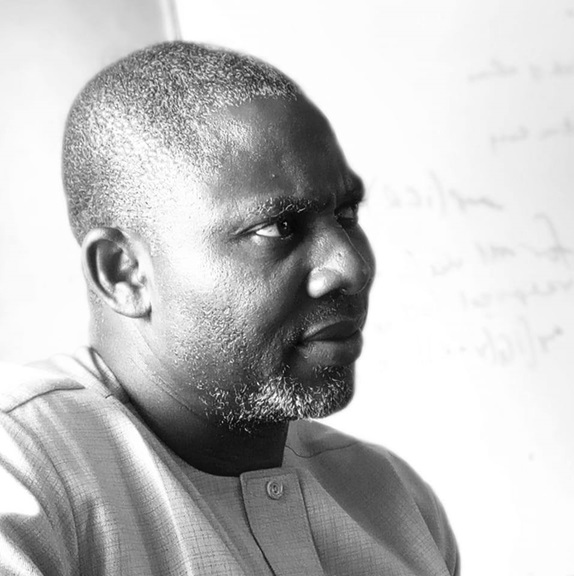
By Ammar Muhammad Rajab

On November 1st, 2023, following mobilisation by Ahmadu Bello University, Zaria, I enrolled with the NYSC at one of the accredited centres in Zaria. I was deployed to Wailo Camp in the Ganjuwa Local Government Area of Bauchi State shortly after.

I departed Zaria on November 2, 2023, via a commercial bus. Following a six-hour journey, I arrived in Bauchi and spent the night there. On the afternoon of the 3rd of November, a Friday, I boarded another commercial car for a 60-kilometer journey to the camp where I had been deployed.

Immediately upon my arrival at Wailo camp, I underwent registration with the NYSC officials. Subsequently, I received the necessary items and materials for my three-week stay at the camp. The orientation period blended joy, intensity, lasting memories, education, and valuable information. I vividly recall the rigorous drilling, the monotonous parades, and the enlightening lectures delivered by various professional bodies, including but not limited to the DSS, Army, Police, NHIA, WEMA Bank, Fire Service, NIM, NSE, OIC Foundation, NAFDAC, FRSC, NDLEA, NDE, NGOs, SDGs, NOA, USAID, and YOMA, among others.

The army and Man O’ War were highly professional in their approaches. Despite the unfamiliar circumstances we found ourselves in, I enjoyed the teachings and orientation provided at the camp.

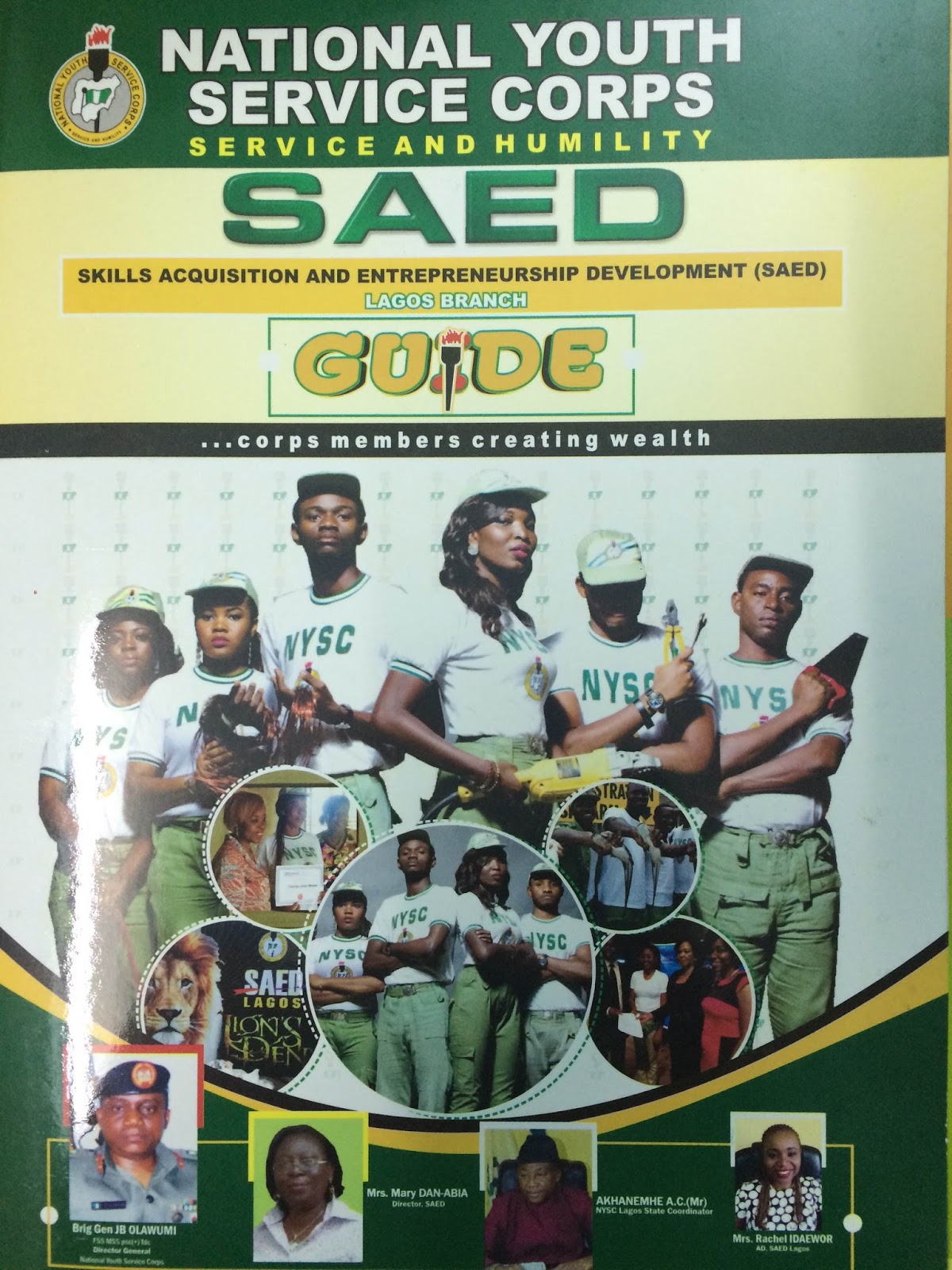
Skills Acquisition and Entrepreneurship Development (SAED), an acronym for a NYSC program established in 2012, was designed to tackle the pervasive issue of unemployment, a significant challenge confronting Nigerian youths and graduates today. This issue has become a national concern as some of our most educated and dynamic individuals are not actively contributing to economic and social development.

The SAED program was charged with raising corps members’ awareness of the realities of the Nigerian job market. Offering foundational entrepreneurship training and practical skills aimed to empower them to consider the possibilities of self-employment or initiating their businesses.

Many corps members harbour disdain for the program, often attributing it to the lengthy duration of both the lectures and practical sessions. During our orientation camp, the program ran daily from 9:00 a.m. to 2:00 p.m., spanning 5 hours. In the classroom, it was common to observe corps members dozing off, engrossed in their smartphones, displaying signs of fatigue, or engaging in other unserious behaviour.

To me, that period was the highlight of the orientation camp. I gained invaluable knowledge, particularly during the lecture delivered by an official from the National Directorate of Employment following the distribution of the guidebook titled “Starting My Own Small Business: Participant’s Workbook.” This lecture was a pivotal and transformative moment for anyone responsible and attentive.

 We were imparted with comprehensive insights into the intricacies of establishing a formal business in Nigeria and the diverse opportunities available across various sectors. We also learned how one could secure grants or loans from government agencies tasked with that responsibility or from commercial banks to facilitate business expansion.

Many individuals who had successfully leveraged these opportunities were invited to deliver practical lectures, and they did so with professionalism and expertise. Their first-hand experiences served as invaluable lessons for us, providing practical insights and guidance on effectively navigating the entrepreneurial landscape.

I listened attentively, maintained focus, and diligently documented all the necessary information provided during the SAED program. Hajia Jummai Idris Reme, the Head of the SAED program in the camp, often reiterated to us that “the SAED program is a corps members’ pathway to wealth creation,” and I wholeheartedly agreed with her sentiment. With commitment and dedication, one could create wealth using the knowledge acquired during the SAED program.

Before attending the camp, I already had a business idea and was working diligently towards realising it. However, attending the SAED classes further ignited and encouraged my efforts. As a result, I recently took the step to register my business with the Corporate Affairs Commission, spurred on by the confidence and insights gained from the SAED program.

In Wailo Camp, I initially participated in the ICT class under the SAED program, but I eventually discontinued my involvement due to some reservations. Subsequently, I joined the educational class, which I found very engaging. However, the class experienced low participation rates. Although we initially started with around twenty-plus participants, we concluded the class with fewer than ten individuals.

Despite the low turnout, I thoroughly enjoyed the educational class. We were exposed to numerous informative, educative, and innovative ideas about education, which enriched my understanding and perspective on the subject.

Most of the participants in the educational class were educators, except myself and one other individual. During this class, I learned about the legal processes involved in opening a private school. I am grateful to Aishatu Yusuf Saje, the head of the educational class, for imparting such valuable knowledge.

Isa Mohammed Inuwa and I were privileged to represent the educational class on Friday, November 17th, 2023, during the camp’s inter-platoon skills acquisition competition exhibition. Following my presentation, Mrs. Rifkatu Daniel Yakubu, the Bauchi State Coordinator, offered valuable advice. She emphasised the importance of establishing a standard school to contribute to our country’s education development. Mrs Yakubu highlighted the prevalence of substandard schools and stressed the significance of ensuring quality education. Her advice resonated deeply with us and reminded us of our responsibility to shape the educational landscape.

With the assistance of the SAED program, four corps members were able to secure a total of 2.3 million Naira in grants. Among the 90 corps members who submitted their business plans, seven were selected to present their proposals to WEMA Bank officials, fellow corps members, and other NYSC officials. Ultimately, four corps members emerged as grant recipients, with amounts awarded: 800,000 Naira, 700,000 Naira, 600,000 Naira, and 200,000 Naira, respectively. This achievement highlights the effectiveness of the SAED program in fostering entrepreneurship and facilitating financial empowerment among corps members.

The prevalent laziness among many youths today contributes negatively to their disdain for the SAED program. Several corps members have expressed that they consider it the most “boring” aspect of the orientation camp. However, the parade is the most tedious part of the camp. This is because I lack any passion for becoming an army or paramilitary officer, which diminishes my enthusiasm for the parade activities.

The blame should not be placed on the NYSC SAED program itself. Instead, the laziness and lack of foresight among many of our youth and graduates hinder their appreciation of this valuable opportunity. The SAED program serves as a platform to showcase talents and acquire knowledge that can be instrumental in thriving during and after the NYSC program. We need to seize this opportunity and make the most of it, as it may only come once in a lifetime.

Ammar Muhammad Rajab is a journalist who writes from Kano and can be reached at ammarmuhammad1993@gmail.com.

Kannywood Movie Review: Zafin Nema

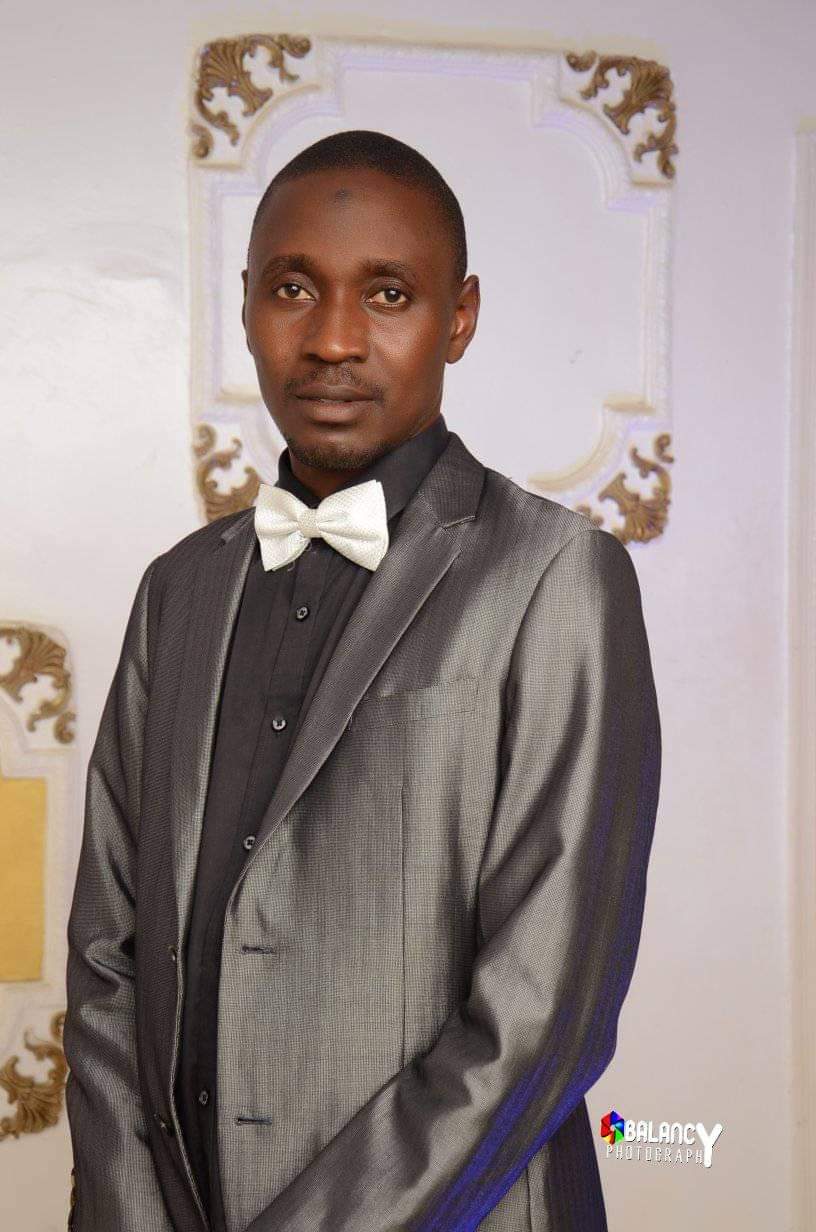
By Muhammad Abubakar

It has been a while since I wrote a Kannywood movie review. The last film I reviewed was Ruwan Dare, directed by the uniquely skilled Auwal Yaseen. In this review, I will discuss the same director’s new series release (Zafin Nema), which shares some similarities with the previous movie.

Zafin Nema is a romantic comedy-drama about two lovers, Ilu (played by Sadiq Sani Sadiq) and Saude (played by Maryam Yahaya), who face numerous challenges. Ilu comes from a poor background, and Saude’s family, especially her paternal grandmother (Hajara Usman), disapproves of their relationship. As a result, Ilu and his friend Rabe (played by Tahir I. Tahir) set off to the city in search of money to marry Saude.

Ilu and Rabe vow not to return home until they become five times richer than Alhaji Dangana (played by Shehu Hassan Kano), whom Saude is forced to marry. Ilu’s financial struggles cause his relationship with Saude to fall apart, and her family’s obsession with material possessions doesn’t make things easier.

The movie is entertaining and leaves you curious about what will happen in the next episode. The cast delivers good performances, but the camera work is poor and looks like it was shot with an ordinary Android camera. However, the natural background is quite appealing.

One issue with the movie is that it’s without subtitles, despite Kannywood’s growing audience across Africa and beyond. Additionally, the subtitles in some Kannywood films are poorly done.

Surprisingly, the industry still produces movies with terrible subtitles despite having (seemingly) educated individuals. Therefore, I suggest they employ people proficient in English to handle subtitles.

Overall, Zafin Nema is a must-watch movie that you shouldn’t miss. I, therefore, recommend it for all and sundry.

Muhammad Abubakar wrote via muhammadabubakarsulaiman070@gmail.com.

COWA president gives palliatives to more members in Abuja

 By Sabiu Abdullahi 

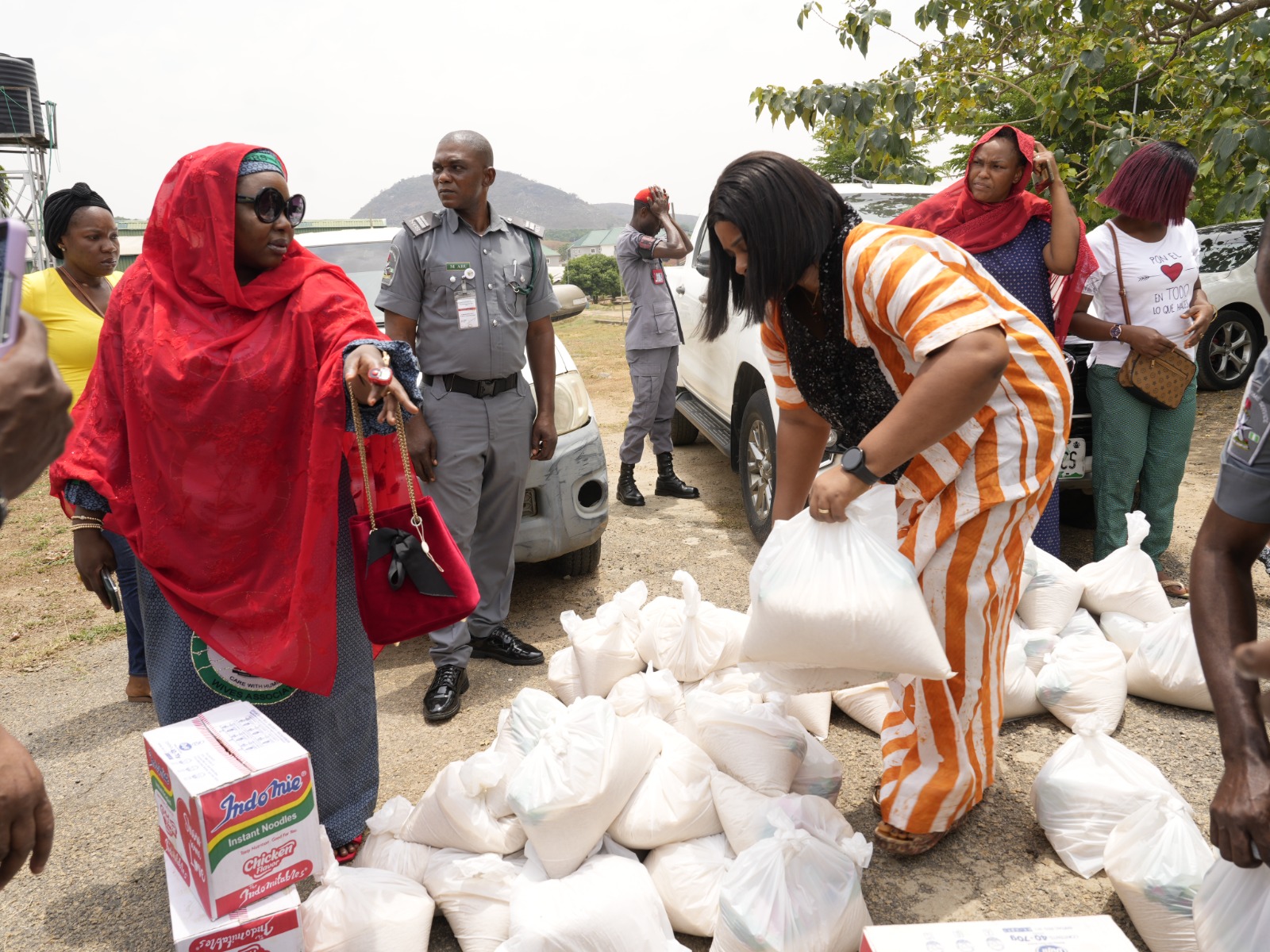
Kikelomo Adeniyi, the National President of the Officers’ Wives Association (COWA), and wife of the Comptroller-General of Customs, spearheaded the extension of palliative distribution to COWA members in Abuja on Wednesday, March 13, 2024. Mrs.

Adeniyi embarked on a tour that included visits to the Federal Capital Territory Command, Nigeria Customs Command, and Staff College Gwagwalada.

During these visits, she delivered a resounding message of solidarity and support to the officers’ wives in attendance, acknowledging their immense challenges and reaffirming COWA’s commitment to providing assistance and empowerment. 

Expressing gratitude to the attendees for their unwavering commitment, the COWA president recognised the sacrifices made by officers’ wives and their invaluable contributions to the Customs community.

She emphasized the significance of empowering women, aligning COWA’s initiatives with the broader national agenda of women’s empowerment championed by the First Lady, Remi Bola Tinubu. 

Encouraging swift registration as members of COWA, President Kikelomo elucidated the myriad benefits awaiting registered members, ranging from access to support services to participation in empowerment programs.

She also articulated COWA’s vision of institutionalising the association and maintaining a comprehensive database of registered members to ensure effective service delivery and support. 

Highlighting the pivotal role of COWA in uplifting women across the nation, Adeniyi reiterated the association’s commitment to empowering widows, orphans, and officers’ wives alike to be self-reliant.

She emphasised the symbiotic relationship between personal empowerment and the ability to uplift others, fostering a culture of support and solidarity within the association. 

Addressing officers directly, the National President urged them to embrace their wives’ participation in COWA activities, recognizing the positive impact on family dynamics and societal progress.

She reassured officers of the benefits stemming from their wives’ involvement, highlighting the transformative power of mutual respect and support within marital relationships. 

During her visit to the Nigeria Customs Command and Staff College Gwagwalada, Mrs. Adeniyi commended the Commandant of the College, Assistant Comptroller-General of Customs (ACG) Kingsley Egwuh, for his unwavering support of COWA activities and dedication to the institution’s growth and development.  

ACG Egwuh reaffirmed the Command’s commitment to providing unwavering support to COWA, recognizing the pivotal role of the association in fostering unity and support within the Customs community.

He pledged continued collaboration and assistance, acknowledging the indispensable nature of COWA’s initiatives in driving positive change and empowerment.

Nigeria: The road to new minimum wage…

By Prof. Abdelghaffar Amoka

In 2011, the exchange rate was 1 USD to 155 naira, and in 2024, it is about 1 USD to 1,550 naira. That is a ratio of 1: 10 for 2011 and 2024.

In 2011, a loaf of bread cost 150 naira, and in 2024, it is about 1,500 naira. That is a ratio of 1: 10 for 2011 and 2024.

In 2011, a bag of maize cost about 5,000 naira. In 2024, it is about 55,000 naira. That is a ratio of 1: 10 for 2011 and 2024.

The price of most basic needs has increased ten times between 2011 and now. That is still a ratio of about 1: 10 for 2011 and 2024.

Then, the price of fuel in 2011 was 65 naira per litre, and the current price in 2024 is about 690 naira. That is still a ratio of about 1: 10 for 2011 and 2024.

If the exchange rate and fuel price remain the same, if the minimum wage was 18,000 naira in 2011, it should be 180,000 naira in 2024.

Abdelghaffar Amoka Abdelmalik, PhD, wrote from Ahmadu Bello University, Zaria. He can be reached via aaabdelmalik@gmail.com.

AMA Medical Manufacturing: A turning point for the Nigerian of Medical Industry

By Muhammad Muzdaleefa

The groundbreaking ceremony for the AMA Medical Manufacturing OSD Plant marks a turning point for the Nigerian medical industry.

The new plant, which will produce oral solid dosage (OSD) medications, will not only boost the local economy but also improve access to high-quality healthcare for the Nigerian people.

It is a testament to the company’s commitment to investing in the future of healthcare in Nigeria.

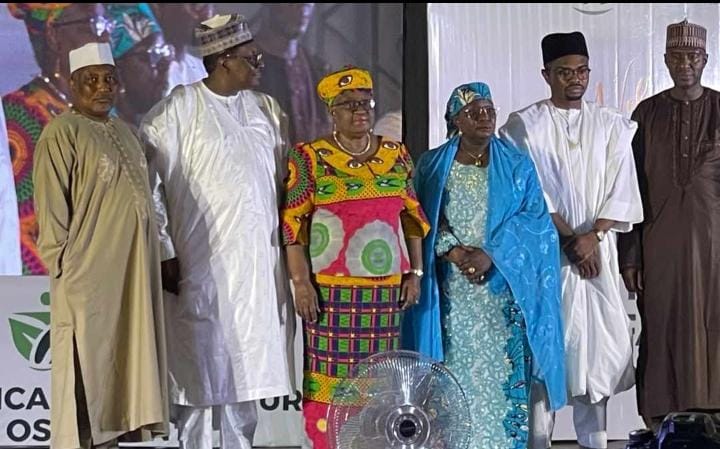
The ceremony was conducted by the Director General of the World Trade Organization, Dr. Ngozi Okonjo Iweala, and attended by a number of dignitaries, including the Governor of Kaduna State, Senator Uba Sani, Deputy Governor of Kaduna State, Dr. Hadiza Sabuwa Balarabe, Minister of Health, Prof. Ali Pate, the Permanent Secretary of the Ministry of Trade and Industry, the Vice President’s representative, Emir of Zazzau, Amb. Ahmad Nuhu Bamalli among others.

A number of medical experts from UK, US, Germany and representatives from numerous health organizations were also in attendance, including the ambassador of Indonesia in Nigeria, partners from Korea, and representatives from the National Agency for Food and Drug Administration and Control (NAFDAC).

Also, a number of memorandums of understanding (MoUs) were signed during the ceremony, reflecting the commitment of various stakeholders to supporting the new plant and its mission to improve healthcare in Nigeria.

The event was a clear sign of the importance of the new plant to the future of healthcare in the country. It is imperative to note that prior to the establishment of the AMA Medical Manufacturing plant, there is virtually no medical companies operating in northern Nigeria.

This meant that many people in the region had limited access to high-quality, affordable medical products and services.

The AMA Medical Manufacturing plant aims to address this issue by providing a reliable source of quality medical products for the people of northern Nigeria.

In addition, the plant’s location in Kaduna State, which is central to the region, makes it accessible to a large population and well-positioned to serve as a hub for medical products distribution.

The founder of AMA Medical Manufacturing, Alhaji Musa Bello Abdullahi, chose Kaduna as the location for the new plant because of its strategic location and rich history.

Kaduna is a major transportation hub, with good road, rail, and air links, making it easy to get medical products from the plant to people across the region.

In addition, Kaduna has a long history as a center of industry and commerce, and the founder hopes that the plant will help to revitalize the local economy.

During her address, the DG of the WTO stated that she is pleased to see the establishment of the AMA Medical Manufacturing plant in Kaduna, and believes that it has the potential to become a global leader in medical equipment production.

She has expressed her commitment to providing the company with the necessary support and assistance to help it achieve this goal.

This includes helping the company to access international markets and comply with international standards.

The Minister of Health has also voiced the federal government’s support for the AMA Medical Manufacturing plant, stating that the government is committed to assisting the company in any way possible.

This includes providing regulatory and policy support, as well as assistance with accessing capital and markets. The Minister has expressed confidence that the plant will help to address some of the healthcare challenges facing Nigeria, and will contribute to the overall development of the country.

The establishment of the AMA Medical Manufacturing plant in Kaduna is a significant development for both the state and Nigeria as a whole.

The company has the support of both the federal government and the WTO, and has the potential to become a global leader in the medical equipment industry.

With the right support and commitment, the plant can play a major role in improving healthcare in Nigeria and making the country a more competitive player in the global economy.

The future of medical equipment manufacturing in Nigeria looks bright, thanks to the efforts of AMA Medical Manufacturing.

Muhammad Muzdaleefa writes from Kaduna and can be reached via mohammedadamu736@gmail.

Celebrating World Speech Day 2024

By Bello Sagir

Today is World Speech Day (WSD), 2024! This year’s theme is “Speech for a Better World.” WSD is a day of celebration for all Nigerians and people around the world.

In 2015, Simon Gibson founded WSD at the Athens Democracy Forum to celebrate free speech, public speaking, and public speakers. In 2016, WSD was inaugurated and first celebrated in Athens and Singapore. By 2020, over one hundred countries celebrated WSD. As a result of this milestone, Facebookers and YouTubers began live-streaming the event.

World Speech Day is a celebration day for all Nigerians because, prior to 1960, when we officially became an independent nation from Britain, there were a series of speeches by Sir Abubakar Tafawa Balewa, Herbert Macaulay, Nnamdi Azikiwe, etc., in Britain, some African countries, and, above all, in Nigerian media and during processions and campaigns, all in a bid to free Nigeria from the shackles of the colonial masters.

Sheikh Uthman Danfodio reformed Islam in northern Nigeria, not because he was the most pious or educated person nor because he was the most fearless warrior, but largely, if not solely, because he was a very persuasive speaker.

The same is true of Malam Aminu Kano, who won the Kano East constituency in the federal legislature during the Second Republic. Similarly, in 1979, his party, the PRP, won the Kano and Kaduna gubernatorial seats in a landslide victory.

As we are Black and African, so is Barack Obama, whose father went to the United States from Kenya. Therefore, his political victory affects us. According to analysts, Obama became the first Black African American President because he could speak persuasively to the audience.

Teaching is a form of speech that falls under informative public speaking. That is to say, all educated people are educated because teachers have taught them. Imagine the world without teachers! Would there be medical doctors who take care of our health, engineers who design and make cars for us, pilots who fly us, military and other security personnel who secure us, bankers who keep and manage our money, or even journalists who hunt for news professionally and inform us? Would there be all these personalities and many more?

Regardless of the religion you follow, it reached you through public speakers who are God’s agents. They used largely informative and persuasive public speaking to extend the religion to people. Also, you learn how to worship God through public speakers who teach you at schools the performance of the religion, as prescribed by God and his messenger.

See how public speaking has been instrumental in Nigeria’s independence, the reformation of Islam in Northern Nigeria, educating Northerners (of that time), resisting bad governance, and a person of African descent becoming president of the powerful United States of America.

Additionally, considering how public speaking is responsible for the creature comforts and peace we enjoy, among other things, it is not amiss to conclude that World Speech Day is worth celebrating every year by all of us in our various capacities because, in a way, celebrating the day is celebrating all the public speakers responsible for the civilized world we are all proud of today.

Bello Sagir Imam

Public Speaking Coach

Malam Ahmad the Muezzin: As Constant as the Northern Star!

By Malam Mahmud Zukogi

Those who did one program or the other at the Bayero University, Kano (BUK) new campus may know Malam Ahmad in two places: the university library and the now-old new campus mosque. 

For students who frequent the library for the serious business of “acada,” the likelihood of you not meeting Malam Ahmad every other day is zero. At any of his bits in the Reserve, Circulation, Serials, and Nigeriana sections, you are certain to meet a man who is calm, gentle, welcoming, and professional in his disposition. 

Malam Ahmad listens to you, guides you, and directs you where to get the books and materials you seek. Such is the man Malam Ahmad, who recently retired from the services of Bayero University, Kano, as a Principal Librarian in 2019.

Malam Ahmad obtained his Diploma in Library Science in the early eighties and was absorbed into the university’s services. He went on to do his bachelor of Arts Education in Library Science at Ahmadu Bello University (ABU) Zaria and capped it off with a master’s degree in BUK.

However, his professional duty has not made Malam Ahmad renowned at the university. For over 40 years, his heart has been devoted to the mosque. Starting as an assistant Muezzin, he rose to become the substantive Muezzin, a role he held steadfastly. 

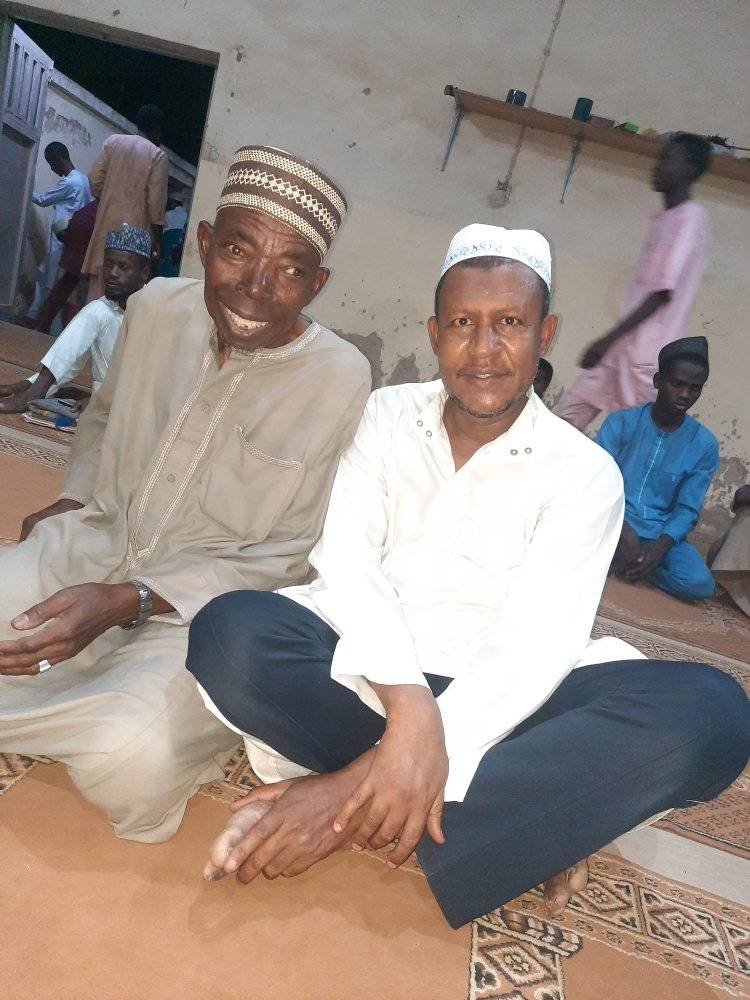
At the onset of time for prayers, you will hear Malam Ahmad’s voice waxing through the air, calling faithful to prayer. He’s as constant as the northern star. Whether sun or rain, he will be on top of time to open the mosque, clean up the spaces and hit the mic with his signature voice. Let the rains tear through the skies with intensity at dawn; his voice calling to prayer and success will wow the fierce nature into the homes and ears of adherents in the quarters. Subhanallah.

He looks frail in his mid-seventies, but his heart is still strong and firm. As a testimony to this, even after packing out of the university quarters, Malam Ahmad will still be in the mosque at the appointed time. The only time you won’t find him is when he is challenged healthwise. He is a very peaceful man, never engaging in any squabbles or quarrels. You will find him engrossed in zikr and recitation of the Holy Qur’an between prayers. 

Ya Allah, grant this your servant good health and endow him with sufficient means to live his remaining life in peace and harmony. Ya Allah, grant him a beautiful ending and enlist him into Jannat ul Firdaus.

Disaster management: FG donates firefighting trucks to Kano government

By Sabiu Abdullahi 

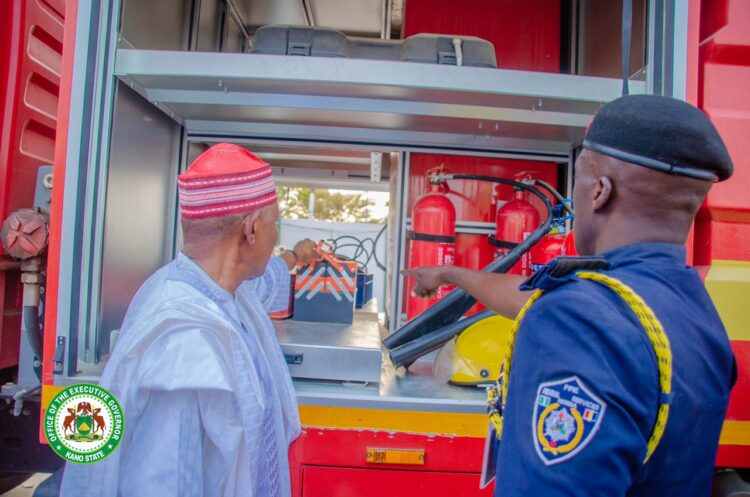
The federal government has stepped in to offer support by donating two cutting-edge digital firefighting trucks to the Kano State government.

The unveiling ceremony, graced by Kano State Governor Abba Kabir Yusuf, was marked by expressions of gratitude towards the Federal Government for its crucial assistance. 

Governor Yusuf, acknowledging the donation, expressed profound appreciation for the gesture, highlighting the substantial impact these firefighting trucks would have on bolstering safety and security within the state.

He assured the public that the resources would be utilised judiciously for the benefit of all citizens.

Time to return to the masjid

By Bello Hussein Adoto

When COVID-19 came, we switched from receiving exegeses of the Qur’an and Hadith from masājid and physical gatherings of knowledge to virtual ones. We attended Facebook Live and Zoom sessions to listen to our favourite scholars. We followed their tafsirs on Mixlr, Google Meet, and Telegram.

These were supposed to be temporary solutions to the social-distancing mandates that COVID-19 imposed, but they have become the norm. It is about time we returned to the masājid to restore their beauty and secure the blessings of learning physically from scholars.

This Ramadan is a great time to start.

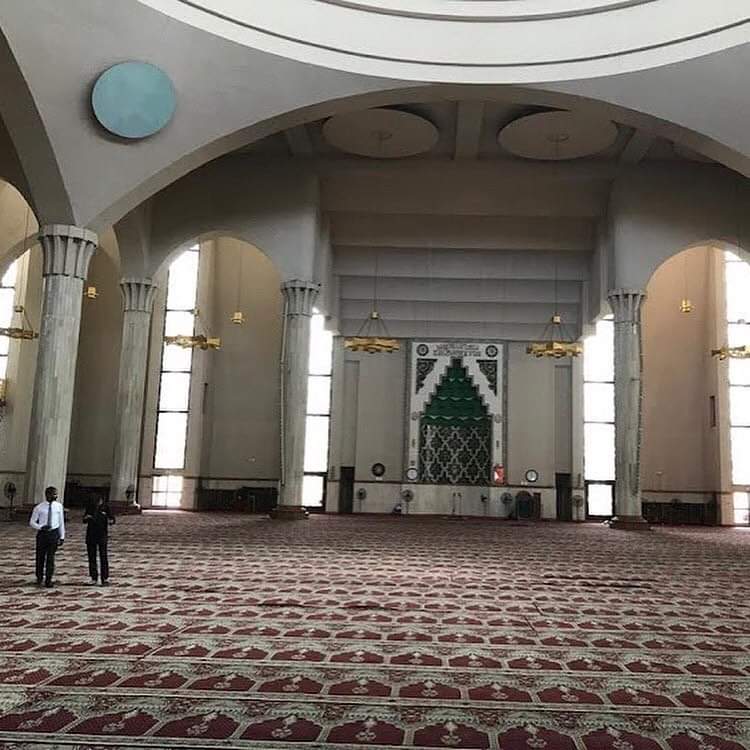
Allāh says in the glorious Qur’an, “I did not create mankind and the jinn except to worship Me.” The masjid is central to this worship. We observe the congregational ṣalāt at the masjid, perform iʿtikāf there, distribute the zakāh, and listen to explanations from our scholars.

Beyond worship, the masjid unites us as a community by bringing us together with our Muslim brothers and sisters as members of a shared community, united by faith. In preserving this faith and community, we must find a way to restore the essence of our masajid, even in the age of online communities.

Why should we return to the masjid?

Islam is not against technological innovations that would benefit Muslims. Indeed, we use microphones to project the adhan, telescopes to observe the moon, and smartphones and other devices to spread the message of Islam beyond the masajid. Therefore, we are free to seek and adopt goodness from any source.

However, attending virtual lectures or learning at online madrasahs or Islamic institutes should complement, not substitute, listening to lectures in the masjid or learning physically at the feet of scholars.

The masjid creates a veritable platform for teachers, scholars, and students to connect physically and leverage the elements of the surroundings—the sound, the sights, the mannerisms, and the divine blessings—to achieve maximum benefit from the engagement. Besides, it is the most common place to connect as brothers and sisters and focus solely on learning and worship without distractions.

So, how can we return to the masjid?

Start small

Returning to lectures at the mosque or taking in-person classes would be challenging in the first few days. You are changing a routine and need time to adjust.

So, start small. Instead of joining Twitter Spaces for morning reminders, stay back for three to five minutes to listen to short tafsirs of the Quran and Hadith. If that is unavailable at your masjid, introduce the idea to the masjid committee. Then, you can listen to your virtual sessions on your way home.

Commit to optimizing Jum’ah sessions

The Jum’ah prayer is our weekly chance to gather in our numbers to worship Allah. Thankfully, Imams deliver khutbahs on salient issues that can provide us with much to ponder for the week. We can optimize our schedules to prioritize the Jum’ah sessions.

Set out early to secure convenient spots. Those of us who sleep through the khutbah can nap before going for Jum’ah. That way, we are more likely to stay sharp until the end of the service and earn the full reward.

Leverage your local masjid

The scholars at the mosque you pray at may not compare with the exotic collection of scholars you can listen to online, but they offer a great platform to keep you grounded in your community’s realities.

They speak your language, use local examples to explain Islamic concepts, and are easier to reach than those you listen to online. Physical sessions with these scholars and teachers also provide a social presence unmatched by virtual ones.

The mere fact that they are live before you strengthens your connection and primes you to appreciate better the content and context of the lecture or discussion. So, start with your local masjid and see how a virtual platform can help you improve.

Remember, the masjid offers more than learning

Think back to the last time you were at the masjid. Perhaps you met a brother you hadn’t seen in a while or made a new acquaintance. Whatever the case, you must have said tasleem, shaken a hand or two, or even felt the warm embrace of your brother in the Deen. Such is the richness that comes with the masjid, the one that strengthens our brotherliness and fetches Allah’s mercies.

We can listen to podcasts for hours and join Mixlr, Zoom, Google Meet, Facebook, or YouTube live sessions to follow our favourite scholars. Still, they cannot and should not replace our intimate experience of physical sessions.

If anything, their many limitations—the distractions, the weaker connection between scholars and students, speakers and listeners, the transient sense of community that virtual platforms foster, and even the difficulties that come with setting up virtual sessions and following them—show that we need our masājid and our ḥalaqah now more than ever.

Ramadan is here. It’s time to return to the masjid.

The Kingdom of Saudi Arabia does not represent Muslims

By Abba Abdullahi Garba

There is an apparent misunderstanding of what a kingdom in the Arabian Peninsula (Saudi), Islam, and Muslims mean and what they represent, especially when it comes to the point of view of some Nigerians.

This short, precise, and well-clarified article, under 700 words, will differentiate these things and conclude with the reason why the Saudi Kingdom does not represent Muslims or Islam but Saudi Arabians.

Saudi Arabia Kingdom

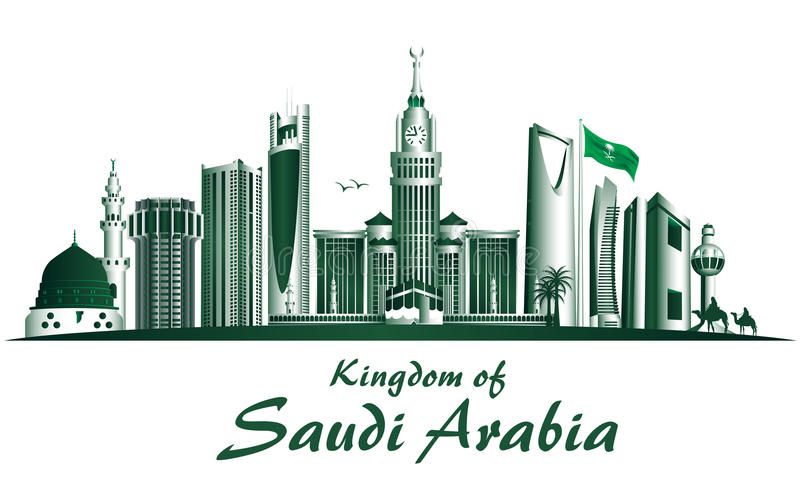
The Saudi Kingdom rules Saudi Arabia and represents it worldwide. It acts as the president, prime minister, and legislative body of Saudi Arabia.

Anything that is outside Saudi land is outside the control of the Saudi Kingdom [from religion, spirituality, international politics, et cetera], except what directly relates to it or its citizens.

The Kingdom, just like its counterparts in Qatar, the UAE, and others, has the authority to allow things [like entertainment, sports, et cetera] to take place within their land. And that is their business, not Muslims!

Islam

Islam is a non-modifiable religion practised by over one billion people all over the globe. And those people come from all walks of life and different races.

However, what makes it the perfect choice for many people is the fact that there is no racism, discrimination, indecency, or so many other leftist things. It is a religion that uses over 1,400 years of old scripture, which, to date, no one has modified, and it will remain like that till the end of the world.

Islam does not have a representative country, kingdom, or race. Its representatives are the teachers who taught it appropriately, and even if they cannot modify its teachings, they must teach it the way it is.

Islam promotes peace, tolerance, love for each other, good manners, truthfulness, and honesty, among other things.

I can’t tell you everything about Islam right now because this article is supposed to be short. But, sincerely speaking, Islam is a way of life!

Muslims

Muslims are the people who accept and practice the teachings of Islam regardless of their race, country, or region. And when I say Muslims, I mean all Muslims.

And it is impossible to say this: all Muslims are good people, or all are bad! Some are good people, and some are bad people. Everywhere and in every religion, there are those kinds of people, good and bad.

And the behaviour of one Muslim does not represent Islam if it is against Islamic teachings. It represents that person, not his religion.

And the behaviour of a kingdom that rules a country of people who follow and practice Islam does not represent Islam; rather, it represents that country and its leaders.

Any Islamic preacher or ordinary Muslim whose actions or words are out of Islamic context does not represent Islam but rather his person.

Conclusion

Islam is a religion. Muslims are those who practice it. And the Saudi Kingdom does not represent Muslims or Islam. It represents the people of Saudi Arabia. And Muslims all over the world have no say in what the Kingdom of Saudi Arabia decides for its people in any aspect of life.

So, for those who think the Saudi Kingdom represents Islam, then it is time to change your perception on this topic, for Islam is a religion with no authoritative body that can speak or act on its behalf. And Muslims are those who practice it.

And you can be one too!

Abba Abdullahi Garba wrote from Zugachi, Kano, Nigeria. He can be reached via abbaabdullahigarba@outlook.com.