Month: December 2023

President Tinubu seeks Senate’s confirmation for 11 Supreme Court justices 

By Sabiu Abdullahi

President Bola Tinubu has in a letter sought confirmation of the Senate for the appointment of 11 justices to the Supreme Court.

The letter, addressed to Senate President Godswill Akpabio, was read during Wednesday’s plenary session. 

President Tinubu cited Section 231(2) of the 1999 Constitution of the Federal Republic of Nigeria (as amended) as the legal basis for the appointment.

The nominated justices for confirmation and subsequent appointment to the nation’s apex court include Justices Jummai Sankey, Stephen Adah, Mohammed Idris, and Haruna Tsammani. 

Additionally, the list comprises Jamilu Tukur, Abubakar Umar, Chidiebere Uwa, Chioma Nwosu-Iheme, Obande Ogbuinya, Moore Adumein, and Habeeb Abiru.

The Senate is expected to deliberate on the nominations and conduct confirmation hearings in adherence to constitutional procedures.

Early marriage in Nigeria: A deep-rooted social issue in need of urgent attention

By Ladi Ibrahim

Early marriage, also known as child marriage, remains a persistent issue in Nigeria, where cultural traditions, poverty, and limited access to education contribute to this harmful practice. Despite significant progress made in addressing child marriage globally, Nigeria still grapples with high rates of early marriage, adversely affecting the lives of countless young girls. This article aims to illuminate the causes, consequences, and potential solutions to this deeply rooted societal problem.

Several factors contribute to the prevalence of early marriage in Nigeria. Cultural norms and traditions play a pivotal role, with many communities believing that marrying off their daughters at a young age protects their honour and ensures their future safety. Poverty is another critical factor, as families with limited resources may see marrying their daughters off early as an economic relief or an attempt to secure a better life for them.

Furthermore, lack of access to quality education, especially for girls, perpetuates the cycle of early marriage. Limited educational opportunities deprive young girls of the chance to develop essential skills, pursue independent livelihoods, and gain awareness about their rights. Additionally, prevailing gender inequalities and discrimination further exacerbate the problem, limiting gender equality and social progress.

Early marriage has detrimental effects on the physical, mental, and emotional well-being of young girls. Firstly, it exposes them to serious health risks, as their bodies are often not fully developed to bear children, resulting in complications during pregnancy and childbirth. Early marriage also robs girls of their right to education, denying them the chance to reach their full potential and contribute meaningfully to society.

Moreover, young brides often face economic hardships, lacking the necessary skills or education to secure stable employment. This perpetuates the cycle of poverty, subsequently affecting future generations. Early marriage is also linked to a higher incidence of domestic violence, mental health issues, and limited decision-making power for girls and women within their households.

Addressing the issue of early marriage in Nigeria requires a holistic approach that involves multiple stakeholders, including the government, civil society organisations, religious leaders, and communities. 

 Enhancing access to quality education, particularly for girls, is pivotal to breaking the cycle of early marriage. This can be achieved by providing scholarships, building schools closer to rural communities, and promoting educational campaigns focused on child rights and gender equality.

Strengthening existing laws that criminalise child marriage is essential, accompanied by strict enforcement mechanisms to hold perpetrators accountable. Providing young girls with vocational training and economic opportunities can dismantle the economic rationale behind early marriage. Such initiatives can help them gain financial independence and empower them to make informed choices.

 Collaborating with religious and community leaders to change social norms and customs that perpetuate early marriage is crucial. Obtaining their support and involvement is vital for building awareness and changing mindsets.

Expanding healthcare facilities and services in rural areas, specifically aimed at addressing the unique needs of young brides, can contribute to reducing the health risks associated with early pregnancy and childbirth.

Early marriage continues to be a significant challenge in Nigeria, depriving countless young girls of their rights and potential. By addressing the root causes of this practice through education, legal reforms, economic empowerment, community engagement, and access to healthcare, Nigeria can pave the way for a brighter future for its girls. Efforts to end early marriage require synergy, collaboration, and a relentless commitment to ensuring that every child in Nigeria has the opportunity to grow, thrive, and determine their destiny.

Ladi Ibrahim wrote from the Department of Mass Communication, University of Maiduguri.

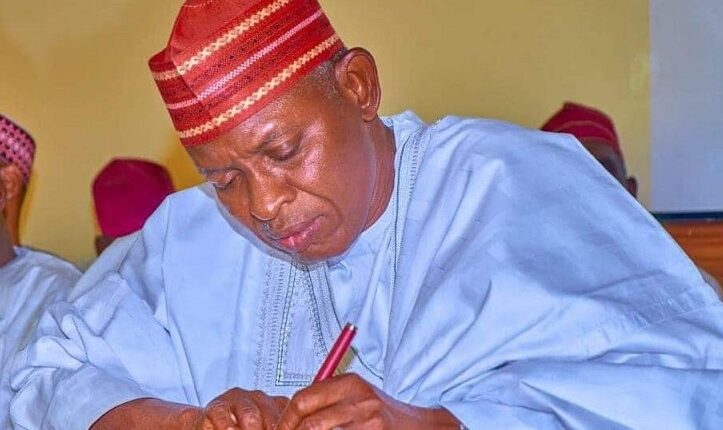
Governor Abba Kabir Yusuf extends compassion, sponsors Umrah for parents of late Asma’u Sani

By Uzair Adam Imam

The Kano State Governor, Abba Kabir Yusuf, has exhibited profound compassion by sponsoring the lesser Hajj (Umrah) pilgrimage for the parents of Asma’u Sani, a young girl he had initially sponsored for a surgical operation in India.

Tragically, Asma’u passed away before the scheduled departure to the Indian hospital, prompting the governor’s empathetic response.

In a poignant gesture of condolence, Governor Abba Kabir Yusuf, accompanied by his deputy, Comrade Aminu Abdussalam, visited the grieving family at Alkalawa Quarters in Gwarzo local government area.

During the visit, the governor directed that the funds earmarked for Asma’u’s surgery be redirected to sponsor her parents for the Umrah pilgrimage in Saudi Arabia, symbolizing a compassionate response to the family’s loss.

Moreover, Governor Abba Kabir Yusuf pledged to immortalize the memory of the late Asma’u. He instructed the local Imam to secure a plot of land for the construction of either a hospital or an Islamiyya school, to be named in honor of the departed soul.

This commitment underscores the governor’s dedication to preserving the legacy of individuals who have made a positive impact on their communities.

Expressing his deep sorrow over the untimely death of young Asma’u, Governor Abba Kabir Yusuf described the event as shocking and deeply pathetic.

The governor’s words reflected the genuine empathy he holds for the family in their moment of grief.

Malam Sani, the father of the deceased, moved by the governor’s honorable gesture, offered prayers for the success of Governor Abba Kabir Yusuf’s electoral affirmation at the Supreme Court.

This acknowledgment highlights the reciprocal respect and admiration between the governor and the bereaved family during this challenging time.

Governor Abba Kabir Yusuf’s compassionate response to the tragedy exemplifies leadership that extends beyond governance, embracing a heartfelt connection with the people.

The sponsorship of the Umrah pilgrimage and the commitment to immortalize Asma’u Sani through community development initiatives stand as enduring symbols of empathy and solidarity in the face of loss.
 

Honorary doctorate and Isa Yuguda’s enduring legacies in education

By Mukhtar Jarmajo

Great leaders not only have vision, they also share it with others and inspire many others to create their own. Leadership is simply about understanding present problems as they affect the future and taking concrete steps to solve the problems in such a way that the future will be better and brighter. And in the annals of Nigeria, many visionary leaders, who Nigerians are still enjoying from the fruits of their visionary leadership, have come and gone. Talk about Sir Abubakar Tafawa Balewa, Nnamdi Azikwe, Ahmadu Bello, Obafemi Awolowo, Samuel Ladoke Akintola, Michael Okpara, J. S. Tarka, Sir Kashim Ibrahim and a host of their contemporaries, they are remembered for their struggle for Nigeria’s independence as well as laying the country’s foundation in its journey to nationhood.

After them, many others have followed their foot steps. In the cause of time, Nigeria has had leaders whose footprints on the sands of time are indelible. The late Gen. Murtala Ramat Mohammed and the late Umaru Musa Yaradua are, respectively, remembered for both their anti-corruption posture and drive for national unity. In the same vein, Mallam Isa Yuguda, an economic czar, Nigeria’s former minister of transport and aviation respectively, and erstwhile Bauchi state governor, is celebrated for making immense contributions in the development of Nigeria’s banking sector, transforming the nation’s transport and aviation sectors as well as raising Bauchi state to a higher threshold of development.

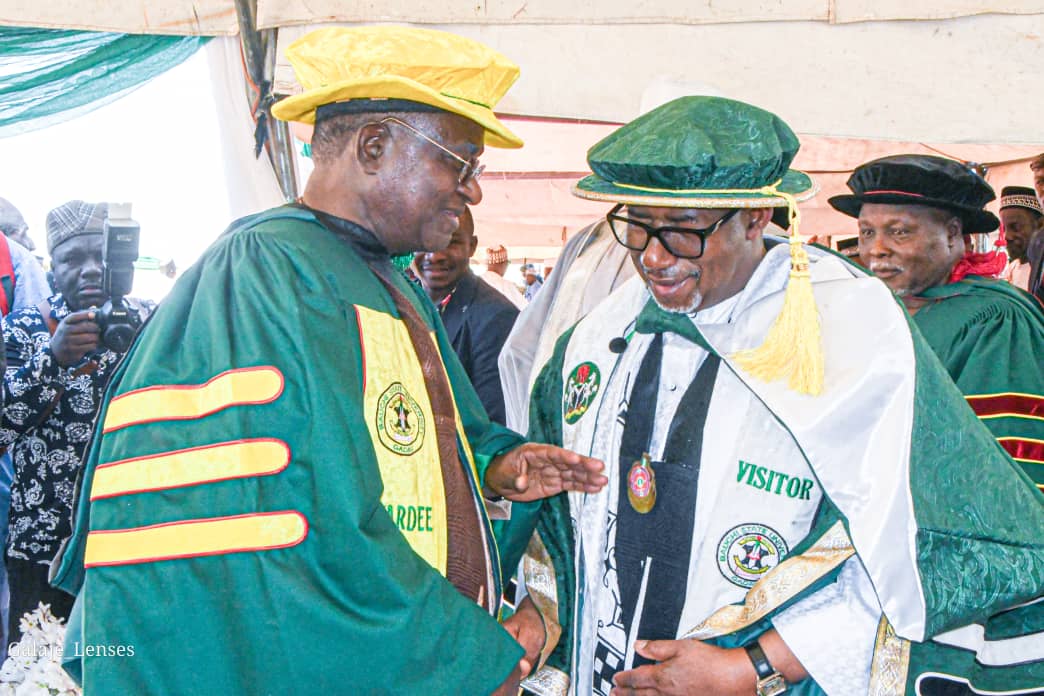
Last Saturday, 16th December, 2023, in its maiden combined convocation ceremony, the Sa’adu Zungur University, Gadau, Bauchi state, awarded Mallam Isa Yuguda an Honorary Doctorate Degree in Management. At the ceremony, 7,543 graduates from six academic sessions were presented for the award of graduate and postgraduate degrees. At this juncture, it’s instructive to note that the point of interest is not that Isa Yuguda received an award or that the university has thus far graduated more than seven thousand students. Rather, what is most fascinating is the fact that Mallam Isa Yuguda established the University back in 2010 when he held sway as Bauchi state governor. Thus, through his visionary leadership, the erstwhile governor established what has become a prestigious center of excellence in learning.

At the time the University was established, there was the problem of many Bauchi state indigenous students not being able to gain admission into federal universities largely because of quota system and distance, especially for female students. But education is so important that at whatever cost, it must be gained. And given that one of the primary responsibilities of government is to ensure the security, safety and well-being of the citizenry through upholding law and order as well as providing healthcare services, education etcetera, the Isa Yuguda administration thought of building the Abubakar Tafawa Balewa University Teaching Hospital, a new Specialist Hospital and the Sa’adu Zungur University.

Speaking on behalf of the awardees at the convocation ceremony, Mallam Isa Yuguda noted that the University is a beacon of hope that will not only prepare the youth for future challenges but will also cause rapid socioeconomic development in Bauchi state. This is how visionary leaders shape the future of a nation. Mallam Isa Yuguda’s visionary approach in leadership is an example to present and future leaders and his Honourary Doctorate award by the Sa’adu Zungur University is a testament to his remarkable impact on education in not only Bauchi state in particular but also the entire nation in general.

Jarmajo wrote from Wuse 2, Abuja.

Goro’s legacies shine brighter than M.B Shehu’s failure

By Abbas Datti

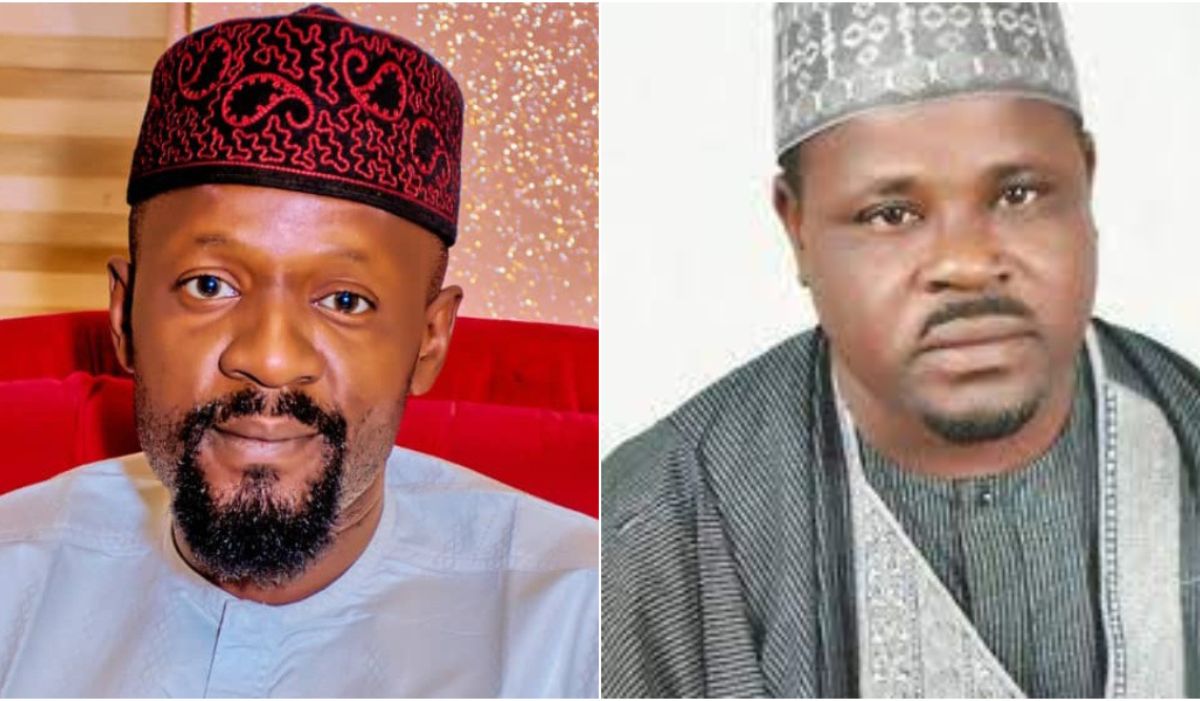
In this political landscape, a legislator’s success is defined by the number of bills he sponsored and his contributions during plenary sessions within the hallowed chamber. Also, the impactful work he does in his community reveals the true character of a public servant. In this regard, the former Member of the House of Representatives, Fagge constituency, Rt Hon Aminu Suleiman Goro, stands tall as a shining example of dedication and selflessness as we compare his accomplishments to those of the incumbent Rep Member, Barr. Muhammad Bello Shehu.

Aminu Suleiman Goro served well as a Fagge Member of the House of Reps, and during his time, he left an indelible mark on our community. His commitment to the welfare and prosperity of Fagge’s constituents was unwavering, from improving infrastructure to advocating for better educational opportunities and carrying all constituents along when making decisions.

One of the most notable achievements during Aminu Goro’s tenure was the successful chairmanship of the House Committee of Tertiary Education and Services, which saw the establishment of numerous Universities, federal Colleges of education, and many more tertiary institutions. 

Goro’s massive empowerment programs supporting women and the vulnerable with small businesses, promoting job creation, and investing in infrastructure projects helped breathe new life into Fagge communities. Unemployment rates fell, and new businesses flourished, bringing economic stability to Fagge constituents.

Education was also a top priority for Aminu Suleiman Goro. He fought for increased funding for universities and tertiary institutions, ensuring our children had access to quality education. Fagge constituents benefitted immensely from the federal government scholarships and educational programs, providing opportunities for Fagge youth to thrive.

In a bewildering contrast, Barr. M.B Shehu has failed to carry the torch of progress set by his predecessor. Key initiatives initiated during Goro’s term have been left in limbo, and we have seen a noticeable lack of enthusiasm for addressing the issues that matter most to Fagge constituents.

Despite Aminu Suleiman’s legacy, M. B Shehu has not shown the same commitment to improving lives and schools or ensuring job opportunities. Constituents have felt the difference, and it’s time we reflect on what we’ve lost since the change in representation.

Goro served the Fagge constituency with dedication and a genuine desire to improve the lives of the people he represented. His legacy shines brightly when compared to Barr. Muhammad Bello has not been able to continue the trajectory of works that Goro established. 

Abbas Datti writes from Kano via abbasdatti448@gmail.com.

NCS partners with cooperative mortgage bank on 5,009 housing units for officers

By Sabiu Abdullahi

The Comptroller-General of Customs, Bashir Adewale Adeniyi MFR, in a bid to enhance living conditions for officers and men of the Nigeria Customs Service, announced a strategic partnership with the Cooperative Mortgage Bank to construct 5,009 housing units nationwide. 

This was disclosed on December 18th at the Pacesetter Garden Estate, Ajoda Ibadan, Oyo State. 

Joined by notable figures such as the National President of Customs Officers Wives Association (COWA), Mrs. Kikelomo Adeniyi, and other senior officers, CGC Adeniyi emphasized the scheme’s positive impact on the morale and efficiency of Customs personnel. 

While acknowledging the temporary relief provided through staff quarters, CGC Adeniyi expressed concerns about retirement and subsequent vacation from these facilities.

The collaboration with Cooperative Mortgage Bank aims to establish a sustainable housing solution, constructing diverse residences, including two-bedroom terrace bungalows and three-bedroom terrace duplexes in strategic locations like Lagos, Kaduna, Kano, Asaba, Masaka, Ibadan, Port Harcourt, and Abuja. 

CGC Adeniyi expressed gratitude to partners such as Cooperative Mortgage Bank, Modern Shelter, and Brains & Hammers for their crucial role in this flagship housing program. 

Tajudeen Aiyeola, President of the Cooperative Association of Nigeria, advocated for government intervention in providing low-cost housing nationwide.

He stressed the cooperative sector’s significance in implementing social and economic programs for the welfare of Nigerians. 

Aiyeola commended the Nigeria Customs Service for prioritizing the middle and lower classes, urging other agencies to follow suit.

He emphasized the need for collective efforts from the government, parastatals, agencies, and the private sector to focus on member welfare and reduce turnaround time in Nigeria. 

Representing Oyo State Governor Seyi Makinde, the Special Assistant commended the initiative for its potential contribution to the state’s economic development.

He urged support for the project, recognizing its capacity to boost the economy and provide value to Nigerian agencies. 

The event concluded with the distribution of housing documents to recipients, group photographs, and a tour showcasing various types of residences, highlighting the commitment to eradicating poverty and fostering economic development in Nigeria.

Allow married women to bear their fathers’ names – MURIC 

By Abdurrahman Muhammad

A call has gone to the Federal Government for a reform of Nigerian marriage laws that will allow married women to bear their fathers’ names. Making the call was an Islamic human rights advocacy group, the Muslim Rights Concern (MURIC). 

A statement signed by the group’s director, Professor Ishaq Akintola, on Monday, 18th December 2023, described the current practice whereby married women are forced to bear their husbands’ surnames as gender discriminatory, archaic and oppressive. 

MURIC condemned the current practice for depriving women of their Allah-given fundamental human right to personal and parental identity in marriage. The group advocated the adoption of the women-friendly Islamic practice, which allows married women to bear their fathers’ surnames after marriage. 

The full statement reads:

“Our attention has been drawn to the plight of married Muslim women who are being disallowed by employers from bearing their fathers’ names. This amounts to forceful enslavement, denial of Allah-given fundamental human right to parental identity and wrongful dismissal of loco parentis.

“We condemn the current practice for three major reasons, namely, for generating confusion in the society, for creating a monumental identity crisis among married women and for depriving women of their Allah-given fundamental human right to personal as well as parental identity in marriage.

“Instead of this, we advocate the adoption of the women-friendly Islamic practice which allows married women to bear their fathers’ surnames after marriage. 

“No woman dropped suddenly from the sky, and even if some appear out of nowhere, they must have been born, bred, nurtured, buttered and marmaladed by certain parents before they grew up and matured into womanhood. Their education was also sponsored by their parents at a time when the future husband probably knew nothing about them and spent no kobo on their upbringing and their education.

“It therefore beats logic, fairness and natural justice that a husband appears out of nowhere to commandeer a woman’s parental identity simply by marrying her. Such identity robbery also has its advantages. 

“For instance, women who are educated are forced to advertise change of names to their husbands’ surnames after marriage in order to retain the validity of their documents and properties. It often becomes very difficult and sometimes impossible for married women to be located or to retain old friends due to such a change of name. 

“Those who want to be sincere among married women today will confirm the stress they have gone through from this experience. Islam sets women free from such stress by permitting married women to retain their original family names.

“Contrary to the general claim that Islam discriminates against women, Islamic liberation theology actually teaches respect for the dignity of women in all circumstances. One of such circumstances is the period when women are in wedlock. Whereas Western civilisation robs married women of their original family identity by insisting that they should bear their husbands’ surnames, the Shari’ah allows women to bear their own fathers’ names even after marriage. 

“We therefore invite the Federal Government and other relevant authorities to set the machinery in motion towards allowing married women to bear their fathers’ names. In particular, we charge both houses in the National Assembly, the Senate and the House of Representatives, to introduce the necessary bills that will set Nigerian women free from undue masculine domination.

“This advocacy is not for Muslim women alone. We are certain that Muslim women are not the only ones who feel the pinch. MURIC would love to see every married woman who desires to be identified by her father’s name enabled to do so. Our lawmakers should frame the clauses in such a way that all women can enjoy the freedom to choose between bearing their fathers’ names or their husbands’. It is time to set Nigerian women free. They are the mothers of our society.

“We contend that the whole gamut of women’s liberation struggle boils down to a sham and a mirage until this goal is achieved. A married woman is not a slave. She is not just a dot in social statistics. She has a soul, and that soul yearns for love. She covets to love and be loved, not only by her husband but also by her family and vice versa. Nigeria must not fail her. Parental identity is sacrosanct. Husbands can never replace fathers in matters of parental identity, and that is what the current system compels women to go through. Enough is enough.”

Lalong resigns as minister, sets to join Senate

By Sabiu Abdullahi

President Bola Tinubu has approved the resignation of Minister of Labour and Employment, Simon Lalong.

Lalong, formerly the Plateau State Governor, is set to become the Senator for Plateau South Senatorial District following a successful appeal court ruling on November 7, 2023. 

The resignation came after last week’s Federal Executive Council meeting, as confirmed by a presidential aide.

Lalong, a lawyer and former Speaker of the Plateau State House of Assembly, had lost his initial bid for the Senate but secured victory through a Court of Appeal decision. 

His valedictory is expected at the next FEC meeting, as noted by a tweet from a source in President Tinubu’s camp.

However, with no FEC meeting scheduled this week, Lalong’s last appearance as a council member was likely last Wednesday.

Meeting the Prime Minister of Barbados, Her Excellency Mia Amor Mottley, S.C., M.P.

By Nura Jibo MRICS

Expo City in Dubai was bathed in semi-winter brightness that night. It was a serene atmosphere. We all came together with the same goal, motivation, objective, and aspiration: to come together, act, save the world, and prevent the climate from shifting into something that could wipe out humanity! Sitting atop Tegula concrete kerbs at Blue Zone with a few pals, I was bemoaning the depressing status of our nation and doubting its advancement. Then I saw her approaching us with a small group of people in tow. She exuded energy and personal temerity as usual!

She was followed by three men, whom I believed might be her security personnel, and perhaps one might even be her Minister of Environment. They were all looking gentlemanly dressed. One of them in his immaculate waistcoat stared at me as I stood up, moved towards them from “nowhere”, and started talking to her!

Her Excellency, Honourable Mia Amor Mottley, looked at me very politely and laughably asked her man, who is he? I quickly introduced myself as a long-term admirer of her fantastic leadership. I told her that she’s my mentor-at-large! The Prime Minister laughed and stopped to listen to my stories. I briefly told her about my NGO: the African Climate Change Research Centre and the United Nations Climate Observer Organization (ACCREC). I told her that for well over thirteen years now, I have been the UNFCCC-DCP on climate change. Under my NGO, we have planted over 1.5 million trees and constructed a fantastic three-hectare green shelterbelt in Asayaya Village, Sule Tankarkar Local Government Area, in Jigawa State.

She was pretty in haste to enter into a meeting. And typical of her, she was honest and down-to-earth! She told me frankly, “I am going into a meeting now. “Let’s keep moving.” I was extremely happy for this archetypal leadership gesture coming from the Prime Minister of Barbados. It is a small but remarkable country with a dogged leader who has struggled to overcome most Barbadian climate change challenges over the years under the country’s first female prime minister, Mia Mottley! It is no longer news that the big climate change polluters have for so long a time refused to rescue small island states and regions such as Barbados, where tropical storms are causing lots of climate change havoc along the Caribbean islands, and in effect, they affect places such as Anguilla, Antigua, Barbuda, Dominica, Martinique, Montserrat, St. Martin, St. Kitts, Nevis, and Guadeloupe.

Indeed, before the COP 28, to be precise, a month before the Dubai COP 28, there was a serious report from the United States Embassy in Barbados that showed heavy rains from Tropical Storm Tammy that would affect the northern Windward and Leeward Islands on October 20, spreading into the British and U.S. Virgin Islands and Puerto Rico. The rainfall was envisaged to have produced isolated flash floods, urban flooding, and isolated mudslides in higher-rain areas.

And don’t forget the storm disasters that gripped or rocked Puerto Rico four years ago, which left President Donald Trump in bewilderment! But instead of learning a lesson, Trump became confused and opted out of the climate change negotiations that placed the United States seven steps backwards!

The world’s climate change catastrophes are the reasons that Her Excellency, Ms Mia Amor Mortley, never hid her position of telling the truth to any global audience about the Barbadian climate struggles and disasters that are ravaging her country with little or no support from the major climate polluters.

I wanted to follow her to any of her meetings at COP 28 and take notes on the climate solutions that she often proposes as a fait accompli in alleviating the hardship of not only the people of Barbados but also the African people and the African condition. Whenever I listen to her, I become delighted that Africa and small island states might be great one day. As a follower of her political trajectory since childhood, I understand that this woman is a climate champion because she has the same manner, attitude, and passion as the late Honourable Wangari Maathai. Indeed, I hold many global female leaders dear, and I see something in them that inspires international debates and provides robust solutions to global climate justice.

Prime Minister Mia Amor Mottley is undoubtedly one of them! Indeed, there are lots of things that I learned from Mia. Her simplicity, eloquent and convincing tongue, and brave and lion-hearted soul are unparalleled. Whenever she speaks her mind before any global spectators, the entire crowd “sneezes” because she’s a global colossus who has no fear of telling the truth to the world’s mighty powers. As the legendary Robert Nesta Marley once described these kinds of people in his redemption song, they have “no fear of atomic energy” because their type of character believes that “none of them can stop their time.”

The only difference between the apolitical Marley and the political Mia, in Bob Marley’s words, is this simple truth: “I not a politician. Politics is money business, and we in people business.” However, Mia combined both a leader’s apolitical and political characteristics per excellence! A combination of Marley’s redemption of people via songs plus Mahatma Ghandi’s salvaging of the oppressed, Madiba’s dogged freedom fighting, and the stubborn attitude of Donald Trump made Mia Amor Mortley a complete “tonic” and unique persona in the international leadership arena.

Mia Amor Mortley is a different leader. She is rare in her thinking and ideologies, just like the late Prof. Ali Mazrui. If all African leaders emulate Her Excellency Mia Mortley, the continent will be a haven for global growth and development. Because I understood her busy schedule, I allowed her to go. But before I left her and her entourage, I asked for her contact address in case I wanted to correspond. This great woman unhesitatingly obliged and started dictating her email to me! I was trying to grasp it up front but missed some letters. The gentleman in the waistcoat and long-sleeve shirt in her company slowed down and dictated the email to me. He made sure I got it right. I then bid farewell to her and her men of honour.

The honourable Prime Minister was surprised by how I told her about my intention to visit her in Barbados with my family. I was deliberate in telling her this because a long time ago, to be precise, in 2018, immediately after I came back from Katowice, Poland, I played my beautiful wife Mia’s video while she was addressing the United Nations General Assembly in New York on climate change and its attendant consequences. I encouraged my wife to spare some time and watch Madam Mia Amor Mortley if she wanted to learn the power of thinking big. I sincerely told my wife that this woman was the first female Prime Minister of Greater Barbados.

Lessons from my COP 28 meeting with the Prime Minister

As I left the Prime Minister and returned to my friends, I spotted our country’s President coming out of a meeting with his vast entourage. I was not interested! I turned my back and continued to avoid the heavy security that followed him as if he was the only president out of the over 100 presidents who attended COP 28! Before then, I spotted some of his ministers moving aimlessly without any UN-COP experience. They were going up and down, watching how things unfold because they were all laypersons attending UNFCCC COP meetings for the first time. At least, I met one of them (picture withheld), who confessed to a global gathering that he was there to learn what was happening. I don’t blame my country’s ministers because Mr President directed them all to attend the COP at the expense of public funds.

I also met with my country’s president’s son, who felt pompous as if he was also a president. My encounter with him did not end well, as I did not spare him, especially when he tried to denigrate me and a gentlewoman who wanted to seek his audience. The rest is history.

The next day at the Blue Zone, I spotted Prof. Jeffery Sachs. My mind was tempted to stop him and greet him. But I tried, as I don’t think it’s necessary, because I met him and even collected his business card in Paris during the Paris Agreement. Thanks to his SDGs, we look forward to salvaging Mother Earth!

I also saw Bill Gates walking with a couple of climate champions. I wanted to stop and engage him and get more insights into his food security agenda and how that impacted the African people, particularly under him and Melinda. I then decided to allow him to go until our paths crossed once again so that I could raise my hands and ask him what happens to the issue of public health in Africa and the so-called Bill & Melinda public healthcare that he “pumped” ample money into Africa to eradicate malaria. However, the continent and its leaders are still wallowing and highly impoverished by malaria, infectious/tropical diseases and other grovelling absurdities.

The failure of Bill Gates’s African plethora of health programmes made me discouraged about his wizardry. But he still earned my respect as a global leader in technology, especially when he and Paul Allen founded the U.S. Microsoft on April 4, 1975, which opened a gateway for all of us to use MS Windows and MS-DOS, which dominated the personal computer operating system.

Indeed, I am trying to make this point: leadership and public service have a tradition. And if we agree that our role is to serve the general public, then we must again take a cue from Bob Marley, whose song “Revolution” resonated well as a form of emancipation for the people of Kingston. Marley lyrically exposed the ills, frustration, and anger of the people of Kingston, who were suffocated by the curfews and corrupt police force. In that song, the legendary Marley looked at the different angles of a citizen uprising, simultaneously revelling in the destruction, understanding the motivations, and expressing disgust at the violence that ravaged a community and left them stranded without any hope of attaining redemption.

The same way Marley had a feeling to save people from leadership corruption through music is akin to Mia’s political journey. She’s in Dubai at COP 28 not because of anything but, in clear terms, to campaign for climate justice.

Over the years, this woman traded the paths of just and clean societies. She is an ardent believer in paying climate reparations for losses and damages. And she did not leave the COP 28 venue until the loss and damage funds were approved by all and sundry!

During her maiden Nelson Mandela lecture at Kwazulu Natal as the guest speaker, Mia agitated and motivated a global audience by urging them to rise and go for Africa’s climate-stabilizing natural capital so that we Africans can compete in the comity of nations. The honourable Prime Minister advised all Africans to use climate-friendly technology and infrastructure at African concessionary rates.

Mia is undoubtedly a climate colossus who always speaks her mind on global enforceable action to immediately halt all major emission-causing businesses, including but not limited to fossil fuel production, investment, and exploration.

The Paris Agreement’s $100 billion climate pledge dilemma

I told the Prime Minister that I would pay her a visit with my wife and children to sit down with her and make her listen to my take on the $100 billion climate change pledge cardinal questions.

First, why should African leaders wait for America, China, France, Germany, Russia, or India to contribute $100 billion to deal with climate change? What money are they expecting from these developed nations when Nigeria’s budget, for example, is today projected at 21.83 trillion? Why should a Nigerian president, for example, wait for a portion of $100 billion to work on climate change? What happens to his country’s money? What would he do with it?

Why should the Egyptian and South African presidents convene in Paris and expose themselves bare to an international community and the French President by saying that they haven’t seen a penny of the $100 billion pledged during the Paris Agreement? Do they have to wait for this money to handle the climate change disasters and mess in their countries? Your Excellency, you must talk to your African colleagues about getting serious about leadership if they want to make Africa great. There is no point whatsoever between actions committed to meaningful goals and public service. The two are inseparable. The leaders of African countries must rise and do more for Africa.

In my memo to two new African presidents, I have extensively advised them on making their countries great. I deliberately wrote those memos to them because they were newly elected, and I hope to see them champion a new beginning. My idea is to remind them about Africanity and its revolutionary proposal as prophesied by Kwameh Nkrumah and Gamel Abdel Nasser. But the reality of the African continent is still at its nadir.

Dear Prime Minister, my problem with your African colleagues is not far-fetched from the fact that the majority of them behave toward the global north as inferior. That inferiority complex in virtually all African leaders could have emanated from the colonial era when our forefathers were subjugated and enslaved by the colonial north. That’s why I firmly believe we don’t have that kind of Mortleyism and Mazruina coming from within them! Indeed, it is quite unwholesome to see almost all 54 African countries struggling to have good leadership and governance even when colonial men and their mentality are no longer in Africa. What makes the African leaders have this second-class inferiority complex mentality? One hasn’t the vaguest idea!

Seriously, out of the 54 African countries, one can hardly tell at least five that are doing very well in economic growth and development. What then happens to the African leadership? What is wrong with Africa?

Dear Prime Minister, as we meet again in Azerbaijan in November 2024, God willing, I hope to be there and express my displeasure over how global leaders have mishandled the issue of climate change negotiations since the Paris Agreement. I am of the view that we give lip service to the climate change matter that today the GHGs produce problems that nobody can escape their public costs. I still believe climate negotiations repeatedly fail to produce realistic agreements because we often focus on reducing public bads instead of contributing to public goods.

While many see the Paris Agreement as a success, people like me think that the result we are getting is still insufficient. Nonetheless, the 2015 COP is still celebrated by some people and countries as a breakthrough!

Sincerely,

Nura Jibo, MRICS, PQS, MNIQS, RQS, UN-DCP

Chartered (Senior) Quantity Surveyor (MRICS), Royal Institution of Chartered Surveyors (RICS), United Kingdom. He is the founder and secretary-general of the African Climate Change Research Centre, United Nations Climate Observer Organization, Jigawa State, Nigeria (2010-Present). Nura is currently the United Nations Designated Contact Point (UN-DCP) on Climate Change for 13 years.

Importance of health insurance to Nigerians

By Muhsin Ibrahim

I wrote about using out-of-pocket money to pay for healthcare in Nigeria a few days ago, which pushes people into poverty. Coincidentally, BBC Hausa had a report on it this morning. The Daily Reality also published an opinion article about it (I shared it earlier).

Most countries of the world have health insurance. It’s, in fact, a necessary requirement to stay in those countries. Why are we doing things differently and wrongly in Nigeria? Less than 10 per cent of Nigerians have health insurance today.

It is undeniable that sickness can strike us at any moment, irrespective of our financial standing. In such a situation, insurance comes to your rescue. Many insurances don’t cover all expenses, but often, they reduce them. So, if some good companies offer such a service, join them.

In all this, governments at all levels have to come in. They should make health insurance mandatory for everyone. Often, the monthly contributions are affordable. Even if you don’t get sick often, it’s important to remember that you are not immune to illness.

I also believe it’s halal to subscribe to the health insurance scheme. Yes, I am not a religious scholar. However, based on some rulings that I am familiar with, it’s not haram to do so.

May Allah guide and provide us with more, amin.

Muhsin Ibrahim is a Nigerian who teaches Hausa at the University of Cologne, Germany.