Month: November 2023

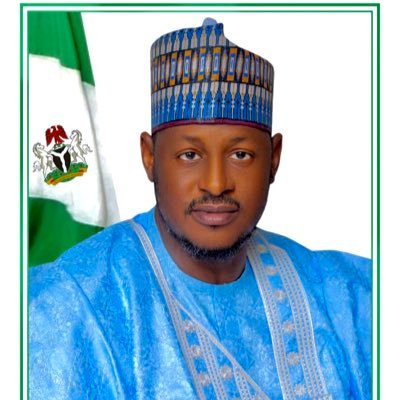
BREAKING: Ododo wins Kogi election

By Sabiu Abdullahi 

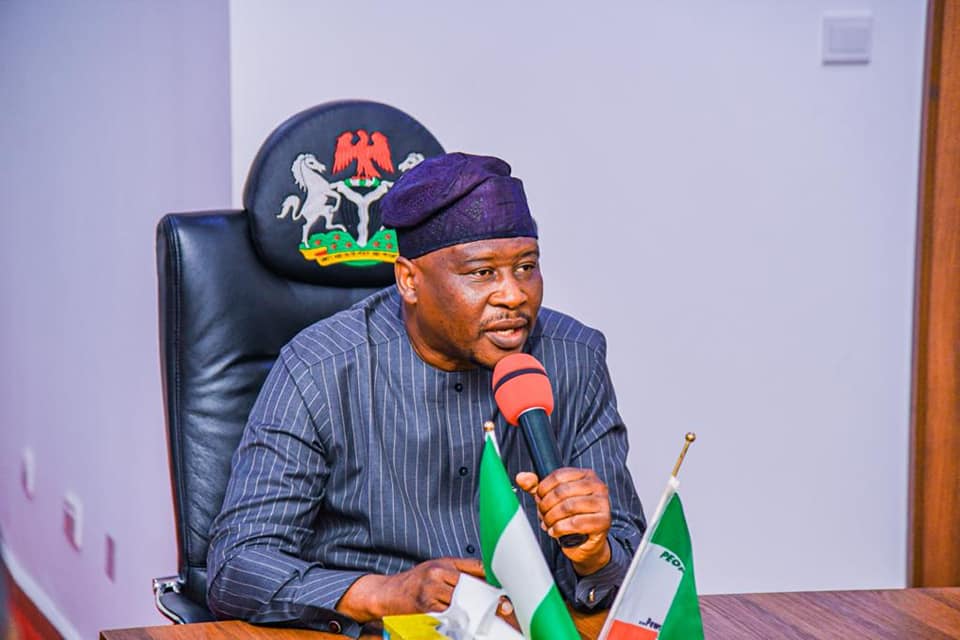
Usman Ododo, the gubernatorial candidate of the All Progressives Congress (APC), has clinched the coveted Kogi State governorship seat following the conclusion of the election held on November 11, 2023. 

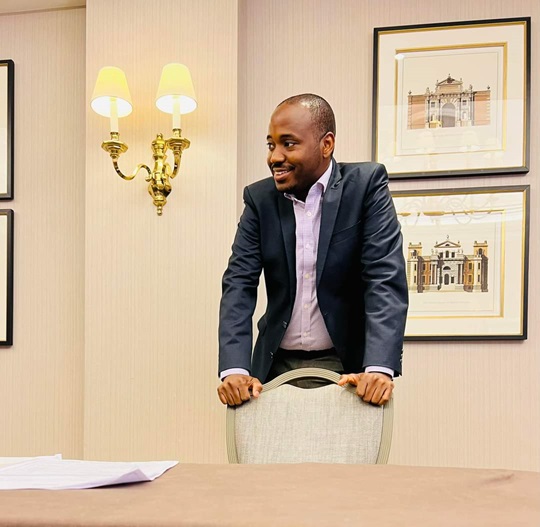
Ododo secured an impressive 446,237 votes, outshining his nearest contender, Murtala Ajaka of the Social Democratic Party (SDP), who amassed 259,052 votes.

Dino Melaye, representing the Peoples Democratic Party (PDP), garnered 46,362 votes, trailing behind in the race. 

This declaration comes amidst the Independent National Electoral Commission’s (INEC) decision to conduct fresh polls in select polling units within the Ogori/Magongo Local Government Area on November 18, 2023.

Professor Johnson Urama, the returning officer for the Kogi State governorship election, officially announced Ododo’s triumph on a Sunday evening, stating, “Ahmed Ododo of APC, having been certified by the law, is hereby declared the winner and is returned elected.” 

As the governor-elect, Ododo is now positioned to assume the mantle of leadership in Kogi State, with citizens eagerly anticipating the realization of his outlined plans and vision for the state’s future.

Protection of persons Hors de combat: Perspective on Israeli-Palestine crises

By Yusuf Idris

The Israel-Palestine conflict is one of the most complex and long-standing disputes in modern history. Rooted in deep historical, religious, and political tensions, the conflict has resulted in a series of wars, uprisings, and ongoing violence between Israelis and Palestinians.

The origins of the conflict can be traced back to the late 19th century when Jewish and Arab nationalist movements emerged in the region, claiming their right to self-determination. After World War I, the League of Nations granted Britain a mandate to govern Palestine, facilitating Jewish immigration and settlement. However, this sparked resistance from the Arab population, who feared displacement and loss of their homeland.

Following the horrors of the Holocaust during World War II, international sympathy for the establishment of a Jewish homeland grew. In 1947, the United Nations proposed a partition plan to divide Palestine into separate Israeli and Palestinian states, but the Arab countries and Palestinian leadership rejected this plan.

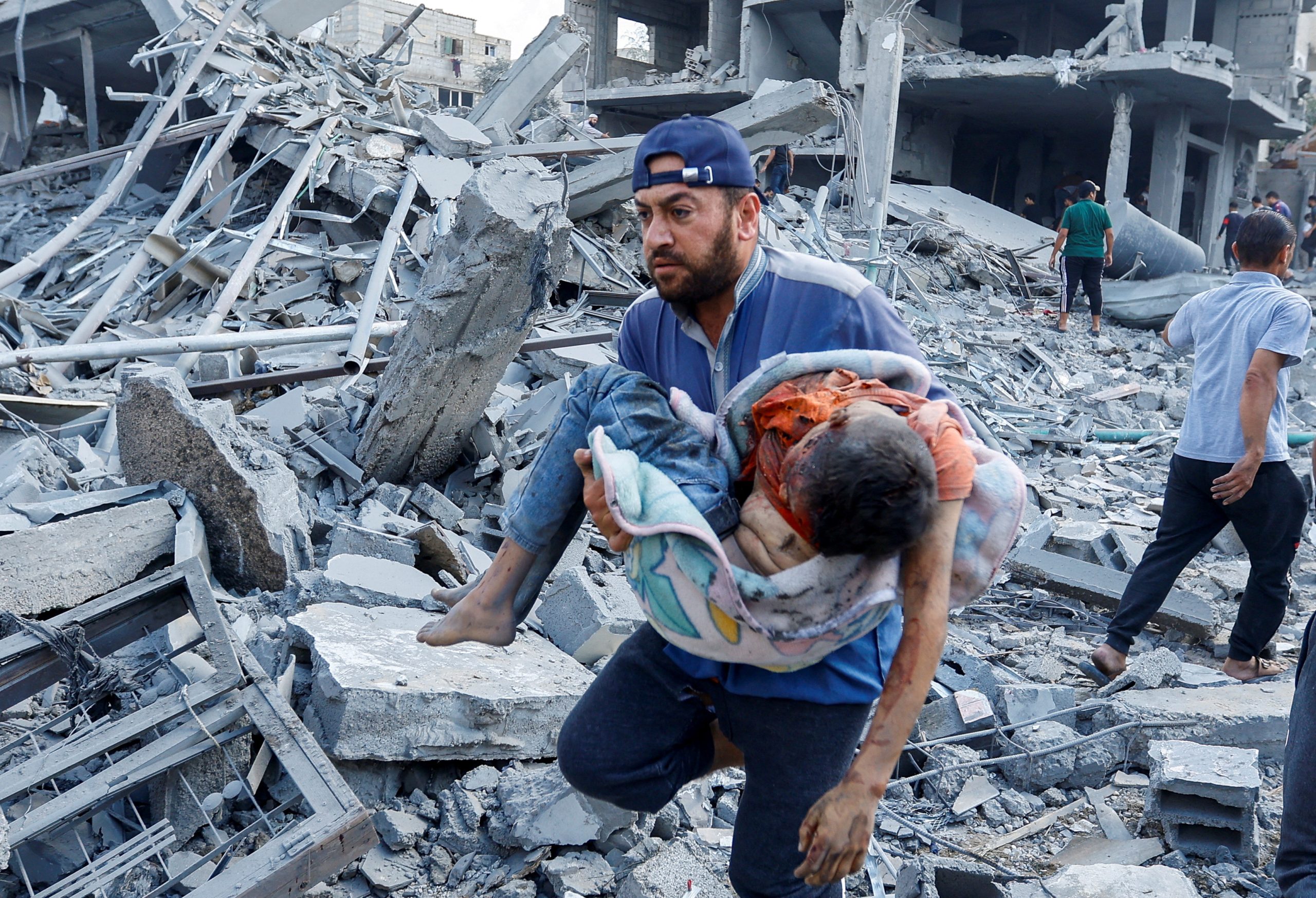
The protection of persons, including both combatants and civilians, is a crucial aspect to consider in any conflict. From the perspective of the Israeli-Palestinian crisis, this issue carries significant weight as the conflict has led to the loss of countless lives and resulted in widespread suffering on both sides.

One of the key aspects to examine regarding the protection of persons in the Israeli-Palestinian conflict is the nature of the conflict itself. The conflict has been marked by a series of military confrontations, uprisings, and acts of terrorism, which have had severe humanitarian consequences. Both Israelis and Palestinians have been subjected to violence, displacement, and the violation of their fundamental human rights.

From the Israeli perspective, the protection of persons, particularly Israeli citizens, is a paramount concern. Israel, as a sovereign state, has the responsibility to safeguard the lives and security of its population, which various Palestinian militant groups have consistently targeted. 

The causes and origins of the Israel-Palestine crisis are complex and deeply rooted in historical, political, and religious factors. 

The Israel-Palestine conflict dates back to the late 19th and early 20th centuries when Zionist Jews sought to establish a Jewish homeland in historic Palestine, which was under Ottoman rule at the time. This intensified with the Balfour Declaration in 1917, in which Britain supported establishing a Jewish homeland in Palestine.

Partition and Creation of Israel: Following World War I and the collapse of the Ottoman Empire, Britain was granted the mandate to administer Palestine. Rising tensions between Jewish immigrants and the Arab local population led to conflicts. In 1947, the United Nations proposed a partition plan, recommending the creation of separate Jewish and Arab states in Palestine. 

 The term “protection of civilians” refers to the measures taken to ensure the safety and security of civilians during armed conflicts. This can include various actions such as providing humanitarian assistance, establishing safe zones or protected areas, and enforcing international human rights and humanitarian laws.

“Hors de combat” is a French term that translates to “combat horse” in English. It refers to horses used in military operations, particularly in combat roles.

 The phrase “protection of civilians horse de combat” does not inherently have a specific meaning as it combines two distinct concepts. However, one possible interpretation could be using combat horses in military operations, specifically focusing on protecting civilians.

Combat horses may be employed in a conflict situation for various purposes like transportation, reconnaissance, or combat roles. If the emphasis is on protecting civilians, combat horses could be trained to rescue civilians in dangerous situations, evacuate them from conflict zones, or provide a deterrent against attacks on civilians.

There is no specific international instrument called “Words de combat” to protect civilians. However, several international legal frameworks and instruments address the protection of civilians during armed conflicts.

1. Geneva Conventions and Additional Protocols: The Geneva Conventions of 1949 and their Additional Protocols provide the foundation for protecting civilians during armed conflicts. They outline rules for the humane treatment of civilians, prohibit attacks against them, and provide for the establishment of protections such as safe zones and medical facilities.

2. United Nations Security Council Resolutions: The UN Security Council has issued several resolutions to protect civilians in armed conflicts. For example, Resolution 1894 (2009) reaffirms the responsibility of all parties to an armed conflict to protect civilians and calls for accountability for those who violate these obligations.

3. International Humanitarian Law: This body of law includes principles and rules that regulate the conduct of armed conflicts and aim to minimise civilian harm. 

Several international humanitarian principles, protocols, and provisions of the Geneva Conventions govern the protection of civilians in armed conflict situations. These frameworks aim to ensure that civilians are protected from the effects of armed conflict and that their human rights and dignity are preserved. 

 Key principles, protocols, and provisions related to the protection of civilians:

1. Principle of Distinction: This principle, enshrined in the Geneva Conventions, requires parties to distinguish between civilians and combatants and between civilian objects and military objectives. It prohibits direct attacks on civilians and civilian objects.

2. Principle of Proportionality: Under this principle, parties to the conflict must ensure that the anticipated military advantage from an attack is not outweighed by the expected harm to civilians or civilian objects. The excessive use of force that could cause disproportionate civilian casualties is prohibited.

3. Principle of Precautions in Attack: This principle obliges parties to take all feasible precautions to avoid or minimise harm to civilians and civilians.

The Israel-Palestine conflict falls within the scope of international humanitarian law, and the principle of protecting civilians applies to both parties. International humanitarian law, including the Geneva Conventions, stipulates that parties must take all necessary measures to protect civilians from the effects of hostilities in armed conflict situations.

This means that parties to the conflict, including Israel and Palestine, are obligated to:

1. Respect the distinction between civilians and combatants and between civilian objects and military targets. Deliberate attacks on civilians or civilian objects are prohibited.

2. Uphold the principle of proportionality by ensuring that the anticipated military advantage does not outweigh the expected harm to civilians or civilian infrastructure.

3. Take precautions in attacks to minimise harm to civilians. Parties should give effective warning of attacks that may affect the civilian population and take all feasible measures to avoid or minimise civilian casualties.

4. Provide medical care and humanitarian assistance to civilians affected by the conflict without discrimination.

Conclusively, the Israel-Palestine crisis is a complex and ongoing conflict with deep-rooted historical, political, and religious dimensions. A few general suggestions that various international actors have highlighted:

1. Dialogue and Negotiations: A peaceful and lasting resolution to the conflict can only be achieved through a comprehensive, inclusive, and sustained dialogue between the parties involved. This should be based on mutual recognition, understanding, and respect to reach a mutually acceptable solution.

2. Two-State Solution: The international community, including the United Nations, has long supported the idea of a two-state solution where Israel and Palestine exist side by side in peace and security. This solution typically involves the establishment of an independent and sovereign Palestinian state alongside Israel, with agreed-upon borders and mutually acceptable arrangements for Jerusalem, refugees, and security.

3. Respect for International Law: All parties should uphold and abide by international humanitarian law

Resolving the Israel-Palestine conflict is a complex and multifaceted issue that requires the commitment and cooperation of all parties involved. While there is no one-size-fits-all solution, several proposals have been put forward. Here are some potential solutions that have been discussed:

4. Two-State Solution: This solution involves the establishment of an independent and sovereign Palestinian state alongside Israel, based on the pre-1967 borders, with mutually agreed upon land swaps and a negotiated resolution to the status of Jerusalem. This solution has been endorsed by the international community, including the United Nations, as a means to address the aspirations of both Israelis and Palestinians for self-determination and security.

Yusuf Idris writes from  Lagos and can be reached via yusufibnadamu@gmail.com.
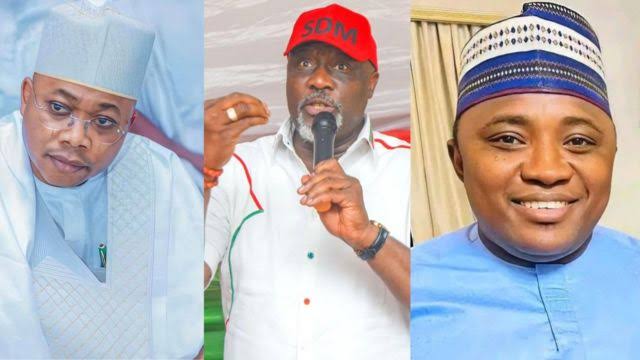
BREAKING: Hope Uzodimma wins Imo election—INEC

By Sabiu Abdullahi

Hope Uzodimma of the All Progressives Congress (APC) has been declared the winner of the Imo State governorship election, dominating with 540,308 votes.

The announcement by the Independent National Electoral Commission (INEC) came from the state Returning Officer, Prof. Abayomi Fasina. Uzodimma’s triumph extended across all 27 Local Government Areas, setting the stage for his second term, set to commence with the swearing-in ceremony on January 14, 2024. 

Controversy marred the declaration as the State Agent of the Labour Party, Callistus Ihejiagwa, was forcefully removed after alleging result manipulation in favor of the APC.

The PDP, along with the LP, has called for the poll’s outright cancellation, citing rigged results.

Tensions remain high as calls for investigations into alleged irregularities persist.

Iconic Hausa actor Samanja dies at 81

By Sabiu Abdullahi

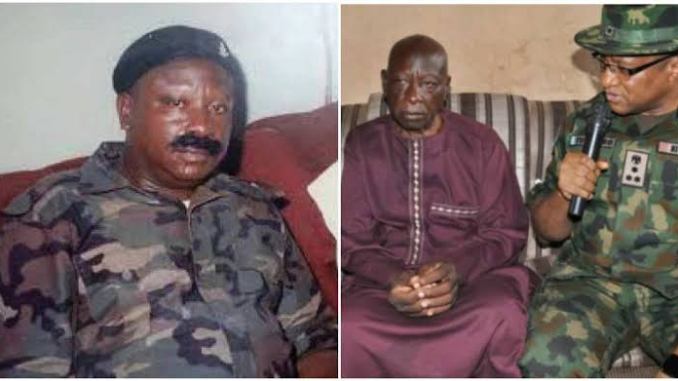
The Hausa entertainment industry mourns the loss of Usman Baba Fategi, popularly known as Samanja, who passed away on Sunday at the age of 81 in Kaduna’s Garden City Hospital after a prolonged illness.

A retired Nigerian soldier, Samanja made significant contributions to the broadcasting industry at the Federal Radio Corporation of Nigeria, Kaduna broadcasting station.

Survived by two wives and 14 children, his funeral is set to take place later today at the Jaafaru Estate Juma’at Mosque, Kabala Costain, Kaduna. The entertainment world bids farewell to a true icon.

140 inmates on death row await execution in Kano

By Sabiu Abdullahi

The Nigerian Correctional Service in Kano State disclosed that 140 individuals on death row are awaiting execution. 

The spokesman for the Kano State Command, Musbahu Kofar-Nassarawa, conveyed this information to the News Agency of Nigeria on Saturday, emphasizing that the condemned individuals comprise both genders. 

Mr Kofar-Nassarawa clarified that the Kano Correctional Centre lacks a hangman as it operates as a Medium Security Custodial Centre.

The absence of a hangman further complicates the situation, raising questions about the state’s preparedness for implementing capital punishment. 

He pointed out that the governors in the state have not taken decisive action by either signing death warrants or commuting the sentences of those on death row to life imprisonment.

The complex nature of the legal process and the reluctance of the governors have contributed to a growing number of individuals in a state of limbo, awaiting a final decision on their fate. 

Mr Kofar-Nassarawa highlighted that some governors utilize constitutional provisions to release inmates, relying on recommendations from the Advisory Council on the prerogative of mercy to alleviate congestion in correctional centers.

The plight of these 140 inmates underscores the broader challenges within the criminal justice system and the need for swift and decisive action to address their uncertain future.

Public Universities: the FG’s new revenue generation goldmine

By Prof. Abdelghaffar Amoka

The Academic Staff Union of Universities (ASUU) has been in a battle with the Federal Government of Nigeria over the funding of the public universities. The facilities that made our universities to still have a semblance of a university were products of ASUU strike. ASUU was so passionate over public universities funding to the point that the public began to think that such funds, when released, are paid into ASUU’s account. Even some journalists that are supposed to be properly informed shared in the ignorance or misinformation.

You read headlines like “FG releases 2 billion naira to ASUU for university funding”. ASUU pursued funding at the expense of its members’ welfare. The battle has been on funding to an extent that the younger generation of academics began to wonder why their welfare is not at the top of the union’s demands. The consoling words from our veterans have always been: You get true fulfillment when you have an ideal working environment.

The battle took a new dimension last year, during the reign of the ex-president Muhammadu Buhari, who had no agenda for education aside from establishing more universities without funding plans. Yeah! Buhari came to re-write the story of our university system. The number of the underfunded new tertiary institutions were listed as his major achievements. A strike on funding and the renegotiation of conditions of service that should not have lasted for more than four weeks, if sincerely handled, was dragged on for eight months and the lecturers starved. A few died and many survived and are still surviving but not an item on the demands on the needs of the universities was treated.

While ASUU was fighting for adequate funding, the FG had a hidden plan. It publicly declared that the universities will have to generate their money to partly fund themselves. The public couldn’t see the implication of the statement. The statement received support from some Nigerians whose education was funded from primary to PhD with public funds. However, besides this declaration, they are also seeing the universities as revenue generation institutions rather than institutions to be funded. They were wondering why they should keep funding these institutions when they are supposed to be generating revenue for the government.

Having conceived the idea to make federal universities an internally generated revenue (IGR) source for FG, their challenge was how to make these institutions generate revenue for FG without backlash. The only obstacle to the plan is ASUU that is always using strikes to force to unwillingly release some funds for the universities. ASUU was on strike again. They find their trouble annoying and something must be done. They engaged their friends that are former union leaders to develop the strategy to clip ASUU. Hunger strategy was found most effective and that was deployed and the rest was history.

From the experience of the last strike, call for a referendum on strike today and the members will tell you that if they will lose their salary for a one day strike, they won’t join. They are still paying their debt. So, they began starving the universities of funds.

Universities like Ahmadu Bello University (ABU) and Unilag, whose electricity bills are around 120 million naira per month, are given about 150 million naira per annum for operational expenses. How they pay their bills was left as their business. So, to keep up with the bills, the universities began to review the service charges. The universities estimated what can run the universities and appropriate charges were put together as fees for students. There were outcries on the fee increment. Some called it tuition and that got FG worried.

FG had to come out with a press release. They acknowledged the increment but that FG has not introduced tuition. The increase in fees as announced by various universities was to reflect the current economic reality; mission accomplished. However, the FG didn’t see these increased fees as service charges, they saw them as IGR by the universities and hence became interested.

As the universities were busy announcing the revised fees, the Minister of Finance suddenly remembered that there was a circular FMFBNP/OTHERS/IGR/CRF/12/2021 dated December 20, 2021 that said all partially funded FG Agencies should remit 40% of their IGR to FG. Universities are currently expected to remit 40% of the fees collected from the students to FG as revenue generation. These service charges in the universities are referred to as Gross Internally Generated Revenue. The deduction is effective from November 2023.

This means that if a student is charged N2,000 for an ID card, the university will give N800 out of it to the FG. It doesn’t matter to the FG if the cost of the ID card is truly N2,000. If a student is charged N10,000 as laboratory charges for chemicals and consumable, the university will give N4,000 out of it to the FG as revenue. If every student is charged N30,000 for electricity, water and sanitation bills, the FG will enjoy N12,000 out of it as revenue. It doesn’t matter if the remaining amount is not enough to pay those bills. If a student is charged N15,000 for a field trip or SIWES, the FG will take N6,000 out of it. If a student pay N5,000 as examination fee, the FG will take N2,000 from it as IGR for the FG. etc.

The insensitivity of the government to the needs of the people has gotten that bad. Public universities are the government’s new revenue generating agencies. This 40% revenue is expected to be paid by kids whose parents are earning less than N100,000 per month from the same FG. As they are milking the people dry, they have refused to cut off the cost of governance. The NASS members that were supposed to drive a car of 7 – 8 million naira by law got 160 million naira cars as against the law.

The bad thing is that the government will deduct 40% from the money as it is paid. It is auto-deduction. They will take their share before the universities even have access to the money. The announced fees were calculated to barely take care of the basic needs of the universities. So, how will the universities be run without the 40%?

My opinion…

Dear parents, tight your seat belt and the revised fees of your kids in any federal higher institution increased by 40%, thanks to FG quest for IGR. ASUU has done its bit for us Nigerians. It should not be a major discussion at the ongoing NEC. Nigerians should be allowed to fight their fight. The fight should now be left for the students and their parents. If they are willing to fight, ASUU members can join as parents. If they are not ready, we all MILT and move on as usual. After all, we are used to suffering and smiling.

The university managements, Senates, and Councils should find an appropriate way to introduce the 40% FG IGR from the universities into the fees. The universities that are yet to announce their revised fees should add the FG 40% university IGR to their fees. It should be separated from the university charges. It can be called “40% FG IGR charge” as a separate item. So that the students and parents will know what they are paying for. They need to know that rather than FG funding the education of their kids, something ASUU has fought for and prosecuted over, FG is now generating revenue from them as they pay their kids fees.

©Amoka

As Governor Fintiri constructs the first superhighway in the Northeast

By Zayyad I. Muhammad

The Adamawa state government, under the leadership of Governor Ahmadu Umaru Fintiri, has commenced the construction of a 20.8-kilometre superhighway in Yola, the Adamawa state capital.

The Superhighway, starting from the Yola City Gate and ending at AA Lawan Junction inside the city of Yola, will open up a new corridor in the Jimeta-Yola metropolitan area as the superhighway is passing through virgin land, though there is massive building activity along the way—new housing estates, including the 2000 housing units constructed by the Governor Fintiri Government for civil servants and other citizens of the state. Other activities along the corridor are industries, farmhouses, schools, and commercial activities.

Some critics have been accusing state governors of neglecting basic needs while constructing big roads and flyovers, but Governor Fintiri is different—he has struck a balance between human development and infrastructure, rural needs and urban development, and community engagement, and political engagement. Governor Fintiri has built cottage hospitals and rehabilitated general and specialist hospitals throughout the states. He built new schools and improved the existing ones, including the payment for WAEC and NECO for all Adamawa State students.

In the just-released 2023 NECO Results, Adamawa State recorded the highest number of candidates with five credits, including English and mathematics. Recently, Governor Fintiri launched the Adamawa Human Development Council to drive Adamawa’s human development initiatives and oversee all human development issues in the state. Furthermore, Adamawa State has one of the most well-structured and sustainable poverty alleviation and wealth creation agencies in the northeast: the Adamawa Poverty Alleviation and Wealth Creation Agency (PAWECA). The agency trains and develops skills for youth and women; it’s doing well in that its core mandate

Coming back to the main topic, the superhighway, it is simply a product of knowledge-driven governance, which always strives to strike a balance between development and expansion, rural needs and urban requirements, and people’s needs and wants. This balance is essential for any state government to fulfil its vital role in how its citizens and businesses travel, commute, and transport goods and services. One of the crucial components of modern transportation in this era of high-speed technology is superhighways.

Like any other huge construction project, superhighways have their challenges, but the importance and the need for the 20.8-kilometre superhighway along that corridor overshadow its challenges.

City expansion, urban congestion, population growth, and modernization necessitate the need for better roadways on a global scale. Superhighways in towns and cities bring efficiency to businesses that depend on transportation, reduce commuter time, and are designed to enhance road safety while reducing accidents. Their economic impact is substantial, improving connectivity between different sections of the city, reducing congestion, and diverting long-distance traffic away from the inner town’s roads. Governor Fintiri’s 20.8km superhighway stretching from the Welcome Yola City Gate to AA Lawan Junction inside the city, which will be the first in any state capital in the Northeast, will offer these benefits, including opening a new corridor in the Jimeta-Yola capital city.

Zayyad I. Muhammad writes from Abuja via zaymohd@yahoo.com.

Governor Dikko deprives local government pensioners of their benefits

By Muhammad Malumfashi

It is no longer intriguing to discuss with the victims of withheld pension payments under the current administration in Katsina State. The pensioners are experiencing severe hunger, their children are unable to attend school, and as a result, their families are vulnerable to social problems for which the governor of Katsina is responsible.

How can a rational government extend the screening process until salary time, knowing that their screening team is not mature and time-conscious enough to complete their work before the start of the salary period? This government, which claims to be ‘intelligent’, is creating unnecessary chaos.

I have listened to the accounts of the victims. Regrettably, this government is not taking significant steps to address the issue. These unpaid pensioners dedicated their lives to serving our state. Some could have found lucrative jobs elsewhere but chose to remain in Katsina and serve their home state until retirement. And now, the government is rewarding them with starvation. What an ungrateful government!

If Governor Dikko Umar Radda (PhD) indeed possesses a doctorate, he should not have merely stated it through words, but instead, he should have demonstrated it through his actions. Unfortunately, his actions don’t even match those of someone who has never had the opportunity to attend elementary school. A PhD, in my opinion, should be characterised by excellence, compassion, promptness, and exceptional decision-making. However, the current government, led by Dikko, is the complete opposite of what we expected.

Dikko should not give us the impression that we are moving from frying pan to fire under the APC’s administration in Katsina. We have long to witness a significant distinction between educated leaders and those lacking education. But Dikko demonstrates, through his actions, that the only difference lies in whether they attain power. They are all birds of the same feather.

Dikko started impudently with a fervent religious overtone and resolute vigour regarding his esteemed doctorate. Katsina’s initial expectations were that a transformation would ensue, surpassing the advancements of neighbouring states in infrastructure development, educational excellence, scholarly interventions, agricultural sustainability, and unexplored approaches to security intelligence. However, to our dismay, we regret electing this incapable and uninspiring PhD holder to lead our state affairs.

We earnestly implore Governor Dikko to take compassionate action, whether motivated by his moral duty or the preservation of his scholarly prestige and promptly provide the pensioners with their long-overdue pensions. Their current living conditions have reached an unacceptable state, bordering on the unimaginable, and if not addressed promptly, dire consequences may unfold.

It is disconcerting to witness the sight of workers and pensioners protesting on the streets, exemplifying the government’s ill-treatment towards them. Should our esteemed governor not execute the necessary actions, it would mark an unfortunate first during his tenure and harm the state’s harmonious relationship with its workforce.

A thorough assessment of his achievements thus far has made it evident that a degree or doctorate certificate is not a prerequisite for government appointments or the ability to govern effectively. Dikko’s PhD has not set him apart from his predecessors; instead, he merely builds upon their legacies. The sole accomplishment I can attribute to his tenure is the establishment of the ‘Katsina State Security Watch Corps,’ which emerged as a product of his government initiative. Unfortunately, there seem to be no further substantial achievements to highlight.

Nonetheless, our followers are responsible for recognising that even the constitution does not require a specific educational qualification, such as a degree or PhD, for individuals seeking governance. We should disregard excessive education and prioritise transparency, credibility, competence, experience, past performance, and a candidate’s track record to determine their eligibility for our vote. This is because having a PhD has not translated into tangible benefits for our society, such as improved living conditions or economic prosperity.

Initially, I believed that with the grandiose claims made by Dikko and his supporters about his PhD degree, Katsina would have transformed into a modern metropolis like Dubai or Qatar by now. However, disappointingly, we have yet to surpass the standards set by even neighbouring states in the northwest, let alone compete with the more developed southern states.

We have now realised that all the hype and celebration surrounding Dikko’s qualifications were falsehoods (duk karya ne). He has failed to deliver on his promises, and the role of the governor surpasses that of the Director-General of Smedan. Furthermore, Katsina is not simply a local government like Charanchi.

Muhammad Malumfashi wrote via muhammadisyakumalumfashi@gmail.com.

WhatsApp enables multiple accounts on Android phone

By Ishaka Mohammed

Meta’s instant messenger, WhatsApp, has allowed Android users to have two active accounts on one phone.

The Daily Reality confirmed the development after accessing a Facebook post by one Pal Kelly Media.

Recall that on October 19, 2023, the Chief Executive Officer of Meta Platforms, Mark Zuckerberg, revealed the company’s intention to enable multiple WhatsApp accounts on Android.

WhatsApp also reported the same in a blog post guiding users on how to add a new account. Part of the post reads as follows:

“Today, we’re introducing the ability to have two WhatsApp accounts on Android logged in at the same time. Helpful for switching between accounts – such as your work and personal – now you no longer need to log out each time, carry two phones or worry about messaging from the wrong place.

“To set up a second account, you will need a second phone number and SIM card or a phone that accepts multi-SIM or eSIM. Simply open your WhatsApp settings, click on the arrow next to your name, and click ‘Add account’. You can control your privacy and notification settings on each account.”

However, users are required to update their WhatsApp to enable them to access the new feature.

Prioritising skills and knowledge 

By Salisu Uba, PhD FCIPS

Let’s discuss why it’s crucial to focus on gaining knowledge and skills as you step into the post-graduation world. Instead of chasing influence or hoarding resources, the real power lies in arming yourself with knowledge and skills.

Being well-known might seem appealing, but the true influence isn’t about being the talk of the town. It’s about leveraging your understanding and expertise to make a positive impact. Genuine influence comes when you navigate challenges with the wisdom gained through knowledge and skills.

Accumulating wealth and resources can be tempting, but having a vault of riches won’t get you far if you don’t know how to use them wisely. It’s not just about having resources; it’s about being savvy enough to transform them into meaningful contributions. Knowledge and skills are the keys to unlocking the full potential of the resources at your disposal.

Think of knowledge as a vast kingdom waiting to be explored. It’s about understanding the rich history, diverse cultures, and the broader world. The more you know, the better equipped you are to connect the dots and see the bigger picture. Knowledge acts as the map that guides you through the complexities of the professional journey, especially when combined with digital skills.

Imagine having the ability to navigate complex tasks, communicate effectively, or solve intricate problems. These skills set you apart in the professional world. Furthermore, being skilled means being prepared for the challenges that come your way, making you a valuable asset in any field, anywhere, at any time.

When you combine knowledge and skills, you become an unstoppable force. For example, graduates who merge theoretical understanding with practical abilities can turn ideas into reality. With the wisdom of knowledge and the practicality of skills, you’re equipped to find innovative solutions, inspire others, and contribute to building a brighter future not just for yourself but for generations to come.

Finally, remember this; while influence and resources might glitter, it’s knowledge and skills that truly shine with everlasting brilliance. Equip yourself with the finest tools, explore diverse knowledge, and let your skills improve your professional path.

Dr Salisu Uba, PhD FCIPS, writes from the United Kingdom.