Month: November 2023

The Daily Reality editor joins Beijing Foreign Language University to teach Hausa

By Sabiu Abdullahi 

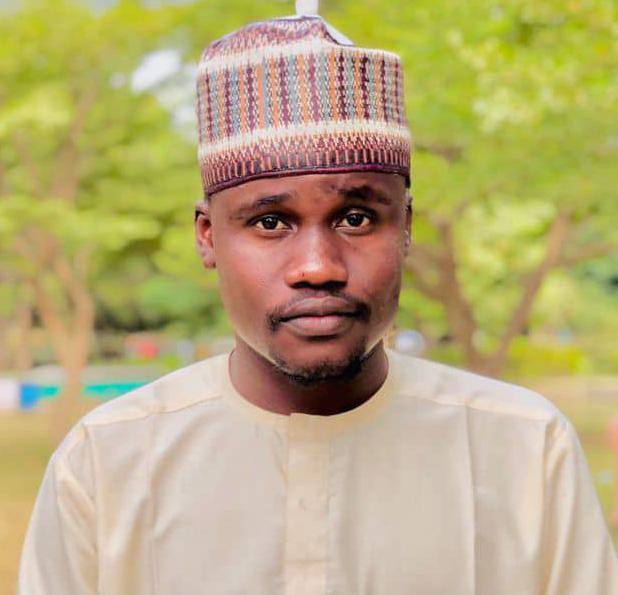
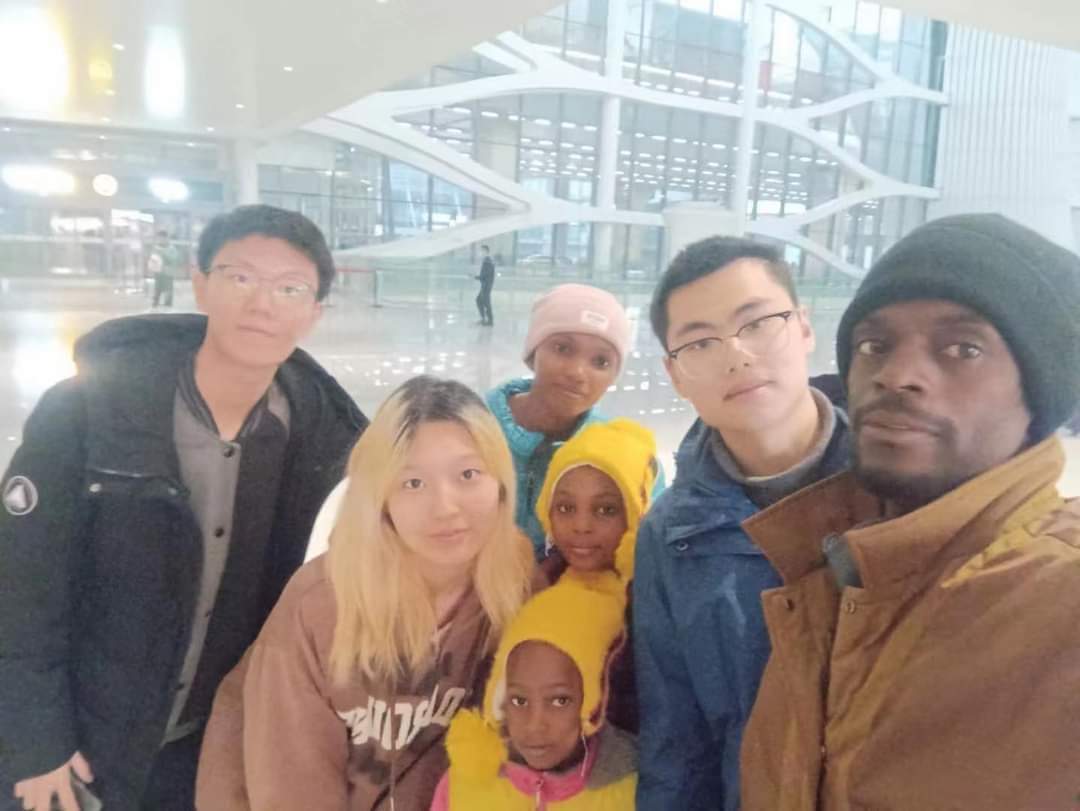
Dr. Muhammad Sulaiman Abdullahi, a lecturer in the Department of Nigerian Languages and Linguistics at Bayero University Kano, has arrived in Beijing with his family, his close associate, Dr. Muhsin Ibrahim, posted on his Facebook handle.

Dr. Abdullahi is set to contribute to the global academic landscape by teaching Hausa to Chinese students at Beijing Foreign Language University (BFSU). 

This collaboration marks a unique opportunity for cultural immersion and linguistic exchange between Nigeria and China. 

Dr. Abdullahi’s expertise in Nigerian languages, particularly Hausa, is expected to enrich the linguistic diversity at BFSU, one of China’s premier institutions for language studies. 

The initiative is part of BFSU’s ongoing efforts to broaden its language curriculum, offering students exposure to languages beyond the traditional offerings. 

Dr. Abdullahi’s presence is anticipated to foster a deeper understanding of Nigerian culture and language among Chinese students, promoting cross-cultural dialogue.

As the academic semester commences, Dr. Muhammad Sulaiman Abdullahi is poised to become a cultural ambassador, bridging the gap between Nigeria and China through the universal language of education.

Arewa24 and the globalisation train

By Zailani Bappa

The satellite television, Arewa24, with headquarters in Kano, will continue to be a pain for northerners who cherish their heritage. It is a necessary evil and a bad influence on the teeming youth in a predominantly conservative society. But, it is established to achieve a purpose and do that efficiently and quickly.

I learned the medium was established by the US government through one of its established NGOs some nine years ago. Amidst the devastating experience of Boko Haram in this part of the country, several studies have indicated to the West that the passion for Islamic values in the North and the teeming followership of a springing set of radical Salafists in the region is the major cause of such developing activism….or should I say…terrorism.

Hence, the decision to spend the hard-earned tax-payers money of the American people to build an entertainment television station in the heart of conservative Kano (after rejecting Kaduna and Abuja as a base for the new medium). I am sure you know that when these guys give you a dime worth of something with the right hand, they are sure enough to take back something worth a dollar from you with the left hand.

So, the Arewa 24 came into light with a bang…..good hands employed mostly popular actors from the entertainment industry as pioneer staff, with good pay for them to work optimally and to stay, very enticing and entertaining programmes with fresh breath of air and of course, all programmes beamed to us with the best of technology one can find around here. Significantly, most programmes target women and the young.

Free of charge, we were entertained until the station became a menu that came to every table in the house. Then came the next stage of the plan (as I see it). It was sold out to a very rich and powerful Nigerian who has the capacity and the passion to run it according to both the quality of content and the pursuit of the target.

Gradually, the programmes started becoming more daring in their approach to change. There is mild and uncoordinated resistance here and there, but the medium has a strong advisory consultant. They evade or outrightly neutralise every challenge from angry quarters at times. And they will continue to do so.

I firmly believe that the Arewa 24 debut, acceptability, prowess, and popularity (often challenged with visionless resistance) are only the tip of the iceberg. This is an era of globalisation. It is a moving train we cannot stop. It will reach its destination, ultimately. Our resistance to it will continue to be a massage to its global ego.

So, for those who understand this phenomenon, just pray, stay calm and do your own thing according to your conscience. Teach your young ones to value your values the way you can, very hard and consistently; then, leave the rest to God. This fight is just too big for us……..for every one of us.

Zailani Bappa wrote from Bauchi State via zailanbappa@gmail.com.

Go to Supreme Court, you’ll finally be sacked—Ganduje tells Abba 

By Sabiu Abdullahi

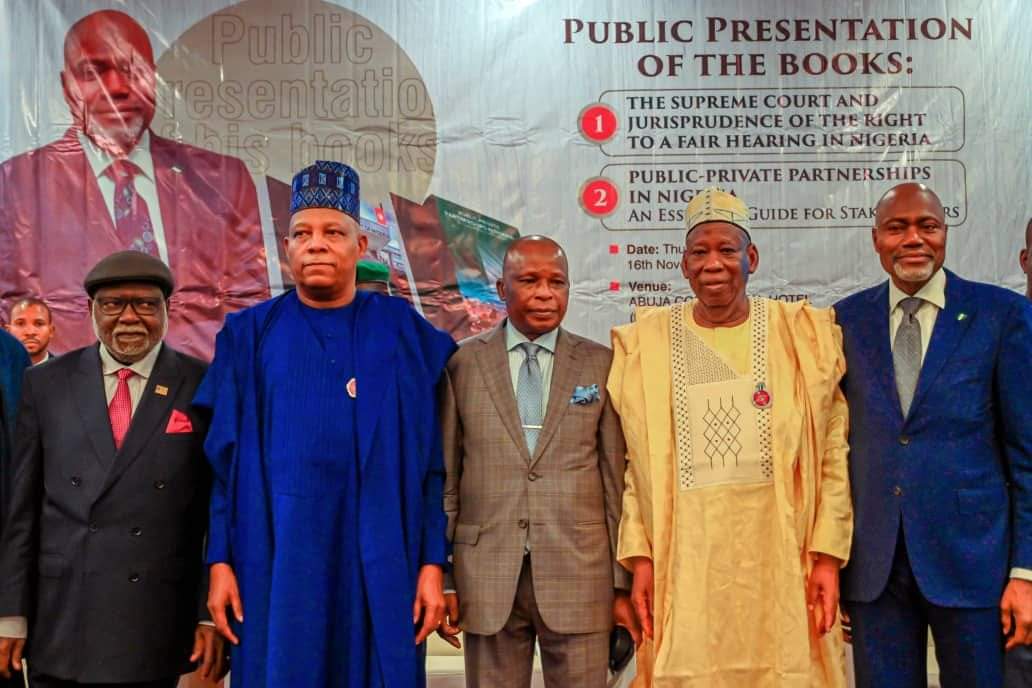
Following the Court of Appeal upholding the removal of Abba Yusuf as Kano state governor, the national chairman of the ruling All Progressives Congress (APC), Abdullahi Ganduje, expressed optimism about the party’s success at the Supreme Court.

Ganduje, applauding the appellate court for delivering justice, confidently stated that the APC is prepared to face the New Nigeria People’s Party (NNPP) again in the apex court. 

Addressing the media in Abuja on Friday, Ganduje acknowledged the democratic right of NNPP to pursue legal avenues, saying, “There is nothing wrong for them to go to the Supreme Court. We too, are ready to meet them in the Supreme Court. And Inshallah, we will win in the Supreme Court as well.”

The APC national chairman also commended the judiciary for its impartiality, praising the victories of the party’s gubernatorial candidates in Kano and Zamfara states.

In a statement, APC’s national publicity secretary, Felix Mokar, underscored the judiciary’s independence, emphasizing its role as the bastion of hope for justice in democracy.

Mokar urged the judiciary to remain resilient against any attempts at blackmail or intimidation by self-serving political interests.

Kano governorship saga continues as Abba takes battle to Supreme Court

By Sabiu Abdullahi

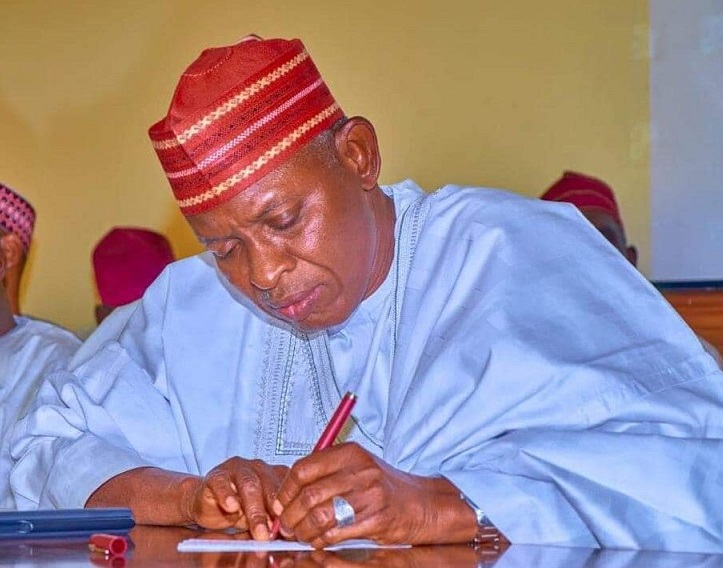
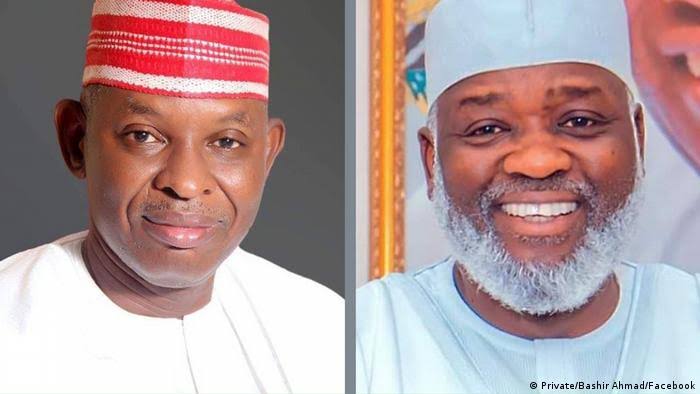
Kano governorship saga continues as Abba takes battle to Supreme Court Kano State Governor Abba Yusuf, ousted by the electoral tribunal and subsequently denied reprieve by the Court of Appeal, has pledged to contest the ruling at the Supreme Court.

The appeal court, situated in Abuja, upheld the tribunal’s decision, unseating Yusuf and confirming Nasiru Gawuna of the All Progressives Congress (APC) as the legitimate winner of the March 18 election. 

Governor Yusuf, undeterred by the setback, conveyed his determination in a televised address on Friday night.

“Our lawyers will challenge the Appeal Court judgment at the Supreme Court. We trust that the Supreme Court will restore the mandate entrusted to us by the people of Kano,” he asserted, urging citizens to remain law-abiding amid the legal wrangling, with security measures in place to ensure public order. 

Conversely, the National Chairman of the APC, Abdullahi Ganduje, hailed the court’s decision as a triumph for democracy.

Expressing gratitude to the judiciary for maintaining a fair administration of justice, Ganduje acknowledged the challenges faced during the case.

“This victory is for all of us. We know what happened during the election, and by the grace of God, we got a fair judgement in favour of our great party, APC,” he remarked. 

Ganduje, anticipating further legal manoeuvres, remarked, “There is nothing wrong for them to go to the Supreme Court. We too, we are ready to meet them in the Supreme Court. Insha Allah, we will win at the Supreme Court as well.”

Stop harassing Kaduna KASTLEA marshals over Hijab – MURIC

By Abdurrahman Muhammad

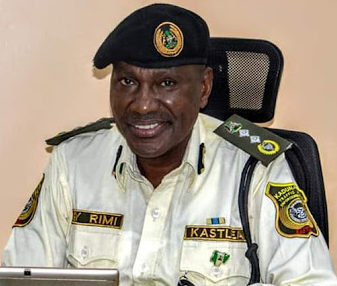
A call has gone to the Kaduna State House of Assembly to investigate the Kaduna State Traffic Law Enforcement Authority (KASTLEA). The appeal came from an Islamic human rights organisation, the Muslim Rights Concern (MURIC). The group accused the leadership of KASTLEA of harassing Muslim female marshals who wear hijab and their male counterparts who have beards.

This was contained in a press statement circulated on Friday, November 17, 2023, by the Executive Director of MURIC, Professor Ishaq Akintola. He said:

“We have credible information that the leadership of the Kaduna State Traffic Law Enforcement Authority (KASTLEA) has recently been casting aspersion on the use of hijab by female marshals and the growth of beards by their male counterparts. 

“The current head of KASTLEA, Carla Abdulmalik, a Christian lady, uses almost every opportunity to directly or indirectly caution marshals against the use of hijab. She reportedly issued a directive for the shaving of beards by the male Marshals. According to her, having beards makes the job unprofessional and disgusting.

“MURIC resents the anti-Muslim antics of Carla. She must be called to order before she plunges Kaduna into a huge crisis whose consequences no one can predict.

“Carla is exhibiting a common trait of Muslim-haters. She is most indiscreetly imposing Christian culture on Muslim marshals and manifesting hatred for all forms of Islamic appearance.

“We therefore call on the honourable members of the Kaduna State House of Assembly to investigate these allegations and make recommendations to Governor Uba Sani. 

“Carla must be called to order. Kaduna is the last place where one would expect to find the persecution of Muslim workers or students. This is an anomaly that should not be allowed to rear its ugly head anywhere in Northern Nigeria. We call on Islamic scholars to speak up on this matter and to put pressure on politicians in Kaduna on the need to protect Muslim marshals in KASTLEA.

“The Constitution is clearly on the side of religious freedom. Section 38 (i) & (ii) of the 1999 Constitution of the Federal Republic of Nigeria provides ‘every person shall be entitled to freedom of thought, conscience and religion, including freedom to change his religion or belief, and freedom (either alone or in community with others, and in public or in private) to manifest and propagate his religion or belief in worship, teaching, practice and observance’

“There have been no restrictions on religious freedom in KASTLEA since its establishment in 2014, and nothing in the 2017 act establishing the agency forbids hijab or beards. Muslim marshals in the agency have also never been intimidated by any of those who headed KASTLEA before Carla. Her persecution and stereotyping of Muslims under her must stop.”

The “Boko Haramisation” of University Education in Nigeria

By Kabiru Danladi Lawanti, Ph.D.

Since 2018, when Nigeria’s public universities started announcing hikes in school charges or what is popularly known as service charges, the survival of indigent students in these universities has become threatened. Public universities are the last hope for children from poor backgrounds. According to Emmanuel Onwubiko, the National Coordinator of the Human Rights Writers Association of Nigeria, over 70% of youths from poor backgrounds attend these universities. Therefore, denying these institutions funding is a direct declaration of war on Nigerian youths.

While it becomes necessary for public universities to increase the shortfall in government funding, the increase in school fees means millions of youths will be denied the opportunity to acquire a university education. To say that Nigerian public universities are underfunded is an understatement. That our public universities are in serious crisis is a fact. That universities are unable to achieve the goals of contributing to national development is sadly true.

Two schools of thought exist on this issue. On one hand is the Academic Staff Union of Universities (ASUU), which opposed increasing school fees. Their argument is quite simple: increased school fees automatically mean denying the children of the poor the opportunity to acquire a university education. They argue that there is a need for more citizens to have a university education. The logic is simple: more people with university education in the population automatically translate to positive economic growth, social development, and political cohesion.

To show their seriousness in what they believe in, ASUU had to go on strike several times for several years, starving their members to push forward with this idea. However, there are people who believe education should be removed from social services. They argue that since students are the direct beneficiaries, then the funding of universities should be shifted “from society to the students who are the beneficiaries of the higher incomes their degrees will provide.” These are the advocates of “commodification of university education.”

There are broadly three sources of funding for public universities in Nigeria, as identified by Professor Olanrewaju Fagbohun, the former Vice Chancellor of Lagos State University. These are government grants or subsidies, student/parent contributions (charges fees or allied non-instructional fees) and the income derived by the institution from commercial or quasi-commercial ventures or services, investments, donations, and endowments.

With overpopulation, teeming unemployed graduates, falling standard of university education, corruption in the management of university education and the shift from a mixed economy to a neoliberal economic system since 1986, Nigerian universities are left struggling to survive. Also, the attitude of the people’s government towards education since democracy’s return in 1999 has combined to suffocate the system already in the ICU.

However, in 2017, the universities came to grapple with a very hostile regime under President Buhari. The regime not only cut funding to public universities but imposed an embargo on the recruitment of academic staff in the universities. For over six years now, universities have not employed any fresh staff. Where they are employed, they are imposed on Vice Chancellors from Abuja. Departments no longer have the power to recommend to the VC to retain the best-graduating students in the departments. IPPIS was the last straw that broke the camel’s back. Departments are short-staffed, and IPPIS stopped universities from engaging contract staff, visiting and adjunct lectures and sabbatical staff.

These are the issues that Nigerians need to look at holistically. As it is now, most people have realised the mistake of not supporting ASUU to force the government to investigate the crises of the public universities. The reality clearly shows that indigent students or children from poor backgrounds cannot afford university education. While many analysts gave ASUU strikes the Boko Haram Logic interpretation, no one sees the onslaught on public universities by government agents as “bokoharamisation” of the university education. It is a disservice to Nigeria to remain silent about the current crises confronting the Nigerian public universities and find our voices when ASUU declares strike. This is succumbing to Boko Haram’s wishes. Already, our public primary and secondary schools are in ruins, and it will take the grace of God to resuscitate them. We are now confronted with the collapse of the public university system.

What is the way forward?

Addressing the current crises requires all stakeholders in the Nigerian Educational System. This is a matter of saving Nigeria from collapse. Already, parents have taken 60% of the burden of educating their children in the university. Parents now pay from N50,000 to 250,000 a year for service charges for their children. They provide for their upkeep – accommodation, feeding, laundry, clothing and, of course, purchase of textbooks. Added to that, they take the burden of transporting their children to and from the schools every now and then when the need arises, which can be weekly, monthly, or quarterly. Already, they are involved in funding their children’s education at the university.

The government is supporting universities with infrastructure payments of staff salaries (both academic and non-academic). The government also pays a fraction of the running cost to the universities. TETFUND will not be counted as government funding because it comes from 2% education tax contributions. People in government are leveraging on this and using funding as a weapon of control, as we saw in 2022 when ASUU members were starved for eight months for declaring an industrial dispute with their employer.

Industrial disputes should not be seen as confrontations or a narrow material interest of “greedy lecturers” or “Boko haram logic” of denying Nigerians the opportunity to acquire a university education. It should be seen as a patriotic intervention to salvage a collapsed system.

The commodification of university education in developing nations like ours is never a solution to the lingering crises in the public university system. Commodification destroys “the value of intellectual challenge and exploration by reducing knowledge to quantifiable, job-oriented results”. In fact, commodification is what derives the idea of a “skills rather than degree” gang promoted by a former minister.

I deliberately ignored the push by the present regime of education banks that will serve as lending institutions for university students because it is deceptive, unrealistic, and impracticable in a country like ours. What we need is an acceptable cost-sharing formula that is realistic and acceptable to all stakeholders. And this can come only through negotiation and mutual agreements between university unions, parents, and the government. We need to start this conversation to save our public universities.
Appeal court sacks Abba, upholds APC’s Nasiru Gawuna as Kano governor

By Sabiu Abdullahi 

The Court of Appeal in Abuja upheld the Kano Governorship Election Petition Tribunal’s decision, declaring Nasiru Gawuna of the APC as the rightful winner.

The appeal by NNPP candidate and current Kano State governor, Abba Yusuf, was dismissed.

The initial tribunal ruling on September 20 ousted Yusuf and declared Gawuna winner.

Despite Yusuf’s appeal through counsel Wole Olanipekun, the Court of Appeal affirmed Gawuna’s victory, concluding the legal battle over the March 18 governorship poll.

Appeal Court upholds Bala Mohammed’s victory in Bauchi governorship election 

By Sabiu Abdullahi 

The Appeal Court in Abuja has confirmed Governor Bala Mohammed’s win in the March 18 Bauchi State governorship election.

The unanimous decision dismissed the appeal filed by APC candidate Sadique Abubakar, who failed to provide substantial evidence to nullify the election. 

The appellant’s claim of improperly filled forms and booklets lacked specificity on polling units and failed to demonstrate the impact on election results. 

The court questioned the credibility of witnesses, emphasizing their inability to establish a clear understanding of the contested forms.

On Abba Kabir Yusuf and human capital devt

By Anas Abbas

In recent years, there has been a growing emphasis on infrastructure development as a key indicator of progress and development in many countries. Governments often prioritize the construction of bridges, roads, and other physical structures as a means of showcasing their commitment to progress.

However, it is important to recognize that true development goes beyond just the physical infrastructure and involves the development of human capital.

While infrastructure development is undoubtedly important, it is equally crucial to invest in the development of human resources. This includes providing access to quality education, training, and opportunities for personal and professional growth. Human capital development is essential for creating a skilled and knowledgeable workforce that can contribute to the overall development of a nation.

A recent example of the emphasis on human capital development can be seen in the actions of the current Kano state government. Instead of solely focusing on infrastructure development, it also recognized the importance of investing in human capital develop. The administration sponsored numerous students who had graduated with first-class honors to pursue their Master’s degrees in India. This intervention is set to enable the beneficiaries to advance their education and acquire valuable knowledge that can be applied in the development of the state and the nation.

This programme us not new in the state. During Rabiu Kwankwaso second tenure as governor of the state, he sponsored over one thousand students abroad to pursue their Master’s degrees in different countries of the world.Infrastructure is doubtlessly important for the development of a nation, but it is crucial to recognize that human capital development should be the top priority If you critically observe the society today, you will find out that infrastructure can deteriorate over time and require continuous maintenance and investment, human capital development is enduring and can be needed for such maintainance need.

The knowledge and skills acquired by individuals remain with them and can be passed on to future generations, creating a lasting impact on the nation’s development. This initiative highlights the significance of human capital development in driving sustainable development.

By investing in the education and training of individuals, governments can empower their citizens to become active participants in the development process. These individuals can then use their expertise to address local challenges, drive innovation, and contribute to economic growth.

Furthermore, human capital development has a ripple effect on society. When individuals are equipped with knowledge and skills, they are better positioned to create positive change within their communities. They can become leaders, entrepreneurs, and advocates for social and economic progress. This, in turn, can lead to a more inclusive and sustainable development that benefits all members of society.

I found it laughable when in the trending Kaduna vs Kano online banter sparked by one Hafsat Paki video in which she talked Kano people down, many commenters paid undue attention to buildings as a way to show that Kaduna is more developed than Kano (Kano has fair share of beautiful buildings if you ask me). For me the ongoing effort in place by the government to better the human capital of the state deserves more attention than anything thing else.

In conclusion, while infrastructure development is important, it is equally crucial to prioritize human capital development as a key component of overall development. The recent initiative by Governor Abba Kabiru Yusuf to send students abroad for further education serves as a powerful example of the value of investing in human capital.

By focusing on human capital development, governments can create a foundation for long-term sustainable development that empowers their citizens and drives progress from within.

Anas Abbas is communication student at Bayero University, Kano . And can be reached via anasabbas2099@gmail.com

Kano gov’t sends 4th batch of 150 first-class graduates to India on scholarship

By Sabiu Abdullahi 

Kano State has dispatched the fourth batch of 150 graduates to India under its foreign scholarship program.

These graduates, part of the 1,001 indigenous students sponsored by the state government, departed from Malam Aminu Kano International Airport at 7:30 a.m. on Friday. 

The Commissioner for Higher Education, Dr Yusuf Kofarmata, and other government officials were present at the airport to witness the departure. The flight is scheduled to land in Lagos before continuing its journey to India. 

Dr. Kofarmata emphasised that the departure of this batch is a continuation of the government’s commitment to implementing the 1,001 postgraduate scholarship programme for 23–2024.

The beneficiaries, all first-class graduates, were selected based on their outstanding performance in undergraduate studies. Upon arrival in India, the students will be enrolled in various universities to pursue their Master’s degree programs.

Dr. Kofarmata highlighted that they will focus on internationally competitive areas of professionalism, contributing to bridging the manpower gap not only in Kano State but across the nation. 

“A total of 550 students make up the first batch, heading to eight reputable universities, aiming to fill the manpower gap in the state and across the nation. The students are also expected to acquire experience, skills, and knowledge to revamp the state’s commercial status and explore other potentials for socio-economic development,” explained the commissioner. 

The initiative, in line with the campaign promises of Governor Abba Kabir Yusuf, aims to revive and strengthen the educational sector.

The first batch of 140 students had already departed for India on October 20, followed by the second batch of 33 graduates heading to the Islamic University in Uganda. 

The beneficiaries expressed their gratitude to Governor Yusuf for fulfilling his campaign promises and reviving the scholarship program, originally introduced by the former governor, Senator Rabi’u Musa Kwankwaso.

The Commissioner noted the joyous celebrations among the beneficiaries, their parents, and well-wishers, reflecting the positive impact of the government’s commitment to educational development in the state.