Month: November 2023

NAWOJ elects new officers in Jigawa

By Muhamamad Suleiman Yobe

The Jigawa state chapter of the National Association of Women Journalists (NAWOJ) has elected new officers to run its affairs for another three years.

Those elected are Aisha Iliyasu Surko of Radio Jigawa as chairperson,  Bishira Muhammad from Horizon FM Dutse as deputy chairperson, Salamatu Nuhu from FM Sawaba Hadejia as secretary, Maryam Ibrahim from NTA Dutse as deputy secretary and Aisha Muhammad Sani from Radion Jigawa  as Treasurer.

The election was conducted at Press Centre Dutse by the National Secretary of NAWOJ, Rabi Gwadabe.

In her acceptance speech, the newly elected chairperson, Aisha Iliyasu Surko, commended members for giving her the mandate and called on other contestants to come and contribute to the development of the Union.

Managing Directors of Radio Jigawa, Yusif Adamu Babura and JTV Abba Muhammad Tukur Gantsa, an elder of the Union Hajia Zainab Rabo Ringim and security agencies witnessed the election.

Army neutralises 7 terrorists in Kaduna

 By Sabiu Abdullahi 

Troops from the Nigerian Army, operating under ‘Operation Whirl Punch,’ have successfully neutralized seven terrorists in Kampanin Doka Village, Birnin-Gwari Local Government Area of Kaduna State.

The operation, conducted in response to ongoing attacks on the local community, resulted in the elimination of four bandits on November 1, 2023. 

According to Lt. Col. Musa Yahaya, Acting Deputy Director of Army Public Relations Officer, Nigerian Army, Kaduna, the troops, in collaboration with 1 Division Nigerian Army, swiftly responded to reports of bandit attacks in Kampanin Doka village.

The operation led to the recovery of weapons, including one AK 47 rifle, one AK 47 magazine, one machete, a mobile phone, and fourteen motorcycles previously used by the criminals. 

In a related incident on November 2, 2023, farmers in the western part of Sabon Sara village faced a bandit attack while harvesting their crops.

The quick response from the Nigerian Army troops, supported by the courageous actions of four farmers, resulted in the neutralization of one bandit.

The attackers, with gunshot wounds, fled the scene, leaving behind two AK 47 rifles. During the encounter, one of the farmers, Mallam Abdulrahman Aliyu, sustained minor injuries and was promptly evacuated to a nearby military hospital for medical attention.

France to return $150 million stashed by Abacha to Nigeria

By Sabiu Abdullahi  

France has announced its decision to return a total of $150 million that was stolen by the former Head of State, the late General Sani Abacha, back to Nigeria.

Mrs. Catherine Colonna, Minister of Europe and Foreign Affairs of the French Republic, made this announcement during a press briefing in Abuja on Friday. 

During the briefing, Mrs Colonna revealed that the fund would be returned to Nigeria in the form of a grant.

She stated, “France will return to Nigeria the assets stolen from the Nigerian people by General Sani Abacha and his family, that have been frozen in France since 2021.”

She further mentioned that discussions would be initiated with the Nigerian government to allocate these funds to development projects that would benefit the population, in alignment with the priorities of the Nigerian government. 

Mrs Colonna, who was in Nigeria to meet with the new government, emphasized France’s commitment to strengthen cooperation with Nigeria in various sectors.

She highlighted the economic partnership between the two countries, mentioning that more than 100 French companies are actively operating in Nigeria, creating jobs, establishing factories, farms, and vocational training centers. 

Furthermore, Mrs Colonna shared France’s goal of increasing investments in Nigeria and promoting reciprocal investments by Nigerian companies in France.

The other degree I have earned

By Sulaiman Maijama’a

Seeing some photographs yesterday that we took in 2019 when we were leaving Sa’adu Zungur Hall of the Bayero University, Kano, as we finished level 200, I remembered several events, particularly during my stay in the hostel. I was filled with mixed feelings of nostalgia, reminiscing about my BUK days, the good and bad experiences, and the culture shock I had to contend with as a fresh university student.

In 2018, when we secured admission, my friend Shamsuddeen insisted that we stay off campus. I did not like the idea, so I reported him to our teacher and mentor, Mallam Abdul Ahmad Burra, to be a judge, knowing that Mallam would be on my side. Mallam Abdul directed that we live in the hostel, saying, “The experience you have when you live in the hostel is another degree in itself. Never miss that.”

The experience began soon after we settled on the 18th of March, 2019, in our number D-56 room on the first floor of Sa’adu Zungur Hall. Six of us were the occupants. Kamal Abdulsalam, Shamsudden A Musa and I were in Mass Comm, Bashir Dalhat read Geography Education, Sirajo Basiru read Economics Education, and Abdul studied Political Science. All of us in the room were voracious readers, what people call “mayun Boko”.

Our room was almost always locked because we left for class or library day and night, and so, we were addressed and addressed each other as Prof. The trouble was, when someone said prof alone, we got confused as to whom he was referring to because we were all bearing the title. One day at the Vice Chancellor’s mosque, I loudly said “Prof. Kamal”, referring to my roommate Kamal Abdulsalam, when I caught the attention of Professor Aliyu Kamal of the English Department. To his surprise, he saw me approaching a student whom I  addressed as Prof.

Unlike other rooms, our bond had blossomed into becoming a family, sharing food and water and even requesting little money when needed. We soon realised that one of us was living a miserable life. In the morning, he would take Gari, water in the gallon, wear squeezed clothes and go to lectures. We all were concerned about his condition and began to talk about how we could help him. God had saved us when News later got to us that he was a millionaire in their village. We were all shocked and began to keep him under surveillance.

I once escorted him to the Eco Bank ATM to withdraw cash. He wanted  2k but mistakenly added a zero to the digits. When the ATM dispensed 20k, we looked each other in the eyes; I was surprised that he had such money in the account, and he was concerned that I saw his money. We had to enter the bank hall and redeposit the cash instantly, and he begged me not to tell anyone I saw that money.

We began to see real shege when we moved to our number D-40 room on the first floor of Idris Garba Hall on  20th January 2020. On the very first day, one of the room members said we were contributing money to buy padlocks, something that in our previous hostel, one of us would just buy and share the keys without asking a penny. D-room is usually allocated to 4 students, but each one could come with one squatter as is the tradition. In this instance, one person came with three settlers and himself (enough number to be allocated a complete room) and insisted they stay in the room. We called an urgent meeting in a small corner and chased away two.

There was one roommate who set an alarm ringing around 3:00 a.m. daily. The whole room would be disturbed and wake up, but the person who placed the alarm never woke up before 7 a.m. It was in level 300 when my young-looking face misled this person into thinking I was a small boy. In the morning, he would toss a Lipton at me and say, “Sulaiman, put tea for me”. He would ask, “Sulaiman, what is the time?, “Bring me sugar, “Bring me a mat, “Do this, do that”.

At the onset, I thought it was normal assistance between roommates, but later, when I realised that he had made me his Personal Assistant, I called it quits. This person would buy all the delicious things in this world; think about eggs, fish, meat, milk, etc., but would request the basic ones like sugar and Maggi from one of us.

In the same room, someone spent the whole night pressing his phone but would fall asleep just before dawn prayers, wake up around 10 a.m. and pray. He never attended 8 am lectures.  We also had two overnight debaters. These people returned to the room in the middle of the night and began to debate loudly until all the room members woke up. When they were scolded, they would humbly say they were sorry. We couldn’t fight further!

In our final session, when we stayed in number D-16 room on the ground floor of the same Idris Garba hall, beginning on November 1st, 2021, we were more mature and tolerant. But there was one character who would wake up in the middle of the night and turn on the light while everyone in the room was asleep. When we complained that he infringed on our rights, he said he turned on the light because he was pressing his phone and did not want the screen’s reflection, so turning on the light reduces the reflection. When he was out, we removed the bulb. Until we graduated, we did not have a bulb in our room.

Maijama’a wrote via sulaimanmaija@gmail.com.

COMMENDABLE: Police, army rescue kidnapped NYSC members in daring operation

By Sabiu Abdullahi 

The Nigerian Army, in collaboration with the Nigeria Police, successfully rescued two National Youths Service Corps (NYSC) members who were kidnapped by bandits in Yargoje community, Kankara Local Government Area of Katsina State.

The Director of Army Public Relations, Brig.-Gen. Onyema Nwachukwu, confirmed this heroic rescue mission in a statement released on Friday in Abuja. 

The abduction took place while the NYSC members were traveling from Edo to Katsina State.

The swift and courageous efforts of the security forces, particularly the 17 Brigade Nigerian Army and the police, led to the safe return of the hostages on Thursday. 

Brig.-Gen. Nwachukwu emphasized that the rescued corps members have received essential medical care and support to ensure their physical and emotional well-being.

Currently, they are under the protective custody of the Nigerian Police in Kankara, where they are being provided with necessary assistance. 

He further stated, “The Nigerian Army continues to solicit the cooperation and support of the public in providing timely and relevant information to enhance troops’ proactive operational engagement of criminal elements.”

This call reaffirms the importance of community collaboration in the ongoing efforts to maintain security and safety in the region. 

The successful rescue of the kidnapped NYSC members stands as a testament to the dedication and effectiveness of Nigeria’s security forces, highlighting their unwavering commitment to ensuring the safety of citizens, including those serving the nation through initiatives like the NYSC program.

JUST IN: NLC begins strike Wednesday to protest president’s brutalisation 

By Sabiu Abdullahi 

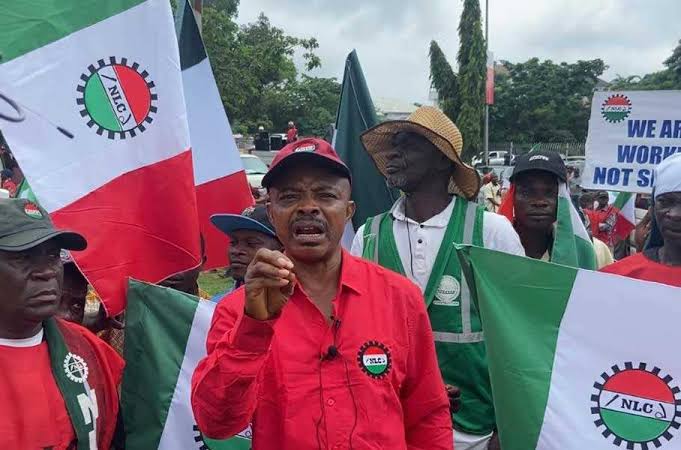
The Nigeria Labour Congress (NLC) and the Trade Union Congress of Nigeria (TUC) have announced a nationwide strike scheduled for Wednesday, November 8, 2023.

The joint union’s decision stems from the alleged beating and abduction of their President, Joe Ajaero, during a protest in Imo State’s capital. 

Leaders of the NLC and TUC have issued a six-point demand to the Federal Government, calling for the immediate removal of the Commissioner of Police, Imo State, and the Area Commander, among other officials, accused of complicity in the brutalization and abduction of Ajaero and other workers.

Reports indicate that Ajaero was taken away by the police during a protest against the non-payment of workers by the Imo State Government. 

The NLC, in a strongly worded statement, accused Imo State Governor, Hope Uzodimma, of conspiring with the state’s Commissioner of Police, Muhammed Barde, to abduct Ajaero.

The unions condemned what they described as the state government’s use of violence and intimidation against trade unions and their leadership, emphasizing that their only demand was the payment of overdue salaries to state workers. 

In response, the state’s Police Command and Governor Uzodimma vehemently denied the allegations, with the police claiming that Ajaero was in Warri, organizing labourers for a planned protest demonstration in the state.

The governor’s spokesperson, Declan Emelumba, dismissed the accusations, labeling the accusers as “mischief makers.” The NLC and TUC, however, remain steadfast in their demand for Ajaero’s release and have called for the intervention of President Bola Tinubu.

Hisbah: The way forward

By Mustapha Abdurra’uf Tukur

The recent outpour of responses by the court of public opinion about the recent raid orchestrated by the Hisbah police in Kano was predictable. We live in an era of opinions, many of which are built not on concrete evidence and thorough understanding but on political and religious sentiments.

I will start by commending the good work done by the Kano State government in reappointing Sheik Aminu Daurawa to spearhead the activities of the Hisbah board. Considering his antecedents in Kano that inspired the same in other northern states, Daurawa genuinely deserved it. The Hisbah under his watch has started again by organising the mass wedding, which fits the stick and carrot approach in problem-solving.

However, as we continue to press down on amoral and delinquent activities, care must be taken not to dent the image of Kano and further plunge its economic viability and business friendliness to a lower ebb. The recent land issues didn’t help the cause.

Standards abound that could be set and upheld within the confines of law and human rights, which, fortunately, Islam upholds in very high esteem. As a student of knowledge, one comes to understand the care Islam gives in protecting dignity and using ethical and deliberate means to entice those astray back to its fold.

The laws establishing Hisbah as a government agency should be revisited such that powers be vested in them to be included in the licensing of the hospitality sector to ensure compliance with the religion and tradition of Kano.

As we seek to redress the amoral activities in this generation, particularly youths and underaged kids, who are constantly being involved in delinquencies, the best ways to tackle such is to enhance the scope the power and refine the activities of moral institutions, particularly in a conservative state like Kano.

A comprehensive law that protects such rights will propel Kano towards its full potential, making it much more peaceful and beautiful. Fulfilling the quotable of our mentor, Prof. Uba Abdallah, who professed, “He who is tired of Kano is tired of life…”

Allah ya ƙarawa Kano albarka.

Mustapha Abdurra’uf Tukur wrote via musteetk@gmail.com

Senate swiftly passes N2.18 trillion 2023 Supplementary Appropriation Bill

By Sabiu Abdullahi 

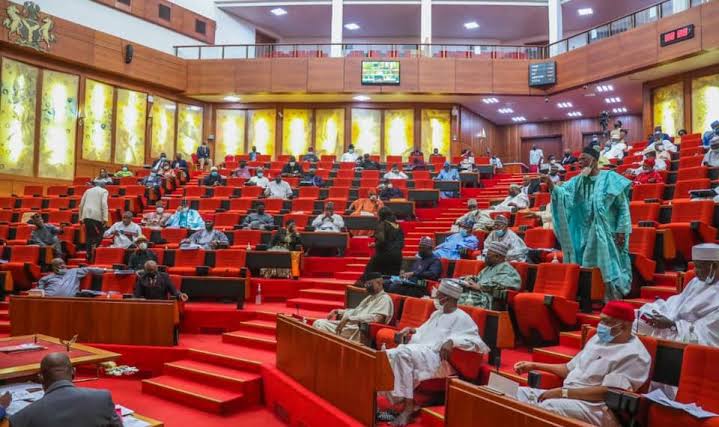
The Nigerian Senate has passed the N2.18 trillion 2023 Supplementary Appropriation Bill, a request for consideration by President Bola Tinubu.

The bill, which was presented to the Senate during Tuesday’s plenary session, received expedited attention as requested by President Tinubu in his letter to the Senate. 

The Chairman of the Senate Committee of Appropriations, Solomon Adeola, laid the report before the Red Chamber on Thursday, leading to the bill’s express approval.

Reports indicate that the Committee on Appropriations had engaged with key ministers heading the agencies outlined in the supplementary budget, including the Minister of Works, David Umahi; Minister of Housing, Ahmed Dangiwa; Minister of Agriculture and Food Security, Senator Abubakar Kyari; Minister of State for Defence, Hon. Bello Matawale; and service chiefs. 

Prior to the bill’s passage, the Senate adopted a harmonised report compiled from discussions in both chambers concerning the 2023 Supplementary Appropriation Bill, submitted by Senator Adeola. Lawmakers emphasised that swift approval was in the best interest of the nation. 

Senator Adeola stated that his committee had meticulously reviewed the budget details with input from relevant sub-committees and heads of the benefiting ministries, departments, and agencies of the government. 

Following a thorough clause-by-clause consideration, the Senate adopted the Committee’s report without any alterations, returning it to the President.

This decisive action underscores the Senate’s commitment to national fiscal responsibility and ensuring the timely allocation of resources for the country’s development projects.

Murja Ibrahim Kunya, a TikToker, in the Curriculum? Why the heck not?

By Prof. Abdalla Uba Adamu

I was tagged in a Facebook thread lamenting the perceptions of Hausa popular culture studies by Muhsin Ibrahim on how such a course of action is looked down upon. Indeed, he related personal bad experiences on his encounter with what one might call ‘culture purists’ who do not see anything worthwhile studying about contemporary popular culture. I feel that my response should be enlarged beyond the one I gave in order to reach wider audiences and stimulate debate.

‘So, what exactly is ‘popular culture’? Without being bogged down by technicalities, it is simply what people like. Often referred to also ‘mass culture’. Which differentiates from the ‘elite culture’ preferences of the high order of the society. Elite culture is often favoured because it is seen as cultural representative due to its historical purity. For instance, Shata is an elite culture, while Rarara is a popular culture. Both are singers. But while Shata was a griot whose lyrics represent the historical antecedents of his society and culture, Rarara is a singer whose lyrics represent his pocket.

Thus, everything people do can come under the purview of popular culture – fashion, food, literature, cyberculture, sports, architecture, theatre, drama, films, music, art, you name it, it is popular culture. It is the dominant culture. Some of the universities that teach popular culture in the world include Harvard, Cambridge, MIT, and Stanford, to name some of the top ones, plus thousands of others.

So, why study popular culture? There are many reasons, but one of the most compelling is social awareness. Such a study makes us aware of important social issues. You may not follow Hausa TV show operas, but they illuminate critical tensions within communities, and some reflect the ideals of the political culture; Ado Ahmad Gidan Dabino’s “Kwana Casa’in” is a case in point. Mediated popular culture gives creators opportunities to be creative.

Thus, popular culture can raise awareness about important social issues. TV shows, films, and music often address topics like discrimination, environmental concerns and mental health, sparking discussions and encouraging positive change. For instance, in Kano in early 2023, AA Rufai Bullgates [sic], an individual with mental health issues, became a popular culture media celebrity due to his delusions of grandeur; at one stage, he bought Kano State for ‘gangaliyan’ naira – his coinage. It took social media to make people aware of the extent of his illness – and stop exploiting his guile.

The contempt with which we approach studies of Hausa popular culture – or, let me modify, modern/contemporary culture – allowed a big room for others to be experts on us. In this way, researchers such as Mathias Krings, Carmen McCain, Novian Whitsitt, Brian Larkin and Graham Furniss came to dominate the documentation of Hausa popular culture.

In 2007, I was a visitor to Graham Furniss’s house in London for lunch, and I was blown away by a bookshelf covering a whole wall devoted to his documentation of Hausa romantic (soyayya) fiction containing over one thousand volumes. In Kano, we refused even to acknowledge such novels existed, and at one conference, I heard a University librarian describing them as ‘trash’. Now, if you want to study the earlier novels in the genre, you can only find them in the Library of the School of Oriental and African Studies, courtesy of Graham Furniss – while they are not available at Bayero University, Kano.

Novian Whitsitt, an American, became an expert on the feminist ideologies of Bilkisu Salisu Ahmed Funtuwa and Balaraba Ramat Yakubu – two wonderful and brilliant female writers we ignored. He made a name out of researching their novels – and he had to learn the Hausa language first before he could even read the novels. In Kano, where we speak Hausa, we looked down on these writers. Now, if you want any reference to the works of these ladies, you have to go to Amazon for his books, for he is considered an expert on Hausa feminist writers.

Matthias Krings collected more Hausa cinema tapes than any European researcher and established a vibrant Hausa film reference library at Johannes Gutenberg University, Mainz, Germany, where he is based. In Kano, we refused even to acknowledge that Hausa film is worth studying – until we gave the study a shove and held an international conference on Hausa films in 2003 – the first of its kind in the whole of Africa in studying an indigenous African language film industry. Even the practitioners – filmmakers, producers, directors – don’t see the value in studying their works, believing that such is done to denigrate them rather than a critical analysis of their art. When I established Yahoo! Groups social network in 2001 – long before Facebook – those who entered the group were constantly fighting us for studying their art.

In any event, it was Brian Larkin from New York who even opened up the doors in 1997 with his brilliant paper, “Indian Films and Nigerian Lovers: Media and the Creation of Parallel Modernities.” Soon enough, he became the only reference point on the emergence of modern-mediated Hausa popular culture. I could go on, but you get the point.

As for music, no one cared – until the Talibanic censorship regime from 2007 to 2013 in Kano favourably enabled the separation of Nanaye soundtrack music from Hausa films, creating an independent Hausa Afropop music genre. It also led to the emergence of Rap music among young Hausa lyricists in 2013 – the year of creative freedom for Hausa popular culture. Billy-O produced the biggest hit Hausa Afropop hit of the year with ‘Rainy Season’, producing a brilliant Engausa song accompanied by Maryam Fantimoti.

No attempt was made to internationalise the study of the emergent music genres by anyone. They were all obsessed with studies of the songs of griot acoustic musicians, believing that the Afropop genre was a passing fad. Seeing a room for documentation, I entered into the field. In any event, I was considered a loose cannon in the whole Hausa ‘adabi’ canon. Luckily for me, my foray into Hausa popular culture, or ’Adabin Hausa’ as they often call it (while I prefer ‘Nishaɗin Hululu as the Hausa term for popular culture), was from the prisms of Stuart Hall (Birmingham School) and Frankfurt School critical theory perspectives.

Most importantly, I was analysing popular culture as a mass-mediated communication, rooting myself firmly in communication theories. I was not interested in etymology, morphology, syntax, grammar, pragmatics, stylistics or other branches of the study of literature in my analysis (I profess ignorance of these branches). My focus was that something was happening; it was providing a stethoscope on the social awareness pulse. We need to document it. It was no longer acceptable to let others become experts on us.

Thus, studying or even debating mediated popular culture was definitely frowned upon in northern Nigeria. I believe I am one of the few flying the flag of the discipline – such that it has now crept its way into a university curriculum. Next semester (December 2022/23), I will be teaching M.Sc. Popular Culture in the Department of Mass Communication – one of the very few Departments in the country courageous and bold enough to do so. It’d be a fully interactive class, touching all aspects of what gives us social awareness through mediated popular culture.

Now, to the question of Murja Ibrahim Kunya, a TikTok influencer who speaks at more than 100 km per second. She is important enough to have a Wikipedia page. Dr. Muazu Hassan Muazu was one of the lecturers teaching the EEP 4201 – Venture Creation and Growth course in the School of General and Entrepreneurship Studies (SGES), Bayero University Kano. We once taught the course together. In the first semester (2022/2023) examination, question #5 went like this: “Murja Kunya and Me Wushirya are bloggers who trend by causing scandalous contents on their social media handles, for that reason, they are given advertisement jobs. If they do that, they become – (a) influencer marketers, (b) brand ambassadors, (c) trading agents, (d) marketing managers.” Students are to choose one which they believe was the correct answer.

What drew attention was the focus on the activities of TikTokers – activities not taken seriously, especially those of Murja Kunya, who elicited different reactions from different people. One posting on Facebook even labelled her a mental health patient. And yet, here, a university is asking academic questions about their activities. The entire 70-item question paper included references to various brands – KEDCO, Rufaidah, Salima Cake, A.A. Rano, L&Z Yoghourt, Sahad Stores, MTN, Chicken Republic, and so on. All these are marketing HUBS. Why not TikTokers?

Marketers are looking for audiences – notice how those silly and irritating videos pop up on news sites on your device to attract your attention. Dr. Mu’azu’s inclusion of cyber popular culture in his course – and Chicken Republic, dealing with food, IS part of popular culture – to me, is a brilliant acknowledgement of popular culture and its social relevance. Crazy, drugged, attention-seeker or not, people follow Murja Kunya. That means audiences, that means market – making her a perfect vehicle to advertise products. So, what’s wrong with that? If a woman frying ƙosai by the roadside has the same level of audience attraction, we should also acknowledge her as a marketing potential. That does not mean we endorse what they do – it means we are interested in reaching out to their audiences to buy our products.

Without pop culture, we wouldn’t be able to understand generations, so knowing gives us all a better understanding. Overall, a critical analysis of pop culture and media can help to shed light on the ways in which media interacts with society and can help to promote a more informed and nuanced understanding of media’s role in shaping our world.

Now, print Ale Rufa’is Bullgates gangaliyan note and purchase your village.
NLC president Joe Ajaero to receive medical treatment abroad after violent scuffle in Imo

By Sabiu Abdullahi 

The President of the Nigeria Labour Congress (NLC), Comrade Joe Ajaero, is set to be flown abroad for medical treatment after sustaining injuries during a violent incident in Imo State.

Ajaero was in Owerri on Wednesday, November 1, to mobilise Imo workers for a peaceful protest rally against alleged violations of workers’ rights and privileges by the state government. 

The planned peaceful protest took a chaotic turn when allegations surfaced that thugs had attacked the protesters and labour leaders.

During the scuffle, Ajaero sustained injuries that necessitated specialised medical attention, making it impossible for him to be treated at the Federal Medical Centre (FMC), Owerri. 

Benson Upah, the NLC Publicity Secretary, confirmed the decision to seek medical treatment abroad due to the nature of Ajaero’s injuries.

The incident has raised concerns about the safety of activists and the need for peaceful demonstrations in the country. 

The NLC, along with various human rights organisations, has condemned the violent attack and called for a thorough investigation to bring the perpetrators to justice.

Meanwhile, arrangements are being made to transport Ajaero abroad, where he will receive the necessary medical care to recover from his injuries.