Month: October 2023

Elder brother buried younger brother for stealing in Lokoja

By Ahmad Deedat Zakari

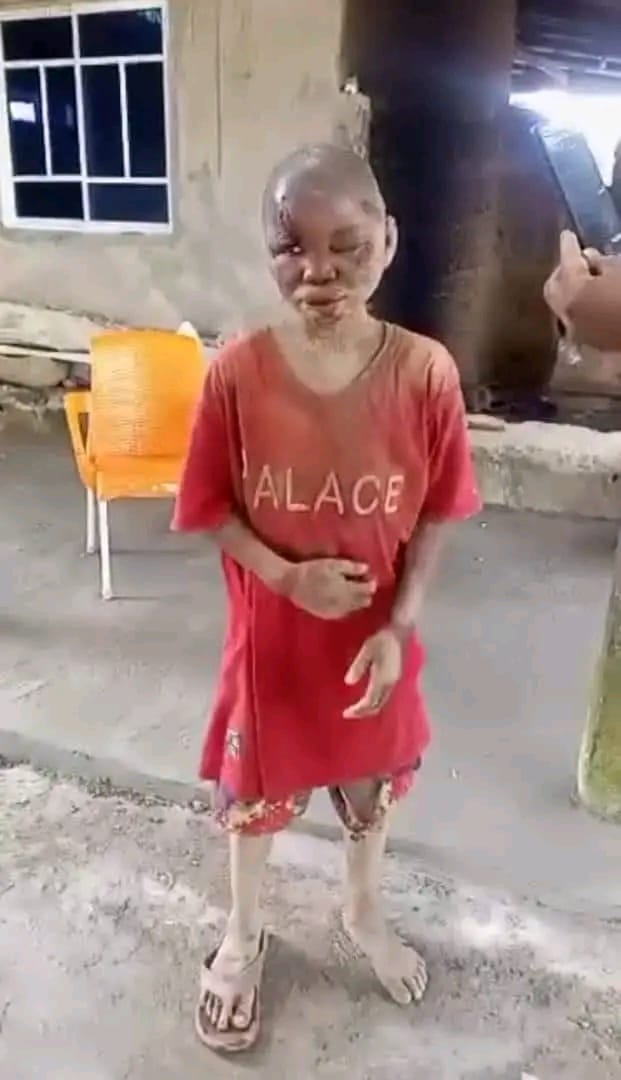
An 11-year-old boy, Friday Oshodi, was buried alive at Apamisede community in Lokoja, Kogi State, by his elder brother, Goodness Oshodi, for allegedly stealing N1000.

Goodness Oshodi buried his younger brother on Tuesday afternoon at the community, located after the army barracks in Lokoja.

According to a witness, the elder brother dug a hole and pushed the boy into it, covering him with sand up to his head.

A passerby was said to have spotted the boy in his predicament and raised the alarm, which attracted other people to the scene.

The witness said the boy was rescued on the verge of unconsciousness.

The Daily Reality gathered that the police were involved in the matter, and Goodness Oshodi is now in the custody of the police.

While he buried his younger brother alive, the suspect said his brother stole N1000, and his mother instructed him to punish him.

“He stole money. I don’t know the exact amount. It was said to be N1000. My mother told me to punish him for the act,” he said.

The Kogi State Police Command’s Police Public Relations Officer (PPRO), SP William Aya, confirmed the incident, saying the suspect had been arrested and was undergoing interrogation.

He said it was alleged that the boy stole compulsively, which had even made him run away from home for almost two months recently.

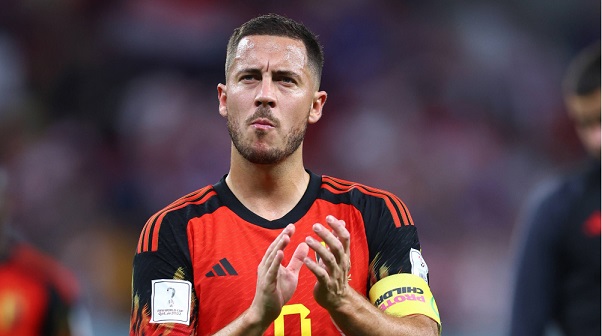
Farewell Eden Hazard, the Belgium Maestro

By Aliyu Yakubu Yusuf

I first took note of Eden Hazard’s mercurial talents way back around 2008 when he burst onto the scene for Lille in Ligue 1. Even in the team that boosted the likes of Johan Cabaye, Matthieu Debuchy, Adil Rami, Mousa Sow and Gervinho, Eden Hazard was the pick of the bunch. Hazard would lead that Lille side to the Ligue 1 crown in 2010/2011 ahead of the more fancied Marseille and Lyon.

When Cristiano Ronaldo left Manchester United for Real Madrid in 2009, I hoped and prayed that Fergie sign up Hazard as the Portuguese’s replacement. I consider Hazard as the only player that could replicate Ronaldo’s exploits for Manchester United. It wasn’t meant to be. Instead of donning United’s red shirt, Hazard would pitch in at Chelsea, where he terrorised EPL defenders week-in, week-out for a decade, winning every single club trophy along the way.

If Hazard’s EPL career will be indelible in the minds of the footballing world, his stint at Real Madrid in La Liga is a story to forget. A combination of injuries, poor form and lack of sheer willpower has left Hazard as merely a footnote in the history of the greatest football club in the world. The fact that Hazard spent three seasons in Madrid but played a grand total of zero minutes in 10 El Clasicos against Barcelona summed up how his stock dramatically fell in Spain.

Apart from Neymar, Hazard was the closest player to Lionel Messi in terms of pure talent and magical dribbles. In fact, when push comes to shove, I would pick a fitter and more focused Hazard ahead of flashy and wayward Neymar. Hazard is a player I so much enjoyed watching. His career may have ended with a whimper, but that shouldn’t take away anything from the fact that he’s one of the greatest players of this generation.

Adieu Eden. Football will never be the same without you.

Cyberbullying and female social media users in Northern Nigeria: A story of Zainab Naseer Ahmad and her struggles

By Nusaiba Ibrahim Na’abba

Over time, social media platforms have gained unmatched acceptability over the legacy forms of communicating or exchanging messages – newspaper, radio and television. Their rapid rise has also corresponded with the swift increase in the development of social media platforms – Facebook, Twitter and WhatsApp – widely embraced by youths in Nigeria.

According to Statista, a known global database organisation, as of 2022, Nigeria has approximately 84 million internet users despite economic hardships that have affected the majority of Nigeria severely throughout the years.

This report projects that there will be a significant rise of 117 million internet users in 2027. “Nigeria is one of the most populous countries worldwide, more internet penetration amounted to over 38 per cent of the population in 2022 and is set to reach 48 per cent in 2027,” read a Statista report.

Already, there are several projections about a massive increase in the population of Internet users as the population increases.

Social media platforms are acknowledged worldwide as important communication forums facilitating wider discussions that cannot necessarily be done offline. Discussions here are indeed quite pervasive as opposed to one-on-one or group discussions. According to Dingli and Tanti (2015), in their study titled ‘Pervasive Social Network’, a pervasive social network is an extension of the traditional social network. The most important aspect borrowed from the traditional social network is the recent intrusion in the field of mobile technology – mobile social networks.

In the past decade, social media platforms such as Facebook, WhatsApp, and Instagram have proven to perform exceptionally well in aspects of e–commerce, changing perspectives of business dealings with a touch of speed and inclusiveness. USAToday (2019), over the past ten years, social media has evolved mainly from keeping in touch with others to flaunting what we have for attention or curating unrecognisable versions of ourselves.

Adding to its purpose of improving personal interactions, social media platforms have enabled youths worldwide to be engaged in businesses by creatively coming up with marketable ideas through unique content creation strategies. Such include online learning, personal life blogging and politics, among many others.

Most businesses use online marketing strategies such as blogger endorsements, advertising on social media sites, and managing user-generated content to build brand awareness among consumers (Wang and Kim, 2017).

People worldwide have embraced the vast opportunities created by social media and have greatly transformed them into gigantic opportunities. In Northern Nigeria, several blogs, including Open Diaries and Northern Hibiscus, have vast followership, raising the bar of social discussions around various topics on relationships, marriage, divorce and digital marketing. From 2016 till date, Northern Hibiscus has over 521,000 followers, while Open Diaries, which also started in 2016, has over 248,000 followers.

According to Rani and Padmalosani (2019), “Social media activism is a form of media activism which brings in a larger audience because of its interactive features towards a great mass. The information that breaks in social media becomes viral in fractions of a second”. More so, “the campaigns and protests-related information on social media can increase the number of supporters. Thus, social media is far superior to traditional media. There are various social media platforms like WhatsApp, Facebook, Twitter, and Instagram, where information can trend in no time”.

Zainab Naseer Ahmad, a social media activist whose role is to influence people on social media, has raised the bar of activism and opened the doors for women to contribute their ideas and suggestions for societal development on social media platforms. From 2019 till date, Ms Ahmad has toiled through the toxic infiltrated space to support the development of beneficial government policies for the larger society in Kano State and beyond.

Gender-based cyber-bullying and trolling

In Nigeria, there is widespread gender-based violence through electronic communication devices, according to Premium Times. Furthermore, “it was noted that technologically facilitated gender-based violence occurs in Nigeria amid a climate of pervasive gender-based violence. The new digital era has given bigotry and misogyny new opportunities to thrive. This is in addition to Nigeria’s different cultural makeup and traditions that have made toxic belief systems that reaffirm patriarchal views that seek to silence women and restrict their liberties in all settings, offline and online, even worse”.

The renowned online newspaper also explains that “Violence against women online is often perpetuated via digital social media platforms like Facebook, Instagram, TikTok and Twitter. This form of violence, especially suffered by women in the public eye and feminist activists, has a detrimental effect on their rights to freedom of expression, keeping them from actively participating in discourse and silencing their voices”.

The online bullying and trolling women face in the online space is an extension of the existing gender-based violence that engulfs a larger part of Northern Nigeria communities. As a result, it is very easy for users to use condescending statements to women, especially on Facebook, which is a massive community of networks.

As a social media activist, Muhammad Khalifa believes that “most of the female activists are seen as a wayward, and their activities are a departure from the generally accepted norms and values of a typical northern woman”. According to Muhammad, “Every northern Nigeria woman is supposed to have a sense of modesty of abstaining from social discussions that happen online.

Khalifa’s claims corroborate some of the experiences shared by Zainab after she decided to become a social media activist. Her phase of activism began in 2018 when she led the commencement of a movement tagged “free pads for girls” on Facebook. 

The campaign was rebutted by fierce backlash from her community and the online community, who saw the concept as mainly indecent and capable of corroding existing values that a “lady” should have in the North. The campaign was purposely led to ensure the availability and accessibility of sanitary napkins for young women in schools.

With the excessive prices of sanitary pads in supermarkets, Zainab joined forces with other online users to call on the government to take the initiative on the health issues confronting learners.   She said, “My worry was how students in Government-owned secondary schools can have access to proper hygiene with relative ease”.

Paradigm Initiative, an initiative that works to connect underserved young Africans with digital opportunities and ensures the protection of their rights,  condemns online violence against women, sexual harassment online, cyber-stalking, doxing, online trolling, targeted hate speech, and identity theft. Also, Paradigm Initiative reports that “Reports from the Federal and State Ministries of Women Affairs in Nigeria have shown that there has been a 149% rise in reports of gender-based violence from March to April 2020 in 23 out of 36 states in Nigeria in which data is available”.

The experiences narrated by Zainab and other female online social media users indicate that even women of older ages are not exempted from cyberbullying. Ziyaatulhaqq, formerly FatIbolady, who surfaced on Instagram, had a bitter experience with social media trolling and bullying. During an interview with Mahangar Zamani on BBC Hausa, Ziyaatulhagg said, “From 2016 to 2018, the same thing happened in my life: over 20 accounts were opened, and peddling lies about my life. It was pure hell”.

Not only Zainab, Ziyatulhaqq and Aysha, but many women also lament the blackmail, lack of confidence, self-sabotage and body shaming online. This is also another challenge for women activists in cyberspace. The challenge also destroys their ideas for development or a desirable change.

Abba Gwale, an active social media user for ten years in Kano State, said, “There is a general assumption among society that women are not capable of participating in activism and sees any girl involved in such online activities as immoral.”

 “They think women should not engage themselves with issues on social media platforms such as marriage, politics, etc,” said Gwale.  These are the experiences shared by Zainab and other female social media users.

The positive influence of female-led social media activism

With the increase in social media usage and the realisation of business opportunities in tech and digital platforms, there has been a rise in positive contributions by women, which societies at large have felt. The global COVID-19 pandemic significantly disrupted businesses in Nigeria, especially Kano State, a known hub for commercial activities. It also opened new doors as women creatively leveraged the Internet to start remote businesses.

The popular social media influencer Aisha Falke engaged a large community of women and men who taught different ideas in tech, businesses and several online opportunities on social media. Numerous youths were exposed to the immense online opportunities available, and many benefitted.

Like other social media users, Zainab also climbed the ladder to prominence. Zainab says visibility on social media platforms takes time, effort and consistency. “I’ve been an active social media user for over five years now, but I only used to chat with friends before 2018. It was in 2018 that I developed a passion for social issues and decided to harness the social media platform – Facebook”.

To have a noticeable impact, you’d have to spend appreciable time on a particular platform and consistently nurture your niche. According to Aysha Tofa, the co-founder of ‘Start-up Kano’, a tech hub that incubates youth businesses in Kano State, the hub has mentored over 500 start-ups, and women have proven to be very capable in the online space. “Many businesses are single-handedly run by women who have gained with significant returns,” said Tofa.

Despite cyberbullying, women are gaining prominence in the online space. Zainab Naseer was able to receive about 700 pads that were handed to vulnerable women in Kano State. “This is one of my greatest accomplishments, and I’ll cherish it forever,” she says. In recognition, Khalifa Muhammad, a social media user who has spent over eight years on Facebook, shares that “there are some issues that can only be discussed by women because of cultural and religious norms and ethics. The few women online like Zainab are doing well to educate our communities on that”.

On the part of other women, the likes of Zainab have opened the doors of opportunities and how to overcome greater challenges ahead in cyberspace. Hannatu Suleiman, an active social media activist and an aspiring journalist, has also gathered the courage to post on social issues bedevilling her community in Kano. She says, “Zainab is one person that I look up to in cyberspace. I’m now confident about writing online despite the challenges of bullying and trolling”.

Zainab was strategic during Dr. Abdullahi Umar Ganduje’s just-concluded term as the Governor of Kano State. Her sanitary pad campaign propelled the government’s decision to distribute sanitary pads to secondary school students for free.  She says, “It was a big achievement to me when I heard that, as it was what I have been advocating for”.

Future Prospects of Social Media and Digital Rights for Women

As technological opportunities continue to gain accolades and acceptance, women are hopeful of embracing their deserved rights online. They would also be acting more responsibly to present other social challenges tormenting the lives of women at local levels.

Before becoming the President of the Youth Society for the Prevention of Infectious Diseases & Social Vices (YOSPIS), Zainab mobilised youth in Kano State to peacefully protest the killings that surfaced in Northern Nigeria. She gained recognition from her live videos on Facebook. The protest left trails of its effects as she was invited to answer some questions by the Department of State Security (DSS).

Zainab said, “I was softly cautioned to refrain from the protest as it may lead to unwarranted results. This made me desist from the protest”.

Through YOSPIS, Zainab has conducted many online and offline activities, including raising youth awareness of the negative impacts of social vices and election monitoring, among other things. The organisation has been particularly keen on equipping youths with information about their relevance in development.

According to Zainab, “Women can only own their sect in the online space by supporting each other. Women must understand that the online space is a free space that seeks the contribution of all people. There’s also an opportunity to report cases of bullying and trolling like I once did, and action was taken. I had to report to the Kano State Police, which summoned the culprit. He was interrogated and later asked to apologise on the Facebook platform he used after confessing he used my photo with a derogatory statement without my consent on his page”.

She adds, “From that moment, all blackmail, insults and other sorts of cyberbullying against me has drastically reduced. There are several privileges to meeting with influential people which are necessitated by social media platforms among thousands of opportunities”.

According to Mr Abdulhameed Ridwan, a lecturer in the Department of Mass Communication at Skyline University Nigeria, a cybercrime act in Nigeria was established to serve as redress for cyberspace crimes such as cyberbullying, cybersecurity, and cyberstalking, among others. When offenders are caught, taken to court, and found, they either pay a fine or spend a substantial time in prison, depending on their crime.

Despite the availability of the law, there is still a low level of awareness on the part of social media users, and other users feel there is a delay in the judicial system, he added. His views corroborate well with that of Zainab, that many social media users in Nigeria are unaware of their rights and the available laws for protecting them.

This work was produced due to a grant from the Africa-China Reporting Project at the Wits Centre for Journalism at the University of the Witwatersrand. The opinions held are of the author(s). Nusaiba can be contacted via nusaibaibrahim66@gmail.com.
Court disqualifies Timipre Sylva from Bayelsa governorship race

By Sabiu Abdullah

The Federal High Court in Abuja has disqualified Chief Timipre Sylva of the All Progressives Congress (APC) from contesting the forthcoming gubernatorial election in Bayelsa State, slated for November 11, 2023. 

The ruling, delivered by Donatus Okorowo, came in response to a lawsuit filed on June 13, 2023, by Deme Kolomo, a member of the APC, under the suit number FHC/ABJ/CS/821/2023.

The court found that Sylva, who had previously served as the state’s governor for two terms, would breach the 1999 constitution as amended if allowed to contest again.

Justice Okorowo pointed out that Sylva had been sworn in twice and had ruled the state for a total of five years, making him ineligible to run for office again. 

Citing the precedent set in the case of Marwa vs. Nyako at the Supreme Court, Justice Okorowo noted that the constitution clearly states that no individual should be voted into the office of governor more than two times.

The judge stressed that allowing Sylva to contest the upcoming election and potentially serve another term would exceed the constitutionally mandated limit of two terms, amounting to more than eight years in office.

This ruling has far-reaching implications for the political landscape in Bayelsa State, setting a legal precedent that reinforces the constitutional boundaries governing the tenure of elected officials.

As the people of Bayelsa prepare for the forthcoming election, this decision reshapes the dynamics of the race, opening the field for new contenders and underscoring the importance of upholding the nation’s constitutional principles.

Ulama Forum in Nigeria condemns Israeli terror in Palestine

By Sabiu Abdullahi 

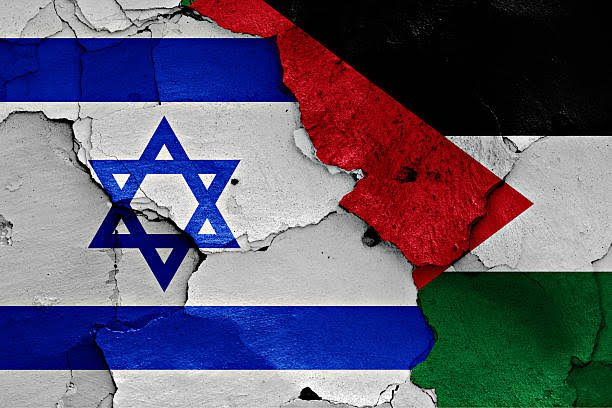
The Ulama Forum in Nigeria has condemned the recent brutal massacre of innocent lives in Palestine by the Zionist state of Israel. 

The Forum, based in Kano, expressed outrage at the ongoing illegal occupation and usurpation of Palestinian lands, calling on global institutions including the United Nations, the Organisation of Islamic Conference, and the World Islamic League to intervene and put a permanent halt to the barbaric attacks on defenceless civilians. 

The Ulama Forum highlighted the hypocrisy of powerful nations that condemned certain conflicts while endorsing Israeli atrocities.

It noted the urgent need for Arab and Middle Eastern countries to unite against Zionist brutality, cautioning against any form of appeasement with Israel, which it deemed to be sacrificing the Palestinian cause.

The Forum urged Muslim countries to impose economic sanctions on Israel and rally international support for the victims of Israeli attacks. 

Commending countries like Saudi Arabia, Turkey, Jordan, and Kuwait for their stern condemnations of Israel’s actions, the Ulama Forum called on Muslims and peace-loving people worldwide to unite in condemning the Zionist provocations and cruelty against the oppressed people of Palestine.

It emphasised the importance of working towards a just, peaceful, and progressive world order. 

BUA Group raises prices on essential goods after cement price cut

By Sabiu Abdullahi 

The BUA Group, despite recently slashing cement prices, has quietly increased the prices of sugar, flour, and spaghetti products, according to a recent market survey conducted in Kano.

Previously, a bag of sugar was sold at N44,000, spaghetti at N8,100 per carton, and flour at N32,500 per bag.

These prices have surged to N47,500, N9,000, and N34,500, respectively. 

Local shop owners confirmed the sudden price hikes, indicating that the increases followed the company’s announcement of reduced cement prices.

A BUA Foods dealer revealed, “They notified us about the increase this week. All these prices are company prices.” 

This unexpected shift has left consumers puzzled, as they had anticipated lower living costs after the cement price cut.

The BUA Group has not commented on the situation, leaving many awaiting an official response to understand the reasoning behind these price adjustments.

NNPCL’s importation monopoly signals return to subsidy era—expert

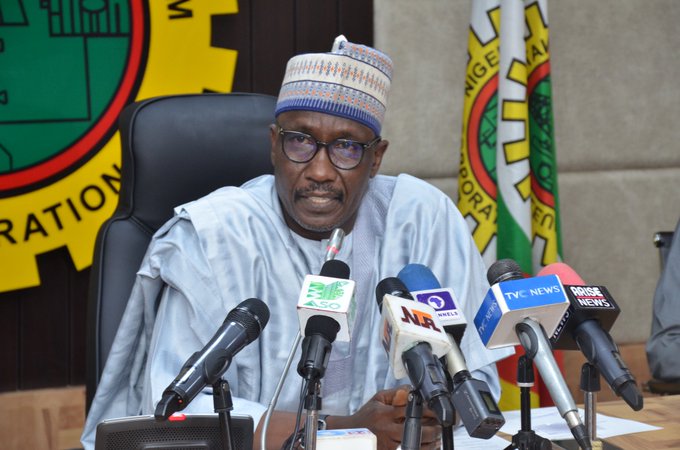
Mele Kyari, the head of the Nigerian National Petroleum Corporation Limited (NNPCL), revealed that the corporation has once again become the exclusive importer of petrol in the country.

Kyari stated that private companies are unable to import petrol due to difficulties in accessing foreign currency caused by shortages. 

“We are the only company importing petrol into the country. None of them can do it today. For them, access to foreign exchange is difficult. We create foreign exchange (FX), therefore we have access to FX, while their access to FX is limited,” Kyari said. 

This revelation has sparked discussions among experts, with oil and gas analyst Kayode Oluwadare unofficially confirming the return of the petrol subsidy in Nigeria.

Oluwadare highlighted that the move contradicts the initial purpose of deregulation, which aimed to enable independent marketers to import petrol independently. 

Oluwadare explained, “The government is gradually bringing back the conditions of the fuel subsidy regime. We are now back to the status quo. In the coming days, the petrol pump price will remain the same. We may also see the petrol pump price slightly coming down, with the current global trend, we are not likely to see an increase in petrol pump prices.” 

This development marks a significant shift in Nigeria’s energy landscape, raising concerns about the country’s economic stability and the implications for consumers in the face of global fuel market dynamics.

Young Nigerians, turn your ideas into capital

By Kamal Alkasim

In these tough economic times in Nigeria, young people, your ideas are more valuable than you think. They can be your ticket to success if you present them well. You can start small or go big, online or offline. Don’t start a business without knowing the ropes. Here’s some straightforward advice: Begin a small business, regardless of your education. Education helps but doesn’t limit you.

If you want to make it, learn from the experts in your field. Avoid diving into something you don’t understand. Ignorance won’t get you far. Remember, being a job creator is better than being a job seeker.

Procrastination is your enemy. Act on your ideas quickly. As Pastor Reno Omokri wisely said, “Your mind is your supercomputer.” Believe in the power of positive thinking, as Islamic Scholar Malam Ibrahim Khalil noted: “A rich person grows through investments, and a poor person through positive thoughts.”

Don’t believe opportunities are scarce. Every day is a chance to work on your ideas wisely and diligently. Even the slightest idea can lead to something great. Small steps pave the way for significant achievements.

Always remember that your ideas hold immense potential. The choice is yours: build on them or let them go to waste. Your future is in your hands. May God bless the brilliant young minds of Nigeria as they turn their ideas into reality!

Kamal Alkasim writes from Kano via Kamalalkasim17@gmail.com.

Kano governor rescues students, releases funds for outstanding university fee

By Sabiu Abdullahi 

Kano State Governor Abba Kabir Yusuf has approved the release of funds to settle overdue registration fees for students sponsored by the state at Bells, Igbinedion, and Al-Qalam Universities. 

The decision aims to alleviate the burden on students who have faced eight years of neglect by the previous administration, enabling them to finally receive their graduation certificates. 

Governor Yusuf, emphasising his commitment to education, announced the move via his official Facebook page. 

The timely intervention has been met with relief and gratitude from students and their families, ensuring a brighter future for these deserving scholars.   

Defending the Naira: A political perspective

By Ibrahim Isa Wada

When the current administration was advised by some economic experts to withdraw the subsidy on fuel and allow the Nigerian Naira to find its own value in the international arena, I got so much worried for fears of what would be the outcome. Being a nonexpert on economics, banking or finance, but only a bloody retired broadcast regulator with a fair understanding of day to day current issues, I decided to drop this piece and I hope it will be carefully considered by the experts. All I know is that, life is so hard for all of us since the Naira decided to take a flung and the fuel prices shoot up.

Sadly, some of the experts disappeared while others started to blame the past administration and/or their village people for making our lives so miserable.

Defending the value of the Naira amounts to defending the Tinubu/Kashim administration, and surely the interest of the Nigerian people.

How can any government, businesses or persons successfully plan and execute meaningful projects; how can Nigeria join economic groups, like the BRICS, with such a rickety currency?

I understand that the value of the Nigerian Naira is a function of her balance of trade. That is for the Naira to be strong and stable, the total value of goods and services Nigeria imports must be the same or less than the value of goods and services Nigeria exports over the period of time.

In the present circumstances, we tend to import almost everything including PMS, and even charcoal for smoking Shisha! While we export gold and dollars in cash etc, to safe havens. To be frank, any Nigerian leadership that wants to succeed must have a strong and stable Naira to begin with, which can be achieved by taking the following measures, among others:

1) Bring back the policy of Export Promotion and Import Substitution of the late 70’s.

This should be done with vigour. Any product that could be manufactured in Nigeria shall not be easily imported into the country, while all products that can be exported should receive a boost from the government.

There are means and ways to manuver around international trade politics, like the WTO, to achieve that.

2) Formalise all international transactions, including our transborder trade with ECOWAS and other African countries. Currently the Nigerian Central Bank serves as the unofficial African Central Bank, providing the foreign exchange requirements for many African countries that route their trade through Nigeria.

The trade formalization entails the systemic deployment of adequate personnel and infrastructure that would make international trade between Nigeria and other countries smooth, yet documented.

3) The CBN, Commercial Banks and Bureau De Change operations should have a joint universal forex transactions software that will ease, unify and speed up forex trading.

4) From 3 above, all foreign currency transfers including PTA above $250 must be in digital form.

5) Also from 3 above, the commercial banks and BDC Forex Operator window should capture a basket of about seven major foreign currencies that Nigeria transacts in, i.e Dollar, Yuan, Euro, Pound, CFA, Saudi Riyal and Dirham.

Therefore the BDC operators should have multiple currency accounts with their banks to receive and transfer funds in digital form.

6) The Nigerian government should be bold enough to block all foreign exchange leakages, in form of waivers and favours to individuals and institutions.

7) Develop key institutions targeted towards the elimination of Forex Guzzlers thus:

a) Establish more private universities to reduce students high foreign exchange remittances.

b) Establish more world class hospitals to save foreign exchange from medical tourism.

c) Establish companies for the local fabrication of low technology agricultural and industrial machinery to reduce foreign exchange outflow.

d) Fuel imports should stop at the shortest possible time, by developing more modular refineries, privatising existing ones and ensuring the early take up of the Dangote refinery.

8) In line with the Export Promotion and Import Substitution Strategy, invest heavily in agriculture to reduce food and dairy products import, as well as encourage the exports of cocoa, cashew nuts, sesame seeds, beef, etc.

This is my political perspective of the basic economic issue, because if the politicians fail to defend the value of the Naira and the poor, they will fail utterly in politics.

Ibrahim Isa Wada, writes from Kano, Nigeria. He can be reached via; ibrahimisawada@gmail.com