Month: October 2023

Nigeria in global malnutrition crisis’ web: A sad commentary

By Lawal Dahiru Mamman 

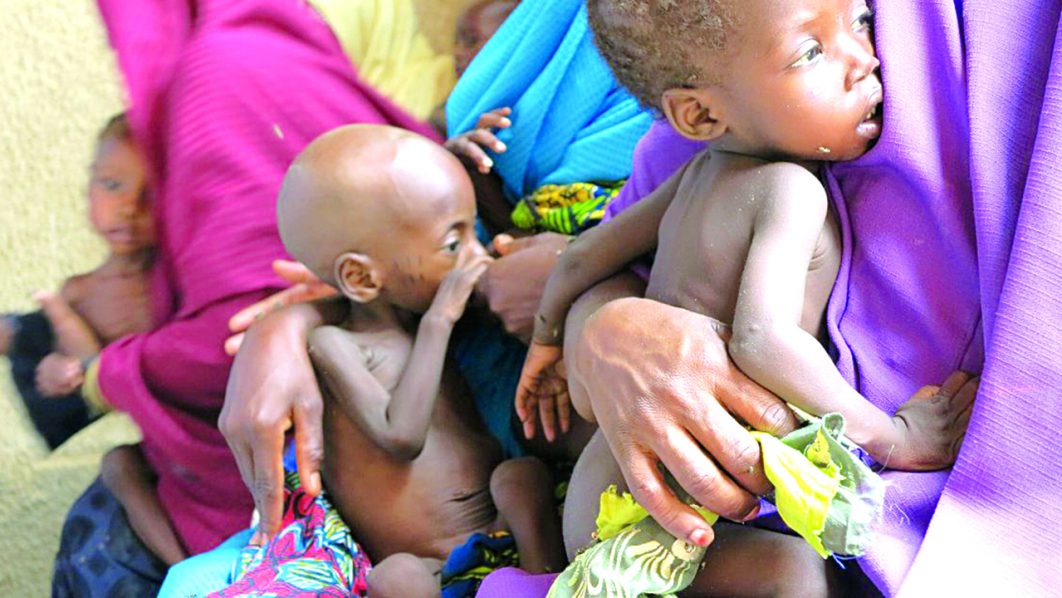
Malnutrition, generally, is when humans or any other living organisms get little or insufficient food nutrients, resulting in health problems. Nigeria is one of the 12 world countries recently declared as the epicentre of the global nutrition crisis. 

The other 11, mostly African countries, include Burkina Faso, Chad, Ethiopia, Kenya, Mali, Niger, Somalia, South Sudan, Sudan, Afghanistan, and Yemen.

COVID-19, war in Ukraine and conflicts in some of these countries are factors that have exacerbated the situation. Barely seven years ago, the number of under-nourished people in sub-Saharan Africa rose from 181 million in 2010 to almost 222 million in 2016. This figure increased to 264.2 million according to a study titled, “Malnutrition: An underlying health condition faced in sub-Saharan Africa: Challenges and recommendations,” published in a medical journal, Annals of Medicine and Surgery, in October 2022.

Recently, Anne Patterson, the Director, United States Agency for International Development (USAID) Mission, at the Trade Fair for Ready-to-Use Therapeutic Foods and Other Life-Saving Nutrition Commodities in Abuja, disclosed that Nigeria is ranked as the country with the second-highest malnutrition rate in the world.

This is according to the recent Food Consumption and Micronutrients Survey, she said.

In reality, Africa, with its abundant water body, aquatic life and favourable climate (which supports the growth of various food crops, including fruits and vegetables), has all that is necessary to produce the macro and micronutrients required to nourish the body for optimal growth and health.

For Nigeria, in particular, which has agriculture written all over its national symbol (as the green on our National Flag signifies agriculture, and the black shield on the coat of arms symbolises fertile soil), the country should not be mal- or undernourished, even ranking second globally.

There are also about 200 species of fish, thanks to the large water body nature has blessed our country with. This, along with other aquatic lives, can be harnessed for healthy foods. There are livestock of various types, giving quality nutrients, too.

A lot is invested by the government in building more resilient health systems medical technologies, training of medical practitioners, and treating illnesses. It is time the same energy and resources are invested in nutrition.

For example, during this year’s World Malaria Day, Nigeria still routinely spent an estimated sum of N2.04 trillion on malaria annually.

Breaking this figure further, the Chairman of the Pharmaceutical Society of Nigeria (PSN) said, “The estimated cost for an individual to treat uncomplicated malaria in Nigeria ranges from approximately N700 to N3000, depending on the type of treatment, and the healthcare facility visited.

“While treating complicated malaria could be significantly higher, ranging from N20,000 to N60,000, or more”. 

On the cost to the Nigerian government, the consultant pharmacist said: “This cost includes expenditures on healthcare facilities, medication, and personnel.”

Tackling the menace of investing heavily in treating illnesses and sicknesses affecting citizens would be to invest in its prevention. And that entails boosting the masses’ nutritional health by ensuring the availability of good and nutritious meals. 

This will help in fortifying the immune system of Nigerians and combating all forms of malnutrition troubling citizens, especially Nigerian children from less privileged backgrounds. 

Being a nation that also engages in massive agricultural cultivation of food and tearing of assorted livestock, the last thing citizens should have as a companion is hunger. Therefore, the federal government and other concerned authorities should worry about the global survey that ranked us as one of the world nations battling with the malnutrition crisis. It is a sad commentary.

Lawal Dahiru Mamman writes from Abuja and can be reached via dahirulawal90@gmail.com.
As oil subsidies made a comeback

By Yusufu Musa

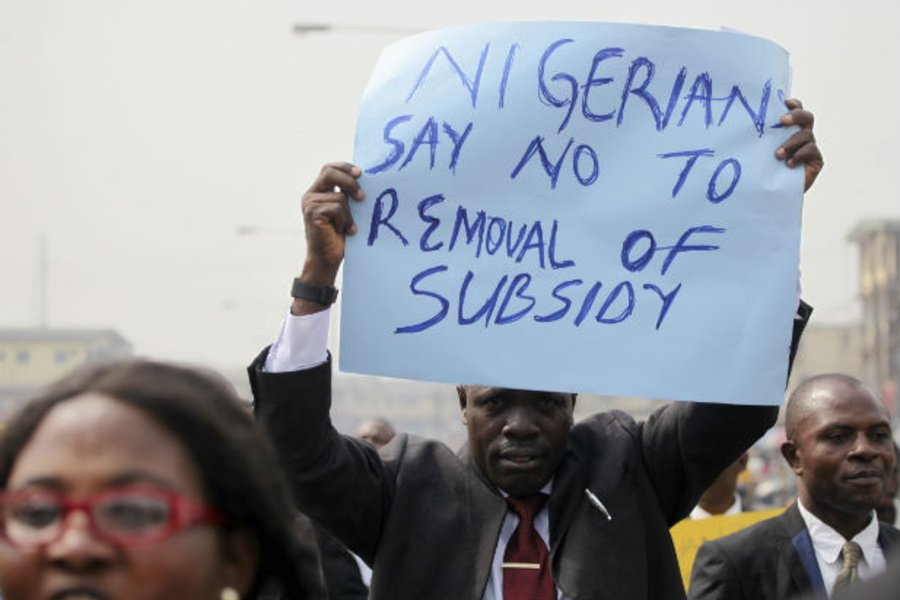
During his inaugural address, President Bola Tinubu made what appeared to be a bold statement – ‘fuel subsidy is gone’- which I received, as many people who advocate for channelling public resources to nation building,  in an inexpressible ecstasy. Though discontinuing subsidy payments made the list of his campaign promises, like his close rivals, the duo of Peter Obi of the LP and Atiku Abubakar of the PDP, the declaration came sooner than expected. 

After watching his debut speech as president, many people were unsure when the order would come into force. For instance, a news item made the rounds in the first quarter of this year, suggesting that the immediate past government had dropped its plans of removing the PMS subsidy. The then minister for finance, Zainab Ahmed, swiftly issued a release to discredit the story. She said the public misunderstood their stance.

According to her, the government only expanded the hitherto planned implementation of the subsidy removal team to allow for the participation of representatives of the incoming government. She insisted that the federal government made estimates for subsidy payments until June 30, and there would be no funds for that after this date. 

We gathered that Nigerians would continue buying fuel at the subsidised rate of N195 per litre. We misinterpreted it. A day later, the NNPCL raised its pump price to N550. But, had the company waited until July 1 to adjust, Nigerians would have spent long hours in petrol retail outlets. Marketers would have hoarded the fuel to create an artificial scarcity to ‘cash out’ after July 1.

It took Nigerians not long to feel the attendant effects of the policy. Transport fares immediately tripled, and prices of consumable goods have been on the increase. However, an average Nigerian is convinced that the action is necessary and is for our collective good. So, we are ready to make sacrifices for the nation. Two, a worker in Abuja who boards a cab to go to his workplace and visits his hometown only during festive thought that big men fuel their motorcades and the government only subsidises their ostentation.

From Jonathan to Buhari, corruption in the system is the loudest criticism against the subsidy. Critics of it argued, and still do that it benefits a handful of people, ‘the oil cabal’. For instance, Malam Isah Yuguda, a chieftain of the APC, disclosed that one of the cabal members approached President Buhari to say they were tired of making money [from subsidies]. Another reservation is that some marketers illegally export the product to our neighbours such as Niger, Cameroon and Benin, thus placing a heavier burden on our government to pay subsidies for what other countries enjoy. They told us that our daily consumption was not consummate with our needs. 

In 2012, Ngozi Iweala, the then coordinating minister of economy, was in Lagos to tell proponents of subsidies that the subsidy funds would reduce maternal deaths in the country and the infrastructural deficit. Sanusi Lamido Sanusi followed the same pattern of thought. Their articulate points could not help convince Nigerians that paying subsidies was evil.

President Buhari was the fiercest in putting forward arguments against subsidies. He is credited with a question he did not answer in his eight years as our president – ‘Who is subsidising who?’  One of those being subsidised was in his office, but he did not take the opportunity to ask him questions. Nonetheless, his administration undertook to let the subsidies go, but in phases. The plan was to go after the PMS subsidy in the final phase.

Governors, who budget billions of naira in the name of security votes whose details are never in the public space, were angry that Buhari was too slow in abolishing subsidies for the health of the country’s economy. 

With borrowing that became a ritual under the last government and the constant blame on the subsidy as the greatest impediment to our development as a nation, we were looking forward to departing from the tradition to set the economy on the path of prosperity.

Four months after making one sentence, which we believed ended the subsidy regime, several papers reported that the government paid about 162bn for subsidy in August.  Onlookers have a reason to ask whether this removal will answer its purpose. Despite the hardship in the country, this news is utterly bad for Nigerians.

If the system encouraged corruption in the past and the government did away with it, how does it intend to convince Nigerians that large-scale corruption would not continue now that the subsidy is back? What assurance would the Tinubu’s government give Nigerians that importing the product to other countries will no longer continue? 

Continuing to vote for such a big figure in enriching oil titans, it repeatedly pointed out they are the actual beneficiaries of subsidies, which means it has no satisfactory cause to starve the poor Nigerians any longer. The philosophy has been thrown out. The amount is not much different from what the previous governments were paying. It should unconditionally reverse the policy. 

Suffering is pronounced in towns and villages. Practical strategies to alleviate the hell are not forthcoming. The government, last month, considered distributing food items to the poor. It went as far as handing funds to state governors. That is not sustainable. It would be difficult, if not impossible, for one man to take more than a sack of grain home. This man has, say, five wards under his roof. There is another chapter of life after the palliative is gone. 

Yusufu Musa writes from Kaduna.

A welcome to Gov. Fintiri’s Fresh Air metro buses 

By Zayyad I. Muhammad

Governor Ahmadu Umaru Fintiri ‘Fresh Air Metro Buses’ have commenced operation in the Jimeta-Yola metropolis, shuttling between Jimeta and Yola town, Jimeta Modern Market to Sangere. Modibbo Adamawa University to the Market, Sangere, Welcome to Yola City-Gate to the Market axis, etc. The government also said it planned to take more buses to other local government areas.

The metro buses significantly impact the citizens’ lives, as the fare fee is a mere 100 naira to any destination. Students, market women and men, farmers, and civil servants have expressed their joys and delight and excitement as one big issue in the common man’s difficulties—the high cost of transportation—has been solved.

Three cardinal things are the lubricants of a decent life: good healthcare, proper education, and easy transportation. Once a family had these things eased for them, all other things are now secondary. 

Politics apart, Gov. Fintiri has impacted healthcare by constructing new cottage hospitals and rehabilitating general hospitals. The payment of WAEC and NECO examination fees, rehabilitation of schools, and teacher welfare. And now, with the commencement of the metro bus service, which has transformed people’s lives not only through easing pressure on their pockets but also through the luxurious nature of the buses while being transported to their places of work, etc.

Recall the arrival in the state of the 58-seater luxurious ‘palliative buses’ was a big surprise to many people, including those in the opposition. Within less than a week of the government’s intention to procure the buses, the buses arrived in the state capital. This is commendable. This writer also says the metro buses are part of the ‘systemic approach’ of the Fintiri government in tackling the economic hardship associated with the removal of the subsidy on petrol, commonly called PMS, by the federal government.

Apart from providing cheap, affordable, and comfortable transportation to the masses, the purchase of the buses by the Fintiri government from Innoson Vehicles Manufacturing (IVM) is a true reflection of the government’s desire to support the local industries, whose multiplier effect can even reach the Adamawa people since the buses are being operated through public-private partnerships (PPP) to create jobs, maintain the buses, and create a friendly business environment to attract more investment.

The Fresh Air Metro buses will assist workers in their daily transport to their offices, pupils to their schools, and the movement of people from one point to another, including the ease of doing business in the state. Furthermore, the buses will greatly eliminate the hustling of using KEKE NAPEP tricycles.

One of the most important aspects of it is that the buses will greatly eliminate the insecurity that Shila Boys associate with the KEKE NAPEP; people will now freely and comfortably use the buses even at night without the fear of anything happening to them as each bus has security personnel attached to it. Urban planners have looked to such public transportation to facilitate improvements in community health and well-being.

Zayyad I. Muhammad writes from Abuja.

Woman pours hot oil on husband after discovering he was involved in fraud

 By Sabiu Abdullahi 

A woman in Rivers State, Nigeria, has been arrested for pouring hot oil on her husband.

The woman, Favour Nweke, said she did this because she found out he had been involved in a fraudulent scheme. 

According to the woman, her husband had not told her about the scheme, and she felt betrayed when she found out.

She said she poured the hot oil on him in a fit of anger and now regrets her actions. 

The woman’s husband is currently in the hospital, receiving treatment for his burns.

The police are investigating the incident, and the woman is expected to be charged with assault.

On our nonchalant attitude towards preserving and maintaining infrastructure

By Muhammad Dauda Muhammad

About two years or so, I was in Jimeta, the capital city of Adamawa State, where I went to visit my family. And, from my observation, the city had witnessed a significant infrastructure improvement and, more significantly, the roads. 

I was amazed to see many areas where new roads were constructed. In the past, I would have never imagined that those places would one day be tarred, but all thanks to the former and the present administrations.

Now, I will state what triggered me to develop this piece. During my visit, I noticed something ill about people’s behaviour towards the new road infrastructure put in place to ease their daily routine, especially in the rainy season. 

Though I am not an engineer by profession, from experience, I know that roads that have already been constructed don’t need any form of substance to stay on them, be it water, oil or anything such. But instead, for people to be more careful and ensure the cleanliness of the roads, they choose to make the drainages built beside the roads for the successful passage of water a place to dump wastes. However, this act congested the drainages, thereby resulting in the stoppage of the water flow, making it spilt all over the roads.

Forget about Adamawa state, which is like a development area compared to states like Lagos and Kano. Kano State is not an exception when it comes to the issue of lack of maintenance of infrastructure. Looking at the ongoing road construction along Gwarzo Road, one will wonder why and how a whole road construction company will block a road for years, all in the name of construction, which is causing more damage to the already constructed road than is good. I am referring to those places they blocked planning to build a new roundabout.

This negligence didn’t stop on properties owned and controlled by the government alone but also in learning institutions like ours. Look at the Ibrahim Gambari Square, built and commissioned a few years ago and the first on our campus. 

Almost all the features set for the beautification of the facility have lost their structure. The fine bulbs that lighten and brighten up the place at night, the concrete chairs that students use to sit and catch a glimpse, the taps that splash water stylishly in the air, and the water flow system that has already been blocked. 

It has not stopped there, but some roads need urgent attention due to eruption, not to mention the grasses that have taken over so many places, greatly threatening the people and the environment.

NB: this piece is not an exposè but a mere candid call to all concerned citizens, both from the public and those in authority, to work collectively in ensuring a transparent and dirt-free society.

Muhammad Dauda Muhammad is a final year student of Mass Communication, Faculty of Communication, Bayero University, Kano. He can be reached via muhammaddaudamuhammad@gmail.com.

Local security agents kill manhood disappearance suspect in Bauchi

By Sabiu Abdullahi 

Bauchi State was rocked by a disturbing incident as a suspect, Yohanna Abubakar, 35, lost his life during an interrogation by members of a quasi-security outfit.

The suspect was allegedly subjected to excessive beatings in an attempt to force a confession regarding the accusations against him. 

Bauchi State Police confirmed the incident, revealing that the quasi-security members, posing as professional hunters, apprehended Abubakar along with two others from Waya village.

The interrogation turned fatal, raising concerns about the methods employed during such questioning. 

Authorities are conducting investigations into this tragic incident, highlighting the need for proper training and oversight within security organisations to prevent such occurrences.

Does it matter the course you studied?

By Bello Hussein Adoto

I am a microbiologist. A colleague asked recently in my set’s WhatsApp group if we are practising as a microbiologist, and another colleague replied: “Virtually everyone!” His reply was laced with sarcasm.

A common belief amongst Nigerians is that if you are told you can work anywhere with your course, you are probably studying one of the so-called useless courses. Microbiology falls into this category.

My colleague’s reply suggests that it doesn’t matter whether you are a banker, a tech bro, or a journalist. You’re a microbiologist regardless of what you do. After all, “you can work anywhere.”

Sarcasm aside, the idea of being able to work anywhere with the course you study should not be a source of mockery. Instead, it should be a testament to the transferable skills that university education should equip you with.

All courses are not created equal. Human Kinetics Education is not as lucrative as Medicine; neither is History and International Studies as prestigious as Law. At least, many don’t believe they are. Nevertheless, each course is a product of university education, which should count for more than a patronising line that “you can work anywhere.”

I don’t use my university degree certificate today, but the training I got for it has served me in multiple fora. The communication skills I acquired from my practicals, presentations, and assignments helped my work as a freelancer, student, and team lead.

My team-playing experience from lab work, time management from projects, independence, ruggedness, and the capacity to improvise, adapt, and evolve came mainly from my time studying at the University.

Of course, these are not part of the curricula. The training I received on writing came via GNS 111 and MCB 311, and they were not even thorough. I only did them in “partial fulfilment of the requirements for the award of ” XYZ—the others I picked up ‘ear and dear’ as a student, without necessarily having to write exams. Still, I am not sure I could have picked all that without having the formal structure of a university to inspire and support me.

I’m not holding brief for courses that have probably outlived their usefulness and should be scrapped or those better as a six-month online course than a four-year classroom programme. Those courses should be reviewed and made more relevant now that education is more expensive and the labour market is more competitive.

Beyond universities and educators, students must reflect on who they want to be. The era of special courses that fetch cool jobs and fat salaries is fast coming to an end. It’s no longer just a matter of what you studied but who you are and what you can do. Some may add who you know, but that’s open to debate.

Besides, the usefulness of a course is also becoming a matter of perspective. Is studying medicine useless if you can earn more as a tech bro.? Is going to school even necessary when you can make a lawyer’s annual salary from creating videos on YouTube and TikTok? Students must find their answers early. Proper career guidance could help here.

We need people in various departments to practice in diverse fields. Not everyone will be a medical doctor or earn thousands of dollars from writing codes or doing affiliate marketing. We will still need farmers, teachers, and communications specialists in the future.

While studying a not-so-prestigious course and earning good money are not mutually exclusive, it’s better now, to begin with the end in mind so that you don’t get to the “top of the ladder and only then realise it was standing against the wrong wall,” as Stephen Covey wrote.

Meanwhile, if you are studying any of the so-called useless courses that allow you to work anywhere, immerse yourself in it. Make your time worth your while. Come out enriched with skills and experiences that can serve you anywhere and at any age.

Don’t fall for the condescension or pity yourself for wasting your time at the University. You are already studying the course, so it’s in your best interest to help yourself and make the most of the course. Who knows, you might graduate and realise the course is not useless after all.

Bell Hussein writes via bellohussein210@gmail.com.

Kano gov’t provides additional infrastructure at Gwarzo School of Environmental

By Uzair Adam Imam

The Kano State Government has revealed plan to provide additional infrastructure to improve the learning atmosphere at the School of Environmental Studies, Gwarzo.

A statement issued and signed by Aminu Bello Sani, the Information Officer, Ministry of Information, disclosed this on Wednesday.

According to the statement, Professor Auwalu Halliru Arzai, the Special Adviser to the Governor on Higher Education, unveiled the plan during a familiarization visit to the college on Monday.

Arzai stated that Governor Abba Kabir Yusuf’s administration prioritizes education at all levels as categorically stated by his government campaign blueprint.

The statement read in part, “Professor Auwalu Arzai emphasized that the state government, under the leadership of Alhaji Abba Kabir Yusuf, places high importance on entrepreneurship courses to combat youth unemployment in the state.

“He stressed that the Governor is dedicated to improving and revitalizing education at all levels.

“He added that the college offers a variety of courses that can empower young people to be self-reliant, reducing their dependence on the government or the private sector.

“Bldr. Tijjani Yahaya Abubakar, the Director of the School of Environmental Studies, expressed his delight at the visit. He also requested the government to expedite the construction of hostels approved by the Central Bank of Nigeria (CBN) at the college.

“In addition, he highlighted challenges faced by the school, such as a lack of operational vehicles and a need for a larger hall to accommodate a larger number of students.

“He said despite the rising unemployment rate, graduates of the college are not only self-employed but also employers themselves, offering hope in the face of joblessness.

“The Director urged parents to consider sending their children to the school, which he described as the best institution for entrepreneurial education in the state,” the statement added.

Muhammadu Buhari University of Transportation ‘ready’ to start academic session

By Sabiu Abdullahi The Muhammadu Buhari University of Transportation in Daura, Katsina State, is on the brink of inaugurating academic activities pending approval from the National Universities Commission (NUC). 

During a recent visit, the NUC delegation confirmed the availability of necessary facilities and equipment for the commencement of the 2023/2024 academic session. 

Prof. Umar Adam-Katsayal, the university’s pioneer vice chancellor, expressed enthusiasm, stating, “We are ready to kick off the academic session as soon as the NUC gives its approval.” 

Established by the past administration of Muhammadu Buhari to boost the transportation sector in the country, the university has proposed a range of academic programs for its initial intake.

The institution awaits the NUC’s green light to officially usher in a new era of higher education in the region.

Saudi Arabia, Iran discuss Gaza conflict for first time

By Sabiu Abdullahi

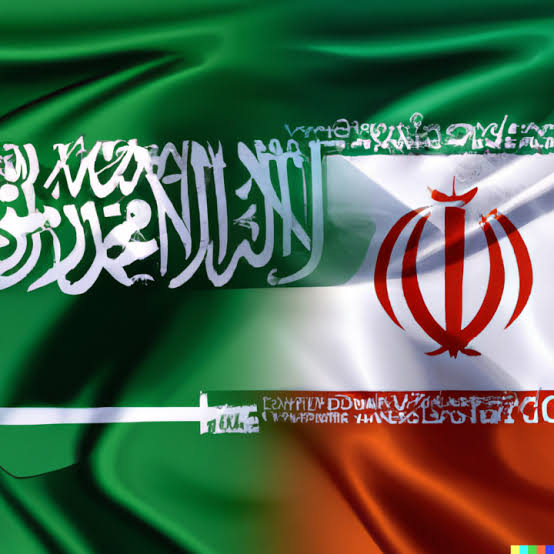
Media reports from Iran and Saudi Arabia stated that the leaders of the two countries discussed the issue of the Israeli-Palestinian conflict in a telephone conversation for the first time since the restoration of diplomatic relations between them. 

They said that President Ebrahim Raisi and Crown Prince of Saudi Arabia Mohammed bin Salman discussed the need to end what Raisi described as war crimes committed by Israel in Gaza. 

The Saudi Press Agency said that Riyadh emphasized its support for the Palestinians and the need to overcome the situation through diplomatic means. 

The Saudi prince confirmed that the Kingdom is doing its best to negotiate with international and Middle Eastern countries to stop this raging war, as quoted by the Saudi Press Agency. 

The company reported that the Prince stressed that Saudi Arabia rejects any plans to attack civilians anywhere. 

The United Nations says 340,000 people have been forced to flee their homes as Israel continues its offensive in response to Saturday’s attack by Hamas. 

Israel has prevented people from leaving anywhere, although some residents have managed to cross from Gaza Strip. 

However, countries and organizations continue to call for the creation of conditions for aid in Gaza and for refugees to leave.