Month: June 2023

Company seeks N10bn in compensation from Kano gov’t for demolishing property

By Muhammad Abdurrahman

Lamash Properties Limited demands N10 billion in compensation from the Kano state government for demolishing its property.

The firm said it entered into a public-private partnership (PPP) with the government of Kano to redevelop the Daula Hotel.

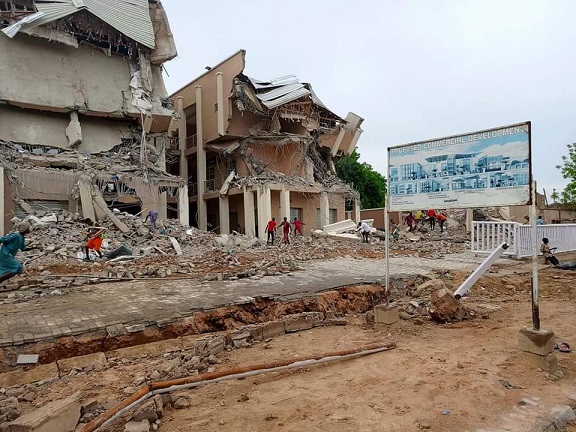
On assuming office, Abba Yusuf, governor of Kano, ordered the demolition of “illegal property” built by the former administration of Abdullahi Ganduje.

In a statement on Sunday, Hassan Yusuf Baba, the firm’s executive director, said it was a “gross injustice” because they were not notified of the demolition exercise.

“Our bid, like every other bid submitted, went through all the processes including going before the state executive council after which we won the bid,” Baba said.

“We were issued the letter of award and we signed a PPP contract agreement with the Kano state government after which we began work on the project.

“The value of the land being the equity contribution of the Kano state government into the project plus the agreed profit share of the state government all in the sum N2,297,016,622.89 only was converted into the hotel and its ownership was given to the Kano state government as its share into the project under the PPP arrangement.

“On May 27, 2023, the immediate past governor of the state, Abdullahi Umar Ganduje, performed the commissioning ceremony of the hotel and it was handed over to the state government as its share in the project.

“To our utmost surprise, we received a call around 2am on Sunday June 4, 2023, that officials of the state government led by the new governor Abba Kabir Yusuf, have mobilized to the site of the project with bulldozers and were tearing down all the buildings on the land including the already completed 90-room 5-star Daula Boutique Hotel, the 90 percent completed commercial area (malls) as well as the ongoing residential apartments.

“We have instructed our legal team to institute legal actions against the state government to claim compensation to the tune of N10 billion already invested in the project and to stop the state government from further taking actions that will negatively affect us based on the PPP contract agreement we signed with it.”

Iconic Zlatan Ibrahimovic retires from football

By Muhammadu Sabiu
 
Iconic Swedish international Zlatan Ibrahimovic announced his retirement from football after a very long career.
 
He started his senior career at Malmo FF in 1999 after subsequently going to Ajax, Juventus, Inter Milan, Barcelona, AC Milan, PSG, and others.
 
Fabrizio Romano, via his social media handle, said, “Zlatan Ibrahimović has now decided to retire from professional football with immediate effect”.
 
Zlatan finally retired at AC Milan in the midst of the club’s fans waving good-bye at him.

Kailani cautions Tinubu on ex-governors

By Uzair Adam Imam

Engineer Kailani Muhammad, an All Progressive Congress (APC) chieftain, has urged President Bola Ahmed Tinubu to discard former governors roving around his administration.

He stated that the president should not appoint any of the former governors as they are bad people that his administration should not engage.

He also urged the president to discard ex-senators and ministers that did not perform well in previous administration.

He stated that “Those lobbyists are not good people and we don’t want them on the stage again. We have been circulating this crop of people every time.

“Let the President bring new people who have not stolen”, he advised.

Kailani is the National Chairman of Tinubu Support Network and Director-General of Amalgamated of APC group.

On the fuel subsidy issue, Engineer Kailani said, “This is the right decision because the immediate past administration shifted it. We have been postponing the evil day. A time has come for this country to measure up with the comity of nations.”

18 Kano passengers burnt to ashes in auto crash

By Uzair Adam Imam

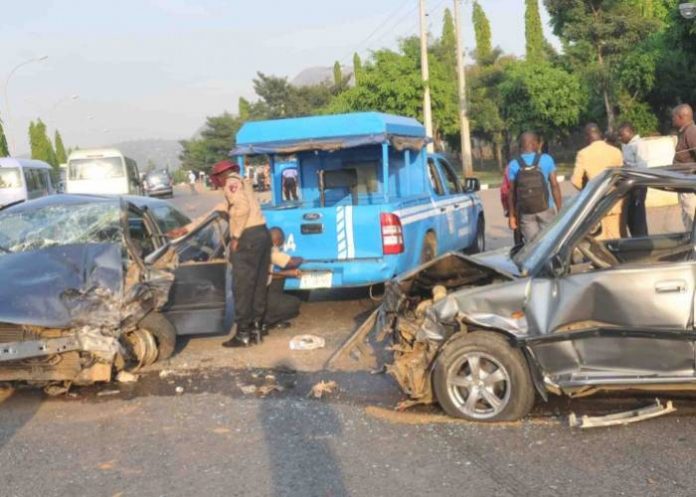
An auto crash in Kano has led to the death of at least 18 persons, a development that brought tears to the eyes of their loved ones and relatives.

The traumatic incident reportedly occurred along Kano-Ringim Road in the Gabasawa local government area of the state.

The sector Commandant of the Federal Road Safety Corps (FRSC), Ibrahim Abdullahi, had confirmed the journalists about the accident.

He stated that the accident involved a total of 35 passengers in two buses, out of which 18 were burnt beyond recognition while 12 others sustained serious injuries.

“We received a call about the accident at about 8:35 p.m. on Friday and dispatched our personnel to the scene to rescue the victims,’’ Abdullahi said.

He further stated that some of the deceased were given mass burial at the accident scene, and others were handed over to their relatives.

Ibrahim said the injured victims were taken to Murtala Muhammad General Hospital, Kano.

Return to Forever: African Studies in Europe

By Prof. Abdalla Uba Adamu

Frankfurt, Germany. 3rd July 2013

The German immigration officer looked at me and gave the usual clenched-mouth smile. I did the same. I am used to it. He flipped through my passport and then looked up.

“How many days are you staying THIS time.” Emphasis on THIS.

“Two days in Cologne”, I replied. “Today, tomorrow, and the day after that, I am off.”

He stamped the passport without asking for the usual – return ticket, invitation, hotel booking – all of which I had. He wished me a pleasant say and waved to the next person behind me.

I was then in Cologne to attend the valedictory retirement conference held in honour of the woman who mentored me and virtually adopted me as her son – Heike Behrend, who was retiring from the Institute of African Studies, University of Cologne, Germany, where she was the Director. She created the research category of “Media and Cultural Communication”, and I was the first African to be invited to deliver a lecture at the cluster. The Immigration Officer’s reference to the length of my stay was in response to the numerous times I had been to Germany – and never stayed beyond the time necessary for whatever it was that brought me.

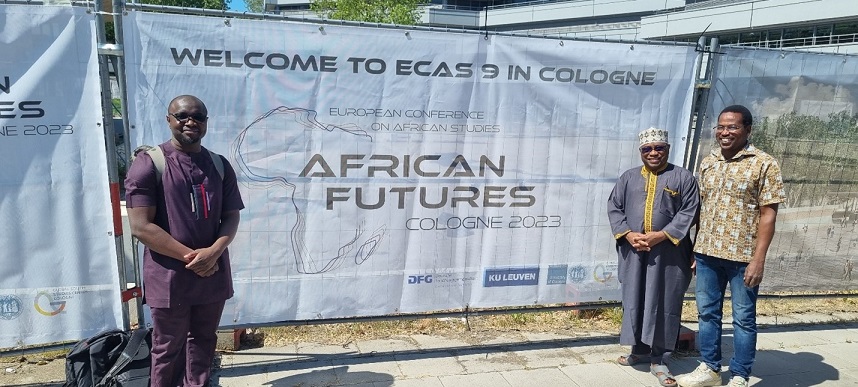
The week from Tuesday, 30th May to Sunday, 4th June 2023, I returned after ten years. This time, the occasion was to attend ECAS2023: 9th European Conference on African Studies, with the theme of “African Futures.” It was hosted by the University of Cologne. “African Futures” explores the continent’s critical engagements with the past, present, and future of Africa’s global entanglements. ECAS is the largest and most visible single event under the AEGIS umbrella. AEGIS is an expression of a much wider and dynamic set of African Studies connections, collaborations, activities and opportunities within and beyond Europe. The conference, lasting four days, had over 70 panels involving hundreds of papers and speakers. All were efficiently coordinated through the various classes at the University of Cologne.

Earlier in the year, I and colleagues from Germany and US had submitted a panel, “Digital/social media and Afrophone literature”, for consideration at ECAS 9. It was accepted.  The conveners were me (BUK), Uta Reuster-Jahn, Umma Aliyu (Hamburg) and Stephanie Bosch Santana (UCLA). Before submitting our panel to ECAS, we first held an online symposium which was preceded by a call for papers. Despite sending the CfP to various universities and the Nigerian Academy of Letters (NAL), the response was pretty poor. The symposium was titled Social Media as New Canvas, Space and Channel for Afrophone Literatures. It was eventually held online at the University of Hamburg, Germany, on 22-23 February 2023. The participants then were from Germany (Uta Reuster-Jahn, Umma Aliyu Musa), Nigeria (Abdalla Uba Adamu, Zaynab Ango, Ado Ahmad Gidan Dabino, Nura Ibrahim, Asabe Kabir Usman, Isyaku Bala Ibrahim), Tanzania (Hussein Issa Tuwa, Zamda Geuza), Ghana (Nikitta Dede Adjirakor), Stephen Ney (Canada), US (Stephanie Bosch Santana).

After the symposium, we submitted a panel for the ECAS 9th edition. Our panel was accepted, and all the participants of the online seminar were issued official letters of invitation to process their funding for the conference in Cologne in June 2023. As a panelist, I was fully funded to attend by Deutsche Forschungsgemeinschaft (German Research Foundation, DFG). Umma and Uta were able to sponsor themselves from Hamburg. Unfortunately, only Nikita from Ghana was able to come from the others who could not get any funding. As a result, our panel, held on Wednesday, 31st May 2023, had only four speakers. It was déjà vu all over again – after almost 24 hours of flying and waiting at airports (Kano, Abuja, Doha), I was given only 20 minutes for the presentation.

My paper was “From Kano Market Literature to Kano Social Media Literature: The Reincarnation of an Afrophone Literary Genre.” The paper traces the trajectory of the genre from print media to its liberation in online media, with a specific focus on Facebook, Wattpad and APK files on Google Play. The paper uses netnographic methodology to harvest the dominance of and reaction to the newly reincarnated genre, which, far from being dead and buried, is more than ever before, alive and kicking in other spaces – beyond censorship or any form of criticism. In the process, the paper explores the freedom gained by the authors in unrestricted storylines that cross boundaries of identity, gender and alternative sexualities.  The Journal of African Literature Association (curated by Taylor and Francis Group) has agreed to publish the papers of the Symposium in 2024. We will have to ask for more contributors.

Another dividend for me was that I was approached by a representative of Lexington Books in the US for the possibility of publishing my paper as part of a book on Hausa media cultures if I have something like that. As it happened, I have almost completed such a project titled “Hausa Cinema” (to complement Jonathan Haynes’s book, “Nollywood”) which was to be published by the Ohio University Press in 2010, but things went southwards! Now Lexington Books is providing an opportunity, and I am excited about it.  

Our panel was lively, though, and I even met a fan! He was Jos Damen, Head of the Library and ICT Department of the African Studies Centre at the University of Leiden. While I was making my presentation, he took my picture with his phone and uploaded it to my Wikipedia page (itself created by another fan)! Later he told me I needed to have a picture there, and he took that responsibility. So it was kind of him!

The conference attendance was a fantastic homecoming for me because although Heike Behrend had retired back to Berlin, where she came from (and where I visited her in 2015 had a wonderful dinner when I was a guest of the Haus der Kulturen der Welt, Berlin), Muhsin Ibrahim is now in the same institute. Both Muhsin and I were from Bayero University Kano. Muhsin was teaching Hausa at the Institute.

I first came to Cologne in 2004 – at the invitation of Heike Behrend when I met her in Kenya. At that time, I had an invitation to participate in an African Literatures project at Johannes Gutenberg University, Mainz. Heike asked me to reroute my itinerary to stop at Cologne, teach a Postgraduate class and give a public lecture. I did both on Monday 15th November 2004. Since then, I have almost lost count of the times I visited Germany – Berlin, Freiburg, Hamburg, Leipzig, and the wonderful Cologne with its incredible, massive and stupendous cathedral – the largest Gothic church in Northern Europe. It was in Cologne in 2004 that the foundation of my ethnographic foray into critical media studies was laid. Unlike in Nigeria, where many saw me as an ‘interloper’ (as they murmur, ‘After all, he is a Biologist, isn’t he?’), here it is not what you study but what you can contribute to any discipline. I have been to Colone four times and other cities several times – all on the same mission of promoting Hausa media studies.

ECAS 2023 started wonderfully with Muhsin meeting me at the Koln Hauptbahnhof and helping me drag my luggage through various concourses to the trains that would take us to his flat: a very lovely well-furnished, and very spacious space. Upon arriving and freshening up, a massive mountain of uncharacteristically fat masa was waiting for me. Even the masa looks like a ‘Bajamushiya’! The soup alone could feed a family for a week! It was a truly delicious welcome. Once I got rid of the hunger, he took me to my hotel, IBIS Centrum.

Breakfast in the morning at the hotel saw a meeting of Who-is-Who in African studies – both diasporic Africans, home-based Africans and European and American researchers. It was indeed a wonderful gathering. In addition, I had a chance to reconnect with one of the most promising diasporic Hausa African Studies experts – Musa Ibrahim.

Musa is based in Ghana. He travelled there through South Africa and Japan, ending up in Bayreuth, Germany, where he obtained his doctorate. We met at Leipzig in 2018, and I collected his CV with the hope of getting him employed in our Information and Media Studies department, Bayero University Kano. However, the university was not interested. Before you knew it, he was grabbed by the University of Florida, Gainesville, where he spent about three years before getting another appointment at the University of Ghana. Such rich and varied experience would have been valuable to us in Kano, but the parochialism of our university system did not factor in multidisciplinarity.

The following day saw dinner at Muhsin’s house, and this time, Umma Aliyu, originally from Bauchi, joined us. Umma now lives and teaches in Germany at the University of Hamburg (after her studies at Leipzig). Like Muhsin, she also teaches Hausa at Hamburg, where she took over from Joe McIntyre (Malam Gambo), who retired some time ago. During dinner, we brainstormed the idea of two book projects – which, for me, was one of the significant takeaways from ECAS9.

Muhsin, Abdalla and Musa at ECAS9, Cologne

The first book project would be tentatively titled “Hausa Studies in European Diaspora: Experiences and Perspectives.” This will be a collection of chapters written by Hausawa living and working permanently in various European universities, either teaching Hausa or other disciplines.  The objective is to demonstrate how internationalised Hausa scholarship is. We started with about five in Germany alone.

The second book project would be a post-Boko Haram narrative. So far, the Boko Haram literature has focused on the human disaster of the insurgency – virtually all books written were from the governance, security and disaster perspectives. Yet, much success has been and is being recorded in the war against terror in the form of surrenders, deradicalisation and reintegration. Yet, no one is looking at this. Using ethnographic field data, the book project will provide another side of the war on terror in Nigeria. We were excited and promised to work on various draft proposals before embarking on the works, which we hope will be completed by 2025.

The Conference’s overwhelming focus on the multidisciplinarity of African Studies was an eye-opener—no room or time for a narrow perspective on scholarship. No one cares about what your degrees are in – what matters is what you are bringing to the table NOW and how it impacts the knowledge economy of African societies and contribute to the decolonisation narrative.

For me, Cologne is a Return to Forever – the beginning of an endless loop of research and investigation.

My deepest thanks to Muhsin for being such an excellent, graceful host.
On demolishing and restoration of order in Kano

By Mansur Hassan, PhD.

The abuse of the Kano State master plan during the administration of Governor Abdullahi Umar Ganduje has led to a proliferation of illegal structures. These include shops built within school premises, encroachments on mosques, hospitals, graveyards, and other areas not designated for such purposes.

Urban planning principles dictate that every city should have distinct residential, commercial, educational, and industrial areas. In line with his campaign promises, Governor Abba Kabir Yusuf’s decision to demolish these structures is a step in the right direction, aimed at restoring order and proper planning in Kano State.

Urban planning is crucial for the development of sustainable and functional cities. A well-designed master plan ensures that cities function efficiently, with designated zones for different purposes.

Residential areas provide housing and essential amenities, commercial areas drive economic activities, educational areas facilitate learning, and industrial areas promote economic growth and employment opportunities.

Under the Ganduje administration, the master plan of Kano State was severely abused. Illegal structures were erected without regard for zoning regulations, leading to numerous consequences. Shops built within the compounds of existing schools not only compromised the safety and security of students but also disrupted their learning environment.

Encroachments on mosques and hospitals within residential areas caused congestion and noise pollution, disturbing the peace and privacy of residents. Additionally, the encroachment of graveyards demonstrated a lack of sensitivity and respect for the deceased and their families.

Governor Abba Kabir Yusuf’s decision to demolish these illegal structures is a positive and necessary step toward restoring order and rectifying the abuses that occurred under the previous administration. By adhering to his campaign promises, the governor demonstrates a commitment to responsible urban development in Kano State.

The demolition of illegal structures will yield several benefits. It will reinstate order and organization, as buildings will be appropriately placed within designated areas. Schools will regain their intended space, ensuring a safe and conducive learning environment for students.

Governor Abba Kabir Yusuf’s commitment to demolishing these illegal structures helps restore public trust in the government’s ability to enforce regulations and ensure responsible urban planning. It also highlights the governor’s long-term vision for the sustainable development of Kano State.

By adhering to the master plan, the government can effectively manage the city’s growth and expansion while meeting the needs of its residents. Governor Abba Kabir Yusuf’s decision to demolish illegal structures in Kano State represents a commendable effort to restore order and proper urban planning.

By rectifying the abuses that occurred under the previous administration, the government aims to create a more organized and functional city. This action reflects the governor’s commitment to fulfilling his campaign promises and ensuring the long-term development of Kano State.

As the city progresses, prioritizing adherence to the master plan will foster sustainable growth and improve the quality of life for all residents.

Mansur Hassan, PhD is a lecturer in the Department of Mathematics, Yusuf Maitama Sule UniversityHe can be reached via mhassan@yumsuk.edu.ng

Seeking sustainable solutions in Kano

By Mukhtar Jarmajo

The new administration in Kano has embarked on a commendable mission to reclaim the lands around schools that were allegedly wrongly sold out by the past government. Such action is important for the protection of public resources and the promotion of quality education. However, demolishing the shops built around the schools may not be the best approach to solving the environmental crisis created by the encroachment.

While it is understandable that the new government wants to send a strong message to potential land grabbers and illegal developers, demolishing the shops may cause unintended consequences that could hurt both the affected traders and the government. For example, many shops were legally acquired by small business owners who may have invested their life savings and borrowed money from banks to establish their businesses. Destroying their livelihoods without proper compensation or alternatives could lead to social and economic unrest.

Furthermore, destroying the shops may not solve the problem of encroachment. Once the shops are gone, the empty spaces may attract new forms of illegal settlements or waste dumping, further depleting the environment and posing health hazards to students and residents. Therefore, a more strategic and holistic approach to Kano’s environmental and economic challenges is needed.

One possible solution is to engage architectural and environmental experts to design sustainable solutions that could improve the safety, aesthetics, and functionality of the schools and the commercial spaces around them. For example, the shops could be redesigned to allow more natural ventilation, lighting, and greenery, enhancing the microclimate and reducing the need for air conditioning and artificial lighting. The shops could also be integrated with the schools’ curricula and activities to promote entrepreneurship and civic engagement among students and teachers.

Another solution is for the government to acquire the shops and lease them out to qualified and responsible entrepreneurs who could operate them under certain conditions, such as payment of rent, taxes, and adherence to environmental and safety standards. Such an approach could generate revenue for the government, support small businesses, and foster a culture of responsible commercial activity in Kano.

Preserving our schools and small businesses requires a collaborative and creative effort from all stakeholders, including government officials, planners, architects, investors, traders, and residents. We must resist the temptation to resort to destructive means of solving complex problems and instead seek sustainable and inclusive solutions that benefit our communities and environment.

The demolition of shops around schools in Kano may seem like a quick fix to the encroachment problem, but it is not a wise or ethical solution. Instead, we should explore innovative and sustainable ways to protect our public resources, promote quality education, and support responsible entrepreneurship. Let us preserve our schools, our small businesses, and our dignity.

Jarmajo wrote from Wuse, Zone 2, Abuja. 

Man dies on pole while repairing cables in Niger

By Uzair Adam Imam

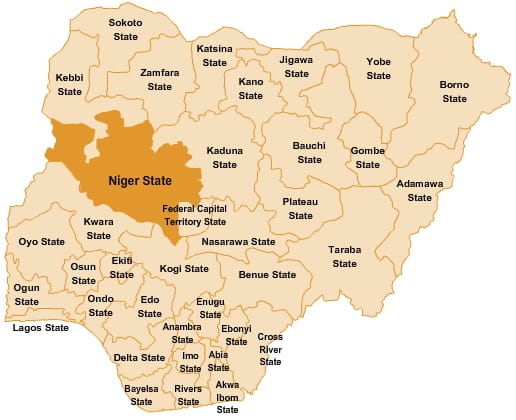
A young electrician identified as Alhaji died while repairing faulty cables on electric poles in Niger.

The incident happened on Thursday in Soje B. Area of Minna, Niger State, at around 3pm.

The man was said to have been specialised in preparing home electrical appliances and had died on the spot after being electrocuted.

The residents who spoke to the journalists in the state said that the efforts to save his life were not successful.

However, one of the witnesses, Aliyu Jibrin, stated that “No one knew he was electrocuted on the pole until his lifeless body fell from the top of the pole.”

13-year-old boy drowns in Kano pond

By Uzair Adam Imam

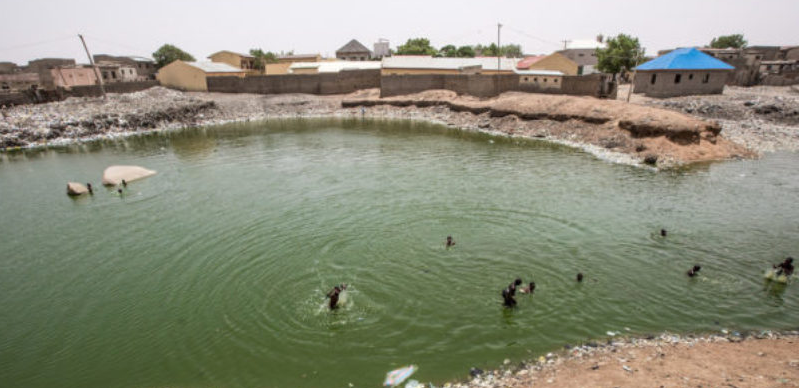
Yusuf Magaji, a 13-year-old Almajiri boy in Kano, breathed his last on Friday when he slipped into a pond and drowned to death.

The boy and his fellow students were said to have been washing around the pond when he slipped and fell inside.

According to the Kano State Fire Service Spokesperson, Saminu Yusuf Abdullahi, the incident occurred in Makugara Village of Karaye Local Government Area of Kano State.

Abdullahi said their office at Karaye received an emergency call from Malam Nafi’u Na Adama, who reported the incident.

According to him, the students were said to be on their way to one village when they stopped beside open water to take their bath, “but very unfortunately, he slid into the river.”

He further stated that the victim was retrieved unconsciously and conveyed to the Karaye Specialist Hospital, where he was later confirmed dead by the doctor.

Nigeria politics and the Stockholm Syndrome effect

By Muhammad Salisu

In 1973, there was a bank robbery in Stockholm, Sweden. The robbery turned into hostage-taking. The hostages, however, later became sympathetic defenders of the perpetrators. This incident and its aftermath would later lead to the coinage of the psychological disorder known as Stockholm Syndrome.

A similar incident happened in which an American named Patty Hearst was kidnapped by a terrorist organisation called Symbiotic Liberation Army. Ms Hearst became sympathetic to the organisation and joined them in bank robberies.

Recently, in Nigeria, a train was attacked by bandits, and many of the train’s occupants were kidnapped. One pregnant victim was later released. However, in an interview, she defended the kidnappers’ actions. She literally became their mouthpiece.

Kidnapped victims may defend their kidnappers due to so many reasons. For example, it may be out of fear and so on.

Turning to the Nigerian political parlance, the Nigerian political class has, since time immemorial, held their masses hostage. The rulers loot public treasures; people are enslaved and impoverished. The ruling class enrich themselves and their families at the mercy of the masses. However, you find the masses who are the victims supporting the rulers.

In Nigeria, there are many reasons why people glorify those who enslave them. It may be to get what to eat; it may be because the ruler is from one’s family, religion, political party, region, or tribe. It may also be a clear case of Stockholm Syndrome!

Muhammad Muhammad Salisu wrote via muhdibnmuhd@gmail.com.