Month: June 2023

Jigawa State signs MOU with Zinder of Niger Republic on integrated livestock

By Muhamamad Suleiman Yobe

In her effort to protect lives and properties of its people,  Jigawa State Government has signed a Memorandum of Understanding (MOU) with Zinder State of Niger Republic on integrated and secure livestock and pastoralism in West Africa region.

Governor Umar Namadi, who signed the agreement while opening a three-day workshop on behalf of the jigawa state Government, said that the MOU will benefit the state and its people in curtailing criminal activities.

The Governor, who was represented by his Deputy, Engineer Aminu Usman Yusuf added that Nigeria has many challenges as cattle entered the country through illegal borders, by this development  there will be a control of farmers and Herders conflict.

In his remarks, the special guest and Governor of Zinder, Lawal Amadu  Madugu, thanked the Jigawa State Government for actualizing the existing cordial relation between the two state, and promised to work together to achieve the desired objectives.

Some of the boarder communities suggested the possible ways of overcoming the trans boarder problems with a view of finding of lasting solution to the menace.

Among the attendees include top Government officials and traditional rulers from both states and countries.

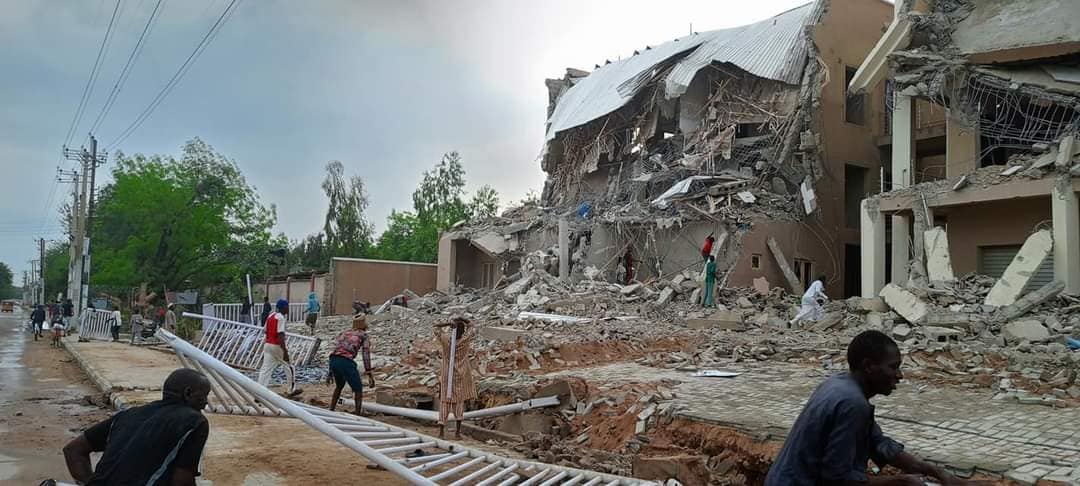
Counting the cost of Kano demolitions

By Mohammad Qaddam Sidq Isa (Daddy) 

Notwithstanding the appropriateness or otherwise of the recent and unprecedented wave of demolitions in Kano by the newly inaugurated governor, Abba Kabir Yusuf, it may have triggered a vicious circle of the incumbent governors and their predecessors taking turns revoking, converting and reallocating public land and facilities in the state. 

Though purportedly guided by relevant legislation and overriding public interest, successive Kano state governors have been involved, to various extents, in controversial public land and facility-related scandals. However, the immediate past governor, Abdullahi Umar Ganduje, having literally overdone it, has been particularly notorious in this regard. 

Now with the recent demolitions, Governor Abba has proven that it’s indeed his turn. The way they were conducted, which made the operation look more like mob action, has been effectively set as a precedent for future similar operations in the state. 

So, unless this looming vicious circle is averted, Kano may, after every four or eight-year tenure, witness similar operations with persistently worsening intensity and impacts.   

Having monitored the situation from afar, thanks to the viral video clips on social media, I felt not only sad but extremely embarrassed watching helplessly how my city, a supposedly aspiring mega city, was being systematically bastardized.

I watched in shocked dismay how the lives of innocent traders, who simply happened to be tenets in the targeted buildings, were being turned to, perhaps, perpetual misery overnight by crowds of sadist creatures feigning being human looting their (traders) merchandise. Some buildings had already been looted even before the demolition team got there. There are verified heartbreaking stories about the plights of many victims. In a particular instance, one was reliably reported to have gone mad out of frustration. 

The sheer ferocity with which the mob plundered traders’ goods suggests deep-seated populist sadism and sheer envy in a society where tacit gloating over the misfortune of any real or perceived wealthy person has become normal. I have also observed tacit attempts on social media by many otherwise reasonable people to underestimate the plights of the victims and even put the blame on them for their ‘failure’ to evacuate their goods in time. 

Meanwhile, the cumulative impacts of this vicious circle on the state’s economy and other strategic interests cannot be overestimated. It’s already seriously affecting local investor confidence, for no one will consider the viability of any significant investment, especially in, say, real estate development and other related sectors, knowing that the land allocation is prone to arbitrary revocation and the structures are subject to impulsive demolition at any time. 

Equally, banks and other financial institutions will have to discontinue recognizing Kano government-issued certificates of property ownership as collateral, knowing that they may at any time be rendered as worthless as takardar tsire. 

Likewise, the state’s attractiveness to direct foreign investment (if there is currently any) will be hit even harder, for no prospective foreign investor, being typically particularly sensitive to any red flag suggesting policy inconsistency, will consider investing in Kano knowing that whatever policy or incentive attracted him can be impulsively terminated at any time. 

Now, obviously, Governor Abba is aware deep down that that wasn’t how he was supposed to handle the situation in the first place. His approach is enough to vindicate those who insist that he is simply on a vengeance mission with a premeditated resolve to settle scores with political opponents and their associates on behalf of his political godfather, Rabi’u Kwankwaso. 

He can address whatever land use abuses his predecessor committed, which are so many, by the way, but he should do it in a civilized way through due process leading to the demolishing of what indeed deserves to be demolished and sparing what deserves to be spared for the purpose of reclaiming and converting it into a public facility. 

Mohammad Qaddam Sidq Isa (Daddy) wrote from Dubai, UAE, and can be contacted via mohammadsidq@gmail.com.

Windstorms kill two, destroy over 20 houses in Jigawa

By Muhammad Suleiman Yobe

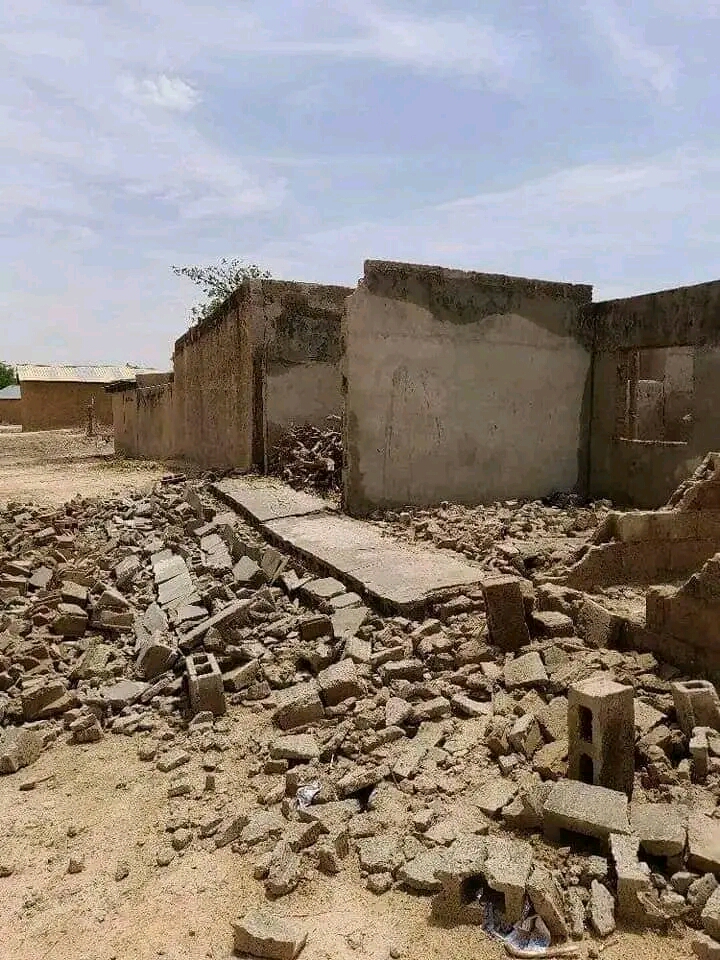
Heavy rainfall and strong winds destroyed more than 20 houses, killing two people and injuring many others on Tuesday in Araba and Hambarawa towns in Ringim local government area.

The chairman of Ringim local government, Alhaji Shehu Sule Udi, confirmed the incident today while answering questions from our correspondent.

He said the incident started around 1 o’clock on Monday while experiencing the first heavy rainfall of the year.

He said that the incident affected the Araba and Hambarawa community, where information confirmed that there was two loss of life, severe injuries and the destruction of houses.

Alhaji Shehu Sule Udi assured their readiness to support the affected community to ease their suffering from the windstorms.

For their part, the people affected by the disaster have asked the government to provide immediate assistance.

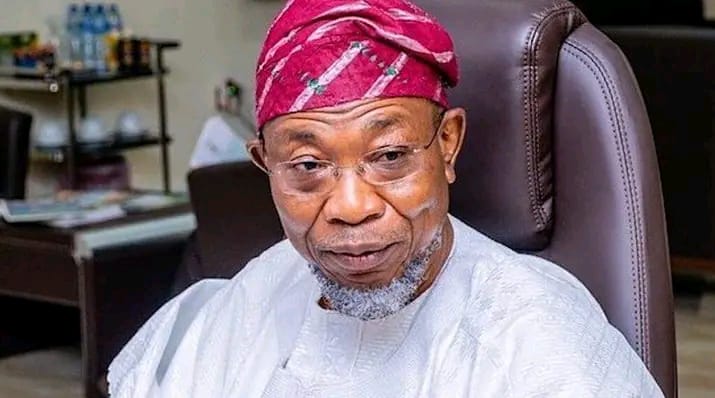
Aregbesola seeks forgiveness, says he is back to restructure Osun APC

By Ahmad Deedat Zakari

Immediate past Nigeria Interior Minister and two-term governor of Osun State, Abdulrauf Aregbesola, has disclosed that he is back to restructure the All Progressives Congress (APC), in Osun State.

On Wednesday, Aregbesola made his intention public while addressing party faithfuls at the Nelson Mandela Freedom Park, Osogbo.

The former governor sought forgiveness of the party party members and stated that it is time for restructuring and reconciliation in the party.

He noted that he did not offend anybody, but said, “whoever feels that we offend him or she should forgive us.

“We seek forgiveness from those who thought we offended and those who sought our downfall.”

“We were here in 2019 after the Supreme Court affirmed the mandate of the former governor, Gboyega Oyetola. I called for unity in the party. I warned that disunity will not produce any good result. But devil didn’t allow them (those who handled the party affairs) to listen.

“We seek forgiveness from those who are smearing our image, though we never offended them.

“We supported them with all I have to see to their success. I didn’t ask for anything from them. I need to emphasize that I didn’t ask for anything from them. But they chose to repay evil for good.

“However, we are here for the restructuring of the party. That is why we are begging anybody that feels that we offended him or her to forgive us.”

Breaking: Lionel Messi joins American side, Inter Miami

By Muhammadu Sabiu  

Argentina captain Lionel Messi has joined an American side, Inter Miami, after parting ways with the French club, Paris Saint-Germain (PSG). 

According to Fabrizio Romano, Messi will make an announcement about the new club he has joined in a few hours. 

Reporting on his official Facebook page today, Romano wrote, “Lionel Messi to Inter Miami, here we go! The decision has been made and it will be announced by Leo in the next hours. 

“Messi will play in MLS next season. No more chances for Barcelona despite trying to make it happen.” 

Recall that before this year’s Ligue 1 campaign came to an end, it was already announced that Messi would not continue at PSG. 

There were speculations that the 7-time Ballon d’Or winner would return to his former side, Barca, but the deal wasn’t sealed by the two parties.

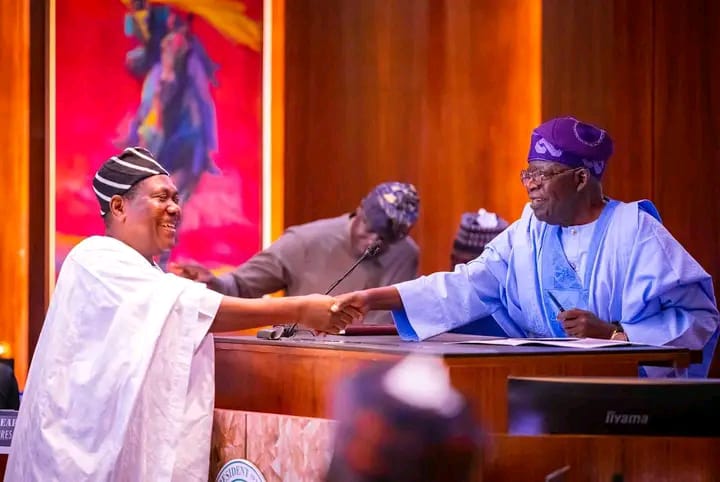
Tinubu swears in George Akume as SGF

By Ahmad Deedat Zakari

President Bola Ahmad Tinubu on Wednesday administered oath of office to the newly appointed Secretary of the Government of the Federation (SGF), Senator George Akume

Senator George Akume, a former senator and governor of Benue State, was appointed to serve in the role barely a week into Tinubu’s administration.

The new SGF took over from Boss Mustapha, who preceded him in office.

The brief event was held at the Presidential Villa and had the Vice President, Kashim Shettima, Senate President Ahmad Lawan; and some serving and former governors in attendance.

The President also took to his verified social media platforms to eulogize the new SGF, whom he described as a distinguished public servant whose services in his new role will benefit Nigeria.

He wrote:

“It was with great pleasure that I, today, administered the Oath of Office and Allegiance to Senator George Akume to mark his official assumption of office as the Secretary to the Government of the Federation.


“As a distinguished public servant who has demonstrated exceptional leadership qualities and a deep understanding of the workings of government, I have no doubt that Senator Akume’s service in the new position will be to the benefit of our nation.”

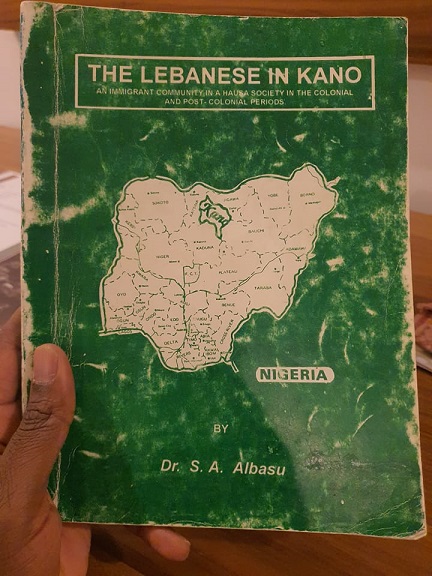
Book Review: The Lebanese in Kano

By Dr Shamsuddeen Sani

I thought The Lebanese in Kano: An Immigrant Community in a Hausa Society in the Colonial and Post-Colonial Periods merely contained a handful of newspaper tales. I was mistaken! Within its pages lies a meticulously researched body of work, a testament to the cultural heritage of Kano that begs to be savoured and preserved for generations to come. It has profound glimpses into the very foundations of Kano’s societal evolution as it illuminates the paramount role played by the Lebanese community in the rich Kano’s historical traditions.

This book, published in 1995 and authored by S.A. Albasu, unfolds with an intricate chronology of eight captivating chapters. As the introduction sets the stage, the initial chapter gracefully delves into the existing body of literature on migration, skilfully intertwining it with the historical fabric of West Africa and Nigeria. Embracing a tangent in the second chapter, Albasu illuminates the emigration of the Lebanese into Kano, beginning in the mid-19th century.

However, a pivotal juncture in Lebanese history within Kano emerged in 1920, a defining moment marked by profound geographical and religious divisions among the Lebanese migrants. The historical catalysts propelling Lebanese emigration into Nigeria were meticulously examined within this segment.

It becomes apparent that prior to the 1920s, the Lebanese immigrants in Kano predominantly belonged to the Maronite Christian community. It is only after this period that a demographic shift occurs, welcoming the arrival of Muslim Lebanese, particularly those of the Shiite sectarian extraction hailing from southern Lebanon. The book exposes the reader to the sociocultural intricacies of the Lebanese community’s towns of origin and unravels the fabric of their society, dispelling prevailing myths.

The entire Lebanese migration into Kano is thoughtfully categorised into four distinct phases, each meticulously explored with great detail: 1890-1903, 1903-1912, 1912-1920, and the 1930s during the tumultuous period of the great depression. Each of these phases represents a significant milestone in the history of the Lebanese community within Kano, as well as its impact on the city’s socioeconomic development.

Subsequent chapters of this book delve into the physical establishment of the Lebanese community, intricately entwined with crucial historical policies such as colonial taxation, the indirect rule system, and segregation policies.

Chapters four, five, and six embark on an exciting journey, covering the consolidation of the Lebanese community within Kano’s vibrant business milieu. From the thriving cattle trade to the realms of Kolanut and groundnut businesses, the book unfurls the profound influence of factors like colonial intervention, the upheaval of the Second World War, Nigeria’s independence, and the burgeoning national consciousness. The book has revelations of ground-breaking nature, leaving you enlightened and astounded, and for me, every piece seamlessly falls into place now.

A glimpse into Abdulhamid’s exceptional, short life

By Adamu Muhammad Burga

As I scrolled down my Facebook newsfeed on Thursday, 11th May 2023, I came across a post that reads, “Indeed we belong to Allah, and to Him we shall return”, and another one that reads, “Losing a good friend like Abdulhameed leaves a scar in the heart that never wanes,” and lots more. They left me agape and confused. Why? They were all attached to the same photo, Abdulhameed’s photo. My shock amplified when I checked my WhatsApp status updates to realise the same thing was happening. I know how death news sounds in peoples’ hearings and hearts, but mine couldn’t believe what I saw. It all seemed to be like a dream to me. 

Yet I called a friend out of sheer confusion to verify whether what I read was true, to which he answered in the affirmative and consoled me. I had one minute of silence before I moved on with my daily routines, still thinking that the news could be a fake one or maybe was mistaken for someone not Abdulhameed. Or perhaps it would later be retracted. ‘How could this be true about someone I visited a few days ago?’ is the question I had been asking myself for a while. 

It had also come to my notice on the day he passed away that a river miles away from my residence claimed a boy’s life. The devastating news saddened me, and why wouldn’t it? The boy was drowned on the day WAEC exams commenced, of which he was a candidate. He even had the wherewithal to sit the exam in the morning before he ‘answered the call of his Lord’. However, I was more shocked by the former’s demise than the latter’s. 

Friends and friends are two categories of people your life can never be devoid of. With the little I know about Abdulhameed’s life, I can conclude that the number of his friends and allies outnumbers that of friends. And this is one of the whys that made me pen this tribute to give a mere exposure to this great personality and exemplary icon — Rahimahullāh.

Abdulhameed was one of the unusual ones. He was resilient. Diligent. Jovial. Religious. Hardworking. A man in whose veins kindness flowed. A true optimist. An exceptional conservationist. 

Abdulhameed was so many different things. A teacher. A student. A Hafidh. A brother. A tech. An exceptionally proud member of the MSSN who served almost at all levels. And a great, a truly great man at diplomacy. And he was most likely a lot more than that. 

But there was one thing Abdulhameed wasn’t. And that’s afraid. Abdulhameed wasn’t scared of his challenges. Of being judged by people. He wasn’t afraid of friendship. A good laugh. He was never scared of a good time. A hard time. Or consequences of his good actions. Or of an impossible task. Or any kind of danger on the right course. And he certainly wasn’t afraid of doing the right thing. Ever.

No matter how hard life was for Abdulhameed, Abdulhameed loved life back. He embraced it without reservation, regret or remorse. And that’s rare, very rare among people of his time.

I wish more people were kind-hearted, diplomatic and easy-going like Abdulhameed. They’re the things about him I’ll miss the most besides his smiles. And I hope it’ll be some time before all my memories of him start to fade.

I remember the last time I visited him. I remember the smiles. I remember his beaming countenance, which told me I’d miss him when he passed. Little did I know that he was bidding me farewell. I wish I had bidden my final adieus to my friend as he bade me his before he left. But, unfortunately, I couldn’t. I failed. 

Having heard different stories of the deceased from other people from different angles, I believe that I’m not having a ‘single story’ of him, as put by Chimamanda Ngozi Adichie, nor am I satisfied with my only story of him. 

These few lines may not richly tell who Abdulhameed was, as they are, but what I have been able to gather from personalities and territories reachable to me. It’s just the tip of the iceberg. And I’m pretty sure there’s more to come—in sha Allah. I pray that Allah forgives his imperfections, provides him with a unique dwelling in Jannah, and gives fortitude to the bereaved.

And after all, ‘we’re all not here for a long time. We’re here for a good time’. May Allah make our ending a good one. 

Adamu Muhammad Burga writes from Bauchi and can be reached via or at abuzharrin212@gmail.com.

Subsidy Removal: A welcome development for Nigeria and its people

By ImamMalik Abdullahi Kaga

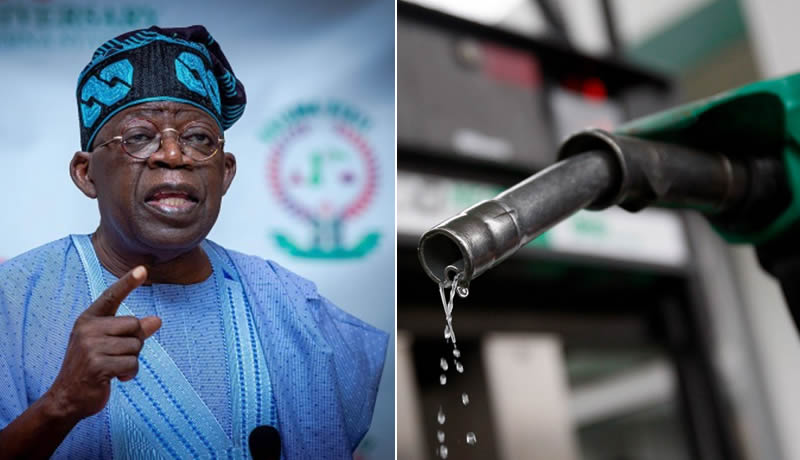
The removal of fuel subsidies has been a hotly debated and controversial topic in Nigeria for many years, especially now that President Bola Ahmed Tinubu has made the pronouncement. For the longest time, fuel subsidies represented a significant portion of government expenditures, and many Nigerian leaders refused to remove them for fear of political backlash from their citizens. However, President Tinubu’s bold decision has been a critical step towards transforming the Nigerian economy and helping the poor.

The Nigerian government spent an average of  $6.2 billion annually on fuel subsidies, and despite this, the country’s economy did not improve significantly. The fuel subsidy was primarily a means of subsidising fuel prices for Nigerian consumers, and the government aimed to keep the domestic fuel prices low, which, in turn, would help fight inflation and improve the economy. However, the fuel subsidy did not achieve this goal; instead, it distorted the market, leading to corruption, smuggling, and inflation.

Furthermore, fuel subsidies are often perceived as socially unjust because it benefits wealthier individuals more than the poor.  Studies have shown that the richest 10% of Nigerians receive up to 60% of the subsidy, while the poorest 10% only receive 1%.

It is well-known that the country’s wealthy motorists and industries benefit most from the subsidy, not the poor. Hence, the benefit did not trickle down to the poor but only helped the rich acquire fuel more cheaply. However, since most of the poor Nigerians are not benefitting from the fuel subsidy, it’s a commendable effort that the president made.

The removal of the fuel subsidy will create jobs in the downstream sector, increasing the availability of fuel and reducing smuggling, which will contribute significantly to the Nigerian economy’s growth.

Moreover, the government’s removal of the fuel subsidy will allow it to redirect the average amount, $6.2 billion, towards investing in critical sectors such as education, healthcare, agriculture, security, and infrastructure, which will help reduce poverty levels and create employment opportunities for Nigerians. The government’s commitment to investing in these critical sectors will reduce the dependency on oil, the country’s primary source of revenue, and make the economy more resilient to oil price fluctuations.

Tinubu’s fuel subsidy removal will also reduce government corruption, a significant problem in Nigeria. With the fuel subsidy, many government officials’ fraudulently inflated the amount allocated to the subsidy scheme, which was further used to enrich themselves. Removing the subsidy will prevent the exploitation of government funds by corrupt individuals, which will be an essential step toward improving the Nigerian economy.

I urge Nigerians to be patient and prayerful as Tinubu Administration has a lot in store for us– poor Nigerians.

Subsidy removal: Kwara announces three-day workweek

By Ahmad Deedat Zakari

Kwara State Government has reduced workdays to three days for the state public servants. 

The Chief Press Security, Office of the Head of Service, Murtala Atoyebi, revealed the development in a press statement on Monday. 

According to Mr Atoyebi, the action became necessary owing to the need to put measures in place to cushion the effect of the removal of fuel subsidy on workers in the state.

Part of the statement reads:

“The State Head of Service, Mrs Susan Modupe Oluwole announced today that the State Governor, Mallam Abdulrahman Abdulrazaq, has directed that the workdays be reduced from five days to three days per week for every worker.

“Mrs Oluwole directed all Heads of Ministries, Departments and Agencies (MDAs) in the State to immediately work out a format indicating the alternating work days for each worker under them.

The Head of Service however, warned the workers not to abuse the magnanimity of the Governor, stressing that the regular monitoring of MDAs by her office would be intensified to ensure strict compliance.”