Month: June 2023

Phone snatching: Stakeholders lament challenges, proffer solutions in Kano

By Aisar Fagge and Uzair Adam Imam

Nothing could have been more worrisome presently in Kano than the menace of phone snatching that has become rampant, leading some analysts to describe the development as a pandemic gradually ravaging the peace in the state.

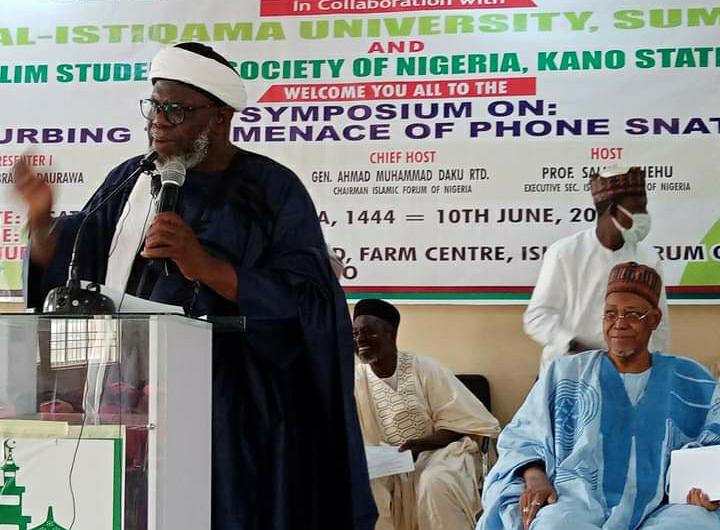
It was on this light that the Muslim Forum of Nigeria in collaboration with Al-Istiqama University, Kano, and the Muslim Students Society of Nigeria (MSSN), Kano State Chapter, converged for a meeting to discuss the way forward with a view to end the menace.

The symposium Saturday with the title “Curbing the Menace of Phone Snatching” has in attendance many people from all walks of the state, including security personnel, traditional rulers, analysts, journalists, Islamic clerics and university dons, to menton but a few.

Phone snatching has become a major security challenge in Kano state that continue to strike terror in the mind of the residents as thugs with deadly weapons spare no one during their ‘phone or life’ operation.

A shocking disclosure by the Kano State Police Command has indicated that from January to May over six hundred (600) phone snatchers have been arrested by security agents in Kano State.

Arrested culprits must be dealt with

The Secretary General of the Muslim Forum of Nigeria and the Vice Chancellor of the Al-Istiqama University, Kano, Professor Salisu Shehu, has called on the relevant authorities to ensure that the culprits arrested in the course of phone snatching be punished according to the provision of law.

He stated that, “There are two ways to address this menace: the problem can be tackled through government and our security personnel who will ensure the arrest and punishment of these armed thugs and; through this kind of symposium with the stakeholders to deliberate on the genesis and possible solutions of the syndrome.”

Professor Salisu added that for any nation or community to survive there must be people of knowledge who would think, study and analyse issues for the betterment of that society.

We must put hands together – traditional ruler

Also speaking at the event, Alhaji Ilyasu Mu`azu, the Ward Head of Sharada, said we should all put hands together before we could fight off phone snatching in Kano state.

“It is only through collective effort that we can address this problem,” he stated, adding that “traditional rulers should work hand in hand with security personnel through reporting happening and any suspicious act or individual involving in criminal activities in their area.”

The Kano State Emir, Alhaji Aminu Ado Bayero, who was represented by Dan Amar Kano, Alh. Aliyu Harazumi, has commended the organizers and also called on the district and ward heads to ensure working with the security personnel to help address the issue of phone snatching in the state.

However, the Public Relatios Kano Police Command, DSP Abdullahi Haruna Kiya, said all efforts by the police to address the issue are on top gear as their personnel were never reluctant.

I’ll not sign new deal at PSG—Mbappé

By Muhammadu Sabiu
 
In a stunning turn of events, Kylian Mbappé, the star forward for Paris Saint-Germain (PSG), has issued an official statement through the AFP agency confirming that he will not be signing a new contract with the club.
 
The announcement comes as a shock to fans and the football world alike, as negotiations had been ongoing for some time.
 
Mbappé’s statement unequivocally states, “I have NEVER discussed any contract renewal with PSG.” 
 
This statement contradicts the narrative that had been portrayed in recent months, suggesting that talks were underway regarding a potential extension of his contract.

Book Review: History of Imamship of Kano

By Dr Shamsuddeen Sani

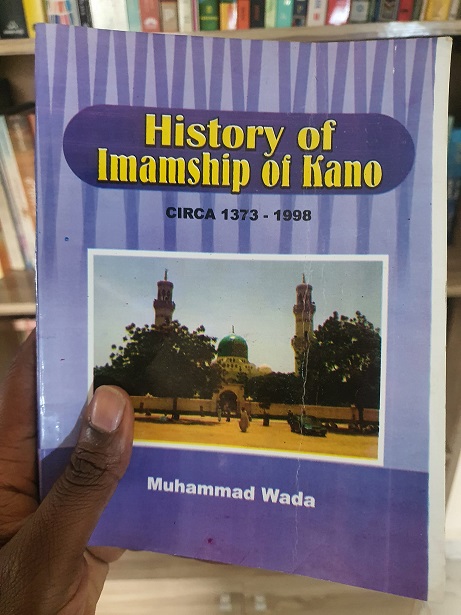
Where I got History of Imamship of Kano by Muhammad Wada is somewhat hazy in my memory, but it is an MA thesis that underwent a transformative process. The author undertook significant efforts to draw from diverse historical sources. This task merits recognition due to the inherent challenges associated with such an endeavour in the Kano historical tradition.

Despite its small physical size, this book ambitiously tackles a weighty subject matter. The initial chapter, which ideally should have served as a generous introduction, takes a look at the historical backdrop concerning the role of Imams within classical Sunni Islam. In doing so, it imparts valuable insights into their spiritual and intellectual significance. The second chapter charts the evolution of the Imams’ role within the classical religious culture of Kano before the advent of the Sokoto Jihad.

Commencing with the arrival of the Wangarawa during the 14th century, their influence played a pivotal role in the domestication of Islam as a state religion during that era. With the gradual expansion of their spiritual responsibilities and socio-political influence within the royal court, the Imams assumed a central position within the annals of Kano’s historical tradition.

The third chapter examines the transformative impact of the Sokoto Jihad at the turn of the 19th century, bringing about substantial changes to the role of Imams and how they were selected. These changes also served to define an expanded set of functions for the state-appointed Imam.

The author peppers fragments from the biographies of early post-Jihad Kano Imams alongside pivotal milestones punctuating their official lives. As the colonial powers exerted their influence in the early 20th century, the 4th chapter examines how the role of Imams underwent a notable shift, culminating in their formalisation within the judicial council, albeit with a subsequent reduction to primarily spiritual functions.

The book’s final chapter highlights the Imams and their ever-evolving roles from post-independence to the present. Moreover, it investigates the expansionist developments surrounding the establishment of Friday congregational prayer mosques across the state. While the book serves as a comprehensive introductory exploration of its subject matter, it might require additional intellectual depth that one might expect within broader, modern academic discourse.

There are also some ectopic clerical errors in the book that could have been identified and corrected before printing. While acknowledging the inherent challenge of achieving complete neutrality in historical works, it is reasonable to expect greater nuance and fairness in a work of this nature.

Dr Shamsuddeen Sani wrote from Kano. He can be reached via deensani@yahoo.com.

Official: Vinicius to wear number 7 jersey at Real Madrid

By Muhammadu Sabiu
 
Real Madrid forward Vinicius Junior will henceforth be wearing the number 7 jersey, shortly after the departure of Eden Hazard, whose jersey used to carry the number.
 
Before now, the Brazilian international’s jersey was number 20.
 
In a Facebook post via its official handle, Real Madrid uploaded a picture of the player wearing the number 7 jersey, attaching the post with an inscription signifying a change from “20 to 7”.
 
Recall that Eden Hazard had, in the last two seasons, had difficult and bad moments as his fame and performance were below average, leading Carlo Ancelotti, the Real Madrid manager, to bench him almost throughout the season.
 
Apart from Hazard, Karim Benzema and Marco Asensio also left for Al-Ittihad and Paris Saint-Germain, respectively.
 
However, in another development, the club has been able to complete a deal with Borussia Dortmund to bring in Jude Bellingham.
 
Also, Madrid’s loanee at Inter Milan, Brahimi Diaz, has been brought back by the Spanish giants.

As Governor Fintiri commences second term 

By Zayyad I. Muhammad

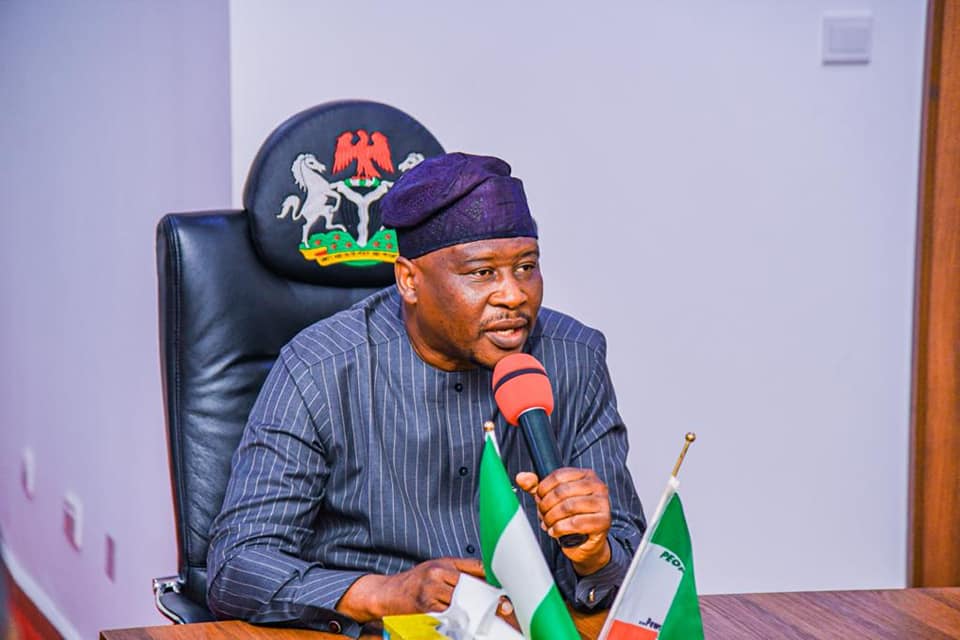
The 2023 Adamawa governorship election was not only tough for Governor Ahmadu Umaru Fintiri, but it also shocked him to his marrows. Fintiri said he didn’t only contest against Senator Aishatu Dahiru Ahmed Binani, but against a powerful people in Abuja- Governor Fintiri further said it was an attempted coup d’état against him.

The aftermath of the April 15th governorship election rerun led to Gov. Fintiri ending his first term in a kind of ‘Anger’. So, Fintiri’s second term is highly likely to begin in anger, vengeance, and fighting real and imaginary political enemies.

This is where we must pity Fintiri; if he mistakenly allowed these three things to control his thinking in making appointments, siting of development projects, and creating policies and programs – his four years of the second term would be shrouded with just politics, politics and politics. if  Fintiri is not very careful, he will allow the ‘trauma’  of April  15th to be on his head- his second term’s appointments, projects, and policies will be full of vengeance, anger, and unnecessary fights- if that happens; it will be the beginning of the end of his political future,  because of 2 things- the complexity of Adamawa politics and the current moment.

Nevertheless, Fintiri’s first actions will be how to punish those he presumed did anti-party in the PDP and how to compensate the ‘outsiders’ who did anti-party in their parties to his advantage. This is where the first problem of Fintiri’s second term will commence- new enemies within his party, the outsiders will feel meagerly compensated while those who worked hard for his second term will feel that the outsiders have more than what they ought to have.

For his political survival, Fintiri’s second term should be a kind of political redemption for him- work on his poor relationship with some of his party stakeholders, discard any thought of unnecessary fights with people who he thinks have worked against him and cool the growing tongue and faith division in the state’s polity, especially among jobless young people.

Fintiri’s second term should be a reconciliatory one towards some of his party stakeholders, the traditional class, and some of his so-called enemies. And his appointment should reflect Adamawa’s complexity and the people that truly contributed to his victory in both his first and second terms. This will go a long way to ‘heal’ the past and ‘nurture’ the future.

As things stand now,  if Fintiri doesn’t apply the science of politics and wisdom in his thoughts-  most of his actions will be viewed through the prism of ‘we’ vs ‘them’, which will be very bad for a Governor in a second term; because second terms are intricate – one’s political values diminish as he utilizes the term’s years; followership  reduces, permutations and carpets cross occur without necessarily factoring the second term’s driver’ while those wishing to replace the driver becomes more of yes men, at the detriment of the driver

Fintiri should quickly make some in-delectable marks with legacy programs and projects in the area of youth empowerment, poverty reduction, and human development and industrialization, amongst others. Roads projects are good- but  within 10-20 years, often,  people will forget who to do them; while some will deteriorate, new ones will replace them, but human development and youth empowerment are everlasting- this is where Kwankwaso and Tinubu derived their unending popularity at their primary constituencies

The truth is, the Binani case is a big hammer dangling on Fintiri’s head. Anything can happen in a Tinubu regime that will be thirsty to maintain the old & get new strongholds and votes, including being non-apolitical on some issues.

Fintiri should be fast- bring new thinking, new ideas, and new vigour. Though this is only possible if he brings on board all his party, including young people and even people with opposing political views, to do some intelligent thinking free of politics but development.

Congratulations, Governor Ahmadu Fintiri.

Zayyad I. Muhammad writes from Abuja via zaymohd@yahoo.com.

President Tinubu, please do no harm

By Mohammed Kabir

The title of this piece was adapted from “A Physician’s Diary,” a Daily Trust’s column written by my friend Dr. Fatima Damagum. Titled “First, Do No Harm”, Dr. Damagum counselled her fellow medical practitioners to do no harm to patients with chronic and complicated illness when they are not so sure the prescribed treatments would improve the patients’ conditions. I am myself a victim of harmful decisions taken by medical personnel when I first lost my hearing at the age of 9.

The same principle applies to the newly sworn-in President of Nigeria, Bola Ahmed Tinubu. If his predecessor, former President Buhari, had done no harm after carrying out exhaustive analysis of the underlying challenges facing Nigeria when he assumed office in 2015, he would not probably have left the country worse than he met it. I know some people may argue that Buhari had left Nigeria better than he met it. That’s their opinion and they are certainly entitled to it.

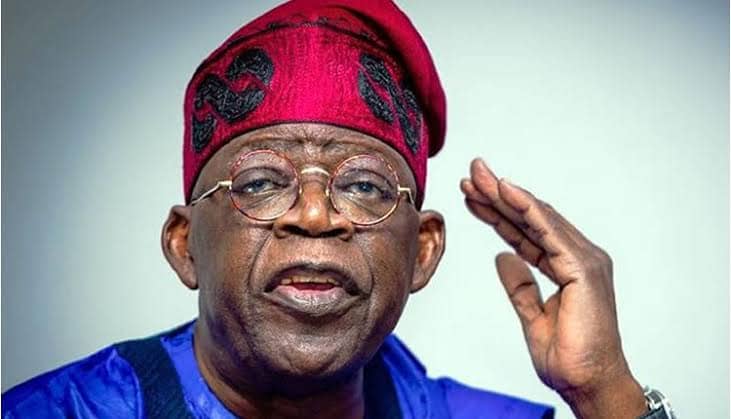
Tinubu has achieved his lifelong ambition to become Nigeria’s President. He admitted it is the proudest moment of his life. However, he was quick to add that the proud moment is not for himself but for all the people of Nigeria. I sincerely pray and hope so. Nigerian leaders have penchant for making insincere political statements. Former President Buhari’s (in)famous “I belong to everybody and I belong to nobody” is still vivid in our memories.

President Tinubu must quickly assemble his team and hit the ground running. There is no time to waste. Nigeria is currently in an ICU. It needs urgent diagnosis and quite possibly multiple surgeries. Sectors that need immediate priority attention include security, economy, power and national unity. This is not to say that other sectors like education, health, agriculture and foreign policy are insignificant.

On security, the President should sack the present crop of service chiefs he has inherited from his predecessor and replace them with more competent ones. If he and his team cannot identify qualified high ranking officers in the military and police to fill the top positions and drive his national security agenda, he should just manage with the current ones. The new President should please do no harm. Any thoughtless attempts to replace the service chiefs with indolent or incompetent ones will spell greater disaster for our country and worsen the prevailing security situation.

On the economy, the President needs to rescind his ambiguous statement regarding fuel subsidy removal. I am not sure it was a carefully thought-out policy statement. A first-hand and
more painstaking analysis is necessary to decide whether or not the fuel subsidy should be sustained. Former President Buhari who repeatedly called the fuel subsidy a scam before his ascension to power could not do away with it for eight long years. I am sure there is more to it than what the anti-subsidy elements are telling us.

It may be absolutely true that the fuel subsidy has been benefiting the affluent class. However, the reckless and ill-timed removal has translated to exponential rise in fuel price and caused a general galloping inflation. Nigerians are already fed up with the incoherent policies of the ruling party under former President Buhari and any attempts by President Tinubu to push for policies that will further aggravate the already precarious situation of the masses is likely to trigger nationwide anger and discontent.

President Tinubu should focus on blocking leakages in the oil sector, place a total ban on smuggling of petroleum products through our ever-porous borders and impose severe penalties on smugglers. The new administration should liaise with the Dangote Refinery to ensure availability of petroleum products, support the completion of the ongoing BUA Refinery, encourage the development and operational efficiency of modular refineries, and make concentrated efforts to revive our ailing refineries. Otherwise, President Tinubu should retain the subsidy payments and do no harm.

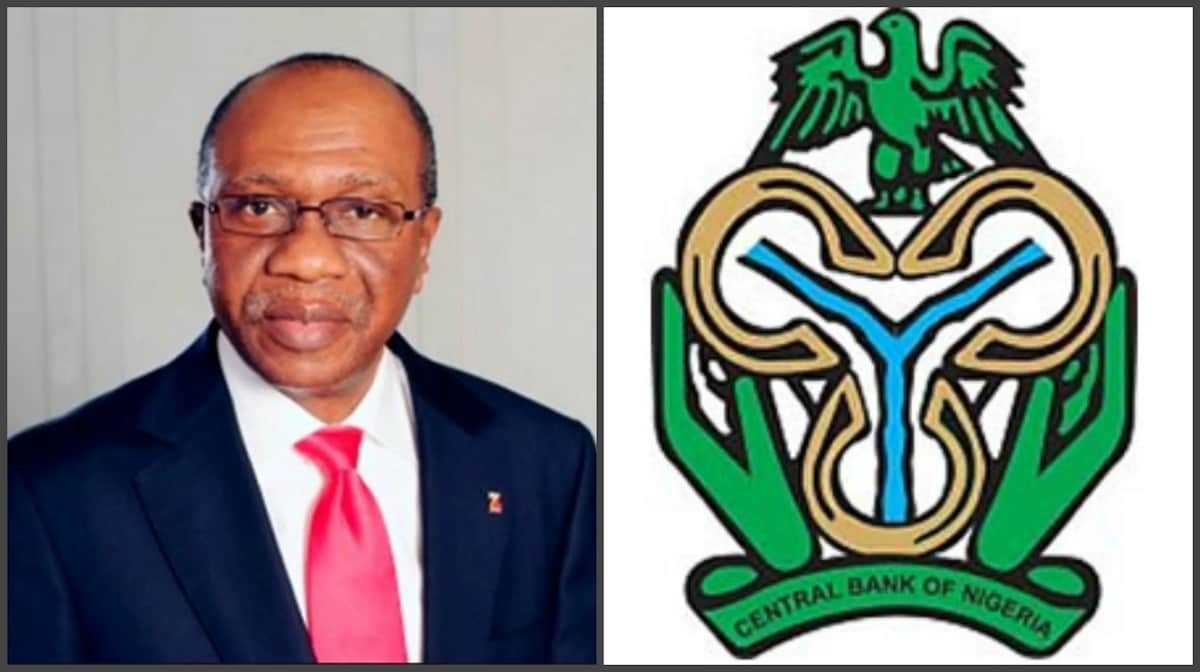
Still on the national economy, the President’s order for sacking the Governor of the Central Bank of Nigeria and the directives given to the relevant law enforcement agencies to immediately arrest and prosecute him for economic crimes and sabotage is a timely idea. No apex bank governor in the history of Nigeria has done so much harm and caused chaos and suffering to the unsuspecting citizens of Nigeria like Mr. Godwin Emefiele. The President’s statement on the unification of exchange rates is a good move but should be done with caution. His economic management team must come together and help him make informed decisions. Otherwise, he should just maintain the status quo and do no harm.

On power, the new President should declare state of emergency, set up a high-powered committee to review the current arrangements pertaining to the generation and distribution of electricity nationwide. The recent dispute between market operator and distribution companies caused avoidable intermittent blackouts across the country and crippled businesses worth billions of Naira. It is becoming quite obvious that a cabal has hijacked the power sector and it is fraudulently profiting from the present generation and distribution arrangements. The President should maintain status quo and do no harm if he cannot implement urgent reforms needed to guarantee uninterrupted power supply and foster the growth of SMEs.

On national unity, the country has never been so polarized. The Muslim-Muslim ticket generated enormous anger and pitted so many millions of Nigerians against one another. The new President should initiate people-oriented policies and programs that foster harmonious coexistence among Nigerias from diverse backgrounds. President Tinubu should work with the national assembly to enact relevant legislations that will transform the present six geo-political zones into six regional development agencies and foster inter-regional cooperation, as well as healthy inter-regional competition. If the president has no interest in prioritizing national integration and harmony, he should do no harm by allowing his belligerent supporters and overzealous political associates to calumniate and disparage members of the opposition and anyone who criticizes his policies.

On a final note, it appears the president is someone who is so eager to make statements. He should be made aware that the office he now occupies demands the highest level of restraint. His words must be carefully chosen in order not to jeopardize our staggering economy or the already fragile national unity. However, still President Tinubu needs to speak regularly to Nigerians about his policies and programs but also avoid making statements that are open to unnecessary speculations and allusions. Once again, president Tinubu, please do no harm. If you are not so sure about the feasibility, workability and sincerity of any proposed policy or action, just maintain the status quo ante bellum. So many millions of Nigerians, including those who did not vote for you are sincerely rooting for you and praying that you succeed.

Mohammed Kabir sent this article from Kaduna and can be reached via mohammedkabir.ibrahim@gmail.com
Education crisis looms in Bauchi 

By Mukhtar Jarmajo 

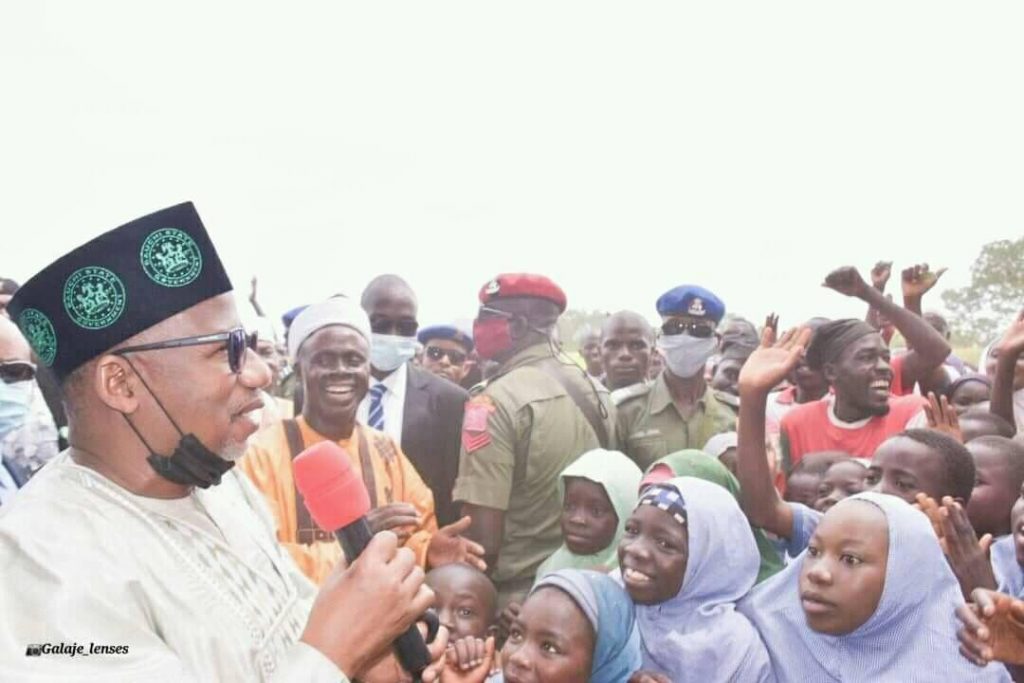
The state of education in Bauchi state is in disarray as over 1.4 million children remain out of school, according to recent reports. This crisis manifests itself in the acute shortage of qualified teachers, inadequate infrastructure, and poor funding for education. The Gabchyari community in Darazo local government is a classic example of the sorry state of our education system.

The only primary and junior secondary school in this area, which has approximately 350 students, has just three teachers, as reported by The Nation Newspaper last Monday. This is a gross inadequacy, as it means that each teacher will be responsible for teaching over 100 students. This will invariably lead to overcrowding, poor quality of learning, and the inability of individual students to receive adequate attention and care.

The continual neglect and unwillingness of the government to provide quality education for our children is evident in the rising number of out-of-school children in the state. This growing trend should be of concern to well-meaning citizens of the state, as it poses a threat to our future and that of the nation.

The consequences of the education crisis in Bauchi state are far-reaching and multifaceted. The inability of these children to access quality education could lead to a high rate of poverty, unemployment, and a general lack of development in the state. We cannot continue to ignore the plight of these children, as they represent the future of our society, and their education is a fundamental human right.

It is, therefore, imperative that the government takes urgent steps to address this crisis. The government must invest more in education by providing adequate funding, training and recruiting qualified teachers and building more schools in rural areas where the majority of these children live.

The education crisis in Bauchi state is a ticking time bomb that needs to be diffused as soon as possible. As stakeholders and well-meaning citizens, we must continue to put pressure on the government at all levels to take education seriously as an essential tool for development and nation-building. The time to act is now before it is too late.

Jarmajo can be reached via dattuwamanga@gmail.com.

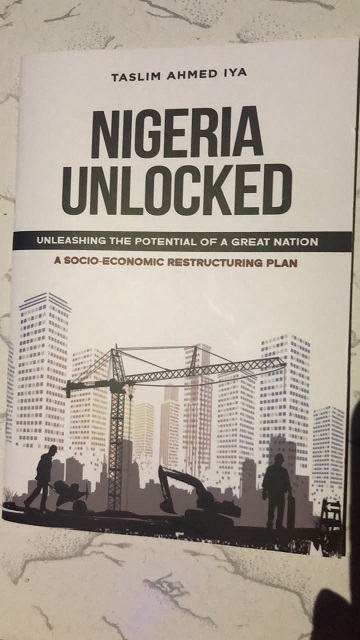
Book Review: Nigeria Unlocked

By Zahra Batul

A Nigerian entrepreneur and investor, Taslim Ahmed Iya has made a significant contribution towards resolving Nigeria’s protracted economic woes with the unveiling of his book, Nigeria Unlocked: Unleashing the Potential of a Great Nation

The 60-page book comprehensively analyses Nigeria’s current challenges and a practical roadmap for restructuring its economy. 

Interestingly, it is a product of intense research by an expert in economics and business who has obtained degrees in Economics and Management from Bocconi University in Italy. 

Taslim is also the CEO of Eximus Partners, an investment management firm focused on Long-Term Investments and Private Equity in Nigeria, Europe and the US.

The book draws from case studies and best practices from other successful emerging economies, presenting a bold vision for Nigeria’s future. 

From addressing corruption and creating a more transparent governance structure to promoting entrepreneurship and creating a skilled workforce, “Nigeria Unlocked” offers a comprehensive roadmap for revitalising the Nigerian economy and improving the lives of its citizens.

The inspiring book is available nationwide in Roving Heights and Spine and Label Bookstores.

Also available on Amazon in e-book and physical copy format

The author also worked as a Management Consultant in various industries, including Oil and Gas, Insurance, Real Estate, FMCG, Supermarkets, and Restaurants. 

His extensive experience in these industries has given him a unique perspective on the challenges and opportunities businesses face in today’s ever-changing market.

His latest literary work is essential reading for policymakers, business leaders, economists, and anyone interested in Nigeria’s economic future. It provides a clear and compelling vision for transforming Nigeria into a vibrant and prosperous nation that serves as a beacon for the rest of Africa and the world.

Apart from his professional endeavours, Taslim is also a passionate entrepreneur, having founded Uncle Tee’s, a restaurant chain in Nigeria, among others. 

He is also deeply committed to improving the education system in Nigeria. He is the founder of Youth Compass Foundation, a non-profit organisation dedicated to providing educational opportunities for young people in the country.

Zahrah Batul wrote via xahrabatul91@gmail.com.

Kano: Governor Abba flags off open heart surgery

By Ahmad Deedat Zakari

The Governor of Kano State, Abba Kabir Yusuf, in the early hours of Friday, flagged off open heart surgery for patients with heart-related diseases.

The Governor flagged off the exercise, which was sponsored by the Saudi Government in partnership with Muslim World League, at the Aminu Kano Teaching Hospital Conference Hall in the State.

During the event, the governor reiterated the commitment of the Kano State Government to partner with any non-governmental organizations and individuals willing to assist in providing training to health personnel and medical care to patients in need of such services.

He said: “We are very much delighted to have you in Kano for this gigantic assistance. Kano state is the most populous state in Nigeria, with over 21 million People. We have the most vulnerable people, downtrodden masses that do not have any means of taking care of their health needs,” said the Governor.

He added that “We will stick to our campaign promises of building general hospitals across the 44 local governments and Primary health care centres across the state and the re-introduce mobile clinics to cater for the people in the rural areas who are in need of medical attention free of charge.”

The head of the medical team from Saudi Arabia, Dr Utman Al-uthman Saad, said the medical team comprised 20 Cardiac surgeons who will perform the surgery and pledged to do their best to achieve the set goals.

Just In: Tinubu suspends CBN governor

By Muhammadu Sabiu

President Bola Tinubu has approved the suspension of Godwin Emefiele, the governor of the Central Bank of Nigeria. 

Willie Bassey, Director, Information Office of the Secretary to the Government of the Federation, said in a succinct statement on Friday night that it is in response to an investigation being conducted by his office and upcoming financial sector reforms. 

According to media sources, Emefiele has been instructed to immediately transfer control of his office’s operations to the deputy governor (Operations Directorate), who would serve in that capacity until the inquiry and changes are complete. 

Recall that there were many controversial policies that were introduced by the apex bank under the leadership of Mr. Emefiele. One of the policies that brought about the change of the Nigerian currency was seen by many people as an effort against the candidature of Bola Tinubu during the last general elections.