Month: April 2023

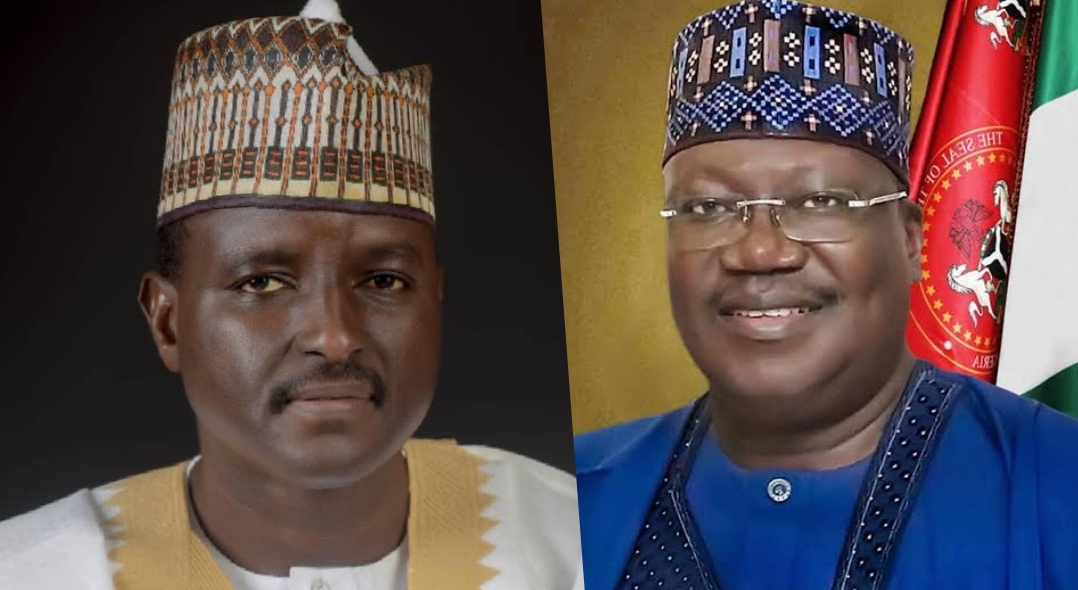
How Lawan and Machina tussle causes divisions in Yobe

By Muhammad Suleiman Yobe.

The controversy over getting the ticket for the APC in Yobe North senatorial district between the President of the Senate, Ahmed Lawan and Bashir Machina has created a serious gap and misunderstanding among the people of the region.

Yobe North region is the most populace senatorial district with 6 local government areas in the state. These are Bade, Nguru, Jakusko, Machina, Karasuwa and Yusufari, and 99 per cent of the residents are Muslims living peacefully with one another despite the fact that there are differences in languages and ethnicity.

The majority of the residents are Manga [ Kanuri ] Hausa, Badawa, Fulani and other minorities, but these differences do not cause problems for the residents for more than 1000 years, as history revealed, more especially if we consider how residents are joking between tribes.

Of course, many things happened between 2022 to 2023. Some happened before primary elections, during the primary and after the primary election as well as the general election that was held this year.

Recalled that in May 2022, Bashir Sheerif Machina won Yobe’s north senatorial primary election, unopposed as organized by the All Progressive Congress, APC.

But the senate president Ahmed Lawan was said to have participated in another primary organized by the APC after he contested the presidential ticket unsuccessfully in June.

Machina was reportedly asked to step down for Lawan, but he insisted that he was the rightful candidate.

Amid the controversy, the APC submitted the senate president’s name to the Independent National Electoral Commission (INEC) as the candidate for Yobe north.

The electoral commission subsequently refused to list any candidate for the district.

Aggrieved, Machina instituted a suit asking the court to declare him as the authentic senatorial candidate.

In September 2022, a federal high court in Damaturu, the Yobe state capital, ordered the APC and INEC to recognize Machina as the candidate.

A month later, an Abuja court of appeal affirmed Machina’s election as the candidate of the APC for the Yobe north senatorial district.

On 6th February 2023, the supreme court sitting in Abuja affirmed Senate President Ahmad Lawan as APC candidate for the zone and was re-elected for the fifth time in the just concluded 25th February presidential and national assembly elections.

This tussled between Lawan and Machina has caused serious problems and enmity between the residents of the area from the supporters of each side.

Each side accuses its opponent of harming and exchanging unpleasant words, especially on social media sites, which is why in this month of Ramadan, the supporters of one side prayed badly for one of the leaders.

In the same way, during the election campaign, there were conflicts and political divisions between each party, which is a strange thing in the region.

During the election, there were some factions with a massive anti-party, and there were some factions that fought other, which led to bad fighting between them.

This conflict has once again created enmity between the residents of other towns, especially regarding the local governments’ origin of Bade and Machina.

In the same way, this problem has created division in the management of the development of the towns in the area and divided the members of the APC, which is the reason why the party lost the election of a member representing Bade Jakusko in the green chamber and two Yobe state members house of representatives, representing Nguru outside and Bade Central.

Surely, this is the right time for traditional rulers of the zone, politicians and the entire leaders in the state and country should sit and reconcile these politicians for the development of the state. Because this coast has nothing to do with the development of the region except for regression.

Muhammad Suleiman Yobe wrote from Jigawa state. He can be contacted via muhammadsuleiman190@gmail.com.

A guide to successful international scholarship application

By Tordue Simon Targema

Last week, I posted on Facebook the key requirements of international scholarships that prospective applicants need to fire successful shots. The post was necessitated by the fact that many graduates seeking international scholarships do not know what to have handy while applying for these scholarships. Such graduates often lose out, given the tight deadlines of most scholarships. Thus, I felt obliged to highlight these key requirements for prospective applicants.

Interactions from the post encourage me to get it published in a platform that has a wider range of prospective applicants beyond my Facebook followers. I must mention from the onset that the list below is not exhaustive, but captures just the basic requirements of most international scholarships.

Moreover, each of these scholarships has specific documents it requires from prospective applicants. Notwithstanding these specifications, few requirements continue to recur across scholarships. These are highlighted as follows:

  • International passport: this is a major requirement for most, if not all international scholarships. Sadly, this is an “unaffordable luxury” for most graduates grappling with the savageries of life and survival after graduation. The last time I checked, international passport costs about twenty-five thousand Naira. This is not to mention the delay that applicants encounter in some states of the federation while trying to get the passport.

More saddening is the fact that you could get the passport without clinching a scholarship till it expires [oops]! Never to mind this, you can use the expired passport to “intimidate” immigration officers on the highways while travelling if it doesn’t fetch you a scholarship. They respect it a lot. But on a serious note, you just need this document to fire shots at international scholarships.

  • Transcript: there is this heck about Nigerian universities and transcript! They say it is confidential. Wonder if foreign scholarships aren’t aware of this confidentiality: they keep asking for transcript from applicants! I was devastated few days ago when a friend received early-stage disqualification mail from Commonwealth Scholarship because of transcripts even as he met EVERY other requirement. Alas! The bureaucracy in MOST Nigerian universities over transcript is simply annoying. Maybe this is one reason I must have to delve into alumni politics someday: willing graduates should be giving their transcript upon request without much headache, after all, it is their performance and useful to them alone.

Anyway, regardless of this bureaucracy, you MUST get your transcript handy- whether the official copy or certified student copy- to fire good shots at international scholarships. How you do this, I don’t know. But for sure: you need your transcript to stand a chance at international scholarships.

  • Your essays! Very important. This is a major requirement of most- if not all- international scholarships. They want to know you. They want to know your skillset. They want to know your leadership potentials. They want to ascertain your “development impact”. The best way they can ascertain these is through your essays.

Consequently, every scholarship you may wish to consider is likely to demand for the following: Personal Statement (or Statement of Purpose), Volunteer/Leadership Skills, Career Plans- short term, on the award and long term, and development impact: how your research/study area connects to, or can facilitate development.

All these have very tight word limitations, and require that you are articulate and informative enough, albeit, succinctly. A bonus point here is to have these essays handy for yourself so you could simply edit them to suit specific scholarship demands rather than having to write them afresh all of the time.

Besides, it pays to have your essays written and edited, and have others read through and critic them for you well ahead of time: very important. A final bonus point on essays: most of these essay types have their templates online! Google them and see how you can fit your information into the templates. These essays take a substantial chunk of the assessment process aside academic credentials.

  • Letter of English language proficiency: proof of English language proficiency is a major requirement of most Anglophone scholarships. IELTS or TOEFL are the commonest among the numerous English language proficiency tests. However, these are expensive and require a lot of logistics – such as traveling, preparations (online tutorials), etc. 

An escape route from these tests [narrow one though] is a letter of English language proficiency from the Office of the Registrar- or any authorised official- from your institution confirming that you were taught in English language at the undergraduate or postgraduate level.

Although some scholarships do not accept this letter, some do, while others only accept it as an interim measure, implying that you must still provide the international tests after nomination. Whatever the case, the letter fetches a candidate some valuable points, and is far better than having nothing at all to show as a proof of English language proficiency.

Emphatically, however, if one has the financial wherewithal, taking the internationally recognised tests [and scoring the required points] significantly enhances one’s chances at international scholarships.

  • Reference letters: this is one other key requirement of international scholarships. Typically, all international scholarships request for reference letters from candidates’ lecturers, heads of departments/institutes, research project supervisors or any other high ranking staff from one’s institution. For employed graduates, reference letters are also accepted from principals or colleagues at the office. Some scholarships accept reference letters from candidates in the course of the application, while others require candidates to supply referees’ email addresses where links are sent to them to respond directly on the scholarship portal.

It therefore pays for prospective applicants to request and have handy, reference letters from their chosen referees on letter-headed papers. This saves one the headache of always contacting referees for each application they are making, especially for scholarships that accept reference letters from candidates.

It is important to maintain good relationship with your lecturers so that they will be willing to reference you anytime you require a reference note. This relationship is very important as the process of submitting some of these references is usually tedious and require referees going through a lot to submit a reference.

Sadly, many students maintain very adversarial relationships with lecturers while in school, thereby finding it difficult to get reference notes from them after graduation. It is also important to use lecturers who know you closely as referees so that they can be able to comment authoritatively on vital issues- such as your academic performance, leadership, social and moral skills, personality traits and emotional quotient, etc. that typical scholarships demand from referees.

A big mistake that most candidates make is bumping into lecturers who scarcely knew them while they were students to ask for reference notes. Trust me; you cannot get the best from such lecturers!   

  • Finally, patience! You need a large heart to accommodate rejections, oh yes! Although some lucky/well prepared applicants have clinched an offer at first shot, this is quite a rare feat. Be prepared to “chop breakfast” from scholarship bodies. This is not a negative prophesy anyway, but trust me, you are most likely to face rejection from scholarship bodies.

You’ll be told how thousands applied for the opportunity, and how they are not willing/able to consider your application any further [as if that is some piece of good news!] They delight in telling you that. Perhaps, worse are those that will go completely mute after application! Like the Hausa man says: Shiru Kaman an shuka dusa.

This could be extremely traumatizing given the enormous headache it takes to “successfully” apply for a scholarship and provide ALL that is required. All the same, you must keep yourself motivated at all times, pick up your broken self after each rejection and move on.

Seldom, some of the scholarship bodies are kind enough to tell you what disqualifies you. Nothing could be more benevolent than this! Work on that and fire better shots in the future. Your motivation all the times should be that one scholarship opportunity can change your life completely for better! Methinks you owe yourself this; hence, it should serve as enough motivation for you to take in good faith, as many rejections as may come your way and fire better shots. Success shall sure be yours someday, see you in glory, cheers!   

Tordue Simon Targema teaches in the department of Journalism & Media Studies, Taraba State University. He is currently a Commonwealth Ph.D. scholar at the University of Glasgow, United Kingdom. Email: torduesimon@gmail.com

Towards addressing Kano’s decrepit health sector: A glimpse into Abba’s policy initiatives

By Bashir Abdu Muzakkari, Ph.D.

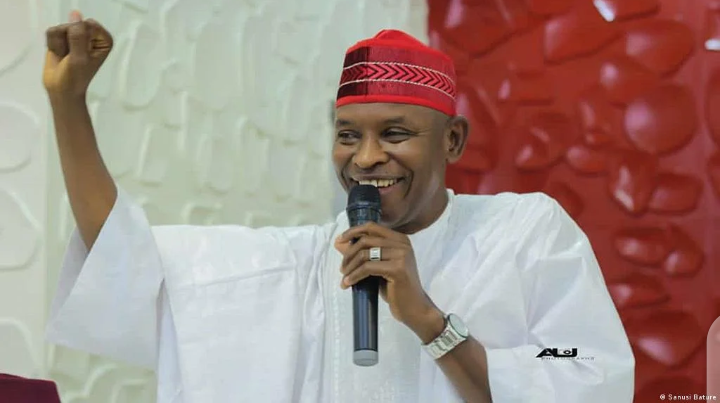
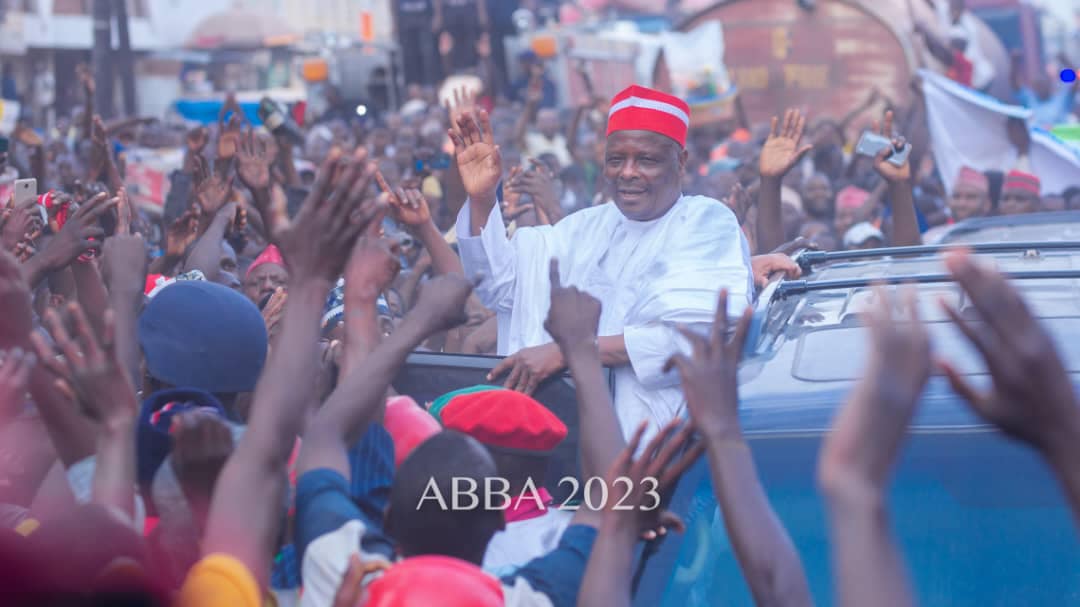
Kano State is the most populous state in Nigeria with a projection of over 20 million people. Access to quality and affordable healthcare services in Kano state have been a major challenge for many years which is due to various factors: inadequate healthcare facilities, shortage of healthcare professionals, poverty, and a lack of awareness and enlightenment among the people about the importance of healthcare. The incoming government under His Excellency, Abba K. Yusuf, has made a commitment to revive the healthcare system in the state through a range of initiatives.

One of the major initiatives is the recruitment of human resources for health sector. This is because, Kano has a shortage of healthcare professionals which has led to inadequate access to quality healthcare services. The government aims to attract more healthcare workers to work in the state by providing incentives and partnering with medical schools to train more healthcare experts locally.

The establishment of mobile clinics and ambulance services is also a key initiative of the government. These services will provide basic healthcare services to people living in remote areas who may not have access to healthcare otherwise. Ambulance services ensure that patients can be transported to hospitals quickly in case of an emergency, improving their chances of survival.

The free Maternal and Child Health (MNCH) program is another significant initiative. This program will provide free healthcare services to pregnant women and children under the age of five. This initiative will help in reducing maternal and child mortality rates in the state as more women will have access to free antenatal care and delivery services.

Primary healthcare services are also a priority for the government. The provision of basic healthcare services at the community level helps to reduce the burden on hospitals and clinics. This initiative will help people access healthcare services closer to their homes, especially those in remote areas.

Partnerships and donor coordination in the health sector are also critical. This initiative will lead to increased funding for healthcare services in the state and partnerships with international organizations and donors to improve healthcare infrastructure and services.

The renovation of major hospitals in the state will also be a crucial part of the incoming government’s efforts. This initiative will improve healthcare services and increase patient satisfaction. The government will also encourage private investment in the health sector to improve access to health services.

To make it easier for people, the government will set up a smart contributory health plan. The scheme is aimed at ensuring that people have access to healthcare services regardless of their income level. This initiative has helped poor and marginalized people all over the world to get better access to healthcare services.

Finally, the government will provide support for medical students and doctors in residency training. This ensures that healthcare professionals are adequately trained and prepared to provide high-quality healthcare services.

In conclusion, the incoming government under His Excellency Abba K. Yusuf’s leadership has shown a commitment to improving access to quality and affordable healthcare services in Kano state. If implemented by the government, the initiatives: recruitment of healthcare professionals, establishment of mobile clinics and ambulance services, free maternal and child health program, primary healthcare services, partnership and donor coordination in the health sector, renovation of major hospitals, private investment in the health sector, a contributory health scheme, doctor residency training and support for medical students will contribute to the improvement of healthcare services in Kano state. These initiatives have the potential to transform the healthcare system in the state and improve access to healthcare services for the people of Kano state.

Bashir A. Muzakkari, Ph.D. writes from Kano.

Book Review: The Alchemist

By Dansaleh Aliyu Yahya

After reading Paulo Coelho’s The Alchemist, this fictional story of a young boy created a river of tears in my gapes. The main character, Santiago, a young lad, dreams and believes that dreams come true when someone follows the way to see them awaken.

At first, he (the boy) taught us that travels were the greatest sources of knowledge, experience, and wisdom when he told his father that he wanted to become a shepherd because of the love he had for knowing the true nature of his world. Nevertheless, he sold his sheep and searched for his “Personal Legend” because he now realised it was more important than just rearing animals.

Throughout the story, we would learn that if the younger person needs to have a useful life, they must learn and believe the philosophy of their older ones. On his journey, Santiago met many good people.

In addition, each of them told him one or more essential facts about life and everything.  For example, he met a king named Melchizedek, who said, “ When you want something, all universe conspires in helping you to achieve it”. I think this is the most important sentence in the book.

The books also taught us that we shouldn’t bother ourselves with our past but instead focus on our present to build a more fantastic future. He was told that when he concentrated on the present, he would always be happy. 

In his treasure search, the boy met a young woman called Fatima. They started loving each other, and he promised her he’d be back one day to marry her. There I remembered the Hausa Proverb that says, “ Garin masoyi baya nisa”. He was about to lose his treasure because of love, but the alchemist summoned him.

The story has a lot of must-be-learned philosophies that couldn’t be mentioned here due to their meanness, but I’ll try to pen down some of them below to build eagerness to read the book in those that didn’t read it. These ideologies include:

— “If you play cards the first time, you’re almost sure to win. It’s called beginners luck.”

— “Everything that happens once can never happen again. But everything that happens twice will surely happen the third time.”

— “Every day was there to be lived or mark one’s departure on one word ‘maktub’”.

— “If you start by promising what you don’t even have yet, you’ll lose your desire to work toward getting it.”

Let me stop here. However, if you have not read the book, you should look for it. I assure you, you won’t be the same person you were before reading it.

Dansaleh Aliyu Yahya can be contacted via dansalealiyu@gmail.com.

Kwankwaso, Kwankwasiyya and Arewa beyond 2023

By Aminu Alhassan Kuba

During the 2023 general elections, Eng. Rabiu Musa Kwankwaso contested for the office of the President Federal Republic of Nigeria under his newly registered party, the New Nigeria People’s Party (NNPP). Unfortunately, he came a very distant 4th, winning just one State out of 36 plus the Federal Capital Territory, Abuja, with a little over 1 million votes. His party also presented candidates for the governorship in a few other states apart from Kano, and the closest it came to winning apart from Kano was in Taraba.

Before the elections, Senator  Rabiu Musa Kwankwaso had been engaged in a fierce political battle with his erstwhile political friend and deputy and present governor of Kano State, Dr Abdullahi Umar Ganduje.

In 2015, Kwankwaso supported Ganduje to succeed him, but afterwards, trouble started. In a video I watched sometime in 2018, Ganduje accused Kwankwaso of envy. He said he did everything to respect and be loyal to his former boss, but it seemed Kwankwaso wanted everything. He accused Kwankwaso of wanting to be governor by proxy.

The fight between the two finally culminated in the now infamous inconclusive governorship election of 2019, where Kwankwaso tried to unseat Ganduje and replace him with his former PA, former commissioner, son-in-law, now governor-elect Eng. Abba Kabiru Yusuf. In that titanic battle for Kano, Ganduje emerged victorious.

The win led to other unfortunate matters, including the dethronement and banishment of the then Emir of Kano, His Royal Highness Muhammadu Sanusi II, the balkanisation of the Kano Emirate into five (5) smaller entities and the eventual appointment of two of Sanusi’s cousins among others as Emirs of Kano and Bichi, respectively.

In the succeeding four years, the political rivalry and fight between Kwankwaso and his old friend and political ally only intensified, culminating in the defeat of Ganduje’s candidate by same Kwankwaso’s son-in-law Eng. Abba Kabir Yusuf in the just concluded governorship election in the State.

Following NNPP’s victory, Kwankwaso’s supporters mainly and some commentators have sought to present Kwankwaso as some political wizard in Northern Nigeria. While this is true to a certain degree and circumstance, it is more accurate if Kano and not Northern Nigeria was the point of reference.

Kwankwaso has indeed managed to remain politically relevant compared to his Northern governor colleagues, alongside whom he contested and won elections to become governor in 1999. However, since his stated goal is not to become or produce the governor of Kano State but to lead Nigeria as President and Commander in Chief, the fairest comparison should be with those who have demonstrated similar ambition. And in this category, the most worthy comparison should be with the President-elect, His Excellency Asiwaju Bola Ahmad Tinubu, former Senator and Governor of Lagos State.

This comparison is even worthier considering that Lagos and Kano share similarities in population, political history, economy and commercial relevance to South and Northern Nigeria, respectively.

Let’s take a dive

In 1992 when Tinubu won a seat to become Senator of the Federal Republic, Kwankwaso won one in Nigeria’s House of Representatives and became its deputy speaker.

In 1999, both Tinubu and Kwankwaso contested and won to become governors of Lagos and Kano, respectively.

In 2003, while Tinubu was re-elected for a second term in office despite Obasanjo’s backstabbing and cynical takeover of the entire South West (except Lagos, of course), Kwankwaso lost his seat to a former permanent secretary, Malam Ibrahim Shekarau, whom he had humiliated and relegated to a classroom teacher. Shekarau went on to serve two full terms as governor of Kano. Kwankwaso was eventually appointed Minister of Defence by Obasanjo.

In 2011 Kwankwaso returned to Kano for a second shot and won. He served the next four years, delivering spectacularly on the massive infrastructural transformation of Kano and investing heavily in education and social services. In addition, he provided scholarships to hundreds of Kano indigenes to undertake postgraduate studies around the world. By the end of his tenure in 2015, he easily transited to the Senate under the newly minted alliance party, the APC, with General Muhammadu Buhari’s CPC, Asiwaju’s AC and Atiku’s rebellious PDP G-5 governors.

 In the same period, Tinubu chose not to run for office but worked to build a formidable political base with the South West as its fulcrum, installing governors in at least four of the region’s six States, many of them his former commissioners and going beyond to support former comrade Adam Oshiomhole to take Edo from the PDP.

In the same period, Tinubu not only built the Lagos-Ogun axis as Nigeria’s financial and economic powerhouse, but his former appointees also became a Vice-President, ministers, governors, chief executives of agencies and parastatals of the Federal Government.

Kwankwaso and his Kwankwasiyya movement have failed to go beyond the borders of Kano into neighbouring states like Jigawa, Katsina, Kaduna, Bauchi, etc.

Notably, they have ruled Kano with his former deputy turned adversary for 16 years. Despite its industrial and commercial potential, Kano has failed to significantly grow its internal revenue base to compete favourably with its peers in the country. In a shocking manifestation of its leadership crisis, a civil service state like Kaduna now generates more internal revenue than Kano.

Again, in education, Kano tops the list of states with the most out-of-school children. This is where I find difficulty in understanding Kwankwaso’s education investment model of sending vast numbers of Doctors, Pharmacists, Nurses, Engineers and other university graduates outside Nigeria to undertake postgraduate studies while millions of children are roaming the streets wretched, hungry and illiterate.

While I do not begrudge the beneficiaries of his scholarship largesse, many of whom I know personally, I think the billions of naira public funds he spent in that endeavour would have been best spent in strengthening Kano’s capacity to educate its underprivileged poor urban and rural population.

Therefore, it’s now twenty-four years after Kwankwaso and Tinubu first became governors; Tinubu could comfortably lose Lagos but still win in the rest of Nigeria and become President; Kwankwaso could only win his Kano and ended up a distant 4th in the same presidential race. This is a testament to how far both have come.

To bolster the point further, while Kwankwaso has managed to build a competent and diverse political team across Nigeria, on the one hand, even in his beloved Kano and over 24 years, he could only find his son-in-law and former PA worthy of his trust to become governor.

Beyond Kano in the wider Arewa, he has failed to create a political support base. Instead, he is mainly seen as the head of a violence-prone, uncouth, fanatic and cult-like group willing to insult and denigrate anyone who dares to disagree with its methods. This is not without justification either. Evidence in utterances, actions and inactions from him, his closest lieutenants and supporters that they are willing to use violence to achieve political ends when push comes to shove.

The behaviour of his supporters after the governorship election in Kano in which his candidate was declared the winner and his silence speak volumes. After attacking and burning down Rarara’s property within the Kano metropolis, no word of condemnation or reproach came from the Madugu [leader] or this party.

Despite Kwankwaso’s failings, however, at this moment of Nigeria’s political journey, Arewa needs a viable opposition to put the APC-led government on its feet from May 29th this year. And Kwankwaso’s NNPP, with a base in Kano, could position itself as a viable platform for the role. From the results of both Presidential and Governorship elections so far declared and its history in this part of Nigeria, PDP can no longer pose a serious challenge to the ruling APC.

Now practically wiped out of the North East, North West and North Central except in some minority enclaves like Taraba and Plateau and unfortunate governance failure examples like Zamfara and possibly Adamawa, PDP is practically dead. In Bauchi and Adamawa (maybe), I don’t see PDP surviving beyond 2027. All these added that Alhaji Atiku Abubakar, its leading financier, is now both old and tired. A Kwankwaso-led NNPP could therefore become a viable alternative for the greater North.

But for NNPP and Kwankwaso to take up this role, I suggest they need to rebrand; Kwankwaso needs to convince the rest of Arewa and Nigeria that his movement can grow beyond the personality cult Kwankwasiyya is now.

He must also convince the rest of Arewa and Nigeria that Kwankwasiyya is not a violence-prone provincial cult that quickly resorts to arson and looting at the slightest opportunity. Finally, he must convince the rest of Nigeria that when his interests clash with that of the State, that of the State will take precedence and that he is willing and able to reign in his supporters.

Aminu writes from Kaduna and can be reached via aminukuba@yahoo.com.
The rise of Nigeria’s electoral process

By Bilyamin Abdulmumin

Nigerians yearning to return to the path of democracy saw the light of day in 1999 when the military head of state, the late Sani Abacha, succumbed to the pressure to plan the Democratic transition. The Independent National Electoral Commission was therefore (established in 1998) and tasked to oversee the election process of the young democracy.

In its maiden election, INEC adopted a secret ballot system. This was a departure from the 1993 election: an open ballot system where voters lined up behind the poster of their candidate of choice. Although this system of voting was seen as the fairest, safest, and cheapest but on other hand, it was dubbed as a violation of voter’s choice privacy.

Other developments brought by INEC in the 1999 election were improved voter cards, transparent ballot boxes, and invitations from foreign observers. Despite irregularities in some areas, the reports said the 1999 election was free and fair. This is evidenced by the relative spread of victory across political parties in the election.

But, things began to go wild in the next election. Again, the incumbents would hold tight. They would fight tooth and nail to ensure their re-election. To make matters worse, the 2003 election (like 1999) was fragile and vulnerable, courtesy of the manual process, from voter registration to accreditation and collation.

The quality of the election process went further down the hill in 2007. When this time around, the incumbent swore to anoint their successors. And transparency and information were not in the public domain compared to the current election process.

But the election process improvements began to take off after 2007. When the winning presidential candidate Umar Musa Yar’adua not only conceded the irregularities in the election that brought him but pledged to improve the election process. He would be committed to his promise and set up a Justice Muhammad Uwais committee.

Although Umar Yar’adua’s determination threatened to hit a glass ceiling with his untimely death but his successor, Good Luck Ebele Jonathan, continued with the electoral reform. As a result, Prof. Attahiru Jega, a widely respected technocrat with an unassailable good track record, took charge of the umpire. From 2010 to 2015, when he led the commission, he brought game-changing policies such as electronic accreditation, the academics for results collation, security features on form EC 8A series as well as ballot papers, provision of clusters (for timely movement of polling team to polling units), and creating voting points to decongest Polling Units.

Like the 1999 election, national and international observers praised the outcome of the results. The 2015 General Election brought back hope to many Nigerian electorates. For the first time in the history of the Nigerian election, the incumbent President would be removed from office by the opposition. The then president Jonathan conceding to the defeat was equally remarkable and unprecedented.

The 2019 and 2023 General elections saw the electoral process in Nigeria blossom. However, professor Mahmoud Yakub will raise the bar even higher. Thanks to the electoral act 2022, Yakub would not consolidate Prof. Jega’s gains only but add other innovative developments: online voter registration, BVAS, IREV, e-school, and chatbot (for public education and effective training on the election process), provision of PVC collected in the margin of lead principle (to reduce the prevalence of “rerun”), finance tracking (to checkmate politicians excessive spending). And that is not all. He converted voting points to polling units, widening the ad-hoc number (collation officers and SPOs). In short, the election process went digital, from registration and accreditation to collation.

The progressive timeline success of INEC was made possible due to the continuity of development from one chairman to another, the dedication and perseverance of the entire INEC staff (both ad hoc and permanent), and the public unreserved scrutiny. With this steady improvement in the election process, the most touted electronic and even voting ahead of election time are not far-fetched.

Bilyamin Abdulmumin can be contacted via bilal4riid13@gmail.com.