Month: April 2023

For Government’s Success: An open advice to President-Elect Bola Ahmed Tinubu (I)

BY Umar Ardo, PhD

PREAMBLE

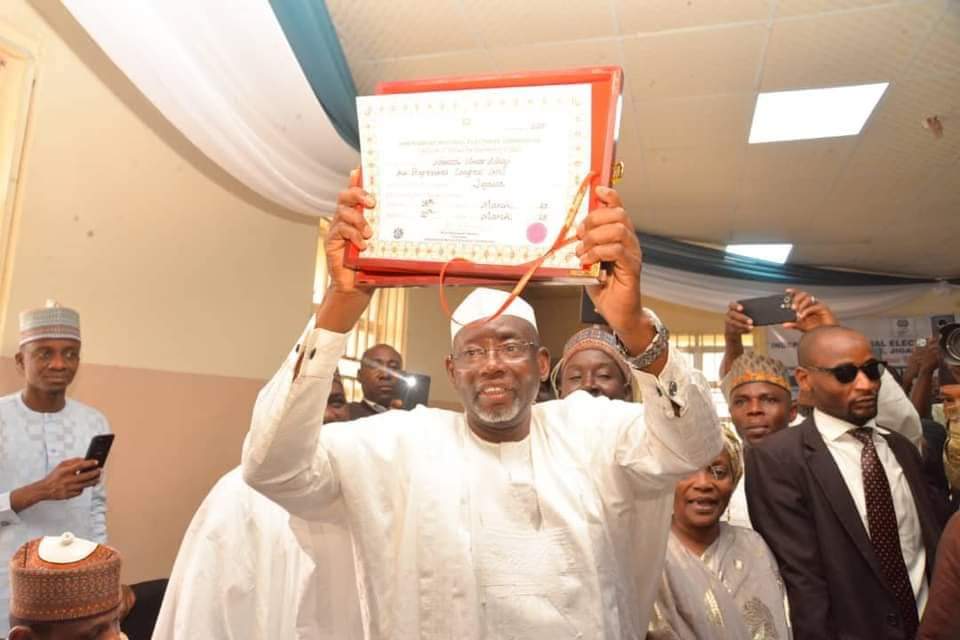
First, let me seize this opportunity to congratulate Sen. Bola Ahmed Tinubu on his well-deserved victory in an unarguably the most keenly contested presidential election in Nigeria’s history. For me, I feel fulfilled in that the incipient seed of this outcome was sown by my humble self way back in January 2012, when I conceived the idea of the merger between Buhari’s CPC and Tinubu’s ACN, premised on the former being President and the latter Vice President. Aware of the previous failed attempt at such a merger, I sold the idea to Buhari in such a way and manner that I was confident he would accept. Even though he had then publicly announced that 2011 would be his 3rd and final attempt to contest for the presidency if he lost that year’s election, it turned out easy for me to get his buy-in to the idea as within three hours, he consented and promised me of approaching Tinubu with the plan. I then knew my job was done, as I was certain Tinubu, too, would consent to it.

And lo and behold, about five weeks later, Buhari called me to a meeting in Abuja, at which he briefed me on his meeting with Tinubu on the merger and that the man had accepted the proposition. I felt elated, knowing there and then that change had come to the country. The rest, as they say, is now history. (The details on this concept and how it was worked out are contained in chapter 7 of my book titled “Court and Politics: Chronicling my Experience in the Nigerian Theatre”, published by Sungai Books; New Jessy, USA, 2020. Both the president and the president-elect have copies of the book).

2. THRUST OF THIS ADVICE

Now, having won this hard-earned victory against so many odds, it is important for the sake of the country and the President-elect’s legacy that the regime succeeds. And this success is largely dependent on, among three other things, the thorough implementation of government policies.

The campaign manifesto of the President-elect has no doubt enunciated laudable core policy initiatives capable of resolving the teething problems facing this country. But this will depend largely on one thing – i.e. diligent implementation! In practical terms, this means that:-

➢ No matter how good a policy, maybe its end product lies in implementation;

➢ Citizens assess governance by what is implemented on the ground, and so citizens interact with public policies only at the implementation level;

➢ As the regime starts its term in office, it must ensure that its policies are fully implemented; and

➢ Without fully implementing its policies and making a difference at the implementation level, the regime also risks ending up a failure like previous regimes.

Yet, the major recurrent concern of governance in Nigeria over the years has been the failure to implement policies as conceived and formulated by governments successfully.

3. JUSTIFICATION

The fact that successive governments, not excluding the outgoing one, would come up with laudable policy initiatives, well-conceived and elaborately articulated, but eventually fail at the implementation level, to the disappointment of the public and discredit of the government itself, calls for a new approach to public policy implementation in Nigeria. To this end, it is important to highlight that:-

➢ The primary reason for this gap between excellent policy initiatives and pitiable policy implementation is mainly a lack of [or poor] monitoring and evaluation mechanism;

➢ Even with a strong will on the part of leadership, it has always been difficult to get things to happen in government organisations because of endemic vested interests that create resistance, inertia, discouragements and even sabotage to such policy implementation attempts; and

➢ Good ideas and the will of the government to implement the same are not sufficient; drive and follow-through are equally important, yet often insufficiently appreciated and applied.

Against this backdrop, so as to help the government overcome these challenges and make a difference in performance and achieve set policy objectives, I respectfully make this open advice for the kind consideration and approval of Mr President-elect, please.

4. ACTION STEPS

➢ Establish a Policy Implementation, Monitoring and Evaluation [PIME] Unit under the Office of the President by means of an Executive Order; and

➢ Appoint a Special Adviser to the President on Policy implementation, Monitoring and Evaluation as head of the Unit. Such a person must be knowledgeable, patriotic, trusted and of impeccable character.

5 STRUCTURE, FUNDING AND MODE OF OPERATION

➢ The PIME Unit is to be a policy Monitoring and Advisory Outlet constituted by an Executive Order to operate within the Office of the President;

➢ The Head of the Unit should report directly to the President;

➢ The Unit’s budgetary funding is to be within the budgetary provisions of the presidency; and

➢ Hold monthly 1hr Update Briefing Sessions with the President on the activities, findings and suggestions of the Unit for any further necessary actions.

6. AIMS AND OBJECTIVES OF THE UNIT

The PIME Unit should have the following aims and objectives:-

➢ To ensure full implementation of government policies, designs, projects and programmes for efficient delivery of expected results;

➢ To devise and drive new national policy-performance-design capable of reversing the endemic failure syndrome in policy implementation by the government; and

➢ To create and sustain a positive image of the government in terms of policy and budgetary implementation attitudes nationwide.

7. SCOPE AND FUNCTIONS OF THE UNIT

The PIME Unit should have the following scope and functions:-

➢ Design, develop and implement a systemic monitoring and evaluation framework to track, monitor, assess and report on the performance of all entities in relation to the government’s plans, activities and timeframes so as to improve the quality and quantity designs in policy, programme and/or project implementation relative to government interests;

➢ Monitor, assess and evaluate the performance of ministries, agencies, institutions, departments, projects and programmes of the government to ensure compliance with policy intentions, outputs, outcomes and impact on the polity;

➢ Organize, undertake and provide [if, where and when necessary] training and technical assistance to implementing entities and partners on specific policy implementation initiatives as may be required for the attainment of government goals;

➢ Produce and submit monthly Reports and prepare presentations of the Unit’s activities, findings and recommendations to the president;

➢ Advice the president on all issues relating to the full implementation of government policies, programmes, projects and obligations; and

➢ Perform any other scope and function as may be assigned to it by Mr President.

8. EXPECTED BENEFITS AND SIGNIFICANCE OF THE UNIT

The PIME Unit will yield the following benefits:-

➢ It will ensure that government policies, programmes and projects are fully implemented as conceived, and government’s goals are achieved;

➢ It will end the failure syndrome of government in policy implementation forthwith and ensure rapid and visible development of the country;

➢ It will establish and maintain inter-agency coordination in policy implementation and provide a consolidated source of information showcasing policy implementation progress, highlight lapses where they occur and devise necessary corrective measures forthwith, hence allowing operators to learn from each other’s experiences, building on expertise, knowledge and synergy;

➢ It will generate written reports that will contribute to transparency, accountability and efficiency, allowing lessons to be shared more easily and experiences and templates used as bases for steering decision-making processes;

➢ It will establish and deepen the culture of transparency, accountability and efficiency in public institutions and public services; and

➢ It will provide the presidency with a veritable measurement tool of the performances of public institutions and public servants.

9. CONCLUSION

The rationale for this open advice now is that I feel Nigerians are actually tired of the unending cycle of failures of successive governments of the country and that we need to put a halt to it. The sole objective of this memo, therefore, is to help create the needed momentum from the start of the incoming Tinubu-led regime that will make it succeed in breaking this failure syndrome in the most critical area where all other regimes had failed – policy implementation; to positively enhance the developmental fortunes of our country, and as a result at once mould public opinion favourable to President Tinubu and his new regime, both at home and abroad. This way, one will fill more gratified that one’s efforts in trying to bring positive change to our country and society have at last yielded fruits.
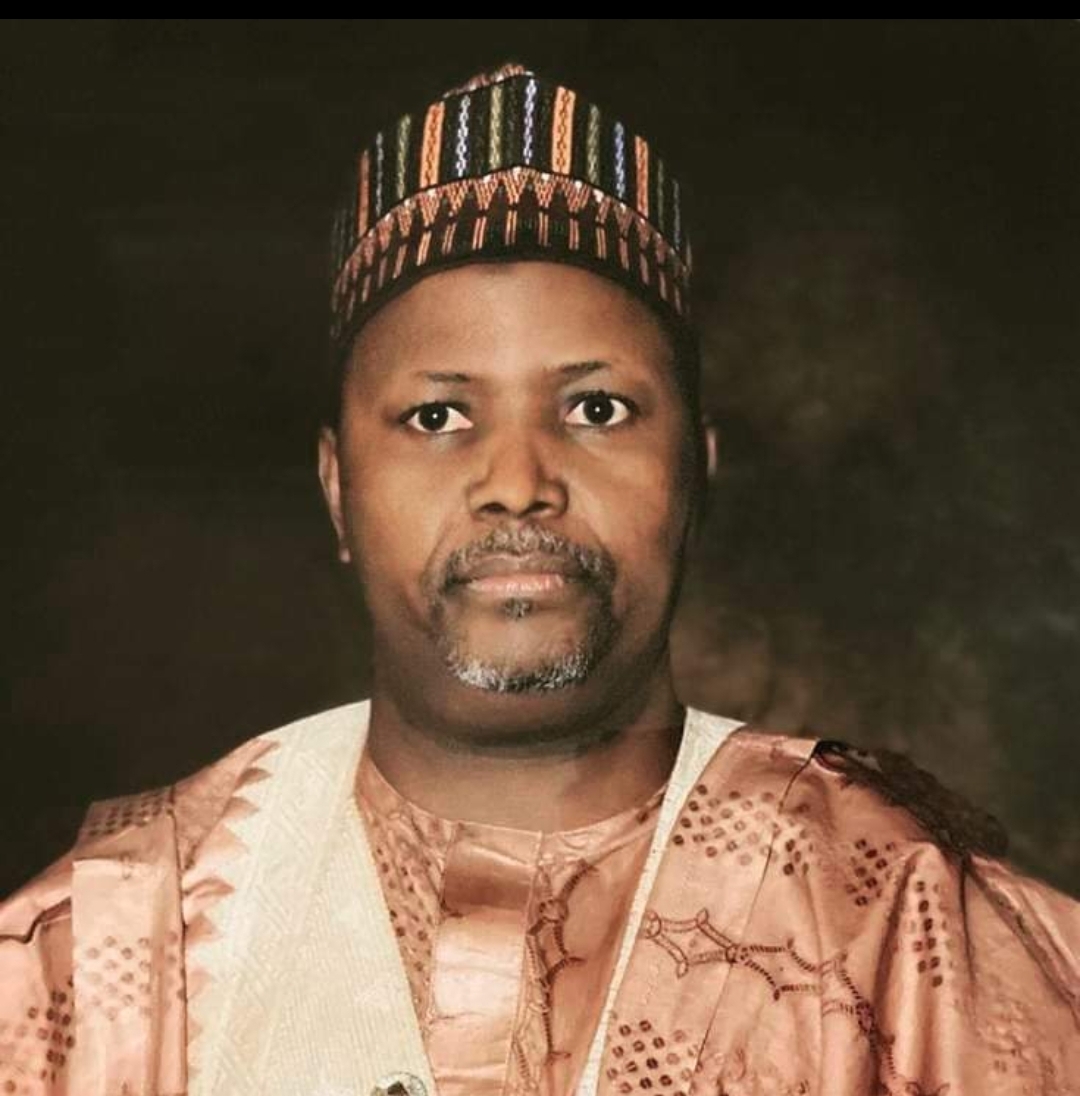
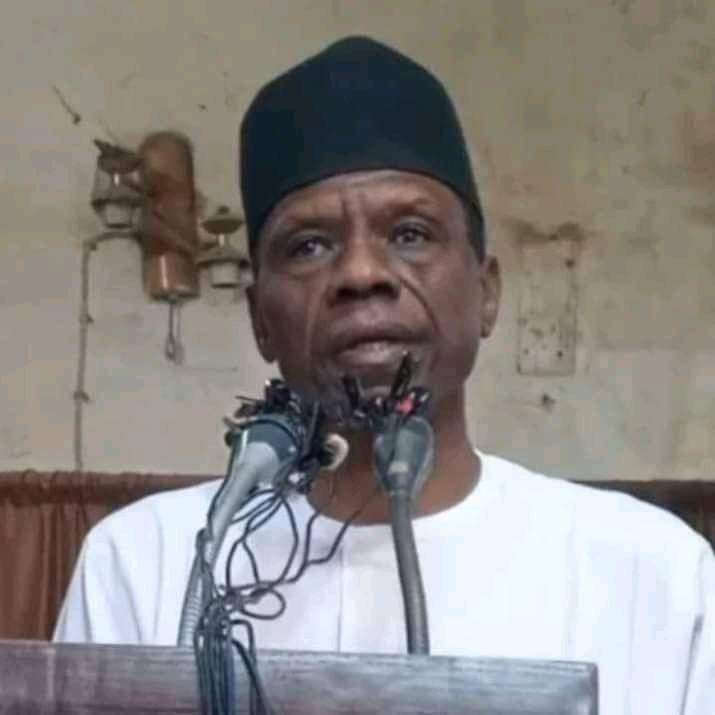
Ramadan: Dr Bichi distributes foodstuff worth millions

By Lamara Garba Azare

A chieftain of New Nigeria People’s Party (NNPP) in Kano State and former Executive Secretary of the Tertiary Education Trust Fund (Tetfund), Dr Abdullahi Baffa Bichi has distributed essential commodities worth millions of Naira to the needy as part of a humanitarian gesture to ease the suffering of the populace.

The items, which include rice, cooking oil, noodles and other commodities estimated at several hundreds of millions of Naira.

Interestingly, the commodity was given across the board irrespective of the party affiliations of the beneficiaries.

Those who benefitted from the gesture prayed to Allah to reward him abundantly.

A widow with 7 children who said she travelled from a far distance to come and collect the gesture burst into tears of joy when she was given 25kg of rice, noodle and cooking oil, saying the last time she saw rice was about a year ago.

“We have no words to thank Dr Bichi. If he had known how happy we are now, certainly, he would further understand the suffering of many of us. To be frank with you, the last time I cooked rice in my house was a year ago when I was passing by the Kabuga area, and I saw a large crowd of women going inside BUK quarters to collect food items. I joined them, and luckily I was given too.”

The coordinator of the distribution exercise, Honourable Ghali Mu’azu, said several thousands of people male and female from across the state have benefited from the gesture.

According to him, this gesture had been instituted by Dr Bichi for a long period of time, spanning over two decades, and priority was given to the elderly and those with physical challenge cutting across all strata of people.

“We gave out to every lucky person irrespective of his political leaning. Ours is to touch humanity by giving it to the needy among the populace,” he said.

Mr Ghali commended the compassionate attitude and benevolence of Dr Bichi, who he described as kind-hearted and a man with a big heart.

Much-awaited debate between Dr. Dutsen Tanshi, Sufi clerics suspended

By Muhammadu Sabiu

The Bauchi State Government has suspended the much-awaited debate between a controversial cleric, Dr Idris Abdulaziz Dutsen Tanshi, and other scholars who tagged his recent comments about “seeking humanly impossible” help from Prophet Muhammad (SAW) as inappropriate.
 
The suspension, according to the state’s Sharia Commission, is until further notice.

Recall that during a Ramadan Tafsir session, Dutsen Tanshi was quoted as saying, “We don’t need help from Inyass; we don’t need help from Tijjanni; we don’t need help from Abdulqadiri; we don’t need help from Shehu Usman. In fact, even from the Prophet. That’s the end of it.

“Whose help do we need? Allah. It’s left to them to twist my words. The Prophet himself said, ‘If you need help, seek help from Allah.'”

Consequently, in a letter the Bauchi State Shari’a Commission sent to the cleric late yesterday night, it says, “I am directed to write and formally inform you of the reschedule[d] date of the interactive session earlier slated for Saturday, 8th April 2023.

“That the new date will be communicated to you accordingly, please.” 

Danmodi and the burden of history in Jigawa

By Kabir Musa Ringim

Now that the election is won and lost, the winners are strategizing and restrategizing, the losers are grieving or heading to court, the politicians are politicking, lobbying, and cross-caperting to be invited to the dining table, the contractors and investors are hoping for their returns on investments, and the technocrats are lurking while the masses are waiting for the transition to start enjoying the dividends of democracy.

Jigawa, as the most peaceful and most homogenous state in the country, witnessed one of the best gubernatorial elections nationwide this year, characterized by being largely peaceful, free, and fair with little or no incident of violence or strife. Contrary to the presumptions prior to the poll, people shamed the rabble-rousers, the agents of disunity, and the promoters of strife with the intent to sow discord and instability by voting the most competent candidate all over the state without minding his zone. It is heartwarming that Mallam Umar Namadi Danmodi won in 26 out of 27 LGAs and got more than 30,000 votes in the remaining LGA; the figure is higher than that of most LGAs thought to be his bases or strongholds.

The result stopped a dangerous precedent that may be the cause of mayhem and instability in our dear state. A few weeks before the elections, both protagonists and antagonists latched onto the intense emotions of the gullible by fueling turmoil to score cheap political goals. It was reported that our hidden enemies with evil agendas were disappointed to learn that we’re still united, and we left no clue as to when and how they will see us divided. Jigawa people are united in every aspect: in faith, language, dress, houses, economy, education, etc. No amount of intrigue, espionage, or blackmail will make us lose our guard and allow the purveyors of hatred to cost us our peaceful coexistence, which was the envy of most states.

But as the transition date of May 29th approaches, I start to sympathize with the incoming governor. The vast expectations on him are far too many. The people are looking up to him as a messiah to rescue them from the pangs of poverty and hunger. The masses hope he will resuscitate the ailing educational sector and revive the falling health sector while maintaining the progress made in the economy, roads, and infrastructure championed by his immediate predecessor. I can say without any fear of contradiction that no Jigawa governor-elect in history has enjoyed the widespread support Danmodi is currently enjoying, to the extent that the opposition is almost crushed and driven into extinction. Thanks to his great personality, personal integrity, magnanimity, and charming character.

The first task of great priority facing the new governor is how to strengthen the peaceful atmosphere by being fair and just to all, irrespective of zone or political affiliation. He should strive to be the governor for all and sundry. Another urgent task of equal importance is that he should put an end to the recent widespread and politically motivated suspension of traditional rulers so as to save our traditional institutions and cultural heritage from mockery and extinction. More importantly, while deciding on his prospective cabinet members, he should consider the technocrats to work with him alongside the usual politicians; I believe he will do this by considering his speeches at the meetings he held with us, the Jigawa academics, at different times in Dutse.

The selection of cabinet members is what determines the success or failure of any administration. The composition of the cabinet will make or break any administration. Danmodi should exercise restraint and not reward political loyalty by imposing incompetence on Jigawa people. As Professor Sheikh Mansur Sokoto recently advised the Zamfara state governor-elect in a widely shared video clip, there are so many ways to reward politicians, not necessarily by appointing them to sensitive positions they are incapable of managing. My advice to Danmodi at this crucial stage is to consider professionalism, competence, capacity, and character when choosing his political appointees. A square peg in a round hole will result in nothing but disaster, and history will not be kind to Danmodi if he enables that.

Secondly, our governor-elect should build on the progress of his predecessors in all sectors and capitalize on their weak areas. Saminu Turaki’s ICT development, Sule Lamido’s institutions and infrastructure, free girl child education, and haihuwa lafiya, Badaru Abubakar’s gains in economy, revenue generation, and infrastructure, should be sustained or resuscitated. Recruitment of teachers and health workers should be treated as a matter of urgent attention. A state of emergency should be declared on poverty and unemployment among youth and women to arrest the sad situation of living in extreme poverty amidst abundance of wealth prospects and means of prosperity. Flood mitigation procedures should be employed so as not to exacerbate the already dire situation of perennial flood incidents.

Lastly, I wish the governor-elect all the best as he steers the affairs of our deer state in the next four years. I pray that he finds a way to deliver in this difficult terrain. The hopes are high, the expectations are immeasurable, and the politicians seeking relevance or appointments are numerous, but the mandate belongs to us, the masses and ordinary citizens, as we are by far the largest in number.

Kabir Musa writes from Ringim and can be reached via ringimkabir@bupoly.edu.ng

Ripples from the Adamawa 2023 inconclusive governorship election

By Zayyad I. Muhammad

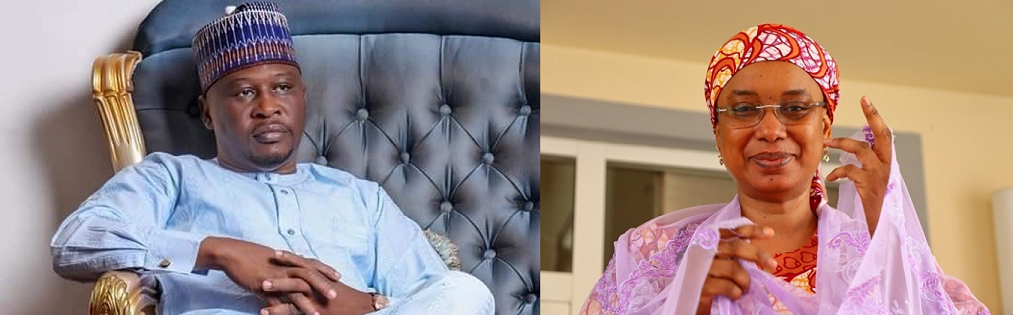
The Independent National Electoral Commission (INEC) has fixed Saturday, April 15th, 2023, as the day for the Adamawa state governorship supplementary election in 69 polling units across the state. Governor Ahmadu Umaru Fintiri is going into the supplementary election with a margin lead of 31,249 votes. Senator Aishatu Dahiru Ahmed Binani needs a miraculous miracle to dilute this margin from the 37,706 expected votes in the 69 polling units where the supplementary election will be conducted. Though miracles, they say, do happen!

Despite the opened anti-party she faced from some members and executives of her party. Her disregard for the crucial aspect of politics – collaborations with everybody and anybody, plus her failure to send an olive branch to some of the APC governorship aspirants who lost to her during the APC governorship primaries, including the indifference to her candidacy exhibited by some stakeholders of the Adamawa APC, Binani has proved a point- Binani shook Governor Fintiri in a way he never expected.

Candidate Fintiri came to the March 18 governorship election over-confident but with poor calculations and with so many off-the-shelves strategies. For instance, he thought that his 2019 bloc vote was still intact, but he was wrong- many people in the bloc vote have realised that they’ve nothing to gain from it- it was mainly Fintiri’s ‘cousins’ and close associates who mostly enjoy the goodies meant for the bloc vote. Fintiri’s second mistake was the poor deployment of logistics – this is obvious from how he performed in the Adamawa North Senatorial District- his primary constituency- Fintiri got only 53% of votes, losing 3 of the 5 LGAs. Though Binani also performed poorly at her central zone- she got only 45% of the total votes – winning only 3 of the 7 LGAs.

When the controversial Fufore LGA result was announced, Gov was pictured celebrating victory with his Aides. However, a few minutes later, when the final result was declared inconclusive – again Fintiri was pictured in a deflated mode. Students of politics and history should study INEC’s declaration of Adamawa 2019 and 2023 governorship elections as inconclusive relative to the man ‘ Ahamdu Umaru Fintiri’- it always brings out ‘the punctured him’. In 2019 when the election was declared inconclusive, Fintiri ran to former Vice President Atiku Abubakar for help and equality in 2023.

When his re-election was also declared inconclusive, Fintiri returned to Atiku for another help. In fact, in 2019, former governor Boni Haruna saved the day for Fintiri. In a press conference, Boni highlighted the difference and the importance of registered voters and PVC collected, which today has become a working document for all political parties and INEC itself.

 Fintiri is a man that often boasts that he is a man of great political sagacity, he often claims to have retired many people or has ‘shaved’ their heads from politics, but whenever he is faced with an intricate political situation, he suddenly becomes punctured and runs to same people for help.

As earlier mentioned, Binani needs a miracle, or the 8th wonder of the world, to upstage Fintiri’s 31,249 votes lead from a pool of just 37,706 votes. Nevertheless, whoever wins the 2023 Adamawa governorship election, will face a big legal tussle; that’s why people were shocked when Fintiri and his convoy were seen returning from Fufore LGAs, in the name of collection results to the state collation centre. It is simply bizarre- when a contender in an election turns himself into the electoral and collation officer.

 Politics is about interest and survival – the APC members and executive who worked against Binani – did it to survive- For the executive to protect their seat, while for some of the stakeholders- it is about 2027 calculation if there is an incumbent governor from the APC, the ticket is closed for eight years. And supporting Fintiri is also another of their calculations. If he wins, he will leave the scene after four years. Thus, 2027 will be free for all.

For some of the prominent PDP stakeholders who were also indifferent to Fintiri’s candidature, they did it to remind Fintiri that ‘big’ is ‘big’- Fintiri went to the election almost solo with his lieutenants, but he could not get an outright victory but managed an underdog-like inconclusive win.

 In conclusion, Governor Fintiri has the brightest chance of coasting to victory in the April 15th supplementary election, but he’s the biggest ‘loser’ in this election- his political might has been reduced to its lowest. He now knows that going to the Senate in 2027 is not as easy as he thought, and bringing a successor from the PDP is not in his absolute control. Another loser is the APC and some of its executives that opened antiparty – Adamawa APC remains fragmented for some time to come- this will hunt the party in the next cycle of elections, as pay-back-time will be the order of the day in the party for many years to come.

Binani, on the other hand, her chance of winning the election is near zero, but she is one of the biggest winners in the election – despite little support from her party in the state and open anti-party from some party executives, she made points and strong political statements. Another winner of this election is some PDP stakeholders and the PDP itself- this election has removed them from any shackle – had it been that Fintiri had a smooth ride; won the election with a significant margin effortlessly, he would attempted to ride on anybody in Adamawa politics in his second term.

 Zayyad I. Muhammad writes Abuja via zaymohd@yahoo.com.

Former Nasarawa deputy governor kidnapped

By Muhammadu Sabiu  

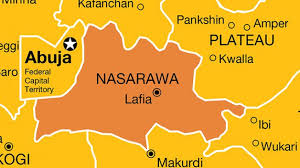
Professor Onje Gye-Wado, a former deputy governor of Nasarawa State, has been abducted by gunmen who are believed to have entered his town, Gwagi, in the early hours of Friday. 

According to a family member who confirmed the occurrence, the kidnappers entered the property through the fence, broke in through his wife’s window, and then took him to an unidentified location. 

The source said, “His wife came in for Easter celebration and they broke into the house through her widow and took him away to an unknown destination. We are hoping that the security agencies will make efforts towards rescuing him unhurt.” 

The Police Public Relations Officer in the state, DSP Ramhan Nansel, confirmed the abduction and said the police were making efforts to rescue him unharmed.

Buhari fires NIPC boss

By Ahmad Deedat Zakari

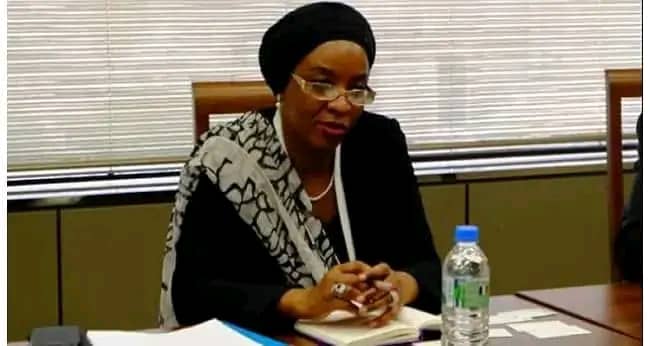
President Muhammadu Buhari has sacked the Executive Secretary and Chief Executive Officer of the Nigeria Investment Promotion Commission, Saratu Umar.

The Special Adviser to the President on Media and Publicity, Femi Adesina, disclosed this in a statement he signed on Thursday.

According to Mr Adesina, the President has communicated the directive of Umar’s termination of appointment to the Honourable Minister of Trade and investment, Otunba Richard Adeneyi Adebanjo.

He also stated that the president ordered that the most senior director in the commission takes over immediately.

The statement reads: “President Muhammadu Buhari has terminated the appointment of Hajiya Saratu Umar as the Executive Secretary/Chief Executive Officer of the Nigeria Investment Promotion Commission (NIPC), with immediate effect.

In a directive to the Honourable Minister of Industry, Trade and Investment, Otunba Richard Adeniyi Adebayo CON, the President also mandated the most senior Director in the Commission to immediately take over in the interim. “

Rarara’s Invective Barbs: innuendoes, body shaming, and Kano politics

By Prof. Abdalla Uba Adamu

For the past 43 years that I have been a researcher, there were two areas I stay clear of: politics and religion. If you see my hand in any of these two, then the entry point is popular or media culture. For instance, I have recorded a lot of Kano Qadiriyya’s Anfasu zikr, not as a devotee, but as an ethnomusicologist – focusing on the body percussion and movements (after studying the wonderful works of Margaret Kartomi on body percussion while in Morocco). Similarly – and to balance things somewhat – I recorded Tijjaniyya zikr sessions at Chiranci in the city of Kano as part of a larger study on religious performances. All my recordings were uploaded to a dedicated YouTube public channel. I was, therefore, amused when people try to pigeonhole me either as Qadri or Tijjani. I am neither.

Politically, I am apolitical, meaning I really don’t care who rules the country. I don’t even vote, having done once a long time ago (at the insistence of a dear friend), and promised never to do it again. But performance arts brought my attention to protest songs and the prosecution of singers in Kano. The end product was a paper, “Poetic Barbs: Invective Political Poetry in Kano Popular Culture” which I am sure is floating somewhere in a modified form. And I thought that was it.

In 2014 I came across a song that I found amusing. I was playing it on my laptop when someone exhibited surprised that I was listening to the songs of Dauda Adamu Abdullahi Kahutu, with a stage name of Rarara. That was the first time I even heard the name. The song was “Zuwan Maimalafa Kano.” It attracted my attention in two ways. First, its lyrical construction, as well as its delivery, was just amazing. Rapid fire. He should have been a rapper, a genre of music I am totally besotted on (old school DMX, 2Pac, Snoop Dogg, Ice Cube, Queen “The Equalizer” Latifah, y’all). It was clear Rarara was singing off the cuff, not reading from a setlist or lyrical sheet. Second, it was the most detailed invective song I have heard in the Hausa Afropop music genre. I started digging and latched on to him and his songs. So, for the last seven years or so, I have been following every song he released using the invective matrix.

So, what is an invective song? Invective is the literary device in which one attacks or insults a person or thing through the use of abusive language and tone. If you like, “zambo/shaguɓe”. Invective is often accompanied by negative emotion. Invective can be divided into two types: high and low invective. High invective requires the use of formal and creative language, while Low invective, on the other hand, makes use of rude and offensive images. From 2010, Rarara became a master of popular Hausa invective oral poetry. He used his skills to abuse, insult and body shame anyone he was paid to insult. Including former masters and associates.

A pattern evolved. His switchbacks. Chronologically, his earliest non-invective song was “Saraki Sai Allah” (in honour of then Governor Ibrahim Shekarau’s turbaning as Sardaunan Kano in 2010 by the late Emir of Kano, Alhaji Ado Bayero). In 2011 – barely a year later – when Shekarau failed to anoint Rarara’s ‘master’, Deputy Governor Abdullahi T. Gwarzo, to succeed him, Rarara became ballistically invective – and established a career in body shaming, abuses and innuendoes against various previous masters. Shekarau bore the blunt of colorist abuses – often a case of the kettle calling the pot black. No one was spared his invective barbs. Deeply cut. Insulting. Spread over 39 songs, from 2014’s “Malam Ya Yi Rawa Da Alkyabba”, to 2023’s “Tangal-Tangal.”

I have seen social media calling Rarara out on his not being a Kano indigene, getting rich in Kano through his songs, and yet insulting Kano’s leaders. This is all true. However, ‘da ɗan gari a kan ci gari’ (enemy within). Only about three songs in my analytical corpus by Rarara were free-standing (i.e., unsponsored). All the others were commissioned and paid for – by politicians from Kano, to abuse other politicians from Kano. Rarara always acknowledges his sponsors in the opening doxology of his performances.

Rarara was a highly unprincipled and unethical businessman. Show him the money, and he will praise his closest friend and abuse the friend’s enemy. Show him more money, and he will insult the same friend he praised, and heap praises on the enemy he insulted. Does anyone remember that the glorified “Ɗan Ƙaramin Sauro” (irritating mote) was part of the demeaned “Banza Bakwai” (Bastard Seven)? The bromance did not end well, did it? Business unusual.

In any event, Rarara’s invective braggadocio came back to hit him hard on 5th April 2023 when his opponents used his mother’s picture in unflattering terms and splattered it all over social media and gave her a feminine variation of an insulting name he used against one of his targets. Apparently when the shoe is on the other foot, it pinches.

Thus, instead of focusing on political ideology and promises of creating a better life for the electorate, often politicians in Kano (and I think Kano, as usual, is the only state that uniquely does this) would pay more attention to denigrating, shaming, and condemning opposing candidates, creating an unfavorable imagery of the politician to prevent his being voted. Rarara was a perfect malleable puppet in this process. He has the same emotional value to Kano politicians as an alien from Saturn. Despite his lyrical brilliance and acerbic wit, he was expendable. How many singers from Kano can you recall doing the same invective insults as Rarara to Kano politicians? Two? Three? Their corpus is not as extensive as that of Rarara. Conversely, how many politicians from Katsina pay Rarara money to insult other Katsina politicians? I can only remember one.

Wary of possible legal action against direct defamatory speeches, politicians often find it easier to engage what I call ‘political drones’ to communicate their defamatory messages through the popular medium of singing. In this way, when push comes to shove, it is the singer who would face legal – or in some cases, physical – wrath in one way or other. Unethical singers like Rarara – who was arrested, but not charged in 2014 over “Zuwan Maimalafa Kano” – were willing to pay the price in exchange for the stupendous amount of money they will receive. At least they will have enough for medical care when their houses were wrecked, assaulted and incapacitated to continue singing.

And the politician who caused it all? He can’t even remember the song that made him popular, having moved on to greener political pastures. Until the next election cycle when he will latch on another expendable drone to help him heat up the polity through more invective songs using campaign words he does not have the guts to utter himself.

Rarara’s defense of not uttering specific names in his invective taunts and body shaming do not stand up to scrutiny under Nigeria’s defamation laws, and demonstrates that while he was a brilliant lyricist, he needs to understand the law. This is because his invective defamation in the form of his songs is publicly available (indeed, he made them so), created a narrative about individuals that are easily identifiable either by their physical appearance or public behavior, created a negative impression on the person being so targeted, and was not misquoted as Rarara’s utterances (from his songs) were publicly available and subject to an only interpretation as intended. A clever prosecutor would have enough to jail Rarara on listening to any of his invective songs, if someone complained hard enough.

Invective songs can often have their positive sides in the sense of making politicians – or their targets – aware of public perception of their misdemeanors, or at most, errant behaviors. Rarara’s invective narrative in the selected songs I analyzed, however, do not demonstrate their oversight functions in public accountability for politicians. Regardless of whether explicit names were uttered or not, their narrative was focused on kicking them when they are down, and subjecting them to public ridicule. This questions the artistry of Rarara as a purveyor of aesthetic values of the Hausa oral arts.

Academicians ignore Rarara and his art – and I think that’s a mistake. True, some would argue that his songs have no aesthetic, intellectual or ideological value. On the contrary, they do. In their own way. They are beautiful as lyrical discourses. His delivery is truly artistic, even if the content is inelegant. Unlike other songs in the repertoire of political communication, his are not protest songs, and thus lack ideological focus. They neither educate, illuminate or illustrate any aspect of political culture. They only entertain – at the expense of the dignity of the people he attacks. His songs synthesize Hausa rural lexicon overlayered with abusive, often self-constructed urban jargon to enhance general appeal – and act as rabble rousers for politicians who think like him. It is a unique, if unadmirable business model in the performing arts.

Subsequently, Rarara’s songs cannot be compared, by any stretch of imagination, with the classical Hausa protest poets such as Sa’adu Zungur, Mudi Sipikin, Aƙilu Aliyu, Abba Maiƙwaru and Aminu Kano, whose artforms were fueled by educative political ideology, certainly not profit. Mudi Sipikin, for instance. used his poetry to attack the system of colonial rule. Aƙilu Aliyu wrote poems directly attacking the NPC. Abba Maiƙwaru wrote a 10-line NEPU poem for which he and Aminu Kano were arrested in the mid-1950s.

Zungur used his poetry originally to warn the emirs of the north of the necessity for reform, as illustrated in his central work, Jumhuriya ko Mulukiya [Republic or Monarchy]. In this work, he called for political and social problems to be solved on the basis of the existing Islamic institutions, rejecting alien political concepts. He later used his poetry to appeal directly to the common people. In a similar vein, one of the earliest poems written for a northern political party was by Aminu Kano, and called ‘Waƙar Ƴancin NEPU-Sawaba’ [Freedom poem for NEPU-Sawaba], and published in 1953 and put in the final form by Isa Wali. It was one of the earliest statements of Nigerian nationalism.

Despite all these, I argue that as researchers we can’t afford to ignore a current of knowledge flowing right at our feet. But the cold shoulder given to Rarara by our community, opposed to Aminu Ladan Abubakar (ALAN Waƙa) who is a toast to the academic and intellectual community, merely emphasizes the expendable and ephemeral nature of Rarara’s art. Ten years after the release of any ALA song, it will still have relevance. The relevance of Rarara’s songs rarely last to the next song release. Instantly forgettable.

Nevertheless, just as we struggled for the recognition and documentation (if not acceptance) of the Kano Market Literature in the 1990s when everyone was denigrating it, we need also to document the stream of popular culture, including Rarara – warts and all – flowing around us at all times. As far as I can see, only Maikuɗi Zukogi has focused attention on two of Rarara’s songs. More needs to be done.

As soon as I tell myself that I will wrap up the research, he will release a song insulting a former master or associate. Subsequently, I delayed publishing the research until he insulted two people, and true to expectations, he did. These were President Muhammadu Buhari (Matsalar Tsaro) and Governor Abdullahi Umar Ganduje (Lema ta sha ƙwaya). With the ‘Hankaka’ barb against Ganduje in the Lema song, my fieldwork became almost complete. His destruction of “ɗan ƙaramin sauro” leaves only the references to be completed. As I argued, based on his corpus, Rarara sells to the highest bidder with neither conscience nor ideology. The huge profit he makes serves as insurance against future loss of earnings when Kano politicians become mature enough to stop patronizing him to insult each other (and themselves) and utilize his skills in more constructive ways.

My thanks to a team of eager research assistants, headed by my ever-faithful and close companion, Hassan Auwalu Muhammad – a former songwriter and lyricist himself. He was the one who mainly, patiently, transcribed the songs, which I wove into a narrative going to almost 40 pages! I plan to upload the lot during my Summer break when the children are all here on holiday! By then, the threatened wobbling ‘Tangal-Tangal’ had stopped and probably settled for a four-year legal battle.

Professor Abdalla Uba Adamu can be contacted via auadamu@yahoo.com.

Saudi Arabia offers £100m to manage national team

By Muhammadu Sabiu 
 
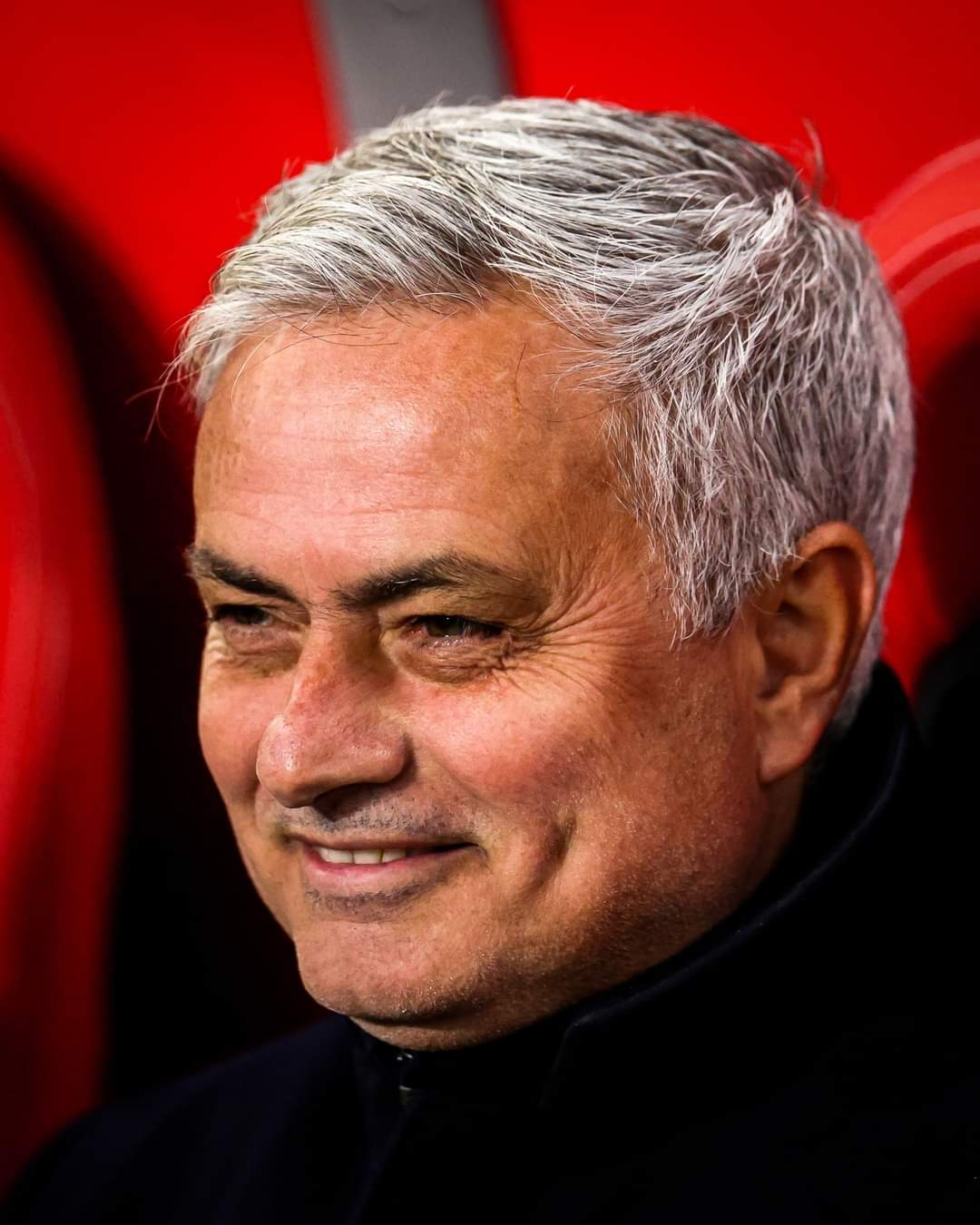
According to a report by the Daily Mail, Jose Mourinho, the manager of Roma, has been offered more than £100 million to coach Saudi Arabia in a two-year contract, making him the highest-paid manager in history.
 
Al-Nassr have expressed interest in Mourinho, according to the English news outlet on Thursday.
 
The 60-year-old Portuguese coach signed a contract with Roma in 2021, and his current deal with the Serie A side extends through 2024.
 
Nonetheless, there have been disagreements about transfers and disappointments with Roma’s results this year.

Nigeria: Prognosis and challenges against the incoming government

By Iranloye Safiu Taiye

Nigeria became an independent State on 1st October 1960 from her former British colonial masters, which ushered Nigeria to the comity of a sovereign state and membership of the United Nations (UN) after decades of British colonial administration officially came to an end (1900 – 1960). On the eve of independence, our nationalists and politicians were mandated to administer Nigeria after rigorous agitations, struggles, and movements by our nationalists, who fought passionately to attain self-rule and independence. It was a memorable period when millions of Nigerian citizens, at home and in the diaspora, troops out with Nigerian flags to celebrate and jubilate the end of the British colonial rule on our father’s land. 

Nigeria is a heterogeneous and multiethnic state with multifaceted socio-economic and political backgrounds. These invariably made Nigeria a unique pluralistic State with more than 450 ethnic nationalities. Despite the diverse culture, religions, customs, languages, social beliefs, and norms within Nigeria’s setting, we’ve managed to dwell together even in the face of our glaring diversities, and this is one of our greatest achievements decades after the independence, notwithstanding the several events that have posed challenges to our national unity. Our country is one of the most blessed states globally, occasioned by the abundant natural endowments deposited across the States of the federation, which had positioned Nigeria better in the comity of nations. Not just that, we’re also blessed with adequate human resources capable of culminating our development. Hence, these human and abundant natural resources can better stimulate sustainable growth in Nigeria than we are currently experiencing.

Paradoxically, the Nigerian quest and cruise to greatness were aborted and short-circuited by the military intervention in Nigeria politics on 15th January 1966 led by Gen. Chukwuma  Kaduna Nzeogwu, who later installed Gen. J. T. U Aguyi Ironsi as the first military head of state, according to the prominent argument of many scholars. The 1966 bloody coup de tact and the subsequent counter-coup de tact had been pointed out by many as the rationality behind Nigeria’s development stagnation.  Because the military regime that lasted for three decades was driven by a mere parochial desire  to rule devoid of prior political training or orientation about governance

Like every other country, Nigeria had hills and challenges that required mechanisation to provoke development and fulfil its obligation to its citizens. However, six decades plus after Nigerian independence, there are some questions critically requiring answers; 

A.) Is this the envisioned Nigeria by our nationalists and founding fathers? 

B.) Have we been utilising our cultural plurality and resources to catalyse the State of our dream? 

C.) Despite these enormous endorsements, can Nigeria even compete with the countries aboard with little endowment compared to Nigeria? 

Nay! The Nigerian vision and enormous resources had been ill-managed, and we’ve scrapped our national interest to the hand of corruption, nepotism, favouritism, and chauvinism. It’s saddened these challenges have become a phenomenon, very terrifying, cumbersome, and complex because we have failed to implore a holistic approach to proffer an answer to our societal challenges. Hence we pursue individualistic and least regional interests against national interests, which have ejected the spirit of one Nigeria from most citizens. Sadly, this has also metamorphosed and Jingerd the swagger of many separatist movements and self-rule agitations across the Northern and Southern pole of the country. i.e. IPOB in the Southeastern region, Middle-belt in the Northcentral region, and Yoruba Nation in the Southwestern region.  

Security which has to be the first duty of every government, has been compromised by the action of terrorists, bandits,  kidnappers, armed robbers, ethnic militias, and other criminals everywhere. This horrible event threatened the safety of life and properties of every citizen, regardless of their position or calibre in the state. Therefore, though the actions of our gallant military men, Nigeria police, and other law enforcement agencies cannot be overemphasised, they will be better off if they can empower the service men with better-sophisticated weapons and machinery to curb the insecurity across the nooks and crannies of our country. Therefore, more advanced weapons and ammunition with technical military training are germane now than ever.

The Nigerian economy was known to be enormous and giant before, but currently, the buoyancy of our economy is now a past glory; even Naira is now at the bottom of the global currency index. Diversification of our economy from crude oil dependency must move from a mere paper presentation to reality. The agricultural and manufacturing sector needs serious attention. Recharging this sector is the only remedy to witness a balance of trade, open the door for more investors and open Nigeria’s market to the international community, and change our status of a perpetual importer, if we want our economy to get back on track and compete favourably with other developing and developed countries of the world. Significantly, both the education and health sector needs critical attention and consideration because this is the brain and blood of every state, and the sorry situation of these two sectors is currently condemnable. 

Glaringly, Nigeria has been ravaged with internal problems ranging from separatist movements, clamouring for restructuring, intimidations, domination, and masterminding of regional agenda despite the constitution forbidding that. However, the pluralistic situation that has polarised us must be considered when deciding to affect the entire country if we don’t want unnecessary agitation that can further divide us. 

In conclusion, I will opine the new regime because of National unity and to curb rising agitation for self-government from different parts of the country. The political parties that won the national election should establish a federal government, not the usual winner-take-all, and douse the growing tension. Optimistically, realising Nigeria’s better tomorrow is achievable and redeemable only if we are ready to admit our differences and substitute our regional, ethnic, religious, and personal agenda for national interests. 

Notwithstanding, we must all be ready to partake in national affairs, challenge our leader for accountability, and embrace our national culture devoid of unholy ethnic jingoism when debating national issues.  

Iranloye Safiu Taiye (Optimism Mirror) can be reached via iranloye100@gmail.com