Month: April 2023

Kano needs more journalists

By Yakubu Nasiru Khalid

Journalists play a crucial role in the ruin of wrongdoings and corruption by reporting the news to the public through various media, research, interview sources, and writing accurate and balanced stories. They also hold those in power accountable by investigating and exposing wrongdoing and corruption. Journalists can simply be described as the voice of the voiceless. 

Moreover, Kano State is the second most populous state in Nigeria, with 44 local governments, and most local governments are outside of the Kano metro. As a result, the voice of the people living outside the metro is not heard. As a result of the lack of journalists that conduct rigorous investigations and research public problems, these rural areas remain neglected.

As gubernatorial elections and State Assembly were conducted in Nigeria on 18 March 2023, many polling units were declared inconclusive due to poor security operations, a snatch of ballot papers and arsons etc. This led to declaring some polling units as inconclusive.

Supplementary elections were held on 15 April 2023 in local governments like Tudun/Wada, Garko, and others. Unfortunately, a large number of thugs were brought into the respective polling units, and those that were legally and legitimately responsible for re-electing were denied and threatened by the thugs. But unfortunately, it is hard to get even a single journalist who eye-witnessed how the election was conducted. Most of these journalists only analysed reports based on their sentiments and opinions. 

In conclusion, journalists can positively impact rural areas by reporting objectively and accurately on public problems without pushing a partisan agenda. However, journalists must avoid promoting divisive rhetoric that pits rural communities against urban areas or different political factions. By investigating local government officials and other influential individuals, journalists can help ensure they act in the community’s best interests. However, this must be done responsibly and fairly without sensationalism or fear-mongering.

Three Crowns Milk producer under fire over ad in shoddy Hausa

By Muhammadu Sabiu 
 
FrieslandCampina, a multinational dairy producer of the famous Three Crowns Milk and many others, has come under fire over the wrong translation of a billboard advertisement from English to Hausa.
 
Many Hausa-speaking social media users, particularly on Facebook, have taken it to their handles to criticise the company for the unprofessional translation of the advertisement.
 
Several of them attributed the error to Campina’s unwillingness to hire professional Hausa translators, adding that it might have been a work of a machine translation.

Attaching pictures to his post about the advertisement, a Facebooker named Aliyu M. Ahmad wrote: “Have you seen the work of ‘Google Translate’?
 
“This is done as if we don’t have Hausa brand designers.
 
“Please, somebody should translate it into standard Hausa.”
 
Another one, Ashir, posted, “Three Crown[s], you’ve raped the Hausa language.”
 
The Daily Reality has gone through social media pages belonging to the company but has not seen any responses to the criticism yet. They were not reachable for a reaction either.

In the past, many Hausa social media users complained about similarly terrible translations seen on billboards adverting one or another product in northern Nigeria.

Others called on the Advertising Practitioners Council of Nigeria (APCON) to intervene. However, The Daily Reality has not seen such an intervention from the council as during this report.


Take pity on the innocent children!

By Muhammad Muhammad Khalil

Marriages built on love, affection and mercy are expected to last forever. But, unfortunately, whilst some marriages crash in infancy, others spanning for decades end up in divorce, too. The psychological trauma children of those failed marriages experience due to their parent’s separation is deep and enormous, negatively affecting their physical and mental health.

In most cases, the love lost between ex-couples shifts to their children. Both the mother and father show unconditional love and care for them, for love of one’s progeny is an inborn disposition in humans and animals.

Despite this, there are pockets of male parents in our society who decline to provide sustenance for their children once the split occurs. They, sadly, leave their ex-wives and their families with the burden of fending for their seeds. Instead, the wives’ families, stacked with their backbreaking responsibilities, bid their daughters to take the matter to court.

It is profoundly depressing how our Sharia courts are flooded with such cases (as mentioned above). I have seen multiple men go to jail for failure to comply with court orders, namely, to give their ex-wives the measly amount designated for the sustenance and upkeep of their children.

From what I have learnt thus far, some men defaulted not because they could not afford it but rather due to their fall-out with their ex-wives, the children’s mothers. The innocent kids usually take a back seat thanks to the resentment the father harbours against the mother. To treat their ex-wives harshly, they deprive their children of their necessities. One wonders: what benefit do such men draw from putting their kids’ lives in misery and danger?

The situation of some divorcees is both worrisome and pathetic. Many have become frequent court-goers because their kids’ fathers are reluctant to relieve the burden. Scores of children of failed marriages suffer significantly because the wrangling between their parents barely stops. The kids’ welfare stays truncated as a result.

My plea to such men is to fear Allah (SWT). And remember that the children they’re endowed with are a trust for which they’ll account. Their children have rights and responsibilities upon them.

As the prophetic saying goes: “All of you are guardians and are responsible for your charges; a man is a guardian of his family and is responsible for his charge.”

Muhammad Muhammad Khalil wrote this via muhdmuhdkhalil@gmail.com.

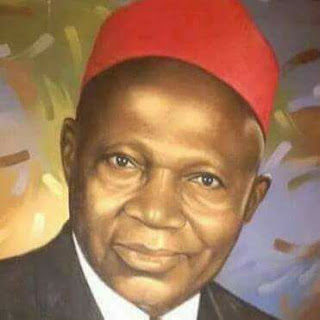
Forty years without Malam Aminu Kano


By Amir Abdulazeez

I became familiar with politics before the age of ten. One contributing factor was family members who contested for elective positions during Nigeria’s botched 3rd Republic in the early 1990s. I was close to people contesting positions as low as councillorship and as high as president. Whenever they were having discussions, there was one name that came up frequently, and that name was Malam Aminu Kano. At that time, his death was not even ten years old.

I knew little about this frequently discussed man then, but I grew up striving to understand more about him. I noticed that politicians from all affiliations adore him, pray for him and then treat him like a prophet. Whenever he is mentioned, people get filled with nostalgia. There is virtually no politician in Kano and, by extension, the greater part of Northern Nigeria who doesn’t want to be associated with the Aminu Kano brand.

For over thirty years since I first heard his story, I have struggled to understand more about him.  The deeper I went, the more I realized how special he was. From 2002, when I became much keen on observing and studying Nigerian politics, up to date, I have been very much convinced that the majority of the set of people we call politicians today are mere jokers without any vision compared to the likes of Malam Aminu Kano. Only a very few of them have tried to replicate the kind of discipline and honesty he was known for. During their era, the likes of Aminu Kano were in politics for a reason which was never self-centred.

Although he was known mainly as a politician, emancipator, reformer and activist, Malam was also a great author, orator, mentor and educationist. He is credited with establishing the modern Islamiyyah system we operate today. He is also believed to be one of the shapers of mass education practised today. He had touched society positively in many ways other than politics. That is why we have diverse institutions named after him; roads, schools, hospitals, airports, etc.

At the peak of his powers, Malam was literally the owner of Kano politics, yet he was humble, kind and generous even to his opponents. His honesty was uncommon even for his era. It was reported that one day, the then Kano State Governor, Muhammadu Abubakar Rimi, visited him with the gift of an electric generator. Malam enquired whether the governor had provided a generator for all the people of Kano State. That was how he rejected it, and Rimi had to leave with it. When Malam died, he didn’t leave any wealth for his family. His only house is now a research centre managed by Bayero University, Kano.

Today marks exactly 40 years since the demise of this rare human being. Although his ideology, ethics and teachings have remained significant, the people have never stopped mourning him. Every year, his death looks fresh; Malam will be mourned forever. He was a champion of progressive politics and justice, a defender of the oppressed and downtrodden, a true man of the people and a dedicated ad unique statesman. He is among the most outstanding Nigerians and a role model to millions of citizens and leaders. He will remain a reference point for a long time or forever. His history will be written and rewritten severally.

His death marked the end of ideological politics in Northern Nigeria. I see him as the greatest Kano citizen of all time, at least in the modern era. He has established a norm by living a life that any right-thinking person would aspire to lead. But, unfortunately, a society like Kano, which enjoyed a solid political foundation laid by the likes of Aminu Kano, is now governed by the kind of shameless and self-centred people we see today.

While some political leaders have worked hard and tirelessly to sustain the Aminu Kano legacy, many others have been anti-people, playing the politics of self-interest at the expense of society. The bitter part is that even political crooks and criminals disguising themselves as leaders are claiming to be identifying with the teachings of Aminu Kano.

Today, we have so many pretenders who claim to be disciples of the late sage, and only people with historical knowledge can unearth their treachery. It is funny that some people even wear his kind of attire, bragging about being like him, while in practice, they are corrupt, morally bankrupt and don’t adhere to any of his teachings.

Unfortunately, many who lived with him did not inherit his modesty, honesty and simplicity. Many of the influential people who remember him today only do so hypocritically. They were never sincere about promoting his virtues. People who claim to have him as their role model are stupendously rich beyond rationality while maintaining a questionable character. If he were alive, he would disown most of these pretenders.

Malam Aminu Kano was not wealthy; he didn’t hold many government positions. Malam didn’t force people into building a political empire, and he wasn’t greedy; his name has been written in gold, and nothing can erase it for the rest of history. The corrupt leaders of today will die to have his kind of name, but they can’t exercise any of his virtues. Instead, they are shamelessly hell-bent on garnering wealth, wealth and more wealth as if there is no life after death.

All my life, I have aspired to become myself and carve a niche from my own view of life. I had understood very early in life that every human being is unique in his own right, and there is no rigid template that everyone must follow to become great. Many great men have inspired me, but I still enjoy being myself. However, for every rule, there is an exception; from what I’ve gathered about Malam Aminu Kano, he is one person I can give up everything to be exactly like him.

Twitter: @AmirAbdulazeez 

The Illogicalities in English Grammar

By Salisu Yusuf

As against the traditional definition of grammar, English grammar is a mixture of arbitrary and non-arbitrary, logical and illogical rules that are fused to form a language that was hitherto made up of some feuding tribal groups (Angles, Jutes and Saxons). It was around the 14th century, when the Renaissance started, that many linguistic and literary forms and areas were borrowed from Latin, Greek, Sanskrit, French, Spanish, etc, to swiftly form a language that would be used to conquer the world.

English grammar is full of arbitrary and illogicalities that are used as rules governing language use.

The inconsistency of English grammar is vivid in tense formations. For example, the three broad English tenses are further subclassed into 12. Each one delineates a form of the verb that allows you to express a specific time. But the English language has bizarrely many different ways of forming future references. While, for example, “he has…” and “he had…” express two incongruous tenses, the following 5 sentences express one thing, one idea and one tense:

1. The man will take off in 2 minutes.

2. The man will be taking off in 2 minutes.

3. The man is going to take off in 2 minutes.

4. The man is taking off in 2 minutes.

5. The man takes off in 2 minutes.

Has your language such bizarre ways of expressing the same idea from different tenses fused in one tense?

While the auxiliary verbs such as have, has, had, etc attract past form of a verb, the past modal auxiliaries such as could, would, should and might ironically attract the present forms of a verb:

 He had arrived before you came.

 He could arrive before you.

What an incongruity!

There’s no grammatical environment where the rules of agreements are flouted as in the use of idiomatic expressions. For example, the rule of specification in the use of definite and indefinite articles is sometimes dropped in favour of the arbitrary. For instance, nouns and adjectives take articles depending on the environment. But many idiomatic expressions do not leave rooms for articles:

 He is second to last.✔️

 He is second to the last.❌

 Moreover, idioms such as “it is high time..” and “it is time..” bizarrely take past forms of a verb whenever they are used though they express the present context:

 It is high time we spent the night there.✔️

 It is time he was jailed.✔️

 Sometimes, two similar idioms can be at variance with a slight change in an article. For example, the following sentences express two opposite meanings:

 1. Musa had been the shadow on Abdu’s shoulders during their undergraduate days.

 2. Musa is a shadow of his former self.

While the first means that Musa was so intelligent that he was Abdu’s rival at the university, the second one expresses that Musa is no longer as formidable as he was.

English grammar becomes arbitrary under the notional concord. Notional Concord refers to the agreement of verbs with their subjects on the basis of meaning rather than grammatical form. For example, each of the following quantifiers takes a different rule when it’s used: while “a number of..” takes a plural verb, “the number of..” arbitrarily takes a singular verb: 

 A number of students are missing.✔️

 The number of students is missing.✔️

Similarly, in the use of a “catenative verb”(denoting a verb that governs a series of verbs in a sentence), two or more verbs can appear in different forms. Another can follow a verb in past form in continuous or even base form:

 I saw her complain.✔️

 I saw her complaining.✔️

 I saw her complained.❌

 What a grammatical anomaly!

Conditional tenses clearly expose the incongruity of English grammar. For example, the first conditional tense looks more futuristic than present in their expressions, yet the “if ..” clause uses habitual tense(if you come..), and third person singular marker (if he comes..). But why should a future reference be used with elements of “s” inflexion exhibiting presentness?

The second conditional tense(which expresses unrealistic situations) daringly expresses the grammatical incongruity: “If you, we, he, she, they were..” is used in all the categories of pronouns and nouns. Here, classifications such as first, second and third-person singular and plural are immaterial! 

Under subject/verb concord, he, she, it, Musa, Binta is used in expressing habitual tense aspects using “s” or “es” inflection but I is not used in this pattern. He/she is used with “has” but I is used with “have”. He, she, it is used with “is” but I is used with “am”. You(second person plural), we, they are used with “are” yet “you”(second person singular) is also used with “are”. But you, we, they, he, she, it is used with “might have..”. Why not he, she, it ” might has..”? English grammar is so funny and complex! 

In plural/singular formations, the rule is sometimes arbitrary. For example, boy, girl, friend form their plural with an “s” inflection. Yet, ox(oxen), child (children), etc, are oddly different.

Why, then, is English so complex in its grammar, phonetics and phonology?

First, English is the child of partible paternity (many fathers)as Jute, Norman, Angle, and Saxon have all contributed their semen in the bearing and formation of what would later become English.

Secondly, English is the most subjugated language, with huge borrowing from Danish, Scandinavia, Latin, Greek, German, French, Arabic, Hindi, etc. No language enjoys huge borrowing as English does.

 Even the so-called 8 English Parts of Speech belonged to the Greek, not English grammar. This is why there are lots of incongruous rules. This is why “boy” is a noun but “beautiful” is not a noun but an adjective. Yet “beautiful” has all the qualifications of a noun. A table with a flat top and 4 legs is not called an adjective, but beautiful, an abstract quality is called an adjective.  This is why you have rules such as “he, she is..” but not “I is..” but “am”. These parts of speech are adopted from Greek grammar.

 The above and many more reasons are what make the English language have the hardest spelling system, pretty difficult pronunciation, a high number of sounds and sound shifts, etc.

The logic is that he is he, she is she, but I is not I, you is not you, but I am.. and you are… While she HAS the book, I ought also HAS the book. But it says I have… While we are we, they are they, but why you is not you, they say you are you not you is you.

 This grammar is illogical!

 Salisu Yusuf wrote from Katsina via salisuyusuf111@gmail.com.

Notes on Hadiza Bala Usman’s book, Stepping on Toes

By Abubakar Suleiman

The 200-page book with 17 Chapters titled, “Stepping on Toes: My odyssey at the Nigerian Ports Authority,” is a very interesting book with damning revelations. It is an inside story of Hadiza Bala Usman’s stewardship as the Managing Director of the Nigerian Ports Authority (NPA) and the mess that is the Nigerian public service.

The book is written in simple and straightforward English that even a high school student will comprehend so well. My interest is piqued and waxing stronger from one Chapter to another thereby making the book to be unputdownable.

The first two chapters of the book highlighted the events that summed up her closeness to the former Minister of Transportation, Rt. Hon. Rotimi Ameachi, his recommendation to President Muhammadu Buhari for her appointment as the Managing Director of the Nigerian Ports Authority and the President’s subsequent approval.

Chapters three, four and five discussed the status quo or context in which Hadiza met the top government officials, internal reforms and her steps toward turning the place around for the better. Her innovation or attempts at decongesting the ever tiring Apapa’s traffic was also captured here.

The rest chapters delved into the ‘stepping on toes,’ the root causes of her imbroglio with vested interests in the industry and her boss-cum-witch-hunter and eventually her ‘stepping aside.’ It was either a major player in the industry or contractor breaches the contract agreement with impunity or it was the Minister who wants an extension for a contractor after a procurement process has already commenced.

The final chapter, Chapter 17, was the icing on the cake. If you’re not given to reading books, try to read this last chapter titled “The lessons I learnt.” For anyone who eventually finds themselves in the public service. The chapter needs to be etched in our memories before we get carried away by the allure of wealth or the sweetness that comes with the corridors of power whenever we are called to serve. I implore everyone to read the book especially people who have a tinge of interest in the public service.

It is good that she documented her experiences and travails as the boss of the NPA. Her successor or anybody with an interest in public service will learn some lessons on the political scheming, politics, lobbying, vested interests, backstabbing, soft and tough decisions and, careless and honest mistakes that come with public office.

Some decisions taken by public office holders might seem awkward, insensitive or uninformed but we never could tell the context and variety of information and decision available to them. An autobiography will give us these insights. And I am particularly happy that politicians or public servants are toeing this path of detailing their experiences, thoughts and decisions making in their public service sojourn. We hope, some day, the former Minister of Transportation, Rt. Hon. Ameachi will also write a book so we could get his own version of the story. The revelations are indeed damning.

Without falling for the danger of a single story and without prejudices to Ameachi, Hadiza’s story is not unusual as far as the public service terrain is concerned. From Sanusi Lamido Sanusi to Yewande Sadiku to many other patriotic Nigerians who left the call to serve the nation somehow scathed; it has always been a case of being loyal to the truth and country or being uncritically loyal to your boss or some vested interests who call the shots with impunity and clear disregard for the rule of law and the country’s image and integrity.

The Nigeria’s public service is a very intriguing space and it would be difficult not to step on big toes especially when you really want to carry out reforms or bring about change or sanity in the system. The beginning of your suffering as a Nigerian, whether as a leader or the led, is to insist on following due process in your dealings. With this sole decision, you’ve kissed peace a goodbye.

A reformed minded person will always come onboard with disruptive decisions and vested interests who have enjoyed monopoly, formed cartels and compromised previous and existing civil servants don’t go down without a fight. They will pull all the strings available in the book and it could be done in the most harshest and dirtiest manner.

From getting a court order to restrain you from proceeding with a well planned and thought out process to employing hoodlums to attack you and to using dangerous politicians to fight you on their behalf. And these dangerous tendencies have pushed many intelligent and patriotic people away from public service.

Furthermore, when it comes to feasting or latching on the national cake, the collabo between politicians or vested interests knows no political party, ethnicity or religion. The most important thing for the interests is to just align and every other thing or person is just a chess pawn.

Public service is increasingly becoming a toxic and thorny path many reform-minded persons will not want to toe. Now, should we decline a call to serve our country? The definitive answer to that is no! Whenever you are called to serve the country don’t hesitate to oblige, it is an opportunity to make decent contributions for your country. The public service is too important to be left to the sharks. Go into the public service terrain, get your fair share of scars but make sure you leave an imprint of integrity, transparency and accountability. And in the end, publish your story.

Abubakar Suleiman writes from Kaduna and can be reached via abusuleiman06@gmail.com

Declaration of guber election winner in Adamawa null and void, says INEC

By Muhammadu Sabiu

The Independent National Electoral Commission has declared null and void the declaration of Mrs Binani as the winner of the Adamawa supplementary gubernatorial election.

In a statement released through the commission’s verified social media handles, Barr. Festus Okoye, National Commissioner for Information and Voter Education, noted that the commission had suspended all the processes of the supplementary election.

The statement reads, “The attention of the Commission has been drawn to a purported declaration of winner in the Adamawa Governorship election by the Resident Electoral Commissioner (REC) even when the process has clearly not been concluded.

“The action of the REC is a usurpation of the power of the Returning Officer. It is null, void and of no effect.

“Consequently, the collation of results of the supplementary election is hereby suspended. The REC, Returning Officer and all involved are hereby invited to the Commission’s Headquarters in Abuja immediately.

The statement added that a “detailed statement” would follow shortly.

Increasing Kano’s IGR: roadmap for economic recovery under Abba

By Bashir Abdu Muzakkari, Ph.D.

Internally generated revenue (IGR) plays a crucial role in the economic development and sustainability of every state. As the Governor-elect of Kano State, His Excellency, Abba Kabir Yusuf, has shown a strong commitment to enhancing the state’s revenue generation through various innovative strategies and plans of action.

One of the key strategies proposed by Abba Kabir Yusuf is innovative financing. This involves exploring new and creative ways of generating revenue beyond traditional tax collection methods. For instance, the governor-elect plans to leverage partnerships with private investors and financial institutions to invest in revenue-generating projects such as infrastructure development, agriculture, tourism, and technology. By diversifying the sources of revenue, Kano State can reduce its overreliance on tax collection and increase its IGR.

Another critical decision towards his plan is the disengagement of current tax consultants. The governor-elect recognizes the need for a more efficient and transparent tax collection system that minimizes leakages and maximizes revenue collection. As such, he intends to review existing contracts with tax consultants and ensure that only reputable and qualified consultants would manage the state’s tax administration. This will help in plugging revenue loopholes and improving the overall effectiveness of tax collection in Kano State.

Furthermore, Abba emphasizes the need to improve the capacity and welfare of state tax collectors. He recognizes their important role played by tax collectors in revenue generation and believes that their welfare and capacity building are critical for optimal performance.

He plans to invest in the capacity-building programmes for tax collectors to enhance their skills and knowledge in modern tax administration practices. Additionally, he intends to prioritize the welfare of tax collectors by providing them with adequate remuneration, incentives, and tools necessary for effective tax collection.

Transparency and accountability in revenue generation are also key components of Abba’s plans of action. He aims to establish a robust system that ensures all revenue collected by the state is properly accounted for and utilized for the benefit of the people of Kano State. This will involve regular audits of revenue collection processes, the use of technology to track revenue inflows and outflows, and the publication of audited financial reports to ensure transparency and accountability in revenue management.

Moreover, the governor-elect is committed to enhancing tax legislation and administration in Kano State. He recognizes the need for an up-to-date and robust legal framework that supports effective tax administration. He plans to collaborate with relevant stakeholders, including the state House of Assembly, tax experts, and civil society organizations, to review and update existing tax laws and regulations to align with international best practices. This will help in creating an enabling environment for businesses and individuals to comply with tax obligations, thereby boosting revenue generation.

In addition, Abba Kabir Yusuf works to identify additional revenue sources for Kano State. This involves exploring new sectors and industries that have the potential to generate significant revenue for the state. For instance, the governor-elect plans to explore opportunities in the creative industry, solid minerals and other untapped sectors to diversify the state’s revenue base. By identifying and harnessing new revenue sources, Kano State can reduce its reliance on the federal grants by creating a more sustainable and resilient revenue generation system.

Abba also recognizes the importance of providing tax relief and incentives to relevant taxpayers. He plans to review the current tax system and identify areas where tax burdens can be reduced for businesses and individuals, especially small and medium-sized enterprises (SMEs), which are key drivers of economic growth. By providing tax relief and incentives, Kano State can attract more investment, stimulate economic activities, and ultimately increase its IGR.

In conclusion, Abba Kabir Yusuf envisions the creation of the Kano State Advertisement and Signage Agency (KASIA) as an additional revenue generation strategy. This agency will be responsible for regulating and managing outdoor advertising and signage in the state, including billboards, banners, and other forms of outdoor advertising. By properly regulating and taxing outdoor advertising, Kano State can generate additional revenue while also improving the aesthetics and environmental sustainability.

Bashir Abdu Muzakkari writes from Kano.

There is voter intimidation in Tudunwada/Doguwa supplementary election, group writes Kano CP

By Muhammadu Sabiu 
 
The Kano Civil Society (KCSF) notes that it has received complaints from community members in the Tudun Wada/Doguwa Federal Constituency, the same areas where there were alleged intimidation, oppression, killings, and property destruction during the two previous elections in the state.
 
This was made known in a letter addressed to the Kano State Commissioner of Police dated April 14 and signed by Ambassador Ibrahim Waiya, President and Peter Hassan Tijjani, General Secretary, respectively.
 
The letter reads, “The above ugly situation, has till date become a National and Global human rights violation issue, as well as made the global community, the National Human Rights Commission, International organizations, National and Local CSOs to beam their search light on Kano State, in the supplementary elections.”
 
“Here we are, with the long awaited supplementary elections, which is scheduled to be conducted by INEC in some Local Governments, including Doguwa/Tudun Wada Federal constituency.”
 
“It is against the foregoing, we call on your good office to uphold the best practices of professional conduct to proactively address any likely re-occurrence of the 25th February, 2023 ugly incidences, where innocent souls were allegedly burnt to ashes.”

Hate over Love: The tragic consequence of custody battles

By Hajara Shehu Esq.

A broken marriage can have adverse effects on the custody of children. In many cases, when a marriage ends, the focus of each partner is solely on how to hurt the other, regardless of the impact on their innocent children.

Nowadays, custody of children has become a weapon of choice in this scenario. As a result, the battling parties are often blinded by fury and anger, sacrificing their children’s well-being in the process.

Unfortunately, the person fighting for custody may not have a conducive environment to raise the child/children. The primary objective is simply to separate the child/children from the other parent as a token of hatred. The main problem is that whoever wins the custody case often destroys the child/children’s lives. In most cases, the child loses the love, care, and affection of the parent who lost the case due to anger, and the parent who wins may not offer the best life for the child.

For instance, if the father wins custody, he may not be married and may live with an elderly mother. In this situation, the child/children often wander around without proper and adequate care. In another scenario, the father may be married and take the child/children to a stepmother. However, this can lead to complete abandonment from the stepmother due to the father’s attitude and behaviour, overprotectiveness, and unending interference.

Similarly, if the mother wins custody, the father may neglect the child/children and completely surrender them to the mother. Unfortunately, most mothers from less privileged families or orphans may find it difficult to meet all the financial needs of the child/children.

While credit is given where it is due, a mother always tries her best until she remarries and has other children. Then, the children will automatically suffer the same fate as above, except in favourable situations where the mother is privileged.

Leaving a child/children to their maternal/paternal grandmother is not a bad thing. However, it is not the best option considering the grandmother’s age and the need for a child to have love, closeness, and affection to be a good individual. The most disturbing circumstance is when both parents are married and have other children, and the child/children are left alone under the care of their dearest grandmother. In such cases, the child/children become hardened by circumstances and are forced to grow faster than their age.

Every child needs to be allowed to grow according to their age in love, care, and affection. Every child deserves the love, respect, and affection of both parents. It is not a privilege but a huge responsibility placed on them by Allah, the Most High, which they shall account for. The Prophet (PBUH) said we are all shepherds and shall account for it on the last day.

Many victims of broken marriages have grown up to become drug addicts, thugs, armed robbers, thieves, and engaged in many other crimes. Love, care, and affection are the foundation of a good individual. Where these are lost, most children go astray except those that Allah guides.

It is disheartening to witness parents cursing, abusing, and calling each other names while holding each other responsible. However, the truth is that these kinds of parents are equally and jointly responsible.

In conclusion, no matter how a marriage ends, Allah’s precious gifts (children) are not the reason and should be kept away from battles. Instead, parents should allow each other to play various roles in the child/children’s life. Relationships might end, but the child/children’s relationship with the ex-partner will forever remain. Children deserve a good life filled with love, care, and affection; parents should ensure they have it!

Hajara can be reached via Hbshehu301@gmail.com.