Month: April 2023

Why Nigeria needs a comprehensive data protection law now

By Muhammad Mikail

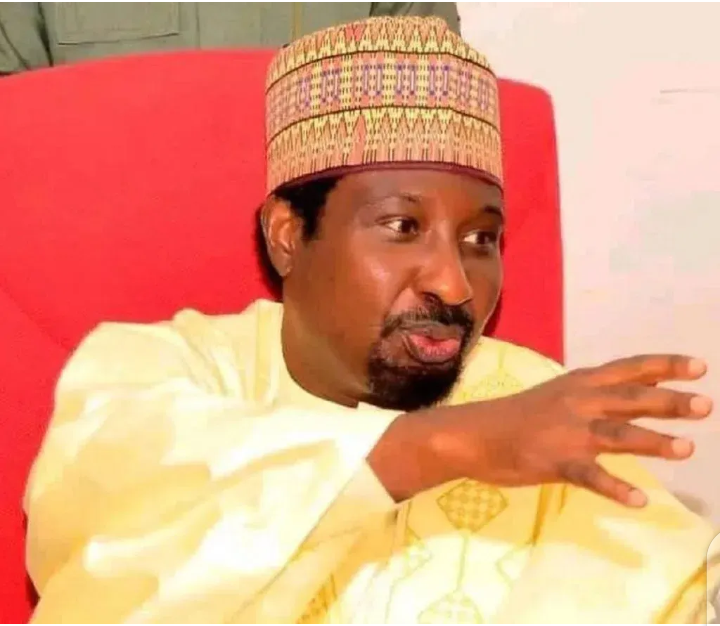
‘The amount of data being generated today is enormous; as such, it has become necessary to have a full-fledged data protection law to ensure confidentiality and privacy of the data’ – Prof. Isa Ali Ibrahim Pantami

In today’s digital world, data is key to the extent that some scholars have termed ‘data as the new oil’. This speaks to the huge revenue potential data has for every country serious about growing its digital economy. Nigeria is certainly one. This data is in the form of personal information, which is frequently collected, stored, and shared by businesses, governments, and individuals.

According to Professor Isa Ali Ibrahim Pantami, the Hon Minister of Communication and Digital Economy, who spoke at the recently held maiden edition of the ‘Digital Economy Regional Conference’ in Abuja with the theme: Positioning West Africa’s Digital Economy for the Future, “In the fourth industrial revolution, data is key. In 48 hours, the quantity of data generated globally is equal to the quantity of data that was generated within a period of 5000 years.”

However, without clear regulations to govern the use of such data, individuals and entities are left vulnerable to privacy violations such as data breaches, identity theft, and other forms of abuse. Today, it is a global best practice to have a data protection law in place. Otherwise, nations find it difficult to attract so many interventions beneficial to their countries. A data-secured environment is an investment wonderland.

The above explains why many development partners, international financial institutions, critical stakeholders in the digital economy space and even potential investors today have continued to ask questions as to why Nigeria does not have a data protection law in place. Having such a law in place will align the country with the scores of others around the globe and make Nigeria a global player. Put differently, the costs of a lack of a proper data protection law are enormous.

To address this issue, the Federal Government of Nigeria established the Nigeria Data Protection Bureau (NDPB) in 2022 as the regulatory institution responsible for ensuring that people’s personal information is kept private and safe when used for ‘digital things.’ Furthermore, in January 2023, the Federal Executive Council (FEC) approved the Nigeria Data Protection Bill presented by the Hon Minister of Communication and Digital Economy for transmission to the National Assembly for consideration.

The draft data protection Bill was sent to the National Assembly by the President in separate letters addressed to the leadership of the National Assembly and read on the floor of both chambers on Tuesday, the 4th of April, 2023. The Bill has gone through the first and second readings and sent to the ‘Committee of Whole’ in the National Assembly to harmonise positions from both chambers. This Bill will provide a legal framework for the protection of personal information, safeguard people’s basic rights and freedoms, and establish a data protection commission for the regulation of the processing of personal information and data when passed into law.

The eight Assembly previously passed the Draft Data Protection Bill, but President Muhammadu Buhari declined assent. This was due to concerns raised by stakeholders on some identified areas and clauses in the Bill. So far, Nigeria Data Protection, in collaboration with the Nigeria Digital Identification for Development Project, NDID4D, has been working with critical stakeholders, captains of industries and policymakers on addressing those concerns and perfecting the bill.

Recently, a validation workshop was held to present the draft bill to stakeholders for their buy-in, comments, criticism, and suggestions to improve the bill.  Senator Ibrahim Hossein, and Rt. Hon Lado Suleja, both Chairman Senate and House Committee on ICT and Cybersecurity, respectively, have, on numerous outings, conveyed the support and willingness of the National Assembly to diligently work on the bill to ensure speedy passage and eventual assent by the President.

‘Data Protection is a constitutional right in Nigeria’, is an oft-quoted statement of Prof. Pantami, the communications minister, as Section 37 of the 1999 constitution as amended provides that: “The privacy of citizens, their homes, correspondence, telephone conversations and telegraphic communications is hereby guaranteed and protected.” In the same vein, the core rights of data subjects under the Nigeria Data Protection Regulation provide a data subject have a right to be informed, the right of access, the right to object, the right to data portability, the right to erasure, right to restriction of processing, rights to rectification and rights regarding automated decision making.

Thus, data protection law is urgently needed in Nigeria as citizens have had one form of data or the other compromised without the ease of recovery, leading to huge financial losses, reputational damage, revenue losses, and other forms of abuse. This is pertinent, especially with the growing rate of identity theft, cyberstalking, data mining, theft, internet fraud and increasing reported cases of abuse of financial information by financial institutions, mobile service providers and telecom companies, unregulated loan credit companies and so on.

The current National Assembly needs to pass the data protection bill for President Buhari to assent to it before May 29th, 2023. This will provide an additional layer of protection for the nation’s digital identity ecosystem and, in no small measure, safeguard the Nation’s fast-growing digital economy, boost investor’s confidence, attract foreign direct investment, improve our GDP, and ensure robust protection and safeguarding of personal information from being stolen and misused for fraudulent purposes, reducing the incidence of identity theft and fraud as well as serve as a buffer for citizens’ personal data privacy.

Data is critical to the survival of every nation’s economy, particularly in today’s digitised global home. It is on record that Nigeria is the first African country to join the developed countries in celebrating international data privacy day. This demonstrates the Nation’s drive and willingness to take its pride of place as a leading African digital economy hub amongst the comity of nations.

The data protection law is not in any way meant to punish our citizens but rather to create awareness so that we will all be data compliant. We are urged to comply. Today, because of awareness creation, collaboration amongst digital economy ecosystem partners, critical stakeholders in the data sphere, reaching out to institutions, sanctions, and interrogating others, the data protection and privacy compliance rate is on a steady increase.

Additionally, businesses and organisations will be held accountable for any data breaches or privacy violations, which will encourage them to take data protection seriously and implement proper measures to protect personal data.

The current Assembly should take due credit and ensure the speedy passage of this lofty bill, and President Buhari should quickly assent to it for the good of posterity. The passage of a comprehensive data protection law in Nigeria is urgent and should not be delayed further.

Muhammad Mikail writes from Abuja, Nigeria and can be reached via muhammadnmikail.mm@gmail.com.
Senate Presidency and the politics of 2027; the facts

By Mahmud Dambazau

Despite being the ruling party; having the President, Vice president, majority in both the senate and the house of representatives, 21 state governors and majority of states houses of assembly, a formidable national spread and structure, adequate financing and financing opportunities, easy access to intelligence from the security (in addition to other privileges of the government), seasoned politicians and the political profile, political sagacity, connection, foresight, friendship across the divide for its presidential candidate, Asiwaju Bola Ahmed Tinubu, still All Progressive Congress (APC) had to take the risk of flying Muslim-Muslim ticket at a time when religion could be a sensitive factor than at any other election period.

The risk taken was, for obvious reasons, the most probable option for winning at the polls and most importantly, it has been successful. Similarly, the success or otherwise of the incoming administration is directly proportional to its success at the legislative arm. The 8th national assembly, despite being led by members of the ruling party, was adjudged by the party itself as part of the reasons for the low and abysmal performance of the outgoing administration of President Muhammadu Buhari. The ABAT administration therefore cannot afford to fail in the choice of the presiding officers of the national assembly and most importantly, the senate.

A brief analysis of the 2023 presidential election results indicates the APC got the highest votes from three of the six geopolitical zones; the north west, south west and north central with 2,652,824, 2,542,979 and 1,760,993 votes respectively with Lagos and Kano states being the only two states that had given the presidential candidate more than five hundred thousand votes. But despite the numbers from the northwest zone, the APC came first in only two of the seven states in the region; Jigawa and Zamfara but Zamfara has now aligned with the PDP. The APC therefore now more than ever, needs to be strategic in ensuring the northwest region, which has the highest number of votes and gave it the highest remain within its fold.

Now back to Kano, the most important state in the region which was before the election and since inception of the APC being under the party but now turned its support towards the NNPP, producing their only governor and most of the other elected positions from the party. The state governor, the deputy governor who also doubles as the governorship candidate of the APC in the state as well as the state party chairman who was heard in a widely circulated video boasting that they will win the elections no matter the consequences all lost their local governments to the NNPP during the presidential election. Senator Gaya, a former governor of the state who has also been at the senate since 2007 also lost his reelection bid to the NNPP candidate.

The story is the same for the son of the state governor, who contested for the house of representative’s seat at the governor’s constituency. Out of the 22 House of Representatives seats announced, the APC got only 5 with the rest lost to the NNPP. It wasn’t coincidence or surprising that all these five came from Kano north senatorial zone, where Senator Barau Jibrin hails from. It should also be noted that Sen.

Barau resoundingly defeated his major challenger, the NNPP candidate who is a staunch ally of Engr. Rabiu Kwankwaso and also a former Executive Secretary of TETFUND. Sen. Barau defied all odds and won with a very wide margin. In view of that, it is safe to say that the fate of APC in Kano solely depends on the political future of its most acceptable candidate as shown from the polls.

I believe the APC will agree that Kano is too important to be abandoned politically and the surest way of a comeback is undoubtedly through Barau. The fate of the PDP at both the presidential and governorship election in the state, despite having Senator Shekarau; a current senator, a former minister and a former two term governor of the state should be a case study.

The Senate president is not just the head of the senate but also the leader of the legislative arm of government as well as the chairman of the national assembly which comprises both the Senate and the House of Representatives. Among all the contenders, Senator Barau Jibrin is the only one who has been at both the house and the senate. He was not just a member of the House of Representatives, but also served as the chairman of the most important committee; that of appropriation. He has been at the senate for two terms and has headed the committees of petroleum downstream sector and that of tertiary education and TETFUND. He is currently the chairman of the appropriation committee of the senate under whose leadership, Nigeria has consistently maintained its budgets within the year circle. Despite all these successes, not once has he ever been accused of any act of corruption! His performance at his constituency (visible at all the nooks and crannies of the constituency and beyond) were what endeared him to his constituents.

Just recently, the President approved the appointment of the management of the newly established Federal Polytechnic Kabo, one of the fruits of the senator’s representation. His bills at the senate were more than those of the other contestants of the senate presidency combined. What more could we possibly ask for?

The first 8 years of the PDP from 1999-2007 produced five different senate presidents from the same region; Senators Evan Enwerem, Chuba Okadigbo, Anyim Pius Anyim, Adolphus Wabara and Ken Nnamani but they were unable to push for the construction of the Second Niger bridge. It was accomplished under a president from the northwest, a minister from the southwest, a senate president from the northeast and a chairman of the appropriations committee from the northwest. So, the jostling for the position might not particularly mean the dividends of democracy to the masses. However, their occupation of the position has ensured continued support of the PDP at the region within the period.

With the now overwhelming support of the Labour party in the region and the inability of any of the contestants from the region to secure 25% for the party at the presidential polls make it necessary for APC not to sacrifice its biggest support region, the northwest, in anticipation of an unlikely support from the southeast.

At a time in 2007, three of the four highest offices in the country; President, Vice president, Senate president and Speaker of the House of Representatives were held by occupants from the same religion. That has happened again from 2019-2023 and it has not religionized the country or stopped adherents of other religions from practicing their religion. Nigeria will certainly progress faster if we set aside religion or ethnic considerations in favor of competence.

Without an iota of doubt, Senator Barau Jibrin is the most competent among all the contestants for the senate presidency of the 10th senate. The facts are there and it is now left to the APC and the Asiwaju Bola Ahmed Tinubu’s incoming administration to decide how it will respond. However, any action taken will have its consequences in the 2027 election!

Mahmud wrote from Kano and can be reached on madambazau@gmail.com.

For the sake of our country: an open advice to the president-elect – II

By Umar Ardo, PhD

Again, having won this hard earned victory against all odds, it is critical for the sake of the country that the regime succeeds. And this success is largely dependent on four key elements; 1. The sincerity of purpose and commitment of the president in carrying out the functions of the office he contested for and which Nigerians entrusted him with; 2. Coordinated consultations and taking of advice; 3. Careful consideration of those to be appointed into key offices of government, i.e. ministers, advisers, chief executives, etc.; and 4. Learning to avoid mistakes of predecessors.

Given the underlining nationwide political variables of his coming to power, these four elements will essentially be the bedrock of determining the success or otherwise of his administration. The first point is actually an issue of intention, which entirely rests on the personal disposition of the President-elect. Once he is sincere in his intentions towards the nation in the use of state power then the rest is easy. All that will be required is to bring his noble intentions to bear in the exercise of the state power now in his control.

The second point rests on the familiar standard of the universal norm of leading through consultations and advice, which are foundational elements of successful leadership.

This third point is the institutional offices of Ministers and Special Advisers, with their functions, which are vital in the due discharge of governance. Those appointed to these offices constitute the first line of official teams for advice and execution of public policies. The success or failure of his regime rests as much on his ability as a leader as on the competence or otherwise of his ministers and advisers. This point needs further explanation.

In underscoring the point, the 1999 Constitution of our country (as amended) creates at the federal level the Council of Ministers and offices of Special Advisers for the good purpose of executing the powers and functions due to the Office of the President. This invariably means that the stability and good governance of the country are dependent on the sound character, right practice and good judgment of the President; while the well-being and quality judgment of the President depend on the knowledge, skill and honesty of his official advisers. Blessed therefore, is the President with truthful, knowledgeable, intelligent and right-doing advisers. Advising a leader, therefore, is an onerous task that necessarily requires very special proficiency to perform.

Great political thinkers agreed that ministers and advisers need five basic attributes, if their works are to be fruitful and satisfactory; i. Wisdom, whereby they will perceive clearly the outcome of everything into which the Principal may enter; ii. Knowledge, where by implications of actions of the Principal will be open to them; iii. Courage, to act as and when appropriate on the Principal; iv. Honesty, so that they will treat all things and men truthfully without exception; and v. Discipline, to keep official secrets as secret at all times. If the President is able to appoint suitable men, then he is most likely going to succeed, for “a good minister/adviser is like the ornament of the King”; but if he is unable and appoints unsuitable men, then his regime is most likely going to fail. Aristotle, that great Greekphilosopher, said that when a ‘king’ has an unsuitable [ignorant] minister/adviser, his reign will be like a cloud which passes on without dropping rain.

Instructively, in our presidential system of government, all ministers/advisers are solely appointed by the President. This means that the quality of advice and execution of public policy are also solely dependent on the kind of ministers/advisers the President-elect assembles to himself. In appointing ministers/advisers, the president’s skill or lack of it to distinguish the great disparity that exists between men who are suitable and men who are not, in itself can decide the ultimate destiny of his regime. The President-elect may well need to heed to Aristotle’s admonition; “good advisers are needed to help the King spare his reign”. The fourth point is to learn from past historical trends, especially the mistakes of his predecessors and avoid them all. I will expatiate few examples on this point.

First, is the inauguration of the National Assembly (NASS). The President-elect needs the NASS

on his side to perform optimally. To this end, the President-elect should avoid the mistakes of his predecessor and personally inaugurate the NASS so as to create an interpersonal relationship with members. This would not only forestall the crises which the Buhari’s presidency faced with the NASS in its first term, it would instead create a strong bond of goodwill and confidence-building between the two arms of government, thereby earning the executive full cooperation of the legislature. He will be able to also influence the type of leadership he needs in the legislative houses.

Second, unlike his predecessor, he must compose his governing team quickly. It is important to carefully and decisively take charge of all the levers of state power and immediately create effective authority to drive government policy thrusts, create a good first impression of the President’s leadership style, trigger people’s confidence in his government’s policy initiatives, and substantially muster public faith in his personal capacity to provide effective leadership to the country.

Third, in resolving the intractable debilitating problems of the country, especially the security issues, the President-elect should also avoid the mistakes of his predecessor. For example, in deciding the policy thrusts of his administration, he initiates the appropriate wide range consultations with necessary stakeholders; thereby appreciating the fact that the problem is more of a sociopolitical than a military one. It is therefore advisable that before the President- elect takes any decision and makes any pronouncements on any critical issue, wide ranging coordinated consultations are made with critical stakeholders so as to arrive at the best form and method of handling the issue at hand.

These consultations are important on two aspects – first, they will help formulate alternative devises that are locally initiated, people-owned, people-friendly and practically effective in the resolution of the issue at hand; second, it will be politically beneficial to the President-elect because he will be seen to be carrying the people along in his policy formulation and implementation processes. This way the people will feel part of it and therefore support it. But failure to do so will alienate the people and distance them from such policy initiatives, thus further create a poor impression of government’s policy directives with its debilitating loss of peoples’ confidence in the president’s method of governance; leading to policy implementation failure.

Fourth, is recognition and careful consideration of those who contributed to the success of the president, especially the competent and qualified amongst them. The biggest political problem of President Buhari is the outright neglect of those who contributed to his political success. The President-elect must identify, recognize and patronize those who sincerely supported and contributed to his political aspirations. This way he will retain their support and be guaranteed of their loyalty. If these points are taken into account, it is my humble submission that the Tinubu regime will succeed where others have failed.

Learning crisis: TRCN remedies 7,000 quack teachers

By Uzair Adam Imam

Over 7,000 quack teachers were reported to have been remedied by the Teachers’ Registration Council of Nigeria (TRCN) in Adamawa, Borno and Yobe States. 

Prof. Josiah Ajiboye, the TRCN Chief Executive, made this disclosure to newsmen on Thursday at a workshop organised by the council.

At the workshop themed, “Strengthening Teachers Education: Challenges and Opportunities in Basic Sub-Sector in Nigeria”, Ajiboye lamented about the learning crisis in the country.

Ajiboye stated that the learning crisis in the country had always been attributed to poor teaching and the lack of qualified teachers.

However, he stated that the effort made by the council was to upscale the dignity of the teaching profession in the eyes of the public.

He stated, “The challenge with Nigerian education is largely attributed to poor teaching in which experienced, dedicated, committed and professional teachers were difficult to find in schools.

“The council, in order to upscale the dignity, rewards and recognition of the teaching profession, had developed a career path policy for the teaching profession,” he stated.

Sudan conflict: South Korea announces evacuation of citizens

By Muhammadu Sabiu 

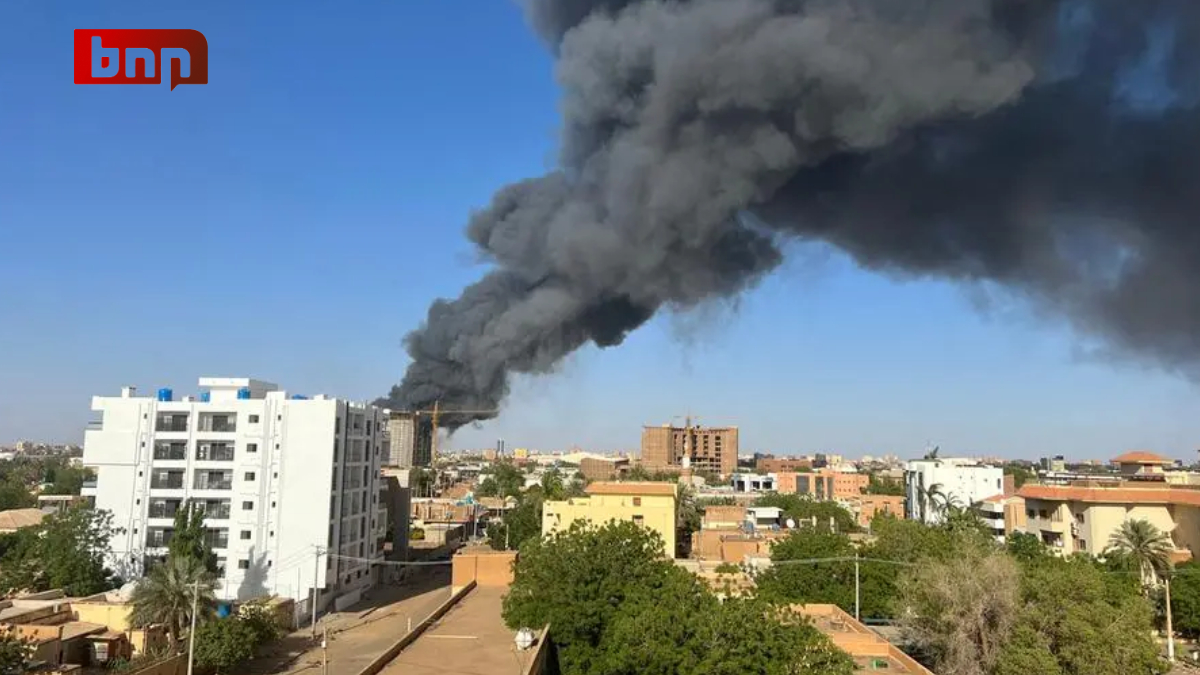
South Korea announced Friday that it would send a military aircraft and soldiers to evacuate South Korean citizens stuck in Sudan, where fighting has claimed hundreds of lives since it started last week.

Similar actions are being taken by Japan, which on Friday dispatched a military jet to attempt to retrieve its citizens from the country affected by the violence.

Violence between soldiers loyal to Sudan’s army head Abdel Fattah al-Burhan and his deputy, Mohamed Hamdan Daglo, who leads the paramilitary Rapid Support Force (RSF), broke out on Saturday, killing more than 300 people.

Despite calls from world powers for end-of-Ramadan peace, there were numerous gunshots and explosions Friday in Khartoum, the capital, and other parts of the country.

BREAKING NEWS: New Shawwal moon sighted, Eid al-Fitr will be on Friday in Saudi Arabia

By Muhammadu Sabiu

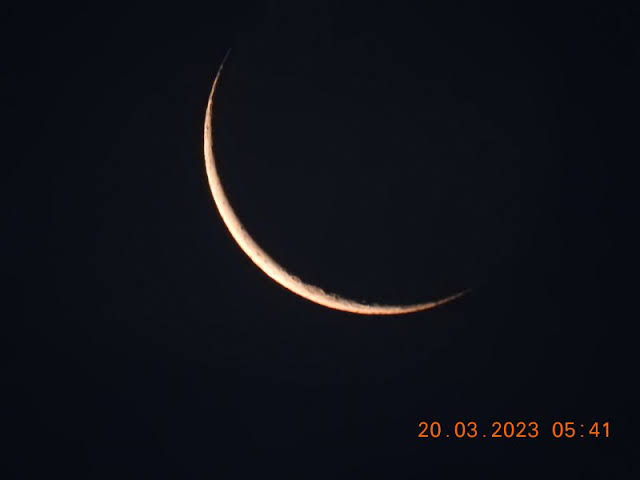
The Shawwal crescent of the Hijra year 1444 has been seen as confirmed by authorities.

This was stated in a short statement through the verified Facebook page of the Haramain Sharifain.

The statement reads, “The Crescent for the month of Shawwal 1444 was SEEN today in Tumair and Sudair subsequently tomorrow i.e Friday, 21st April 2023 is the day of Eid Al Fitr.”

The sighting of the crescent indicates the end of the Ramadan fast.

Transactional Relationship: The bitter truth

By Usama Abdullahi 

Our car got stuck in poky traffic when I was heading home after visiting our ailing mother at the National Hospital Abuja last night. The motion was really slow, and that instantly made me feel bored. Also, a young lady was sitting close to me, making annoying phone calls and eating popcorn. I looked at everybody in the car, and they were all engrossed in their smartphones except the driver, who remained focused while driving. So I brought out my phone, rushed to my gallery and played a Hollywood clip. That’s how I decided to kill my boredom.

While watching the clip on my phone, the young lady sitting next to me tapped me on the shoulder – indicating that she needed to talk to me. I felt her tapping but hesitated to turn until she tapped me again. 

This time I turned and stared at her curiously. She then asked if what I was watching was interesting. “Oh, yeah. It’s an interesting clip. Would you love to see it?” I asked. “Ah, no. I thought it was a movie”, she responded. After learning that what I was watching was just a clip and not a movie, she continued to make her phone calls. She’s holding an iPhone. Even though I didn’t see her face clearly, I could attest to her gorgeousness through the softness of her voice.

She was happily on the phone with her boyfriend when one of her broke guys called. Unluckily for him, she didn’t hang the call to attend to his call until she was done talking to the rich boyfriend. She didn’t even greet him when she finally picked up the broke guy’s call. Instead, she began to yell at him for not sending the money he had promised her the other day. I keenly listened to them till the very end. Mind you; I wasn’t eavesdropping because she put the phone on speaker. So, I did hear every single bit of their heated phone conversations.

I was disgusted by what she said to the broke guy. I pitifully imagined myself in his shoes. Although I’m hopeful that I will never be entangled in such a type of unavailing relationship, I felt and still feel for the poor guy.

This encounter has taught me a bitter lesson: how transactional relationships have become these days. Today, only a handful of women love their men unconditionally. Instead, most of them love their men because of their monetary status. I’m not saying that money doesn’t play a significant role in relationships. Of course, it does, but it’s saddening how some women have reduced relationships to lucrative businesses where they earn big money without even investing a dime.

And it’s equally saddening that some men, too, only entertain sexual relationships. This is why we are fast losing our modesty as a society. Any relationship sorely built on material gain is doomed to fail. Loyalty and patience are the most important things that usually keep a relationship going. Money cannot possibly keep your relationship afloat, but loyalty and patience can.

Usama Abdullahi writes from Abuja and can be reached via usamagayyi@gmail.com.

2023 elections most authentic since independence – FG

By Uzair Adam Imam

The Federal Government of Nigeria has described the recently concluded 2023 general elections as the most authentic ever held in Nigeria since independence.

The Minister of Information and Culture, Lai Mohammed, disclosed this yesterday while fielding questions from journalists after the FEC meeting.

He stated that despite efforts by the opposition parties to delegitimize the election, it was the most transparent, freest and authentic ever held in Nigeria.

Muhammed disclosed this as one of the reasons President Muhammadu Buhari refused to interfere with the Adamawa State poll debacle.

He added that the issue was strictly the responsibility of the Independent National Electoral Commission to sort out the matter

According to the Minister, it is not in Buhari’s character to micromanage the government’s institutions.

Mohammed said: “I don’t think that this government has ever intervened in the way the Independent National Electoral Commission conducts its elections.

“So, there’s no need for us to intervene. It was an entirely INEC matter, and INEC handled it.

“The chairman of INEC is in charge of all employees in INEC, and he’s handling it. So, what do you want the government to do?”

Nigerian students in Sudan beg FG for evacuation

By Muhammadu Sabiu 
 
Nigerians studying in Sudan have written the Nigerian government to evacuate all its citizens trapped there, especially in the capital city of Khartoum where the military and paramilitary are fighting.
 
This is coming after some days since the fight had started, which left hundreds either killed or injured.
 
Reports have indicated that thousands of people are trapped in the city of Khartoum with no access to basic needs like food and medicine.
 
The National Association of Nigerian Students in Sudan made this request in a letter to the federal government.
 
The letter reads, “We write this to Nigerian Government in respect to the current and ongoing conflict that erupts between the Sudan military and paramilitary forces in these past days; particularly in Khartoum, the capital city where constant gunfire, explosions and airstrike attacks dominate its vicinity and environs (where a score of Nigerian Students study).
 
“2. The Nigerian Students have been stranded in fears with no access to basic needs equipment and have been facing dangerous threats. We hereby write soliciting and yearning for the Nigerian Government’s intercession to rescue and send for an immediate evacuation of the Nigerian students that are stuck in the center of the ongoing war.
 
“3. We strongly hope that our call for rescue to our dear nation Nigeria will be responded to with immediate effect.


AI key to combating insecurity – NDC Commandant 

By Uzair Adam Imam

The National Defence College (NDC) said Nigeria’s insecurity is not inevitable if only magic technologies like artificial intelligence are to be used in the nation.

The NDC commandant, Rear Adm. Murtala Bashir, stated this on Tuesday in Abuja, adding that the military needs to be ahead of the violent non-state actors to address the security challenges ravaging the country.

Over a decade, insecurity has been one of the major issues facing Nigeria and has claimed the lives of thousands of innocent people, leading to the displacement of several others in the country.

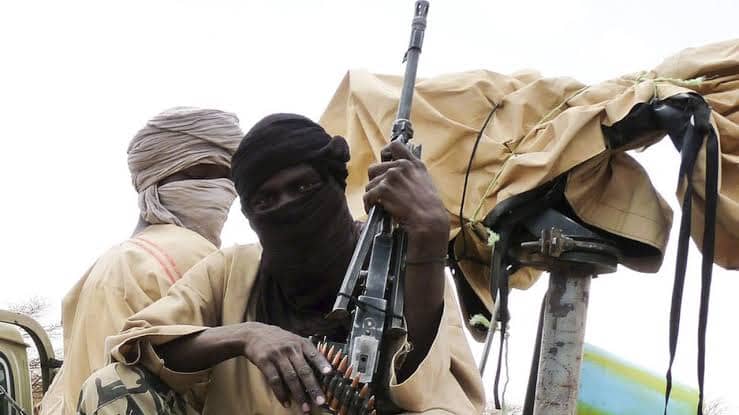
The activities of bandits have badly affected the economic growth of the nation as farmers and businessmen fear the atrocious attack by the bandits who either kidnap or slaughter any misfortune individual they encounter.

However, the NDC Commandant identified measures he believed could have been used to defeat terrorists and terrorism in the country.

He said, “Technologies like artificial intelligence and others are the much-needed game changers that will enhance the effectiveness and efficiency of the military’s responses to the challenges facing Nigeria.

“If we’re to also avoid the experiences of the past, where Nigeria has to beg foreigners to prosecute legitimate internal security challenges against militancy, terrorism and insurgency, then we need to reappraise our research and development efforts in technology acquisition and innovation.

“We need to also revamp our military industrial complex, and these efforts must be of national outlook and driven by research and development,” he said.