Month: February 2023

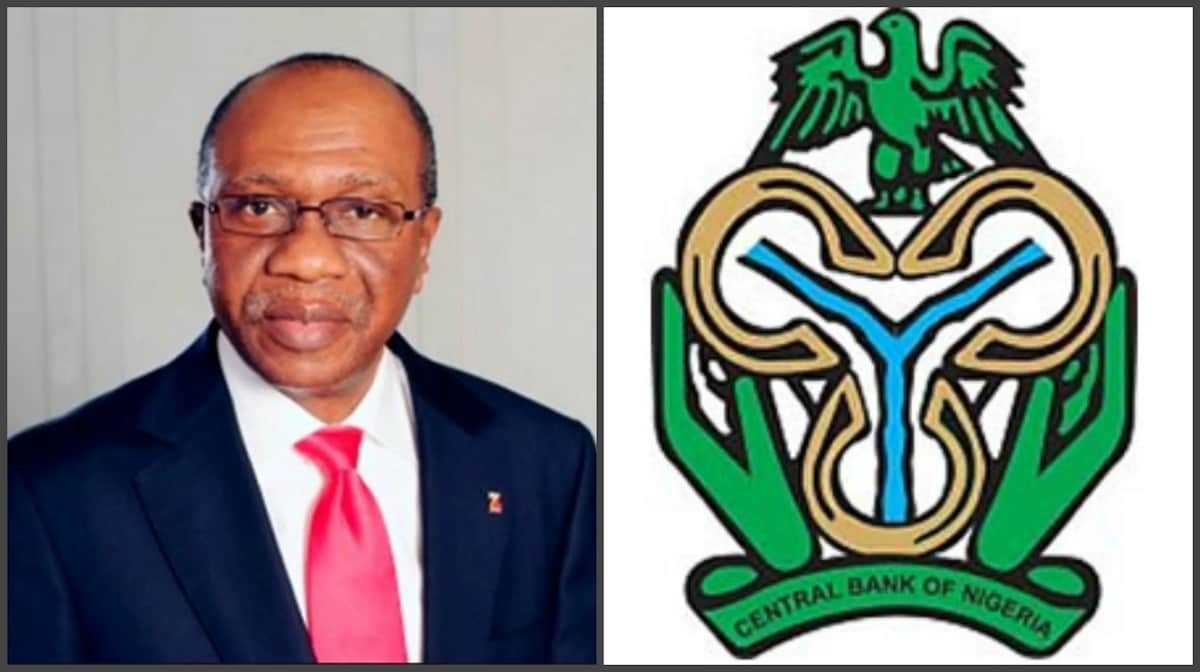
Former CBN Director lambasts Emefele’s policies, asks him to resign

By Uzair Adam Imam

A former Secretary to the Lagos State Government in the Second Republic, Chief Olorunfumi Bashorun, said the Central Bank of Nigeria’s (CBN) cash policy is making a dangerous and destructive history for Nigeria.

He stated that since CBN was established in 1959, and I was a foundation staff, no governor has taken Nigeria for a ride as Emefiele.

Bashorun, who disclosed this in a statement he personally signed on Thursday, asked the CBN governor, Godwin Emefiele, to resign immediately.

He said in the statement, “I have just read online a directive from the CBN governor that banks should pay a maximum of N20,000 out to customers on presentation of the teller.

“It is now clear that the CBN governor, Godwin Emefiele, is making a dangerous and destructive history for Nigeria. Since CBN was established in 1959 (and I was a foundation staff), no governor has taken Nigeria for a ride as Emefiele.

“The multiplier effect of his rather evil directive is to close down all businesses in Nigeria, and further add to the hardship Nigerians are experiencing in recent times.

“I make bold to state that unless this oppressive directive is withdrawn within the next 48 hours, Nigerian masses will have no choice than to rise and compel the government to take positive action to reverse it,” he stated.

We need your support to succeed in our mandates – CP tells Jos residents

By Uzair Adam Imam

The Commissioner of Police (CP) in Plateau State, Bartholomew Onyeka, has asked the residents to join hands with the police and fight insurgence in the state by showing their support.

Onyeka stated that maintaining control over the state depends on mutual trust with the residents.

He disclosed this Thursday in Jos while delivering a keynote address at a one-day retreat for human rights stakeholders organised by the Rule of Law and Accountability Advocacy Centre (RULAAC).

He said, “As attractive as the concepts of intelligence-led policing or technology-driven policing could be, the reality remains that no police agency either in the advanced or developing climes can succeed in its mandate without the consent, support and trust of the citizens they are engaged to serve and protect regardless of how well equipped, trained or motivated they may be.

“The point being emphasised here is that police legitimacy draws from public consent and trust, and the lack of effective partnership between the police and the public can only sustain ineffective policing and engender insecurity within the community.

“Generally speaking, the security situation across Plateau State has been relatively stabiliSed. The reality is that the current concerted operations of the police and other security agencies in the state have engendered a dispersal and relocation of some of the criminals out of the state,” he stated.

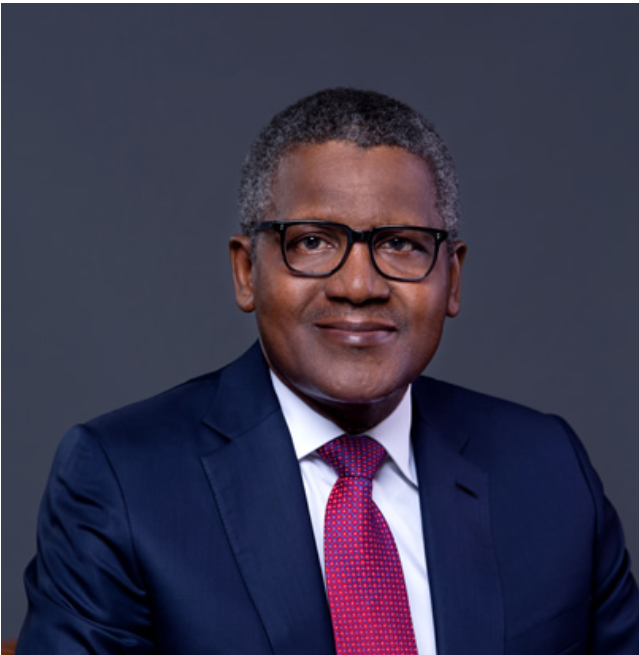
Dangote Group, China company sign to build cement plant in Ogun

By Aisar Fagge

The Dangote Industries Limited (DIL) alongside China Sinoma International Engineering (CSIE) have signed an agreement to build a six million tons per annum cement plant in Itori of Ogun state.

Alh. Aliko Dangote, the Chairman of Dangote Cement Plc, made this disclosure during the signing ceremony.

Dangote stated that he signed the agreement alongside the Group Executive Director, Strategy, Capital Projects & Portfolio Development, DIL, Devakumar Edwin.

While China Sinoma Engineering, on the other hand, was represented by its Group President, Yin Zhisong, and the company’s chairman, Liu Renyue.

Dangote said that the new integrated cement plant at completion would strengthen the local production capacity of Dangote Cement and bring its local capacity to 41.25 million tons per annum and total African capacity to 57.6 million tons per annum.

He further stated that the Nigeria’s capacity to export cement would also be increased, the development that would enable more diversification and foreign exchange inflows for the economy.

He also noted that the project would further develop the domestic economy through creation of thousands of indirect and direct jobs and drive economic development in the Itori axis.

Aso Villa cabals sabotage APC

By Aliyu Nuhu

From what governor Nasiru El-Rufai said, the currency redesigning and fuel scarcity are the handiwork of the cabal in Aso Villa to ruin the electoral chances of the APC candidate, Asiwaju Bola Ahmad Tinubu. The president’s wife validated the claims by endorsing El-Rufai’s views.

Now it makes a lot of sense to me. No sitting government with victory in mind will introduce such harsh policies that shut down the economy few days to election. Northerners will go into the polls with anger and no one will vote for APC. I don’t think there is anywhere, except Borno and Yobe the president can go without being pelted with stones. Let him try it.

I have reviewed the policy again and again and could not see the economic sense in it. Withdrawing cash from circulation in a cash economy is a recipe for disaster. CBN has effectively shut down the informal sector of the economy. The North is 95% cash economy. Everything is at a standstill.

I wholly agree with El-Rufai. Emiefele is acting a script to undermine Tinubu. His policies are for political reasons after all he has never hidden his partisanship by attempting to contest in the election. The cabal surrounding the president wanted the vice president to succeed his principal and it didn’t work because no one could defeat Tinubu in the primaries. I was wondering why Osinbajo contested when it was obvious that Tinubu could not be beaten. Now I understand. It was the cabal that gave him the false hope of winning. Today, due to apathy, Osibanjo is not even attending Tinubu’s campaigns.

Unfortunately the opposition politicians are not cashing on the crisis to make political fortunes out of it. Only Kwankwaso knows how to exploit such situation. This is the time to push Nigerians against APC. But they appear docile as if they don’t know the art of political brinkmanship.

As for Tinubu he is not doing the right thing. This is the time for damage control for his electoral benefits. He should distance himself from the new currency policy and promise to reverse it. He should be beyond any fear by now. Buhari can’t do him anything. The president is now a political nonentity. Without Kano and other parts of the North, Buhari is nothing. As long as the governors are with Tinubu he has nothing to fear.

As for Buhari, just forget about him. He has never been in charge of the government. He is just a figure head. If he were the candidate in this election will he allow this kind of crisis?

Pay customers over-the-counter, CBN directs banks 

By Sumayyah Auwal Ishaq

The Central Bank of Nigeria (CBN) has directed commercial banks across the country to start paying the new naira notes to customers over-the-counter to ease the plight of Nigerians. 

In a statement on Thursday signed by the bank’s Director of Corporate Communications, Osita Nwanisobi, CBN stated that “We have equally noticed the queues at Automated Teller Machines across the country and an upward trend in the cases of people stocking and aggregating the newly introduced banknotes they serially obtain from ATMs for reasons best known to them”. 

“Also worrisome are the reported cases of unregistered persons and non-bank officials swapping banknotes for members of the public, purportedly on behalf of the CBN”. 

The apex bank has assured Nigerians that the queues at ATMs will end soon. However, Nigerians have continued to express their dismay over the scarcity of the new naira notes.

Rape of Muslim Woman: MURIC demands justice

  • News Desk

Oyo State branch of the Muslim Rights Concern (MURIC) has waded into the case of rape inside the mosque in Ibadan where a Muslim woman was raped inside a mosque by one Idris, a.k.a. Kesari Rekereke.  

In a press statement released on Wednesday, 1st February 2023, by Ustadh Ibrahim Agunbiade, the ambassador of MURIC in Oyo State, the group warned that the case must not be swept under the carpet.

MURIC confirmed that the suspect is Kesari Rekereke. The group further noted that Kesari Rekereke is the son of a transport union leader known as Almajiri of the Oyo State National Union of Road Transport Workers (NURTW).  

The Islamic human rights organisation called for the prosecution of Idris and warned that the case must not be swept under the carpet. Although MURIC commended the police for arresting the culprit, it maintained that justice must not only be done in this case, it must be seen to have been done.

The group also appealed to Muslims in the state to refrain from attempting any reprisal attack.

How Harvard University sponsored students for Umrah

By Muhammad Jameel Yusha’u, PhD

On Friday, I spent the early morning hours participating in a boot camp on negotiation. It was part of the effort of Professor Rand Wentworth to build the capacity of his students in negotiation. The boot camp was facilitated by Monica Giannone.

Immediately after the boot camp ended at 12 pm, my friend Alibek Nurbekov and I proceeded to the Friday prayer. As I was about to enter the prayer hall, Dr Khalil Abdur-Rashid was also arriving. Dr Khalil is the Muslim Chaplain at Harvard University and teaches courses at Harvard Kennedy School and Harvard Divinity School.

“Sheikh Khalil, welcome back from Umrah,” I said as he made his way into the prayer hall.

“Good to see you, Jameel. I need to talk to you after the prayer,” he said, and I nodded in agreement.

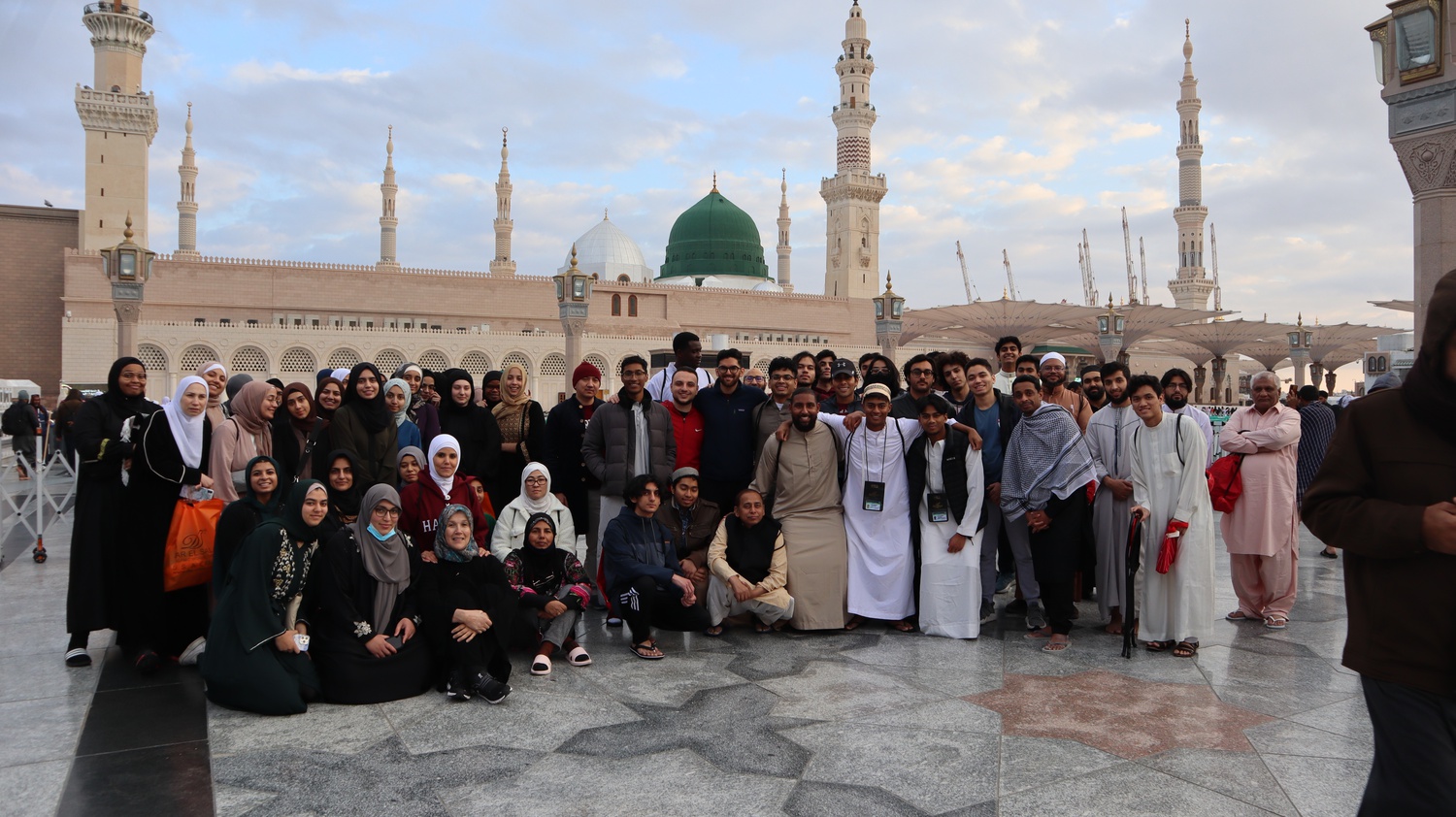
Dr Khalil led a group of students and other members of the Harvard Community to participate in Umrah, the lesser Muslim pilgrimage, where Muslims visit Makkah and perform the Umrah rites. They also visit Prophet Muhammad’s (PBUH) mosque in Madina and other historical places in the Kingdom of Saudi Arabia.

I came to know about the Harvard Umrah trip during the welcome orientation for students led by Dr Khalil last year at the beginning of the fall semester. He announced that some donors had provided scholarships for Muslim students to attend the pilgrimage, and he played a video for us on the experience in 2019 when they went on a similar voyage. Many students pledged to join the group for the trip in January.

Organising trips to different countries is a common tradition at Harvard University during the January break. Many trips were organised to Brazil, Singapore, Mexico, Saudi Arabia and more. The Harvard chaplaincy also utilised the break to organise the Umrah from 4th-14th January 2023.

Quoting Dr Khalil, The Harvard Crimson reported that “a generous donation from a graduate of Harvard Business School and a parent of two current Harvard undergraduates allowed the University to offer the trip at no cost to first-generation, low-income Muslim students. The donation for this year’s trip reportedly totalled approximately $100,000.”

As the Friday prayer finished, I waited patiently for Dr Khalil. As he came out, he asked me to walk towards his car. He brought a gift from the car and handed it to me. “This is a gift from the Umrah.” His wife Samia, who is also the female Muslim Chaplain, said, “it is a little gift for your girls.”

I thanked them in appreciation and headed home to enjoy the rest of the evening with my family. You can find the full story on the Harvard Umrah trip entitled “Spiritually Stimulating: Harvard Students Embarked on First Umrah Trip in Four Years.” (https://lnkd.in/et_dEBer).

Takeaway: Spiritual well-being is important in helping students to have a balanced educational experience.

Muhammad Jameel Yusha’u, PhD, is a candidate for a Mid-Career Master’s in Public Administration at Harvard University, John F Kennedy School of Government. He can be reached via mjyushau@yahoo.com.

2023: INEC expresses alarm over persistent fuel shortages

By Uzair Adam Imam

The Independent National Electoral Commission (INEC) has expressed worries over the current incessant fuel scarcity in the country.

The electoral body said that the development could negatively affect its arrangements during the election due to the unavailability of products.

The INEC Chairman, Prof. Mahmood Yakubu, disclosed this at a consultative meeting with officials of the National Union of Road Transport Workers (NURTW) on Tuesday.

Fuel scarcity is one of the lingering issues many people have continued to decry in the country.

A recent investigation by the Daily Trust claimed that the menacing issue of fuel scarcity in the country is artificial.

Yakubu said, “The commission shares your concern about the fuel situation in the country and its impact on transportation on election day. 

“The truth is that our arrangements may be negatively affected by the non-availability of products.

“For this reason, the commission will this afternoon (yesterday) meet with the Nigerian National Petroleum Company Limited, NNPCL, to look into ways to ameliorate the situation.

“I wish to assure Nigerians that we will continue to engage every national institution for the success of the 2023 general election.

However, the Nigerian National Petroleum Company (NNPC) assured the electoral commission of an adequate supply of fuel during the election.

Some of Buhari’s people are working against Tinubu—El-Rufai

By Muhammadu Sabiu 

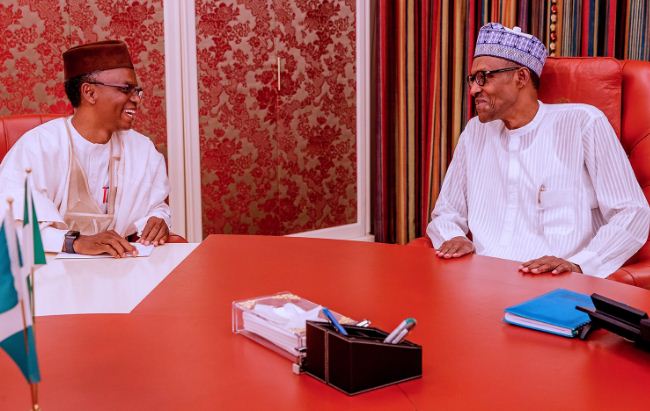
Malam Nasir El-Rufa’i, governor of Kaduna State, alleged that some officials in Nigeria’s Presidential Villa are working against Bola Tinubu, the APC candidate for president.

The governor added that although the populace had a candidate for the APC presidential primary, he or she would not win.

Responding to questions on Wednesday’s episode of Sunrise Daily on Channels Television, he claimed that some individuals conceal themselves behind President Muhammadu Buhari, who has the commitment to do the right thing.

He was quoted as saying, “I believe there are elements in the Villa that want us to lose the election because they didn’t get their way; they had their candidate. Their candidate did not win the primaries.

“They are trying to get us to lose the election, and they are hiding behind the president’s desire to do what he thinks is right. I will give two examples: this petroleum subsidy, which is costing the country trillions of Naira, was something that we all agreed would be removed. 

“In fact, I had a discussion with the president and showed him why it had to go. Because how can you have a capital budget of N200b for federal roads and then spend N2 Trillion on petroleum subsidy? This was a conversation I had with the president in 2021 when the subsidy thing started rising. He was convinced. We left. It changed. Everyone in the government agreed, and it changed.

“The second example I will give is this currency redesign. You have to understand the president. People are blaming the governor of the Central Bank for the currency redesign, but No. 

“You have to go back and look at the first outing of Buhari as president. He did this; the Buhari, Idiagbon regime changed our currency and did it in secrecy with a view to catching those that are stashing away illicit funds. It is a very good intention. The president has his right. But doing it at this time within the allotted time does not make any political or economic sense.”

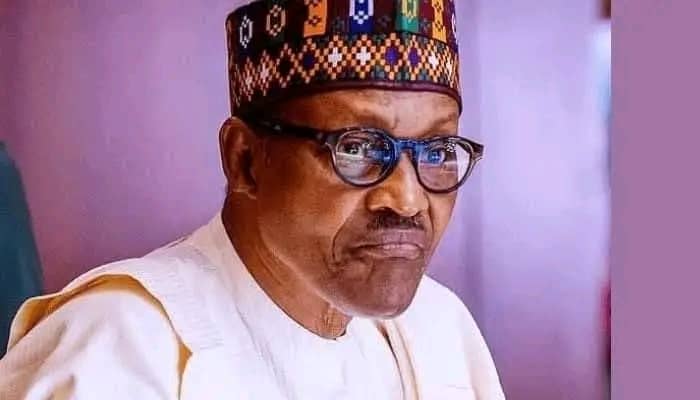
President Buhari: The good, the bad and the ugly

By Mubarak Shu’aib

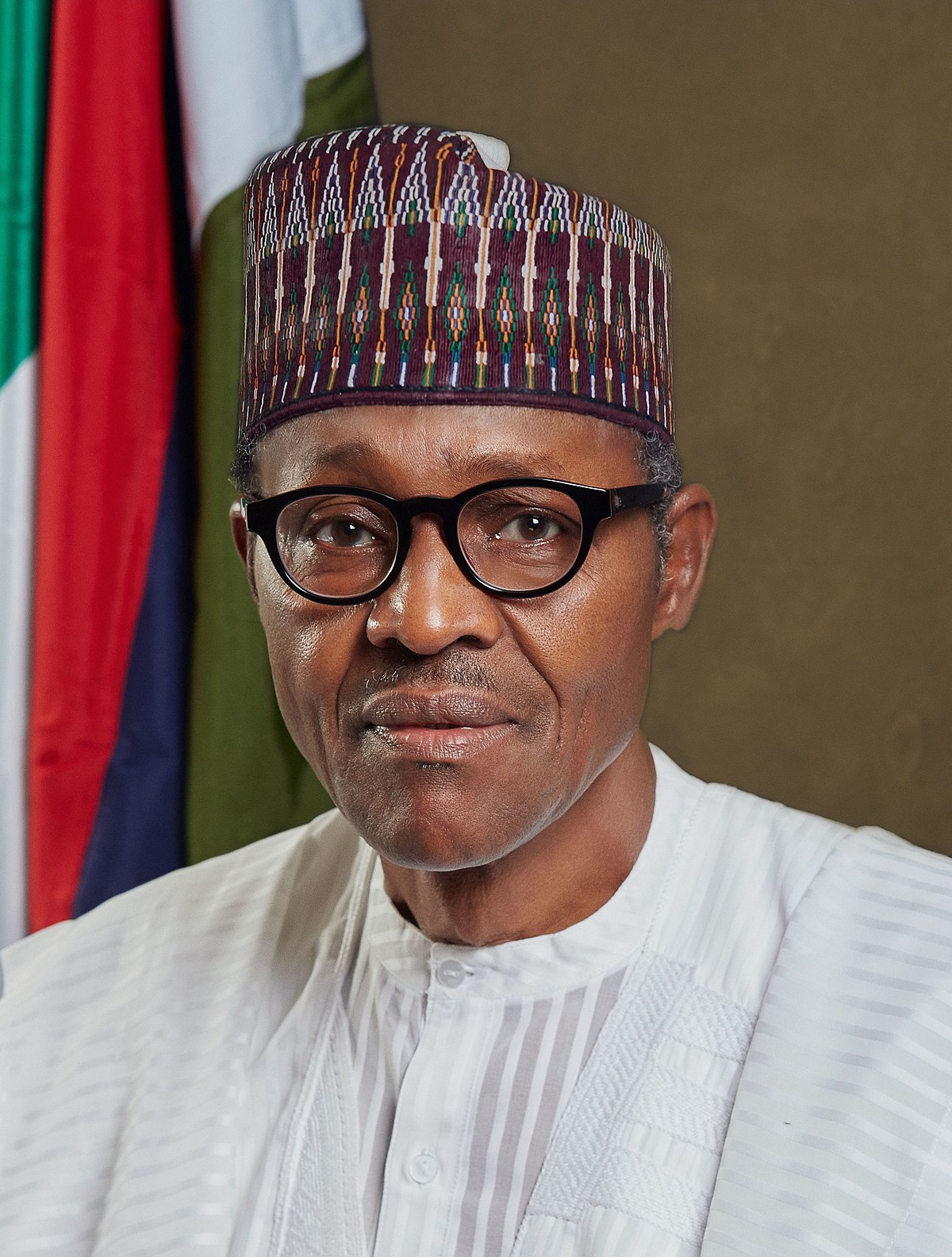
Portrayed as a fraud. Painted as a failed leader by others, there’s more to President Muhammad Buhari’s tenure than meets the eye. Charged with the titanic assignment of bringing Nigeria back and on track, his ascension to the Number One seat in 2015 highlighted the arrival of a new era. 

No living politician enjoyed the overwhelming support, love, care, concern etc., like Buhari. However, the time he spent in power has proven to be anticlimactic. Rightly so? 

President Buhari’s biggest flaw, his Achilles heel, can be summarised in one word. Narrow-mindedness.

His failure to recognise, acknowledge or accept ideas other than his own, even when reasons suggested, proved to be his greatest weakness. In addition, he’s a staunch critic who sees no good in his political rivals, except for President Goodluck Ebele Jonathan (GEJ), who later handed him power on a silver platter. From labelling fuel subsidy as “Fraud”  and blabbing Jonathan’s efforts in his fight against the Boko Haram insurgency to touting the ASUU strike as something that could be resolved in a blink of an eye.

When he was declared the winner of the 2015 Presidential election, nothing but the second return of Jesus could elicit such a nationwide reaction. 

The Good:

From his inaugural speech, Nigerians, both at home and in the diaspora, were swept in joy. More interesting was his (in) famous line, which rekindled our hope, “I belong to everybody, and I belong to nobody.”  He further added, “My appeal for unity is predicated on the seriousness of the legacy we are getting into. With depleted foreign reserves, falling oil prices, leakages and debts, the Nigerian economy is in deep trouble and will require careful management to bring it around and to tackle the immediate challenges confronting us, namely; Boko Haram, the Niger Delta situation, the power shortages and unemployment especially among young people. In the longer term, we have to improve the standards of our education. We have to look at the whole field of medicare. We have to upgrade our dilapidated physical infrastructure.”

“The most immediate is Boko Haram’s insurgency. Progress has been made in recent weeks by our security forces, but victory cannot be achieved by basing the Command and Control Centre in Abuja. The command centre will be relocated to Maiduguri and remain until Boko Haram is completely subdued. But we cannot claim to have defeated Boko Haram without rescuing the Chibok girls and all other innocent persons held hostage by insurgents.”

Throughout the inaugural speech, President Buhari was full of himself, firing shots across his bow, which almost suffocated the guilty minds. 

The Bad:

The first signs of bad were Buhari’s procrastination, complacency, blame game and failure to take responsibility. His greatest strength, which is the use of rhetoric to scare and naturally bully the guilty minds, slowly grew to become one of the biggest reasons for his fall. Initially, he has established himself as someone strategic, prowess and predatory. However, it later became clear that he was devoid of such qualities, even more obvious after it took him over six months to appoint his ministers. When he eventually did, some dead people made the list of the appointees. Concerns began to leak out around his leadership’s identity as an undefined style. Doubts began to set in. His lackadaisical approach continued to grow, but to doubt Buhari at that material time, was a heinous sin. Nigerians continue to play the sport of attacking ringworms while leprosy festers. Blaming the Sarakis, Dogaras etc., on the NASS floor as saboteurs of his government. This threw the re-election bid of Saraki, Dino, and Isah Hamma under the bus in the 2019 election to pave a clear pathway for Buhari. 

The ugly:

Nigeria’s Jekyll and Hyde performances under Buhari grew out of control. While Buhari struggled to explain the abnormal nature behind his government’s inconsistent performances, his puzzled supporters appeared equally as confused. 

His record in infrastructural development is good without being impressive. And, better not to visit the issue of insecurity, which assumed many dimensions (banditry, kidnapping, etc.), corruption/looting in billions, high unemployment rate, the exorbitant cost of living, fuel scarcity, the marathon ASUU strike, 8 months old. Cutting a long story short, the most anticipated “Jarmiya” and the aspirations to see Nigeria back and on track during “Mai Gaskiya” went up in flames. 

There were a series of decisions that had repercussions. Such as the border closure, adopting the economy of ‘borrow-and-spend’, unaccounted CBN loans, etc. A disturbing reflection of his tenure was the gruesome murder of innocent souls by the bandits, rampant ransom demand by kidnappers, attack on the Abuja-Kaduna train, Abuja Central Prison, and the Presidential convoy. 

Is Buhari Unfortunate? 

The economic recession, the coronavirus pandemic, oil doom,  etc., could all be attributed to his below-par performance. However, even at that, with good economic policies, and shrewd investment in the critical areas, he can do more. Even better, had he accepted responsibilities and moved on?

Final Days:

To borrow a word from the intimidating Mike Tyson in Dark Trade, “The leader’s always by himself in a time of doom.” As is Muhammadu Buhari. 

As Nigerians started counting down to just some days to the General Election, the frustration of the “talakawas“, like a rolling ball, is just getting bigger and bigger. First, it was in his home State, Katsina and later, Kano, where he was jeered and stoned. An incident which summarised how everything had turned ugly for him. Uglier still was his inability to understand the frustration of Nigerians. The love and support he enjoyed in those days have ebbed away. 

Conclusion

Nigeria had deteriorated in and around Goodluck Jonathan’s final years as a President, which Buhari recognised. 

He did fairly well in the security sector during his first tenure, but his second tenure spiralled into chaos once more, as he was eventually unable to liberate the country from turmoil. 

Although it didn’t sit well with my spirit that he was jeered and or stoned, Buhari of the masses failed to love them. He dropped the most critical ball that saw him claim victory against a sitting president. And it hurts to love and not be loved in return.

Mubarak Shu’aib write from Hardawa. Misau LGA Bauchi State, Nigeria. He can be reached via naisabur83@gmail.com.