Month: February 2023

Everyone is unique

By Dansale Aliyu Yahya

Every human in this world is unique. It’s you that will work tirelessly to find your uniqueness, the new version of yourself, and to pass that acquaintance you have to others. So that the whole of today’s world will thank you, and tomorrow’s world will write your name with their running blood.

Expand your mind by reading books. Know how to think critically. Look at everything with two eyes(seeing eye with reasoning eye) and concentrate on your outgrowth. You can do it, and you are the best! Just give it a hack today.

However, one may not succeed in any field without starting(you can never edit a blank page). Procrastination never helps. Don’t think you can do things well the first time you do them. Never think you can super pass your teacher in a single day. Please, give it your little time; it will give you years in return. Learn at your pace(You cannot finish in a day). If you know you cannot do all of it today, do some of it and leave the rest for tomorrow.

The best thing to earn what you want in life is to surround yourself with those that already get it. Because they know the way, they can show the path to follow. You cannot say that you want to be a teacher and are always in the hospital with doctors. The rule is that: if I love money, I must get people with the same dream in my surroundings. When I lose hope, they will give me theirs. We go together; we get together!

In the end, I will say, “please, my buddies! Start dreaming today and never die without bringing something new that will benefit the human world”.

May we live to serve our creator by helping others in and out of our midst, amin.

Dansaleh Aliyu Yahya can be reached via dansalealiyu@gmail.com.

Nigerian man creates 25 bank accounts, robs US citizens of $3.4 million

By Muhammadu Sabiu 
 
Olaniyi Nasiru Ojikutu, a 39-year-old Nigerian, was convicted of participating in a multi-year romance scam and was given a sentence of nearly seven and a half years in a U.S. prison.
 
Ojikutu, a permanent resident of the US, allegedly opened roughly 25 bank accounts under his own name, a fictitious name, and the name of a shell company, through which nearly $3.4 million in fraud proceeds were moved.
 
It was revealed that Ojikutu and nine other people were charged in Operation Gold Phish, a Chicago-based sting operation that uncovered cybercrimes that preyed on senior citizens.
 
Ojikutu was charged with wire fraud in the scheme in 2019 and received an 88-month prison term on Wednesday, according to Fox32Chicago.
 
Ojikutu fled to Canada by bus after being charged, but was apprehended seven months later and turned up to American authorities in January 2020.
 
Last July, he entered a guilty plea to one count of wire fraud.
 
Social networking sites, including Facebook and Instagram, as well as the mobile dating app Match.com were used to contact scam victims.
 
Prosecutors asserted on Thursday that Ojikutu used the money obtained fraudulently for his own personal gain, including buying cars in the US and exporting them to Nigeria for resale.
 
Federal prosecutors reported that some victims suffered financial losses of several hundred thousand dollars as a result of Ojikutu’s acts.


Ƙoƙi and ethnographic slice of Hausa history

By Prof. Abdalla Uba Adamu

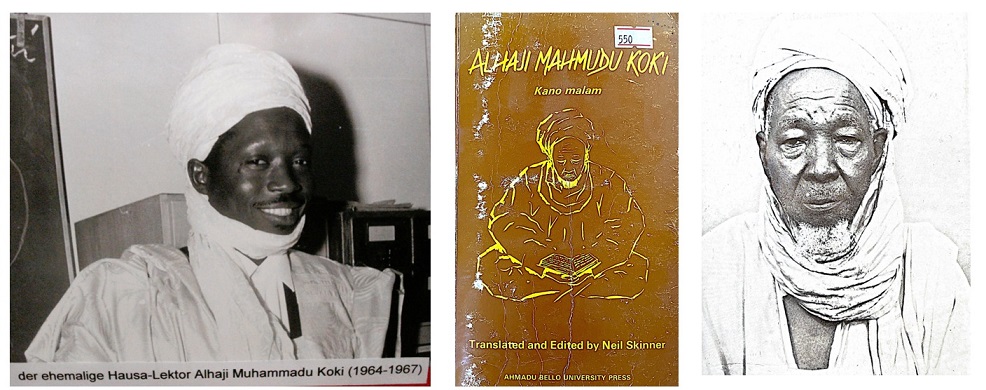
I was rummaging through my travel pictures when I came across a picture that I am sure has not been published anywhere. I saw it in a glass case at a ‘corridor museum’ at Universität Hamburg, Germany, on 2nd December 2008. I was excited because of its rarity. It was the picture that I am sure has not seen the light of day almost anywhere. I had vaguely heard about the man from my father, a writer, but did not pay attention then. Now he was there, smiling in all glory and right before me. I decided I would take the picture to show it to my father.

Edit: The man was Muhammad Ƙoƙi, the son of Alhaji Mahmud Ƙoƙi, the Kano Malam. His picture triggered my excitement about his father, Malam Mahmudu Ƙoƙi.

Malam Mahmudu was perhaps one of the most unsung and unknown critical literary figures in Hausa history. You can Google all you can. You won’t find him or his picture. Instead, you will be taken to Neil Skinner’s book, “Alhaji Mahmudu Ƙoƙi: Kano Malam” (ABU Press, 1977). I very much doubt if ABU Press itself has a copy. My copy is in excellent condition (except for a slightly scratched cover) since it was printed on shiny bond paper – and can therefore scan very well. I hesitate to do this for fear of copyright violation. I do wish ABU Press would consider retrieving a copy somewhere and reprinting it.

On return from Hamburg, I started looking for the book – and I was lucky to grab a copy at then ₦550 in January 2009. Now, some 14 years later, you can get a second-hand copy from the online store Abe Books for just $99 (cheap at ₦74,000 in 2023). At the moment, I don’t have any ‘kebura’ around me (since the ASUU strike was suspended!). Otherwise, I would offer mine for ₦50,000 for my copy!

Quite simply, it is a brilliant slice of Hausa history. Most significantly, it detailed the fieldwork done in the collection of data for Bargery’s Hausa Dictionary, whose full title is “A Hausa-English dictionary and English-Hausa vocabulary”.

Although mainly attributed to Rev. George Percy Bargery (1876-1966), an English missionary and linguist, the dictionary had significant input from Diedrich Hermann Westermann (1875-1956), a German missionary, Africanist, and linguist. The dictionary was published in 1934. The printed copy used to be available at ABU Bookshop, where a colleague of mine gifted me one he bought at the huge sum of ₦2,000 in ancient days, almost breaking his bank account!

The book was written/edited by Neil Skinner (1921-2015) at the request of Bargery’s son, Kenneth, to collect recollections of the elder Bargery while in northern Nigeria. Alhaji Mahmudu Ƙoƙi (1894–1976) was Bargery’s Chief Assistant in the preparation of the Dictionary and was the first choice to ask in 1967. As Skinner recollected, “I began recording some of his memories of Bargery. Listening to his vivid accounts of Kano in the first of the century, I formed the idea of putting together from Mahmudu’s lips some account of his own life.”

And what a fascinating life it was. Skinner continued, “As a son of the largest city of northern Nigeria, who had been born into the civil war of Aliyu and Tukur, M. Mahmudu saw the coming of the British, knew Waziri Giɗaɗo and Resident Temple, lived to see the end of the British rule and the Nigerian Civil War and, above all, had close contact with rulers and innovators, both Nigerian and British. He, therefore, seemed likely to have a tale worth recording for younger generation of Nigerians and those with an interest in Nigeria as it was and is. Mahmudu was a spectator of many great events and participant in not a few.”

And what a whirlwind tour of northern Nigeria it was in the early 20th century. Reading the book is like going back in a time machine. Everything was covered: economy, society, governance, culture, everything. As Neil Skinner stated, the book was told by Mahmudu himself – Skinner just edited it. It contained both fascinating and often disturbing details of days gone by. For me, for instance, I was traumatized by his account of the slave trade in Kano. As Mahmudu recalled,

“I used to see slaves being sold – with my own eyes! At Ƴan Bai, on the west of the [Kurmi] market. That was where they used to line them up and sit them down, with their feet sticking out, like this. Then it would be, ‘You there! Get up!’ And he would get up, and we would look him over well from top to bottom and say, ‘Walk a little!’ then he would do so until we told him to come back. He would do so, and we would say, ‘Right, go and sit down’ and put hand to pocket and take out a little money, perhaps a score of cowries or fifteen and give them to him. You would do this, whether you bought him or not. Then, if he saw someone selling groundnuts, he would call her over to get some saying he had been given the price for getting up to be inspected. That is how we have a proverb which says, ‘Tashi in gan ka ma na da ladanta’.”

Based on this disturbing account – in the heart of Africa – I wonder how many of our other proverbs have such creepy and dark origins? If you go to Ƴan Bai in Kurmi market in Kano, now you will only see mats, books and assorted goods.

Alhaji Mahmudu Ƙoƙi provides a rich tapestry of ethnographic details about how the Dictionary was compiled and the fact that the team of Bargery and his assistants insisted on seeing actual objects and their names before recording them. One wished they had an artist with them to sketch out many of the cultural artefacts that have all but disappeared now. It is good that the Bargery dictionary has been digitized and is available free online, thanks to the efforts of Hirokazu Nakamura of the Faculty of Human Science, Department of Human Sciences, Bunkyo University, Japan.

“Alhaji Mahmudu Ƙoƙi: Kano Malam” is comparable to “Baba of Karo” by Mary F Smith (wife of M.G. Smith, author of “Government in Kano, 1350 to 1950” amongst others, and which is available FREE online!). Published in 1954, “Baba of Kano” is an anthropological record of the Hausa people, partly compiled from an oral account given by Baba (1877-1951), the daughter of a Hausa farmer and a Koranic teacher. Baba’s reports were translated by Smith.

Books like these encourage us to seek out our own cultural history – visit those places mentioned, savour their historical aroma and note them as centres of excellence in discovering our past. By the way, Ƙoƙi is a ward in the city of Kano and right on the edge of the Kurmi market. If you are from the area, perhaps you may have heard of Alhaji Mahmudu from his grandchildren.

Don’t forget; this is not a review of the book but a memory jog on the old man, Alhaji Mahmudu Ƙoƙi, whose picture was honoured at a foreign university.

There is a composite collage of the picture I snapped in the Hamburg university museum of the son, the book and the father! as the latter appeared in the book.

Prof. Abdalla Uba Adamu can be reached via auadamu@yahoo.com.

Quick takeaways from the premiere of Manyan Mata!

By Mahmud A. Zukogi

This much-awaited, much-talked-about and star-studded film series, which incidentally will hit your screens today, Saturday, February 11, 2023, at nine o’clock this evening on Arewa 24, was premiered on February 4 at the Film House, Ado Bayero Mall, Kano.

The event, which was graced by the invited guests and Kannywood’s veteran, reigning and emerging stars, was full of the usual fanfare, excitement and expectations associated with the premiere of any new film. The red carpet was lit with beautiful lighting and stars, and guests took turns to pose to the beauty and demand of the evening.

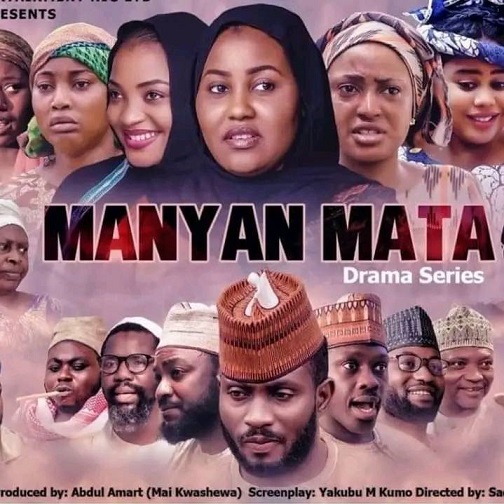
The industry is gradually exploiting the opportunities that film serialisation provides, no thanks to the exciting marketing platform made available by the leading entertainment television, Arewa 24. It is to the eternal credit of the television that such films as Dadin Kowa, Gidan Badamasi, Labarina, Kwana Casa’in, Gidan Danger, etc., have become popular and a must-watch by the teeming audience of the industry. It is obvious, therefore, that the art of film serialisation has gained currency in the industry, and Manyan Mata is coming to compete for space and attention. How it is able to do this will depend largely on the techniques and the staying power of the crew, especially the producer and the director.

Manyan Mata is produced and directed by two of the industry’s iconic duo, Abdul Amart (Maikwashewa) and Sadiq Mafia. What the film brings to the table can be summarised into three: innovation, diversity and topicality of motif. Abnur Entertainment is known in the industry for innovations that have opened a window of opportunities to the core stakeholders, from the producer down to the end of the ladder in the entertainment chain.

The film is highly diverse because of the array of stars it could gather under one roof. As far as the Kannywood industry is concerned, it takes great power, confidence and directing abilities to handle these stars, each with his/her ideals and idiosyncrasies. Thus, if any outstanding star is left out of the film, it could be a result of unavoidable oversight or a logistical glitch. But getting Ali Nuhu and Adam Zango, the northern and the southern poles of the industry, in one set is no doubt speaks of the commendable effort of the producers. Talk of the leading female stars of the industry; name them, and they are all there.

What, then, are the central motifs of the film and which has made it outstanding and a must-watch? The Almajirci question, the girl-child abuse/prostitution and the male overload of the women under the guise of marriage have been juxtaposed to educate, entertain and, most of all, draw public empathy to the raging social issues putting us down as a people.

The premiere opens with electrifying scenes of these social motifs, and this drew great excitement from the audience, who expressed individual understanding and appreciation of the representations in the film and its many expectations.

Veterans of the industry were well represented, ranging from Kabiru Maikaba, Shehu Hassan Kano, Hajiya Saratu Gidado Daso and the like. No less represented were the leading directors in the industry who came to support one of their own. There were expressions of appreciation and critique of the film, which was well received by the directing crew.

Overall, the premiere evening was full of life, excitement, and encomiums for the head of Abnur Entertainment, Abdul Amart, for his creativity and vision.

The greatest oversight is the industry’s inability to tap into the opportunities provided by the university which is next door. As far as the industry is concerned, there has not been a concerted effort to establish the needed relationship between and gown, a beneficial relationship that would help to grow the industry and take it to a whole new level of growth and worldwide visibility.

Strong institutional linkage is desperately needed to grow the art and economy of this under-tapped multibillion-dollar industry. I’m aware that scholars such as the respected Professor have invested so much energy in intellectual research that would have propelled the industry to the worldwide heights it ought to be. Same for Professor Yusuf Adamu, Ibrahim Malumfashi and, lately, Dr Muhsin Ibrahim, who has published widely and recently completed his PhD on a topic related to the industry at the University of Cologne.

Yours sincerely and his colleagues were only there in their individual capacity and not on institutional representation, which shouldn’t be the case.

It is thus necessary and about time that this costly oversight is remedied. The industry needs to open up and embrace change, and the best way to do this is to key into the opportunities they stand to gain by establishing a solid relationship with the university to improve its art and human capacity. I also believe this should be a two-way process, so the university should take the industry into confidence and dispel its image of unapproachability.

Mahmud Zukogi can be reached via mabuzukogi78@gmail.com.

Lee Kuan Yew and African leaders: A comparative note

By Muhammad Muzdaleefa

Founding leaders of nations matter. A country’s founding moment is often a make-or-mar moment in the life of the country. The trajectory on which the founding leadership sets the country, as well the power of their founding example, often defines and determines the future course of events way past the founding generation. Founding precedents tend to have an exceptional degree of endurance, because founding leaders command a kind and degree of legitimacy and license that is exceptional and which gives them and their example and precedents a special status and the propelling force of path dependency in their country’s history.

George Washington’s founding example, of not offering himself up for election again after serving two terms as (first) president of the new republic, even though nothing in the US constitution at the time imposed term limits on an incumbent president, initiated a tradition of American presidents not going beyond two terms; a tradition that remained in place until Franklin Delano Roosevelt breached it in the 1930s/40s, causing it to be restored by constitutional amendment. Additionally, the contemporary trajectory of American federalism, including the enduring fault lines in its politics, can be traced back to the Federalist/anti-Federalist split in the founding generation; between the Hamiltonian (strong federal/center) and the Jeffersonian/Madisonian (strong states) visions.

The death of Lee Kuan Yew, the founder of modern Singapore and its prime minister from 1959 to 1990 (then senior minister after that), has brought the usual apologists of autocratic rule in Africa out of their holes, doing what they do best: making all manner of inapt comparisons and prophecies of “what would have been” had one or the other favorite African autocrat been allowed to rule for as long as Lee Kuan Yew did. There is the implicit suggestion that similar longevity in office would have turned Lee’s African contemporaries into a Lee Kuan Yew or transformed their African states from Third World to First. It is a fanciful thought, one not borne out by the record.

First of all, Africa’s first generation of autocrats did, in fact, stay in power for very long periods. Nyerere, Kaunda, Banda, Houphouet Biogny, Mobutu, Bongo, Senghor, all were in power continuously for nearly three decades. And many current ones, including Mugabe, Museveni, and Biya have equaled or broken the record. None has managed any transformation of the Lee Kuan Yew kind, except in the opposite direction. So, the difference between Lee Kuan Yew and his African contemporaries was not just a matter of longevity in power, it was far more than that. Time itself is a value-neutral resource. It is what you do with the time you have that determines the future course of events. Africa’s autocrats did very different things with their time in power than Lee Kuan Yew did with his. They were bound to reap different results.

Second, while Lee Kuan Yew was an authoritarian leader, he was not an autocrat. It is an important distinction. Lee built and worked through institutions. He did not destroy the rule of law. Lee’s government passed and enforced draconian laws, but arbitrary and personal rule did not displace government through institutions, rules, and procedures. Lee also assembled and worked with a solid team (the first group of which is featured in the book “Lee’s Lieutenants”). His was not a one-man project; he was captain of a team. Lee’s Lieutenants brought to the table a complement of talents and abilities that Lee, as leader, effectively harnessed and synthesised into a shared vision. There was no “Lee Kuan Yewism” to which all were obliged to swear allegiance or else. And while Lee Kuan Yew did not like or think much of his opposition, he never declared a one-party state. His party contested elections and won those elections repeatedly. The franchise was not aborted. Nor were opposition parties. Absence of electoral turnover is inconsistent with competitive parliamentary politics. The Liberal Party’s overwhelming hold on power in postwar Japan is a case in point.

Lee Kuan Yew ruled for as long as he did, in part because he did not replace Singapore’s Westminster parliamentary system with a presidential system. The title “President” apparently had no particular allure for the supremely self-confident Lee. He was happy to be a “mere” prime minister, which meant that, as long as his party continued to win a majority in parliamentary elections and he retained his own seat and leadership of the party, he was free to remain prime minister. Term limits have been traditionally associated with presidential systems, not parliamentary systems. Today, his party remains in power, even if its electoral strength has diminished over time.

Lee’s contemporaries in Africa, on the other hand, moved quickly to replace their parliamentary systems with presidential rule. It was one step on the road to autocracy. It freed them from accountability to their party, to cabinet, and to parliament. From that foundation, other blocks in the autocratic project fell into place.

There are many other ways in which Lee Kuan Yew and his African contemporaries were fundamentally different. They, like Lee, did not care much for human rights, free speech, free press, and the like. Lee Kuan Yew believed in “Asian values”, not “Western democracy”. And his African contemporaries too defended their own idiosyncratic versions of African exceptionalism. But that’s pretty much where the similarities end.

Instructively, Lee Kuan Yew recalls telling himself, after a 1964 visit to Africa that took him to 17 countries, “I was not optimistic about Africa”. Lee said. And while in Lagos in January 1966 for the Commonwealth Heads of State conference, Lee again recalls, after observing the Nigerian government at work: “I went to bed that night convinced that they were a different people playing to a different set of rules.”

Nothing is gained, except more of the same escapism and revisionism that keeps us stuck in the counter-developmental past, by trying to cast one or the other African autocrat in the mold of a Lee Kuan Yew. We have had no Lee Kuan Yews. Not that we need or must have one. But, well, just saying!

Lessons from Adam A. Zango’s life

Muhammad Ubale Kiru

Adam A. Zango, for those of you who don’t know him, is a Kannywood Film actor who is popularly known as Adamu Usher for his spectacular dance steps. He appeared in more than 100 Hausa films over the years.

While lamenting why his marriage is in chaos, Adam identified that his wife committed a number of mistakes that may probably lead to their divorce. One of the mistakes mentioned was that she posted a video of herself taken at a beauty parlour while having henna (kunshi) done on her and at the same time dancing.

He indicated that such action was something he prohibited all his wives from doing, and he was devastated by the action. Hence, he stated it as one of the things she did. Now, the irony is this – these people have no shame in picking young girls to act in their movies. They have no shame in displaying these young girls on TV dancing and sometimes even touching them. However, they know quite well that it is wrong, yet they lure young girls into it.

Adam felt so bad that he is thinking about divorcing her because of what he himself is doing with other women and yet posting on the internet.

Dear ladies: You see, most of you are not smart. Men can do things and run away with it, but can you? Adam can spend 50-60 years of his life acting, but for you, the maximum is 40-45. This means what you are doing is not really a good business because, in the end, they will use you and then dump you. They know so well that it is not right, yet, they get you involved because they don’t care about your life or future.

In an interview with Hadiza Gabon, she was asked about when she would be getting married or if she had a fiancee. In her response, she said, “yes, I have a fiancee. As for when I will marry, that I don’t know because I can’t marry off myself”. They have plenty of suitors, but will they be ready to commit to marriage? The answer is NO. because Film is a bad business for women. It doesn’t matter whether it is Kannywood or Hollywood. The majority of them spend their lives pursuing lusty men and, in the end, commit suicide or die in nursing homes helplessly and full of regrets.

Ganduje drags Buhari to Supreme Court over Naira notes

By Uzair Adam Imam

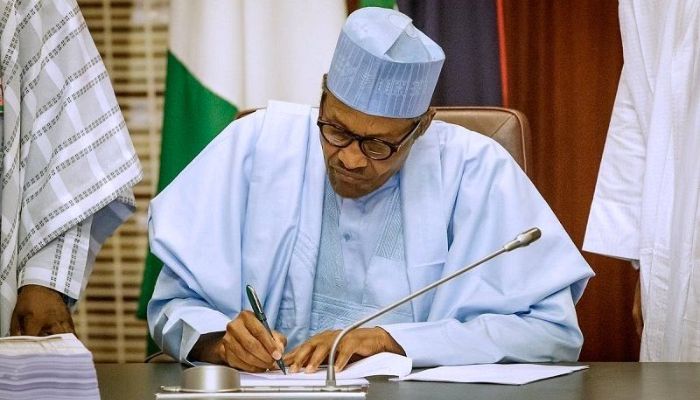
The Kano State Governor, Dr. Abdullahi Umar Ganduje, has dragged President Muhammadu Buhari before Supreme Court on Thursaday over naira notes redesign.

Governor Ganduje asked the court to command the Central Bank of Nigeria (CBN) not to stop collecting the old naira notes of N200, 500 and 1000.

He added that the naira redesign has also contradicted the provision of the 1999 constitution of Nigeria.

In a complaint filed by Sunusi Musa SAN yesterday, Ganduje said President Buhari alone had no right to instruct the CBN to stop collecting the old naira notes without consulting the House of Assembly.

Ganduje also decried about the way people are suffering in the country because of this newly introduced policy by the CBN.

In his interview with BBC Hausa, Musa said the court will hear the case on Wednesday next week.

The Daily Reality recalls that the governors of Kaduna, Zamfara and Kogi had earlier dragged president Buhari to the court over same case of naira redesign.

However, some analysts are seeing it as a power tussle between Buhari and Tinibu cabal ahead of 2023 elections.

Court convicts lady for attempting to kill, steal lookalike’s identity

By Muhammadu Sabiu 

A woman from New York City who was accused of trying to steal the identity of another woman by feeding poisoned cheesecake to her doppelganger was found guilty of attempted murder.

In a news release, Queens district attorney Melinda Katz stated that a jury had found 47-year-old Viktoria Nasyrova guilty of trying to kill 35-year-old Olga Tsvyk with cheesecake laced with a potent sedative in August 2016 and stealing her passport and other belongings afterwards.

The district attorney stated that Nasyrova intended to pass herself off as Tsvyk after killing her since the two women had similar looks, including dark hair and skin tones.

The attorney was quoted as saying, “The jury saw through the deception and schemes of the defendant. She laced a slice of cheesecake with a deadly drug so she could steal her unsuspecting victim’s most valuable possession, her identity. Fortunately, her victim survived, and the poison led right back to the culprit.”

According to the prosecution team, after eating the cheesecake, Tsvyk felt nauseous and passed out. Later, she was discovered practically unconscious in bed by a friend and was rushed to a hospital for treatment.

The team noted that after Tsvyk was released from the hospital and went home, she discovered that her passport, work authorization card, gold ring, and other valuables were all gone.

Nasyrova was detained after it was discovered through testing of residue from the cheesecake container that it contained phenazepam, a strong sedative.

President Buhari dedicates 2023 trade fair to Dangote Group

By Aisar Fagge

The International Trade Fair of the year 2023 has been dedicated to the Dangote Group by President Muhammadu Buhari.

The Kaduna State Chamber of Commerce organised the trade fair in collaboration with the Industry to Pan-African Conglomerate.

This was disclosed in a statement signed and issued by the Corporate Communication Unit of Dangote Group.

The statement said that President Buhari, who was represented by the Minister of Agriculture and Rural Development, Dr Muhammad Mahmud Abubakar, made the dedication while declaring the Trade Fair open over the weekend.

The statement read in part, “As part of strategies to expand market share and reach more customers, the management of the Pan-African conglomerate, Dangote Group, has announced its partnership with Ogun and Kaduna states Chamber of Commerce and Industry to stage this year’s International Trade fair with a promise to invest more in Nigeria’s economy.

“To this end, the Group Chief, Branding and Communication, Dangote Industries Limited, Mr Anthony Chiejina, said subsidiaries under the Group are featuring prominently at the two fairs, which kicked off at the weekend in Kaduna and Abeokuta, Ogun states, respectively.

“While the Trade fair organised by the OGUNCCIMA will be formally declared open today (Monday) by the Ogun State Governor, Chief Dapo Abiodun,” the statement added.

The president also commended the Dangote Group for its contributions to national development.

President Buhari further urged the general public and businesses to use the opportunities offered at the fair.

Bauchi: Association advocates for non-violent elections across secondary schools

By Ukasha Rabiu Magama

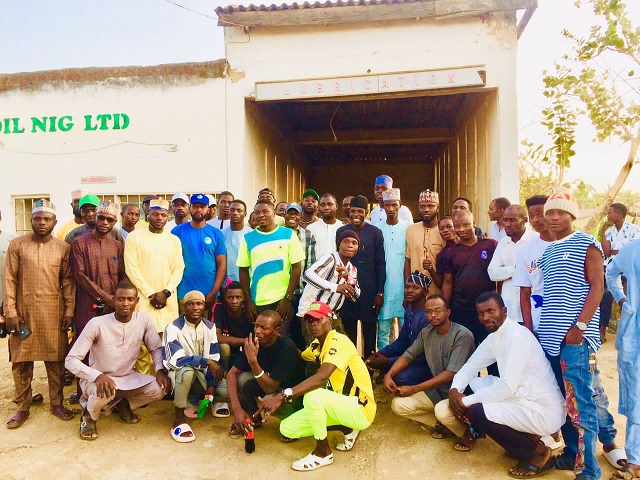
In a bid to prevent pre and post-election unrest across Toro and Bauchi during the oncoming elections in Nigeria, Toro Uplift Association commences a sensitisation program across various secondary schools in Bauchi state.

The sensitisation program, which will commence on Monday, 13 February 2023 and end on Thursday, 23 February 2023, has been disclosed by the Union’s chairman Abdulfatah Mu’azu while addressing some susceptible youths in Toro last Wednesday on the consequence of political thuggery.

Abdulfatah said the sensitisation journey, which will be embarked on in three selected secondary schools across the state’s towns, is aimed at discouraging pre and post-election violence in the forthcoming poll.

He, however, admonished the susceptible youths to disassociate themselves from unprofitable politicians who may hire them to disrupt the smooth conduct of elections for selfish interests.

In their respective comments, some of the susceptible youths, Shamsudden Umar and Nabil Saleh, paid allegiance to Toro Uplift and thanked the union for considering them despite their situation and promised not to engage in any political violence no matter the amount of money one will offer them during the election period. 

In his remark, the association’s secretary Umar Muhammad Sani said the Toro Uplift would not fold its hands to allow selfish politicians to use youths to disrupt the peaceful conduct of the exercise. He, however, charges that susceptible youths report any suspicious politicians whose target is to use them as thugs.

He further called on the principals of various secondary schools across the state to give the Toro Uplift Association maximum cooperation to have a smooth sensitisation exercise so that entire societies will be benefited from the program’s outcome.