Month: February 2023

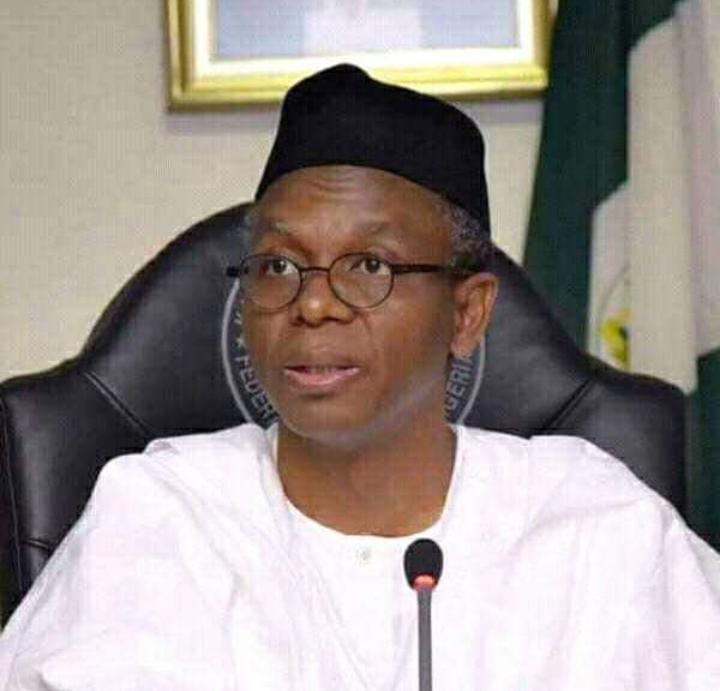
Again, El-Rufa’i orders collection of old Naira notes in Kaduna

By Sumayyah Auwal Ishaq

The Governor of Kaduna State, Malam Nasiru Ahmad El-Rufa’i has ordered ministries, agencies and departments in the state to accept old and new currency.

In a statement signed by the Special Adviser, Media and Communication, Mr. Muyiwa Adekeye said that, “In line with the subsisting order of the Supreme Court, the Kaduna State Government has directed its ministries, departments and agencies to ensure that their collection agents continue to accept payments made in all denominations of the naira, old and new”.

It further stated that “the laws of Kaduna State do not allow personnel of government agencies to be involved in cash collection of revenues. The collection agents authorised by state government agencies do offer citizens a route for cash payment, and are expected to comply with the subsisting court order”.

As Nigerians head to the polls

By Salim Yunusa

In less than a week, Nigerians will get to exercise their democratic and electoral rights in carefully selecting and choosing new leaders that will steer the affairs of the country and represent them across local, state and federal levels; with the hope of bringing on board people that will – among many other things – secure the country and improving its economy.

The last 8 years have been characterized by a turbulent administration; with glaring insecurity caused by banditry and kidnapping in the North-West and North Central, IPOB uprising in the South – East and the lingering Boko Haram insurgency in the North – East.

The Nigerian economy took hits and was severely battered, with double digit inflation figures and millions of Nigerians plunged into poverty. Recently, the cashless policy, which is good in the long run, has caused untold hardship to many Nigerians, with protests and riots in some places.

As Nigerians head to the polls, they’re left with clear choices of who they want to steer the affairs of this country; a leader who can tackle the insecurity ravaging the country, a leader who can improve and strengthen the economy and mostly, unite a nation whose unity is precariously held by few loose strings.

Nigerians should elect a leader with a clear-cut vision on how to effectively utilize the millions of youths that are unemployed and underemployed. They should vote vote a leader devoid of religious, ethnic and regional bias for the betterment of the country.

Someone who will prioritize education – enrollment of the millions of out-of-school children roaming on the streets – and will put to an end the incessant industrial strikes bedeviling the public universities.

Nigerians should opt for a leader that listens and doesn’t infringe on their rights – whatsoever right that may be. We have seen how this administration banned Twitter, one of the most popular platforms that gave young Nigerians a voice, for six months. We have seen how the government cracked down on young Nigerians protesting police brutality during the #EndSARS protests.

We have seen how the government has tried to gag press freedom through the introduction of the social media bill. No sensible Nigerian should bring forth a leader that will enshrine this.

As Nigerians go to the polls, they should remember that the greatest mistake they made was placing all their hopes in the hands of one person; thinking that one person alone would ‘change’ the country. They should know – and if they do know – they should remember that change and nation building is not a job that can be done and achieved by just one man.

That it is a collective responsibility of everyone to play their part in making the country work for everyone. They should know that there is no magic wand that will swish away the problems of this country and that there’s no messiah that will come and save us.

Luckily for Nigeria, the problems are clear – and that’s half the problem solved. It is left to us to choose what is right over what is easy; to look away from hype and what is in vogue and to opt for options that will put first the interest of Nigerians and Nigeria.

Salim Yunusa is a prolific writer, poet and public affairs commentator. He writes in from Zaria, Kaduna.

Nigerians and mass migration: Addressing the Japa syndrome

By Umar Yahaya Dan’inu

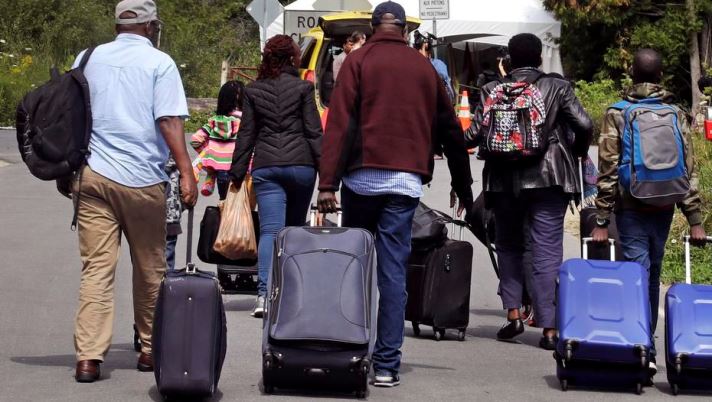
Mass migration is a complex and multifaceted phenomenon that affects individuals, communities, and entire countries. It is driven by factors such as economic opportunity, political instability and natural disasters as people seek to improve their lives.

In Nigerians, many people are driven to migrate for better lives, education and healthcare, and job prospects. Political instability, such as conflict, insurgency and human rights abuses, also contributes to a mass migration of Nigerians.

The term “Japa” refers to the migration of Nigerians to foreign countries, especially Western ones, in search of a better life. A lack of quality leadership in the country at all levels often causes this phenomenon. Several reports and writing has shown that despite their love for their home country, many Nigerians have lost trust in their leaders and feel compelled to leave in search of a better future. Moreover, the decay in leadership has caused division within the polity; every tribe or region is suspicious of one another, and there is fear of domination and marginalisation.

In the 60’s and late ’70s, Nigeria was a country that commanded respect in the global arena. Our passport is a thing of pride at any entries and departure level. The Nigerian currency and economy were in good shape. However, the challenges facing Nigeria, such as insecurity, kidnapping, banditry, corruption and political violence, have led to the decline of the country’s economy and international standing. This decline has driven many young people, skilled and unskilled, to leave in search of a better life.

In Northern Nigeria, where Islam dominates the culture, people prefer to migrate to Middle Eastern countries, such as Saudi Arabia and recently Dubai and Qatar, where they share the same religion and beliefs. In contrast, Southern Nigeria is the centre of migrants, as people seek to escape bad governance and poor leadership. Despite the differences between the North and South in terms of access to education, quality of life, job prospects and economic opportunities, many young people still feel compelled to leave.  

However, the skilled and unskilled knows what they can do to navigate their way to leaving Nigeria. In Benin, the state of Edo, people are trafficked in the name of migration to get a better life, and they mostly end up enslaved and sold to work without regard for the dignity and respect they left in their country.  

Furthermore, some skilled migrants bring positive changes to Nigeria; they are doing wonders in their new countries, such as setting up companies that employ Nigerians, impacting the economy positively. In addition, statistics have shown that Nigerians are highly skilled people in the UK and the US, contributing to the economies of the host countries.

The migrations of these groups affected Nigeria negatively because Nigeria is among the world countries with the highest numbers of out-of-school children and increased maternal mortality rates. Nigerian-trained Doctors, Engineers, Scientists, Musicians and filmmakers are all over the world doing great work. Nigerian government needed their services and contribution to help in reducing the numbers of maternal mortality and to help in actualising effective education take place at all levels.     

To address the Japa syndrome, a multi-faceted approach is needed that addresses the root causes of migration and its challenges. These involved improving economic opportunities, promoting stability and security, and increasing access to education, healthcare, and employment opportunities can help reduce migration. In addition, strengthening the democratic process, improving wages and salaries, and enhancing the country’s security architecture are also important steps that need to be taken.

Nigeria is ours, and our responsibility is to ensure a bright future for our nation and youth. We must take action to address the Japa syndrome and create a future that is worth staying for.

Umar Yahaya Dan’inu wrote from Hausari Ward, Nguru, Yobe State. He can be contacted via umarnguru2015@gmail.com.

Mainstreaming mental health in Nigeria

Bello Hussein Adoto

The signing of the Mental Health Bill into law presents a renewed imperative to rewrite the mental health narrative in Nigeria. Here is how Nigeria can do better.

‘All diseases are equal, but some are more equal than others’. Although Nigeria is not George Orwell’s Animal Farm, the country has a glaring disparity in the kinds of diseases it considers a priority, but the recent signing of the Mental Health Bill into law can help us to rewrite the narrative.

At the mention of infectious diseases like HIV, tuberculosis, and malaria, or non-infectious diseases like diabetes, hypertension, and cancer, one could point to tangible, nationwide, and sustained initiatives to promote public health and reduce their impact on individuals and communities. But very few such initiatives are available, if any, for anxiety, depression, or Alzheimer’s disease. 

While anxiety and depression do not kill as regularly as untreated malaria, HIV, tuberculosis, and uncontrolled diabetes and hypertension – diseases that received far more attention, these mental illnesses are nonetheless deadly.

Anxiety and depression, for instance, reduce our quality of life and living, undermining our productive capacity, while depression increases a person’s risk of suicide. This reality makes diseases that affect moods and behaviour as relevant as those that affect tissues and organ systems.

Mental health disorders are a huge challenge in Nigeria. A recent report puts the number of people living with one mental illness or the other in the country at 60 million. According to a World Health Organization report, Nigeria has more than seven million people living with depression. This value doubles the number of people living with depression in South Africa and Ghana combined. A similar story plays out in the estimate for people with anxiety in the continent.

Nevertheless, the signing of the Mental Health Bill offers a renewed imperative for stakeholders to harness the several opportunities that could rewrite the narrative of mental health in the country.

The first opportunity is an extensive network of primary, albeit underfunded and underutilized, healthcare centres across the country. Nigeria has more than 33,000 primary health centres with a potential capacity to provide mental health first aid services to Nigerians. The government can expand these facilities to provide mental health care services.

The centres have community health officers (CHOs), community health extension workers (CHEWs), registered nurses, and midwives. Specialists can train these non-specialist healthcare workers to provide basic mental healthcare services nationwide, especially in rural areas, in a task-sharing, task-shifting policy.

Nigeria has applied this policy to provide malaria and family health services, and a 2015 study shows that integrating mental health into primary healthcare in Nigeria could follow a similar model. Such integration will buffer the shortage of mental health specialists in the country and improve care coverage for underserved populations.

Secondly, the digital era is here. Digital channels such as social media, webinars, SMS, and tools such as smartphones and software, provide an exciting, affordable, and sustainable opportunity to reach many people. The government could harness these channels to support non-specialist care delivery, educate the public about the fundamentals of mental health, reduce ignorance about mental health, and eliminate the stigma and dangerous practices associated with mental health disorders in the country.

Beyond helping to raise awareness, the government and other relevant stakeholders should harness digital channels to deliver e-health to people with mental health disorders and bypass the barriers to accessing traditional care. Such digital interventions have been shown to improve mental illnesses among students and could be helpful in care delivery to a larger population.

A third opportunity is the existence of non-governmental organizations, such as the Mentally Aware Nigeria Initiative (MANI) and Asido Foundation, that champion mental health causes in the country.

NGOs are paramount to health promotion because they supplement public efforts to promote health. Some NGOs operate helplines for mental first aid; others, like the Asido foundation, run the Unashamed campaign to increase mental health awareness and reduce stigma in the country. The government can partner with these NGOs to sensitize the public and provide the much-needed care and support that millions of Nigerians need.

Finally, a special insurance package should be instituted for people with mental health disorders, so they can access essential care without worrying about the cost. Awareness about health insurance has increased over the years, and more Nigerians are enrolling in their numbers. The number of enrollees in the Nigerian Health Insurance Scheme [(NHIS), mow National Health Insurance Authority (NHIA)] has nearly doubled between 2007 and 2013. Stakeholders can expand current social health insurance packages for insurance owners to include mental health conditions and give Nigerians a new lease to access proper mental health care whenever needed.

Bello Hussein Adoto, a researcher, writer, and journalist, writes via bellohussein210@gmail.com.

2023: Buhari working for PDP, says Ganduje

By Ahmad Deedat Zakari

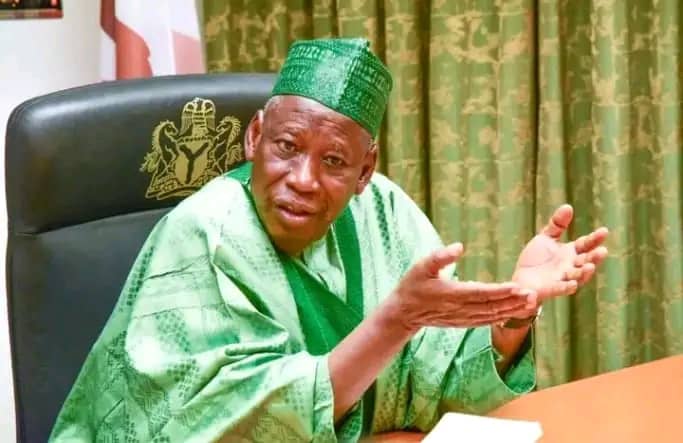
Kano State Governor, Abdullahi Umar Ganduje, has accused President Muhammadu Buhari on working for the defeat of the All Progressives Congress (APC) in the forthcoming presidential election.

In an audio recording, Ganduje was quoted in Hausa saying, “President Buhari should remember that for several times he was trying to contest Presidency but he could not make it until there was an alliance , but now after enjoying everything , he turned back against the same democratic system that saw him to office.”

This is coming from Ganduje after Buhari’s address to the nation on Tuesday. Buhari had in his address poignantly refused to obey the Supreme Court order on the extension of time for the use of old Naira notes. A move Ganduje and other APC stalwarts believe jeopardises their chances in the February election.

Ganduje then criticised and counselled the president thus: “I wonder why the President is hellbent in making the same Party that helped him to win elections lose out, what did we do to him that he is this ignorant on several advice forwarded to him.”

“This same Buhari he contested again and again but he couldn’t win not until there was an alliance, now he wins and win again for the second term, but now that he is living, he wants to cripple the same Party that brought him to power why?

“This Currency Swap Policy, why didn’t the President bring it seven and a half years ago or after elections, but now one must be compelled to think that there is an ulterior motive in the whole thing.”

Election safety advice

By Abdurrazak Mukhtar

As the election season draws near in Nigeria, it’s imperative to prioritise one’s safety. Political elections, although crucial to democracy, can often lead to tension and conflict. Thus, citizens must be aware of the potential dangers and take necessary precautions to ensure their well-being.

Safety should always come first, and in times of political elections, it’s of utmost importance. By staying informed through reliable news sources, avoiding large gatherings and protests, and following safety advice provided by local authorities, individuals can take control of their safety during such times.

For instance, it’s recommended to steer clear of crowded areas during demonstrations or political rallies and to dress in a manner that doesn’t identify one as a supporter of a particular political party.

Moreover, respecting the rights of others is a fundamental aspect of ensuring a peaceful and safe election season. Political differences should never be used as an excuse for violence or intimidation, and individuals must refrain from engaging in illegal activities. This not only protects the safety of others but also helps maintain peace and stability in the country.

In conclusion, as citizens gear up for another election season, it’s essential to prioritise one’s safety. By being aware of the potential dangers, following safety advice, and respecting the rights of others, individuals can participate in the democratic process peacefully and responsibly.

Therefore, let’s work together to promote harmony and ensure that the elections in Nigeria are conducted in a fair, transparent, and safe manner, securing a peaceful and stable future for generations to come.

Abdurrazak Mukhtar can be contacted via prof4true1@gmail.com.

Nigerian youth and their quest for high-paying jobs

By: Muhammad Danjuma Abubakar

On the weekend, while scrolling through my phone casually, I clicked on the Google App to open the search box. I stared for a while as I had no question in mind. Although, it is advised that one should have a specific question in mind before attempting to consult the internet; to enable the user to save precious time and better organisation the resources therefrom.

As I was thinking about which question was most relevant to the search, I suddenly typed ‘best paying jobs that can earn me millions’ as my query in the search box. This took a better part of my time for hours as I kept searching through Google – the most admired search engine today, to find out the ‘best jobs’ that could earn a person millions, whether in naira or whatever currency.

The outcomes from the search engine result pages (SERP) could not cease to amaze me.  The more results I got, the greater my curiosity for further searches as I kept re-phrasing the queries.

While on this, I also remembered that our society today is such that it overrates affluence and attaches respect to any ‘rich wheat’ regardless of whether one can genuinely justify the means to its acquisition.

Because of these, most young Nigerians wish, in a resolute manner, to find a professional career in jobs that could offer them huge pay to enable them to build a big house and get a car or cars of choice, among other acquisitions in the shortest time possible. These are society’s key indicators for measuring success in life or otherwise.

Emphatically, it is because of the perceived belief that studying certain courses in the university could translate more in good paying jobs that some parents impress it upon their children to forfeit one university admission for another or go to a greater length such as using monies to get the desired choice of course(s) of study for their children.

In one of my recent articles titled ‘Our Schools, the rots and dangerous implications’, I discussed some of these unfortunate realities and how best to tackle them. That aside.

As I realised further the fact that our youths today do not choose a career or job that aligns with their interests but those ones that pay more, I took my research more seriously as I began to write down the results from my search queries. And at the end, I got massive results from my google searches.

Good-paying jobs could fetch you millions are many. Yet, I was shocked to see that most jobs I had expected to find, considering the perceived potential of the courses leading to those jobs, did not make a list, and those least expected were on the list. How ironic!

Some list of the careers/jobs I expected to find are: Politics, Aeronautical engineering, Pilot, Photography, Data visualisation, Water resources engineering, web development and Planning Officer. Others are shipping and logistics, music, and filmmaking, among others. I did not find any of these.

For clarity, my expectations were well placed. Because for example, politics is one of the most desirous ambitions, particularly in Nigeria, where even a ward councillor easily amasses wealth within his shortest period in office. Most Nigerians, especially those who wish to feel they belong, desire to win an elective office.

 Another notable example is photography. It is estimated that over 20,000 events take place in Lagos State every day, according to the vanguard newspapers report.

Photography has become a speciality that has stood the taste of all times and has proven to be a money-spinning venture. If you must know, politicians of class, businessmen, top government functionaries and blue-chip organisations now have trained photographers in addition to their spokespersons and media teams. This is why even some universities, particularly overseas, now run degree and even higher degree programs in modern Photography. 

Similarly, the job of being an aeronautical engineer or pilot could also be very rewarding. According to statistics from Statista, the number of current active commercial aircraft is more than 25,000 globally, with Africa accounting for 888 of this number, with an annual growth rate of no less than 3.8%.

But, the only very financially fulfilling jobs, according to Google, despite repeated searches, were a Sales manager, Chief executive officer, Financial manager, Software developer, Lawyer, Investment Banker, Negotiations expert, Neurosurgeon, Psychiatrist, Human Resources Manager, Risks Analysts among others.

The best cure for ignorance is a constant search for knowledge. So, I took my research further this time by picking each of these jobs one at a time to ask google again ‘why they were the best-paying job. I wondered, this time, why I kept receiving tips on ‘how to be successful and earn better pay’ instead. 

Put differently. My search results indicated that there are key conditions for you to excel and eventually earn more in these jobs earlier regarded as the ‘most financially’ rewarding. Google listed the conditions to include; passion, staying evergreen through the search for new ideas, and competence, among others.

At this point, it is reasonable to believe that any legitimate job and vocation is a best-paying job and could make you a millionaire when you imbibe certain principles.

Therefore, instead of seeking the best-paying jobs, the youths must rather seek a job that aligns with their purpose and personality in life, seek to become like a ‘bunch of keys’ with broad ideas and creativity in their chosen career and seek to work to learn more, not to earn more; because it is said that, when you work more than you earn; you will later earn more than you work.

Muhammad Danjuma Abubakar lives in Minna, Niger State. He can be contacted via muhammadcares4u@gmail.com.
‘Banks lost over N5bn to protesters due to naira scarcity’, Association cries

By Muhammadu Sabiu 

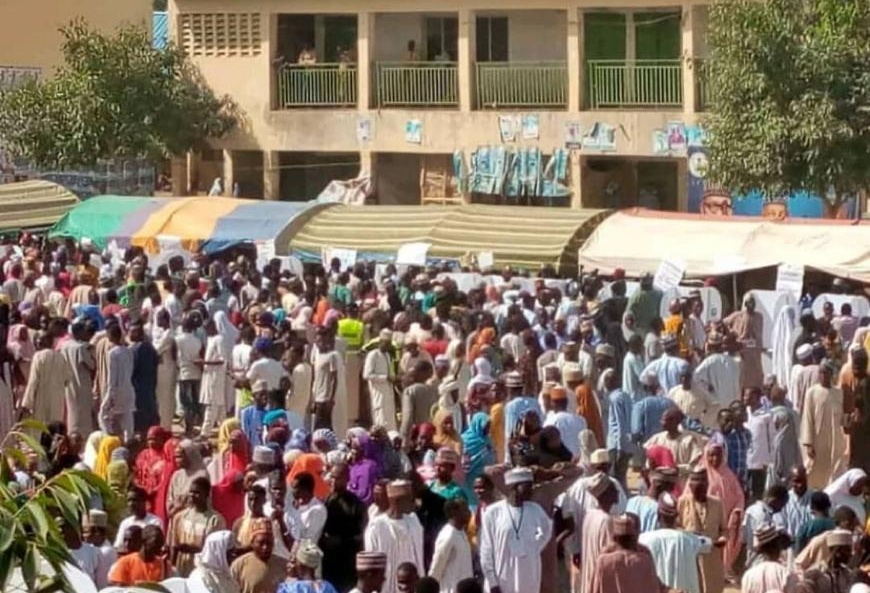
An umbrella organization for banking sector employees, the Association of Senior Employees of Banks, Insurers and Financial Institutions, revealed that banks lost N5 billion as a result of demonstrators’ attacks on assets due to naira scarcity.

Oluwole Olusoji, the group’s president, revealed this on Thursday in Lagos.

He also lamented that the attacks by demonstrators had affected 17 commercial banks.

He explained that in addition to attacks on bank employees, bank premises and ATMs were set on fire.

He said, “We call on the public to desist from threatening or attacking our members or destroying our properties as they will be only proverbially cutting their noses to spite their faces. We can only give what we have been provided with and nothing more.”

Philip J. Jaggar: The exit of another giant Hausaist scholar

By Prof. Abdalla Uba Adamu

I first met Philip Jaggar in March 2008 at the School of Oriental and African Studies (SOAS) when I was engaged as the cinematographer for a visit, mediated by the British Government, of Sheikh Dr Qaribullah Nasir Kabara of Kano, to various places in the UK, including the University of London.

While I knew of Jaggar (although never having met him before), the rest of the team was pleasantly surprised by his total command of the Hausa language (and inner city Kano Hausa at that) – and his absolute refusal to respond to any question except in Hausa. The SOAS meeting brought together an impressive list of scholars to receive Sheikh Qaribullah. These included Graham Furniss, Dmitry Bondarev (specialist on Hausa handwritten Warsh Qur’anic manuscripts of Hausaland) and Philip Jaggar himself. It was a very pleasant encounter, full of banter.

My next encounter with him was later in November 2008, when I was commissioned to deliver a lecture at the Universität Hamburg. Jaggar had taught at the university, and I was honoured he attended my public lecture. Only two meetings, but he treated me like a long-lost friend, despite the eleven-year age gap between us. I was also elated when he told me of his interest in my works which at that time were beginning to gain traction in media and cultural studies. It was our last meeting, but very memorable for me due to his simplicity, love for Kano and absolute devotion to Hausa studies. He taught at Bayero University Kano from 1973-1976 and had pleasant memories of his experiences.

Jaggar’s most famous and highly acclaimed book is simply titled Hausa (John Benjamins, 2001). It was considered a classic comprehensive reference grammar of the Hausa language spread over sixteen chapters which together provide a detailed and up-to-date description of the core structural properties of the language in theory-neutral terms, thus guaranteeing its ongoing accessibility to researchers in linguistic typology and universals.

While Jaggar, or Malam Bala as he preferred to be addressed when he was in Kano, was known for his immense contributions to Hausa grammar, I interfaced with his work on the ‘maƙera’/blacksmith industry of Kano. Jaggar was the first to provide a comprehensive study of the blacksmith industry in Kano. His landmark book, The Blacksmiths of Kano City: A Study in Tradition, Innovation and Entrepreneurship in the Twentieth Century (Rüdiger Köppe, Cologne 1994), brought out the honour, dignity, creativity, aesthetics and the technology of the metalworking industry in the heart of Africa. The blurb of the book summarizes this amazing work:

“The present book examines the factors involved in the expansion, during the colonial and post-colonial periods, of a traditional pre-European craft. It discusses the art of blacksmithing in Kano City, northern Nigeria, and its eventual conversion into a modern metalworking industry. In doing so, it challenges the widely-held and simplistic assumption that such traditional professions declined before the economic and technological onslaught of colonialism.”

For me, the book provides a fascinating and ethnographic picture of the industrialization of the inner core city where I spent the early years of my life. It vividly brought to life the alleyways, the people and the entrepreneurial focus of the various wards in the city. This alone is enough to endear a reader to the book, even without the fascinating focus on the blacksmithing industry. I was able to snatch a copy in a bookstore at the University of Maiduguri in 2003 at ₦800 – barely 2€ now, but the publisher is currently selling it for 24€, about ₦12,000.

If, and only if, someone in the policy circles of the Kano State government of the day had taken note of the book, our maƙera would have received a boost and been incorporated into the development agenda of a national creating a synergy between its creative proto-industrialists and modernity.

When he celebrated his 75th birthday in 2020, many of his colleagues paid a lot of glowing tribute to him. Now that he has sadly passed away, those tributes remain etched in stone. He will be surely missed by hundreds of his colleagues and thousands of Hausa students who benefitted, directly or indirectly, from his extensive scholarship on the Hausa language.

Tribute to Philip Jaggar (2020)
https://study.soas.ac.uk/tributes-to-philip-j-jaggar/

About Philip Jaggar
https://study.soas.ac.uk/jaggar-hausa-champion-soas/

Various scenes with Phil Jaggar and the OP, as well as with Sheikh Dr Qaribullah Nasir Kabara’s team

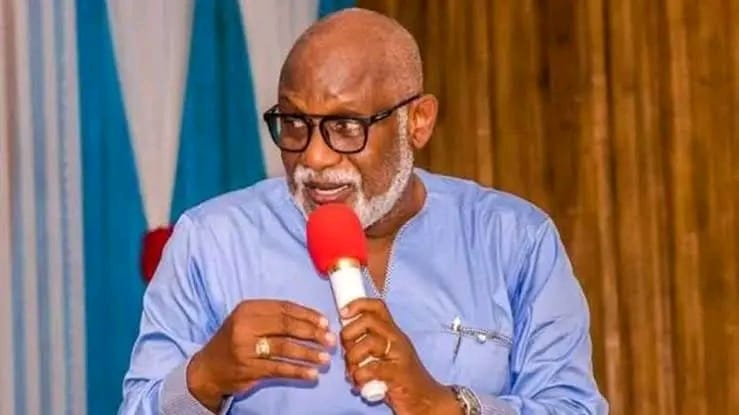
2023 Elections: Naira swap threatens APC chances, Akeredolu tells Buhari

By Muhammadu Sabiu 

The governor of Ondo State, Rotimi Akeredolu, states that the All Progressive Congress’ (APC) popularity has been harmed by fuel and naira scarcity.

Akeredolu begged President Muhammadu Buhari to give the Governor of the Central Bank of Nigeria (CBN), Mr Godwin Emefiele, the appropriate instructions to reverse the naira redesign policy right away.

He said this while meeting with members of the All Progressive Congress (APC) Presidential Campaign Council (PCC), led by Seyi Tinubu, the son of the party’s presidential candidate, Asiwaju Bola Tinubu, in Akure, the capital of Ondo state.

He said, “We have a problem we are facing in this country today. Our rating as a party is not that favourable.

“Let’s not deceive ourselves. Must it be now that we will have this financial policy?

“How? Fuel and everything? Things are not easy. This policy is not right at this time. It should be reversed.

“Reserve it and tell CBN that we are reversing it. Let old, and new notes co-exist.”

So far, there have been reports of Nigerians taking to the streets to protest the scarcity of naira notes, leading to the burning down of some bank branches in Delta State.