Month: February 2023

Voting suspended at 141 polling units in Bayelsa

By Muhammadu Sabiu 

Reports reaching the Daily Reality (TDR) indicate that voting at 141 polling units in Bayelsa state has been suspended by the Independent National Electoral Commission (INEC).

According to INEC Chairman Mahmood Yakubu, the exercise was suspended due to disruption as the voting process had been interfered with.

This was stated on Saturday when the INEC chairman addressed journalists at the collation centre in Abuja on the ongoing general elections.

As of the time of filing this report, TDR has not been able to gather more details about the decision taken by the electoral body.

Just-in: FCT PDP chairman dies in an accident

By Ahmad Deedat Zakari

The Federal Capital Territory Chairman of the People’s Democratic Party (PDP), Sunday Zaka, has passed on.

Mr Zaka, who was popularly known as HIV, was involved in a car accident that claimed his life on Saturday morning.

Bawa Benjamin, a close aide of the deceased confirmed his demise to newsmen.

According to Bawa, Mr Zaka lost control of his car and crashed into a tree on his way home from the party’s meeting.

He also disclosed that the deceased was rushed to the University of Abuja Teaching Hospital Gwagwalada, where he was confirmed dead by doctors.

Reports have it that Mr Zaka’s personal security also died alongside his boss in the car crash.

A chieftain of the party, Michael Kpatuba mourn the death via a post on his Facebook page on Saturday morning.

“Dying Election day is really heartbroken to the FCT, PDP family.

“Rest in peace, Hon Zaka Sunday, FCT PDP Chairman”, the post read.

Nigeria’s security, humanitarian challenges and the role of journalism in tackling them

By Uzair Adam Imam

Nigeria as a nation has been battling with security challenges over the years. The issue has disrupted many activities in the country and, sadly, as the 2023 general elections approaches, there is no safe corridor in the country.

Nigeria, it is a bitter truth the citizens have to swallow, has relinquished its sovereignty in many parts of the country to terrorists.In the North East, there is the 12-year-old Boko Haram war that has displaced thousands, claimed hundreds of thousands lives and destroyed property worth billions of naira.

In the North West and some parts of North Central the activities of bandits is the new normal. Zamfara, Sokoto, Katsina, Kaduna and Niger states are the epicenters of this new wave of terrorism. In some parts of the above mentioned states bandits slum huge taxes on locals before they allow them to farm.

In the South West cultists and kidnappers have a field day. They machete people to death on a daily basis. The media are awash with the news of people being burnt alive.

In the South East the Indigenous Peoples of Biafra (IPOB) terrorists maimed their victims in broad daylight; and have extended this carnage to security formations in the region. One of the attributes of a failed state is insecurity, when the government is not in charge.

This drives away many foreign investors. This is the reality of Nigeria today.Humanitarian crisis in Nigeria comes in many hues. While some are caused by natural disasters, insecurity has worsened the situation.

Many states in various political zones in the country, internally displaced persons camps have opened up. Drug abuse, abortion, sexual exploitation, extortion, among other social vices, are rampant now.

In different parts of the country locals have no access to potable drinking water. Many of them drink from the same stream their cows drink, and they wash their clothes there, too. This has exposed them to different kinds of diseases like cholera and other life-threatening diseases.

The condition of our hospitals, especially in rural areas, is bad. Many of these facilities are understaffed and lack working materials. There are not enough beds and sometimes patients have to lay down on the floor for treatment.

As a student-journalist I believe journalism has an important role to play in tackling these lingering issues bedeviling Nigeria over the time. This includes but is not limited to public enlightenment, responsible reporting, countering fake news and balanced reporting (social responsibility of journalists involved here).

For example experts and analysts believe that many bandits are into banditry because of their ignorance. Balanced and factual reporting can help end terrorism in some ways.

This can only be achieved with adequate training of journalists on terrorism reporting.Recent documentaries by BBC and Daily Trust have laid credence to the argument above of how ignorance, unbalanced reportage and fake news contribute to insurgency or terrorism in Nigeria.

In conclusion, while insecurity is weighing down Nigeria as it worsens to humanitarian crises, journalists can tackle it by fighting fake news, balancing their report and enlightening the public of the danger ahead.
Just In: APC suspends Senate Chief Whip, Orji Uzor Kalu

By Muhammadu Sabiu 

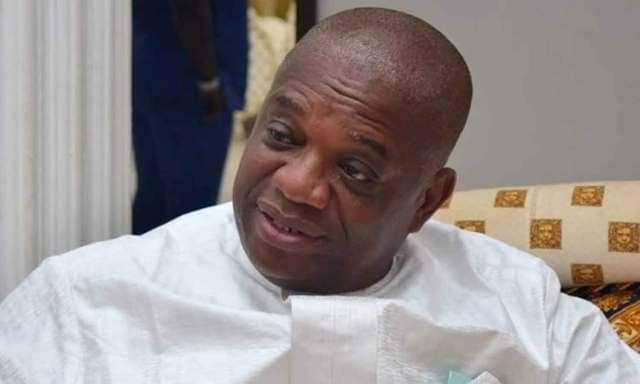
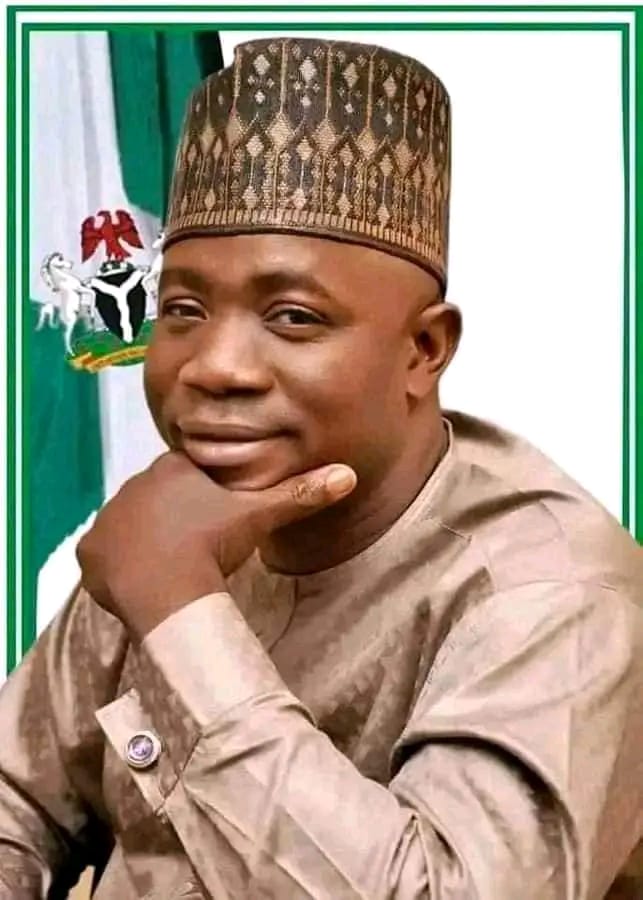
The All Progressives Congress (APC) has suspended Orji Uzor Kalu (Abia North), the Senate Chief Whip, due to alleged anti-party activities and other violations, less than 24 hours before the National Assembly election.

The suspension of Kalu, according to the ruling APC, takes effect immediately.

The former Abia governor was accused of undermining and ruining the party in the state, and this caused Kalu to clash with the Abia APC leadership and people.

The former governor is alleged to have worked against Chief Ikechi Emenike, an APC candidate for governor.

Also, he has been accused of advocating on behalf of the Action Peoples Party (APP), whose governorship candidate is Prince Uzor Kalu, his younger brother.

In the meantime, Kalu officially acknowledged and defended backing and promoting the candidature of his younger brother, Mascot, by stating he is qualified to run for the state in an interview last Tuesday.

Nigeria’s security and role of media

By Sulaiman Maijama’a

Security of lives and properties of the citizens is one of the cardinal responsibilities of every responsible government and the first priority of every society. Nigeria, being a plural society (with different cultures, tribes, languages religions and regions) since independence has experienced, in different points in time, security challenges, the sad development that sowed the seeds of fresh security challenges that resurface in our time. Today, all the six geo-political zones that constitute Nigeria suffer from one form of insecurity or the other.

Boko Haram in the North East, kidnapping and banditry in the North West and the North Central becomes the epicentre of farmers-herders clashes.

Similarly, the South East suffers from the evil atrocities of the Biafran secessionists, the South South is coping with armed groups that have sabotaged pipelines and kidnapped oil workers in Niger Delta, while the South West suffers ritual killings for money making.

In its report on January 4th, 2022, HumanAngle revealed that in 2021, Nigeria had recorded its worst insecurity-related death toll since 2016. At least 10,398 persons were killed across the country between Jan. 1 and Dec. 31, 2021.

While this horribly compounded situation is winking its head, other humanitarian challenges in recent time came in and deteriorated the condition.

Thisday reported that in 2019, Nigeria contributed 4.3 percent of the global figures of 79.5 million in terms of humanitarian crises, making her one of the top 10 countries with the highest risks of humanitarian disasters, and the situation continues to worsen.

The humanitarian crisis range from seeking refuge in overburdened and unsafe camps, to limited access to food, healthcare and education. Millions of people in the humanitarian crisis face malnutrition, inadequate social protection, sexual violence, and uncertain timelines for a return to normalcy.

The role of the media: Journalism, apart from its traditional role of informing, educating and entertaining, can play the following role to curtail such challenges:

  1. Stakeholder engagement and “tree analysis”: the nature in which the Nigerian government fights insecurity is like cutting the leaves of a tree without cutting its root. The media should provide a forum for stakeholders to be brainstorming on the genesis of these challenges and the motives behind them. This will give an insight to the government into the roots and ways through which it can be curtailed.
  2. Applying “Agenda Setting Theory”: the media should make security and humanitarian reports their topmost priority by consistently reporting and giving them banner headlines and breaking news positions. By so doing the government and relevant authorities will swing into more deliberate actions with a view to bringing an end to the challenges.
  3. Applying “Development Support theory” and Serving the watchdog and surveillance role: the media should make editorial policies that will support development and expose any suspicious attempts. This should be done deliberately, knowing that security and humanitarian challenges cause Nigeria underdevelopment.
  4. Objective and credible reportage: these are a second name to journalism. When fairness and credibility are maintained in journalism, security and humanitarian challenges will reduce to a minimal level.

Maijama’a is a student at the Faculty of Communication, Bayero University, Kano. He can be reached at:
sulaimanmaija@gmail.com

Benue Senators reject Obi, endorse Atiku

By Ahmad Deedat Zakari

The three senators from Benue State have distanced themselves from the decision of the Benue State Governor, Samuel Ortom, to support Peter Obi in the tomorrow’s presidential election.

The senators disclosed this in a statement they jointly signed and made available to newsmen on Thursday.

According to the senators, their support is for the People’s Democratic Party’s Candidate, Atiku Abubakar.

The three senators are currently representing Benue at the National Assembly. They are: Gabriel Torwua Suswam, Emmanuel Yisa Oker Jev and Patrick Abba Moro.

The statement reads in part ,”This is to inform the entire public, the citizens of Benue State and Nigeria that after due consultations with the Benue people in the three senatorial zones, Benue has resolved to cast their votes for the People’s Democratic Party. We are resolved to join the rest of Nigeria to elect former Vice President His Excellency Alhaji Atiku Abubakar as President of the Federal Republic of Nigeria on February 25th, 2023.”

International Epilepsy Day 2023: Call for continuous sensitisation 

By Lawal Dahiru Mamman

Epilepsy is a non-communicable condition that affects the brain. The condition causes recurrent seizures, which are brisked episodes of involuntary movement that may involve a segment or whole parts of the body accompanied by unconsciousness and loss of control of bowel or bladder function. 

The prevalence of epilepsy is particularly high in Latin America and in several African countries, notably Liberia, Nigeria, and the United Republic of Tanzania. Parasitic infections, particularly neurocysticercosis, are important etiological-causative factors for epilepsy in many of these countries.

The importance of epilepsy made the World Health Organisation (WHO) and its partners christen the 2nd Monday of February annually “International Epilepsy Day”. This serves as an opportunity to raise awareness of epilepsy, what it is, how it can be treated, and what is needed to bring treatment to all people who need it. This declaration became paramount, especially as 25% of the recorded cases are potentially preventable. 

International Epilepsy Day 2023 (February 13th) appears to have slipped through the cracks of health professionals, media outlets and other bodies usually taking the pain to sensitise the populace about the disease and other medical conditions in the country. This could result from the Diphtheria outbreak and proliferation of notorious Lassa fever, meningitis and cholera.

Nonetheless, Epilepsy remains one of the most common non-communicable neurological diseases globally, with written records dating back to 4000BCE and fifty million (50,000,000) people suffering from the same worldwide, according to the World Health Organisation (WHO), and of this value, 80% live in low and middle-income countries probably attributable to endemic conditions like malaria, road traffic accidents, birth-related injuries, neurocysticercosis – pork tapeworm infection (A tapeworm infection that affects the brain, muscle and other tissues) and poor medical infrastructure.

A large number of patients (70%) could live seizure-free if properly diagnosed and treated even so, the sad reality is that 70-75% of people suffering from epilepsy in low-income countries do not have access to the treatment required.

For centuries, fear, misunderstanding, discrimination and social stigma have trailed and is still trialling epilepsy therefore, an event like ‘International Epilepsy Day’ should be used for sensitisation on preventive measures while authorities make an effort to provide facility and medications needed to control the condition since there has been no known cure.

Lawal Dahiru Mamman writes from Abuja and can be reached via dahirulawal90@gmail.com.

Tens injured, vehicles destroyed as thugs attack NNPP supporters in Kano

By Muhammad Aminu

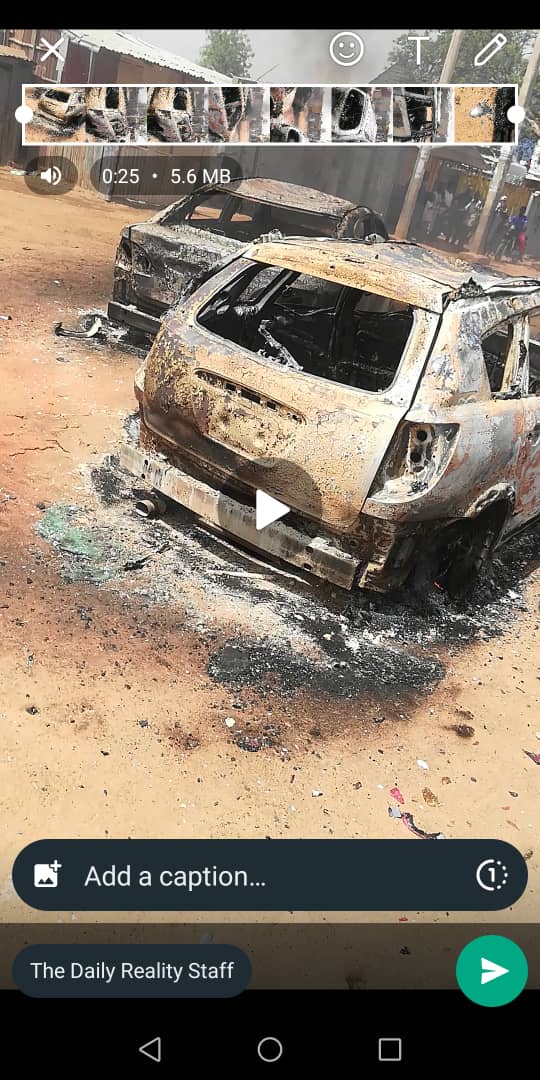
At least ten vehicles have been destroyed and many injured as thugs attacked supporters of the New Nigeria Peoples Party, NNPP, in Kano Thursday afternoon on their way to welcome NNPP’s presidential candidate, Rabi’u Kwankwaso.

The vehicles filled with the NNPP’s Kwankwasiya movement supporters have been vandalized, among which three were burned to ashes.

An eyewitness, Tasiu Lawan, said he escaped death as hundreds of thugs attacked them and wounded many people.

Lawan further confirmed that many people had been injured while vehicles were touched.

NNPP’s presidential candidate Rabi’u Kwankwaso was billed to hold his grand finale campaign in Kano, where he enjoys a massive following.

Earlier in the morning, Kano State Police Command, through its spokesperson, Abdullahi Kiyawa, advised the trio of All Progressives Congress, Peoples Democratic Party and New Nigeria Peoples Party to put on hold their planned rallies in Kano due to the possible clash between their supporters.

Recalled that in 2019, the Kano Commissioner of Police barred Kwankwaso from holding a political rally in Kano ahead of the general elections, which his members see as clear discrimination and siding with the ruling party in Kano.

We have no plan to shut down e-transactions – CBN reacts to rumours

By Uzair Adam Imam

Few days to election and the remours that the Central Bank of Nigeria (CBN) was planning to shut down all e-transactions on Thursday have gone viral on social media.

However, the CBN has reacted in dismay to the widespread rumours in the early hours of Thursday on its official Facebook page.

The rumours said that the CBN planned to shut down all financial transactions from Thursday, 23rd to 27th of February.

Part of the remour instructed that, “Anyhow you can get money between today and tomorrow get it. Also whatever transfer you want to do, do it between today and tomorrow.

“As from Thursday, banks network will go off till Sunday or Monday so that politicians will not be able to transfer money to anybody for vote.

“So buy enough money and do your transfer now,” the false information said in part.

Meanwhile, the CBN also asked the general public to disregard the rumour while describing it as baseless and misleading.

2023 Presidency: Muslim students organisation, MSSN, endorses Tinubu

 By Muhammadu Sabiu
 
The Muslim Students’ Society of Nigeria (MSSN) has endorsed the candidature of Asiwaju Bola Ahmed Tinubu in Saturday’s presidential election.
 
In a statement signed by its National Amir and released on Tuesday, the Muslim body noted that it would be a “deadly hypocrisy” for it to sit on the fence regarding the 2023 elections, adding that it would give its support to Bola Tinubu.
 
The statement reads, “In matters of great importance and unquantifiable consequence, at a critical point in our national history we cannot afford to sit on the fence. Where the general interest of the Muslim Ummah is at stake, silence becomes a deadly hypocrisy.
 
“Having said this, in view of the circumstances surrounding the general election which comes up across the nation on Saturday, it has become necessary to take a definite stand to stand firmly where we have reasons to believe, the candidate has the most coloration of our identity and capacity to bring about stability and progress in the areas of the economy, security, education, and other sectors to facilitate self-actualization for our members.
 
“After due consultations with leaders of the Society at various levels, members and elders, we have come to the sincere conclusion that for the presidential election Asiwaju Bola Ahmed Tinubu is the best candidate for the good of the Muslim Ummah and our members across the 19 states of the North. Come Saturday, February 25th, we are calling on all our members across the North, to come out en masse, to vote for the ticket that is completely Muslim – vote for Asiwaju Bola Ahmed Tinubu and Kashim Shettima as President and Vice-President of the Federal Republic of Nigeria, respectively.”
 
Mr. Tinubu, the presidential contender under the All Progressives Congress, APC, is contesting against three other major contenders, including Atiku Abubakar of the People’s Democratic Party, Rabiu Kwankwaso of the New Nigerian People’s Party, and Peter Obi of the Labour Party.