Month: January 2023

The Kano of my dream

By Rukayya Abdulhadi

A dream has always been a glimpse of the future—yet to happen and fragments of the past or what we thought to be. But, the Kano of my dream is a Salad of both; past and present.

It has always been hard to differentiate between my dreams and fantasies. What I have always dreamt as Kano, my past, present and future, was just a hallucination. The surest way to make your dreams a reality is to live them.

I dream of Kano to be the peaceful city that it once was – where people slept outside the walls of their rooms undaunted.

A Kano where humans are as safe as birds, swirling inside streets ‘Lunguna’ with no phone snatchers or intimidating drinkers.

A Kano where there is no imposing but tolerant of religion and cultures. Where marriage is bound by love, not ethnicity or race. Where schools outnumbered business centres branded as mosques. Where sect ‘Dariqah’ is not a prerequisite for relationships.

I yearn for Kano to be where nobody has to know someone to get their children educated. Where the rich and the poor eat in the same bowl without distinction. A Kano where anyone sitting on the throne of Emir is respected, their counsel duly noted. A Kano where elders are leaders.

I want Kano to be where every father is a father to all, and every child is a child to society. A Kano, which will not only be the centre of commerce but it is also the portrait that speaks the values of Hausa and Islam. A clustered society that doesn’t discriminate.

A Kano with a unique voice of respected command, youngsters, scared to dare elders. A Kano where respect is bounded by deserving.

A Kano where politics and religion will no longer be an instrument of coercion and manipulation.

A Kano free from the insalubrious dependence of pseudo-clerics, religious entrepreneurs and miracles.

A Kano where religion will not take the place of good governance.

A Kano with critical thinking youth, not human—machines for winning elections.

I dream of a Kano without all the cacophony of the ill-mannered and bastardised semi-illiterate politicians.

A Kano where every girl-child deserves an education, her dreams not shattered by the pretence of street hawking and child marriage. A Kano where female nurses and doctors are welcomed, not accused. Where motherhood and carrier peacefully coexist; accepted. Where a woman’s place is beyond the ‘oza room’.

A Kano where givers give without being asked, where takers take without asking. A Kano free from child labour camouflaged as ‘Almajiranci’.

I would love Kano to be a place wallowing in technology and accelerating towards the future, with a promising economy and fertile land. A Kano where poverty is dying while commerce is thriving.

Where leaders are readers, not a collection of nincompoops monopolising power.

A city where for kids, night tales will replace the abracadabra of TV series and an avalanche of technology with no use.

A Kano of my dream is possible.

As Eleanor Roosevelt said, “The future belongs to those who believe in the beauty of their dreams.”

Rukayya Abdulhadi is among the runners-up in the 2022 “The Kano of my dream” writing competition jointly organised by Muhsin Ibrahim, PhD, and The Daily Reality online newspaper. He can be reached via rukayyaabdulhaddi@gmail.com.

2023 election: Soludu receives Kwankwaso in Anambra

By Ahmad Deedat Zakari

The Governor of Anambra State, Charles Soludo, hosted the presidential candidate of the New Nigeria Peoples Party (NNPP), Rabiu Musa Kwankwaso on Thursday.

Kwankwaso was accompanied by Buba Galadima and other key members of his campaign team to Anambra’s State Government House in Awka. 

Explaining the reason for the visit, Kwankwaso said he was in the state to open the campaign office of his party and decided to pay the governor a courtesy visit. 

Receiving Kwankwaso’s entourage, Soludo commended him for his tenacity and belief in Nigeria. He described Kwankwaso as a man with exemplary public service history, which he called the greatest philanthropy.

Soludo said, “I want to commend your tenacity and belief in the country, your exemplary public service and commitment to our nation. I have always said that those who have something to offer should offer it through public service. Public Service is the biggest philanthropy”

We made the best decision by letting Messi go—Barca president

By Muhammadu Sabiu 

Recently, Barcelona president Joan Laporta insisted that it was best to allow Lionel Messi to depart the team.

Recall Messi ended his 21-year at Barcelona in 2021 when he departed Camp Nou.

Following the termination of his contract, the Argentina captain left Barcelona as a free agent.

Messi’s sad departure from the Catalan giants was prompted by a dire financial crisis the team was experiencing.

According to Goal, Barca’s president said, “I had to put Barca ahead of the greatest player in football history.

“In those moments of financial ruin, I could not retain him. I think it was the best for the club. Right now, he is a PSG player, and I prefer not to talk about him.”

2023: Discovering the best choice Nigerlites need as a governor

By Muhammad Danjuma Abubakar

Alain Touraine- a French sociologist, in clarifying what democracy entails, concludes that it is a ‘free choice of leaders by the people’. Using Touraine’s view as an instance, the ground is slim for an argument (if any at all) that democracy is not the ideal form of government, considering its enormous opportunities for choice.

But, electorates’ hopes that any individual chosen for an elective office can deliver dividends of democracy in line with their needs and expectations have been repeatedly dashed by the existence of poor governance and misrepresentations evident from records of poor delivery of dividends of democracy by most occupants of such offices.

This means that free choice of leaders is not enough unless they translate to commensurable desired developments for the electorates, mainly through the provision of basic needs of life, quality and adequate infrastructures, economic growth and so on.

It’s disheartening that mostly, those elected get carried away by the regalia of political power; become sleepy on the duty of governance and disappointingly fail to show desired response abilities that come with such offices across all levels from the Presidency to ward councillorships. As evidence, this is seen in their inconsistent policies formulations, policies contradictions, ill-fated policies deviations and promises without fulfilment.

Away from that, while this piece is quick to accuse elected officials for lack of sincere will and woeful performances while in office, the electorates own the larger portion of the blame for their continued inclination to myopic choices of leaders, as well as their acceptance for continued manipulation by ill-minded politicians who share monies and other baits and find their way to elective office.

 It’s a shocker, yet a reality, that the orientation of a typical Nigerian voter, most of whom are ignorant, swims in how financially loaded and lavishing is a political candidate. Little wonder, a serving minister of the Federal Republic, in a purported viral video, boasted as saying (in Hausa), ‘…we have enough money and resources and will use them to get what we want…’ The minister under reference implied votes buying.

He understands very well that the psyche of Nigerian voters is irresistible to politicians’ short-term flashing generosity that is mostly bankrolled by proceeds of corruption, which even Mr Minister under reference could hardly claim innocence.

The electorates should understand that commercialisation of politics carries underlying undesirable outcomes and is so irrational to complain of misgovernance and lack of significant development as is being witnessed. With few exceptions, evidence of decayed infrastructures, misgovernance and misrepresentation abound in many states and constituencies, respectively.

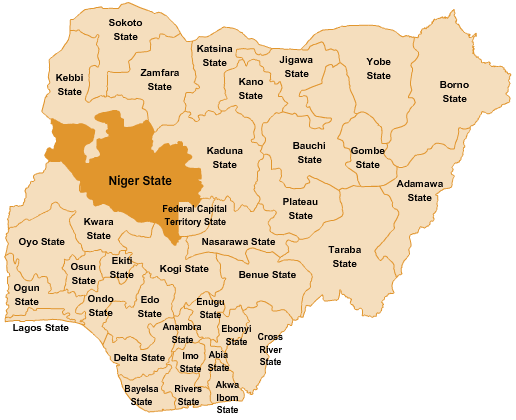
Niger State, for example, since 1999, when democracy was birthed, is still beset with serious underdevelopment, insignificant modern infrastructure, and zero industrialisation across its 25 local government areas. In spite of her strategic location with large federally connected road networks, there is yet very insignificant federal attention and presence.

It’s over 76,000 square kilometres landmass are largely arable, fertile and endowed with mineral resources, but the living condition of her population is not exalted. Outside the state civil service, which only accommodates very few individuals, the situation of most Nigerlites is pitiable.

In fact, the experience of a typical Nigerlite since democracy, from one dispensation to the other, is either that of a governor who was been ‘misinformed/lied to’ by certain appointees about projects not carried out because of inadequate monitoring, non-interest for feedbacks with little demand for accountability (if any) from such ‘trusted’ appointees; or of a governor who used oratorical prowess to his advantage rather than altruistic; or even of a governor who is presumed disposed to nepotism and ‘emi-lokan’ tendencies.  

In the enlightened view of this piece, whether these assumptions are perceived or real, they are enough grounds for legitimate discontent by Nigerlites, having witnessed elements of good governance and effective public service delivery from certain state governments while no such or their equals are replicated in Niger state for 23 years of democracy and still counting.

So, it’s wise to conclude that even in a democracy, the choice is not enough; the best choice is rather the determinant for good governance and satisfactory delivery of dividends of democracy, as seen in Governor Umara Zulum of Borno State.  It’s also wiser to understand as Nigerlites that we can only determine the best choice for Minna Government House in 2023 when we assess candidates using some preconditions as follows:    

Character excellence: Character is an observable behaviour reflective an individual’s public conduct. A person who has a great worth of character shows self-discipline, integrity, ennobles candour and accountability. It also embodies the spirit to accommodate divergent views and public criticisms because they are critical to the makeup of a liberal democracy. Thus, those candidates who are easily allergic to views and public opinions do not deserve to be governor of Niger State.

Additionally, the seat of governance is characterised by multiple broad remits that often have timelines if dividends of democracy are to be adequately delivered, as is the case in Borno State; therefore, this best choice must be he/she who has a forward-looking and goal-setting spirit with the nerve to follow them through to reality. This means Competence and capacity.

In contradiction to the likely unrefined thinking of those vying to become governor of Niger State, it is much more than travelling with numerous convoys, irresponsible show of temporal political power and reckless spending of taxpayers’ monies.

Noteworthy, to identify this best choice with ease, Nigerlites must look at the antecedents of all governorship candidates from their character, an exhibition of competence and capacity, and employment of labour (of Nigerlites). Study their various social and economic projects of the past, considering the resources at their disposals, which must have been born with peoples’ needs

As a result, we must decouple ourselves from shallow assessments of these candidates’ antecedents and use clear conscience beyond party leanings for valid judgements in order to determine the best choice for the Niger State governorship seat.

Any candidate (male or female) who possesses these thorough assessments in the excellence of character, competence/capacity and antecedent is a governorship candidate with substance and, therefore, most deserving of our mandates to spearhead the affairs of the state from the 29th  of May,  2023.

Muhammad Danjuma Abubakar, a concerned Nigerlite, lives in Minna, Niger State Capital and can be reached via muhammadcares4u@gmail.com.

The Kano of my dream

By Abdulmajid Mudassir

I dreamt a good dream, a perfect dream about Kano. I consider Kano the best part of myself. Words are indeed scantier than dreams. The Kano of my dream is nearly impossible to describe. It is the Kano that cannot be found elsewhere in a hurry. Dear reader, I will describe it to you. 

The Kano of my dream is a society where education is the most valued treasure. It is where primary and secondary education is free, compulsory and easily accessible in the real—not political—sense of the word. The Kano from whose territories illiteracy has entirely vanished. The Kano, where tertiary education is affordable and accessible by anyone who wishes to pursue it. Education is the bedrock of any thriving society. Education is to a society what fresh water is to thirsty lips. 

People often say: “health is wealth”. In the Kano of my dream, there is the required number of doctors, nurses, midwives, paediatricians, obstetricians and public health officers who are patriotic and caring. There is also an adequate number of hospitals and materials. Listening to people begging for money via radio stations for medical care is horrific. 

Kano has been blessed with seductive fertile lands: there is virtually no farm produce we cannot grow. I dream of Kano growing food in excess. 

Is a just society not the best society? I dream of Kano, where injustice of any kind is zero-tolerated. Where the weak can successfully seek redress with ease. 

I dream of Kano, where good road networks and potable water in rural areas are available. 

I dream of Kano, where there is respect for the values and dignity of women and where the youth are considered the engine of growth. 

It has been said that every limit is a beginning as well as an ending. All that you read above are hopes. How can we achieve all our hopes? George Elliott, the author of the Middlemarch, said: “hopes are often delusive.” But is hope not delusive only when the wrong remedies are applied? If we carefully observe, understand and plan for the solutions to our problems, they are surmountable. 

Although there is a concentration of pupils in rural areas, primary schools in rural areas give very little or no consideration to knowledge, skills and new ideas needed by these pupils to function effectively in their environment (e.g. farming practice and management, community development, fishing, sheep and goat rearing, hygiene, nutrition etc.). Moreover, the teaching focuses more on recitation and repetition instead of thinking and problem-solving. 

The curricula shall be radically reformed. It should incorporate the subjects needed in rural areas. Our primary and secondary schools should not only focus on general but also a family improvement, community development, and occupational education. Failure to do this will cause the youth to drift away from rural areas, eventually leading to more crimes and job lottery in the Kano metropolitan area. 

To achieve the above, the government shall reopen teachers’ training colleges. Furthermore, primary schools should observe and prepare pupils who distinguish themselves in terms of sharp thinking, problem-solving and creativity for those schools. 

Research shows that not more than 35% of the potentially cultivable lands are used in Kano. Therefore, the government shall revivify our dams, provide more irrigation channels, construct road networks, and provide materials for land improvement in preparation for intensive farming by the teeming unemployed labour force willing to participate in farming. 

As a state estimated to have over 15 million people, it is horrific to learn that no manufacturing company produces merely distilled water in the whole state. Government should concentrate more on providing the sophisticated and expensive machines and other materials desperately needed in our hospitals instead of focusing on building new blocks in the existing hospitals where it is unnecessary. 

It is now the time for Kano City to develop vertically instead of horizontally in building construction. What if we have multiple twenty-and-above-storey buildings in Kantin Kwari Market? The urban planning authority should help with ways to encourage people to build multiple storeys instead of making several buildings with one level. 

Waste materials shall be adequately recycled. In addition, there shall be a widespread plantation of trees. 

What seems a foreboding is the emergence of the modern Almajiri system of education. The situation must be handled properly, for it is a time bomb. The system should be reshuffled and incorporated into the modern education system. 

Our lack of trusted leaders pains me the most. But, with good governance, we can achieve something meaningful. It is, therefore, a collective responsibility to make sure we go out en masse on election days to vote for suitable candidates. 

The leaders know everything except what the followers know better. Therefore, public opinion shall matter in all governmental policies. 

All forms of productive competition, such as agricultural produces and writings (such as this), shall be encouraged. 

Happiness and sports are always hands in gloves. The Kano Pillars should utilise the legacy of Golden Stars—a founding member club of Kano Pillars. Golden Stars used to select only players who were squarely passionate about football, not money, fame or anything else. That action made them win 32 out of 36 matches in a football tour they took in the late 1980s across West Africa. 

If we keep it right, other things will keep it right. If we brave all the difficulties, it may cause to make this state great: a thrice-blessed Kano is attainable. But it is an accumulation of trouble to think that making Kano great is not a collective responsibility. We have no right to urge greater change until we have tried as much as possible to alter the wrongs beneath our hands. Let us work together to make Kano a smaller edition of the terrestrial paradise.

Abdulmajid Musassir is among the winners of the 2022 “The Kano of my dream” writing competition jointly organised by Muhsin Ibrahim, PhD, and The Daily Reality online newspaper. He can be reached via abdulmajidmudassir@gmail.com.

2023: Tinubu questions Atiku’s source of wealth

By Uzair Adam Imam

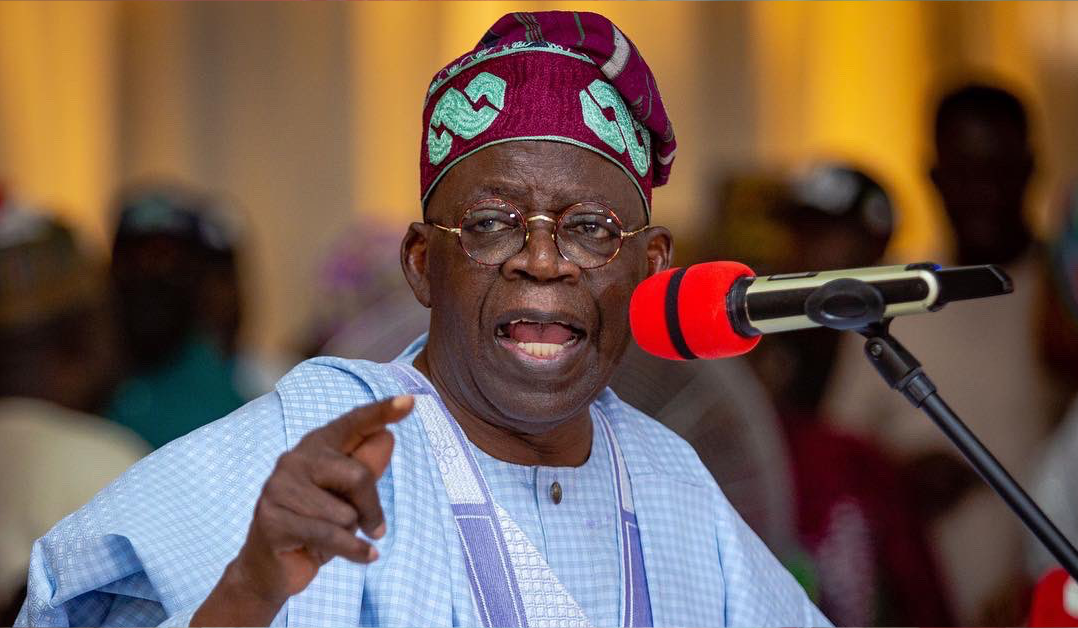
The Presidential Candidate of the ruling All Progressive Congress (APC), Bola Ahmed Tinubu, has accused his Peoples Democratic Party’s (PDP) counterpart, Alh. Atiku Abubakar, of being a liar.

Tinubu Tuesday argued that Abubakar was a liar who could not explain the source of his wealth, adding that there were a lot of contradictions in the information he gave.

Addressing the North-West Muslim leaders in Kano, Tinubu said, “They asked one of them. How did you get rich? He said he was doing transportation and motor vehicle business.

“He had forgotten that civil service (sic), you cannot do any other thing if you are a custom officer but farm. Who is lying to who? Who is contradicting who?” 

Tinubu mockingly threw the label against Abubakar to the delight of his supporters, who cheered him on at the event.

However, in 2020, Tinubu was reportedly accused of stealing public funds after Peoples Gazette’s report exposed some documents showing how Tinubu stole to enrich himself.

EFCC recovers N13bn illegal fuel subsidy funds

By Muhammadu Sabiu 

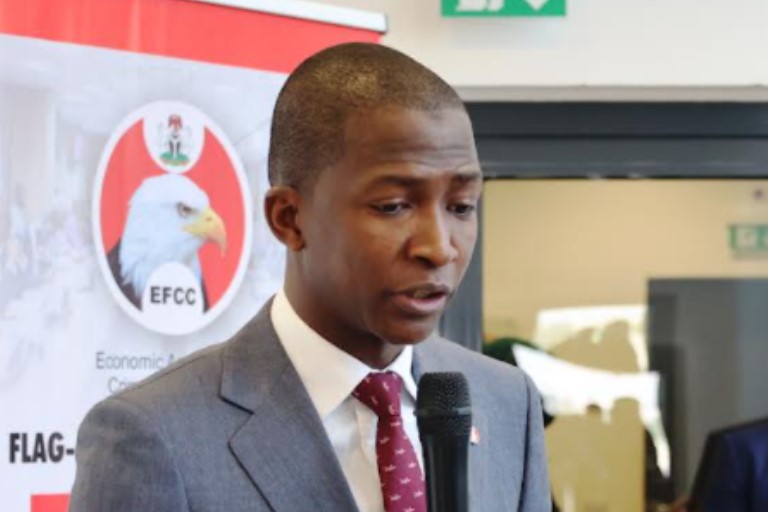
The Economic and Financial Crimes Commission, or EFCC, was able to retrieve over N13 billion that was earmarked illegally.

The funds are the profits of unauthorised payments made between 2017 and 2021 under the subsidy regime.

Recall that this was reported in a recent paper on the National Inherent Risk Assessment of Money Laundering in the Nigerian Extractive Sector that was obtained from the website of the Nigeria Financial Intelligence Unit, or NFIU.

The document stated: “The Economic and Financial Crimes Commission, the agency responsible for the investigation and prosecution of corrupt subsidies in the oil and gas in Nigeria, recovered N12,998,963,178.29 as proceeds of illegal payment made within the subsidy regime between 2017 and 2021.”

Corruption involving fuel subsidies has raised concerns in Nigeria. For instance, according to the World Bank, increased gasoline subsidies put the Nigerian economy at high risk.

This is because the payments might have a major impact on public finances and raise questions about the sustainability of the country’s debt.

The Kano of my dream

By Suhaibu Safiyanu Bagwai

Indeed, one of the most important developmental aspects of modern Nigeria is the growth of public opinion, which, aided by universal education and the mass media, can today keep the government in check as has never happened before. We can still march on through our fastidious conscience and occasional rebellion or our constant prodding of society’s leaders for better things. Even in a perfect world, there will always be men who will dream of other worlds, of better things, since not everyone is likely to be enthused by their current world, let alone someone who lives in Kano, a state that is riddled with corruption, social insecurity and illiteracy, bloated by debts and battered by economic volatility, poorly planned buildings and poor refuse disposal and management, to mention but a few.

Kano is one of the seven ancient Hausa kingdoms, and the principal inhabitants of the state are the Hausa people. A commercial nerve centre of Northern Nigeria, the “Centre of Commerce”, with a population of about 20 million people. The large population of people and the ease of doing business in the state have added to the crowded nature of the state. Nevertheless, it has maintained its commercial status for centuries, although the economy is friable, despite the inconsistent government policies and sporadic electricity supply, which hamper the manufacturing industry. Kano’s economy relies primarily on trade, retail and services.

Over the years, Kano has encountered enormous urbanisation challenges, ranging from rapid population growth, overcrowding, increasing vehicular and industrial pollution, high rates of out-of-school children, and urban poverty resulting in many environmental issues. Compared to its neighbouring states, Kano is faring better; but when put on a realistic scale, it is devastatingly poorer! Thus, every Kano citizen dreams of seeing that the major problems bedevilling the state are properly checked, and I am not an exception.

Looking at the population of Kano, one will find how it grows at a hysterical height. Rural-urban migration is at its peak; the city is overpopulated with people who leave their hometowns for greener pastures. That makes the city dirtier and unhealthy to travel around. But why the rural-urban migration increases every day? This is the question we seldom ask.

Nigeria’s current economy is debilitating; the inflation rate is high. The recent statistics of multi-dimensionally poor Nigerians rise to 65%, and 75% (of this percentage) live in rural areas. This shows that the urban-rural poverty and unemployment margin is wider, hence the rise in rural-urban migration. However, this is something that is not uncontrollable. Job creation and providing basic social amenities will go a long way in solving this problem. Offering loans, fertiliser and seeds to our small-scale rural farmers and making sure they reach the target people and introducing government and private agencies aimed at educating the farmers on how to make a good harvest, storage and sale will boost our agricultural produce, create job opportunities, diversify our economy and reduce the rural-urban migration drastically.

Reading the statistics of the number of out-of-school children in Kano and seeing it myself in my hometown, Bagwai, scares me the most. A society that invests less in education is stagnant and hopeless, with little or no future. Over the years, our government’s educational policies could have been better planned and executed. For instance, the current government’s introduction of the “Free and Compulsory Education Scheme” has, owing to poor planning and execution, ruined the education system. Before the scheme’s introduction, students used to pay 700 naira per term, which was used for the management of the school and pay teachers, mostly volunteers, some tokens. Now that the fee is removed, teachers – that are primarily voluntary – become scarce, and the principals and the head teachers cannot raise the money to pay them or manage the schools. It is the government’s responsibility to look for a way out. Unfortunately, public schools have remained neglected since the law was passed.

Many students drop out of school due to dilapidated buildings, overcrowded classrooms, scarcely qualified teachers, and poor teaching and learning atmosphere and facilities. Therefore, the government should look deeper into this scheme and make immediate improvements. In addition, the sectoral allocation in the education ministry should be increased. We have thousands of well-trained, unemployed education graduates ready for recruitment.

Kano is notoriously known for political thuggery, and it is one issue that perversely mocks my hope of a better Kano. However, I learned that most are either unemployed or school dropouts. Thus the creation of rehabilitation centres, youth empowerment schemes, sporting activities and public enlightenment programs will help reduce it.

Although there has been some development in the road network of the Kano metropolis, the number of vehicles at some road injunctions exceeds the road’s designed capacity. The trading activities along the major roads and inadequate planning obstruct efficient road transportation in urban Kano. Poorly planned buildings in our major markets, mostly built on water passages, blocks the water passages causing water to flood when it rains, which leads to the loss of lives and properties worth billions of naira – as it happens yearly – and obstructs the easy passage of vehicles whenever there is an accident or a fire outbreak in the markets. I dream of seeing some of the major markets relocated from their present locations or their buildings re-planned and trading activities along the roads banned, providing them with space for their businesses. More bus stops and parking spaces should also be provided to prevent indiscriminate parking and to stop at prohibited places.

One of the most disturbing environmental problems we face is refuse dumping on the streets outside our homes and any unused space in our neighbourhood, including open sewers and ponds. We produce almost 2,000 tonnes of garbage daily, but the sanitation workers can only approximately dispose of 800 tonnes. The remaining 1,200 are piling up on the streets and alleyways of the city, posing severe health risks to the inhabitants and blocking water passages. That is why the city is always dirty! Therefore, through REMASAB, the government should provide sufficient equipment for refuse disposal and the general public, who mostly needs a culture of refuse disposal, be enlightened on the dangers of improper refuse disposal and how to control it.

Bringing traditional and religious leaders closer to the government will influence public adherence to some governmental policies since the citizens are religious. The leaders are also influential. There should also be an establishment of a law that will restrict religious leaders from using abusive or provocative language during their sermons and preaching.

The poor supply of electricity and acute dearth of pipe-borne water in Kano can also be reduced if the government were to utilise its resources accordingly. Kano is blessed with almost seven major dams that can generate hydroelectric power, like the ones done at Tiga and Watari dams, providing adequate electricity and water supply for public and industrial usage. The surroundings can also be used for hotels and tourism by building amusement parks which can generate revenue for the state and create jobs.

The agency responsible for revenue collection, KIRS, needs to be redressed and transparent. The government’s spending should also be transparent to the public to know where and how their taxes are spent.

If I were to advise the government and the budgetary committee, I would suggest they determine budget priorities so that resources can be directed to issues of higher priorities and the proposed plans to be in line with the projected range of resources for each government agency. That will also compel the government to make hard choices between using available resources to start new projects or completing the existing ones. For instance, this year’s priority is education; new teachers recruited, buildings renovated, wages increased, teaching and learning facilities provided and so on. Then, next year will be the health sector, followed by commerce, water, electricity, agriculture, and sports…in the subsequent years. This will go a long way in tackling our problems.

Finally, I believe that hopeless as she may seem, Kano is not beyond redemption. We just need the will to do that. This is my dream, and I believe it is everyone else’s!

Suhaibu Safiyanu Bagwai is among the winners of the 2022 “The Kano of my dream” writing competition jointly organised by Muhsin Ibrahim, PhD, and The Daily Reality online newspaper. He can be reached via bagwaisafwan@gmail.com.

Bauchi State 2023: The Man of the moment

By Tajuddeen Ahmad Tijjani

Bauchi State APC Gubernatorial Candidate, Ambassador, Air Marshal Sadique Baba Abubakar (RTD), CFR, had on 29 December 2022 flagged off a free medical diagnosis and treatment for eye patients at the Federal Medical Center, Azare. Hence such a philanthropic gesture earned him more support and love from the concerned citizen in the environs and beyond. 

Later, he joyfully went on to inspect a campaign office that was donated by Usman Sufy. Amidst cheers from supporters and well-wishers. Sufy, a young, dynamic youth leader whose personality is garnished with technical know-how and grassroots mobilization spirit, has assured his total commitment to the Air Marshall project; he joined the train with thousands of supporters across Bauchi State for the sole aim of an APC victory in the 2023 election. Indeed, Sufy’s relevance in the Bauchi political arena shall never be over-emphasized at this material time, and perhaps it will add more value to the Baba Sadieque movement. 

It’s very imperative to note that not only had sufy joined the train, holding the line with progressive minds, but he even meritoriously carried his lieutenant along in an eloquent, compelling, historical, rebounding, and overwhelming manner for the victory of Sadique. Remember, the Arabic meaning of my man’s name is “truthful,” which he symbolizes in all his dealings. 

The massive support the Progressive candidate is receiving in Bauchi North and indeed all over the state will sweep away all doubt, further secure his resounding victory, cement the naysayers’ doubt, yet, reposition the state, and usher in a new and refreshing era of hope, progress, and prosperity, in sha Allah. 

However, Sadique appreciated the resounding welcome and reiterated his commitment to repositioning Bauchi State on the path of progress and development. Yet he assures the people of Katagum that, when given the mandate in 2023, the APC government will focus on people-oriented programs/policies that will be beneficial to the populace of Bauchi State as a whole.

Tajuddeen Ahmad Tijjani writes from Galadima Mahmoud Street, Kasuwar-Kaji Azare, Bauchi State.

The Kano of my dream

By Ayuba Ibrahim Gezawa

Kano, located in northern Nigeria, is a place of great cultural and historical significance. It has a rich history dating back to the 7th century and is known for its strong Islamic influence, vibrant arts and crafts scene and bustling markets. In my dreams, Kano is a thriving metropolis that is modern and progressive while still maintaining its rich cultural heritage.

One thing that makes Kano so unique is its diverse and vibrant culture. It is home to a mix of ethnic groups with unique traditions and customs. In my dreams, Kano celebrates this diversity and promotes cultural exchange and understanding. The city is full of vibrant festivals and events that bring people from all walks of life together to celebrate their cultural traditions and share them with others.

Another aspect of Kano that I admire is its strong sense of community. The city has a strong sense of pride and belonging; its residents are known for their hospitality and generosity. In my dream, Kano is where people come together to support each other and work towards a common goal. Whether it is through volunteering at local charities, participating in community projects or simply being there for a friend in need, the people of Kano are always willing to lend a helping hand.

One of the things I would love to see in my dream Kano is a strong focus on education. Education is the key to a better future, and I would love to see Kano become a hub for learning and innovation. In my dream Kano, top-quality schools and universities provide students with the knowledge and skills they need to succeed in the modern world. There are also numerous research and development facilities where scientists and innovators can work to solve some of the world’s most pressing problems.

Technology is the heart of all developments in the current world. It changes how we interact, do business, entertains ourselves, and understand the world. In Kano of my dreams, technology plays an integral role in its development. It prioritises the training of technically oriented personnel who are to be the initiators, facilitators and implementers of the technological development in the country. Not only that, but it harnesses those technological developments and applies them to the economic, social and environmental challenges.

In the Kano of my dreams, corruption has no place. Corruption is a disease capable of hindering all forms of progression. One way for Kano to tackle corruption is to implement strict penalties for corrupt behaviour and to enforce those penalties consistently. This could include fines, imprisonment, and other consequences for individuals and organisations engaging in corrupt practices. Additionally, the city could increase transparency in its financial and decision-making processes by making budget information and contracts available to the public.

Furthermore, Kano could establish a hotline or other mechanism for citizens to report instances of corruption and take steps to protect those who come forward with information. Finally, the city could invest in education and public awareness campaigns to encourage citizens to speak out against corruption and understand its negative impact on the community.

I would love to see an improvement in the healthcare system in the Kano of my dreams, by hugely investing in the health sector, not just by building world-class hospitals but through proper management and sustainable accountability of those hospitals. A Kano city where the poor, the rich, and our top government officials patronise the local hospitals rather than opting for other alternatives. A Kano where the local hospitals would provide the same quality of healthcare services as the ones in the developed countries. A city with a drastic reduction in infant and maternal mortality due to access to qualitative and world-class healthcare services.

Distinguished and prominently renowned as the centre of commerce as Kano already is, in the Kano of my dreams, I would love to see a city that further promotes exponential growth and development in our businesses. It encourages businesses to start or expand in the city, supports entrepreneurs, creates jobs, and stimulates economic growth. This might include offering tax incentives, providing business development resources or investing in education and training programs to help prepare the local workforce for new job opportunities.

My dream Kano is a place that uses its natural environment to generate electricity so that every place within the rural and urban metropolis will experience an uninterrupted power supply. A city that provides all the basic amenities: good roads, portable water, good rural and urban town planning, sanitation and recreational facilities, among others, to its citizens. A state that puts an end to high levels of poverty, inequality and unemployment, a united, stable and peaceful place. A city that would inspire other northern states and Nigeria as a whole to become important and giant figures in the global community.

Overall, my dream Kano is a place of diversity, community and education. It is a thriving state celebrating its rich cultural heritage while embracing progress and innovation. It is where people from all walks of life come together to support each other and work towards a brighter future for all. I dream of a better Kano, a state with a brighter future, where everyone would work to make these dreams a reality.

Ayuba Ibrahim Gezawa won the 3rd position in the 2022 “The Kano of my dream” writing competition jointly organised by Muhsin Ibrahim, PhD, and The Daily Reality online newspaper. He can be reached via ayubaibrahimgezawa@gmail.com.