There has been quite a bit of online commentary, some of it quite derogatory, regarding the black robe that Lionel Messi wore prior to accepting the World Cup. For context, I wanted to explain its significance.
The garment is called a ‘bisht’, and it is an outer garment worn in predominantly Arab countries. The name is derived from the Akkadian word ‘bishtu’, which means ‘nobility’ or ‘prestige’.
This garment is considered a symbol of great honour. It’s a status symbol amongst royalty, the wealthy and those with high social rank, much like a cross between ceremonial graduation robes or, in Western terms, wearing a black tuxedo on a special occasion.
When it’s the Emir of a country literally gifting you the bisht, putting it on you with his own hands, it’s the highest honour that can be bestowed upon that civilian. It has nothing to do with religion at all.
Messi may not have understood what it meant when he graciously wore it, but it was the Qatari way of recognising him for the GOAT that he is.
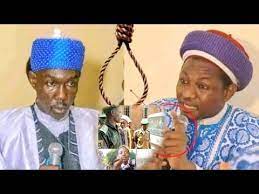
It is about the feud between the Izala and Darika in Kano and across the nation. AbdulJabbar’s over-zealousness, eventually, landed him into trouble. He is from the Qadiriyyah Sufi order, whose headquarters is in Kano, just as Kano is one of the headquarters of Tijjaniyyah. Lately, Kano also became one of the headquarters of factional Izala group, specifically the Salafiyyah.
AbdulJabbar grew up in the midst of an ongoing harsh and hot arguments between the scholars of Izala and that of Darikah. Thinking that he is knowledgeable enough to wade in, he dived into the arguments.
The fundamental aspect of the Izala argument, which secluded the title of “Ahlussunnah” to itself, is basing everything on the Qur’an and Sunnah based on the understanding of the first three generations of Islam. But they put more emphasis on hadith (sayings, actions and approvals of the Messenger of Allah) with a pedagogical approach. To display that he has an unmatched prowess in that kind of knowledge, AbdulJabbar ventured into the altercation head on.
That coincided with the emergence of Kano as one of the headquarters of the Shi’a sect, (with whatever you come to Kano, you will find someone/something better). The Darikah Ulama are divided into two, pertaining engagements with Shi’a. While many of their scholars are suspicious about them, some have embraced them for their (Shi’a) near similar stand on the status of the progenies of the Messengerof Allah. AbdulJabbar is one of those who were influenced by the doctrines of Shi’a. He started to turn to their books, which contained condemnation of the companions of the Messenger of Allah and rejection of what they reported directly from the Messenger of Allah. When he went to Iraq for studies, he met many adherents of Shi’a and, consequently, became influenced by their stand on the companions of the Prophet and Hadith.
Thence, AbdulJabbar decided to wage a war on Izala in an unprecedented way – through the condemnation and destruction of the entire Sunni school of thought- to which Izala held on tightly and proudly. Prior to this, no scholar have ever tried that. In addition, all the Darikah scholars believe that they are Ahlussunah, they have no problem with the sunnah of the Messenger of Allah (PBUH). Their problems with Izala is only that of definition, meaning or translation. The Izala, too, according to some scholars among them, agrees that yes the Darikah adherents are Ahlussunnah, in a “broader meaning”, while they (Izala) are the specific/real Ahlussunnah.
Another influence of Shi’a, specifically the Zakzaky faction, on AbdulJabbar, is the “heedless” confrontational approach. He decided to confront Izala in a “heedless” manner similar to the Zakzaky faction of Shi’a. He failed to decipher that Zakzaky faction only display “heedlessness” while confronting the government, but when it comes to the Shi’a doctrine, specifically on the companions of the Prophet, they apply the “Taqiyyah”. AbdulJabbar didn’t learn the wisdom behind Taqiyyah, because he thinks that if if he didn’t disrobe himself from the Sunnah he can’t say anything (to suppress Izala) when it comes to “knowledge driven discussions.”
He started by insisting that most of the Ibadat undertaken by Izala were not based on the Sunnah of the Prophet but based on innovations from his companions. He, then started discussing the “innovations of the Sahaba”, giving more emphasis on the second CalIph, Umar. This exposed how deep he was influenced by the Shi’a. He spent time discussing “the fifty innovations” that were smuggled into Islam by Umar.
The fundamental thing that AbdulJabbar failed to realize, when he started his “heedless” sojourn, was that he was invalidating the whole jurisprudence that were in practice by every Muslim who was not a Shiite. He failed to understand that he was, indeed, attacking every Muslim.
When he started this, the scholars at his home quickly realized where he was heading and the danger that lies ahead if their family is to be identified with what he was spewing. Therefore, they tried to stop him, an action that resulted in bitter disagreements between them. Consequently, he parted ways with them and started his own group for his kind of Da’awa.
The advent of Google search engine gave AbdulJabbar quick access to some writings by atheists, Muslim heretics and orientalists from the Christian scholars who satirize the Prophet and his companions. This emboldened him over his attack on Sunnah.
He immediately embarked into the process of invalidating Hadiths. His most important targets were Sahih Bukhari and Sahih Muslim, to be followed by the rest of Hadith books. His method was to establish that it was the companions who deliberately concocted those Hadiths in order to destroy Islam after the Prophet. The Prophet didn’t utter those Hadiths. He insisted that those who reported the Hadiths knew that they were lies, concocted by the companions, but they chose to conceal the truth for over a thousand years! This is exactly the stand of Shi’a on the Hadith believed by Ahlussunnah.
To prove that the companions were against the Prophet and that they were trying to destroy his religion, AbdulJabbar decided to quote the utterances of Shi’a scholars, heretics and that of the atheists, (everything said by AbdulJabbar on this subject was copied from elsewhere, he was not the one who discovered or hypothesized them, as he boastfully claims), that asserts that the companions have disrespected and ridiculed the Prophet, or that they (the companions) have invented some things into Islam that could never have been from the Prophet (PBUH).
This is what the scholars termed as challenging the “Dirayah” (the part of knowledge that ascertain whether or not the import or meaning of a hadith is in concurrence with the shari’ah) instead of challenging the Hadith from the angle of its authenticity or not, through observing the chain of reporters (Riwayah).
AbdulJabbar used both approaches, but he took an opposing stand to that of the scholars of Hadith’s principles that “a hadith couldn’t be faulted on the basis of the companion who reported it, because all the companions are deemed trustworthy and honest (specifically when reporting what the Prophet said)”. He, instead, selected the stand of Shi’a that asserted that the fault of a companion is also the fault of any hadith from him, notwithstanding who followed in the chain of the narrators.
Muslims in this country have been reading these books and other commentaries on them from the day Islam came into this country, they’ve never heard anyone interpreting them with such bizarre meanings as did AbdulJabbar. But he kept misinterpreting them – as the Judge said in his rulings – “without showing or pointing the exact words in the books, and it was not an interpretation with meaning (which is lawful) but that -as he (AbdulJabbar) claimed- it was an interpretation with a “Shubhul “Ma’na.”
Therefore, to all Muslims in this country, with the exception of the Shi’a, AbdulJabbar’s failure to point the exact offensive words he alleged were uttered by the companions, meant that those reprehensible words were his, and he is the one who invented those words against the Prophet (PBUH). This ignoble act, prompted all the Muslims in Kano that bear the name of Ahlussunnah, even if it is the “broader meaning” of Ahlussunnah, to merge in order to fight this menace which is simply Shiism in the garb of Sunnah.
The merger scholars were victorious in pressuring the government to prosecute AbdulJabbar. The judge sentenced him according to the Malikiyya school of thought, using the verdict from “As-shifa”, a book made famous by the family of AbdulJabbar for reading it always in public. It was disclosed that the stand of Imam Malik is that “anyone who report offensive comments on the person of the Messenger of Allah, and eventually failed to prove it, will be deemed as the one making the offensive statement, and is liable to be sentenced to death.”
When AbdulJabbar came out “heedlessly” to proselytize Shiism using the garb of Sunnah, in order to suppress Izala, he was oblivious of this statement from “As-shifa”. Eventually, the verdicts of the book have consumed him. He had also forgotten that, by so doing he will be fighting every segment of the Muslims who are not Shi’a. Now the merger has consumed him. He had also forgotten that though it is said that in this country everyone can say whatever he likes, due to Freedom of Speech, the shariah law is exercised in Kano. Now he is consumed by Shariah.
Overzealousness in sectarianism should be avoided by all, please.
The Abuja-Kaduna train resumed operations after eight months of suspension due to the sad event of March 28, 2022, where terrorists attacked the train and kidnapped 168 passengers, killing eight others. Thus, the situation is now under control. Captives were freed and reunited with their families. We hope not to have a repeat of these ugly scenarios in the future.
Behold, the Nigerian citizens can’t hide their excitement as the train is back on track after the unfortunate incident. We all call for a proper investigation into the circumstances and, at the same time, call on the authority to remain vigilant.
However, citizens have the habit of crossing the railway track without proper guidance and caution, resulting in accidents and damage to the public infrastructure, which is public property that shouldn’t be dabbled with.
There is a sad report of a Toyota Camry with a female occupant that was allegedly crushed by the train as it carelessly came to pass the track. Often those with prior knowledge of the train, especially as you leave Kubwa train station in the suburb of the city centre, Bwary Area Council, the community residents of that axis have a habit of trespassing anyhow without being cautious of the danger therein. This has, of course, inflicted untold hardship on the victims and, at the same time, damage to the slippers of the track. Perhaps people are not aware of the dangers or have deliberately neglected them.
However, as I went to the axis some time ago, I observed a provision for a pedestrian channel to pass. Sadly, people develop the habit of going through the danger zone. It’s a patriotic call on the ministry of transport to take a leaf from the city centre and provide barricades in such a way that communities have to follow the normal route, which will indeed be a win-win situation, as neither the track will be damaged nor no accident will occur within that axis as long as proper precautions are taken.
I also laud the measures of the management for the proper check and balance of passengers, where thorough screening is put up so that those with suspicious motives are apprehended. I call on the general public to give maximum support to security agencies and report any sceptical movement for the benefit of all Nigerians.
Tajuddeen Ahmad Tijjani writes from Galadima Mahmoud Street, Kasuwar Kaji Azare, Bauchi State.
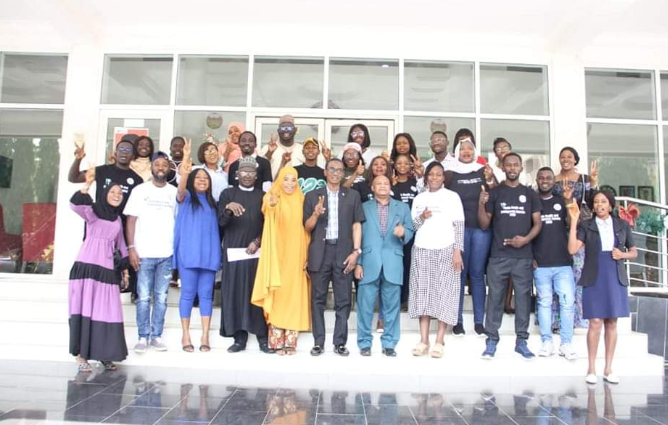
Nigeria Meaningful Adolescent and Youth Engagement Working Group (Naija MAYE) has called for the involvement of youths in politics and urged political parties to ensure health and development agenda in political parties manifestos in the country.
The call is an aftermath of a one-day summit organized by MAYE and held at Belmont Hotel in Abuja on Wednesday.
In a press statement signed by the Chairman of MAYE, Olympus Ade Banjo and other leaders of the group, the group charged the Nigeria political class to ensure the involvement of youths in politics and prioritize health and development in their party manifestos
The group also lamented the slow implementation of the Sustainable Development Goals (SDGs). They noted that many Nigerians are yet to experience the economic and political dividend of the SDGs.
At the end of the summit, Naija MAYE was quoted to have made the following suggestions:
1:- “Ensure inclusivity of youth health and development agenda in all 2023 party manifestoes blueprints, and campaign messages.
2:- Review the Basic Health Care Provision Fund (BHCPF) to recognize adolescent and youths as part of vulnerable population by improving access to quality youth friendly health care services.
3:- Adopt innovative and diverse approaches in financing social health insurance for young people taking into consideration that they are about 70 percent of Nigeria’s population and the high rate of unemployment which is about 40 percent.
4:- Ensure National Council on Health should approve reduction of age of independent access to sexual and reproductive health services including HIV testing from 18 to 14years.
5:- Ensure a comprehensive range of sexual and reproductive health services required by diverse groups of young people is integrated into training curriculums of healthcare providers at all levels of training Ensure that policies supporting youth and female engagement in governance is actively implemented. Ordinary people should be given opportunity to serve from the local government to the Federal level. Strengthen Micro Finance to give reduced interest rates to young people’s mini and small scale businesses.
6:- Create meaningful occupational counselling structures for young people in secondary schools and institutions.”
Yesterday, education lost one of its most important gurdian angels. Professor Abdullahi Mahdi was arguably the best university administrator and without doubt, the greatest environmentalist Nigeria produced in the last 30 years. As VC, he transformed Ahamdu Bello University (ABU) Zaria into one of the safest and most hospitable university campuses in the country.
In a period of just 6 years, he transformed ABU’s vast land spaces from weed infested farmlands into a scene of beauty, serenity and gardens of roses and woodlands. In our very eyes, he literally transformed the landscape from the brown dusty lands in the dry season and muddy grassland in the rainy season into a beautiful garden of woods, palms and flowers.
As VC, he was like a restless military administrator with a mission. He was everywhere either making sure lecturers were in classes and laboratories imparting knowledge and character, or making sure that no one derailed his green revolution project on campus threatened the peace andsafety of the University communityhe administered.
Within a few years of stewardship, he stabilised the once notoriously unstable ABU academic calendar, ensured teachers taught the courses they were meant to teach at the times alloted. Tests and examinations were conducted as at when due, scripts were marked within agreed timelines and results of all examinations pasted and displayed before the commencement of the next semester. I could remember that, on resumption, the first point of call for any student was the departmental and/or faculty notice boards.
Mahdi was the best VC friend of the Student that ABU had. He was always there whenever and wherever needed. As a student, you could be admiring his flowers or taking a picture in any random place on campus and be surprised with the VC of mighty ABU helping you adjust your pose or position to better capture his beautiful gardens.
He made accommodation administration so seamless and fair that every deserving student got it on a first come first served basis. He made the hostels liveable by deploying adequate sanitation staff and providing water for drinking and sanitation. He turned our hostels into beautiful green gardens and enforced the rules to keep them so.
On security on the campus, ABU felt so safe and tranquil that female students could leave Amina and Ribadu halls 2:00pm and go to their classes unaccompanied anywhere on campus to study without fear of harassment or molestation. The ABU security system became so efficient that Students and the University community trusted them more than any State security agency of the country.
To govern ABU’s huge landmass, he employed the services of hunters to patrol every inch and ensured no one encroached or made its inhabitants feel unsafe. On campus, the University security was empowered to function and deployed the most effective methods to govern the most diverse student collection on campus anywhere in Nigeria.
Within the shortest time possible, he provided adequate water to not only ABU’s numerous hostels and his ubiquitous green revolution project, but its many and widespread staff quarters. The ABU dam was desilted and expanded, the waterworks revamped and expanded, and where provision of water became an intractable challenge like the Suleiman Hall, industrial boreholes were sunk and connected to the water reticulation system.
When NEPA became notoriously efficient in its failure to provide electricity to the campus environment, Mahdi fixed the broken down generators prcured new ones, installed and ran them with military efficiency. Again, they provided lightning to every class on campus and staff quarters. He signed an MoU with NEPA to guarantee power for some hours while generators provided lightning in the absence of NEPA. You could go to the class anytime with the assurance that light was available for your reading pleasure.
On sexual and other sundry harassments by lecturers and other members of university staff, he protected female students to the hilt. The only case that went unsolved was perhaps the one not reported. As Students, we felt safe and protected by Baba Mahdi.
For those that fell in love with themselves on campus, there were always places to go to, to sit and share stories, to take photos and relax without fear. ABU was hard, but it was beautiful, it was a social citadel. We had chairs to sit in every garden and enjoy the beauty and serenity of the campus. The famous gardens around the senate building and convocation square were nicknamed Love Gardens by some and Mahdi Gardens by others.
Public toilets with adequate water for sanitation and hygiene became available in every department, faculty and library. Whenever the need arose, students and staff needn’t rush to hostels to comfort themselves.
As ABUSites, we felt proud to return to campus wherever school reopened. It was always a pleasure to go to the assembly hall or Mamman Kontagora’s convocation center.
Whenever the travails of campus got on the way, the well maintained sports arena opposite Queen Amina Hall was there to admire the beauty of creation and watch volleyball, basketball or just relax. Mahdi made sure that Amina Hostel’s paint was always new, and those saddled with the responsibility of giving accommodation also always ensured that the most beautiful girls were accommodated there.
Mahdi turned ABU Samaru campus to a garden city with paved roads, walkways, trees and flowers. We were proud to tell students from other schools that they could visit ABU, spend a week and return home without walking on unpaved grounds.
Before his tenure elapsed, graduands got their certificates on the day of convocation just students had their results before the next semester commenced.
During his tenure he faced the recalcitrant university unions, including ASUU which he once chaired, with resolve and ensured that their troubles didn’t derail his vision. On a particular day, were inside Kashim Ibrahim Library when violently striking SSANU members clashed with police and teargas was used to disperse them. Many left the library with tears, but Mahdi won.., jacking continued.
When he eventually left, he left ABU many generations better than he met it in every aspect.
In Gombe, he built the State university from scratch to compete favourably with many older federal universities and perhaps, to become the best State university in at least northern Nigeria. Two months ago, I was there on q leisure visit and was confronted with the nostalgia of the Mahdi vision all over again. Even when ASUU had been on strike for months, the green made the campus lively and serene. At the zoo he established, we found the few animals it houses well fed and catered for. We saw families visiting with children enjoying the facilities provided by a man of vision and foresight.
As an academic, administrator and leader, Mahdi accomplished all these with a simplicity of a saint and commitment of a soldier on the battle field. He never sought to be known, he did not crave power, but when he got the opportunity he used it to make life better not just for the people he was responsible for but for environment and everything living within.
And when he eventually left the field and retired, he did not build or bought mansions in Abuja, Kaduna or even Gombe, he retired to the warm embrace of his family, and the community he served most of his life with distinction, Samaru in Zaria.
May Allah in His infinite mercy forgive his shortcomings, have mercy on his soul and grant him Jannah. May He comfort his family, the ABU Community and Nigeria 🇳🇬 deprived of a father, leader and patriot that served with distinction, dedication, honour, love and humility.
Kuba was a former student of ABU Zaria. He writes from Katsina State.
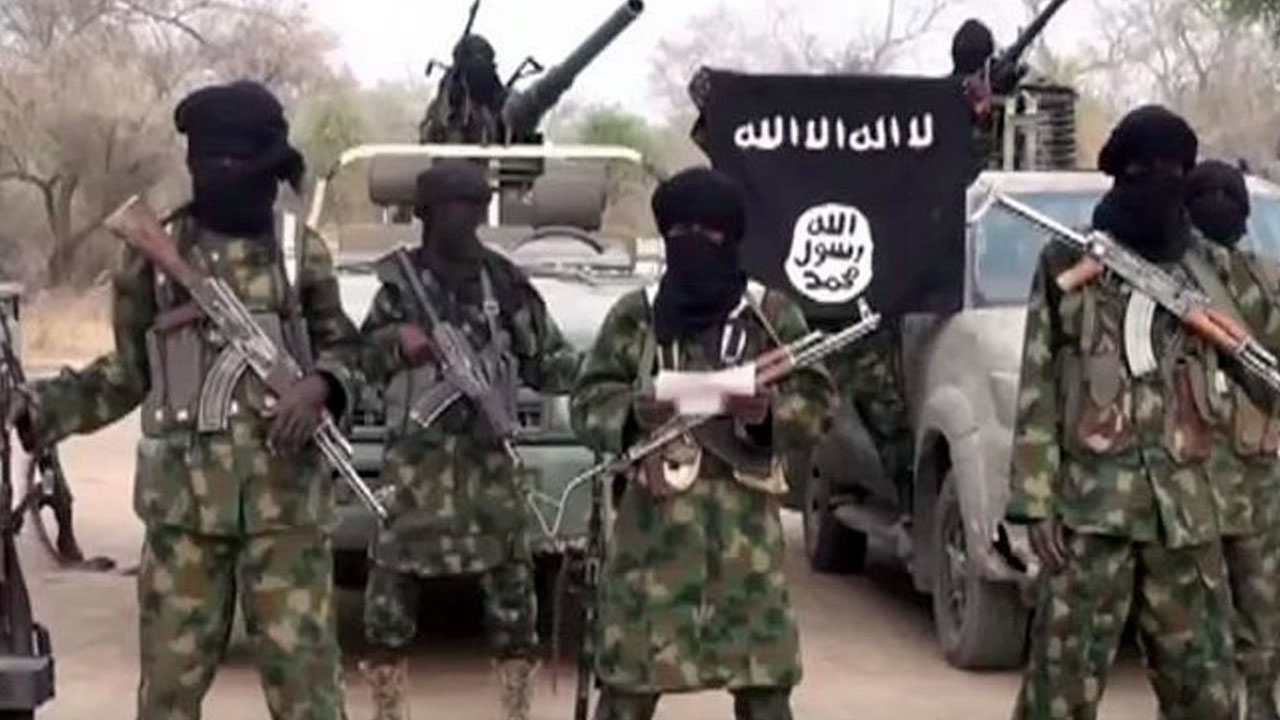
Four prominent members of Jam’at Ahl as-Sunnah lid-Da’wah wa’l-Jihd, popularly known as Boko Haram, have turned themselves into Nigerian forces in Borno State.
Commanders Mala’ana (Khalid), a Governor, Abu Dauda (Munzir), Modu Yalee (Commander), and Bin Diska (Nakif) submitted to Operation Hadin Kai (OPHK) soldiers on December 12, 2022, when they were patrolling the state’s Gwoza local government area.
This fresh intelligence reveals that the insurgents have emerged from the Sambisa forest where they had been hiding and are now waging terror attacks against the state, according to Zagazola Makama, a Counter-Insurgency Expert and Security Analyst in the Lake Chad region.
They once served as leaders at the Njimiya camp under Abubakar Shekau.
Nevertheless, during the invasion of the Sambisa Forest in May 2021, they disarmed and joined ISWAP at Lake Chad, which finally led to Shekau’s demise.
The four Commanders later abandoned ISWAP and fled to Sambisa, where they established a camp and started acting independently.
They were forced to surrender out of fear of being wiped out on the battlefield by a combination of a protracted, increased bombardment on terrorist hideouts and rivalry strikes.
Meanwhile, 83,000 Boko Haram fighters had been captured and were being treated for rehabilitation in Borno State, according to Major General Christopher Musa, the OPHK Theatre Commander.
The agitation for gender equality could be dated back to the beginning of the 18th century when Mary Wollstonecraft wrote her book titled A vindication of the right of woman, in which she argues for women’s right to education. The issue rose to cosmopolitan through the 18th and 19th centuries when women from different parts of the world began to advocate for gender equality and fight against any act they considered as oppression against women by their opposite gender. They aggressively campaign against patriarchy – admonish it and call for its total abolition.
The central themes of most of their campaigns, as they usually proclaim, are centred around fighting against gender stereotypes and gender-based violence. And also seek equal opportunities as men, and women’s education, among others. They perceived women as being oppressed since the inception of humanity.
But unfortunately, the moral justification of this ideology puts men at a disadvantage. They consistently receive backlash as a predicament of these struggles. Those ardent advocates always consider men as oppressors, narcissists, egoists and self-centred, which causes all the misfortunes in women’s lives. This makes women that are adamant about this ideology highly androgynous.
Androphobia has become part of the ideology per se because most of those promoting it display one aspect of man-hating or the other. The radical ones among them tend to even distance themselves from any intersexual relationship due to their adamant stand on ideology. Do women who do not believe in this ideology have anything to lose? Why are many women against this ideology, and some even consider it evil?
According to major religious beliefs and scientific views about creation, almost all living things are created in pairs (i.e. male and female). The disparity is primarily because of reproduction. Therefore, females alone cannot reproduce without their male counterparts. Contemporarily, in this technologically advanced world, there are certain procedures that some women adopt to conceive without the physical involvement of men in the process. Still, regardless, man has to contribute in one way or the other along the way. That’s in the case of reproduction alone.
Human beings are created with inadequacies. Men tend to be physically stronger than women and can cope with the stressors of life more than women. Women, on the other hand, are meant to be more compassionate than men. They can better take care of the responsibilities of others without being stressed. That is why they tend to play a more significant role in the upbringing of children. Coming together of man and woman to form a family has never been a mistake, but rather to fill up the inadequacies of one another and form a society where morality is respected.
Unfortunately, marriage is the first institution destroyed by those promoting gynocentrism. That is why there is a high increase in the rate of single mothers in the developed world, negatively affecting the upbringing of children and victimising women by increasing the level of their responsibility to the children. Broken homes are mostly a predicament because of this ideology that usually renders many men homeless and distances them from their children.
Suicide among men has been on the rise, caused mainly by judgement issues by family courts in developed countries. The legal system has been tempered to favour women in matrimonial cases, which promotes gynocentrism. Men are being oppressed and victimised worldwide, but sadly, nobody talks about it.
Many rape cases where men were held responsible are just false accusations from women to get revenge for what might have occurred between them. Severally, men have been traumatised mentally over allegations of rape cases against them that have not happened. Men face a series of domestic violence. Many men were sexually molested during their childhood by elderly women, which perverted them in their old age. Men are being oppressed on several occasions by women, but nobody is standing for men, and nobody is advocating for men’s rights.
The equality that promotes gynocentrism advocate is subject to women’s superiority. You’ll be tagged as a misogynist when you talk to them about equality that will strike a balance between men and women.
Injustice can be found everywhere, across gender, race, tribe, etc. There’s no monopoly when it comes to justice or injustice. Anybody can oppress and can be oppressed. Therefore, try to be objective in your approach when calling for equality or justice. Nobody will deny you the right to advocate for your rights, but don’t be unjust in trying to find justice. Know your position in society and respect your social obligations and that of others.
Abdullahi Yusuf is a 400-level student of Health Education at Bayero University Kano. He can be reached via abdoolphd@gmail.com.
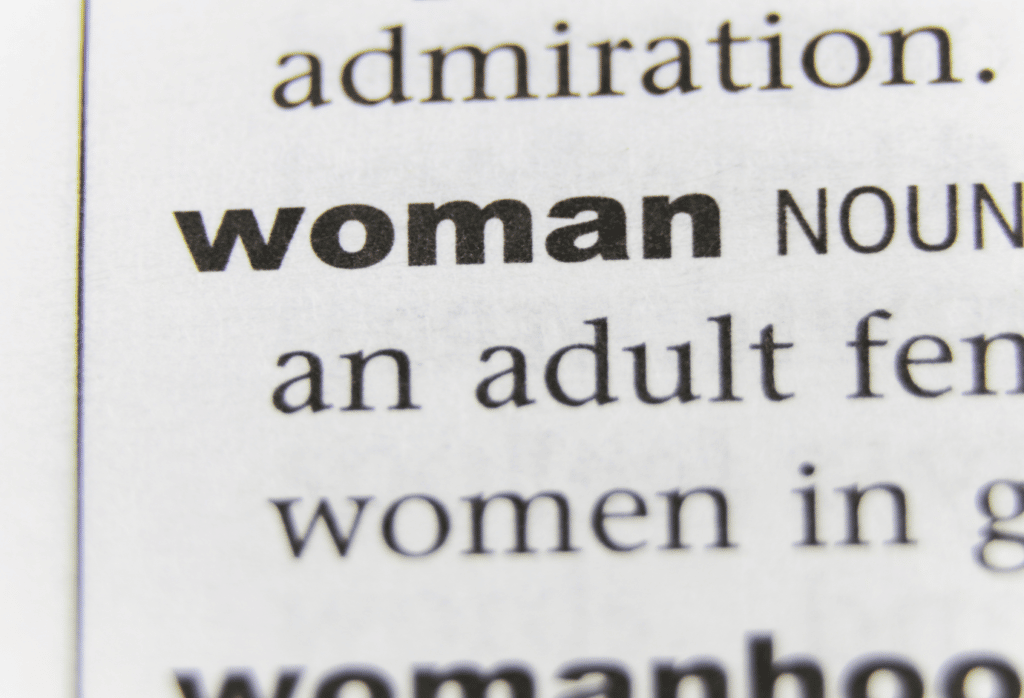
In light of the intense debate over gender in politics and public life in the US and elsewhere, Dictionary.com has named “woman” as its Word of the Year for 2022.
According to Dictionary.com, there has been a significant spike in users looking for the meaning of “woman,” which at its peak increased by 1,400%.
It stated on its website that this year, searches for the word woman on Dictionary.com increased considerably in relation to various high-profile events.
“Our selection of woman as our 2022 Word of the Year reflects how the intersection of gender, identity, and language dominates the current cultural conversation and shapes much of our work as a dictionary,” it said.
The site lists the definition of ‘woman’ as an ‘an adult female person’.
The discovery of oil in the north is a national development that is worth celebrating as it would bring about several national developments, provide many employment opportunities to citizens, and enhance the nation’s economic state.
Nigerians, especially northerners, celebrated the news break of the success recorded in Bauchi, north-eastern Nigeria, hoping that the citizens are going to benefit from such a remarkable achievement of president Buhari’s led administration as the Federal Government signed an agreement of establishing a power plant and fertilizer-producing company in the area.
Besides, for oil to be discovered, it has to go through specific series of activities, an operation called SEISMIC, A geological data acquisition operation that leads to the discovery of a hydrocarbon reservoir, which is the key foundation to any success recorded in oil discovery, hence it requires rigorous activities of hard work with persistence and perseverance from the management function and indeed the labourers who are responsible for the entire hard work surrounding the seismic operations.
Also, Seismic is such a difficult job that comes with a series of hard work ranging from carrying and laying heavy loads of cable, drilling machines, and stems, among other equipment and material needed for the operation. It is usual for seismicity to work from 6 am to 6 pm, seven days every week, without any complaints because that is the nature of the work. Still, to JV209, a seismic joint venture between the subsidiary of NNPC Integrated Data Services Limited (IDSL) and that of China National Petroleum Corporation CNPC, Bureau Geophysical Prospecting (BGP) workers, the case is different, as the company introduces and succeeded in night operation.
Wholeheartedly the workers stand through thick and thin, thereby enduring the extreme cold weather and highly scorching sunshine of the region as the work cuts across the entire season, where workers often get drenched due to heavy rainfall during the wet season.
The workers on the field are left with no option of which route to follow while working in the bush because the lines to work on are preassigned and therefore have to pass through every nook and cranny, thereby climbing mountains, entering water bodies penetrating through thick forest in the course of discharging their duty.
Notwithstanding, the sacrifices of the workers did not go in vain as the crew recorded the highest production ever in the country and yielded positive results of quality data, and was able to complete an estimated two years project in just a year, which should have been paid for if extended to the said period.
Unfortunately, some workers lament that they were promised a certain amount of money after work by the crew management, which is yet to be fulfilled. Almost every worker was admitted to a crew clinic and some to a medical centre in the state capital during the operation only the sacrifice of staying a year away from our family with a lower salary should be rewarded” and cite their ability to finish two years project in one which if extended to that period they would be paid for it.
Above all, the government should try and fulfil such promises, as failure is a significant threat to the nation’s security. We are not done with militants, bandits, and insurgents, among other security challenges bedevilling the country’s growth and required development.
The workers should follow the right way of pressing home their demands. This may hinder the progress to the logical conclusion of the project, which will be detrimental to all and sundry.
With the approval of the National Language Policy by the Federal Executive Council (FEC), instruction in primary schools within Nigeria will now be done in the mother tongue. As with every other issue of importance in this country, the policy was greeted with passionate arguments, both for and against. The Government’s decision to promote language learning for greater learning outcomes has been in the making for many years, especially at the lower primary levels. The Federal Government may have officially made it compulsory for the primary mode of instruction to be in the mother tongue. However, this policy has been in practice in most remote communities, especially in the North.
Whilst some arguments against the idea (which we shall review shortly) were valid, it is worth considering the fact that Nigeria is currently facing what is akin to an education emergency. In this regard, whatever little effort is made, especially at the policy level, should be greeted with some positivity whilst exploring ways to augment the effort in the non-governmental and private sectors.
Having said that, it is equally important we explore reasons why this policy might not work. This is because it is only when we clearly understand the hurdles ahead that we will be sufficiently prepared to effectively nurture the policy seed that the Federal Government has planted. Below are three strong reasons advanced against the policy:
The Financial Implication of Educating Children From 500 different ethnic groups.
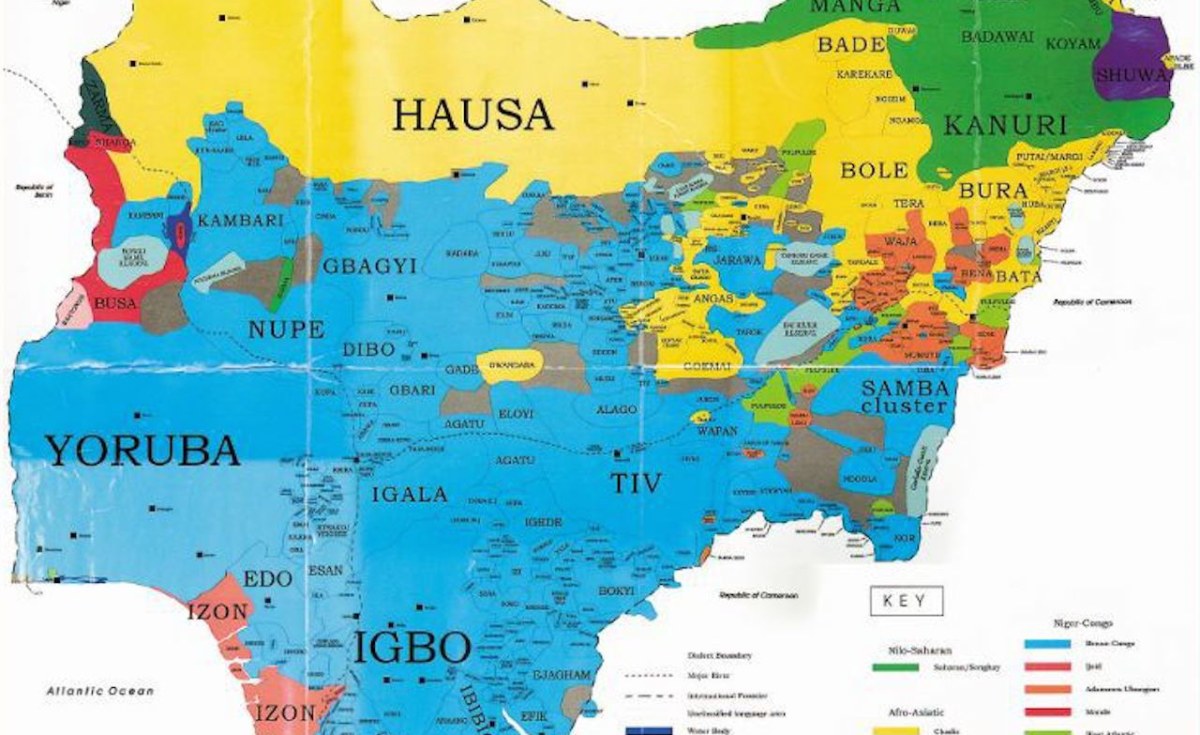
Without mincing words, I agree with those who say it is unrealistic and unachievable to educate children from over 500 ethnic groups. This is especially true considering that education has always been at the low end of budgetary allocations. Let’s face it, the current economic profile of the nation does not look promising for a radical overhaul of this nature. However, in order to take advantage of this policy and benefit from what technologically advanced countries like China, Germany, and Russia have benefited from for many years, we can start with the low-hanging fruits. By this, I mean let’s start with the three dominant languages – Hausa, Yoruba and Igbo.
These languages already have advanced international media backing (BBC Hausa, Yoruba, Igbo, for instance) and a copious body of knowledge accessible through search engines like Google. There is a possibility of easily scaling beyond the three languages by leveraging the data and lessons learnt at this phase of the implementation.
The dearth of Qualified Teachers and Instructional Materials
Closely related to funding is the challenge of the dearth of teachers and the availability of adequate instructional materials to implement such a grand overhaul. The truth is even the current system is grappling with the same challenges, so it is an open secret that any change will mean more challenges. However, with what is available through scientific research on the benefits of children receiving instructions through their local languages, it is clear that it is only a matter of time before this issue becomes the front burner of national discourse. And although we don’t have it all figured out, we have to start with what is available. The NCE curriculum makes provision for every college of education in the Federation to have departments of Hausa, Igbo, and Yoruba and some provision for the language of the immediate community.
Community ownership, NGO, and private sector support will go a long way in ensuring effective implementation. It is also important to note that whilst the Federal Government makes policies, the responsibility of implementing basic education lies with State Governments. Thus, the onus of ensuring this success will vary from state to state. If, for example, northern governors believe this policy will serve their interest most, they should do everything within their powers to ensure the success of this policy at the state and regional levels. The same may not be a priority for the southern region. What is significant here is how we make this policy work in the best interest of Nigeria’s peace and prosperity.
Favouritism and the Challenge to the Fragile Peace in Nigeria
Viewed from the historical context of education in Nigeria, it is obvious that English is more accessible, learnt and understood in the southern part of Nigeria than in the dominantly Hausa-speaking North, where the region has always relied on the Hausa language for the mass dissemination of information. In such a situation, it is obvious that a policy of this nature will find more fertile ground in the north compared to other regions of the country. But let’s face it, the earlier we speed up access to quality education through whatever medium possible, the better for our country’s peace and prosperity.
The data available on the out-of-school population in Nigeria is disproportionately in the north, and the earlier we bridge this gap, the better for our developmental outcome. In the final analysis, this policy might actually make it more cost-effective and efficient to educate a Nigerian child than the current western-based model.
In conclusion, whilst a radical policy of this nature is bound to be confronted with many obstacles, research and comparative curricular studies have proven that our nation gains from a policy favouring our local languages over foreign languages.
It is true that the English language gives us a platform to compete globally, but the spice is in what is truly ours, our local languages, which tell the stories of history and survival. Let’s not forget that nobody says our own languages cannot gain global dominance under the right circumstances, and it all begins with the curriculum.
Mrs Maryam Augie-Abdulmumin is the Founder and Executive Director of Illmi Children’s Fund. She can be reached via: info@illmichildrensfund.org.