Month: December 2022

Virginity test is illegal, barbaric—Expert

By Muhammadu Sabiu 

Virginity testing is forbidden, Dr Oluwajimi Sodipo, a consultant family physician at the teaching hospital of Lagos State University, said in Ilorin on Wednesday.

He revealed to the News Agency of Nigeria that the WHO had ruled the practice to be unlawful while he was attending a session for primary healthcare professionals.

Aside from the WHO announcement, he said, the practice was antiquated.

The most common reasons for conducting the virginity test are requests from parents or suitors to see whether the girl is eligible for marriage or to determine her suitability for a job.

According to the WHO, a virginity test is a gynaecological exam done with the intent of determining if a woman or girl has had vaginal contact.

He added that the practice was frequently agonizing, embarrassing, and distressing, adding that the idea of a virginity test was false because a woman’s lack of a hymen did not necessarily indicate that she was promiscuous.

Deal with politicians using religion as campaign tool – El-Rufa’i

By Uzair Adam Imam

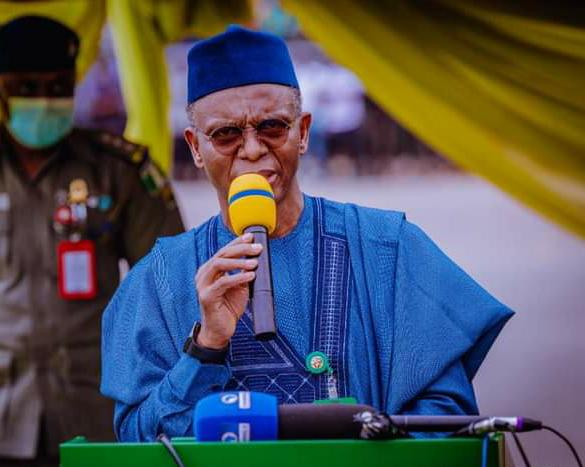
The Kaduna State Governor, Nasir El-Rufa’i, expressed concern over the way some politicians were using religion and ethnicity to create division in their campaigns.

The governor also stressed on the need to punish policians using religion in their political campaigns.

He spoke at the commissioning ceremony of the head office of the Sultan Foundation for Peace and Development held in Kaduna.

He stated that the 2023 election would be a golden opportunity for Nigerians to take region out of politics.

He said the 2023 elections presented a unique opportunity for Nigerians to take religion out of politics.

El-Rufa’i was qouted to have said, “People are united in their poverty, in their need for education, in decent healthcare and to put food on their table, that is what we should focus on but some people are holding meetings to promote religious and ethnic division.

That is the last thing Nigeria needs at a time when the whole world is facing challenges of ultra-nationalism and global supply chain disruption.”

He then asked for forgiveness, saying, “We try to do what is right but only God is right, my apologies to anyone that I have offended, we have five months to go and I will like to leave and sleep in peace.”

Bandits abduct Fulani leader after attending security meeting

By Uzair Adam Imam

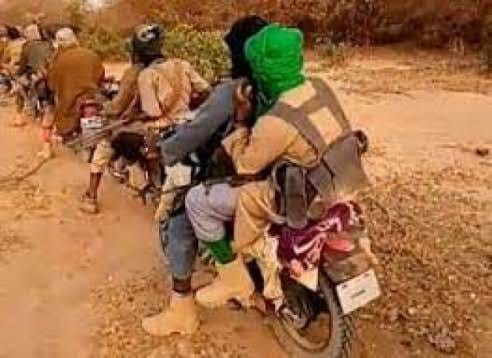
A Fulani leader, Alh. Aliyu Abdullahi, in Maganda village near Kagarko town in Kaduna state, was abducted by unknown gunmen on Monday.

It was reported that the leader, also known as Ardon Maganda, was going back home on his motorcycle after attending a meeting with other village chiefs on security issues bedevilling their communities.

The Daily Reality reported how handits raided three communities and abducted 37 villagers in Kaduna communities just recently.

A source from Janjala community, simply identified as Ishaq, said, “This morning (Tuesday), someone from Maganda who was coming to Janjala saw Ardo’s motorcycle abandoned by the roadside and suspected that he has been kidnapped.”

He added that the victim earlier visited the families of some of his konsmen to sympathise with them over the recent attacks by bandits which led to the abduction of some of his family members.

As of the time of filing this report, there was no official report from the police in the area.

Waqf Foundation upgrades lives of Nigerians

By Abdulhamid Muhammad

Sunday, 25th December 2022, was a day of revelations and feedback from the Waqf Ambassadors of the Zakah and Waqf Foundation, Gombe, Nigeria. It happened during the Uncovering Potentials Workshop (UPW) organized by the Foundation for the 1st and 2nd sets of its Waqf Ambassadors, which was facilitated by Dr Najeeb A.A. Gambo, a researcher with the Microsoft Company and Nigeria’s 2nd Google Certified Trainer.

It was conducted a day after a 2-day intensive induction training for the 2022/23 Waqf Ambassadors at the Foundation’s Training Room. As usual, of all the year-long life-changing training that the Foundation organizes monthly for its 80 enrolled Waqf Ambassadors annually, the UPW was highly impactful, thought-provoking and action-triggering.

In the closing session of the workshop, scores of youth voluntarily gave their testimonies on how the sessions of the workshops they have gone through in the last 12 months have completely revolutionized the way they look at the world financially and intellectually.

One of the ambassadors narrated how excited she was after starting a business and discovering that she could now do a lot of things with her earned income without asking or waiting for someone to give her. It was a great discovery because she grew up in a society that programmed her to think that she could not make money for herself.

Another person said that it was a workshop in ZAWFOG on reading culture that ignited in him the habit of reading books, and that has completely transformed his life, making him more creative and more confident, and hopeful about life.

Another Ambassador, whose parents hitherto paid all his bills, revealed how as a result of the motivation he got from these series of lectures is now able to earn more than the national minimum wage every month despite being still a student. And many of the participants went on and on.

These are a few of the testimonies, and I wished the Chairman of the Foundation, Ameer Abdullahi Abubakar, was there at the closing session to hear how the Foundation is making an impact and transforming lives. It is clear that his model is working; the Waqf Ambassadors are fast moving from poverty (p) to prosperity (p) and soon to philanthropy (p) in sha Allah. As envisioned by the founders of the Foundation, we will soon have a generation of youth who are rich enough and committed seriously to building our society through Waqf.

May Allah accept this from all the people who have contributed in one way or the other in moulding the next generation to be a productive one, amin. May He continue to bless the Foundation and take it to greater heights.

Abdulhamid Muhammad is a 2021 Waqf Ambassador and wrote from Gombe State, Nigeria.

Movie Review: Dan Jarida

By Habibu Maaruf Abdu  and Muhsin Ibrahim

It’s well known that series movies have recently dominated the Kannywood film business. As a result, some major producers in the industry have already abandoned features for the production of TV series. As the trend develops, the famous producer Abubakar Bashir Maishadda gets on board with the big TV drama Dan Jarida [The Journalist].

The hyped Maishadda debut series, directed by Hafizu Bello, is a thought-provoking thriller mainly about journalism. It is notable for featuring an ensemble of reigning stars in a never-before-seen avatar. A Duniya famed Daddy Hikima, who consistently portrays a villain, is playing a positive leading role in the latest series for the first time.

Launched on Sunday, 25 December 2022, the show will continue to be aired weekly on Arewa24 TV and Maishadda Global Resources YouTube channels. The first episode exposes a tiny part of the story arc. It begins with some crooks chasing a reporter Fauziyya (acted by Amal Umar), who videotapes them while killing and burning someone. They eventually catch and mutilate her to death. Everything keeps revolving around this conflict until the episode’s end…

The first episode is an auspicious start to what promises to be an exciting crime-thriller. It gathers momentum right in the few reels, taking viewers to the background of its major characters. They are; a criminal mastermind Madugu (Sha’aibu Kumurci), who disguised as a philanthropic politician, and Sadiq (Daddy Hikima), Fauziyya’s boss and a media company manager with dogged determination and integrity.

The drama is a delight to watch, at least by how it goes so far. It also promises to be more so when the rest cast of Lawan Ahmad, Tijjani Asase, and Isah Ferozkhan (Presido), among others, enter the next episodes. The camera work particularly captures the intense nature of the film, and the background score gives it full support in generating the desired tone.

Besides depicting the exhaustion, uneasiness and risks associated with journalism, Dan Jarida drama reminds journalists about the importance of doing their job right. It is also a great attempt to provide real insight into the causes of various crimes that are ubiquitous in our society today.

Beyond the positive aspects mentioned above, smoke, as used in the series to create cinematic depth, could be enhanced. For instance, there is little or no need for a smoke when Magudu and his henchmen capture Fauziyya. One may assume it is the exhaust of their cars, which cannot be. In other instances, the smoke is too thick, and its colour looks unnatural.

Finally, while recommending the new series to all and sundry, particularly the Kannywood audience interested in journalism and politics, we appeal to the makers to refrain from exploiting the promising story for commercial purposes. Moreover, they should refrain from extending it beyond reasonable length as producers of some contemporary YouTube series do.

We’ll support Nigeria in fight against illicit drugs—US

By Muhammadu Sabiu 

The government of the United States has unveiled a scheme that will help Nigeria’s fight against illegal drugs.

The National Drug Law Enforcement Agency’s (NDLEA) capacity for forensic and chemical analysis, intelligence gathering, and prosecution will be strengthened by the support.

The intervention is being coordinated by the Bureau of International Narcotics and Law Enforcement Affairs (INL) of the U.S. Department of State.

The announcement was made in a statement released on Monday by Femi Babafemi, Director of Media for NDLEA.

The chairman of the anti-drugs agency, Brig. Gen. Mohamed Buba Marwa (ret. ), made the requests after meeting with American representatives in Abuja and Washington, D.C.

The project will be carried out in Nigeria by the United Nations Office on Drugs and Crime (UNODC).

The assistance will strengthen NDLEA’s intelligence-driven inquiries using various tools, including legal texts, an e-library for prosecution, and others.

Babafemi stated that by adopting enhanced collection, handling, and custody practices, the agency would be able to prosecute cases with solid evidence.

The initiative “will be a vital step in furthering our shared objective of a united, peaceful, and stable Nigeria,” the U.S. government stated in its message.

Policeman murders female lawyer on Christmas day

By Ahmad Deedat Zakari

A female lawyer identified as Bolanle Raheem has been allegedly killed by personnel of the Nigerian Police Force (NPF) 

Mrs Raheem was shot dead by an unknown policeman while on his way from Christmas Church Service on Sunday. She was pronounced dead upon arrival in the hospital she was rushed to.

The Spokesperson of the Lagos State Police, SP Benjamin Hundeyin, has confirmed the incident in a statement he issued on behalf of the NPF.  

Hundeyin described the incident as “unfortunate and avoidable”. He stressed that justice will prevail” 

“The Lagos State Police Command condoles with the family, friends and colleagues of Barrister Bolanle Raheem. The Commissioner of Police, Lagos State Command, CP Abiodun Alabi, has been in touch with the family and the Nigerian Bar Association since yesterday and has given firm assurances that justice will definitely prevail.” He tweeted

Meanwhile, the Nigerian Bar Association ( NBA) has demanded that justice should be served in the matter. 

NBA National Publicity Secretary Akorede Lawal wrote, “We are aware of this unfortunate incident. This is yet another crime against a lawyer. Regrettably, our member is gone…We shall ensure that justice is duly served.”

SAS Kano promoted Shari’ah after Jihad – Prof. Naniya

By Ibrahim Mukhtar

The main aim behind the establishment of the famous School for Arabic Studies (SAS) Kano was solely to promote Shari’ah after the conquest of Northern Nigeria by the colonialists.

This was disclosed by Professor TIjjani Naniya of the History Department, Bayero University, Kano, during the SAS day celebrations, which marks the 82nd anniversary of the school.

The History professor went down the history lane and narrated how the school was established and how the then-colonial government wanted to undermine Shariah by promoting their own legal system.

According to the professor, “Sarki Alhaji, who was the first emir of Kano to have performed Hajj, was the one who applied and sought the approval of the colonial masters to establish a school which would cater for the peculiar legal needs of the Northern Muslims.

The colonial masters thought it would be another way to distort and dominate the Islamic legal system, but unknown to them, the School for Arabic Studies would outshine them and their mischief.”

Prof. Naniya narrated how the school admitted only brilliant students based on merit and how a son of a late business tycoon in Kano was expelled as a result of his bad attitude then.

He further talked at length about how the story of the school went high and how the model was copied and established in other states in Nigeria and beyond. Finally, he urged all the attendees to pray for those emirs and leaders who worked very hard to promote Islam and Shariah for all the country to benefit.

The 82nd anniversary took place Monday, December 26, 2022, on the school premises. The event was well-attended by the alumni of the school and other dignitaries.

Currency redesign and its attendant expectations

By Muhammed Umar-Hong

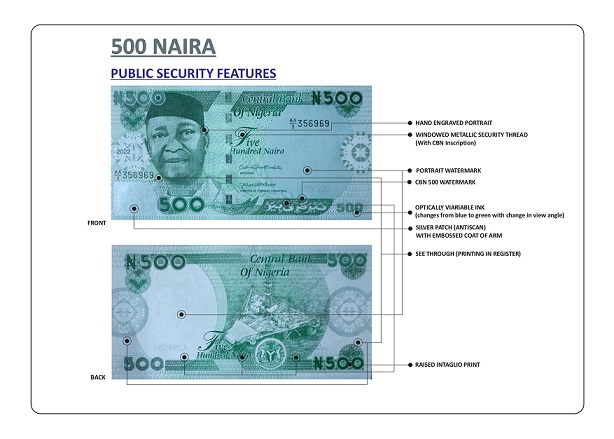
Changing the appearance of a country’s currency is widely practised worldwide by various methods and for different reasons. It could portray a nation’s rich cultural heritage, a change in regime to symbolise a ruler or celebrate national heroes with portraits of them attached to these currencies. However, the most cited reason has been to combat threats of counterfeiting. Threats which may lead to inaccurate figures of the total amount of money in circulation, for example. 

The Naira is certainly not a stranger to the redesign concept, which has seen various denominations change over the last few decades. Chief among the changes had been the transition to more durable currency notes which began with the N5, N10, N20 and N50 denominations all upgraded to polymer substrates in 2007. While 2014 saw the birth of the N100 commemorative note marking the nation’s centenary celebration. 

It should thus not be a contentious issue if the CBN decides, as it has, to make further modifications to the country’s currency. After all, it is within the apex bank’s constitutional powers as stated in the CBN Act, 2017 (Section 19, subsection 1b). This time, its primary aim will be to address our security challenges by reducing the hoarding of certain denominations whilst ensuring proper monitoring of monies in circulation. 

But before the release of the new bank notes, however, interactions on social media had clearly shown that not many Nigerians understood the difference between currency redesign and currency redenomination (which involves removing/adding more zeros to the currency), and some were highly expectant of the policy to have some technical outcome. Opinions and suggestions are illogical or don’t seem to rest on sound economic principles. But I took the trouble to note a few, and to explain my views on them below. Feel free to make your contributions.

Q: Why wouldn’t the government set our highest currency denomination to N20 to end money laundering? 

V: The reason for raising our highest denomination to N1000 is because our Naira has a fallen value. The change in exchange rates between two countries is usually determined by the constant demand for one currency by the other. If a country produces goods and services in commercially exportable quantities, the demand for those goods by foreign customers would automatically lead to foreign currencies being converted to local currency to enable these purchases, which ultimately drives the value of the local currency up. Foreign currencies would have to chase more Naira, thereby bolstering its value. 

On the other hand, for products such as petroleum, where the purchases are made in US dollars, the additional dollars can be used by the apex bank to purchase the Naira, thus creating a sort of artificial demand for the Naira that usually raises its value. 

I don’t think any money launderer (assuming I know how this is being done) would be deterred just because he now has to carry/stash away more currency in N20 denominations.

Q: Why wouldn’t the government choose an interval of four years to redesign its currency? 

V: The international standard for countries to redevelop their currencies is between a 6 – 8 year interval. This is not, however, a strict rule, as some countries do it more frequently than others. In the US, for example, the practice is to focus more on widely used denominations (prone to more wear-and-tear) or are frequently targeted for currency fraud (counterfeiting) for a redesign. For instance, a currency like the two-dollar bill has a much longer lifespan due to its near-absence in daily transactions compared to a dollar bill. 

Additionally, not every need for currency changes can be accurately foreseeable. And it may only sometimes be financially viable to make wholesale changes if it coincides with financial or economic shocks. Both of which our mono-economy is particularly susceptible to.

Q: Will the unaffected currency notes (i.e. N5, N10, N20, N50 and N100) remain in circulation after this redesign? Would their value fall?

V: The other currency notes that haven’t been affected by the current redesign will still maintain their legal tender status, fortunately, until the CBN says otherwise. They will also retain value as market forces dictate and are expected to remain in wide circulation. Elsewhere though, lower denomination currencies have been the most exchanged and most subjected to redesign, mainly due to their frequent use.

Q: Why not grant amnesty to hoarders of cash instead of embarking on the expensive redesign?

V: Well, I believe you can’t exert leverage over hoarders of cash if you were never going to carry out your threat (the redesign). 

But Abdullahi Imam has another angle to it: The question of amnesty is straightforward. Amnesties are mostly for criminal activities. It’s not a crime to have cash or to store it. So the topic of amnesty is a non-starter. Except if an amnesty is for those that need to exchange their old notes before the agreed deadline. 

Q: The government should introduce the use of coins if it hopes to increase its purchasing power.

V: Purchasing power is simply the value of a unit of currency in terms of the goods/services it can buy, which is effectively how strong/weak your currency is. The higher the purchasing (buying) power of a unit of your currency,  the greater the number of goods/services it can purchase, and vice versa.

Does the N5 note come to mind? It’s okay to say the note has become worthless these days. I can’t remember when I walked into a shop for an item priced in the multiple of 5. Most of our goods have now been (deliberately, I think) rounded up to the power of 10.

Although they play little or no role in our daily transactions, coins are currently the oldest form of money available to us. They used to have intrinsic value based on the valuable metals (gold, silver) they were made with until it became less expensive to produce using materials like Copper. In more notable climes, they have been used for commemorative purposes. 

Just recently, Britain had to redesign its fifty pence (50p) coin to feature the portrait of its new king, Charles III, following the death of Elizabeth II. And in many other countries, coin usage has practically been resigned to handling smaller transactions, often serving as ‘change’ from paper currency payments. This is more evident in countries assigning lower denominations to coins, effectively making the highest value of the coin in circulation worth less than the lowest-value note. 

Even in our case, Prof. Soludo, then CBN governor, in his 2007 paper titled ‘Strategic Agenda for the Naira’ had proposed the reintroduction of coins in the following denominations: 1 kobo, 2 kobos, 5 kobos, 10 and 20 kobos in his bid to make the Naira a currency of reference in Africa. 

Paper currency has become the preferred medium of exchange for higher denominations worldwide due to their convenient nature and the fiat status conferred on them by governments. To the best of my knowledge, no relationship EXISTS between using coins and increasing the purchasing power of a nation’s currency. But that’s not to say coins are wholly valueless and lack significance in the overall dealings of a country because, who knows, “the most important decisions you will ever make in your life may be decided with the toss of a coin.”

Muhammed Umar-Hong wrote via muhammedu.hong@gmail.com.

Six killed, many injured in Bauchi auto crash

By Muhammad Sabiu

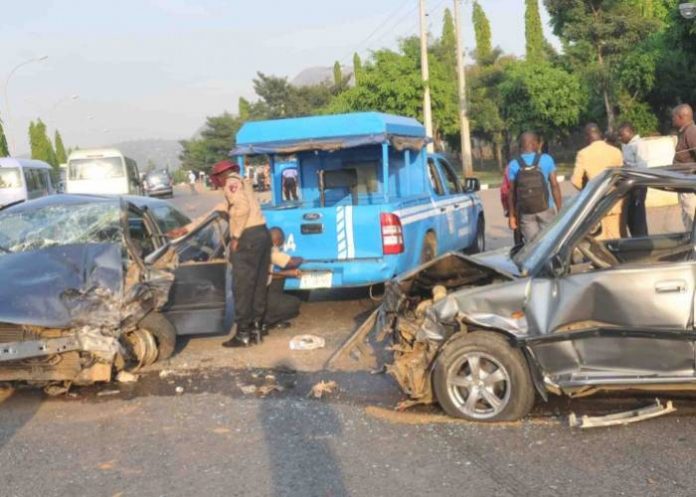
A car crash along the Kafin Madaki-Ningi route in the Ganjuwa Local Government Area of Bauchi State claimed the lives of six persons on Christmas Day.

The accident, which occurred at 11.50 a.m., also injured sixteen other people to varying degrees.

Yusuf Abdullahi, the state’s FRSC Sector Commander, stated that a white Toyota Hiace bus owned by the Bauchi State Government was involved in the fatal collision.

He said, “Immediately we got the call, our men rushed to the scene within 20 minutes for a rescue operation. They evacuated the victims and rushed them to the Kafin Madaki General Hospital.

“It was when they got there that a medical doctor confirmed six people dead. Sixteen others sustained various degrees of injuries.

“There were a total of 22 people consisting two male adults, four male children, 10 female adults and six female children in the bus when it crashed.

“The lone fatal crash involved a Bauchi State Government vehicle, a Toyota Hiace Bus, white in colour.

“Those killed included two female adults, two male children and two female children.

“Those who sustained bruises and fractures are two male adults, two male children, eight female adults and four female children.”