Month: October 2022

FG intervenes in struggles for ownership of Dangote factory in Kogi

By Uzair Adam Imam

The Federal government intervened in the struggle for ownership of the Dangote cement factory in Obajana, Kogi State, on Monday.

The Federal Government intervened following the shutdown of the factory by the Kogi State government over the issue of ownership and allegation of tax evasion.

A reliable source in the Presidency confirmed the meeting at the Office of Chief of Staff to the President in the Presidential Villa in Abuja.

It was learned that the meeting had in attendance the President of the Dangote Group, Aliko Dangote, Governors Yahaya Bello (Kogi) and Abdullahi Sule (Nasarawa).

It said that the management of Dangote Group has concluded a plan to drag the state government to the court over its legality.

It was alleged that the vigilante members in the state stormed the factory and many of the company’s staff were wounded in the process.

ASUU to call off strike in few days

By Uzair Adam Imam

The Academic Staff Union of Universities (ASUU) promised to end its strike after meeting the Speaker of the House of Representatives, Femi Gbanjabiamila.

The union, which has been on strike since February 14, disclosed this yesterday after meeting with Gbanjabiamila and some ASUU members.

The lecturers down tools to press their demand home which include the Federal Government’s failure to meeting the agreements reached with the union.

The meeting was a last-minute move to persuade the striking union and came after the Court of Appeal, Abuja, on Friday intructed the union to call off its incessant strike.

Gbanjabiamila said, “This is a recap to seal the deal on what has been a long-fought battle; a long hard road for everybody – for ASUU, the students and the government.

“As you would recall, some weeks ago the House got involved in this crisis and we had long, tough, intense meetings with ASUU.

“We had meetings with those on the government side and we are happy to report that as the result of the consultation and intervention of the House, very significant progress has been made and we are more or less at the end of the road save for dotting some “I”s and crossing some “T”s.

“I believe we have covered ground, covered most of the thorny issues and it is basically, what we have agreed with ASUU is basically to put everything on paper and sign off. I believe if we had met yesterday and the papers had been drawn up, ASUU, I am sure, would have called off the strike today.

“But we only just met behind closed doors now and so we have to draw up the agreement as I have stated to you, and hopefully in the next couple of days, of course, ASUU has to get back to its bases as well. Once that is agreed, I am very hopeful and very excited about the possibility or probability the strike would be called off in a matter of days.”

“We did this for the sake of our students and children and I hope it would be a thing of the past. I thank you very much, ASUU. I also thank Nigerians for their patience, and the students, having endured these many months. But I believe that this has hopefully come to an end in a matter of days.”

The ASUU President, Professor Emmanuel Osodeke, commended the House leadership for its intervention.

He said, “If the way the National Assembly has intervened; if you have done that long ago from the beginning, or those who are in charge of labour and education have done exactly this, we will not be where we are today.”

Buhari honours Dr Sani Rijiyar Lemo with OON

By Uzair Adam Imam

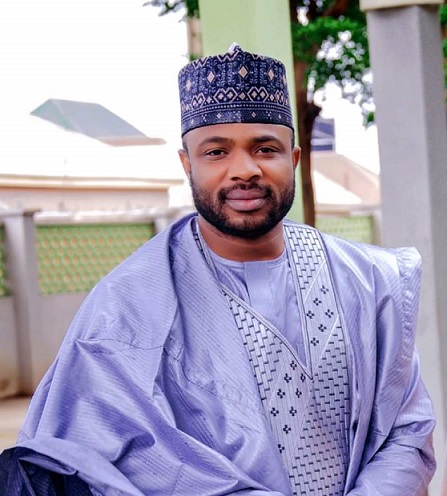
President Muhammadu Buhari has approved the conferment of the national honour on Ass. Prof. Sheikh Sani Umar Rijiyar Lemo in the rank of OON (Officer of the Order of the Niger).

However, the conferment of honour was disclosed in a letter to the sheikh dated October 7th, 2022, by Sen. George Akume, fnim.

Rigiyar Lemo is a Senior Lecturer at Bayero University, Kano (BUK), and also a prominent Islamic scholar in Nigeria with expertise in Hadith and Tafsir. His numerous authored books are being read in many mosques and circles of learning in Nigeria and beyond.

Popularly known As Dr Sani Umar R/Lemo, he was born in Saudi Arabia in 1970. He bagged 1st, 2nd and 3rd degree in Hadith in the reknowned Jami’atul Islam of Madina. He established name as the successor of Sheikh Ja’afar’s tafsir in Kano, Maiduguri and Bauchi State respectively. His popular weekly radio program “Fatawowin Rahama” endears him the love of millions of people who see him as peace ambassador.

The honor was in recognition of his tremendous contributions towards developing Nigeria through his teachings and enlightenment to ensure peace in the country.

The letter read in part: “I have the honour to formally inform you that the President of Republic of Nigeria, His Excellency Muhamadu Buhari, GCFR, has approved the conferment of the National Honour on you, in the rank of OON (Officer of the Order of the Niger).

The investiture ceremony is scheduled to take place at the International Conference Center (ICC), Abuna on Tuesday, 11th October, 2022, at 9:00 am.”

Petrol shortage hits Kaduna

By Muhammadu Sabiu

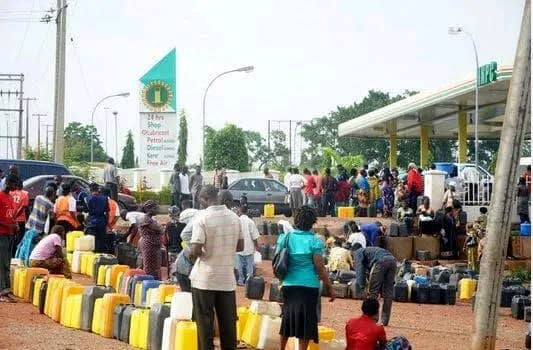
Reports reaching The Daily Reality have indicated that residents and drivers were in a panic on Monday as fuel shortages hit many filling stations in Kaduna State and the surrounding area.

Many petrol stations had long lines of vehicles, and this forced buses drivers and commercial motorcycle riders to increase transportation costs by 50%.

Madam Ashatu Suleiman, a local, claimed that it cost her N150 to move from Sabon Tasha to Kaduna Central Market, where she sells food, adding that she paid N200 this evening as she was heading home.

According to a report, the cost of transportation from Kaduna to Zaria has jumped from N800 to N1,000.

Many people feared that the state’s fuel shortage was caused by floods in Kogi, which made it difficult for fuel trucks to pass.

The Kogi flood, according to Mr. Samuel Ebiko, station manager of Enyoojo filling station, has nothing to do with the Kaduna station’s gasoline shortage.

Obajana (Dangote) plant invasion: Implications for public-private partnerships in Nigeria (I)

By Tordue Simon Targema

Last week, the Obajana Cement Plant came under siege by armed vigilante groups from the Kogi State Government, acting on the orders of the State House of Assembly who stormed the Company to seal it and ground its operations.

This was followed by war of words between the Kogi State Government and Dangote Industries Ltd. on the establishment, acquisition, ownership and legal rights of operations of the company.

The House of Assembly premised its decision to seal the Company over its management’s refusal to appear before a public hearing on petitions bothering on the acquisition of the Company by Dangote Industries Ltd. This, the House considered arrogant and hence, had to wield its sledge hammer on the Company to serve as deterrent to it, and indeed, other investors in the State.

Reports also indicate that the Company’s management had earlier shunned a Commission of Inquiry set up by the State Government to investigate petitions bothering on its acquisition and operations by Dangote Industries Ltd.

This scenario is unfortunate and regrettable, especially as Nigeria grapples with untold economic hardships and paucity of vibrant private companies that will provide adequate buffers to the nose-diving economy, create job opportunities and mop up the teaming jobless youth that have littered her streets today.

But the fundamental questions lingering on several minds since this crisis erupts, however, are: why did Dangote Industries Ltd. snub the Kogi State Government and House of Assembly, giving rise to this preventable misfortune? If Dangote Industries Ltd. is innocent of the allegations, why evade a Commission of Inquiry and a House of Assembly public hearing that would have provided the best platforms for the Company to exonerate itself?

Again, Why allow the crisis to degenerate to this level, despite the numerous warning signals? Does it mean that the Company operates without a proactive conflict management strategy to arrest this sort of obvious conflict prompters and nib them in the bud?

These questions continue to beg for answers, and have caused many to accuse the operators of Dangote Industries Ltd. of arrogance and blatant disregard to constituted authorities within their operational domains.

Beyond these, however, the behaviour of the Kogi State Government and its operatives suggest that someone somewhere wants to “cash out” from the Company, and has decided to use this brute invasion as the best means of actualising the selfish ambition. Yes, available records have provided sufficient proofs to this effect.

To start with, most of the claims contained in the report of the Commission of Inquiry chaired by the Head of Service to the State Government, Mrs. Folashade Ayoade are utterly mischievous and amusing.

The Committee, for instance, could neither interact with any of the four government representatives that interfaced with Dangote Industries Ltd. to transfer ownership of the Company from the State Government to Dangote in 2002, nor interact with the Company’s management team; yet, concluded its report and made damning recommendations based on selective documentary evidence!

Curiously, the agreement that facilitated transfer of the Company which was duly signed by the then Executive Governor of Kogi State, late Prince Abubakar Audu has been “invalidated” by the Committee on the grounds that it lacks “consideration” 20 years later!

To claim in 2022 that an agreement signed and implemented since 2002 lack consideration is funny, given that the same agreement has been guiding operations of the Company all this while.

Notably, this agreement which the Committee invalidates is explicit in its terms regarding ownership of the Company when it states that: “the State, being the sole owner of the Company hereby offers, and DIL (Dangote Industries Limited), accepts the transfer of 90% of the total shareholding in the Company.”

This transfer was made in the light of the State Government’s apparent inability to adequately exploit the huge mineral deposits.

The agreement notes categorically in this regard that: “in order to actualise the aspiration of the State and its people to exploit and utilize the abundant minerals for establishment in the State of cement manufacturing plant, the State has invited DIL to consider equity participation in the project.”

Clearly, Dangote Industries Ltd. was not an intruder in Kogi State on cement exploration tour ab-initio, but was duly invited by the State Government to help actualize the goal of adequately exploring and mining mineral deposits in the State under a well-articulated equity regime.

So far, the Company has done well on several fronts such as its enormous contribution to the country’s GDP and provision of employment opportunities. The huge financial investment of Dangote Industries Ltd. into the Company gave it life in 2008 when it finally commenced operations after about 20years of its conception in 1992.

At the moment, Obajana Cement Company is the biggest cement plant in Sub-Saharan Africa, with a nameplate production capacity of about 16.5 million metric tonnes per annum across its five production lines.

With sufficient fuel- gas, coal and diesel- the five cement mills are expected to produce 7000, 000kg of cement each per day. When one considers maintenance and circumstantial stoppage of five days per month, the loss of even a day of production is such a huge pain that management of the Company could not afford to risk.

Presently, due to gas and coal shortage that is being experienced across the country occasioned by flooding, only two to three out of the five production lines can run simultaneously. In this circumstances, a shutdown of the Company by the State Government is least envisaged, and is capable of wrecking untold hardships on the Company’s investments.

It is worthy to note that Obajana Cement Plant provides gainful employment to over 3,000 staff. This is apart from casual workers, cleaners and other private individuals who have business dealings with the Company.

With this manpower capacity, the rippling effect that the Company portends to the economies of both Kogi State and Nigeria at large can be best imagined. Yet, even with this production capacity, the cost of cement in Nigeria is excessively high and continues to rise at an alarming rate given the economic uncertainties of the time.

At the moment, a 50kg bag of cement costs around 3,500 to 4,200. One wonders what the implications of shutting down the largest production plant would be on the supply and price of the product within the shortest possible time, not to mention the thousands of people that are most likely to lose their decent means of livelihoods should the unfortunate crisis linger on.

To be continued

Tordue Simon Targema writes from the department of Journalism and Media Studies, Taraba State University, Jalingo. Email: torduesimon@gmail.com

Unknown shooters storm Plateau community, kill village heads, others

By Uzair Adam Imam

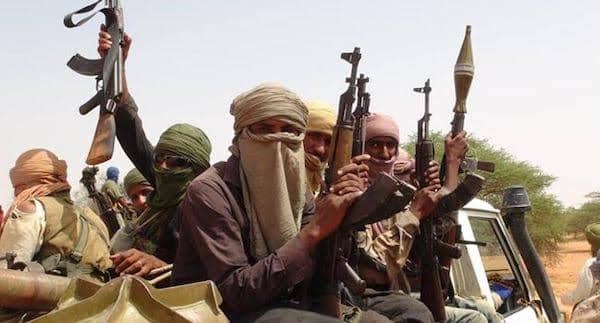
Uknown shooters descended on the Butura Community of Plateau State and killed two village heads and two other residents.

Batura is a community in Kulias village in the Bokko Local Government Area of the state.

It was gathered that the tragic incident happened around 9:00 pm on Sunday.

The victims were Mataru Mahwash, 67 (village head), Mallan Amalam, 50 (village head), Ishaya Fompun, 50 and Daniel Ishaya, 22.

One of the residents, Josiah, who reported to have lost his brother, told journalists that the attackers were in dozens.

“Dozens of armed men stormed our community at about 9:00 pm, last night. As a result, four persons including my elder brother, Mr. Mataru Mahwash were killed.

“Upon hearing the heavy gunfire by the attackers, everyone including myself scampered for safety in the nearby bushes until the shootings were over. On our return, I found my elder brother and three others in a pool of blood.

“Our people are in serious state of mourning. They are uncertain of what would befall them next,” he said.

The Police Public Relations Officer (PPRO) of the Plateau State Command, Alabo Alfred, confirmed the attack to journalists in the state.

Should we be silent on discussing Maulud?

By Abubakar Suleiman

Many topics that have been generating rancour or heated arguments on Facebook or any other platform today have been discussed or debated exhaustively in the past. Lately, even if I have an opinion about a topic today, I do tarry a while before I write because I have this strong feeling that someone must have written virtually all the things I have in mind. This gives me the pleasure of saving myself the stress of writing; hence I mainly read opinions and sometimes laugh.

One such controversial topic raising dust today is the celebration of Mauludun Nabiyy (S.A.W). Some respected writers, ‘elders’ and creative minds took exceptions in discussing maulud and all it entails, particularly on social media. Maybe they find it counter-productive or think it won’t change anything because people will keep celebrating maulud and embracing anything that comes with it while others won’t celebrate it. Some would say regurgitating this topic or argument year in and year out is needless. I beg to disagree.

This logic or take, in my opinion, is flawed. The fact that some people will keep celebrating Maulud while others won’t should not make us shy away from discussing its legality, Islamically or otherwise, whenever the need arises. A replica of this kind of skewed opinion is Christians should not call Muslims to Christianity and vice-versa hence let’s just concentrate on politics and economy. Impliedly, da’wah is needless.

For sure, people will keep being Christians, Muslims, Atheists etc., and divisions in the understanding of religious diktats will continue till the end of time, but that shouldn’t hinder a sincere call or an honest critique of a creed, ideology or religion. It should also not stop us from enjoining people to do what we believe is good or the truth and forbid what we believe is bad or falsehood based on our understanding. I think discussions on religious matters, and even other matters, should be done with the utmost wisdom, refined words, and sincerity of purpose, and they should also be devoid of ad hominem.

Prophet Muhammad (SAW) was reported to have said: “Whosoever of you sees an evil, let him change it with his hands; and if he is not able to do so then [let him change it] with his tongue; and if he is not able to do so, then with his heart – and that is the weakest of faith.” Yes, one should choose his audience wisely so as to avoid unnecessary ruckus, and one should know when, where and how to say the truth and even who to tell the truth. Thus, one must not force his/her ideology or creed down someone’s throat.

In his book, “Think Again,” Adam Grant espoused that “our opinions can become so sacred that we grow hostile to the mere thought of being wrong, and the totalitarian ego leaps in to silence counterarguments, squash contrary evidence, and close the door on learning.” In another place in the book, he informed us that, “wisdom is also recognizing that we are wrong more often than we’d like to admit, and the more we deny it, the deeper the hole we dig for ourselves.”

Therefore, we should be open to discussions around some ideologies we hold so dear and be willing to stomach an honest critique of these ideologies, especially when these discussions are premised on mutual respect, wisdom and verifiable evidence or facts. Overall, we learn more from these kinds of discussions and/or dispositions. But insulting or talking down on people with a contrary understanding of our ‘cherished ideology’ will only yield a fertile ground for extreme tendencies, and this will further push us away from objective truth.

Unlike political or economic views, you don’t just seek religious knowledge; you practise it and call people to it while you embrace patience in doing so. Consequently, it is not an effort in futility to engage people in such discussions. And what does one gain after discussing all the political or economic issues on earth and ending up in hell for going against a religious teaching rooted in Islamic primary sources of knowledge.

We seem to underestimate the power of information put out on social media platforms and the influence it carries. We have gullible people who join these platforms, and they could be lured into any kind of creed or sect. In fact, these days, more people get radicalised or lured into a sect through social media than the masjids. On these platforms, many people have had discussions with some people, and such has led those people to denounce or accept their religion, maulud etc. However, we can peacefully stay away from toxic discussions after putting out our understanding.

Therefore, it is not about proving to be more intelligent than anyone who holds a contrary religious view or trying to be the gatekeepers of heaven or hell. It goes beyond that. It is about discussing our differences for a good understanding of our religion. Let us simply embrace sincerity and decorum in our discussions while we stay away from toxic people who aren’t ready for honest and open discussions.

Interestingly, opinions or ideas could change due to contexts or circumstances. Over time, people learn from exposure, old age or new knowledge. We may find ourselves opposing some views or ideas we hold so dear today. Conversely, we may be less hostile to contrary views when we continue to seek knowledge or begin to rethink our stands on many issues in the future.

May Allah show us the truth and give us the conviction to embrace it, and may He also show falsehood and give us the courage to turn away from it.

Abubakar Suleiman writes from Kaduna and be reached via abusuleiman06@yahoo.com.

Nigerian lady emerges second in Dubai Qur’anic competition

By Ahmad Deedat Zakari

A Nigerian lady, Aisha Abubakar Hassan, has emerged as the second-position winner in the just concluded sixth edition of the Sheikha Fatima Bint Mubarak Holy Qur’an Competition for women in Dubai. 

Fifty countries participated in the competition that was held from the 1st to the 7th of October at the Dubai Culture and Science Society.

Aindati Sisi from Senegal came first, while Aisha Abubakar Hassan from Nigeria and Shima Anfal Tabani from Algeria took the second and third places, respectively.

According to the organisers, the participants were women Quran memorisers with mastery of tajweed. They also have to be under 25 years old. 

The first position-winner received 250,000 dirhams; the second got 200,000 dirhams, and the third 150000 dirhams. Other participants who performed brilliantly in the competition were also handsomely rewarded.  

The Dubai International Holy Qur’an Award, DIHQA, hosts and organises the event for women worldwide annually.

NDLEA intercepts 2.4 million tramadol pills at Lagos airport

By Ahmad Deedat Zakari

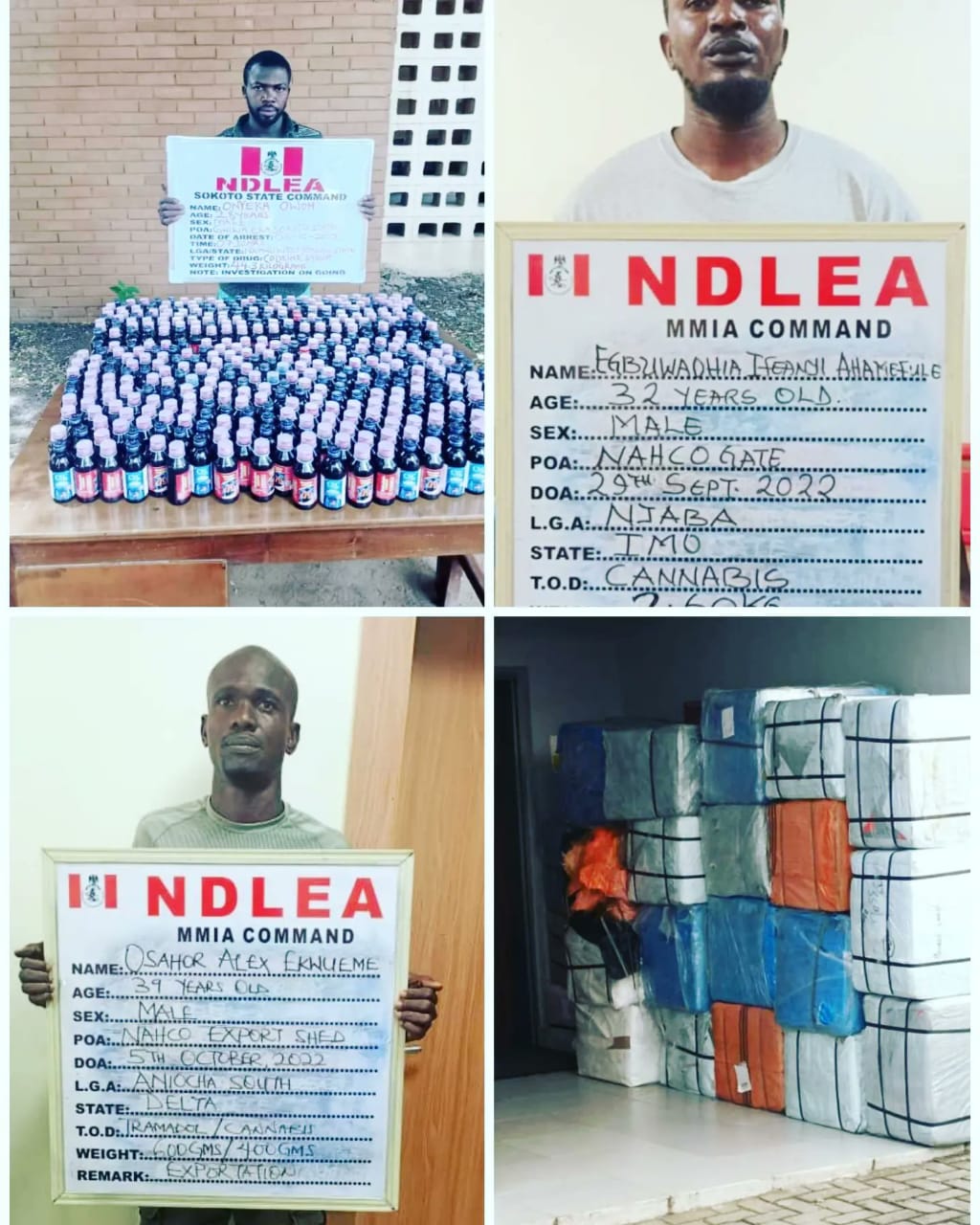
The National Drug Law Enforcement Agency, NDLEA, disclosed that it has intercepted 2.4 million tramadol pills from Pakistan at the Murtala Muhammad International Airport in Lagos

NDLEA Spokesperson, Femi Babafemi, announced the seizure of the drug in a statement released on Sunday, October 9, 2022.

According to the spokesperson, the drugs were intercepted by the agency’s operatives at the Murtala Muhammad International Airport on Friday

He also said the drug weighs 2,356kg and the value is estimated to be 1.4 billion naira

“Desperate attempts by the tramadol drug cartel to smuggle into Nigeria over two million four hundred and sixty-five thousand (2, 465, 000) tablets of the pharmaceutical opioid in 225mg and 250mg, weighing two thousand, three hundred and fifty six kilograms (2,356kgs) with an estimated street value of one billion, forty million naira (N1, 040, 000, 000) through the Murtala Muhammed International Airport, MMIA, Ikeja Lagos have been foiled by operatives of the National Drug Law Enforcement Agency, (NDLEA),” the statement reads.

The NDLEA Chairman, Buba Marwa, commended the officers for their great works and advised them to remain “steadfast, resolute and unrelenting until the last gram of illicit drugs is taken away from the streets of Nigeria”

An open letter to the Chairman of Kumbotso local government

By Musa Idris Panshekara

Dear Sir,

I am Musa Idris, an ex-student of Government Secondary School (GSS) Panshekara.

Mr Chairman, news has been spreading like wildfire all over the town that you are planning to sell some parts of GSS Panshekara or build staff quarters on the land.

Mr Chairman, this news became a nightmare not only to the ex-students or the students but to the entire people of Panshekara.

Mr Chairman, I want to let you know that the school bear its name “GSS Panshekara” because it is located there, under Kumbotso local government. The people benefitting from it are not limited to the people of Panshekara or Kumbotso local government. Still, the school accommodates some students from some parts of Madobi and Gwale LGAs.

Mr Chairman, with your plan of selling or building staff quarters in the land, do you know the school has two sections, one in the morning and the other in the evening, senior and junior classes, respectively? This is happening not for style but because of the insufficient classes to accommodate all the students contemporaneously.

Moreover, the school does not have a friendly and conducive learning atmosphere, despite the overpopulation of students per class. As old as the school is, it has no more than four classes with sufficient seats for the students, not to mention the worn-out ceilings and floors which even you, you can not rear your animals inside one of it. The problems are not limited to that – some classes were previously used but are no longer in use now due to the lack of funds for upkeeping them. Nonetheless, about eight incompleted classes have been without cemented floors for over a decade.

Mr Chairman, there are countless problems the school has: liable scientific laboratory, biological garden, etcetera.

Therefore, no one asks you (if so) to rehabilitate the school from your pocket but the local government treasury. If there is no sufficient amount in the local government treasury, you can refer it to the state government. If the state cannot grant, nobody forces you to intervene in rehabilitation.

Mr Chairman, selling this land for the rehabilitation of the school is inept and inappropriate; moreover, it is a lack of priority if you think of building staff quarters on the land. There are previous chairmen before you who left without glancing at the school. So you are not the first and will not be the last. If you could/would not give your contribution, you can leave the school as it is.

In conclusion, Mr Chairman, do not be deceived by all these people parading behind you like a queen bee. They are parasites who would only suck your blood and throw you away. They will not be with you when you leave your position or with you when you go to your grave.

Mr Chairman, I urge you not to consider yourself or people like you. Instead, please consider the vulnerable children of poor masses coming in the 20, 30, 40 years, whose parents can not afford to take their children to private schools.

Mr Chairman, remember that Boko Haram use weapons to kill students, and teachers and destroy schools brutally. So please, you should not use your office to destroy our mother school in the name of reviving the school.

Yours,

Musa Idris Panshekara