
By Nusaiba Ibrahim Na’abba
It is indeed sickening and quite unfortunate to have been part of the Nigerians alive to witness the gruesome killing of Harira and her children and two others in Anambra State. We haven’t even been relieved of tensions that arose from the derogatory remarks on our beloved Rasul SAW. And amid these tensions, another heartless fellow has murdered his niece in Kano – a similar event as Hanifa’s.
Undoubtedly, these seven years since the administration of President Muhammadu Buhari kicked off have been the most unprecedented for many Nigerians. Stressful periods have made killings assume a state of normalcy, especially in the Northern part of the country, and many horrendous activities now don’t even get into the spotlight.
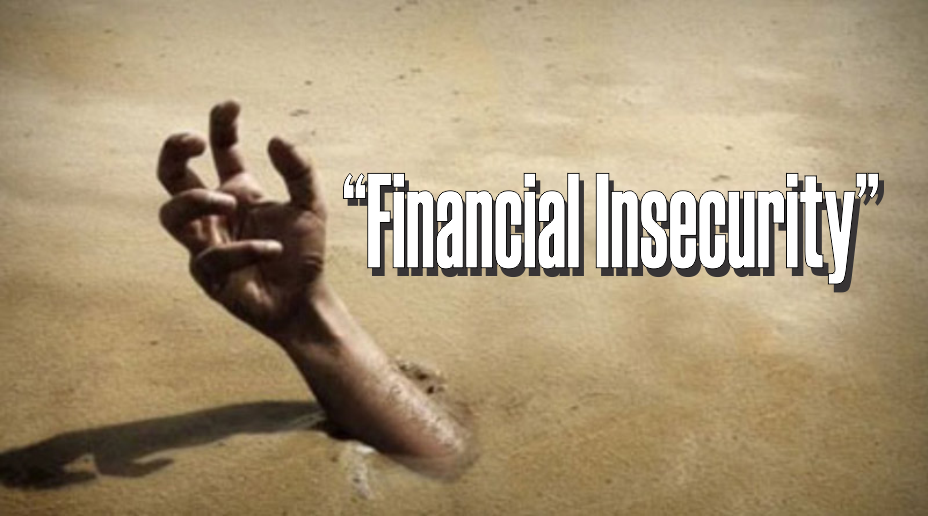
While we continue to deal with post traumas after witnessing more than enough horrifying stories of senseless murders and killings of innocent lives, we continue to fiercely battle financial uncertainties from different angles, coming in distinct shapes and sizes. There has never been a time when we have found ourselves at risk of losing our earnings. From a series of unfounded mobile messages to mysterious calls and emails from strangers, we have been bombarded with multiple ‘Yahoo! or 419’ daily. We think one step to securing our earnings while these ‘intellectuals’ are already a hundred miles ahead. Such is the cruel world we live in a while our leaders wander in a desultory fashion.
To begin with, are the ‘Yahoo intellectuals’. In this context, they have proven beyond any iota of doubt that they are efficient to prosper and have almost always never missed their targets by successfully outsmarting technologies our private financial institutions, alias banks, breaching secured accounts of innocent people in order thieve their hard-earned money – only God knows the kind of cumbersome efforts put in to get them. They are perfectly immune to any countermeasure provided by these banks. Only a few of them are being traced.
The height of this situation will not puzzle you until you hear a bank staff declaring that it is not the bank’s fault but ‘yours’ – the customers’ fault – who exposed your bank details to a ‘Yahoo Pro’ unknowingly. Ideally, banks are supposed to be substitutes for traditional means of saving assets, but the current situation shows that they’re becoming dangerous institutions. Filing a complaint is intensely laborious as your insignificant earnings do not matter so much to the banks. You’d spend hours in a queue to face your worst fear – they can do nothing to help you.
In a recent report published by FJI Nigeria, a student’s $2000 was stuck and only released after their report. Similarly, just on May 8, 2022, the same FJI Nigeria published how a nurse based in Ogun State lost her N95,000 after her ATM card got stuck in the ATM and after her communication with one of the GT bank’s staff. Millions of peoples’ earnings have continued to slip away through untraceable means as banks claim or through multiple deductions from the banks. In some southern states, you could be robbed with a gun when withdrawing cash from an ATM and others adopt POS machines for these fraudulent activities.
There is also another set of dubious humans that use religious covers to decorate their Yahoo strategies. For example, you’d receive calls from unknown fellows claiming to be in good spirits, giving references from the Holy Qur’an and directing you to a strange place where they want you to keep the money for them, and they help you in return. Sounds hilarious, though, but it still happens. Another way they opt for is by sending random text messages about a critical condition of their family member, and they’d threaten you to send a stipulated amount to them or fear the unthinkable happening to you.
Let me highlight that the current wave of rancorous political exchanges in the primary elections is also enshrouded by financial insecurity. We have all vividly seen the disparity in the offers presented to ‘delegates’; it all boils down to ‘money’. Of course, it unveils how deep-seated corruption is in our country, but it also paves the way for us to see that not only the ruled are financially unstable. As the delegates go for the highest bidder, so do the aspirants try to bid the highest amount or withdraw from the race and embrace the likely winner for basically financial and political advantages. For the aspirants, some are very calculative to either invest where they’ll win or save what they’ve pocketed.
I wouldn’t do justice to this discourse without reiterating the kidnap for ransom mishap that continues to flourish without any sign of slowing down. The ‘business’ has now reached a stage of maturity such that Nigerians are challenged to save for unwary expectations indirectly. You may not be directly involved, but your support would be needed when an outrageous amount of money is demanded from a person you know.
The dangerous convergence of economic hardship, lack of political will, and financial insecurity has placed Nigerians grievously. The damage done to widows, orphans, families, workers and students is unimaginable. Assets aren’t safe at home and are neither safe at the banks. And with the continuous devaluation of the Nigerian currency, the means of our sustenance has become an uneasy endeavour.
For now, the government is overwhelmed with so much politicking – divergences, convergences and calculations are taking a toll on virtually everything. So, since the major financial institutions that deal with the exchange of money are private, and the government has proven its incompetency to bring solace to our impediments being at the receiving end, we can offer solid suggestions on how best we can be treated with dignity by these banks.
Securing our dignity and finance at this point means banks must make a move to create codes that we can use to halt the operation of our accounts when necessary. It’s distressing how they have created codes for transfers and recharge card purchases without prioritising securing our accounts. This can be a gigantic step to counter our susceptibility to fraudsters as they are fully aware that their malicious intentions can only be crushed when the damage is done.
Then, it would be worthwhile for the government to equip its legal system to challenge these private financial institutions to ensure sanity in their operations. I firmly believe they aren’t above the law, and nobody is.
Nusaiba Ibrahim Na’abba is a master’s student from the Department of Mass Communication, BUK. She is a freelance writer and researcher. She can be reached via nusaibaibrahim66@gmail.com.