By Sabiu Abdullahi
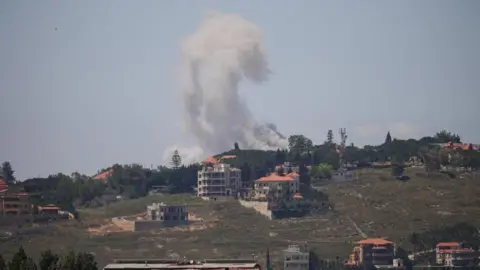
An Israeli air strike in southern Lebanon has killed Brigadier General Wissam Sabra and two other senior Lebanese military personnel, amid growing regional tensions linked to the ongoing conflict involving Israel, the United States and Iran.
According to the Lebanese military, Sabra was travelling in a convoy on a road between Kfar Tebnit and Khardali when the strike occurred. The two other victims were identified as Captain Elie Khoury and soldier Hussein Ghozal.
The Lebanese presidency condemned the attack, describing it as “a blatant violation” of the country’s sovereignty. President Joseph Aoun said the strike was “aimed at thwarting all efforts to reach a solution”, while Prime Minister Nawaf Salam called it “a heinous crime and an attack on Lebanon and all Lebanese people”.
The Israeli military later acknowledged carrying out the attack and said the vehicle involved was “moving suspiciously”. It added that the incident remains under review.
The killing of Sabra, a 54-year-old father of three, is one of the deadliest incidents involving the Lebanese army in recent years. The attack comes at a sensitive time as diplomatic efforts continue to seek an agreement involving the United States, Iran, Hezbollah, Lebanon and Israel.
Jordan also condemned the strike and called for an immediate halt to Israeli military operations in Lebanon. A spokesperson for Jordan’s Foreign Ministry, Fouad Majali, described the attack on the Lebanese military convoy as “a blatant violation of the sovereignty, security, and stability” of Lebanon.
Majali extended condolences to the Lebanese government and the families of those killed. He also reaffirmed Amman’s “unwavering support” for Lebanon.
According to Jordan’s official Petra news agency, Majali “also stressed Jordan’s support for the Lebanese government’s efforts to assert its sovereignty over all Lebanese territory, reactivate its national institutions, and ensure that weapons are solely in the hands of the state”.
Meanwhile, Pakistan’s Interior Minister Mohsin Naqvi reportedly delivered what was described as an “important message” from Islamabad to Iran’s Supreme Leader Mojtaba Khomeini. He also urged an end to the war involving Iran, Israel and the United States.
Elsewhere, demonstrations in support of Palestinians took place in several countries. Hundreds of people marched through Manchester in the United Kingdom carrying Palestinian flags and demanding that the British government withdraw support for Israel. Protesters displayed a banner reading “End the Israeli Occupation”.
The march coincided with the 59th anniversary of the 1967 Naksa, when Israel occupied the West Bank, East Jerusalem and the Gaza Strip.
In Tunisia, demonstrators gathered in the city of Bizerte to protest Israel’s military campaign in Gaza. Participants placed symbolic coffins marked with red paint in a public square to highlight the humanitarian situation in the territory.
In Scotland, activists from the group Red Card Glasgow held a vigil outside Hampden Park Stadium to honour Palestinian footballers killed during the conflict. Participants placed wreaths, football shirts and Palestinian scarves at the venue.
The latest developments highlight continuing instability across the region as diplomatic efforts to ease tensions face significant challenges.