
By Kamal Buba Danladi
According to the Oxford Dictionary, Urology, also known as genitourinary surgery, is the branch of medicine that focuses on surgical and medical diseases of the urinary tract and the male reproductive organs. Organs under the domain of urology include the kidneys, ureters, adrenal glands, urinary bladder, urethra and the male reproductive system.
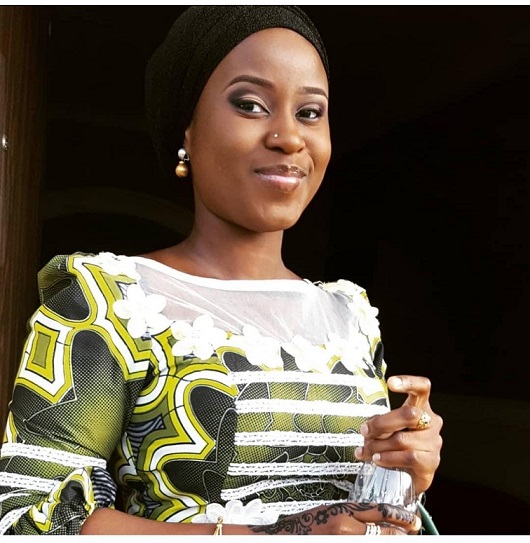
On the 19th of April 2023, Dr Amina Buba became the youngest urologic surgeon in Nigeria, the 7th female urologist in our country and the first Muslim woman in Nigeria to bear that title. Amina truly has shattered the glass ceiling! She is an inspiration to young women all around the world that anything is possible.
Amina was born in Lagos and attended St. Jude’s private School in Festac Town, Lagos. Then she started her secondary school at Federal Government College, Kwali, Abuja, before she transferred to Federal Government Girls College, Bwari, Abuja. After completing her junior secondary school there, she moved to El-Amin International School, Minna, where she completed her senior secondary school and then proceeded to her A-levels at Irwin College Leicester, England.
Amina also studied medicine at Brighton & Sussex Medical School, Brighton, England and then did her Master’s in Tropical Medicine & International Health at the Prestigious London School of Hygiene and Tropical Medicine, where she gained an MSc. as well as a diploma in Tropical Medicine and Hygiene. Shen then did her surgical residency in Abuja, Nigeria, which she recently completed.
When asked about why she chose this particular field, Amina says that she has always wanted to be a doctor, and when she qualified as a doctor, she knew that she wanted to be a surgeon but wasn’t sure of the surgical speciality. She began her residency programme with a posting in urology, and she fell in love with urology instantly because it is such a diverse surgical speciality, and you get to operate on the entire urinary tract as well as the male genital tract. There are also so many facets to it; there are paediatric urology, reconstructive urology, and upper and lower tract surgeries.
She further says that there are also plenty of opportunities to engage in both open and minimally invasive surgery, that is, laparoscopic, robotic and endoscopic surgeries. She was also drawn to it because, as a junior resident, she had 5 amazing consultants who, despite the strains of an under-resourced working environment, ensured that their patients got the absolute best.
Another interesting thing about the field, according to her, is that most urology patients have fixable problems and so it is really satisfying to identify a pathology in a patient, operate on it and discharge a happy, healed patient. She also added that urology is a fantastic speciality with so much room for growth.
She gave thanks to her mentors because they have been encouraging, and says she has had excellent teachers. Speaking about some of the challenges she faced, she says that they were there but were minimal and mainly from her peers questioning her decision to specialize in urology. This also prompted her to carry out a questionnaire-based survey on patients’ perceptions of having a female urologist. And interestingly, the majority of patients have absolutely no qualms at all.
In her practice, she has seen that even the few patients who seem sceptical tend to relax once she starts talking to them and establishes a rapport. She also says that she has had patients who specifically only want to see her, and she also added that when people are sick, they just want a good doctor and don’t care about their gender. She jokingly often asks people who question a decision to specialize in a primarily male-dominated area; “what of the men in gynaecology”. They only see women, but at least as a urologic surgeon, she sees both male and female patients. Another challenge she faced in training which she says is not peculiar to her, is the lack of facilities in Nigerian Teaching Hospitals. Our government really ought to do better.
And when asked about her family’s view on it she says that they were extremely supportive, and she really would not have been here if she didn’t have such supportive parents. Amina also says that her two elder sisters have been supportive, and they cheer her on in the process because the training is strenuous, emotionally and physically demanding and without her family’s support, it would have been impossible.
She also states that they have gone through the entire journey with her, and she appreciates them tremendously. She adds that she had some really supportive friends and bosses who have always cheered her on, and finally, her advice to young girls, especially in Northern Nigeria, is they should believe in themselves and strive for excellence, don’t settle for mediocrity. Pray hard, establish a good relationship with God and work hard.
Amina also has this to say “Pray like you are not working and work like you are not praying”. The world is our oyster, and there are so many glass ceilings waiting to be shattered! She concludes by thanking Allah for the mercies he has shown to her and by saying if she can do it, then anybody can. She hopes that her achievement will inspire young ladies to realize that there is so much that needs to be done.
Kamal is a student of Mass Communication from Skyline University Nigeria. He writes from Kano, Nigeria.