
By Zayyad I. Muhammad
Nigeria’s solid minerals sector presents a bittersweet story for the country and its people, particularly in Northern Nigeria.
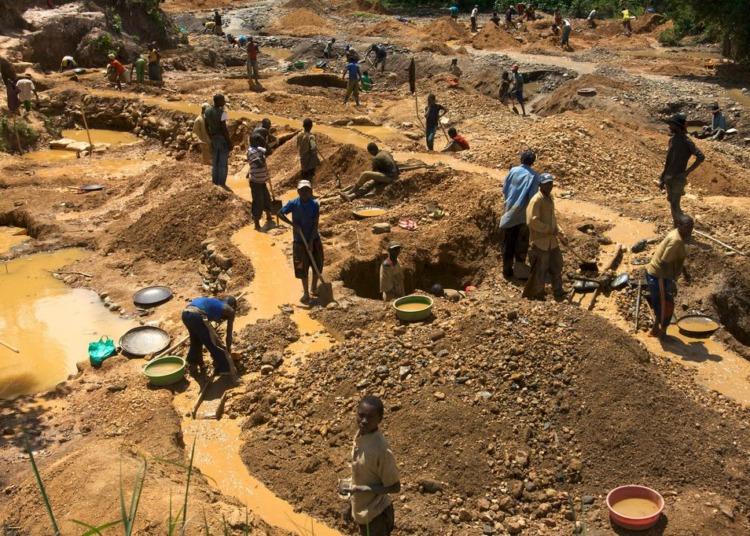
Mining has created wealth, jobs and economic opportunities for individuals and communities. In mineral-rich areas, it has provided livelihoods and opened new sources of income. At the same time, illegal mining activities have contributed to insecurity, environmental degradation, exploitation and social disorder in some communities.
Since 2023, Nigeria’s solid minerals sector has undergone significant reforms to modernise the industry, strengthen regulation and enforcement, attract investment, and shift the country away from exporting raw minerals toward local processing and value addition.
There has also been growing interest in critical minerals, particularly lithium, alongside efforts to formalise artisanal mining and improve government revenue from the sector.
Some reports say revenue from the solid minerals sector rose from about ₦16 billion in 2023 to ₦38 billion in 2024, and from approximately ₦68.1 billion to over ₦70 billion in 2025.
The niger state tragedy in which 37 young lives were lost is being linked to illegal mining, official negligence and unprofessionalism by some Civil Defence officers
Illegal mining is the exploration, extraction, processing or trading of mineral resources without the licences, permits or regulatory approvals required by law, or in violation of the conditions governing such activities.
Nigeria has an established legal and regulatory framework for mining, primarily under the Nigerian Minerals and Mining Act, 2007, along with subsequent legislation affecting the sector. The Nigeria Tax Act 2025, which took effect on January 1, 2026, also introduced changes affecting mining taxation and mineral royalties.
Therefore, not every person found around a mining site is necessarily an illegal miner. The important questions include: Who holds the mining title? Is the operation properly licensed? Are the miners operating within the approved area and under the approved conditions? Are the required royalties, taxes and fees being paid? And are environmental and safety requirements being observed?
Despite improvements in regulation, modernisation and enforcement, illegal mining, insecurity and environmental degradation remain interconnected challenges in Nigeria’s solid minerals sector.
The problem is not simply the absence of laws. Nigeria already has extensive mining legislation and regulatory institutions. Rather, poverty, unemployment, weak enforcement capacity, informal economic activity, insecurity and limited government presence in some remote areas can create conditions in which illegal mining thrives.
This is particularly important in rural communities where artisanal mining may provide livelihoods for families with few alternative sources of income.
Nigeria’s challenge, therefore, is not merely to stop illegal mining, but to bring legitimate artisanal miners into the formal economy, enforce the law against criminal mining operations, protect host communities and the environment, improve security around mining areas, and ensure that Nigeria’s mineral wealth translates into sustainable development.
Nigeria is richly endowed with solid minerals. The ultimate objective should be to ensure that the wealth beneath the ground becomes prosperity above the ground, legally, safely and sustainably.
Zayyad I. Muhammad writes from Abuja via zaymohd@yahoo.com.