By Uzair Adam
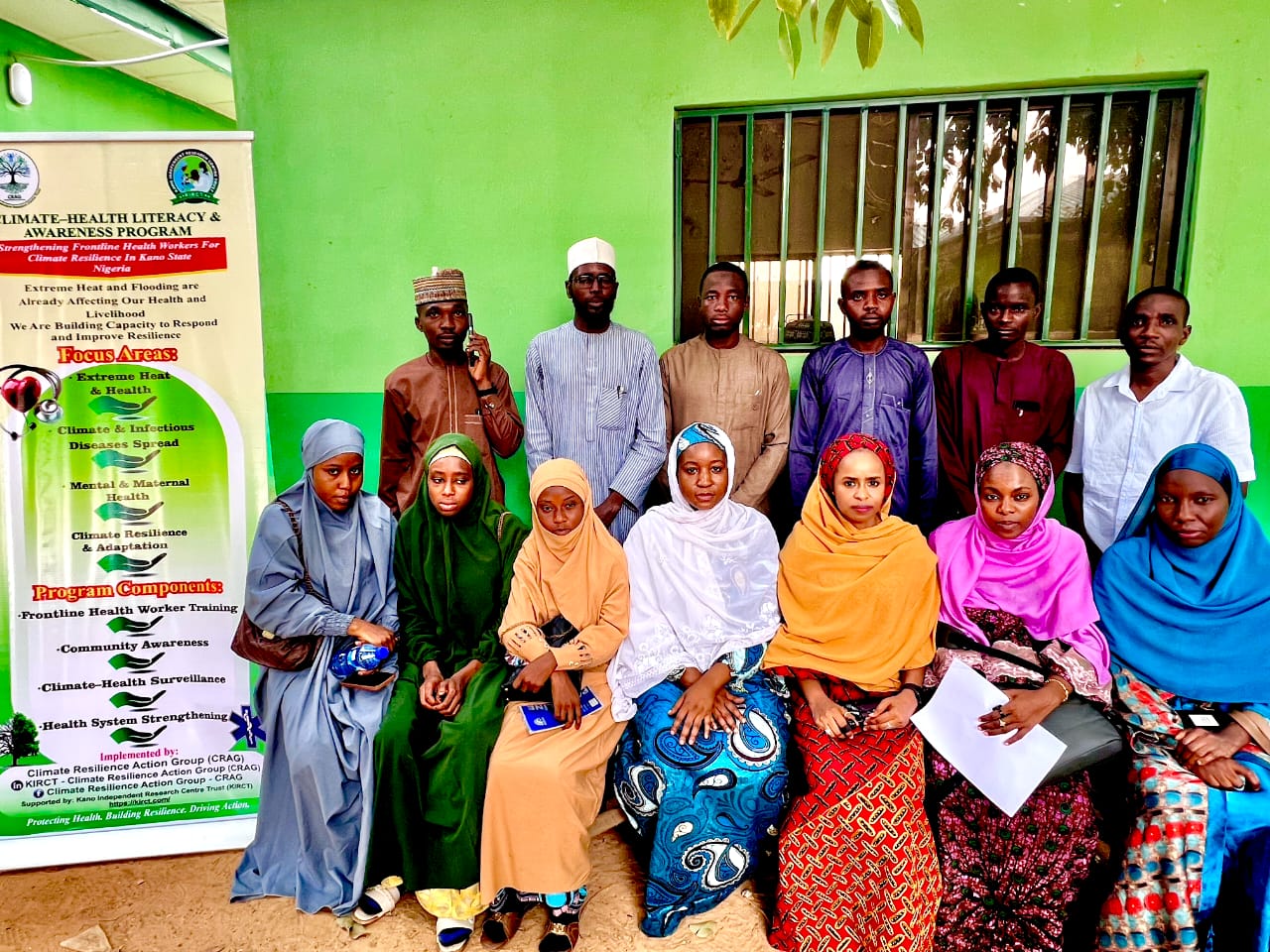
Frontline health workers in Tofa Local Government Area of Kano State have been trained on how to respond to rising cases of heat-related illnesses, with particular focus on protecting pregnant women and other vulnerable groups from the effects of extreme heat.
The intervention comes amid growing concern over rising temperatures across Kano State and northern Nigeria, with health experts warning that extreme heat is becoming a serious public health challenge.
They note that pregnant women, children, the elderly and people living with chronic illnesses such as hypertension and diabetes are particularly vulnerable to heat-related complications.
The training, organised by the Climate Resilience Action Group (CRAG) with support from the Kano Independent Research Centre Trust (KIRCT), was held at Tofa Comprehensive Health Centre.
Speaking during the programme, the team lead of CRAG, Dr. Bashir Isa Waziri, said the initiative was designed to equip frontline health workers with the knowledge and skills needed to respond to climate-sensitive diseases, especially during periods of extreme heat.
He explained that primary healthcare workers were targeted because they serve as the first point of contact for patients, particularly in rural communities.
“We are trying to empower them with knowledge and skills to recognise climate health risks and climate-sensitive diseases, especially during extreme heat season, and how they can respond appropriately to such conditions,” he said.
Dr. Waziri added that CRAG is also implementing climate awareness programmes in schools, alongside environmental interventions such as tree planting and innovative waste management, to strengthen long-term community resilience.
One of the facilitators, Dr. Maryam Ahmad Said, a Physician Specialist with the Kano Independent Research Centre Trust and member of CRAG, said pregnant women are among the most vulnerable groups affected by extreme heat.
She explained that rising temperatures could lead to serious maternal health complications, including preterm labour, miscarriages, stillbirths and pregnancy-induced hypertension.
“We talked about the effects of extreme heat on vulnerable populations, especially pregnant women, children, elderly people and those with chronic diseases such as sickle cell disease, chronic kidney disease, hypertension and diabetes,” she said.
Dr. Maryam stressed that awareness and health education remain key to preventing heat-related illnesses.
“The most important thing is awareness. People need to know the symptoms of extreme heat on the body, such as excessive sweating, dry mouth and palpitations,” she added.
She advised residents to drink water regularly, wear light and loose clothing, and avoid strenuous activities during peak heat hours, particularly between 12 p.m. and 4 p.m.
Another facilitator, Dr. Aisha Adam Abdullahi, also sensitised participants on climate-related diseases and preventive measures during extreme weather conditions.
One of the participants, Muhammad Naziru Adamu, described the training as timely, saying health workers had long needed capacity building on climate-health issues.
He added that participants would share the knowledge gained with colleagues and members of the community to improve awareness of heat-related health risks.
The programme also featured a tree-planting campaign at Government Girls Arabic Senior Secondary School, Tofa, where selected students were introduced as “climate ambassadors” responsible for nurturing and protecting the trees.
The Vice Principal Administration of the school, Ahmad Ibrahim Ahmad, commended CRAG for selecting the school for the intervention, saying it would improve the learning environment.
He pledged the school’s commitment to ensuring proper care of the trees planted during the campaign.
CRAG Trains Kano Health Workers on Risks of Extreme Heat to Pregnant Women, Vulnerable Groups

ByAdmin
22 May 2026