
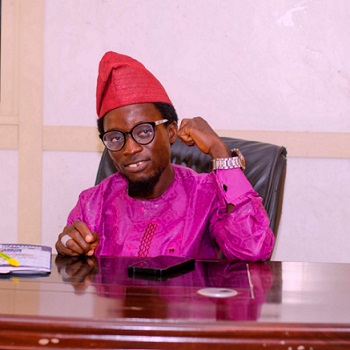
By Iranloye Safiu Taiye
Nigeria became an independent State on 1st October 1960 from her former British colonial masters, which ushered Nigeria to the comity of a sovereign state and membership of the United Nations (UN) after decades of British colonial administration officially came to an end (1900 – 1960). On the eve of independence, our nationalists and politicians were mandated to administer Nigeria after rigorous agitations, struggles, and movements by our nationalists, who fought passionately to attain self-rule and independence. It was a memorable period when millions of Nigerian citizens, at home and in the diaspora, troops out with Nigerian flags to celebrate and jubilate the end of the British colonial rule on our father’s land.
Nigeria is a heterogeneous and multiethnic state with multifaceted socio-economic and political backgrounds. These invariably made Nigeria a unique pluralistic State with more than 450 ethnic nationalities. Despite the diverse culture, religions, customs, languages, social beliefs, and norms within Nigeria’s setting, we’ve managed to dwell together even in the face of our glaring diversities, and this is one of our greatest achievements decades after the independence, notwithstanding the several events that have posed challenges to our national unity. Our country is one of the most blessed states globally, occasioned by the abundant natural endowments deposited across the States of the federation, which had positioned Nigeria better in the comity of nations. Not just that, we’re also blessed with adequate human resources capable of culminating our development. Hence, these human and abundant natural resources can better stimulate sustainable growth in Nigeria than we are currently experiencing.
Paradoxically, the Nigerian quest and cruise to greatness were aborted and short-circuited by the military intervention in Nigeria politics on 15th January 1966 led by Gen. Chukwuma Kaduna Nzeogwu, who later installed Gen. J. T. U Aguyi Ironsi as the first military head of state, according to the prominent argument of many scholars. The 1966 bloody coup de tact and the subsequent counter-coup de tact had been pointed out by many as the rationality behind Nigeria’s development stagnation. Because the military regime that lasted for three decades was driven by a mere parochial desire to rule devoid of prior political training or orientation about governance
Like every other country, Nigeria had hills and challenges that required mechanisation to provoke development and fulfil its obligation to its citizens. However, six decades plus after Nigerian independence, there are some questions critically requiring answers;
A.) Is this the envisioned Nigeria by our nationalists and founding fathers?
B.) Have we been utilising our cultural plurality and resources to catalyse the State of our dream?
C.) Despite these enormous endorsements, can Nigeria even compete with the countries aboard with little endowment compared to Nigeria?
Nay! The Nigerian vision and enormous resources had been ill-managed, and we’ve scrapped our national interest to the hand of corruption, nepotism, favouritism, and chauvinism. It’s saddened these challenges have become a phenomenon, very terrifying, cumbersome, and complex because we have failed to implore a holistic approach to proffer an answer to our societal challenges. Hence we pursue individualistic and least regional interests against national interests, which have ejected the spirit of one Nigeria from most citizens. Sadly, this has also metamorphosed and Jingerd the swagger of many separatist movements and self-rule agitations across the Northern and Southern pole of the country. i.e. IPOB in the Southeastern region, Middle-belt in the Northcentral region, and Yoruba Nation in the Southwestern region.
Security which has to be the first duty of every government, has been compromised by the action of terrorists, bandits, kidnappers, armed robbers, ethnic militias, and other criminals everywhere. This horrible event threatened the safety of life and properties of every citizen, regardless of their position or calibre in the state. Therefore, though the actions of our gallant military men, Nigeria police, and other law enforcement agencies cannot be overemphasised, they will be better off if they can empower the service men with better-sophisticated weapons and machinery to curb the insecurity across the nooks and crannies of our country. Therefore, more advanced weapons and ammunition with technical military training are germane now than ever.
The Nigerian economy was known to be enormous and giant before, but currently, the buoyancy of our economy is now a past glory; even Naira is now at the bottom of the global currency index. Diversification of our economy from crude oil dependency must move from a mere paper presentation to reality. The agricultural and manufacturing sector needs serious attention. Recharging this sector is the only remedy to witness a balance of trade, open the door for more investors and open Nigeria’s market to the international community, and change our status of a perpetual importer, if we want our economy to get back on track and compete favourably with other developing and developed countries of the world. Significantly, both the education and health sector needs critical attention and consideration because this is the brain and blood of every state, and the sorry situation of these two sectors is currently condemnable.
Glaringly, Nigeria has been ravaged with internal problems ranging from separatist movements, clamouring for restructuring, intimidations, domination, and masterminding of regional agenda despite the constitution forbidding that. However, the pluralistic situation that has polarised us must be considered when deciding to affect the entire country if we don’t want unnecessary agitation that can further divide us.
In conclusion, I will opine the new regime because of National unity and to curb rising agitation for self-government from different parts of the country. The political parties that won the national election should establish a federal government, not the usual winner-take-all, and douse the growing tension. Optimistically, realising Nigeria’s better tomorrow is achievable and redeemable only if we are ready to admit our differences and substitute our regional, ethnic, religious, and personal agenda for national interests.
Notwithstanding, we must all be ready to partake in national affairs, challenge our leader for accountability, and embrace our national culture devoid of unholy ethnic jingoism when debating national issues.
Iranloye Safiu Taiye (Optimism Mirror) can be reached via iranloye100@gmail.com
Waaah! What a fascinated and insightful submission
Clearly stated
You’re doing a good job, keep it up