
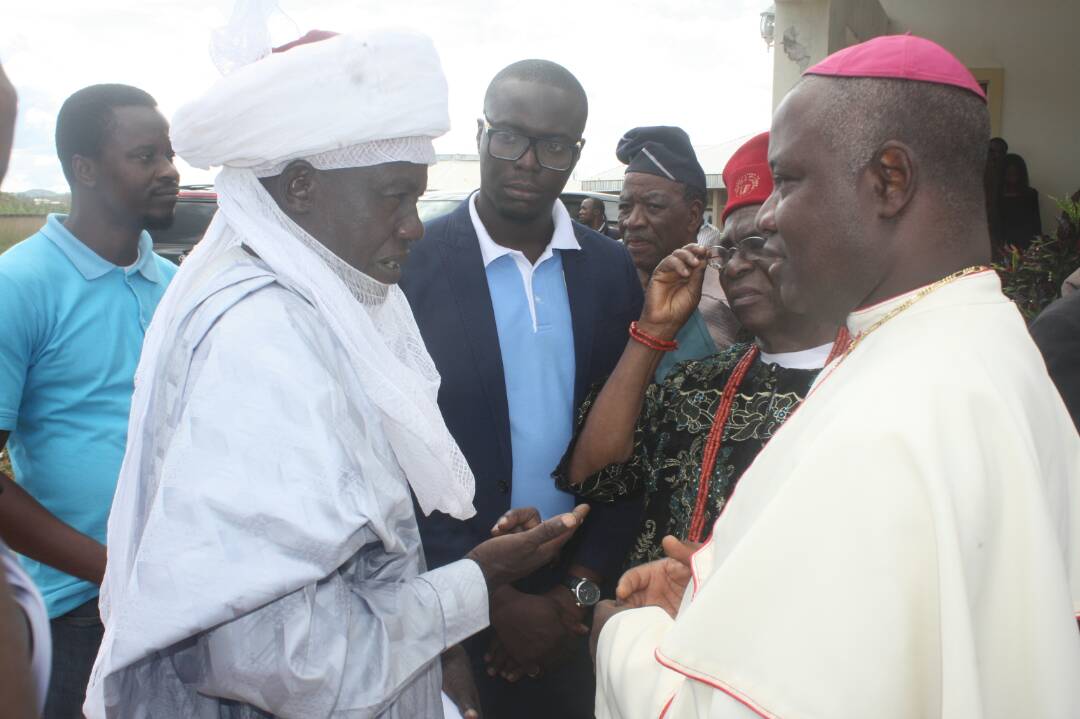
By Malam Aminu Wase
There is something quietly noble about Plateau State, its hills, its history, and above all, its diversity. It is a state woven together by the threads of ethnicity, language, and religion. And yet, that same diversity, which should be our strength, has too often been ignored in political leadership.
For too long, the highest office in Plateau State has been shaped by one-sided considerations. The repeated emergence of Christian Christian governorship tickets, while strategically convenient to some, continues to erode the principle of inclusive governance. It sends a subtle but loud message to a large portion of the population: you are seen, but not enough to be counted.
Muslims in Plateau have consistently shown political maturity. They have supported Christian-led tickets, participated in state-building efforts, and invested their trust in shared progress. From Wase to Kanam, Jos North to Shendam, Mangu, Quanfaan, and beyond, Muslim communities have not withheld their votes, their voices, or their commitment. But politics, like any meaningful relationship, cannot survive on one-sided loyalty. Reciprocity matters.
This is not just about religion; it is about equity. About the right of every community to see itself reflected in the leadership that governs it. Muslims make up a significant segment of Plateau’s population. Their persistent absence from the governorship, or even from serious consideration for the deputyship, is more than a political oversight; it is a moral failure.
What would it cost the political class to offer a Muslim-Christian ticket or vice versa? What would it say to the next generation if Plateau finally decides to lead by example, to choose unity over uniformity, and inclusion over imbalance?
My reflections are not theoretical. I grew up in a Plateau that taught me the value of coexistence. My closest friends in school, from Pilot Central Primary School, Wase, to Government Science College, Wase, through Federal College of Education (Technical), Bichi, in Kano State, and later Ahmadu Bello University, Zaria, were Christians. We laughed together, studied together, and dreamed together. That spirit never left me. It shaped my worldview, grounded in mutual respect and shared humanity. If we could sit side by side in class, why can’t we serve side by side in leadership?
In Wase Local Government, where Christians are a minority, they have not been pushed aside. They have held positions of responsibility, including Deputy Chairman, and benefited from federal appointments, many of which came under the leadership of Rt Hon Ahmed Idris Wase. This is not charity. It is simply fairness in practice.
That example should guide the rest of the state. Leadership is not a reward for numbers alone, but a test of vision. A government that sees only one side of its people cannot fully represent them. And a society that silences its own diversity risks becoming deaf to its own future.
Plateau State belongs to all of us. Let us end the quiet exclusion. Let us begin a new chapter, one in which faith is no longer a political disadvantage and unity is no longer a slogan but a living reality.
It is not too late to do the right thing. But it is urgent.
Malam Aminu Wase is a Political Analyst and Advocate for Good Governance and Youth Inclusion.