
By Abdulhamid Abdullahi Aliyu
Recent signals from Washington suggest a growing impatience with Nigeria’s internal complexities, especially as they relate to religion, security, and political leadership. At the centre of this emerging posture is a troubling tendency to compress Nigeria’s layered crises into externally convenient labels—labels that risk doing more harm than good.
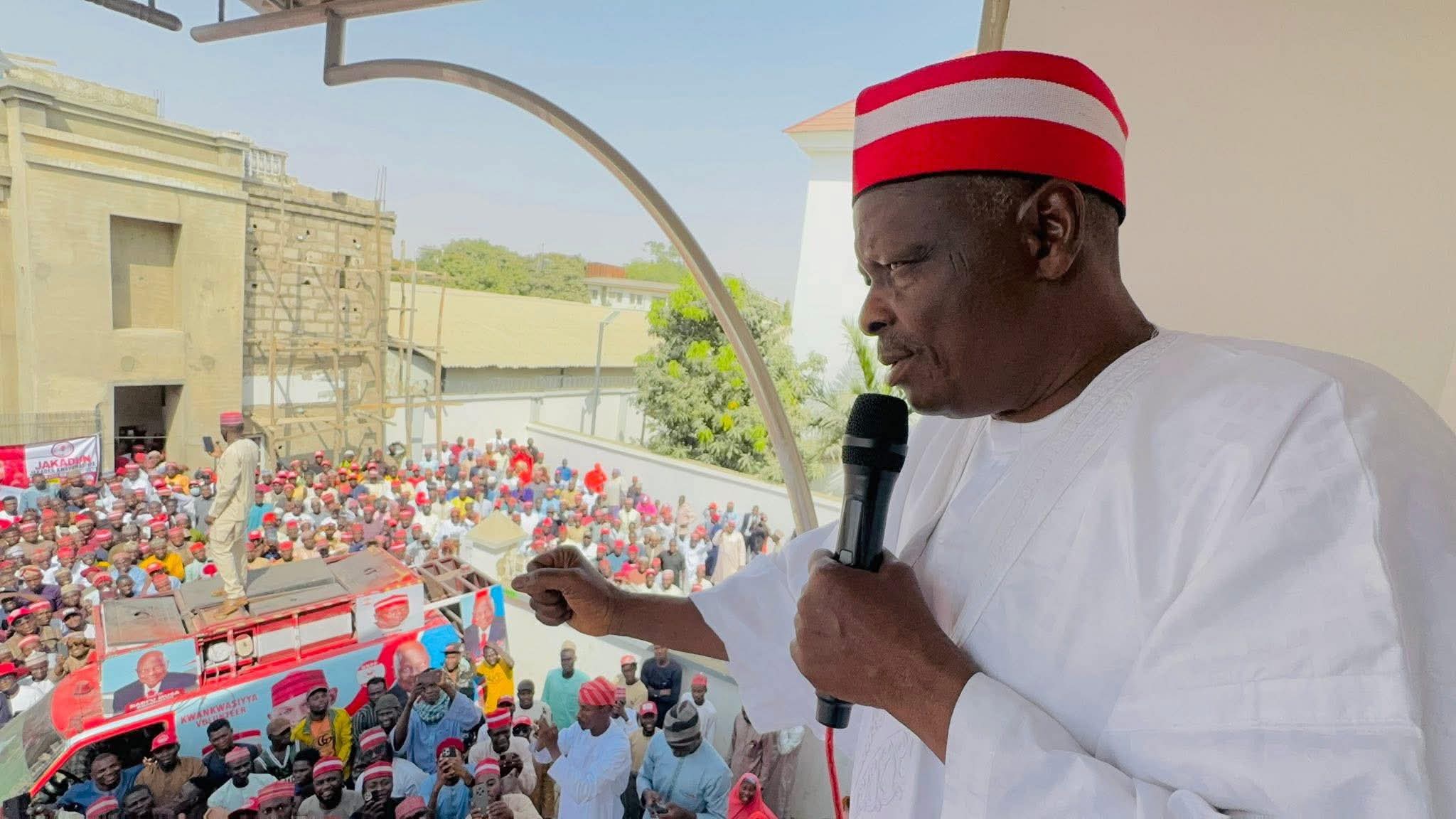
One of the clearest flashpoints in this evolving narrative is the renewed attention to former Kano State governor Rabiu Musa Kwankwaso. His name, along with those of Fulani-affiliated organisations and, by implication, Nigeria’s Muslim political class, has begun to feature in American policy conversations framed around religious freedom and accountability. What appears, at first glance, as principled concern deserves closer scrutiny.
Nigeria’s security breakdown is undeniable. Insurgency, banditry, farmer–herder violence, and organised criminal networks have torn through communities across the country. But these tragedies have never respected religious boundaries. Muslims and Christians, northerners and southerners, rural farmers and urban traders have all paid the price. To reframe this national trauma primarily as a story of religious persecution is to flatten reality into something politically useful but analytically false.
This framing did not emerge organically. It has been cultivated through persistent lobbying, selective reporting, and advocacy-driven briefs circulated within Western policy and faith-based circles. Many of these narratives rely on contested data sets and ideologically motivated interpretations that have been challenged by journalists and security analysts familiar with Nigeria’s terrain. Yet repetition has given them traction.
Under Donald Trump, the United States has shown a greater willingness to convert these narratives into policy instruments. Nigeria’s earlier designation as a “Country of Particular Concern” over alleged religious persecution, and the signals accompanying its reconsideration, reinforced the impression that Washington had settled on a moral script that leaves little room for nuance.
What is especially alarming is how this posture now intersects with Nigeria’s domestic political timeline. The proposal of punitive measures against figures like Kwankwaso—who has no public record of religious extremism—raises uncomfortable questions about motive and timing. Sanctions, visa restrictions, or terror designations do not occur in a vacuum; they shape reputations, constrain political options, and influence electoral perceptions.
Even more dangerous is the elastic use of terms such as “Fulani militia.” The Fulani are not a monolith, nor are they a security organisation. They are a vast, diverse population spread across West and Central Africa, encompassing professionals, farmers, scholars, politicians, and pastoralists. To collapse this diversity into a security label is not accountability—it is ethnic profiling with far-reaching consequences.
Those who defend this approach often argue that allowing clerics or religiously identified politicians into democratic space risks sanctifying power. That concern is not without merit. In plural societies, when political authority borrows the language of divine legitimacy, dissent can be recast as moral deviance. But that argument cuts both ways. External actors who cloak geopolitical interests in moral absolutism risk exporting the very instability they claim to oppose.
Nigeria’s democracy, imperfect as it is, rests on pluralism, negotiation, and the acceptance of politics as a human—rather than sacred—enterprise. When foreign policy instruments treat Nigerian political actors as symbols in a global religious drama, they undermine this fragile equilibrium. Worse still, they embolden local extremists who thrive on polarisation and grievance.
None of this is to argue against international engagement or concern for human rights. On the contrary, Nigeria benefits from cooperation with partners such as the United States in intelligence sharing, capacity building, and counterterrorism. But partnership must be grounded in evidence, context, and restraint—not in sweeping classifications shaped by advocacy pressure or domestic American politics.
If Washington’s objective is stability in West Africa, then the path forward lies in engagement rather than labelling, dialogue rather than designation. Nigeria’s challenges are internal, complex, and deeply rooted. They cannot be solved by reducing political figures to caricatures or entire communities to security threats.
Kwankwaso’s politics, like that of any public figure, should be judged by Nigerians through debate, scrutiny, and the ballot. External political labelling, however well-intentioned, risks distorting that process and deepening divisions within an already strained federation.
In the end, what Nigeria requires from its partners is not moral theatre but sober cooperation. Fairness, evidence, and respect for internal democratic processes remain the only sustainable foundations for international engagement.
Abdulhamid Abdullahi Aliyu is a journalist and syndicate writer based in Abuja.