By Sabiu Abdullahi
Spain has pushed back against pressure from the United States after President Donald Trump warned that Washington could halt trade ties over Madrid’s refusal to support American military strikes on Iran.
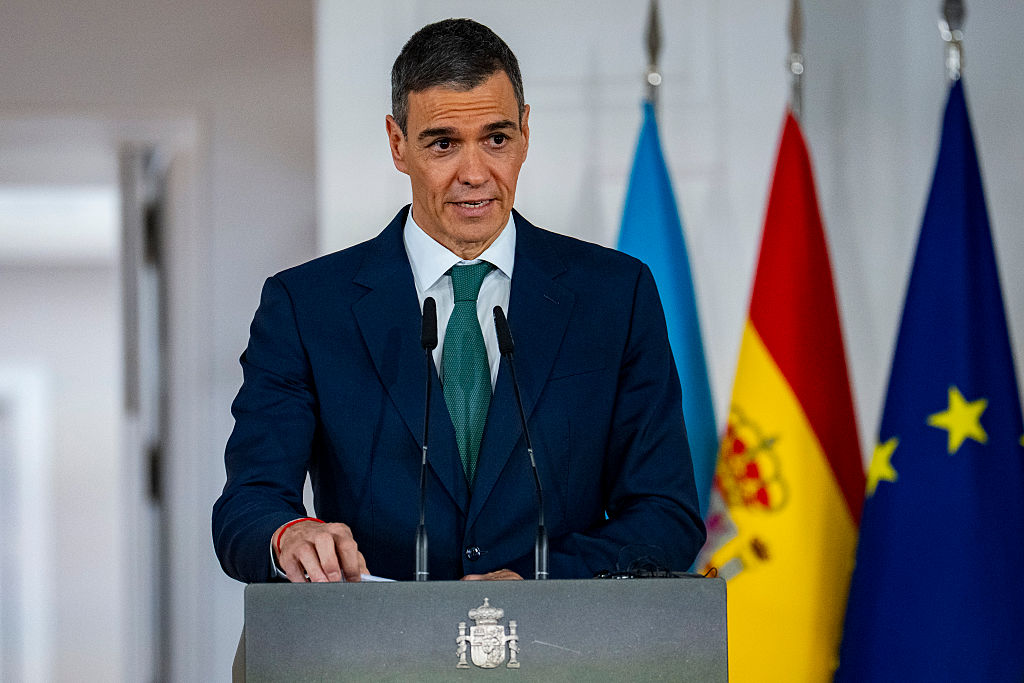
In a national broadcast from the Moncloa Palace, Prime Minister Pedro Sánchez set out his government’s position in clear terms. He told citizens that Spain’s stance could be reduced to three words: no to war. He also stressed that one “illegality” could not be met with another, framing the issue as a matter of principle and international law rather than political rivalry.
Tensions escalated when Spain declined to grant the United States permission to use the shared military bases at Morón and Rota for operations targeting Iran. Spanish authorities described the strikes as unjustified and risky. In response, Trump labelled Spain a “terrible” partner and threatened to cut off all trade between the two countries.
The warning has raised concerns about a key economic partnership. The United States ranks among the top destinations for Spanish exports and remains a major source of investment. Although no formal sanctions or tariffs have been announced, the prospect of trade restrictions has unsettled investors and business leaders.
Spain’s approach aligns with its recent foreign policy record. The government has adopted firm positions on conflicts it believes may violate international law. It has criticised Israel’s actions in Gaza and recognised a Palestinian state ahead of several European Union members. At the same time, Madrid has backed Ukraine in resisting Russia’s invasion, while urging restraint to avoid broader escalation elsewhere.
Spanish officials have also invoked the memory of the 2003 Iraq invasion. That conflict, which Spain supported under a previous administration, sparked widespread protests at home. Many citizens still regard that decision as an error that increased insecurity and carried lasting costs. Leaders now argue that military action can produce consequences that endure well beyond the battlefield.
The dispute unfolds at a delicate time for Spain’s coalition government. It faces political pressure in parliament and allegations of corruption involving individuals close to the leadership. However, recent opinion polls indicate that a significant number of Spaniards hold unfavourable views of Trump. Analysts say this could reduce the domestic fallout from the diplomatic clash.
For Madrid, the confrontation extends beyond Iran or access to military facilities. It touches on Spain’s broader role in global affairs. The government maintains that adherence to peace and international legality reflects national values and long-term interests. Critics counter that challenging the United States may expose the country to economic strain that could affect ordinary citizens.
The next phase depends largely on Washington’s response. If the White House moves from rhetoric to concrete measures, trade relations could face serious disruption. Until then, Spain remains in a tense standoff that tests both its diplomatic principles and its economic stability.