By Sabiu Abdullahi
The Central Bank of Nigeria (CBN) says it has achieved its target of attracting $1bn in monthly diaspora remittances and is now working to raise the figure to $1.5bn by the end of the first half of 2027.
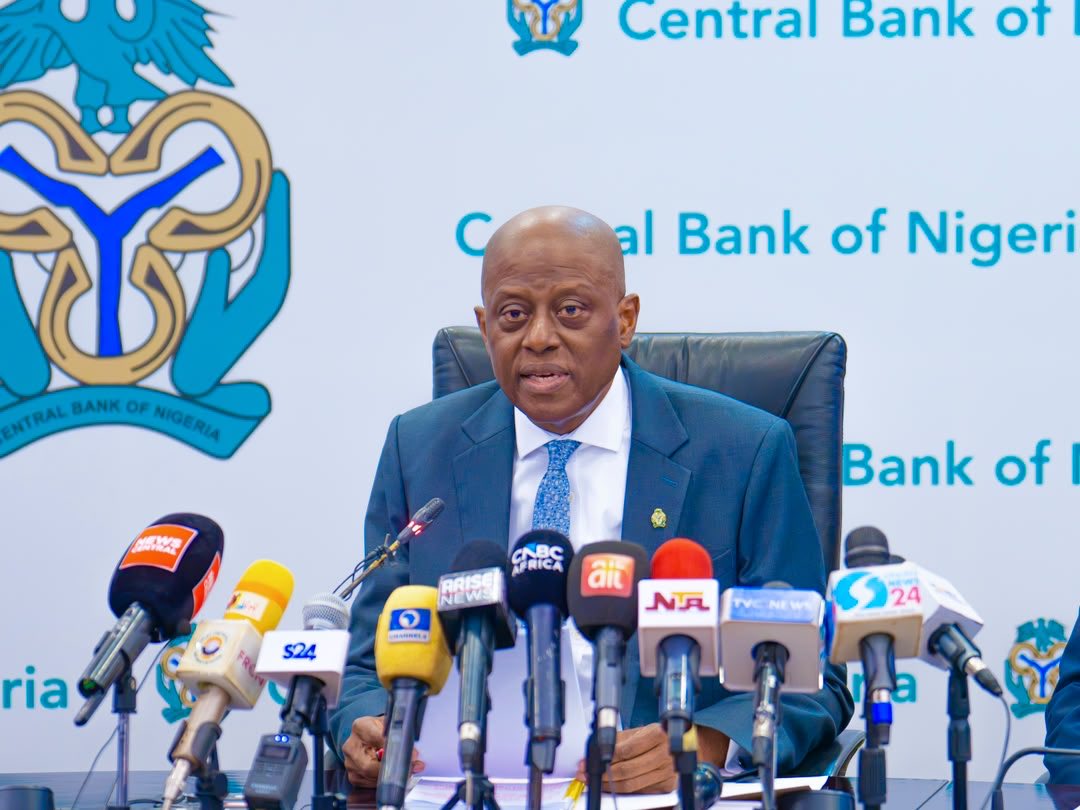
CBN Governor Olayemi Cardoso disclosed this on Friday at the 61st annual bankers’ dinner of the Chartered Institute of Bankers of Nigeria (CIBN) in Lagos.
He also said the naira had appreciated by approximately six per cent over the past year, while daily foreign exchange market turnover had occasionally exceeded $1bn.
Cardoso said the apex bank remained focused on sustaining price stability, strengthening financial markets and consolidating recent reforms into lasting institutional improvements.
He disclosed that headline inflation fell from 24.48 per cent in January 2025 to 14.06 per cent in October 2026, while the country’s external reserves had risen to their highest level in about 18 years.
The CBN governor also announced plans to introduce an accessible and comprehensive regulatory rulebook next year to provide clearer guidance on regulatory requirements and supervisory standards.
He said the bank was working towards building a resilient and innovative financial system capable of supporting Nigeria’s economic ambitions by 2030.
On credit access, Cardoso said the CBN was targeting at least a doubling of Nigeria’s private sector credit-to-GDP ratio by 2030 to improve financial intermediation and support economic growth.
He said achieving the target would require increased domestic institutional investment, deeper capital markets and financial institutions capable of financing businesses at different stages of development.
“There is considerable scope to deepen financial intermediation in Nigeria. As inflation moderates and the broader lending environment improves, our ambition should be to at least double the private sector credit-to-GDP ratio by 2030, consistent with sound lending practices and financial stability,” he said.
Cardoso further disclosed that the CBN planned to introduce interbank repurchase agreement (repo) and overnight indexed swap (OIS) markets in the first quarter of 2027 to improve liquidity management and financial market efficiency.
According to him, the proposed markets would help financial institutions manage liquidity and long-term financing risks while reducing dependence on the central bank for functions that could be handled by market participants.
He also announced the successful completion of the banking sector recapitalisation exercise launched in March 2024, saying 33 banks had met the revised minimum capital requirements and raised approximately N4.65tn in fresh capital.
However, he acknowledged that stronger bank balance sheets had not yet translated into affordable credit for many productive businesses, citing elevated credit risks, monetary policy constraints and weaknesses in credit assessment, collateral and enforcement systems.
“Stronger balance sheets are necessary, but the capacity of banks to lend affordably also depends on the environment in which they operate,” he said.
The CBN governor called for improved credit information and collateral systems, continued efforts to reduce inflation and stronger cooperation between monetary and fiscal authorities to expand access to financing.
CBN Hits $1bn Monthly Diaspora Remittance Target, Eyes $1.5bn

ByAdmin
29 November 2026