
By Hussaini Aliyu Yero
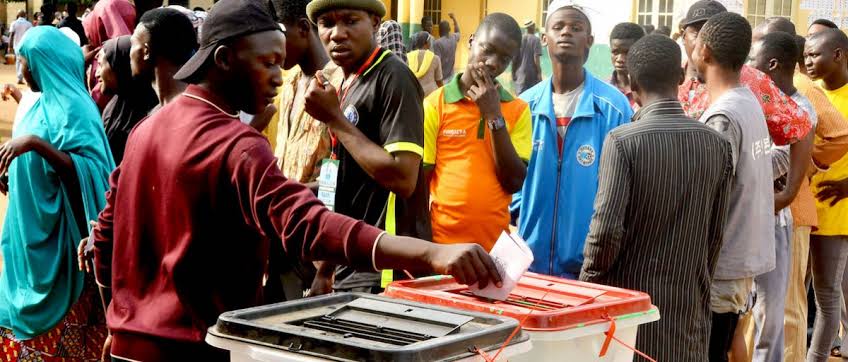
Nigeria’s return to democratic rule in 1999 marked the beginning of the Fourth Republic and raised hopes for a political system in which citizens would have a greater voice in determining the country’s direction. More than two decades later, Nigerian democracy has survived several elections, changes of government and political crises. Yet an important question remains: what role have young Nigerians played in this democratic journey, and what role will they play in the 2027 general elections?
The answer is both encouraging and troubling.
Nigeria has a very large young population, and young people constitute a significant proportion of the electorate. In the 2023 general elections, the Independent National Electoral Commission (INEC) recorded (37,060,399) registered voters between the ages of 18 and 34, representing 39.65 percent of the total registered electorate. This shows that Nigerian youths are not a marginal group in electoral politics. They are potentially one of the most powerful forces capable of influencing election outcomes.
However, numbers alone do not equal political power.
From 1999: Youths as Political Followers.
When democracy returned in 1999, young people participated mainly as voters, party supporters, campaign workers and mobilisers. Leadership positions, particularly at the highest levels of government and within major political parties, remained dominated by older politicians.
For many young Nigerians, politics was something to watch rather than something they could control. Political parties were structured around powerful individuals, political godfathers and established networks. Young people could mobilise crowds, but had limited influence over who became candidates.
This created a contradiction: young people were important during elections but were frequently sidelined when political decisions were being made.
The Growing Political Awareness of Nigerian Youths.
Over the years, this began to change. The growth of social media, increased access to information and frustration over unemployment, insecurity, corruption, poverty and poor governance encouraged more young Nigerians to become politically conscious.
Young Nigerians increasingly questioned traditional political structures, demanded accountability and used social media to organise and express opinions.
The August 2024
EndBadGovernance protests. demonstrated this growing awareness. Nigerians, particularly young people, took to the streets across the country to protest economic hardship, rising living costs, hunger and poor governance.
The protests showed that citizens were increasingly willing to organise and demand accountability. They also proved that young Nigerians were no longer content to remain passive observers of government policies.
The Not Too Young to Run Movement
One of the most important developments in youth political participation was the Not Too Young To Run movement.
The movement contributed significantly to constitutional changes in (2018) that reduced the minimum age for elective offices. The presidential age was reduced from 40 to 35, while the minimum age for the House of Representatives and State Houses of Assembly was reduced from 30 to 25.
This reform removed a formal barrier to youth candidacy.
However, lowering the age requirement did not solve the larger problem. Young aspirants still face expensive nomination forms, high campaign costs, weak internal democracy, political godfatherism and lack of resources to compete.
The real question is no longer whether young Nigerians are legally old enough to contest. It is whether the political system is genuinely prepared to give them a fair opportunity to win.
The 2019 and 2023 Elections
The impact of Not Too Young To Run became visible in 2019 as youth candidacy increased.
But the 2023 election showed progress was not linear. Analysis by (YIAGA Africa) found youth candidacy declined from 34 percent in 2019 to 28.6 percent in 2023. Of the 15,336 candidates on the ballot in 2023, 4,398 were youth candidates.
This is a warning. While young Nigerians make up a huge part of the electorate, they remain underrepresented among candidates. There is still a gap between youths as voters and youths as leaders.
The 2023 election also showed the potential strength of the youth vote. Youths aged 18–34 were 39.65 percent of registered voters, while 76.56 percent of newly registered voters during the 2021–2022 exercise were between 18 and 34.
The potential power of the youth vote is enormous.
Political Participation Beyond Voting
Political participation should not be defined only as voting.
Democracy requires more than collecting a Permanent Voter’s Card. Young people should participate in political parties, policy discussions, community leadership, election monitoring, campaigns, civic organisations and public debate. They should also demand accountability after elections.
A young Nigerian who votes but never questions public spending or participates in community decisions is exercising only one part of democratic citizenship.
The challenge is to move from being electoral numbers to becoming political stakeholders.
Looking Towards 2027
The 2027 general election presents another opportunity. By 2027, many first-time voters from 2019 and 2023 will have gained experience. The question is whether that will translate into greater participation and better leadership.
Young Nigerians should not wait until parties distribute campaign materials to get involved. They should begin now by studying parties, candidates, manifestos and asking tough questions about governance.
Most importantly, youths must resist being used as political thugs, crowd pullers or online attackers. Young people deserve to be decision-makers, not just tools for mobilisation.
What Must Change Before 2027
First, political parties must create genuine opportunities for young people to contest and influence party decisions.
Second, the cost of participation must be reduced. Democracy is not inclusive when only the wealthy can afford forms and campaigns.
Third, young Nigerians must strengthen political education. Youth leadership must be built on competence, integrity and commitment to public service.
Fourth, young voters must reject vote buying. Selling a vote may bring temporary relief but leads to poor leadership.
Fifth, youths should look beyond personality politics. Candidates should be judged by competence, character, record and policies, not ethnicity, religion or social media popularity.
2027 and the Future of Nigerian Democracy
The 2027 election should not be just another contest between parties. It should be a chance for Nigerians to decide what kind of democracy they want.
For youths, the choice is critical. They can remain spectators who complain after elections, or become active participants who organise, contest, vote, monitor and demand accountability.
Since 1999, young people have moved from the margins to the centre of political discussion. Not Too Young To Run showed institutional change is possible. The 2023 registration figures showed numerical strength. Yet low youth representation shows more work is needed.
The challenge is to turn numerical strength into real political influence.
Conclusion
Nigerian democracy cannot be truly representative while the largest generation remains underrepresented in leadership.
From 1999 to 2027, youth participation has been marked by awakening, activism and growing consciousness. The next stage must be deeper: participation must become representation, and representation must become responsible leadership.
Nigerian youths should ask not only “Who will I vote for?” but also “Who will represent us? Who will make decisions for us? And what are we doing to become the leaders we want?”
The 2027 election will test Nigerian democracy. But the future of politics will be determined by what young Nigerians do before, during and after election day.
Nigeria’s youths are not merely leaders of tomorrow. They are citizens and stakeholders today. The future of Nigerian democracy depends on whether they choose to remain spectators or become active participants in shaping the country they will inherit
Hussaini Aliyu Yero can be reached via GSM:09061612465 or
hussainialiyuyero@gmail.com.