
By Uzair Adam
The Senate has called on the Federal Government to discontinue the rehabilitation and reintegration of repentant Boko Haram members and other violent criminals, arguing that the policy has failed to curb insecurity across the country.
The resolution followed a motion on the rising cases of attacks, abductions and killings involving serving and retired military personnel, including the late former Director of Defence Information, retired Major General Rabe Abubakar.
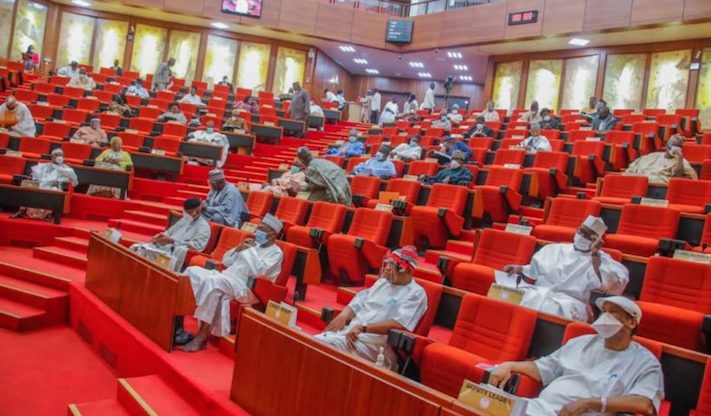
The motion, sponsored by the Chairman of the Senate Committee on Army, Senator Abdulaziz Yar’Adua (APC, Katsina), received unanimous support during Tuesday’s plenary.
Lawmakers condemned the continued rehabilitation of former Boko Haram fighters, bandits, kidnappers and other criminal elements under the Federal Government’s deradicalisation programme. Several senators linked the persistent security crisis, particularly in northern Nigeria, to the release of individuals described as repentant criminals back into society.
The Senate expressed concern over what it described as the deteriorating security situation, warning that the growing attacks on serving and retired military officers represent a dangerous dimension to the country’s security challenges.
It cited the killing of retired Major General Richard Duru in Owerri after a reported ransom payment of $50,000, the murder of retired Brigadier General O.M. Harlord Udokwere in Abuja, the 56-day captivity of former NYSC Director-General, retired Brigadier General Maharazu Tsiga, and the death of retired Major Aja while in captivity in Kogi State.
According to the lawmakers, the attacks pose a significant threat to national security because many of the victims previously held sensitive operational, intelligence and command positions.
The Senate observed a minute of silence in honour of Major General Rabe Abubakar and other Nigerians killed by terrorism, insurgency, banditry, kidnapping and other violent crimes.
It also urged the Federal Government to ensure that perpetrators are arrested and prosecuted.
The Red Chamber further called on security and intelligence agencies to strengthen intelligence gathering, surveillance, threat assessment and early warning mechanisms, while urging the government to accelerate the deployment of modern security technology to combat terrorism, banditry and kidnapping.
The resolution comes despite the existence of Operation Safe Corridor, a Federal Government initiative launched in 2016 to deradicalise, rehabilitate and reintegrate former Boko Haram combatants who voluntarily surrendered.
While officials have credited the programme with encouraging thousands of insurgents to abandon violence, concerns have persisted over reports of some beneficiaries allegedly returning to criminal activities.
Reacting to the Senate’s position, security analyst and Associate Professor at the University of Namibia, Dr. Babayo Sule, described the resolution as unfortunate and potentially counterproductive.
He argued that the deradicalisation programme was introduced only after military operations failed to bring lasting peace, stressing that rehabilitation and reconciliation remain recognised components of counter-insurgency strategies worldwide.
Rather than scrapping the initiative, Sule urged lawmakers to investigate its shortcomings and strengthen its implementation. He also called for greater oversight of Operation Safe Corridor and similar reconciliation programmes in states affected by insurgency.
According to him, abandoning the programme without addressing the underlying challenges could further worsen insecurity, as the country currently lacks sufficient capacity to defeat insurgents solely through military means.